

OBD-II Code B1388: Device Power Circuit Malfunction
What B1388 means, why it triggers, and how to fix it
- B1388 means entirely different things depending on the brand: a power tailgate fault on Hondas, a critical airbag sensor failure on Hyundais, or a dead instrument cluster chime on Fords.
- On Hyundai and Kia vehicles, B1388 disables the advanced dual-stage driver's airbag deployment, requiring immediate repair to restore crash safety.
- For 2018 and newer Honda Odysseys, a B1388 code is almost always caused by a defective roof seam leaking water directly onto the $250 power tailgate control unit.
- Never buy replacement parts until you use a manufacturer-specific OBD-II scanner to read the exact sub-definition of the B1388 code for your specific vehicle.
What Does B1388 Mean?
B1388 is a manufacturer-specific Body code indicating a malfunction in an accessory's power circuit. Because it is manufacturer-specific, its meaning changes entirely depending on the brand. It points to power tailgate failures on Hondas, driver seat airbag sensor faults on Hyundais and Kias, or instrument cluster chime failures on Fords.
Technical definition: For Honda and Acura, B1388 is defined as 'Power Tailgate Drive Motor Circuit Malfunction.' On Hyundai and Kia, it means 'Driver Seat Track Position Sensor Open or Short to Power' within the Supplemental Restraint System (SRS). For Ford, it indicates a 'Key-In-Ignition Warning Chime Circuit' failure. On GMC vehicles, it flags high voltage in the ignition start circuit.
Can I Drive With B1388?
Yes, But With Caution. Yes, but with a critical exception. On Hondas and Fords, B1388 only disables convenience features like the power tailgate or warning chimes. However, on Hyundai and Kia vehicles, B1388 indicates a fault in the airbag system (SRS). This disables the advanced dual-stage deployment of the driver's airbag, significantly increasing injury risk in a crash. Repair Hyundai/Kia vehicles immediately.
🎬 Watch: A quick breakdown of the Hyundai B1388 code.Common Causes
- Moisture Intrusion (Honda Odyssey) (Very Common) — Water leaking into connectors or control modules is a major cause. On 2018 and newer Honda Odysseys, a known body seam defect allows water to leak directly onto the Power Tailgate Control Unit, shorting it out.
- Damaged Wiring Harness (Common) — Corroded, frayed, or loose wiring causes an open or short circuit. This frequently occurs in the flexible wiring harness between the vehicle body and the tailgate, or under a power-adjustable seat.
- Blown Fuse (Common) — A blown fuse instantly interrupts power to the affected module or motor. Always check the fuses in all fuse boxes (under-hood, interior, and rear) before replacing expensive parts.
- Faulty Control Module (Less Common) — The control module itself (such as the Power Tailgate Control Unit or SRS Control Module) fails internally due to electrical surges, component aging, or water damage.
- Failed Motor or Actuator (Less Common) — The main drive motor, its internal clutch mechanism, or the secondary latching motor fails, causing a circuit malfunction.
- Weak Gas Support Struts (Common Misdiagnosis) (Common Misdiagnosis) — On vehicles with power tailgates, weak gas struts fail to support the tailgate's weight. This forces the power lift motor to overwork, overheat, and eventually burn out, triggering the B1388 code.
Symptoms
- Inoperative Power Feature — The most direct symptom is the failure of the associated feature, such as a power tailgate that won't open or close, makes beeping noises without moving, or a power seat that won't adjust.
- Warning Light on Dashboard — A warning message or light appears. This is an SRS/airbag light for Hyundai/Kia, 🎬 See this short explanation of the Kia B1388 fault. or a specific 'Power Tailgate Problem' message on Honda/Acura vehicles.
- Intermittent Operation — The feature works sometimes but not others. This points to a loose connection, a failing component, or moisture in the circuit that comes and goes with weather changes.
- No Audible Chimes or Alerts — If the code is related to an instrument cluster speaker (common in Fords), warning chimes for keys in the ignition, headlights being on, or the door being ajar cease to function.
- Error Message Takes Over Display — On vehicles like the 2017+ Honda CR-V, the B1388 error message persistently occupies the main multi-information display, preventing the driver from seeing other vehicle information until fixed.
Diagnostic Flowchart
Tap your situation to follow the diagnostic path that matches what you're seeing on this code.
Common Fixes & Costs
- Replace Power Tailgate Control Module (Honda)
— Parts: $150-$300, Labor: $150-$250, ~1.5 hr book time
(Intermediate)
2018-2020 Honda Odyssey: OEM 74970-THR-A12, 74970-THR-A03 (Alt: Dorman) - Replace Seat Track Position Sensor (Hyundai/Kia)
— Parts: $60-$150, Labor: $150-$250, ~1.5 hr book time
(Intermediate)
2011-2013 Hyundai Sonata: OEM 88970-3Q500 (Alt: Duralast SU17338) - Repair Wiring Harness — Parts: $10-$50, Labor: $150-$400, ~2.5 hr book time (Intermediate)
- Replace Blown Fuse — Parts: $1-$5, Labor: $0, ~0.1 hr book time (DIY)
- Repair Instrument Cluster (Ford) — Parts: $150-$300, Labor: $100-$200, ~1.5 hr book time (Professional)
Used vs. New Parts: Buying Guide
When a used part is worth it: For a Ford instrument cluster, a professionally repaired unit is the most cost-effective solution. For other components, the risk outweighs the savings.
Donor-vehicle mileage cap: roughly under 100000 miles for the part to have meaningful remaining life.
Donor quality checklist:
- For clusters, ensure the part number is an exact match and prepare for dealer programming.
- For control modules, avoid parts from vehicles with signs of water damage.
- NEVER buy used SRS components like sensors; the safety risk is too high.
Decision logic:
- If The part is for a safety system (Hyundai/Kia airbag sensor) → Always buy new OEM. Do not use salvaged parts.
- If The part is an instrument cluster (Ford) → A professional repair service is the best balance of cost and reliability.
- If The part is an electronic module prone to water damage (Honda tailgate unit) → Favor a new part to avoid inheriting a latent problem.
Warranty tradeoff: Used parts typically come with a 30-day part-only warranty, leaving you to pay labor again if it fails. New OEM parts offer 1-year warranties, providing greater peace of mind.
Worst-case if a used part fails: $300-800 if a used part fails after installation, accounting for repeat labor costs and the price of another part.
What Happens If You Wait — Timeline
- Immediate (Hyundai/Kia): SRS light illuminates. The Airbag Control Unit disables the advanced dual-stage deployment for the driver's airbag. (MPG impact: 0%% · Added cost: $0 (Safety risk))
- Ongoing (Hyundai/Kia): The vehicle remains drivable, but crash safety is compromised. The airbag will not deploy with the appropriate force for the driver's position. (MPG impact: 0%% · Added cost: N/A)
- 0-3 Months (Honda/Acura Water Leak): Water intermittently contacts the tailgate control unit. The tailgate works sporadically. Minor corrosion begins. (MPG impact: 0%% · Added cost: $0-$50)
- 3-9 Months (Honda/Acura Water Leak): Sustained moisture causes severe corrosion on the control module's circuit board. The tailgate fails completely. (MPG impact: 0%% · Added cost: $150-$300)
- 9+ Months (Honda/Acura Water Leak): Chronic water ingress saturates the main vehicle wiring harness, causing rust on body panels and mold growth. (MPG impact: 0%% · Added cost: $2000-$4000+)
- Ongoing (Ford Cluster Chime): The internal speaker on the instrument cluster fails. Warning chimes cease to function. This is an annoyance with no progressive damage. (MPG impact: 0%% · Added cost: $0)
Cost of Not Fixing It
- Immediate (Hyundai/Kia): CRITICAL SAFETY RISK. The driver's dual-stage airbag will not deploy as designed, significantly increasing the risk of serious injury or death in a frontal collision. (Added cost: N/A (Safety Risk))
- 0-6 Months (Honda/Acura): Inconvenience of a non-functioning tailgate. If caused by a water leak, delaying repair allows moisture to destroy other nearby electronics and rust body panels. (Added cost: $500 - $2000+)
- 6+ Months (Ford): Continued lack of audible chimes for key-in-ignition or headlights-on warnings. This is a low-risk annoyance with negligible financial consequence. (Added cost: $0)
Diagnosis Steps
- Identify the Affected System
Use a high-quality OBD-II scanner to read the code's full sub-definition for your exact vehicle make and model. This confirms if the fault is in the tailgate, SRS system, or instrument cluster.
Tools: OBD-II Scanner with manufacturer-specific definitions (Beginner) - Check All Related Fuses
Consult the owner's manual to locate all fuse boxes. Pull and visually inspect every fuse related to the affected system (e.g., 'Power Tailgate', 'SRS', 'Cluster') for a broken filament.
Tools: Owner's manual, Fuse puller (Beginner) - Visually Inspect Wiring and Connectors
Thoroughly inspect the wiring harness leading to the affected component. Look for chafed wires in the tailgate rubber conduit, disconnected plugs under the driver's seat, or water damage on the tailgate control unit.
Tools: Flashlight, Trim removal tools (Intermediate) - Scan Tool Component Test
Use a bidirectional scan tool to command the module to activate the motor or read live sensor data. If the module receives the command but the component doesn't actuate, the component has failed.
Tools: Bidirectional Scan Tool (Advanced) - Test for Power and Ground
Using a multimeter, verify the component's main electrical connector receives 12V power and has a solid ground connection (less than 1 ohm of resistance to the chassis).
Tools: Multimeter (Intermediate) - Pro Tip (Honda): Bench Test the Tailgate Motor
Disconnect the motor and control unit. Use fused jumper wires to apply 12V power and ground directly to the motor's input pins. If the motor runs, the problem is in the wiring or control unit. If not, the motor is dead.
Tools: Fused jumper wires, 12V power source (Advanced) - Pro Tip (Hyundai): Test Seat Sensor Circuit
With a multimeter, check the current on the Seat Track Position Sensor signal wire. Service manuals specify 4-7 mA (forward) and 12-17 mA (rearward). Readings below 3.5 mA indicate a faulty sensor or broken wire.
Tools: Multimeter with mA function, Service manual (Advanced) - Check the Control Module
If all wiring, fuses, and components test okay, the control module has failed internally. Inspect the module's connector for corrosion; if clean, replace the module.
Tools: Socket set, Multimeter (Advanced)
When This Code Triggers (Freeze-Frame Conditions)
- System Voltage: 11.5-14.5V (Code sets if voltage is too high or too low during self-test.)
- Ignition Status: ON (The fault is detected during a Key-On self-test or when the affected system is commanded to activate.)
- Component Commanded State: Active/On (For power tailgates, the fault logs the exact moment the driver presses the button to open or close the gate.)
- Fault Type: Open Circuit / Short to Ground / Short to Power (The control module logs the specific electrical fault type, which is crucial for diagnosis.)
Related Codes
- B1391 — On Hyundai/Kia, B1388 is the Driver's Seat Track Position Sensor, while B1391 is the Passenger's Seat Track Position Sensor. Both present suggests a shared wiring or module issue.
- B1352 — Often appears with Honda/Acura power tailgate codes. B1352 indicates an internal control unit error. If present with B1388, the control unit is almost certainly faulty.
- B1375, B1376, B1377 — Honda/Acura tailgate switch codes. B1375 is the dash switch, B1376 is the outer handle, and B1377 is the inner button. These pinpoint switch failures versus B1388 motor faults.
- U0155 / U3000 — On Fords, these communication codes appear alongside B1388 if the instrument cluster has a severe internal failure beyond just the chime speaker.
Climate & Environmental Factors
- High Humidity / Rain: On 2018+ Honda Odysseys, rainwater penetrates a faulty roof seam and short-circuits the Power Tailgate Control Unit, causing permanent failure.
- Cold Weather: On 2011-2017 Honda Odysseys, the outer tailgate handle switch fails in freezing temperatures, which is frequently misdiagnosed as a B1388 motor fault (TSB 16-063).
- Road Salt / Corrosion: Heavy road salt accelerates the degradation of wiring harnesses and ground connections under the vehicle (Hyundai/Kia seat sensors) or in the tailgate area.
How to Talk to a Mechanic About This Code
Say this: "For Honda: 'I have a B1388 code and my power tailgate isn't working. Please inspect for water intrusion near the rear control unit before checking the motor.' For Hyundai/Kia: 'I have an SRS light with code B1388 for the driver's seat track position sensor. Please quote testing the sensor and wiring specifically, not replacing the entire seat.' For Ford: 'I have a B1388 code and dead warning chimes. Do you send instrument clusters out for repair or only replace them?'"
This language shows you've done your research and directs the technician to the most likely cause, saving diagnostic time. It prevents them from immediately suggesting the most expensive, wholesale fix.
Avoid saying:
- 'My airbag light is on, can you fix it?' (Too vague, invites an expensive diagnosis).
- 'Just fix whatever is wrong.'
- 'My tailgate is broken, do whatever you think is best.'
Questions to ask before authorizing the repair:
- For Honda: Did you find evidence of a water leak? Can you show me the corroded part?
- For Hyundai: Can you show me the test results for the seat sensor? Is the sensor available as a separate part?
- For Ford: What is the cost to send my cluster for repair versus replacing it?
- What is the warranty on this specific repair?
Where to Take It: Dealer vs Independent vs Chain
- Dealer:
Best for: Vehicles under warranty., Honda models with applicable TSBs or warranty extensions.
Downsides: Highest labor rates., Defaults to replacing entire assemblies. (Typical cost: +50% vs. baseline) - Independent Shop:
Best fit for most B1388 scenarios, especially Honda/Acura.
Best for: Out-of-warranty Honda tailgate repairs., Getting a second opinion on a Hyundai seat replacement.
Downsides: Quality varies; ensure they have SRS diagnostic experience. (Typical cost: +0% vs. baseline)
When to Walk Away From the Repair
If the estimated repair cost exceeds 40-50% of the car's private-party value, pause and consider alternatives.
- Car worth $3000, fix is $1800: Walk away. The repair is 60% of the car's value.
- Car worth $15000, fix is $850: Fix it. The repair is a small fraction of the value.
- Car worth $4000, fix is $1800: Borderline. Get a second opinion focused on sensor-only replacement before proceeding.
What Scan Tool You Need for This Code
Minimum: A scanner that can read manufacturer-specific Body (B) and SRS (airbag) codes.
A standard $20 engine code reader will not see Body (B) codes like B1388. It will show 'No Codes Found,' leaving you blind to the actual fault.
Budget: Foxwell NT301 / Ancel AD410 (~$70) — Reads and clears Body (B) codes for most brands, which is the minimum needed to identify the fault.
Mid-range: BlueDriver Pro / Innova 5610 (~$100-250) — Offers full system diagnostics, including SRS, and reads manufacturer-specific definitions.
Professional: Autel MaxiCOM MK808 / Launch X431 Series (~$450-800) — Provides full bidirectional control to command the tailgate motor or analyze deep SRS module data.
Rent vs buy: Auto parts stores offer free loaner tools, but their basic scanners typically cannot read Body or SRS codes. Buying a midrange scanner is a worthwhile investment.
How to Clear the Code After You Fix It
- Perform the physical repair of the faulty component or wiring.
- Reconnect any disconnected components and the vehicle battery.
- Use an OBD-II scan tool capable of reading Body (B) codes to clear the DTC.
- Cycle the ignition and operate the repaired component to verify the fix.
Drive cycle: A specific drive cycle is not required for Body (B) codes. The code clears immediately with a scan tool after the repair is completed.
Watch out for:
- Using a basic engine-only code reader that cannot see or clear Body (B) codes.
- Failing to fix the root cause, causing the code to return immediately upon the next component activation.
- Disconnecting the battery to clear the code, which resets radio presets and window auto-up functions without permanently clearing the hard code.
Will This Fail Emissions / State Inspection?
No — by itself this code doesn't fail OBD inspection (but it can keep readiness monitors from setting, which causes a separate fail).
- General Note: Code B1388 is a Body code. It does not turn on the Check Engine Light and is not evaluated during an OBD-II emissions inspection.
- California: An illuminated airbag (SRS) light, common with B1388 on a Hyundai/Kia, is not a cause for emissions test failure.
- New York: An illuminated airbag (SRS) light is recorded as an advisory on the safety inspection report but is not a reason for failure.
- Texas: During the annual safety inspection, the inspector checks the airbag warning light. If the light stays on (Hyundai/Kia B1388), the vehicle fails the safety inspection.
Most Commonly Affected Vehicles
- Honda Odyssey (2018-2023) — Very common issue. A defective body seam allows water to leak into the rear quarter panel, destroying the power tailgate control unit.
- Honda Odyssey (2011-2017) — Prone to B1388 for the power tailgate. A common issue is the outer handle switch failing in cold weather (TSB 16-063), which is often misdiagnosed as a bad motor.
- Acura MDX/RDX (2013-2018) — Commonly experiences faults in the power tailgate system, triggering this code. Diagnosis focuses on the motor, wiring, and control unit.
- Honda Pilot (2009-2015) — The power tailgate motor and its related circuitry are a known failure point, sharing a similar design to the Odyssey of the same era.
- Hyundai Santa Fe / Sonata (2006-2012) — Points to a fault with the driver's seat track position sensor, part of the SRS (airbag) system. Wiring under the seat is a common failure point.
- Kia Sorento / Optima (2006-2015) — Shares the same SRS design as Hyundai; indicates a problem with the Driver Seat Track Position Sensor. This is a safety-critical issue.
- Ford Focus / Explorer / F-150 (2008-2016) — Points to a failure of the small internal speaker (chime) soldered within the instrument cluster. The fix requires cluster repair or replacement.
- Honda CR-V (2017-2022) — Displays this code related to intermittent power tailgate faults. The error message takes over the entire info display until the fault is rectified.
Manufacturer-Specific Notes
- Honda/Acura: B1388 is exclusively for the power tailgate. On 2018+ Odysseys, the primary suspect is a water-damaged control unit due to a known body seam leak. On 2011-2017 models, check TSB 16-063 for handle failure in the cold before replacing the motor.
- Hyundai/Kia: B1388 is a critical SRS code for the driver's seat track position sensor. A fault disables the advanced, multi-stage deployment, defaulting to a less optimized inflation or preventing second-stage deployment entirely.
- Ford: B1388 means the internal chime/speaker on the instrument cluster's circuit board has failed. It is not available as a separate part. The fix requires a specialist to solder a new speaker or replacing the entire cluster.
- General Motors (GMC): Indicates a high voltage condition detected by the Body Control Module (BCM) in the ignition start circuit, requiring a completely different diagnostic path.
Real Owner Stories
2018 Honda Odyssey Elite - Tailgate Failure
Owner found the power tailgate dead and the trunk floor wet.
Outcome: Owner replaced the fried tailgate control module themselves ($230) and sealed the body seams with auto seam sealer to prevent future leaks.
Lesson: On 2018+ Odysseys, a B1388 code with a wet trunk is the known body seam leak. DIY module replacement and seam sealing saves thousands.
2017 Acura MDX - Intermittent Tailgate
Tailgate would not open using the exterior handle button, but worked with the key fob.
Outcome: The problem was a faulty exterior tailgate button. The owner replaced the button assembly, resolving the issue.
Lesson: If only one method of opening the tailgate fails, the problem is that specific switch, not the main motor or control unit.
2007 Hyundai Sonata - SRS Airbag Light
SRS warning light came on with code B1388.
Outcome: The owner found the sensor is available separately. They replaced just the sensor (OEM 88970-3Q500) for $60.
Lesson: Be skeptical of quotes to replace the entire seat. The fault is almost always the independently replaceable seat track position sensor.
How to Prevent This Code From Triggering
- Seal Roof/Body Seams (2018+ Honda Odyssey) (Inspect annually) — Factory seam sealer cracks, allowing water into the tailgate control unit area. Applying auto body seam sealer prevents this #1 cause of B1388.
- Clean and Lubricate Tailgate Struts and Hinges (Every 6-12 months) — Unlubricated hinges increase resistance, forcing the power tailgate motor to work harder. Silicone lubricant reduces strain and prevents overload faults.
- Apply Dielectric Grease to Connectors (During any related repair) — Applying non-conductive dielectric grease seals connections from moisture, preventing corrosion that leads to open circuits.
- Replace Weak Tailgate Gas Struts Promptly (When tailgate struggles to stay open) — Weak struts overload the motor on every cycle. Replacing $50 struts prevents burning out a $500 motor assembly.
Frequently Asked Questions
What is the most common cause of code B1388?
On 2018+ Honda Odysseys, a water-damaged tailgate control unit causes it. On Hyundai/Kias, failed wiring under the driver's seat triggers it. On Fords, a dead instrument cluster speaker is the culprit.
Is the B1388 code serious?
Severity depends entirely on the brand. It is a high-severity safety risk on Hyundai and Kia vehicles because it alters airbag deployment. On Hondas and Fords, it is a low-severity convenience issue.
My B1388 error message is stuck on my dashboard screen. How do I clear it?
On vehicles like the Honda CR-V, the B1388 error message locks the information display until the electrical fault is fixed. You cannot permanently clear it without repairing the root cause. Once repaired, clear the code with an OBD-II scanner.
Why did the B1388 code disappear on its own?
This indicates an intermittent fault, usually caused by moisture drying out or a loose connection temporarily making contact. The problem will return until you fix the root cause, such as a leaking body seam or chafed wire.
What are common misdiagnosis pitfalls for B1388?
On Hondas, mechanics often mistakenly replace the expensive tailgate motor when the real issue is weak gas struts or a water-damaged control unit. On Hyundai/Kias, replacing the entire $1,500 seat assembly is a costly error when only the $60 sensor failed.
Can I fix a B1388 code myself?
You can easily replace a blown fuse or swap a bolt-in tailgate control module yourself. However, diagnosing intermittent electrical faults or repairing SRS airbag circuits requires advanced multimeter skills and is best left to professionals.
Will code B1388 cause my car to fail an emissions test?
No. B1388 is a Body code unrelated to the powertrain or emissions systems, so it will not cause an emissions inspection failure.
Key Takeaways
- B1388 means entirely different things depending on the brand: a power tailgate fault on Hondas, a critical airbag sensor failure on Hyundais, or a dead instrument cluster chime on Fords.
- On Hyundai and Kia vehicles, B1388 disables the advanced dual-stage driver's airbag deployment, requiring immediate repair to restore crash safety.
- For 2018 and newer Honda Odysseys, a B1388 code is almost always caused by a defective roof seam leaking water directly onto the $250 power tailgate control unit.
- Never buy replacement parts until you use a manufacturer-specific OBD-II scanner to read the exact sub-definition of the B1388 code for your specific vehicle.
Helpful Videos
Shop the Parts Behind B1388
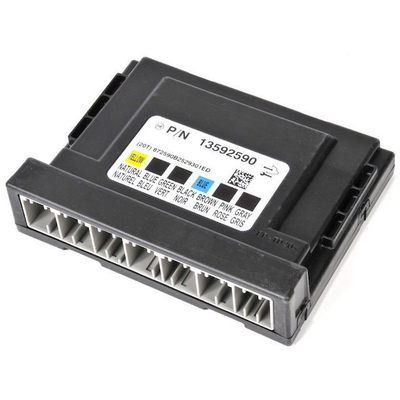
Below are the parts most often responsible for code B1388, ranked by how frequently each one is the actual culprit (per the diagnosis above). Tap any to see what we have for your vehicle.



The information in this article is provided for general reference and educational purposes only. Vehicle specifications, procedures, and part compatibility can vary by production date, trim level, and region. Always consult your vehicle's factory service manual and verify part numbers before purchasing or performing repairs. Safety-critical components such as airbags, seat belts, and braking systems should be installed by a qualified professional.
- 🧭 Diagnostic Flowchart
- 🎬 Helpful Videos
- 🛍️ Shop This Part
- What Does B1388 Mean?
- Can I Drive With B1388?
- Common Causes
- Symptoms
- Common Fixes & Costs
- Used vs. New Parts: Buying Guide
- What Happens If You Wait — Timeline
- Cost of Not Fixing It
- Diagnosis Steps
- When This Code Triggers (Freeze-Frame Conditions)
- Related Codes
- Climate & Environmental Factors
- How to Talk to a Mechanic About This Code
- Where to Take It: Dealer vs Independent vs Chain
- When to Walk Away From the Repair
- What Scan Tool You Need for This Code
- How to Clear the Code After You Fix It
- Will This Fail Emissions / State Inspection?
- Most Commonly Affected Vehicles
- Manufacturer-Specific Notes
- Real Owner Stories
- 2018 Honda Odyssey Elite - Tailgate Failure
- 2017 Acura MDX - Intermittent Tailgate
- 2007 Hyundai Sonata - SRS Airbag Light
- How to Prevent This Code From Triggering
- Frequently Asked Questions
- What is the most common cause of code B1388?
- Is the B1388 code serious?
- My B1388 error message is stuck on my dashboard screen. How do I clear it?
- Why did the B1388 code disappear on its own?
- What are common misdiagnosis pitfalls for B1388?
- Can I fix a B1388 code myself?
- Will code B1388 cause my car to fail an emissions test?
- Key Takeaways
- 🎟️ Get 5% Off