

OBD-II Code B1400: A Highly Variable Fault Code
What B1400 means, why it triggers, and how to fix it
- Verify the B1400 definition for your specific vehicle first, as it ranges from a critical airbag fault to a minor rain sensor glitch.
- On Hyundai and Mitsubishi vehicles, B1400 indicates a critical airbag system failure that completely disables the airbags until repaired.
- For Ford, GM, and Chrysler models, B1400 typically flags a broken wire in the driver's door jamb, disabling the power window or speaker.
- Toyota and Lexus vehicles log B1400 for a malfunctioning windshield rain sensor, requiring a simple gel pad or sensor replacement.
- Ignore online search results pointing to a Baldwin B1400 oil filter; this is a common part number mix-up completely unrelated to the OBD-II code.
What Does B1400 Mean?
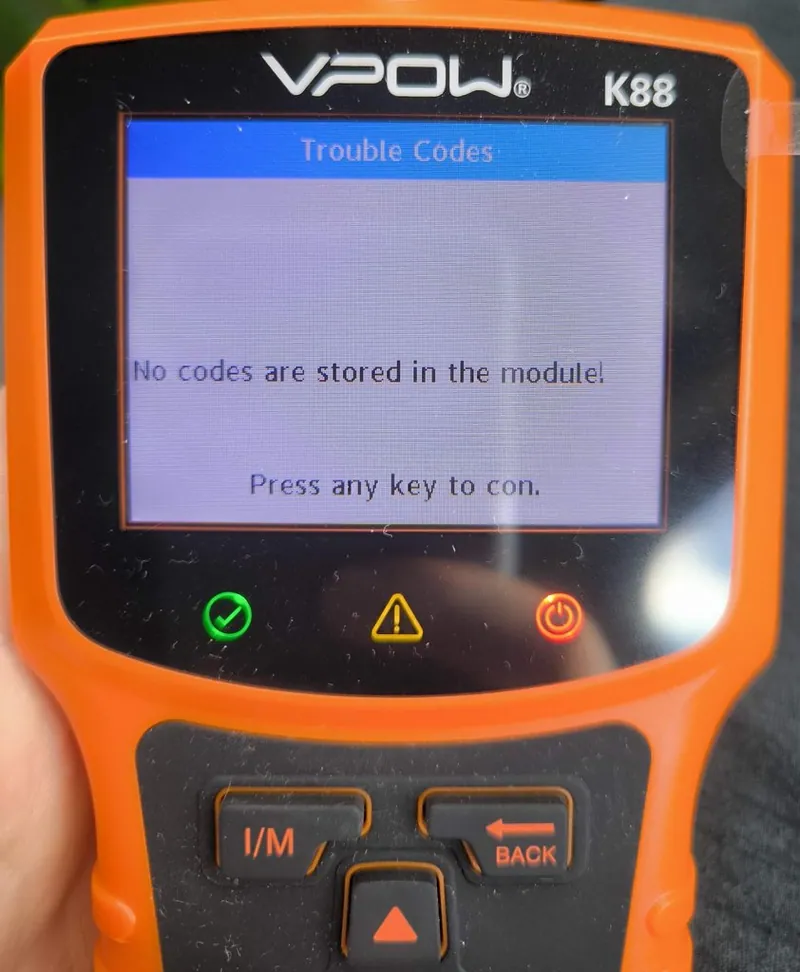
B1400 is a manufacturer-specific code with entirely different definitions depending on your vehicle. For Hyundai and Mitsubishi, it signals a critical airbag system fault. For Ford and GM, it points to an electrical short in the driver's power window circuit. On Toyota and Lexus vehicles, it indicates a rain sensor malfunction. Always verify the exact definition for your make and model before diagnosing.
Technical definition: The official OBD-II definition for B1400 varies entirely by manufacturer. Common definitions include 'Driver's Air Bag Module (Squib) System Short-Circuited' (Mitsubishi), 'Driver Front Side Impact Sensor (FSIS) Circuit Fault' (Hyundai), 'Driver Power Window One-Touch Relay Circuit Short to Battery' (Ford), 'Rain Sensor Malfunction' (Toyota), 'Electronic Control Unit (ECU) Performance General Checksum Failure' (Chrysler), or 'AV Control Unit (DSP Connection)' error (Kia).
Can I Drive With B1400?

No, if airbag light on Do not drive if the airbag or SRS warning light is on. The vehicle's computer disables the entire supplemental restraint system when this light illuminates, meaning airbags will not deploy in a collision. If the code flags a non-safety system like a power window or radio, the vehicle is mechanically safe to drive, but you should address the issue to restore functionality and prevent battery drain.
Common Causes

- Faulty Airbag System Component (Hyundai/Mitsubishi) (Very Common) — On Hyundai and Mitsubishi vehicles, this is a critical airbag code. The cause is a failed clock spring in the steering column, a defective side impact sensor, or a short in the driver's airbag module (squib) wiring.
- Broken Wires in Door Jamb (Ford/GM/Chrysler) (Very Common) — When B1400 relates to a power window or speaker fault, the cause is broken or chafed wires in the flexible rubber boot between the driver's door and the car's body. Constant opening and closing fatigues and snaps these wires.
- Failed Driver's Power Window Motor or Switch (Common) — If the code indicates a power window issue, the window motor itself has failed electrically, or the master window switch on the driver's door has shorted out.
- Failed Speaker or Radio (Ram) (Common) — On 2013-2016 Ram 1500 trucks, B1400 specifically flags a fault in the front left speaker circuit. This is caused by a blown speaker or, on 2013 models, a radio software glitch requiring a dealer update (TSB 08-111-15).
- Faulty Rain Sensor (Toyota/Lexus) (Common) — On Toyota and Lexus models with automatic wipers, B1400 indicates a rain sensor malfunction. This stems from a failed sensor, a loose connection, or a damaged gel pad between the sensor and the windshield glass.
- Weak Vehicle Battery / Low System Voltage (Less Common) — The airbag control module is highly sensitive to voltage drops. A weak battery causes communication errors on the CAN bus network, setting a B1400 fault code even if all airbag components are perfectly functional.
- Corroded or Damaged Connectors (Less Common) — Water intrusion or physical damage to connectors for airbag modules, door modules, or sensors causes a short or open circuit. This frequently happens in doors or near the firewall.
- Faulty Body Control Module (BCM) or SRS Module (Rare) — The control module setting the code fails internally. This causes multiple simultaneous electrical problems and is only suspected after ruling out wiring and component failures.
Symptoms

- Airbag Warning Light is On — The primary symptom for Hyundai, Mitsubishi, and other makes where B1400 is an SRS code. The airbag system is disabled and will not deploy in a crash.
- Driver's Power Window Does Not Work — For Ford, GM, and others, the driver's window is stuck, moves slowly, or fails completely.
- No Sound From Front Left Speaker — On affected Ram trucks, the driver's door speaker produces no audio.
- Automatic Wipers Malfunctioning — On Toyotas, the wipers fail to activate automatically in the rain or behave erratically.
- Intermittent Electrical Functions — A non-working window or speaker works sporadically when the door is opened, closed, or when wiggling the rubber boot in the door jamb.
Diagnostic Flowchart
Tap your situation to follow the diagnostic path that matches what you're seeing on this code.
Common Fixes & Costs
- Replace Clock Spring — Parts: $180-$450, Labor: $150-$220, ~1.5 hr book time (Professional)
- Repair Wires in Door Jamb — Parts: $5-$20, Labor: $200-$400, ~2.5 hr book time (Intermediate)
- Replace Window Regulator and Motor Assembly — Parts: $75-$350, Labor: $140-$210, ~1.5 hr book time (DIY)
- Replace Side Impact Sensor — Parts: $80-$150, Labor: $100-$250, ~1.2 hr book time (Professional)
- Replace Rain Sensor — Parts: $200-$530, Labor: $100-$200, ~0.8 hr book time (Intermediate)
- Reset/Replace SRS Airbag Module — Parts: $400-$1200, Labor: $100-$300, ~1.0 hr book time (Professional)
Used vs. New Parts: Buying Guide
When a used part is worth it: For non-safety components like a window regulator or speaker, a used part from a reputable recycler is cost-effective. For safety-critical SRS components like a clock spring or impact sensor, buying used is STRONGLY DISCOURAGED due to unknown history.
Donor-vehicle mileage cap: roughly under 100000 miles for the part to have meaningful remaining life.
Donor quality checklist:
- For window regulators, match the part number exactly and ensure the donor vehicle is the same model and year range.
- For any SRS component, avoid if there is any sign of water damage, corrosion, or unknown history.
- Only purchase used SRS components from certified recyclers who guarantee the part was not from a vehicle with deployed airbags.
Decision logic:
- If The part is an airbag, clock spring, or impact sensor → buy new OEM. The safety risk is not worth the cost savings.
- If The part is a window motor/regulator and the vehicle is over 10 years old → a used part is a reasonable choice to save money.
- If The part is a simple speaker → used is acceptable, but new aftermarket speakers are inexpensive and offer better quality.
Warranty tradeoff: Used parts typically have a 30-90 day warranty for function only. New aftermarket parts offer 1-year to limited lifetime warranties. New OEM parts offer the best guarantee of fit and function.
Worst-case if a used part fails: $250-$500 if a used part fails after installation, requiring repeat labor costs. For an SRS component, the worst-case cost is a failure to deploy in an accident.
What Happens If You Wait — Timeline
- Immediate (Airbag Fault): The SRS warning light illuminates. The airbag control module detects a hard fault and disables the entire system as a fail-safe. (MPG impact: 0%% · Added cost: $0, but safety risk is immediate and total.)
- 0-1 month (Airbag Fault): Driving with a disabled airbag system. The vehicle fails any state safety inspection that checks for an active airbag light. (MPG impact: 0%% · Added cost: $50-$150 in failed inspection fees.)
- Immediate (Window/Door Fault): A component like a power window or speaker stops working. The issue is an inconvenience but does not affect vehicle drivability. (MPG impact: 0%% · Added cost: $0)
- 1-6 months (Window/Door Fault): A short circuit creates a parasitic battery drain, leading to a dead battery. A stuck-open window exposes the interior to water damage. (MPG impact: 0%% · Added cost: $150-$500 for a new battery and interior cleaning.)
- 6+ months (Window/Door Fault): Ignoring a short circuit eventually leads to overheating wires or damage to the Body Control Module (BCM). (MPG impact: 0%% · Added cost: $500-$1500 for BCM replacement and diagnostics.)
Cost of Not Fixing It
- Immediate (Airbag System Fault): The entire Supplemental Restraint System (SRS) is disabled. Airbags will NOT deploy in a collision, drastically increasing the risk of serious injury or death. (Added cost: Incalculable safety risk.)
- 0-3 months (Power Window/Door Fault): A short circuit causes a parasitic battery drain, leading to a no-start condition. A stuck-open window creates a security risk and allows water entry, damaging interior electronics. (Added cost: $150-$500 (New battery, interior module damage).)
- Ongoing (All Fault Types): Failure of state safety inspection in states where an active airbag light is an automatic failure. (Added cost: $50-$150 (Failed inspection fees, re-inspection costs).)
Diagnosis Steps

- Verify the Code Definition
Use a professional-grade scan tool or reliable resource (ALLDATA/Mitchell) to find out exactly what B1400 means for your specific year, make, and model. Do not proceed until you know if you are dealing with an airbag, window, or other system fault.
Tools: OBD-II Scanner (professional grade recommended) (Beginner) - Check for Technical Service Bulletins (TSBs)
Search for manufacturer TSBs related to B1400 for your vehicle. Ram issued TSB 08-111-15 for a software update on 2013 models, and GM issued TSB PIT5201A regarding 'ghost codes' on trucks. TSBs provide a massive shortcut to diagnosis.
Tools: Online access or Mitchell/Alldata subscription (Beginner) - Power Window System Diagnosis (If Applicable)
Check the power window fuse first. If good, perform a 'wiggle test' on the rubber boot in the driver's door jamb while operating the switch. If the window works intermittently, the wires inside are broken. If wiring is intact, use a multimeter to test for 12V power at the motor connector when the switch is pressed.
Tools: Multimeter, Trim Removal Tools, Basic Hand Tools (Intermediate) - Speaker/Audio Diagnosis (If Applicable)
For Ram trucks, remove the driver's door panel and test the speaker with a multimeter. A good speaker reads 2.0 to 4.0 ohms. An open circuit (OL) or short (near 0 ohms) means the speaker is dead. Inspect the wiring between the radio and speaker for shorts to ground or power.
Tools: Trim Removal Tools, Multimeter, Basic Hand Tools (DIY) - Rain Sensor Diagnosis (If Applicable)
Check the sensor's connection at the windshield near the rearview mirror. Ensure it is securely mounted and wiring is undamaged. Use a scan tool with live data to confirm the sensor is communicating with the BCM. A 'NG' (No Good) status points to a faulty sensor or connection. Check for 11-14V at the IG pin with the ignition on.
Tools: Scan Tool with Live Data, Trim Removal Tools, Multimeter (Intermediate) - Airbag System Diagnosis (If Applicable)
STOP. If the code is for the airbag system, diagnosis requires specialized knowledge and tools (like dummy resistors). Leave this to a professional due to the severe risk of accidental deployment. WARNING: Never probe airbag system connectors with a standard multimeter, as the voltage can trigger deployment.
Tools: Professional Scan Tool, Dummy Resistors (Advanced) - Pro Tip: Test Airbag Squib/Sensor Circuits (Advanced)
For a Mitsubishi B1400, the fault is often the driver's airbag squib circuit. After disconnecting the battery and airbag module (CRITICAL SAFETY STEP), measure the resistance of the clock spring and squib circuit. Normal resistance is 2.0 to 5.0 ohms. Infinite resistance (Open Loop) indicates a broken wire inside the clock spring.
Tools: Multimeter, Service Manual, Dummy Resistors (Professional) - Pro Tip: Scope the LIN Bus at the Window Switch (Advanced)
On modern Fords/GMs, the window switch communicates with the door module via a single LIN bus wire. Back-probe this wire with an oscilloscope. A healthy signal is a series of square waves (low <2.4V, high >9.6V). A flat line at 0V or 12V indicates a wiring fault or failed switch/module.
Tools: Oscilloscope, Back-probe kit, Service Manual (Professional)
When This Code Triggers (Freeze-Frame Conditions)
- System Voltage: 11.5-12.5V (Key On), 13.5-14.5V (Engine Running) (The SRS/BCM module runs a self-test at key-on; low voltage sets a fault before the engine starts.)
- Vehicle Speed: 0 mph (Airbag codes set during the initial power-on self-test before the vehicle moves.)
- Component-Specific Action: N/A (For non-airbag systems, the code triggers the moment the faulty component is used (e.g., pressing the window switch).)
- Time Since Key-On: < 5 seconds (Safety system B-codes set immediately following the initial system check after turning the ignition.)
Related Codes
- B1480 — On Mitsubishi vehicles, B1400 refers to the first airbag squib circuit, while B1480 refers to the second squib circuit in the same airbag. Appearing together confirms the fault is in their shared wiring within the clock spring.
- B1401 — On Ford vehicles, B1400 indicates a 'short to power' in the window circuit, while B1401 indicates a 'short to ground'. A multimeter test on the specific wire differentiates the two.
- U0199 — Means 'Lost Communication With Driver Door Control Module'. If seen with B1400 on a GM or Ford, the root cause is a wiring or module communication problem, not the window motor itself.
- B1620 — Indicates an 'Airbag Control Unit (ACU) Internal Fault' on Kia/Hyundai vehicles. Triggered by issues that also cause B1400, pointing to a deeper module-level problem requiring replacement.
Climate & Environmental Factors
- Extreme Cold: Low temperatures make the PVC insulation on door jamb wires brittle. This accelerates fatigue, causing wires to crack and break from the repeated motion of opening the door.
- High Humidity / Road Salt: Moisture and road salt accelerate corrosion on electrical connectors. This affects airbag sensors, door modules, and speaker connections, creating high resistance that triggers a B1400 code.
How to Talk to a Mechanic About This Code
Say this: "I have a [Year, Make, Model] and my scanner shows a B1400 code. I know this code varies by manufacturer, ranging from an airbag fault to a power window issue. I need to schedule a diagnostic appointment to pinpoint the specific problem for my vehicle."
This proves you are an informed consumer. It tells the shop you are dealing with a specific Body (B) code rather than a vague 'check engine light,' and that you understand its variable nature. This forces a targeted diagnostic approach instead of open-ended, expensive exploration.
Avoid saying:
- 'My airbag light is on, can you just reset it?'
- 'Just fix whatever is wrong with the door.'
- 'My friend said it is probably the clock spring, so just replace that.'
Questions to ask before authorizing the repair:
- For an Airbag Fault: 'What specific component failed your resistance test? Are you using a new OEM part for this safety system repair?'
- For a Power Window Fault: 'Did you confirm the failure by testing for power at the motor, or by checking the wiring in the door jamb? Will you repair the broken wire or replace the entire harness?'
- For a Speaker/Audio Fault: 'Did you test the speaker's resistance to confirm it failed? Did you check for any Technical Service Bulletins (TSBs) related to a radio software update?'
- For any Repair: 'What is the parts and labor warranty for this specific repair?'
Where to Take It: Dealer vs Independent vs Chain
- Dealer:
Best for: Airbag (SRS) system faults, especially on newer vehicles., Repairs covered by warranty or recall (e.g., Hyundai/Kia airbag sensor issues)., Diagnosing complex electrical issues requiring manufacturer-specific software updates.
Downsides: Highest labor rates, typically 1.5-2x more than independent shops., Often defaults to replacing entire expensive assemblies (e.g., full door harness) instead of performing targeted wire repairs. (Typical cost: +50% vs. baseline) - Independent Shop:
Highly dependent on the fault. For airbag/SRS issues, use a dealership or a certified independent shop specializing in SRS. For all other B1400 variations (window, speaker, rain sensor), a trusted independent shop is the most cost-effective choice.
Best for: Out-of-warranty vehicles., Non-airbag faults like power window or speaker issues., Common repairs like a clock spring replacement or door jamb wiring repair.
Downsides: Experience with SRS systems varies greatly. Vet the shop carefully for safety-related repairs., May lack dealer-level software for module programming. (Typical cost: +0% vs. baseline) - Chain Shop:
AVOID. B1400 requires specific diagnostic capabilities (reading B-codes/SRS codes) and expertise beyond the scope of a typical chain shop.
Best for: Not recommended for complex electrical or SRS diagnostics.
Downsides: Technicians often lack specialized training for SRS systems or in-depth electrical diagnostics., High pressure to meet sales targets leads to misdiagnosis (e.g., selling a window motor when only a wire is broken). (Typical cost: -10% vs. baseline)
When to Walk Away From the Repair
If the estimated repair cost exceeds 50% of the car's current private-party value, sell or trade it in rather than repairing it.
- Car worth $3500, fix is $2200: Walk away. A $2,200 airbag system repair on a $3,500 car is a poor investment, representing over 60% of the car's value.
- Car worth $10000, fix is $500: Fix it. A $500 repair for broken wires in the door jamb is only 5% of the vehicle's value and restores full functionality.
- Car worth $5000, fix is $650: Fix it. A $650 clock spring replacement is 13% of the car's value. While significant, it resolves a critical safety issue.
What Scan Tool You Need for This Code
Minimum: A scanner that reads and clears Body Control Module (BCM) and Supplemental Restraint System (SRS) codes. Basic engine-only (P-code) readers cannot see this fault.
A standard $20-$30 OBD-II code reader only accesses powertrain (P-codes) from the Engine Control Unit. It cannot communicate with the BCM or SRS modules, showing 'No Codes Found' even with the airbag light glaring.
Budget: BlueDriver Pro (~$100) — Connects to a smartphone app to read and clear codes from all modules, including SRS and BCM. It views live data, essential for diagnosing intermittent issues.
Mid-range: Autel MaxiCOM MK808 / Foxwell NT809 (~$250-400) — Offers bidirectional controls to command components directly. You can tell a window motor to move up or down via the tablet to instantly pinpoint if the fault is in the switch, wiring, or motor.
Professional: Autel MaxiSys MS906 Pro / Launch X431 Series (~$600-1500) — Provides full dealer-level diagnostics. Necessary for programming a new SRS module to the vehicle's VIN after replacement.
Rent vs buy: Most auto parts store 'loaner' tools are basic code readers that CANNOT read SRS or B-codes. Buying a scanner like the BlueDriver Pro saves you a $100-$180 diagnostic fee on its very first use.
How to Clear the Code After You Fix It
- Perform the physical repair (e.g., replace clock spring, repair wire).
- Reconnect the vehicle battery if disconnected for safety.
- Use a professional-grade OBD-II scan tool capable of accessing the BCM or SRS module to clear the fault code.
- Cycle the ignition off and then on, and observe if the warning light returns.
Drive cycle (~15 minutes): A formal drive cycle is not required for B-codes. After clearing the code, a 15-minute test drive involving normal operation of the repaired system (e.g., turning the steering wheel lock-to-lock, operating the window) confirms the fix.
Readiness monitors affected: None. Body codes like B1400 do not affect emissions readiness monitors.
Watch out for:
- Using a basic code reader that only sees Powertrain (P-codes) and cannot clear Body (B-codes) or SRS faults.
- Disconnecting the battery does not clear a hard fault from the SRS module; the code must be cleared with a scanner.
- Failing to confirm the fix. If the electrical issue remains, the code returns immediately after being cleared.
Will This Fail Emissions / State Inspection?
No — by itself this code doesn't fail OBD inspection (but it can keep readiness monitors from setting, which causes a separate fail).
- California: An airbag light will NOT cause a failure of the California Smog Check, which is strictly an emissions test.
- New York: An illuminated airbag light is NOT an automatic failure for the NYS safety inspection. The inspector notes it as an advisory, but the vehicle passes.
- Texas: An airbag warning light is NOT on the Texas vehicle safety inspection checklist. The vehicle passes the safety inspection with the light on.
Most Commonly Affected Vehicles
- Hyundai Elantra, Tucson, Santa Cruz, Ioniq (2011-2025) — B1400 is a critical airbag code for the 'Driver Front Side Impact Sensor (FSIS) Circuit Fault'. Part numbers 95920-M6000 and 95920-F2100 are common replacements.
- Mitsubishi Lancer, Outlander, Eclipse Cross (2008-2024) — Indicates a short in the driver's airbag squib circuit, often caused by a failed clock spring. For the 2017+ Outlander, the clock spring part number is often 8619A515 or 8619A517.
- Ford F-150, Fusion, Focus (2004-2015) — Relates to a 'Driver Power Window Motor Circuit Malfunction'. Caused by broken wires in the door jamb or a failed window motor/regulator assembly. Extremely common on 2009-2014 F-150s.
- Chevrolet / GMC Silverado, Sierra, various GMT900 trucks (2007-2013) — A generic 'Device voltage reference input #2 circuit malfunction'. Diagnosis focuses on the driver door module and wiring. TSB PIT5201A notes that 'ghost codes' can be stored and should be ignored if no symptoms exist.
- Ram 1500, 2500, 3500 (2013-2016) — Means 'Front Left Audio Speaker Output - Circuit Open/Short/Performance'. Usually a bad speaker, wiring, or a radio software issue on 2013 models with the RA1 radio (TSB 08-111-15).
- Toyota / Lexus Camry, RX330, Sienna, Highlander (2002-2021) — Typically means 'Rain Sensor Malfunction'. On older Lexus models, it refers to an HVAC sunload sensor, which sets a code on a bright day and is considered normal operation.
- Kia Forte, Sportage, Sedona (2010-2025) — Indicates an 'AV Control Unit (DSP Connection)' error in the infotainment system, or a critical airbag sensor fault identical to Hyundai models.
- Chrysler / Dodge Town & Country, Grand Caravan (2008-2016) — Points to a 'Circuit Open' condition for the power window controls, caused by broken wires in the sliding door harness or a failed master window switch.
Manufacturer-Specific Notes
- Hyundai / Mitsubishi: B1400 is almost always a CRITICAL airbag code. The airbag system is disabled until repaired. Check for recalls, as some Hyundai models had recalls for faulty impact sensors (e.g., NHTSA 17V-801).
- Toyota / Lexus: Commonly a 'Rain Sensor Malfunction'. Diagnosis starts at the windshield, not the doors. A B1400 for the sunload sensor on Lexus models sets during normal operation on a sunny day.
- Ram (Dodge) / Chrysler: An audio code for the front left speaker on 2013-2016 Ram 1500s. A software glitch on 2013 models with the RA1 radio requires a dealer update per TSB 08-111-15.
- Honda / Nissan / Mazda / Subaru: The term 'B1400' is a popular part number for a Baldwin-brand oil filter fitting these vehicles. This is completely unrelated to a diagnostic trouble code and causes major online confusion.
- General Motors (Chevy/GMC): On GMT900 trucks (2007-2013), B1400 related to the driver door module is accompanied by 'ghost codes' like B2555. Per TSB PIT5201A, ignore these other codes if no symptoms are present.
- Kia: Safety recall SC226 covers certain 2017-2018 models where the Airbag Control Unit malfunctions. The dealer replaces the ACU if DTC B1620 is present; otherwise, they perform a software update.
Real Owner Stories
2014 Mitsubishi Lancer with airbag light
Airbag light illuminated, and steering wheel volume controls worked intermittently only at certain steering wheel angles.
What they tried:
- Initially considered ignoring the issue since some controls still worked.
Outcome: Diagnosed as a failing clock spring. The intermittent connection proved the internal ribbon was breaking. The owner learned the system is compromised and unsafe even without a constant airbag light.
Lesson: Intermittent failure of steering wheel controls is a classic symptom of a failing clock spring. Do not wait for the airbag light to become permanent; the system is already unreliable.
2013 Ram 1500 with no sound from driver's speaker
Code B1400 was present, and the front left door speaker was completely silent. Dash speakers worked correctly.
What they tried:
- Performed a soft reset of the Uconnect radio system; this did not solve the problem.
- Tested the speaker with a multimeter to check for an open circuit.
Outcome: Forum users confirmed replacing the 6x9" door speaker resolved the B1400 code. A secondary cause for 2013 models is a radio software glitch requiring a dealer update.
Lesson: For a Ram B1400, always test the speaker itself before suspecting the expensive radio head unit. A simple resistance test quickly confirms the failure.
2008 Dodge Grand Caravan with battery drain after clock spring replacement
Immediately after a mechanic replaced the clock spring, the vehicle's battery started dying overnight.
What they tried:
- Replaced the battery, which did not solve the issue.
Outcome: The new clock spring was faulty or installed incorrectly, creating a parasitic draw. The owner returned to the mechanic to have them properly diagnose the drain they caused.
Lesson: If a new electrical problem appears immediately after a repair, the repair itself is the most likely cause. Hold the repair shop accountable for fixing the new issue.
Ford F-150 with intermittent driver's power window
The driver's side window worked sporadically. Code B1400 was stored.
What they tried:
- Performed a 'wiggle test' by squeezing the rubber wiring boot in the door jamb while pressing the window switch.
Outcome: The window began to work intermittently during the wiggle test, confirming broken wires inside the door jamb harness. The fix was repairing the broken wires with solder and heat shrink.
Lesson: For an intermittent window fault, always check for broken wires in the door jamb first. This simple test saves you from buying an unnecessary window motor.
How to Prevent This Code From Triggering
- Lubricate Door Jamb Harness Boot (Every 2-3 years) — Applying a silicone-based rubber protectant keeps the flexible boot supple. This prevents the rubber from drying out and cracking, reducing stress on the wires inside.
- Maintain Battery Health (Annually) — Clean battery terminals and ensure connections are tight. A healthy battery prevents low voltage conditions that cause sensitive modules to store spurious fault codes.
- Secure Clock Spring During Steering Service (During any related repair) — Secure the clock spring with tape or a zip tie before removing the steering wheel. Reinstalling it in the wrong position causes it to snap internally when the wheel is turned.
- Avoid Slamming Doors (Daily habit) — Repeatedly slamming doors sends a shock through the window regulator, motor, and speaker, jarring electrical connections loose over time.
Frequently Asked Questions
Is it safe to drive with a B1400 code?
Do not drive until you verify the code's meaning for your specific vehicle. If it is an airbag code (common on Hyundai/Mitsubishi), the system is disabled and airbags will not deploy in an accident. If it is a window or audio code, the vehicle is safe to drive.
What is the most common misdiagnosis for B1400?
For power window faults, the most common mistake is replacing the window motor when the actual problem is broken wires in the door jamb. A simple 'wiggle test' of the rubber boot confirms this. For airbag faults, mechanics often misdiagnose a weak battery as a failed sensor.
My airbag light is on with code B1400. Can I just reset it?
No. B1400 on an airbag system indicates a hard fault, meaning a component has failed or an active electrical short exists. Resetting the code will not fix the underlying issue, and the light will return immediately.
I looked up B1400 and it says it is an oil filter. What is going on?
This is a common point of confusion online. 'B1400' is a popular part number for a Baldwin oil filter that fits many Honda, Nissan, and Subaru vehicles. This is completely unrelated to the OBD-II diagnostic trouble code.
Can a weak battery cause a B1400 code?
Yes. Certain control modules, particularly the SRS module, are highly sensitive to system voltage. A weak battery causes communication errors on the data network, triggering a B1400 code even when no airbag components have failed.
Can I replace an airbag component myself to fix a B1400 code?
Do not attempt DIY airbag repairs. Airbag systems contain explosive charges (squibs) that cause serious injury if accidentally deployed. Take the vehicle to a certified professional who can safely disable the system and handle the components.
My window does not work and I have a B1400 code. Where should I start?
First, check the power window fuse. If it is intact, the most likely cause is broken wires inside the rubber boot between the driver's door and the car body. Carefully peel back the boot and inspect the wires for breaks or chafing.
Can B1400 be an intermittent problem?
Yes. If the cause is a broken wire in a door jamb, the connection makes or breaks as the door opens and closes, causing intermittent symptoms. A loose connector or failing component also causes the code to appear sporadically before failing completely.
Key Takeaways
- Verify the B1400 definition for your specific vehicle first, as it ranges from a critical airbag fault to a minor rain sensor glitch.
- On Hyundai and Mitsubishi vehicles, B1400 indicates a critical airbag system failure that completely disables the airbags until repaired.
- For Ford, GM, and Chrysler models, B1400 typically flags a broken wire in the driver's door jamb, disabling the power window or speaker.
- Toyota and Lexus vehicles log B1400 for a malfunctioning windshield rain sensor, requiring a simple gel pad or sensor replacement.
- Ignore online search results pointing to a Baldwin B1400 oil filter; this is a common part number mix-up completely unrelated to the OBD-II code.
Helpful Videos
Shop the Parts Behind B1400
Below are the parts most often responsible for code B1400, ranked by how frequently each one is the actual culprit (per the diagnosis above). Tap any to see what we have for your vehicle.



The information in this article is provided for general reference and educational purposes only. Vehicle specifications, procedures, and part compatibility can vary by production date, trim level, and region. Always consult your vehicle's factory service manual and verify part numbers before purchasing or performing repairs. Safety-critical components such as airbags, seat belts, and braking systems should be installed by a qualified professional.
- 🧭 Diagnostic Flowchart
- 🎬 Helpful Videos
- 🛍️ Shop This Part
- What Does B1400 Mean?
- Can I Drive With B1400?
- Common Causes
- Symptoms
- Common Fixes & Costs
- Used vs. New Parts: Buying Guide
- What Happens If You Wait — Timeline
- Cost of Not Fixing It
- Diagnosis Steps
- When This Code Triggers (Freeze-Frame Conditions)
- Related Codes
- Climate & Environmental Factors
- How to Talk to a Mechanic About This Code
- Where to Take It: Dealer vs Independent vs Chain
- When to Walk Away From the Repair
- What Scan Tool You Need for This Code
- How to Clear the Code After You Fix It
- Will This Fail Emissions / State Inspection?
- Most Commonly Affected Vehicles
- Manufacturer-Specific Notes
- Real Owner Stories
- 2014 Mitsubishi Lancer with airbag light
- 2013 Ram 1500 with no sound from driver's speaker
- 2008 Dodge Grand Caravan with battery drain after clock spring replacement
- Ford F-150 with intermittent driver's power window
- How to Prevent This Code From Triggering
- Frequently Asked Questions
- Is it safe to drive with a B1400 code?
- What is the most common misdiagnosis for B1400?
- My airbag light is on with code B1400. Can I just reset it?
- I looked up B1400 and it says it is an oil filter. What is going on?
- Can a weak battery cause a B1400 code?
- Can I replace an airbag component myself to fix a B1400 code?
- My window does not work and I have a B1400 code. Where should I start?
- Can B1400 be an intermittent problem?
- Key Takeaways
- 🎟️ Get 5% Off