

OBD-II Code B1401: Driver's Airbag Circuit Fault
The Ultimate 2026 Guide to B1401: What It Means, Why It Triggers, and How to Fix It
- Code B1401 disables your driver's side airbag, increasing your risk of severe injury in a frontal collision by 40-50%.
- A broken clock spring causes over 80% of B1401 codes and typically disables your horn and steering wheel controls simultaneously.
- Always verify the code definition for your specific VIN, as B1401 indicates an Electronic Power Steering (EPS) fault rather than an airbag issue on vehicles like the Subaru BRZ.
- Never replace parts based on the code alone; use a 2.0-2.5 ohm SRS dummy resistor to isolate the fault between the clock spring, wiring, and airbag module.
- Disconnect the negative battery terminal and wait 15 minutes before touching any yellow SRS connectors to prevent accidental, potentially fatal airbag deployment.
What Does B1401 Mean?
B1401 is a manufacturer-specific diagnostic trouble code (DTC) indicating the Supplemental Restraint System (SRS) control module detected an electrical fault in the driver's side airbag circuit. This 'squib' circuit connects the control module to the steering wheel's inflatable airbag. The system illuminates the airbag warning light and deactivates the driver's airbag to prevent accidental deployment.
Technical definition: The SRS module continuously monitors the resistance of the driver's side airbag squib circuit. If resistance falls outside the expected 1.5 to 3.5-ohm range, the module sets code B1401. This indicates an open circuit (broken wire), a short to ground (wire touching the chassis), or a short to power.
Can I Drive With B1401?
No — Do Not Drive. While the vehicle is mechanically operational, it is not safe to drive. The B1401 code confirms the driver's airbag and likely the entire Supplemental Restraint System (SRS) are disabled. This increases the risk of severe injury in a frontal collision by 40-50%. Driving with an active airbag warning light guarantees an automatic failure of vehicle safety inspections in states that require them.
Common Causes
- Faulty Airbag Clock Spring (Very Common) — The clock spring maintains electrical connections for the airbag, horn, and steering wheel controls while the wheel turns. Constant rotation fatigues and breaks its internal ribbon cable, creating an open circuit. This is the most frequent cause of B1401.
- Damaged Wiring or Corroded Connectors (Common) — Wiring between the SRS module, clock spring, and airbag frays or pinches during dashboard repairs. Moisture from leaks or spills corrodes connector pins, increasing circuit resistance or causing a short to ground. Loose pins also create intermittent faults.
- Low Vehicle Battery Voltage (Less Common) — The SRS module requires stable voltage for its startup self-check. A weak battery causes a significant voltage drop during engine cranking, which the sensitive SRS module misinterprets as a circuit fault. The code persists even after normal voltage returns.
- Faulty Driver's Airbag Module (Squib) (Less Common) — The airbag inflator module contains the igniter (squib) that deploys the bag. The internal wiring of the squib occasionally fails its self-test, creating a permanent open or short circuit.
- Faulty SRS Control Module (Rare) — The SRS control module fails internally. This requires replacing and reprogramming the module and is only considered after definitively ruling out the clock spring, wiring, and airbag module.
Symptoms
- Airbag Warning Light & Messages — The dashboard airbag warning light remains illuminated permanently or intermittently. Modern vehicles also display a 'Service Airbag System' or 'Restraint System Fault' message on the instrument cluster.
- Steering Wheel Controls & Horn Failure — The horn, cruise control, and radio buttons fail simultaneously. Because these components share the clock spring's electrical ribbon with the airbag, their failure strongly confirms a broken clock spring. 🎬 See how a broken clock spring affects the horn and light
Diagnostic Flowchart
Tap your situation to follow the diagnostic path that matches what you're seeing on this code.
Common Fixes & Costs
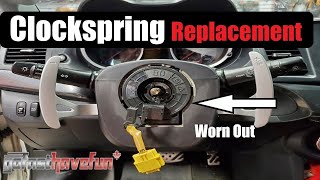
- Replace Airbag Clock Spring 🎬 Watch this step-by-step guide to replacing a faulty clock spring
— Parts: $50 - $350, Labor: $150 - $250, ~1.5 hr book time
(Intermediate)
Mitsubishi L200 (2006-2016): OEM 8619A016, 8619A164 (Alt: Dorman, SMP)
Dodge/Ram 1500 (2009-2018): OEM 68339336AB (Alt: Dorman 525-600) - Repair SRS Wiring or Connectors — Parts: $10 - $50, Labor: $150 - $400, ~2.0 hr book time (Advanced)
- Replace Driver's Airbag Module — Parts: $500 - $1,200, Labor: $100 - $200, ~1.0 hr book time (Professional)
- Replace SRS Control Module — Parts: $300 - $800, Labor: $150 - $350, ~1.8 hr book time (Professional)
Used vs. New Parts: Buying Guide
When a used part is worth it: A used OEM clock spring from a low-mileage vehicle (under 80K miles) is cost-effective for older vehicles. Ensure the donor vehicle was not in a front-end collision, as deployment heat melts clock spring connectors. NEVER buy a used airbag module; they are single-use explosive devices.
Donor-vehicle mileage cap: roughly under 80000 miles for the part to have meaningful remaining life.
Donor quality checklist:
- Verify the donor vehicle was not scrapped due to a front-end collision or airbag deployment.
- Match the part number exactly. Superseded parts often lack compatibility with specific SRS modules.
- Reject parts with water damage, corrosion, or melted plastic on the connectors.
Decision logic:
- If The part is the airbag module (squib) or SRS control unit → Buy new OEM or use a professional module reset service. Never buy used.
- If The part is the clock spring and an OEM new part is < $250 → Buy new OEM. The risk of premature failure from a used part outweighs the savings.
- If The vehicle is older (>10 years) and budget is the primary concern → Buy a used OEM clock spring from a reputable recycler with a 90-day warranty.
Warranty tradeoff: Used clock springs carry 30-90 day warranties. New aftermarket parts offer 1-year warranties. New OEM parts carry 12-month/12,000-mile warranties and guarantee exact fitment.
Worst-case if a used part fails: $200-$400 if a used clock spring fails prematurely, requiring repeat labor costs.
What Happens If You Wait — Timeline
- Immediate: Code B1401 sets during a startup self-test. The airbag warning light illuminates, and the driver's airbag is immediately disabled as a safety precaution. (MPG impact: 0%% · Added cost: $0 (Immediate safety risk is the primary cost))
- 0-6 months: The vehicle remains drivable but unsafe. The vehicle fails state safety inspections. If the cause is an intermittent connection, the light flickers, but the fault remains stored. (MPG impact: 0%% · Added cost: $500+ (Diminished resale value and potential fines for expired inspection))
- In case of an accident: A frontal collision occurs. The disabled driver's airbag fails to deploy. The risk of severe or fatal head/chest injury increases by 40-50%. Insurance claims are complicated by the unrepaired safety fault. (MPG impact: N/A% · Added cost: Potentially thousands in denied insurance claims and legal liability.)
Cost of Not Fixing It
- Immediate: The driver's airbag is disabled. In a frontal collision, the risk of severe or fatal injury increases by 40-50%. The vehicle automatically fails state safety inspections. (Added cost: N/A (Safety Risk))
- 1-12 months: Inability to legally register the vehicle upon inspection renewal. Resale and trade-in values drop significantly, as buyers require functional safety systems. (Added cost: $500 - $1500 (Diminished Value))
- Long-Term: In the event of an accident, insurance companies deny personal injury claims due to the known, un-repaired safety system fault. (Added cost: Potentially thousands in denied claims or legal liability.)
Diagnosis Steps
- Scan for SRS Codes & Sub-codes
Use an SRS-capable OBD-II scanner to confirm B1401. Document manufacturer-specific sub-codes like 'Open Circuit', 'Short to Ground', or 'High Resistance'. Note any accompanying codes, such as B1481 on Mitsubishi vehicles, which indicates a dual-stage airbag fault.
Tools: SRS-capable OBD-II Scanner (Beginner) - Check Steering Wheel Functions
Test the horn, cruise control, and steering wheel radio buttons. If they are dead, a faulty clock spring is the definitive cause. Visually inspect the yellow SRS wiring under the driver's dash for obvious damage or loose connectors.
Tools: None (Beginner) - Check Technical Service Bulletins (TSBs)
Search for TSBs related to your vehicle's make, model, year, and the B1401 code. For example, GM TSB 21-NA-005 identifies connector corrosion on 2020-2023 trucks as the primary cause, saving hours of diagnostic time.
Tools: Internet Access (Intermediate) - Isolate Fault with Dummy Resistor (Advanced)
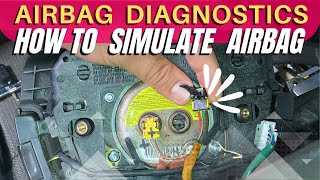
DISCONNECT THE BATTERY and wait 15 minutes. Remove the driver's airbag module. Connect a 2.0-2.5 ohm SRS dummy resistor to the clock spring connector where the airbag plugged in. Reconnect the battery, clear codes, and turn the ignition on. If B1401 does NOT return, the airbag module is faulty. If it DOES return, the fault is in the clock spring or wiring.
Tools: Basic hand tools, 2.0-2.5 ohm SRS Dummy Resistor (Advanced) - Bypass the Clock Spring (Advanced)
With the battery disconnected, unplug the clock spring's main connector at the base of the steering column. Insert the dummy resistor into the vehicle-side harness connector leading to the SRS module. Reconnect the battery and clear codes. If B1401 disappears, the clock spring is faulty. If it persists, the wiring or SRS module is the issue.
Tools: Basic hand tools, 2.0-2.5 ohm SRS Dummy Resistor (Advanced) - Measure Live SRS Circuit Resistance (Advanced)
Using an advanced scanner, access the SRS live data stream. Locate the 'Driver Airbag Resistance' PID. Normal range is 1.5 to 3.5 ohms. A reading of 'OL' or > 6.0 ohms indicates an open circuit (broken clock spring). A reading < 1.0 ohm indicates a short. Wiggle the steering wheel to check for intermittent resistance fluctuations.
Tools: Advanced Bi-Directional OBD-II Scanner (Advanced) - Test Clock Spring Continuity (Pro-Tip)
With the battery disconnected and clock spring completely unplugged, use a multimeter set to Ohms to test continuity through the clock spring while rotating it. Disable the connector's internal 'shorting bar' using a non-conductive pick before testing. A good clock spring shows consistent resistance under 2 ohms. 'OL' indicates a broken internal ribbon.
Tools: Multimeter, Service Manual, Non-conductive probe (Professional) - Inspect SRS Module and Wiring
If the clock spring and airbag test good, inspect the wiring harness between the steering column and the SRS control module for continuity and shorts to ground. If the wiring is intact, the SRS control module requires replacement.
Tools: Multimeter, Service Manual (Professional)
When This Code Triggers (Freeze-Frame Conditions)
- System State: Key-On Self-Test (The B1401 code sets during the initial power-on self-test the SRS module performs each time the ignition turns to the 'ON' position.)
- System Voltage: 9V - 16V (The SRS module records system voltage when the fault occurs. A value below 11.5V indicates a weak battery or cranking voltage drop caused the fault.)
- Fault Type: Open Circuit / High Resistance (Advanced scanners display manufacturer-specific sub-codes. 'Open Circuit' or 'High Resistance' points directly to a broken wire, characteristic of a failed clock spring.)
Related Codes
- B0001 — The generic SAE standard code for a 'Driver Frontal Stage 1 Deployment Control' fault. It is functionally identical to B1401; manufacturers simply use different naming conventions.
- B1481 — Refers to the second stage (Stage 2) igniter on dual-stage airbags. When diagnosing B1401 with a dummy resistor, B1481 appears as an expected 'ghost code' because its circuit is temporarily open.
- B0010 — Points to a fault in the passenger's side frontal airbag circuit. The diagnostic process is identical to B1401, but focused on the passenger side of the dashboard.
Climate & Environmental Factors
- High Humidity / Water Intrusion: Moisture from sunroof or windshield leaks corrodes SRS connector pins. This increases resistance or causes short circuits, triggering B1401.
- Extreme Cold: Sub-zero temperatures make the clock spring's internal ribbon cable brittle. Turning the steering wheel in these conditions snaps the ribbon, creating an open circuit.
How to Talk to a Mechanic About This Code
Say this: "I have an airbag warning light on and my scanner shows code B1401, pointing to the driver's side airbag circuit. I need a diagnostic to pinpoint the failure. I suspect the clock spring, as my steering wheel controls also stopped working."
This signals you are informed. It focuses the technician on a specific system, preventing a broad search and discouraging upsells. Mentioning associated symptoms provides a strong diagnostic clue.
Avoid saying:
- 'My airbag light is on, can you just reset it?'
- 'Just fix whatever is wrong with the airbag.'
- 'I saw on YouTube it's the clock spring, just replace it.' (Never authorize a repair without a diagnosis)
Questions to ask before authorizing the repair:
- Did you use a dummy resistor to isolate the fault between the clock spring, wiring, and the airbag module?
- What was the specific sub-code? Was it an 'open circuit' or a 'short to ground'?
- If the clock spring needs replacement, is the part OEM or aftermarket, and what is the warranty?
Where to Take It: Dealer vs Independent vs Chain
- Dealer:
Recommended only if the repair requires module programming or if the vehicle is under warranty.
Best for: Vehicles under factory or extended warranty., Repairs requiring SRS control module replacement and programming., Newer vehicles where a specific Technical Service Bulletin (TSB) applies.
Downsides: Highest labor rates and part costs., Defaults to replacing entire assemblies rather than repairing wiring. (Typical cost: +50% vs. baseline) - Independent Shop:
Best fit for most B1401 repairs, especially clock spring replacement. Ensure the shop has SRS diagnostic tools.
Best for: Out-of-warranty vehicles with a common clock spring failure., Shops with ASE-certified technicians specializing in electrical or SRS repairs.
Downsides: Quality varies widely; must vet the shop carefully., Lacks dealer-specific tools to program a new SRS control module. (Typical cost: +0% vs. baseline) - Chain Shop:
Not recommended. Airbag system repair requires specialized knowledge and carries significant safety risks.
Best for: Simple, routine maintenance like oil changes or tires.
Downsides: Technician skill with complex electrical systems is highly variable., Business model incentivizes quick part replacement over nuanced diagnosis. (Typical cost: -10% vs. baseline)
When to Walk Away From the Repair
If the estimated repair cost for the B1401 fault exceeds 40-50% of the car's private-party value, seriously consider selling the car as-is or trading it in.
- Car worth $4000, fix is $350: Fix it. This is a low-cost repair (clock spring) that restores a critical safety feature and makes the car sellable.
- Car worth $5000, fix is $2200: Borderline to Walk Away. The repair (airbag module and control unit) costs 44% of the car's value. Get a second opinion.
- Car worth $2500, fix is $1800: Walk away. The repair cost is 72% of the car's value and is not economically viable.
What Scan Tool You Need for This Code
Minimum: A scanner that reads and clears codes from the Supplemental Restraint System (SRS) module.
A standard $20 engine code reader cannot communicate with the SRS module. It shows 'No Codes Found' even with the airbag light on.
Budget: Autel AutoLink AL619 (~$90) — Reads and clears engine, ABS, and SRS codes. It confirms the B1401 code and clears it after the repair.
Mid-range: BlueDriver Pro (~$120) — Connects via Bluetooth and provides SRS code reading and clearing. Displays live data, allowing you to view the 'Driver Airbag Resistance' PID to identify open or shorted circuits.
Professional: Autel MaxiCOM MK808S (~$450) — Offers full-system diagnostics, live data graphing, and bi-directional control. Essential if you need to diagnose or program a replacement SRS control module.
Rent vs buy: Auto parts store loaner tools typically do NOT read SRS codes. Buying a budget SRS-capable scanner is the most cost-effective option, as it costs less than a single shop diagnostic fee.
How to Clear the Code After You Fix It
- Ensure the physical repair is complete and all yellow SRS connectors are fully seated.
- Reconnect the negative battery terminal.
- Use an SRS-capable OBD-II scan tool to access the Supplemental Restraint System module.
- Select the 'Clear Codes' or 'Erase DTCs' function within the SRS menu.
- Cycle the ignition off, then on. Verify the airbag warning light performs its self-check (illuminates for 3-5 seconds, then turns off) and does not return.
Drive cycle: No drive cycle is required. The airbag module performs a self-test upon every ignition-on event. If the repair succeeds, the light extinguishes immediately after the self-check.
Watch out for:
- Using a basic engine code reader fails to access or clear SRS codes. An SRS-capable scanner is mandatory.
- Disconnecting the battery does not clear hard-fault SRS codes like B1401.
- If the light returns instantly after clearing, the repair failed, the wrong part was replaced, or the new part is defective.
Will This Fail Emissions / State Inspection?
No — by itself this code doesn't fail OBD inspection (but it can keep readiness monitors from setting, which causes a separate fail).
- California: The airbag light does not affect the emissions (smog) check, but technicians refuse inspections on safety grounds if the light is active.
- New York: An illuminated airbag warning light is an advisement, not an automatic failure. The inspector informs the owner, but the vehicle passes the safety inspection.
- Texas: The airbag warning light is NOT on the Texas state vehicle inspection checklist and does NOT cause the vehicle to fail.
Most Commonly Affected Vehicles
- Mitsubishi L200 (Triton) / Pajero (2005-2021) — Extremely common clock spring failure. Service manuals require a CAN bus diagnostic check and dummy resistors to isolate the fault.
- Dodge/Ram 1500/2500/3500 (2009-2018) — Widespread clock spring failures cause the airbag light and simultaneous loss of steering wheel controls.
- Hyundai / Kia Sonata / Optima (2011-2020) — High clock spring failure rates prompted a 15-year/unlimited mileage warranty extension. Contact a dealer before attempting repairs.
- Chevrolet / GMC Silverado / Sierra 1500 (2020-2023) — Covered under TSB 21-NA-005 for a known corrosion problem in the driver's airbag connector causing circuit faults.
- Subaru BRZ / Toyota 86 (2013-2020) — CRITICAL NOTE: On these vehicles, B1401 indicates an Electronic Power Steering (EPS) or immobilizer fault, NOT an airbag code.
Manufacturer-Specific Notes
- Mitsubishi: Defines B1401 as an 'open circuit' in the driver's squib, strongly pointing to the clock spring. Service literature heavily details the use of dummy resistors to isolate the fault.
- General Motors (Chevrolet/GMC): Often defines B1401 as a 'short to ground'. For 2020+ trucks, check TSB 21-NA-005 regarding harness connector corrosion before suspecting the clock spring.
- Subaru: On the BRZ, B1401 is completely unrelated to the airbag system. It indicates a fault with the Electronic Power Steering (EPS) ECU or the immobilizer system.
- Hyundai / Kia: Due to high failure rates, Kia and Hyundai extended the clock spring warranty for many 2011-2020 models to 15 years/unlimited mileage. Dealers perform this repair free of charge.
Real Owner Stories
2012 Dodge Ram, ~110K miles
Airbag light appeared, accompanied by the horn and all steering wheel-mounted controls failing to work.
What they tried:
- Owner self-diagnosed based on symptoms.
- Purchased an aftermarket clock spring for $150 and replaced it following a tutorial.
Outcome: Replacing the clock spring fixed the B1401 code and restored function to the horn and steering wheel controls. Total repair time was 1.5 hours.
Lesson: When the B1401 code pairs with the simultaneous failure of all steering wheel functions, the clock spring is the definitive culprit.
2021 GMC Sierra, ~30K miles
Intermittent airbag warning light. A scan showed code B1401 with a 'Short to Ground' sub-code.
What they tried:
- A search for the code and vehicle model revealed GM Technical Service Bulletin (TSB) 21-NA-005.
Outcome: The dealer found corrosion in a specific airbag harness connector, as described in the bulletin. The repair involved cleaning the connector and applying dielectric grease, covered under warranty.
Lesson: Always check for Technical Service Bulletins (TSBs) before buying parts. A known issue presents the same code as a common failure, and the repair is often covered by the manufacturer.
How to Prevent This Code From Triggering
- Avoid turning the steering wheel forcefully to full lock. (Daily habit) — Hitting the steering stops puts maximum stress on the clock spring's internal ribbon cable, fatiguing the delicate wires and causing open circuits.
- Address water leaks promptly. (As needed) — Leaks from windshields or sunroofs allow moisture to reach SRS connectors. This causes corrosion on electrical pins, leading to high resistance or short circuits.
- Never tap into yellow-loomed SRS wiring. (During accessory installation) — SRS wiring is a dedicated, monitored circuit. Splicing into it for aftermarket accessories alters the circuit's resistance and instantly triggers a fault code.
Frequently Asked Questions
Is it safe to drive with code B1401?
No. The B1401 code means the driver's airbag is disabled and will not deploy in a crash. This significantly increases your risk of serious injury. Repair the system immediately.
Can I just reset the airbag light?
You can clear the code with an SRS-capable scanner, but it returns instantly if the electrical fault remains. The light stays off only after finding and fixing the physical problem.
I replaced the clock spring and the light is still on. What now?
First, ensure you cleared the code with an SRS-specific scanner. If it returns, the fault lies elsewhere (wiring, airbag module), the new clock spring was damaged during installation, or the replacement part is defective.
What are the most common mistakes when diagnosing B1401?
The biggest mistake is replacing the clock spring without confirming it is the cause. Using a 2.0-2.5 ohm dummy resistor to isolate the fault prevents wasting money on unnecessary parts. Relying on a basic engine code reader that hides vital sub-codes is another major error.
Is working on the airbag system dangerous?
Yes, airbags contain explosive charges that cause severe injury or death if deployed accidentally. Always disconnect the negative battery terminal and wait 15 minutes before touching any SRS components. Untrained individuals must leave this repair to qualified professionals.
My horn and radio buttons also stopped working. Is that related?
Yes, this is the classic symptom of a failed clock spring. The clock spring provides the electrical connection for the airbag, horn, and steering wheel buttons. When they fail together, the clock spring is the definitive culprit.
Why did my airbag light come on after a battery change?
The SRS module is highly sensitive to voltage fluctuations. A sudden spike or drop during a jump-start or battery replacement triggers a false circuit fault. Clear the code with an SRS scanner; if it does not return, it was a temporary voltage issue.
What is a 'shorting bar' in an airbag connector?
It is a built-in safety feature inside yellow SRS connectors. When unplugged, a small bar automatically connects the terminals together to prevent static electricity from deploying the airbag. You must carefully disable this shorting bar using a non-conductive pick to perform accurate multimeter tests.
Can I use a secondhand airbag or SRS module?
Never use secondhand airbag modules, as their history of moisture, impact, or internal damage is unknown. Used SRS control modules cause system incompatibility issues because they are programmed to a specific vehicle's VIN. Always use new, certified OEM parts for explosive safety systems.
Why is the repair so expensive?
Airbag modules and control units are critical, highly engineered safety components with high manufacturing costs. The labor requires specialized training to handle explosives safely. Post-installation programming with expensive dealer-level software is also frequently required.
Key Takeaways
- Code B1401 disables your driver's side airbag, increasing your risk of severe injury in a frontal collision by 40-50%.
- A broken clock spring causes over 80% of B1401 codes and typically disables your horn and steering wheel controls simultaneously.
- Always verify the code definition for your specific VIN, as B1401 indicates an Electronic Power Steering (EPS) fault rather than an airbag issue on vehicles like the Subaru BRZ.
- Never replace parts based on the code alone; use a 2.0-2.5 ohm SRS dummy resistor to isolate the fault between the clock spring, wiring, and airbag module.
- Disconnect the negative battery terminal and wait 15 minutes before touching any yellow SRS connectors to prevent accidental, potentially fatal airbag deployment.
Helpful Videos
Shop the Parts Behind B1401
Below are the parts most often responsible for code B1401, ranked by how frequently each one is the actual culprit (per the diagnosis above). Tap any to see what we have for your vehicle.



The information in this article is provided for general reference and educational purposes only. Vehicle specifications, procedures, and part compatibility can vary by production date, trim level, and region. Always consult your vehicle's factory service manual and verify part numbers before purchasing or performing repairs. Safety-critical components such as airbags, seat belts, and braking systems should be installed by a qualified professional.
- 🧭 Diagnostic Flowchart
- 🎬 Helpful Videos
- 🛍️ Shop This Part
- What Does B1401 Mean?
- Can I Drive With B1401?
- Common Causes
- Symptoms
- Common Fixes & Costs
- Used vs. New Parts: Buying Guide
- What Happens If You Wait — Timeline
- Cost of Not Fixing It
- Diagnosis Steps
- When This Code Triggers (Freeze-Frame Conditions)
- Related Codes
- Climate & Environmental Factors
- How to Talk to a Mechanic About This Code
- Where to Take It: Dealer vs Independent vs Chain
- When to Walk Away From the Repair
- What Scan Tool You Need for This Code
- How to Clear the Code After You Fix It
- Will This Fail Emissions / State Inspection?
- Most Commonly Affected Vehicles
- Manufacturer-Specific Notes
- Real Owner Stories
- 2012 Dodge Ram, ~110K miles
- 2021 GMC Sierra, ~30K miles
- How to Prevent This Code From Triggering
- Frequently Asked Questions
- Is it safe to drive with code B1401?
- Can I just reset the airbag light?
- I replaced the clock spring and the light is still on. What now?
- What are the most common mistakes when diagnosing B1401?
- Is working on the airbag system dangerous?
- My horn and radio buttons also stopped working. Is that related?
- Why did my airbag light come on after a battery change?
- What is a 'shorting bar' in an airbag connector?
- Can I use a secondhand airbag or SRS module?
- Why is the repair so expensive?
- Key Takeaways
- 🎟️ Get 5% Off