

OBD-II Code B1409: Varies by Make (e.g., Impact Sensor or Window Circuit Fault)
What B1409 means, why it triggers, and how to fix it
- Code B1409 requires manufacturer-specific diagnosis: it signals a critical airbag impact sensor failure on Hyundai/Kia vehicles, but indicates a minor driver's power window short on Ford models.
- An active B1409 airbag code completely disables your vehicle's Supplemental Restraint System (SRS), meaning 0 airbags will deploy in a collision.
- Corroded wiring or a damaged connector at the impact sensor causes over 60% of B1409 codes, especially in salt-belt states where moisture attacks exposed bumper and door harnesses.
- Never attempt to test SRS circuits with a standard multimeter or repair airbag wiring with solder; always disconnect the battery for 15 minutes before inspection to prevent accidental, lethal deployment.
What Does B1409 Mean?
Code B1409 requires manufacturer-specific definitions. For Hyundai, Kia, and Mitsubishi, it signals a critical communication failure with an airbag impact sensor. For Ford-family vehicles, it indicates an electrical short in the driver's power window circuit. For Chevrolet, it points to a 'Device voltage reference output #2 circuit open'. This guide focuses on the safety-critical airbag system fault.
Technical definition: For Hyundai, Mitsubishi, and related manufacturers, B1409 is defined as 'Side/Front Impact Sensor (SIS/FIS) Communication Impossible'. This indicates the Supplemental Restraint System (SRS) control module has completely lost its data link with a specific impact sensor, distinguishing it from a B1408 'Communication Error' which implies an intermittent or corrupted signal.
Can I Drive With B1409?
No — Do Not Drive. Driving with an active B1409 airbag code poses a severe safety risk. The illuminated airbag warning light indicates the entire Supplemental Restraint System (SRS) is disabled to prevent unpredictable deployments. In a collision, zero airbags will deploy and seatbelt pre-tensioners will not activate. While the vehicle operates mechanically, its primary passive safety system is completely offline.
Common Causes
- Damaged or Corroded Wiring/Connectors (Very Common) — The wiring or connector leading to the impact sensor is the most frequent failure point. Vulnerable locations behind the front bumper or in door pillars expose these components to moisture, road salt, and physical damage, causing corrosion, broken wires, or intermittent shorts.
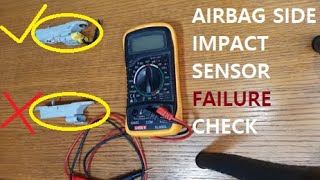
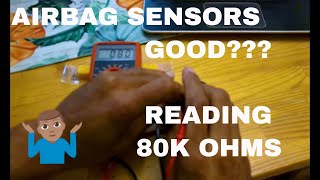
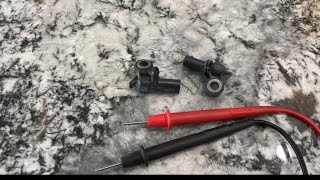
- Faulty Impact Sensor (Common) — Impact sensors fail internally due to age, moisture intrusion, or minor impacts that break the internal accelerometer without deploying the airbags. 🎬 Watch: How to test an SRS sensor to see if it's working.
- Latent Accident Damage (Common) — Previous collisions stretch wiring harnesses or crack sensor housings. These compromised components degrade over time, triggering a delayed B1409 code months or years after the initial impact.
- Faulty SRS Airbag Control Module (Less Common) — The primary SRS computer can fail internally, losing the ability to communicate with its sensors. This requires professional replacement and VIN programming.
- Weak or Failing Vehicle Battery (Less Common) — Low system voltage causes unpredictable communication errors between control modules. Always verify battery health before beginning extensive SRS diagnostics.
- CAN Bus Communication Failure (Rare) — A fault on the vehicle's Controller Area Network (CAN) bus prevents the SRS module from receiving sensor signals, usually accompanied by U-series network codes.
Symptoms
- Airbag Warning Light is On — The SRS or airbag light on the dashboard stays illuminated permanently after the initial startup check.
- Failed Safety Inspection — In regions requiring vehicle safety inspections, an active airbag warning light results in an automatic failure.
- Driver's Power Window Inoperable (Ford Only) — On Ford vehicles, B1409 indicates a window motor short, resulting in a stuck driver's side window.
- Airbag System Disabled (also visible on scanner) — The entire SRS system is deactivated as a safety precaution. Airbags will not deploy in an accident.
- Seatbelt Pre-tensioners Disabled (also visible on scanner) — Seatbelt pre-tensioners, which tighten the belts in the initial milliseconds of a crash, are disabled alongside the airbags.
Diagnostic Flowchart
Tap your situation to follow the diagnostic path that matches what you're seeing on this code.
Common Fixes & Costs
- Repairing Wiring or Replacing Connector Pigtail — Parts: $20-$60, Labor: $150-$350, ~1.5 hr book time (Professional)
- Replacing a Faulty Impact Sensor — Parts: $100-$250, Labor: $150-$350, ~1.0 hr book time (Intermediate)
- Replacing a Driver's Power Window Motor (Ford-specific) — Parts: $80-$150, Labor: $150-$300, ~1.2 hr book time (DIY)
- Replacing the SRS Control Module — Parts: $400-$1200, Labor: $300-$600, ~2.5 hr book time (Professional)
- Diagnosing and Repairing CAN Bus Fault — Parts: $5-$100, Labor: $200-$800, ~3.0 hr book time (Professional)
Used vs. New Parts: Buying Guide
When a used part is worth it: Never for SRS components. Always buy new OEM impact sensors and modules. Used Ford window motors are acceptable.
Donor quality checklist:
- Unknown history: Used sensors may have hidden moisture damage or micro-fractures from previous impacts.
- Liability risk: Installing used safety components introduces enormous legal liability if they fail during a crash.
- Counterfeit parts: The market contains dangerous counterfeit airbag components that fail to function.
Decision logic:
- If The faulty part is an SRS component (sensor, module, airbag) → Buy a new, OEM part from an authorized dealer. The safety risk outweighs any savings.
- If The code is for a non-SRS part (e.g., Ford window motor) → A used part from a reputable auto recycler is a cost-effective option.
Warranty tradeoff: Used SRS parts carry no guarantee of functionality. New OEM parts are warrantied and manufactured to exact safety specifications.
Worst-case if a used part fails: Injury or Death. Non-deployment in an accident cannot be measured in dollars.
What Happens If You Wait — Timeline
- Immediate: The SRS module fails to receive a signal from the impact sensor during startup. The airbag warning light illuminates, disabling the entire SRS system. (MPG impact: 0%% · Added cost: $0)
- First Drive: The vehicle operates with a non-functional passive safety system, dramatically increasing the risk of serious injury or death in a collision. (MPG impact: 0%% · Added cost: $0)
- Next State Inspection: The vehicle automatically fails mandatory safety inspections due to the illuminated airbag light, preventing registration renewal. (MPG impact: 0%% · Added cost: $20-$70 (Failed inspection fee))
- Vehicle Resale or Trade-in: Dealerships deduct the full estimated repair cost from trade-in values. Private sales become extremely difficult due to liability. (MPG impact: 0%% · Added cost: $800-$2500 (Diminished resale value))
Cost of Not Fixing It
- Immediate: Complete failure of the SRS system. Zero airbags will deploy in a collision, significantly increasing the risk of fatal injury. (Added cost: N/A)
- Next state inspection: Guaranteed failure of state-mandated safety inspections, preventing legal registration renewal. (Added cost: $20-$70 (Failed inspection fee))
- Vehicle Resale: Significant reduction in resale value. Buyers and dealers deduct the maximum estimated repair cost from offers. (Added cost: $800-$2500 (Diminished value))
Diagnosis Steps
- Confirm the Code and Definition
Use an OBD-II scanner capable of reading SRS codes to confirm B1409. Note the exact definition, which confirms the affected system and specifies the sensor location (e.g., 'Front-Driver').
Tools: SRS-capable OBD-II Scanner (Beginner) - Visual Inspection of Sensor and Wiring
Locate the specific impact sensor. Visually inspect the sensor and wiring harness for physical damage, corrosion on connector pins, or loose connections. Check areas where the harness rubs against the chassis.
Tools: Flashlight, Safety Glasses (Beginner) - Disconnect and Clean Connector
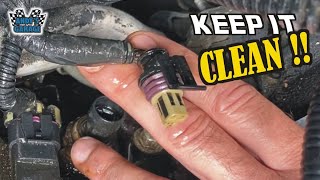
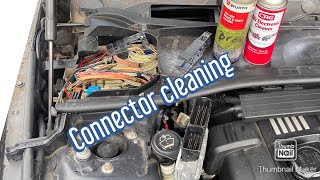
CAUTION: Disconnect the negative battery terminal and wait 15 minutes to de-power the SRS system. Disconnect the sensor, inspect for bent pins, clean with electrical contact cleaner, 🎬 See this quick guide on cleaning electrical connectors properly. and apply dielectric grease before reconnecting.
Tools: Wrench set, Electrical Contact Cleaner, Dielectric Grease, Safety Glasses (Intermediate) - Swap Sensors (If Applicable)
For front or side impact sensors, swap the left and right sensors. Clear the codes. If the code changes to the opposite side (e.g., B1409 changes to B1410), the sensor is faulty. If B1409 remains, the wiring or module is the issue.
Tools: Basic hand tools, SRS-capable OBD-II Scanner (Advanced) - Test the Sensor Circuit with a Multimeter
With the battery disconnected, use a multimeter to check for continuity on the signal wires between the sensor connector and the SRS module connector. A reading of OL (Open Line) indicates a wire break.
Tools: Multimeter, Vehicle-specific Wiring Diagram (Advanced) - Check for Related Trouble Codes
Scan the SRS module for other codes. U-series codes (CAN bus faults) appearing alongside B1409 indicate a wider network problem rather than an isolated sensor failure.
Tools: SRS-capable OBD-II Scanner (Intermediate) - Live Data PID Analysis
Access the SRS module's live data stream. A sensor with a communication fault shows a status of 'Not Available' or 'Fault'. Compare this to a known-good sensor on the opposite side to confirm signal loss.
Tools: Advanced Bi-directional Scan Tool (Advanced) - Test the CAN Bus Network Resistance
With the battery disconnected, measure resistance between Pin 6 and Pin 14 at the OBD-II port. A healthy CAN bus reads 60 Ohms. 120 Ohms indicates an offline terminating resistor; 0 Ohms indicates a short.
Tools: Multimeter (Advanced) - Substitute with a Known-Good Part
If wiring is intact and swapping sensors wasn't possible, substitute the suspect sensor with a new OEM part. If the code remains, the SRS control module requires professional replacement and programming.
Tools: New Impact Sensor, Professional Scan Tool (Professional)
When This Code Triggers (Freeze-Frame Conditions)
- System Voltage: 11.5V - 14.5V (SRS communication faults log during the power-on self-test and are rarely tied to dynamic engine conditions.)
- Ignition Status: ON (The code sets immediately upon turning the key to 'ON' as the SRS module attempts to ping all sensors.)
- Fault Status: Present / Active (Freeze frame data shows B1409 as 'active', indicating a hard failure detected during the most recent self-test.)
Related Codes
- B1408 — B1408 means 'Communication Error,' suggesting intermittent or corrupt data. B1409 means 'Communication Impossible,' indicating a complete loss of signal.
- B1410 — The direct equivalent of B1409 but for the passenger side impact sensor. Swapping sensors to see if B1409 changes to B1410 confirms a faulty sensor.
- B1582 — A Mitsubishi code for 'Front impact sensor (RH) ID fault'. The SRS module recognizes the sensor but cannot verify its unique ID.
- B1400 / B1403 — These indicate a circuit fault (open or short) within the impact sensor itself, rather than a communication failure between the sensor and module.
Climate & Environmental Factors
- Road Salt / Saline Environments: In regions using road salt, wiring and connectors for impact sensors suffer accelerated corrosion. Saltwater acts as an electrolyte, attacking copper wires and connector pins, causing the green oxidation that disrupts communication.
- High Humidity / Water Intrusion: Moisture intrusion into sensor connectors or the SRS control module causes short circuits. Sensors located in bumpers or doors are highly vulnerable to water spray from the road.
How to Talk to a Mechanic About This Code
Say this: "I have an airbag light on and my scanner shows code B1409, indicating a communication failure for an impact sensor on my [Make, Model]. I'd like to book one hour of diagnostic time to confirm if the fault is the sensor, the connector, or the wiring. Please do not replace parts without my authorization based on the diagnostic findings."
This directs the mechanic to perform logical diagnostic steps instead of replacing the most expensive part. It sets clear boundaries, preventing them from replacing a $300 sensor when only a $30 connector was corroded.
Avoid saying:
- 'My airbag light is on, can you fix it?'
- 'Just do whatever it takes to get the light off.'
- 'A friend told me it's probably the sensor, just change it.'
Questions to ask before authorizing the repair:
- What specific diagnostic steps isolated the cause to the part you recommend replacing?
- If the cause is wiring, will you use OEM-approved crimp connectors for the repair?
- If recommending a sensor replacement, what was the result of testing the wiring between the sensor and the SRS module?
Where to Take It: Dealer vs Independent vs Chain
- Dealer:
Recommended if the SRS module needs replacement and programming, or if the vehicle is under warranty.
Best for: Vehicles under warranty or with a relevant recall/extended warranty., Complex cases requiring SRS control module replacement and VIN-specific programming.
Downsides: Highest labor rates and part costs., May default to replacing expensive modules rather than repairing wiring. (Typical cost: +50% vs. baseline) - Independent Shop:
Best fit for most B1409 scenarios. An experienced independent technician expertly handles wiring and sensor replacements at a lower cost.
Best for: Out-of-warranty vehicles where the cause is wiring or a sensor., Shops specializing in electrical or diagnostic work.
Downsides: May lack the expensive, manufacturer-specific tools to program a new SRS module. (Typical cost: +0% vs. baseline) - Chain Shop:
AVOID. SRS system repair requires diagnostic expertise not typically found at chain shops.
Best for: Simple maintenance like oil changes or tires.
Downsides: Technicians lack specialized training for complex SRS diagnostics., High risk of misdiagnosis. (Typical cost: -10% vs. baseline)
When to Walk Away From the Repair
If the estimated repair cost for the airbag system exceeds 50% of the car's private-party value, consider selling it as-is or trading it in. An active airbag light reduces trade-in value by 20-40%.
- Car worth $5000, fix is $2200: Walk away. The repair costs nearly half the car's value. Sell as-is to a specialized buyer or trade it in with full disclosure.
- Car worth $15000, fix is $900: Fix it. The repair cost is a small fraction of the vehicle's value, restoring a critical safety feature and preserving resale value.
What Scan Tool You Need for This Code
Minimum: A scanner capable of reading and clearing Supplemental Restraint System (SRS) codes. Basic engine-only (P-code) readers cannot communicate with the SRS module.
A standard $20 OBD-II reader only sees 'Powertrain' codes. It will report 'No Codes Found' even with the airbag light on, leading to confusion.
Budget: Autel AutoLink AL619 (~$99) — Explicitly designed to read and clear ABS and SRS codes. It correctly identifies B1409 and its manufacturer-specific definition.
Mid-range: BlueDriver Pro (~$100) — A Bluetooth dongle providing live data streams, allowing you to monitor sensor inputs in real-time to diagnose intermittent wiring issues.
Professional: XTOOL D7W / Autel MaxiCOM MK808Z (~$450-600) — Full-featured bidirectional scan tools with 'Active Test' capability, essential for advanced diagnostics like testing CAN bus integrity without swapping parts.
Rent vs buy: Parts stores offer loaner tools, but verify they read SRS codes. Given the safety-critical nature of this fault, owning a capable scanner is a worthwhile investment.
How to Clear the Code After You Fix It
- Ensure all SRS components are securely reconnected.
- Reconnect the negative battery terminal.
- Use an SRS-capable OBD-II scan tool to access the Supplemental Restraint System module.
- Select the function to 'Clear DTCs' or 'Erase Fault Codes'.
Drive cycle (~5 minutes): No specific drive cycle is required. Cycle the ignition off, then turn it to 'ON'. The SRS module performs a complete self-test at startup. If the light illuminates briefly and turns off, the repair is successful.
Readiness monitors affected: None. SRS status does not affect emissions readiness monitors.
Watch out for:
- Using a basic engine code reader that cannot communicate with the SRS module.
- Failing to clear the code with a scanner; disconnecting the battery will not clear hard SRS codes.
- Attempting to clear a code set by an actual crash deployment, which requires professional module replacement.
Will This Fail Emissions / State Inspection?
No — by itself this code doesn't fail OBD inspection (but it can keep readiness monitors from setting, which causes a separate fail).
- California: An airbag light does NOT cause a failure of the emissions-only smog check, but remains a critical safety hazard.
- New York: An illuminated airbag warning lamp is an advisory item. The owner is informed, but the vehicle passes the safety inspection.
- Texas: The airbag system is not a required inspection item. A vehicle with an active airbag light passes the state safety inspection.
- Virginia / Pennsylvania: In states with strict annual safety inspections, an illuminated airbag light is an automatic failure.
Most Commonly Affected Vehicles
- Hyundai Elantra (2011-2015) — Frequently cited with 'SIS Front-Driver Communication Error'. Models use an accelerometer on the B-pillar.
- Hyundai Tucson / ix35 (2010-2015) — Commonly experiences communication errors with the driver-side impact sensor.
- Hyundai Santa Fe (2007-2012) — Sets B1409 for 'SIS front-Driver communication error', often located in the center B-pillar.
- Kia Sorento (2011-2015) — B1409 translates to a side impact sensor communication error. Note that Kia has extended warranties for other airbag light causes on this model.
- Mitsubishi Mirage (2014-2015) — A Technical Service Bulletin (TSB-15-52B-002) corrects diagnostic procedures for B1409 'Front Impact Sensor (RH) Communication Impossible'.
- Chevrolet / GM Cruze, Malibu (2010-2019) — On GM vehicles, B1409 is a Body Control Module code for 'Device Voltage Reference Output #2 Circuit Open', unrelated to airbags.
Manufacturer-Specific Notes
- Hyundai / Kia / Mitsubishi: B1409 almost always points to a communication failure between the SRS control module and a front or side impact sensor.
- Ford / Lincoln / Mercury: B1409 has a completely different meaning: 'Driver Power Window Up Circuit Short to Ground'. This is a body control module fault, not an SRS fault.
- Chevrolet / GM: B1409 is defined as 'Device Voltage Reference Output #2 Circuit Open', a Body Control Module issue unrelated to the airbag system.
- Kia: Kia has extended warranties for airbag light issues on models like the 2011-2015 Sorento (TSB BOD205). Dealers diagnose airbag lights at no cost under these terms.
Real Owner Stories
2012 Hyundai Tucson with B1409
Airbag light stayed on permanently. The scanner read B1409 for the driver's side impact sensor communication error.
Outcome: The technician cleaned the pins with electrical contact cleaner, applied dielectric grease, and reconnected it. The code cleared permanently. Total cost was one hour of diagnostic labor.
Lesson: Visible corrosion is a smoking gun. Always start with a thorough visual inspection of the sensor's connector before replacing expensive parts.
2011 Hyundai Elantra after minor side-swipe
Airbag light appeared a few weeks after a minor parking lot accident where the driver's door was scraped. The code was B1409.
Outcome: The technician found the wiring harness inside the door stretched during the impact, causing a partial break that finally failed completely. They repaired the wire using an OEM-approved crimp connector for $300.
Lesson: Airbag system faults appear long after an accident due to latent wiring damage. Have the body shop re-inspect the impact area if a light appears post-repair.
Older Ford F-150 with B1409
Code B1409 appeared, but the airbag light was NOT on. The driver's side power window stopped working.
Outcome: A professional scanner provided the Ford-specific definition: 'Driver Power Window Up Circuit Short to Ground'. Replacing the window motor fixed the issue.
Lesson: Manufacturer-specific definitions are critical. For Ford vehicles, B1409 is a window motor fault, not an airbag fault.
How to Prevent This Code From Triggering
- Apply Dielectric Grease to Vulnerable Connectors (During any related service involving bumper or door panel removal) — Dielectric grease creates a waterproof barrier against moisture and road salt, preventing the corrosion that causes communication failures.
- Regular Undercarriage and Wheel Well Washing (Monthly during winter in salt-belt states) — Road salt is highly corrosive to electrical wiring. Washing removes salt deposits before they penetrate connector seals.
- Inspect for Cabin Water Leaks (Annually or after noticing damp carpets) — Water from clogged sunroof drains pools under the carpet, corroding critical wiring harnesses and the SRS module.
Frequently Asked Questions
Why does B1409 have different meanings?
While generic OBD-II codes (P0xxx) are standardized, manufacturer-specific codes (starting with B1, C1, U1) are defined differently by each automaker. You must use a scanner that provides the specific definition for your vehicle's make and year.
Can I just reset the airbag light?
No. Clearing the code without fixing the underlying fault causes the SRS module to detect the same error during its next startup self-check, immediately triggering the light again. Codes set by an actual crash deployment require professional module reprogramming or replacement.
The car had a minor accident a while ago. Could that cause this code now?
Yes. Latent damage from a previous collision is a common cause. Stretched wiring harnesses, cracked connectors, or internally damaged sensors often fail months later due to vibration and thermal cycling.
I swapped the left and right front impact sensors, but the B1409 code stayed. What does that mean?
If the code does not follow the swapped sensor to the other side (e.g., changing to B1410), the sensor is functioning correctly. The fault lies upstream in the original side's wiring harness, connector, or the SRS control module itself.
Is it safe to work on the airbag system myself?
Working on the airbag system is extremely dangerous due to explosive charges. Always disconnect the negative battery terminal and wait 15 minutes before inspecting components to prevent accidental deployment. Leave complex testing or module replacement to a certified professional.
Can a weak car battery cause a B1409 code?
Yes, a weak battery causes low system voltage, triggering random communication errors across multiple modules, including the SRS. Always verify your battery and charging system are healthy before beginning expensive airbag diagnostics.
Where is the B1409 sensor located?
Location depends on the code's specific definition (e.g., 'Front-Driver'). Front impact sensors mount on the radiator core support or bumper reinforcement bar, while side impact sensors sit inside the front doors or at the base of the B-pillar.
Key Takeaways
- Code B1409 requires manufacturer-specific diagnosis: it signals a critical airbag impact sensor failure on Hyundai/Kia vehicles, but indicates a minor driver's power window short on Ford models.
- An active B1409 airbag code completely disables your vehicle's Supplemental Restraint System (SRS), meaning 0 airbags will deploy in a collision.
- Corroded wiring or a damaged connector at the impact sensor causes over 60% of B1409 codes, especially in salt-belt states where moisture attacks exposed bumper and door harnesses.
- Never attempt to test SRS circuits with a standard multimeter or repair airbag wiring with solder; always disconnect the battery for 15 minutes before inspection to prevent accidental, lethal deployment.
Helpful Videos
Shop the Parts Behind B1409
Below are the parts most often responsible for code B1409, ranked by how frequently each one is the actual culprit (per the diagnosis above). Tap any to see what we have for your vehicle.



The information in this article is provided for general reference and educational purposes only. Vehicle specifications, procedures, and part compatibility can vary by production date, trim level, and region. Always consult your vehicle's factory service manual and verify part numbers before purchasing or performing repairs. Safety-critical components such as airbags, seat belts, and braking systems should be installed by a qualified professional.
- 🧭 Diagnostic Flowchart
- 🎬 Helpful Videos
- 🛍️ Shop This Part
- What Does B1409 Mean?
- Can I Drive With B1409?
- Common Causes
- Symptoms
- Common Fixes & Costs
- Used vs. New Parts: Buying Guide
- What Happens If You Wait — Timeline
- Cost of Not Fixing It
- Diagnosis Steps
- When This Code Triggers (Freeze-Frame Conditions)
- Related Codes
- Climate & Environmental Factors
- How to Talk to a Mechanic About This Code
- Where to Take It: Dealer vs Independent vs Chain
- When to Walk Away From the Repair
- What Scan Tool You Need for This Code
- How to Clear the Code After You Fix It
- Will This Fail Emissions / State Inspection?
- Most Commonly Affected Vehicles
- Manufacturer-Specific Notes
- Real Owner Stories
- 2012 Hyundai Tucson with B1409
- 2011 Hyundai Elantra after minor side-swipe
- Older Ford F-150 with B1409
- How to Prevent This Code From Triggering
- Frequently Asked Questions
- Why does B1409 have different meanings?
- Can I just reset the airbag light?
- The car had a minor accident a while ago. Could that cause this code now?
- I swapped the left and right front impact sensors, but the B1409 code stayed. What does that mean?
- Is it safe to work on the airbag system myself?
- Can a weak car battery cause a B1409 code?
- Where is the B1409 sensor located?
- Key Takeaways
- 🎟️ Get 5% Off