

OBD-II Code B1411: In-Cabin Temperature Sensor Circuit Malfunction
The Ultimate 2026 Guide to Meaning, Diagnosis, and Repair
- Code B1411 disables your automatic climate control by flagging a fault in the in-cabin temperature sensor circuit, causing the system to blow extreme hot or cold air.
- Verify your vehicle's specific code definition before replacing parts; on 2010-2019 Subaru models, B1411 indicates a critical immobilizer fault that prevents the engine from starting.
- Check for a disconnected sensor plug first if you recently had dashboard work done, saving you up to $350 in unnecessary diagnostic and repair fees.
- Replacing the sensor costs between $180 and $430 professionally, with over 75% of that price coming from the 1 to 3 hours of labor required to dismantle the dashboard.
What Does B1411 Mean?
B1411 means your car's main computer or Body Control Module (BCM) detects an electrical fault in the in-cabin temperature sensor circuit. This thermistor measures the air temperature inside the passenger compartment. It provides the crucial data needed for the automatic climate control system to regulate heating and air conditioning. When this code triggers, the system cannot maintain a set temperature, resulting in it blowing hot air when cold is desired, or vice-versa.
Technical definition: The official SAE/ISO definition for code B1411 is "Room Temperature Sensor Circuit." This indicates the Body Control Module (BCM) or Air Conditioning Amplifier detects an open, short, or abnormal voltage reading from the passenger compartment thermistor circuit. On many systems, a specific out-of-range value registers; for example, a Toyota open circuit reads as a fixed -6.5°C (20.3°F), while a short circuit reads as a fixed 57.25°C (135.05°F).
🎬 Watch: Diagnosing a B1411 code on a Lexus IS300.Can I Drive With B1411?
Yes, But With Caution. Yes, you can drive with a B1411 code. The fault does not affect the vehicle's mechanical operation. However, the automatic climate control will not function correctly, making the cabin uncomfortable. More importantly, an inability to control air temperature prevents the windshield from defrosting or defogging effectively in cold or humid weather, creating a significant safety hazard.
Common Causes
- Disconnected Connector After Dash Work (Very Common) — If the dashboard was recently removed for a stereo or evaporator repair, the technician likely forgot to plug the sensor back in. This is the most common real-world cause.
- Failed In-Cabin Temperature Sensor (Very Common) — The thermistor's internal resistance degrades over time, sending incorrect or zero voltage to the climate control system.
- Debris Clogging the Sensor Grille or Aspirator (Common) — Dust, pet hair, or debris clogs the small dashboard grille or jams the aspirator fan, insulating the sensor from the actual cabin air.
- Damaged Wiring or Poor Ground (Common) — Wires leading to the sensor become corroded, loose, or broken, causing fluctuating or incorrect voltage readings. This frequently happens in older vehicles with brittle plastic connectors.
- Failed Aspirator Motor (Less Common) — The small fan pulling air across the sensor dies. Without airflow, the sensor reads the internal dashboard temperature instead of the cabin.
- Faulty Climate Control Module (A/C Amplifier) (Rare) — The computer module reading the sensor's data fails internally. This is the most expensive and least likely cause.
Symptoms
- Erratic Automatic Climate Control — The 'Auto' function fails to maintain a set temperature, often blasting full heat when you request cold A/C, or vice-versa.
- Inability to Defrost Windshield Effectively — The system fails to produce and direct hot air to the windshield, creating a severe visibility hazard in cold or humid conditions.
- Incorrect Fan Speed in 'Auto' Mode — The blower motor gets stuck on high or low because the system cannot determine the target temperature.
- A/C or Master Warning Light Illuminated — A specific climate system warning light or the master warning triangle illuminates on the dashboard.
Diagnostic Flowchart
Tap your situation to follow the diagnostic path that matches what you're seeing on this code.
Common Fixes & Costs
- Reconnect Loose Electrical Connector — Parts: $0, Labor: $0-$150, ~1 hr book time (DIY)
- Clean Sensor Grille and Aspirator Tube — Parts: $0, Labor: $0-$100, ~0.5 hr book time (DIY)
- Replace In-Cabin Temperature Sensor
— Parts: $30-$80, Labor: $150-$350, ~1.5 hr book time
(Intermediate)
Toyota Prius (2004-2009): OEM 88625-47021 (Alt: Denso 221-3333, Standard Motor Products AX168)
Lexus IS250 / IS350 (2006-2013): OEM 88790-22131 (Aspirator Assembly) (Alt: Denso (Varies), Dorman 902-613) - Repair Damaged Wiring or Connector — Parts: $5-$25, Labor: $150-$350, ~1.5 hr book time (Professional)
- Replace Climate Control Module (A/C Amplifier) — Parts: $200-$700, Labor: $100-$250, ~1 hr book time (Professional)
Used vs. New Parts: Buying Guide
When a used part is worth it: For a simple electronic sensor like the in-cabin temperature sensor, buying used rarely makes sense. The cost savings are minimal compared to the high labor cost of installation.
Donor-vehicle mileage cap: roughly under 40000 miles for the part to have meaningful remaining life.
Donor quality checklist:
- Verify the part number matches exactly.
- Avoid parts from vehicles with flood or fire damage.
Decision logic:
- If The new part (OEM or quality aftermarket) costs less than $100. → Always buy new. The warranty and peace of mind outweigh the minor savings of a used part.
- If The labor to install the part is more than 3x the cost of the part. → Buy the highest quality new part you can to minimize the chance of paying for the labor a second time.
Warranty tradeoff: Used parts typically have a 30-90 day warranty. New aftermarket parts often carry a 1-year to limited lifetime warranty. OEM parts have a 1-year warranty.
Worst-case if a used part fails: $300-$600 if a used part fails after installation, representing the repeated labor cost to replace it again.
What Happens If You Wait — Timeline
- 0-1 month: Code B1411 sets. The 'Auto' climate function stops working correctly, blowing hot air when cold is selected, or vice-versa. Manual control partially works. No mechanical damage occurs. (MPG impact: 0%% · Added cost: $0)
- 1-6 months: In cold or humid climates, the inability to produce reliable hot air for the defrost function becomes a significant safety hazard, impairing visibility. (MPG impact: 0%% · Added cost: $0)
- 6-12 months: The climate control system constantly commands blend door actuators to move to their extreme limits to compensate for bad data. This excessive cycling causes premature wear on the plastic gears within the blend door actuators. (MPG impact: 0%% · Added cost: $200-$800 (Cost to replace a failed blend door actuator))
Cost of Not Fixing It
- Immediate: Loss of automatic climate control, resulting in cabin discomfort. Inability to effectively defrost or defog the windshield, creating a significant safety hazard in cold or humid weather. (Added cost: $0)
- 1-6 months: Premature wear on the blend door actuators as the system constantly tries to cycle between extreme hot and cold settings to compensate for the bad sensor reading. (Added cost: $200-$800 (If a blend door actuator fails due to excessive cycling))
Diagnosis Steps
- Visually Inspect the Sensor Grille
Locate the small, slotted grille on your dashboard, often near the steering column or ignition. Check if it's blocked with dust. Carefully use a vacuum cleaner with a brush attachment to clean it. With the key on, listen closely for the tiny aspirator fan running.
Tools: Flashlight, Vacuum Cleaner (Beginner) - Scan for Codes and View Live Data
Use an OBD-II scanner with live data capability. Confirm B1411 is present. Navigate to the 'Live Data' stream for the HVAC module and find the PID for the 'In-Cabin Temperature Sensor'. An open circuit reads a fixed, extremely low temperature (like -40°F), while a short circuit reads a fixed, extremely high temperature (like 300°F).
Tools: OBD-II Scanner with Live Data (Beginner) - Inspect the Connector Behind the Dash
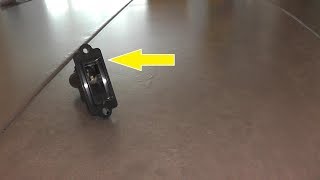
The sensor is located behind the lower part of the dashboard, requiring trim panel removal. Consult a vehicle-specific repair manual for its exact location. Once visible, check if its electrical connector is plugged in securely. A disconnected plug after previous dash work is a very common cause.
Tools: Trim Removal Tools, Screwdriver Set, Socket Set, Flashlight (Intermediate) - [PRO TIP] Test the Circuit's Voltage at the Connector
With the sensor unplugged and the key 'On', set your multimeter to DC Volts. Probe the two terminals in the wiring harness connector. You should see approximately 5 volts. If you see 0 volts, probe between the reference pin and a chassis ground; if you have 5V, the ground wire is faulty. If you still have 0V, the problem is upstream in the wiring or the module itself.
Tools: Digital Multimeter (Advanced) - Test the Sensor's Resistance vs. Temperature
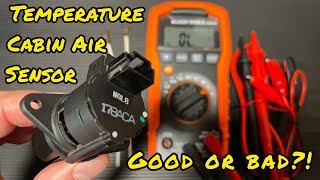
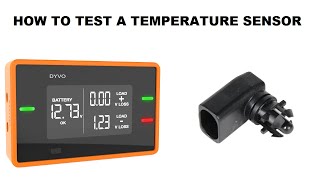
Unplug the sensor. Set a digital multimeter to measure Ohms (Ω). Place the probes on the sensor's electrical pins. Warm the sensor with your hand or a hairdryer; the resistance should decrease. Cool it with compressed air; the resistance should increase. 🎬 See how to test sensor resistance using a multimeter. If the resistance is infinite (Open Loop), zero (shorted), or doesn't change, the sensor is bad.
Tools: Digital Multimeter, Hairdryer (optional) (Advanced) - Test the Aspirator Fan Motor
If the sensor is behind a grille, it relies on a small aspirator fan. With the key on, you should hear or feel it running. Professional scan tools have a bidirectional function to command the aspirator fan on and off to confirm its operation. If it doesn't run, check for power and ground at the aspirator motor connector.
Tools: Professional Scan Tool (optional), Digital Multimeter (Professional) - [ADVANCED] Check for Voltage Drop
If the sensor and live data seem plausible but the fault persists, perform a voltage drop test. With the sensor plugged in and the system on, set your multimeter to DC millivolts (mV). Place one probe on the ground pin of the connector and the other on a known good chassis ground. A reading above 100mV indicates a poor ground connection.
Tools: Digital Multimeter with back-probes (Professional)
When This Code Triggers (Freeze-Frame Conditions)
- System State: Ignition ON (The Body Control Module or A/C Amplifier checks the sensor circuit as soon as the key is on. The fault registers if the out-of-range condition exists for 4 seconds or more.)
- In-Cabin Temp (Live Data): -6.5°C (20.3°F) or 57.25°C (135.05°F) (The code sets when the module sees a fixed, impossible temperature, indicating an open or short circuit.)
- Ambient Temperature: Above -10°C (14°F) (The code represents a true fault when set in normal temperatures. In extreme cold, some vehicles set a false B1411 that clears when the cabin warms up.)
Related Codes
- B1412 — On Toyota/Lexus systems, B1411 indicates an OPEN in the sensor circuit, while B1412 indicates a SHORT. Live data differentiates them: an open circuit (B1411) displays a fixed, extremely low temperature, while a short circuit (B1412) displays a fixed, extremely high temperature.
- B1441 — Points to a fault with an Air Mix Damper Servo Motor. It appears alongside B1411 because the system, receiving an illogical temperature reading, commands the blend door to its extreme limit repeatedly, causing the motor to fail.
- P0070 - P0074 — These codes relate to the ambient (outside) air temperature sensor, located outside the passenger cabin. A B1411 fault is for the in-cabin sensor. They are different parts in different locations.
Climate & Environmental Factors
- Extreme Cold: On Toyota/Lexus vehicles, ambient temperatures below -10°C (14°F) cause the sensor's resistance to go outside its expected range, temporarily triggering a B1411 code. The code clears on its own once the cabin warms up.
- High Humidity: On vehicles where the temperature and humidity sensors are a single unit (like Toyota Prius models), high humidity contributes to sensor failure or inaccurate readings, leading to the B1411 code.
- Dusty/Dirty Environments: Operating the vehicle in dusty conditions accelerates the clogging of the sensor's aspirator grille and fan, preventing proper airflow and causing inaccurate readings.
How to Talk to a Mechanic About This Code
Say this: "I have a B1411 code on my [Year, Make, Model] and the automatic climate control isn't working correctly. I'd like to schedule a diagnostic. Can you tell me your diagnostic fee for an electrical issue like this?"
This signals you have a specific code, focuses the conversation on a diagnostic fee rather than an open-ended repair, and shows you understand it's an electrical/body control issue, not a simple engine problem.
Avoid saying:
- 'My A/C is broken.' (Too vague, leads to unnecessary A/C system checks)
- 'My check engine light is on.' (B1411 is a 'B' code and usually doesn't trigger the main check engine light, so this is inaccurate and confusing)
- 'Just fix it, whatever it takes.' (This is an open invitation for a high bill)
Questions to ask before authorizing the repair:
- Did you confirm the B1411 code is for the in-cabin temperature sensor on my specific vehicle?
- What was the root cause? Was it a failed sensor, a wiring issue, or something else?
- If the sensor needs replacement, is the high cost due to labor to access it? Can you show me where it is located?
- Will you provide a written estimate with a clear breakdown of parts and labor before starting the work?
- What is the warranty on the parts and labor for this specific repair?
Where to Take It: Dealer vs Independent vs Chain
- Dealer:
Recommended if the vehicle is under warranty or if it's a make (like Subaru/Ford) with a non-standard definition for this code. Otherwise, an independent shop is more cost-effective.
Best for: Vehicles under warranty, Complex electrical issues where manufacturer-specific software is required, If the fault is on a Subaru or Ford where B1411 means something other than climate control
Downsides: Highest labor rates and part costs, Defaults to replacing entire assemblies instead of repairing a simpler wiring fault (Typical cost: +50% vs. baseline) - Independent Shop:
Best fit for most B1411 repairs on common vehicles like Toyota and Lexus. The job involves straightforward electrical testing and mechanical skill in removing dash panels, which any competent independent shop handles easily.
Best for: Out-of-warranty vehicles, especially common ones like Toyota/Lexus, Diagnosing and repairing known issues like a failed sensor or broken wire, Cost-conscious customers
Downsides: Quality and diagnostic skill vary widely; choose a shop with good reviews and ASE certifications., Lacks the specific bidirectional tool to test an aspirator fan on some models. (Typical cost: +0% vs. baseline) - Chain Shop:
AVOID. This requires specific diagnostic skills for electrical body codes and careful dashboard disassembly, which are outside the core competency of quick-lube or chain shops.
Best for: Not recommended for this type of repair.
Downsides: Technicians lack the specific electrical diagnostic training for a B-series code., High pressure to sell parts leads to replacing the sensor without proper diagnosis of the circuit., Lacks the expertise for dashboard disassembly without causing damage. (Typical cost: -10% vs. baseline)
When to Walk Away From the Repair
If the estimated repair cost exceeds 50% of the car's private-party value, seriously consider selling or trading in the vehicle.
- Car worth $4000, fix is $850: Fix it. The repair cost is well below the 50% threshold and resolves a key comfort and safety (defrost) feature.
- Car worth $3000, fix is $1600: Borderline. The cost is over 50% of the car's value. Consider your car's overall condition and any other needed repairs before proceeding.
- Car worth $2000, fix is $1500: Walk away. It is not economical to spend 75% of the car's value on a comfort-related repair.
What Scan Tool You Need for This Code
Minimum: An OBD-II scanner that reads Body Control Module (BCM) or HVAC-specific codes (B-codes) and views live data streams.
A basic $20 engine code reader does not see 'B' codes. To diagnose B1411, you must access the body/HVAC module and see the 'In-Cabin Temperature' reading to know if it's open, shorted, or just inaccurate.
Budget: BlueDriver Pro or Autel AP200 (~$60) — Reads B-codes and displays live data from the HVAC module, allowing you to see the exact temperature the sensor reports. This confirms a bad sensor vs. a wiring issue.
Mid-range: Foxwell NT510 Elite (~$150) — Offers full system access to read/clear codes from all modules and provides limited bidirectional control to test components like the aspirator fan.
Professional: Autel MaxiCOM MK808 (~$450) — Provides full bidirectional control to command the aspirator fan on/off and graph live data, making it the ultimate tool for pinpointing circuit failures.
How to Clear the Code After You Fix It
- Use an OBD-II scan tool to clear the code from the Body Control Module / HVAC module.
- Turn the ignition off, then on again.
- Operate the automatic climate control through various temperature settings to confirm functionality.
Drive cycle (~1 minutes): A complex drive cycle is not required. The BCM/HVAC module re-evaluates the sensor circuit immediately upon power-up. If the repair is successful, the code stays cleared. If the fault remains, the code returns within seconds.
Readiness monitors affected: None
Watch out for:
- Using a basic code reader that only communicates with the engine control unit (ECU) cannot read or clear codes from the body control module (BCM).
- Simply disconnecting the battery does not clear the code from the BCM's memory.
- The code returns instantly if the root cause (e.g., failed sensor, broken wire) is not fixed.
Will This Fail Emissions / State Inspection?
No — by itself this code doesn't fail OBD inspection (but it can keep readiness monitors from setting, which causes a separate fail).
- California: This code will NOT fail a California smog check. The inspection focuses on powertrain (P-codes) and the check engine light status.
- New York: A B1411 code will NOT cause a failure of the NYS emissions inspection. The OBD-II inspection checks for check engine light status and powertrain faults only.
- Texas: This code will NOT fail the emissions portion of the Texas vehicle inspection. The test scans for powertrain-related faults.
Most Commonly Affected Vehicles
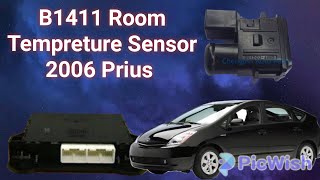
- Toyota Prius (2004-2015) — Extremely common on Gen 2 and Gen 3 models. The sensor (Part# 88625-47021) is integrated with a humidity sensor and is crucial for climate control efficiency.
- Lexus IS250 / IS350 (2006-2013) — Frequently reported due to sensor failure or a disconnected plug after dashboard maintenance for stereo work.
- Lexus RX350 / RX450h (2010-2015) — The in-cabin sensor is a known failure point that causes erratic A/C behavior. Replacement cost is high due to labor.
- Toyota Camry (2007-2017) — The B1411 code is a documented issue in service manuals. Labor costs for replacement are high, as the dash must be removed.
- Ford Focus / Fusion (2010-2018) — CRITICAL: On many Ford vehicles, B1411 is defined as 'Driver Power Window Motor Circuit Open' or 'External Media Control Connectivity'. It is NOT a climate control code.
- Chevrolet / GMC Silverado / Sierra (1999-2006) — On many GM models, B1411 refers to 'Input Voltage Reference #3 Circuit Range/Performance'. Use a model-specific diagnostic tool to confirm the fault area.
- Subaru Outback / Forester (2010-2019) — CRITICAL: On many Subaru models, B1411 is defined as 'Immobilizer Antenna Abnormal'. This is a security system fault completely unrelated to climate control. A no-start condition is the primary symptom.
Manufacturer-Specific Notes
- Ford / Alfa Romeo / Fiat: B1411 is defined as 'Driver Power Window Motor Circuit Open' or a similar non-climate control issue. This is a completely different fault, and it is critical to verify the definition for your specific vehicle.
- Subaru: B1411 points to an 'Immobilizer Antenna Abnormal' fault. If you have a no-start condition along with this code on a Subaru, the issue is with the vehicle's security system, not the A/C.
- Toyota / Lexus: In very cold weather (below -10°C or 14°F), the system temporarily sets a B1411 code even if the sensor works normally. The code clears once the cabin warms up.
- Mitsubishi: B1411 indicates 'Front Passenger's Air Bag Squib Open-Circuited'. This is a serious safety system fault requiring immediate diagnosis, completely separate from the climate system.
Real Owner Stories
2008 Toyota Land Cruiser Prado after evaporator replacement
Immediately after having the evaporator core replaced at a shop, the A/C began blowing hot air when set to a cold temperature. The shop returned the car, claiming it was a new, unrelated problem.
What they tried:
- Owner scanned the vehicle and found code B1411.
- Based on forum research, they suspected a disconnected plug from the recent dash work.
- Owner located the in-cabin temperature sensor behind the lower dash trim.
- They found the sensor's electrical connector was completely unplugged.
Outcome: The owner plugged the connector back in until it clicked. They cleared the B1411 code with their scanner, and the automatic climate control began working perfectly. The total cost was $0.
Lesson: If code B1411 appears immediately after any dashboard repair, the most likely cause is a technician forgetting to reconnect the sensor. Always check for a loose connector before buying parts.
2007 Lexus IS250 with 115,000 miles and erratic A/C
The automatic climate control randomly switched from cold A/C to full heat, especially on hot days. The problem was intermittent but becoming more frequent.
What they tried:
- A local mechanic scanned the car and found B1411.
- The mechanic quoted over $500 for the repair, citing high labor to remove the dashboard.
- The owner watched a DIY video, bought a set of trim removal tools for $15, and decided to access the sensor themselves.
- They found the sensor located behind a small grille to the right of the steering column.
Outcome: The owner purchased a new OEM sensor (part #88790-22131) for $80 online. Following the video, they replaced the sensor in 45 minutes. The code cleared, and the A/C works correctly.
Lesson: On many vehicles like the Lexus IS, the sensor is accessible with minor dash trim removal. A high labor quote assumes full dashboard disassembly, which isn't always necessary.
2015 Subaru Outback with a no-start condition
The vehicle would not start, and the security indicator light flashed. The owner used a basic OBD-II scanner and pulled code B1411.
What they tried:
- Assuming B1411 was a climate control issue based on a generic internet search, the owner spent time checking the in-cabin temperature sensor and its wiring, finding nothing wrong.
- Frustrated, they had the vehicle towed to a dealership.
Outcome: The dealer used a Subaru-specific scan tool and confirmed that on this vehicle, B1411 means "Immobilizer Antenna Abnormal". The fault was in the security system, completely unrelated to the climate control. The antenna ring around the ignition required replacement.
Lesson: The meaning of code B1411 is NOT universal. For Subaru, it points to the immobilizer security system. Always verify the code definition for your specific make and model before starting diagnosis.
How to Prevent This Code From Triggering
- Regularly Clean the Sensor Grille (Every 6-12 months, or during interior detailing) — The sensor relies on cabin air pulled through a small grille. Dust and pet hair clog this path, insulating the sensor and preventing it from reading the true cabin temperature.
- Replace the Cabin Air Filter on Schedule (Every 12,000-15,000 miles) — A clean cabin air filter reduces the overall amount of dust circulating in the cabin, directly reducing debris pulled into the in-cabin sensor's aspirator assembly.
- Brief Technicians About the Sensor Before Dash Work (Any time the dashboard is being removed or serviced) — Forgetting to reconnect the in-cabin temperature sensor is the leading cause of B1411 after a stereo installation or evaporator core replacement.
Frequently Asked Questions
What are the most common misdiagnosis mistakes for B1411?
The biggest mistake is assuming B1411 always means 'In-Cabin Temp Sensor' for all brands. On Ford, Subaru, and Mitsubishi, it means window motor, immobilizer, or airbag faults, respectively. Another common error is confusing the in-cabin sensor (B1411) with the ambient air sensor (P007x codes).
Can a bad cabin air filter cause a B1411 code?
No, a clogged cabin air filter does not directly cause a B1411 electrical fault code. However, a severely clogged filter restricts airflow and causes dust to build up on the sensor grille, eventually leading to inaccurate readings.
My scanner shows B1411 and a humidity sensor code. Are they related?
Yes, very likely. On many modern vehicles like the Toyota Prius, the in-cabin temperature sensor and the cabin humidity sensor are integrated into a single component. Faults for both strongly point to a failure of this combined sensor assembly.
Can I fix a B1411 code myself?
Cleaning the sensor grille is an easy first step for anyone. Replacing the sensor requires removing dashboard panels, making it an intermediate-level DIY job for those comfortable with interior trim removal. Stop and consult a professional if you suspect a wiring harness issue.
Is the in-cabin temperature sensor the same as the ambient temperature sensor?
No. The in-cabin temperature sensor measures the air inside the car (code B1411). The ambient temperature sensor measures the air outside the car and triggers P-series codes like P0071. Their readings are both used by the climate control system, but they are separate parts.
Why is the labor cost so high to replace a cheap sensor?
The high cost comes from the significant labor needed to carefully remove dashboard panels to access the sensor. A technician spends 1 to 3 hours on this process to avoid damaging trim pieces or nearby wiring.
My A/C blows hot and my heater blows cold. Is this code B1411?
Yes, this is a classic symptom of code B1411. The climate control system receives bad information about the cabin temperature, so it overcompensates in the wrong direction.
Key Takeaways
- Code B1411 disables your automatic climate control by flagging a fault in the in-cabin temperature sensor circuit, causing the system to blow extreme hot or cold air.
- Verify your vehicle's specific code definition before replacing parts; on 2010-2019 Subaru models, B1411 indicates a critical immobilizer fault that prevents the engine from starting.
- Check for a disconnected sensor plug first if you recently had dashboard work done, saving you up to $350 in unnecessary diagnostic and repair fees.
- Replacing the sensor costs between $180 and $430 professionally, with over 75% of that price coming from the 1 to 3 hours of labor required to dismantle the dashboard.
Helpful Videos
Shop the Parts Behind B1411
Below are the parts most often responsible for code B1411, ranked by how frequently each one is the actual culprit (per the diagnosis above). Tap any to see what we have for your vehicle.



The information in this article is provided for general reference and educational purposes only. Vehicle specifications, procedures, and part compatibility can vary by production date, trim level, and region. Always consult your vehicle's factory service manual and verify part numbers before purchasing or performing repairs. Safety-critical components such as airbags, seat belts, and braking systems should be installed by a qualified professional.
- 🧭 Diagnostic Flowchart
- 🎬 Helpful Videos
- 🛍️ Shop This Part
- What Does B1411 Mean?
- Can I Drive With B1411?
- Common Causes
- Symptoms
- Common Fixes & Costs
- Used vs. New Parts: Buying Guide
- What Happens If You Wait — Timeline
- Cost of Not Fixing It
- Diagnosis Steps
- When This Code Triggers (Freeze-Frame Conditions)
- Related Codes
- Climate & Environmental Factors
- How to Talk to a Mechanic About This Code
- Where to Take It: Dealer vs Independent vs Chain
- When to Walk Away From the Repair
- What Scan Tool You Need for This Code
- How to Clear the Code After You Fix It
- Will This Fail Emissions / State Inspection?
- Most Commonly Affected Vehicles
- Manufacturer-Specific Notes
- Real Owner Stories
- 2008 Toyota Land Cruiser Prado after evaporator replacement
- 2007 Lexus IS250 with 115,000 miles and erratic A/C
- 2015 Subaru Outback with a no-start condition
- How to Prevent This Code From Triggering
- Frequently Asked Questions
- What are the most common misdiagnosis mistakes for B1411?
- Can a bad cabin air filter cause a B1411 code?
- My scanner shows B1411 and a humidity sensor code. Are they related?
- Can I fix a B1411 code myself?
- Is the in-cabin temperature sensor the same as the ambient temperature sensor?
- Why is the labor cost so high to replace a cheap sensor?
- My A/C blows hot and my heater blows cold. Is this code B1411?
- Key Takeaways
- 🎟️ Get 5% Off