

OBD-II Code B1425: Collision Data Stored & System Lockout
The Ultimate Guide to Understanding, Diagnosing, and Fixing B1425
- On Nissan and Infiniti vehicles, Code B1425 indicates the Airbag Control Module has permanently stored crash data, disabling all airbags and seatbelt pretensioners.
- You cannot clear B1425 with a standard $50 OBD-II scanner; the module requires a professional EEPROM reset service (costing $40-$100) or complete replacement.
- Driving with an active B1425 code is extremely dangerous because 100% of your supplemental restraint system is offline and will fail to deploy in a crash.
- Manufacturer definitions vary wildly: while Nissan uses B1425 for rear collisions, Dodge uses it for a stuck steering wheel radio button pressed for over 600 seconds.
What Does B1425 Mean?
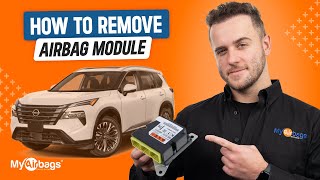
Code B1425 indicates the vehicle's airbag control module (ACM) has recorded and permanently stored data from a past collision. Even in a minor impact without airbag deployment, crash sensors trigger the module to log the event. Once this 'hard code' writes to the module's internal EEPROM memory, 🎬 See how professionals reset crash data from the EEPROM the system disables all airbags and pretensioners as a safety precaution. The system remains locked until the module is professionally reset or replaced.
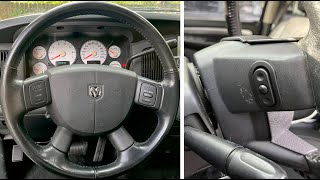
Technical definition: The formal definition of B1425 varies significantly by manufacturer. The most critical definition, primarily for Nissan and Infiniti, is 'Rear Collision Detection'. However, other manufacturers use this code for entirely different systems: * **Dodge/Ram:** Remote Radio Switch Input - Stuck 🎬 Watch: How to access and install Dodge steering wheel controls (a steering wheel button is pressed for over 600 seconds). * **Mitsubishi:** TPMS Sensor 4 Battery Voltage Low. * **Saab:** Battery Voltage Too High (Airbag Module) or Overvoltage (Cabin Heater). * **Mazda:** Active Bonnet Sensor Malfunction (pedestrian protection system). * **GM (Chevrolet/Cadillac/Buick/GMC):** Control Module Power Circuit.
Can I Drive With B1425?
No — Do Not Drive. You can physically drive the vehicle, but it is extremely unsafe. This code signifies the entire Supplemental Restraint System (SRS) — including all airbags and seat belt pretensioners — is disabled. In a crash, pretensioners will not tighten seat belts, causing excessive slack that allows occupants to hit the dashboard or windshield. Stop driving and repair this immediately.
Common Causes
- Rear-End Collision (Very Common) — The vehicle was in an accident that triggered the crash sensors. The airbag control module stores this 'crash data' and sets the code, disabling the SRS system.
- Faulty Airbag Control Module (ACM) (Common) — The module fails due to internal electrical issues or sustained physical damage from a prior severe collision, causing it to store false crash data.
- Low Battery Voltage or Electrical Glitch (Less Common) — A dying battery, improper jump-starting, or voltage fluctuations corrupts the SRS module's memory, falsely logging crash data.
- Malfunctioning Rear Impact Sensor (Less Common) — A faulty rear impact sensor sends an incorrect signal to the airbag module, simulating a collision.
- Wiring Harness or Water Damage (Less Common) — Water intrusion or corroded wiring between the impact sensors and the airbag control module interrupts the signal and triggers the code.
- Unreset Used Airbag Module Installed (Rare) — Installing a used module from a crashed vehicle without resetting it transfers the previous vehicle's crash data, triggering B1425.
Symptoms
- Airbag or SRS warning light is on — The light stays illuminated on the dashboard, indicating a total fault in the Supplemental Restraint System (SRS).
- Seat belts are locked or won't retract — Following a collision, the seat belt pretensioners activate, causing the belts to lock up or become unusable.
- Passenger airbag 'Off' light is illuminated — The system disables the passenger airbag as a safety precaution, keeping the 'Off' light on even with an adult in the seat.
- Code cannot be cleared with a standard scan tool (scan-tool only — no driver-felt sign) — Erasing the trouble code fails immediately because it is stored as 'hard data' in the module's non-volatile memory.
- Inability to communicate with SRS module (scan-tool only — no driver-felt sign) — If the module has an internal power failure or severe water damage, a scan tool cannot establish communication.
Diagnostic Flowchart
Tap your situation to follow the diagnostic path that matches what you're seeing on this code.
Common Fixes & Costs
- Airbag Control Module Reset Service — Parts: $40-$100 (Mail-in service fee), Labor: $50-$150 (For local shop removal/installation), ~1.5 hr book time (Professional)
- Replace Airbag Control Module
— Parts: $400-$900 (OEM module), Labor: $150-$300 (Installation and VIN programming), ~2.0 hr book time
(Professional)
: OEM
: OEM - Replace Deployed Seat Belt Pretensioners
— Parts: $150-$300 per assembly, Labor: $100-$200, ~1.0 hr book time
(Professional)
: OEM - Replace Rear Impact Sensor(s)
— Parts: $50-$150, Labor: $75-$150, ~1.0 hr book time
(Intermediate)
: OEM - Wiring Harness Repair — Parts: $20-$200, Labor: $150-$300, ~2.5 hr book time (Professional)
Used vs. New Parts: Buying Guide
When a used part is worth it: A used Airbag Control Module is not recommended. It likely contains crash data from the donor vehicle, causing the same B1425 code. If a new part is discontinued, a used module from a reputable source guaranteeing it is crash-free is a last resort, but requires professional VIN programming.
Donor-vehicle mileage cap: roughly under 50000 miles for the part to have meaningful remaining life.
Donor quality checklist:
- Verify the donor vehicle was not in a collision.
- Ensure the part number matches your original module exactly.
- Avoid modules from flood-damaged environments to prevent corrosion.
- Purchase from a supplier offering a warranty and return policy.
Decision logic:
- If The vehicle was in a minor collision with no airbag deployment → Resetting the original module via a mail-in service is the safest and most cost-effective option.
- If The original module is physically damaged or waterlogged → Buy a new OEM module to ensure safety and compatibility.
- If A new OEM module is prohibitively expensive or discontinued → A used module is a last resort, but must be professionally reprogrammed and verified.
Warranty tradeoff: Used modules typically have a 30-day warranty. New OEM modules carry a 1-year warranty. Reset services often provide a lifetime guarantee on the software flash.
Worst-case if a used part fails: $1500 if a used module fails to deploy airbags in a subsequent crash, excluding injury costs.
What Happens If You Wait — Timeline
- Immediate (Post-Impact): Code B1425 is stored as a hard fault. The SRS warning light illuminates. The entire supplemental restraint system is disabled. (MPG impact: 0%% · Added cost: $0)
- 0-12 months: The vehicle operates normally, but the risk of severe injury in a subsequent crash is drastically increased. Fails safety inspections. (MPG impact: 0%% · Added cost: $50 - $300 in fines or failed inspection fees.)
- Long-term (12+ months): Ongoing safety liability. The vehicle's resale value is significantly diminished due to the persistent airbag warning light. (MPG impact: 0%% · Added cost: $1000 - $3000+ in reduced vehicle resale value.)
- In a Subsequent Collision: Catastrophic failure of the safety system. Airbags and seatbelt pretensioners fail to activate, resulting in severe injury. (MPG impact: N/A% · Added cost: Incalculable cost of injury and potential insurance claim denial.)
Cost of Not Fixing It
- Immediate: Complete deactivation of the Supplemental Restraint System (SRS). Airbags and seatbelt pretensioners will not deploy in a crash. (Added cost: N/A)
- 1-12 months: Failed state safety inspection in jurisdictions that mandate active SRS systems. (Added cost: $50 - $300 in fines or re-inspection fees.)
- Long-term: Significantly reduced resale value. An active SRS light requires repair before a sale or results in a substantial price reduction. (Added cost: $1000 - $3000+)
Diagnosis Steps
- Confirm the Code with a Scan Tool
Use an OBD-II scanner capable of reading SRS (B-codes) to confirm B1425. Note any other SRS codes, as they point to specific deployed components like pretensioners.
Tools: OBD-II Scanner (SRS compatible) (Beginner) - Attempt to Clear the Code
Try to clear the code. If the code is for 'Collision Detection', it will not clear. This confirms crash data is stored and the module is locked.
Tools: OBD-II Scanner (SRS compatible) (Beginner) - Inspect for Physical Damage
Thoroughly inspect the rear bumper, frame, and trunk area for repairs or damage indicating a past impact.
Tools: Flashlight (Beginner) - Check Seat Belt Function
Test all seat belts. If any are locked, tight, or slow to retract, their pretensioners deployed and require replacement.
Tools: None (Beginner) - Inspect SRS Wiring and Connectors
Visually inspect the wiring harnesses connected to the airbag control module (usually under the center console) and visible impact sensors for corrosion or damage.
Tools: Flashlight, Trim removal tools (Intermediate) - Review Live Sensor Data
Access the SRS module's live data stream. An erratic reading from the rear impact sensor indicates a sensor or wiring fault rather than actual crash data.
Tools: Advanced Bi-Directional Scan Tool (Advanced) - Test Rear Impact Sensor Resistance
Disconnect the battery. Measure the resistance across the rear impact sensor pins. Compare this to the manufacturer's specified range (typically 1.8-2.5 ohms). Out-of-range readings dictate sensor replacement.
Tools: Multimeter, Vehicle-specific service manual (Advanced) - Check for Stuck Radio Button Voltage (Dodge/Ram Only)
Monitor live data for the 'Remote Radio Control Switch voltage'. Unpressed buttons should read ~5.0 volts. Voltage stuck above 10.0V or near 0V indicates a shorted switch assembly.
Tools: Advanced Bi-Directional Scan Tool (Advanced)
When This Code Triggers (Freeze-Frame Conditions)
- System Status: Fault Present (Sets immediately upon the module detecting stored crash data during its power-on self-test.)
- Ignition Cycle Counter: N/A (This hard code ignores ignition cycles; it remains until the module is reset or replaced.)
- Battery Voltage: 11-14V (Typically set under normal operating voltage during an impact event.)
- Vehicle Speed: Varies (Captures the vehicle's exact speed at the moment the rear impact was recorded.)
Related Codes
- B1421 — Indicates 'Frontal Collision Detection' in Nissan/Infiniti vehicles. It is the direct counterpart to B1425 ('Rear Collision Detection').
- B1193 — The Ford and Mazda equivalent of Nissan's B1425, defined as 'Crash Event Storage Full and Locked'.
- B1431 — Relates to the seat belt pre-tensioner circuit. B1425 is the collision cause, and B1431 is the effect (a deployed pretensioner).
- U0151 — A generic communication code meaning 'Lost Communication With Restraints Control Module'. Indicates a severe power or wiring failure preventing the module from talking to the scanner.
Climate & Environmental Factors
- High Humidity / Water Intrusion: Direct water leaks from clogged sunroof drains or bad window seals infiltrate the module, causing circuit board corrosion that triggers a false B1425.
- Extreme Temperature Fluctuations: Repeated expansion and contraction of electronic components leads to microscopic cracks in solder joints on the airbag module's circuit board, causing permanent failure.
How to Talk to a Mechanic About This Code
Say this: "I have an airbag warning light on, and my scanner shows B1425, which on my Nissan indicates 'Collision Data Stored'. I'd like a quote for the labor to remove and reinstall the airbag control module so I can send it out for a reset service."
Frames the repair as a 'remove and reinstall' job, preventing the shop from defaulting to a $1000 module replacement. It separates labor costs from the reset service.
Avoid saying:
- 'My airbag light is on, can you fix it?' (Invites a costly, open-ended diagnostic process).
- 'Just replace whatever is broken.' (Gives the shop a blank check to replace the module instead of the $50 reset).
- 'I was in a fender bender, can you clear the code?' (Shows you don't understand B1425 is a hard code).
Questions to ask before authorizing the repair:
- What is your labor charge to remove and reinstall the SRS control module?
- Are there any other SRS codes stored, such as for seat belt pretensioners?
- If you recommend replacing the module instead of resetting it, is there physical damage to the module?
- Will there be additional charges for programming after the reset module is reinstalled?
Where to Take It: Dealer vs Independent vs Chain
- Dealer:
Use as a last resort. They will not support the cost-effective 'reset' option.
Best for: Vehicles under warranty., When a brand new, VIN-programmed module is required after a major collision.
Downsides: Highest cost, often 1.5-2x more than other options., Will always recommend a $900 module replacement over a $50 reset service. (Typical cost: +100% vs. baseline) - Independent Shop:
Good choice for the labor portion. Have them handle removal/reinstallation while you mail the module to a reset service.
Best for: Performing the labor to remove and reinstall the module., Diagnosing related issues like faulty sensors or wiring.
Downsides: May not have the specialized equipment to reset the module themselves, requiring coordination with a mail-in service. (Typical cost: +0% vs. baseline)
When to Walk Away From the Repair
If the total estimated repair cost (including physical bodywork and the SRS system fix) exceeds 50-60% of the car's private-party value, consider selling it as-is.
- Car worth $5000, fix is $2500: Borderline. Get a second opinion. If the vehicle is otherwise in good condition, fixing it may be worthwhile.
- Car worth $15000, fix is $1200: Fix it. The repair cost is well below the threshold and critical for safety.
- Car worth $3000, fix is $2000: Walk away. The repair cost is a large percentage of the vehicle's value.
What Scan Tool You Need for This Code
Minimum: A scanner that reads and clears Supplemental Restraint System (SRS) codes. Basic engine-only readers will not see this B-code.
A standard $20 OBD-II scanner only reads check engine light codes (P-codes). It cannot communicate with the SRS module, leaving you blind to the actual problem.
Budget: Autel AutoLink AL619 (~$70) — Reads and clears SRS codes. It confirms the presence of B1425, but cannot clear this specific 'hard code'. Its value is confirming the diagnosis before paying a shop.
Mid-range: Foxwell NT630 Plus (~$150) — Provides robust SRS diagnostics and live sensor data, helpful for diagnosing sensor or wiring issues. It still cannot clear the 'crash data' hard code.
Professional: Autel MaxiCOM MK808 (~$500) — Offers professional-level bidirectional diagnostics. Performs deep scans, views live data, and performs system resets after a repair. A physical module reset is still required for B1425.
Rent vs buy: Buy a budget SRS-capable scanner. Confirming the 'Collision Data' diagnosis yourself gives you significant leverage when talking to a repair shop, ensuring they don't overcharge for diagnostics.
How to Clear the Code After You Fix It
- Disconnect the battery for 5 minutes.
- Physically remove the Airbag Control Module (ACM).
- Send the module to a professional service for an EEPROM crash data reset.
- Reinstall the reset module and torque to spec.
- Reconnect the battery and use an SRS-compatible scanner to clear remaining soft codes.
Drive cycle: A drive cycle cannot clear B1425. The code is stored in non-volatile memory and requires professional reprogramming.
Watch out for:
- Attempting to clear the code with a standard OBD-II scanner will fail.
- Disconnecting the battery will not clear stored crash data.
- Replacing deployed seat belts without resetting the module leaves the code active.
Will This Fail Emissions / State Inspection?
No — by itself this code doesn't fail OBD inspection (but it can keep readiness monitors from setting, which causes a separate fail).
- California: An illuminated airbag light is not part of the emissions (smog) inspection and will not cause a failure.
- New York: An illuminated airbag warning lamp is an advisory item only and is not cause for rejection during the annual safety inspection.
- Texas: The airbag system is not an inspected item; an illuminated SRS light will not cause an inspection failure.
- Virginia: An illuminated airbag readiness light is an advisory item and not a cause for rejection.
- Pennsylvania: A vehicle will not fail the annual safety inspection for an illuminated airbag warning light.
Most Commonly Affected Vehicles
- Nissan X-Trail (2001-2020) — Frequently cited with B1425 requiring an airbag module reset after a collision. The T30 and T31 generations are particularly common.
- Nissan Juke (2011-2017) — Owners report B1425 cannot be cleared with standard tools after a rear collision.
- Nissan Armada (2004-2020) — The first generation (TA60) is highly susceptible to stored crash data locking the SRS module.
- Nissan Versa (2007-2020) — Commonly requires a mail-in module reset service to clear B1425 and turn off the airbag light.
- Infiniti All Models (2000-2020) — Shares Nissan's SRS module logic where B1425 indicates stored crash data requiring professional clearing.
- Chevrolet / GMC Silverado, Sierra, Tahoe (2000-2014) — B1425 indicates a 'Control Module Power Circuit' fault. Diagnosis focuses on battery voltage, fuses, and wiring.
- Dodge / Ram Ram 1500, Grand Caravan (2005-2015) — Unrelated to airbags. Points to a stuck 'Remote Radio Switch Input' on the steering wheel.
- Mazda CX-5, Mazda6 (2013-2020) — Indicates a malfunction with the 'Active Bonnet Sensor', a pedestrian safety system.
Manufacturer-Specific Notes
- Nissan/Infiniti: B1425 is a 'hard code' that cannot be cleared with an OBD-II scanner. The module must be physically removed and sent to a specialist for an EEPROM re-flash.
- Ford/Mazda: Uses code B1193 ('Crash Event Storage Full and Locked') for the exact same condition of stored crash data.
- Dodge/Ram/Chrysler: Completely unrelated to the airbag system. It means a steering wheel-mounted radio control button is stuck for more than 10 minutes.
- Mitsubishi: Indicates the battery for the #4 tire pressure monitoring system (TPMS) sensor is low.
- Saab: Points to either the airbag module receiving over 16V for 25 seconds, or the cabin heater shutting down due to overvoltage.
Real Owner Stories
2014 Nissan Juke with Airbag Light After Repair
The owner had collision repairs done, but the airbag light remained on with code B1425.
What they tried:
- Attempted to clear the code with a Maxisys Mini scan tool, but it failed.
Outcome: The crash data was permanently stored. The solution was physically removing the module and mailing it to a specialist service for a $50 reset.
Lesson: For Nissan/Infiniti, B1425 is a hard code that standard diagnostic tools cannot clear. The module must be professionally reset.
2013 Mazda 3 with Airbag Light After Minor Rear-End Collision
The airbag light came on immediately after being rear-ended at a moderate speed. The mechanic was skeptical the rear impact caused it.
What they tried:
- Took the car to a collision center for insurance-covered repairs.
Outcome: The rear crash sensors registered the event and triggered the SRS module to store data, proving the impact caused the light.
Lesson: Even a minor rear-end collision without airbag deployment triggers the SRS module to store crash data and illuminate the warning light.
2015 Ram 1500 with B1425 for Stuck Radio Button
The radio control buttons on the steering wheel stopped working, triggering B1425.
What they tried:
- Replaced the clockspring, but the issue persisted.
Outcome: Diagnosed as a faulty Steering Column Control Module (SCCM) causing a 'stuck switch' code.
Lesson: On Dodge/Ram vehicles, B1425 is not an airbag code. Diagnosis must focus on checking the steering wheel switch harness.
Nissan X-Trail with Persistent B1425
After a collision, the airbag light was on with code B1425 indicating rear collision detection.
What they tried:
- Learned a standard scan tool could not clear the code.
Outcome: Sent the original module to Safety Restore to have the crash data reset for $50, saving hundreds over a dealership replacement.
Lesson: A mail-in reset service is the most cost-effective solution for Nissan's B1425 code.
How to Prevent This Code From Triggering
- Maintain Battery Health (Every 6 months) — A weak battery causes low voltage spikes that corrupt the SRS module's memory, falsely triggering a B1425 code.
- Practice Defensive Driving (Daily habit) — The primary cause of B1425 is a collision. Maintaining a safe following distance prevents the rear-end impacts that trigger this code.
- Address Water Leaks Promptly (As needed) — Water intrusion from bad seals seeps into the cabin and reaches the airbag control module, causing corrosion and electrical shorts.
- Ensure Proper Module Installation (During any interior repairs) — If the center console is removed, ensure the airbag module is securely bolted down and connectors are fully seated to prevent intermittent faults.
Frequently Asked Questions
Why is the airbag light on if my airbags didn't deploy?
Crash sensors are highly sensitive and record data even in minor impacts. The system locks itself as a safety measure, illuminating the warning light.
Can I reset B1425 by disconnecting the battery?
No. Crash data is permanently written to the module's non-volatile memory and requires specialized EEPROM reprogramming to erase.
Is it safe to drive with code B1425?
No. Your entire airbag and supplemental restraint system is inactive, leaving you completely unprotected in a crash.
Are online module reset services safe?
Yes, for minor collisions without airbag deployment, a $40-$100 reset service safely clears the data. For major deployments, replace the module to avoid unseen internal circuit damage.
Can I use a junkyard airbag module?
Avoid this. Used modules often contain hidden crash data and require expensive dealership VIN programming to function.
What is a hard code?
A hard code is permanently stored in the module's memory and cannot be cleared with a standard scanner. It requires professional reprogramming or part replacement.
Will replacing the rear bumper fix the code?
No. The code lives inside the control module's memory and remains active until the module itself is reset or replaced.
Key Takeaways
- On Nissan and Infiniti vehicles, Code B1425 indicates the Airbag Control Module has permanently stored crash data, disabling all airbags and seatbelt pretensioners.
- You cannot clear B1425 with a standard $50 OBD-II scanner; the module requires a professional EEPROM reset service (costing $40-$100) or complete replacement.
- Driving with an active B1425 code is extremely dangerous because 100% of your supplemental restraint system is offline and will fail to deploy in a crash.
- Manufacturer definitions vary wildly: while Nissan uses B1425 for rear collisions, Dodge uses it for a stuck steering wheel radio button pressed for over 600 seconds.
Helpful Videos

Shop the Parts Behind B1425
Below are the parts most often responsible for code B1425, ranked by how frequently each one is the actual culprit (per the diagnosis above). Tap any to see what we have for your vehicle.



The information in this article is provided for general reference and educational purposes only. Vehicle specifications, procedures, and part compatibility can vary by production date, trim level, and region. Always consult your vehicle's factory service manual and verify part numbers before purchasing or performing repairs. Safety-critical components such as airbags, seat belts, and braking systems should be installed by a qualified professional.
- 🧭 Diagnostic Flowchart
- 🎬 Helpful Videos
- 🛍️ Shop This Part
- What Does B1425 Mean?
- Can I Drive With B1425?
- Common Causes
- Symptoms
- Common Fixes & Costs
- Used vs. New Parts: Buying Guide
- What Happens If You Wait — Timeline
- Cost of Not Fixing It
- Diagnosis Steps
- When This Code Triggers (Freeze-Frame Conditions)
- Related Codes
- Climate & Environmental Factors
- How to Talk to a Mechanic About This Code
- Where to Take It: Dealer vs Independent vs Chain
- When to Walk Away From the Repair
- What Scan Tool You Need for This Code
- How to Clear the Code After You Fix It
- Will This Fail Emissions / State Inspection?
- Most Commonly Affected Vehicles
- Manufacturer-Specific Notes
- Real Owner Stories
- 2014 Nissan Juke with Airbag Light After Repair
- 2013 Mazda 3 with Airbag Light After Minor Rear-End Collision
- 2015 Ram 1500 with B1425 for Stuck Radio Button
- Nissan X-Trail with Persistent B1425
- How to Prevent This Code From Triggering
- Frequently Asked Questions
- Why is the airbag light on if my airbags didn't deploy?
- Can I reset B1425 by disconnecting the battery?
- Is it safe to drive with code B1425?
- Are online module reset services safe?
- Can I use a junkyard airbag module?
- What is a hard code?
- Will replacing the rear bumper fix the code?
- Key Takeaways
- 🎟️ Get 5% Off