

OBD-II Code B1432: Manufacturer-Specific Body System Fault
What B1432 means, why it triggers, and how to fix it
- Code B1432 lacks a universal OBD-II definition, meaning it points to a seatbelt pretensioner on a Nissan, a wiper motor on a Ford, or an HVAC servo on a Toyota.
- Always pair B1432 with your specific vehicle make and model in a search engine before buying parts, as a wrong guess wastes hundreds of dollars.
- An illuminated airbag light alongside B1432 means the vehicle's entire Supplemental Restraint System (SRS) is disabled, requiring immediate repair to restore crash protection.
- Test the vehicle's battery and swap the affected system's relay before replacing expensive components, as voltage drops below 11.5V frequently trigger false B1432 codes.
- Fixing a post-collision B1432 code requires two distinct steps: replacing the deployed $200 hardware and paying a specialist $50 to clear the locked crash data from the SRS module.
What Does B1432 Mean?
B1432 is a manufacturer-specific Body Control Module (BCM) code. It indicates a fault in a body-related electrical circuit, but the exact system depends entirely on your vehicle's make. On a Ford, it flags a wiper relay or cruise control module misalignment. On a Nissan, Hyundai, or Mercedes, it indicates a disabled seat belt pretensioner or side airbag. On a Toyota or Lexus, it points to a failing HVAC servo motor.
Technical definition: The formal SAE/OBD-II definition of code B1432 varies by manufacturer. Common definitions include: * **Ford:** Wiper Brake/Run Relay Circuit Short To Battery or Cruise Control Module (C-CM) Vertical Misalignment. * **Nissan:** LH Seat Belt Pretensioner Circuits Are Shorted To Each Other (Lap Belt). * **Mitsubishi:** Side-Airbag Squib (LH) Drive Circuit Shorted to Ground. * **Lexus/Toyota:** Air Inlet Damper Position Sensor Circuit or A/C Compressor Lock. * **Hyundai/Kia:** Left-hand Rear Side Airbag Short To Power Feed (VSS). * **Mercedes-Benz:** Left Seat Belt Pre-Tensioner 2 Circuit Fault.
Can I Drive With B1432?
Yes, But With Caution. You can physically drive, but a critical safety system is likely disabled. If the airbag light is on (common on Nissan, Hyundai, Mitsubishi, and Mercedes), the entire Supplemental Restraint System (SRS) is offline. Airbags and seat belt pretensioners will NOT deploy in a crash. If the code relates to Ford wipers, driving in rain becomes an immediate hazard. Address this code immediately.
Common Causes
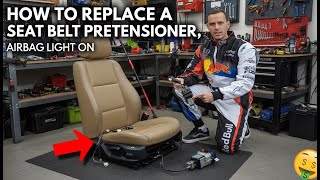
- Faulty Component (Pretensioner, Wiper Motor, HVAC Servo) (Very Common) — The component itself failed. This includes a deployed seat belt pretensioner after an impact, a burned-out wiper motor, a faulty airbag squib, or a stripped HVAC blend door actuator.
- Post-Collision Crash Data (Very Common) — If the vehicle was in an accident, the SRS module stores 'crash data' and locks the system. This data must be cleared by a professional service, even after replacing deployed airbags or pretensioners.
- Water Intrusion & Wiring Damage (Common) — Moisture leaking into fuse boxes, modules, or connectors causes electrical shorts and corrosion. Ford issued multiple recalls (e.g., 24S51) for water entering the wiper motor. Chafed or broken wires also interrupt the signal.
- Faulty Relay (Wiper/HVAC) (Common) — The small electrical relay controlling the component gets stuck open, closed, or develops an internal short.
- Weak Vehicle Battery (Less Common) — Low battery voltage causes electronic modules to behave erratically and set spurious fault codes. Always verify battery health before chasing complex electrical issues.
- Faulty Control Module (BCM, SRS, C-CM) (Rare) — The control module monitoring the circuit failed internally. This is rare and should be the last part suspected after ruling out wiring and components.
Symptoms
- Airbag Warning Light is On — For SRS-related faults (Nissan, Mitsubishi, Hyundai, Kia, Mercedes), the primary symptom is a solid airbag light on the dashboard, indicating the system is disabled.
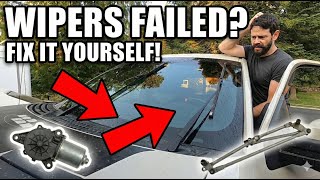
- Windshield Wipers Dead or Erratic — For wiper-related faults (Ford), the wipers fail completely, operate on only one speed, or fail to park in the correct resting position.
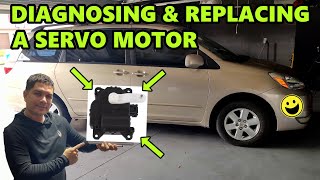
- Incorrect HVAC Operation — For HVAC faults (Toyota/Lexus), air blows from the wrong vents, the temperature fails to adjust, or a clicking noise comes from behind the dashboard. 🎬 See how to diagnose and replace a faulty HVAC servo.
- Dashboard Warning Messages — A text message appears on the instrument cluster, such as 'Pre-Collision Assist Not Available' (Ford) or 'Service Airbag System'.
Diagnostic Flowchart
Tap your situation to follow the diagnostic path that matches what you're seeing on this code.
Common Fixes & Costs
- Seat Belt Pretensioner Replacement — Parts: $75-$120 (rebuild) or $200-$400 (new OEM), Labor: $150-$300, ~1.5 hr book time (Professional)
- SRS Airbag Module Reset — Parts: $0, Labor: $40-$70 (mail-in service), ~0.5 hr book time (Professional)
- Windshield Wiper Motor Replacement — Parts: $150-$230, Labor: $120-$180, ~1.2 hr book time (Intermediate)
- HVAC Blend Door Actuator Replacement — Parts: $30-$150, Labor: $150-$2,000+, ~4.5 hr book time (Intermediate)
- Wiper Relay Replacement — Parts: $10-$45, Labor: $20-$50, ~0.1 hr book time (DIY)
Used vs. New Parts: Buying Guide
When a used part is worth it: For non-safety components like wiper motors and HVAC actuators, a used part from a reputable salvage yard is cost-effective. For SRS components, professional rebuild services are mandatory over junkyard parts due to safety risks.
Donor-vehicle mileage cap: roughly under 100000 miles for the part to have meaningful remaining life.
Donor quality checklist:
- Match the part number exactly. Body modules are year and trim specific.
- Never buy used SRS components from unknown online sources due to the risk of counterfeit or damaged parts.
- Avoid parts from flood-damaged vehicles, as corrosion is a primary failure cause.
- Verify the used part comes with at least a 90-day warranty.
Decision logic:
- If The part is a seat belt pretensioner or airbag module → Prioritize a professional rebuild of your original part or buy new OEM. Avoid used parts from a salvage yard.
- If The part is a wiper motor or HVAC actuator and the vehicle is over 10 years old → A warrantied used part is an acceptable budget-friendly choice.
- If The part is an electronic module (BCM, SRS) → Buy new or use a specialist to reset your original. A used module is VIN-locked and requires expensive dealer programming.
Warranty tradeoff: Used parts typically have a 30-90 day warranty. New aftermarket parts offer 1-year warranties. A rebuild service for your original SRS part often comes with a lifetime warranty.
Worst-case if a used part fails: $300-$1500 if a used part fails, covering repeat labor and a new part. For an SRS component, the worst-case cost is non-financial.
What Happens If You Wait — Timeline
- Immediate: Airbag warning light illuminates. The entire SRS is disabled by the control module to prevent accidental deployment. (MPG impact: 0%% · Added cost: $0 (Safety risk is total and immediate))
- Ongoing: The vehicle fails state safety inspections. The safety risk of having no airbags remains constant. (MPG impact: 0%% · Added cost: $50-$200 in re-inspection fees or fines.)
- 0-2 months: Wipers operate intermittently or don't park correctly. This is an inconvenience and minor safety risk. (MPG impact: 0%% · Added cost: $0)
- 2-6 months: Wiper motor fails completely, often during heavy rain. Driving in precipitation becomes impossible. (MPG impact: 0%% · Added cost: $0 (Risk of accident is high))
- 6+ months: Continued moisture seeps into the main fuse box (BJB) or Body Control Module (BCM), causing widespread electrical failures. (MPG impact: 0%% · Added cost: $500-$2500+ for BCM replacement and programming.)
- 0-3 months: A faint clicking or knocking sound is heard from the dashboard when changing temperature or vent settings. (MPG impact: 0%% · Added cost: $0)
- 3+ months: The actuator's internal gears strip completely. The clicking stops, but the blend door is stuck in one position, killing temperature control. (MPG impact: 0%% · Added cost: $0 (Comfort and defrosting ability compromised))
Cost of Not Fixing It
- Immediate: If the airbag light is on, the entire SRS is disabled. In a crash, airbags and pretensioners will not deploy, drastically increasing the risk of severe injury. (Added cost: N/A (Safety Risk))
- Immediate: If the wiper motor fails, driving in rain or snow becomes extremely hazardous due to lack of visibility. (Added cost: N/A (Safety Risk))
- 0-6 months: For a wiper fault caused by water intrusion, continued neglect allows moisture to spread to other electronics in the cowl area, causing expensive damage. (Added cost: $500-$2000+)
- Long-term: An illuminated warning light causes an automatic failure of state safety inspections, preventing legal registration renewal. (Added cost: $50-$200 in fines or re-inspection fees.)
Diagnosis Steps
- Identify the Vehicle-Specific Definition
Use a search engine with your vehicle's make, model, year, and 'B1432' to find the exact meaning. This dictates whether you investigate wipers, airbags, or HVAC.
Tools: Internet access (Beginner) - Scan for Sub-Codes and Crash Data
A professional-grade scan tool reads manufacturer-specific sub-codes (e.g., Ford's B1432:78) and communicates directly with the SRS or BCM to view live data and stored crash history.
Tools: Advanced OBD-II scan tool (Intermediate) - Perform Visual Inspection & Check Fuses
Inspect the affected component for damaged wires, disconnected connectors, or water intrusion. Check the relevant fuse for continuity and swap the system relay with an identical one (like the horn) to see if the problem moves.
Tools: Flashlight, fuse puller (Beginner) - Test Circuit Power and Ground
Unplug the component (e.g., wiper motor) and use a multimeter to check for 12V power and solid ground at the connector pins when the system is activated.
Tools: Multimeter (Intermediate) - Pro Tip: Test Toyota/Lexus HVAC Servo
Disconnect the servo. With the key on, verify a 5V reference between the VZ and GND pins. Measure the PT signal wire voltage while manually moving the damper linkage; it should sweep smoothly between 0.5V and 4.5V. A jumpy or dead voltage means a bad internal sensor.
Tools: Multimeter, wiring diagram (Advanced) - Pro Tip: Check Ford C-CM Alignment
Code B1432:78 indicates a Vertical Misalignment of the Cruise Control Module. Place a digital level on the C-CM surface. Turn the vertical adjustment screw until the reading is exactly 0.0°.
Tools: Digital level, hand tools (Advanced) - Pro Tip: Test SRS Component Resistance
For Nissan/Mitsubishi SRS faults, disconnect the battery for 15 minutes. Unplug the pretensioner or squib. Substitute the component with a known-good 2-3 ohm resistor. If the code changes from 'short' to 'high resistance', the wiring is good and the component is faulty.
Tools: SRS-safe resistor pack (Professional)
When This Code Triggers (Freeze-Frame Conditions)
- System Voltage: 11.5-14.5V (The module records battery voltage at the time of the fault. Low voltage (<11.5V) indicates a battery or charging system issue as the root cause.)
- Ignition Status: ON / RUN (Indicates the key was in the 'ON' or 'RUN' position when the fault was detected. Most body codes set during the module's power-on self-test.)
- Odometer Reading: e.g., 123,456 miles (The vehicle's mileage is logged when the code is set, providing a timestamp for the failure.)
- Ignition Cycle Counter: e.g., 50 (Tracks how many times the vehicle has been started since the fault was first detected. A low number indicates a recent fault.)
- Component Status (if available): e.g., Wiper Switch: HIGH, Pretensioner Resistance: OPEN (Advanced scanners pull manufacturer-specific data showing the state of the switch or the electrical reading from the sensor at the moment of the fault.)
Related Codes
- B142E, B1433 (Ford) — These codes relate to the alignment of the forward-looking sensor (C-CM). B1432 indicates Vertical Misalignment, which is adjustable. B142E indicates Horizontal Misalignment, which is not adjustable and points to a bent mounting bracket.
- B1433, B1428, B1429 (Nissan) — These codes frequently appear with B1432 as they relate to different faults within the SRS system. While B1432 points to the driver's side lap belt pretensioner shorting, other codes indicate open circuits or high resistance in the same component.
- B1342 (Ford) — This generic module fault code means the control module itself has an internal error, which appears alongside a circuit code like B1432.
- B1430, B1431, B1433 (Mitsubishi) — These codes relate to the driver's side airbag squib circuit. B1432 indicates a short to ground, B1431 is an open circuit, and B1433 is a short to power. Seeing these together isolates the fault to a specific wiring harness.
Climate & Environmental Factors
- High Humidity / Water Intrusion: Direct water entry is a primary cause of B1432 faults for external components like wiper motors. Moisture causes corrosion on connectors and circuit boards, leading to short circuits. This is the exact cause cited in multiple Ford wiper motor recalls.
- Extreme Cold: Cold weather stiffens plastics and lubricants. This causes HVAC blend doors to bind, putting extra strain on the actuator motor until it strips its gears and sets a fault code.
How to Talk to a Mechanic About This Code
Say this: "I have a B1432 code on my [Make, Model]. Based on the symptoms, it points to the [SRS pretensioner / wiper motor / HVAC actuator]. I'd like to schedule a diagnostic to confirm the specific fault in that circuit before replacing parts. If it's an SRS fault from a collision, can you also quote an SRS module reset?"
This signals you've done your research, directs the technician to the correct system, and prevents a costly 'shotgun approach' of replacing random parts. It shows you're an informed consumer looking for an accurate diagnosis.
Avoid saying:
- 'My airbag light is on, can you just turn it off?'
- 'The car is acting weird, just fix whatever is wrong.'
- 'My wipers don't work, I probably need a new motor.'
Questions to ask before authorizing the repair:
- Did you test the circuit for power, ground, and resistance to confirm the component itself has failed?
- For an SRS repair, does your quote include resetting the main SRS module, or is that a separate charge?
- For a wiper or HVAC repair, have you ruled out a simple relay or fuse issue first?
- What is the warranty on both the replacement part and your labor?
Where to Take It: Dealer vs Independent vs Chain
- Dealer:
Recommended for warranty/recall work and complex electronic recalibrations.
Best for: Vehicles under warranty (for wiper recalls or seatbelt lifetime warranties)., Complex, manufacturer-specific procedures like Ford C-CM alignment or Toyota servo recalibration., Post-collision repairs where OEM parts and procedures are required by insurance.
Downsides: Highest labor rates., Defaults to replacing an entire module when a less expensive reset or rebuild is possible. (Typical cost: +50% vs. baseline) - Independent Shop:
Best fit for most B1432 repairs, provided you choose a reputable shop with proven expertise in auto electrics and SRS systems.
Best for: Out-of-warranty vehicles with common B1432 causes like a Ford wiper motor, a Nissan pretensioner, or a Toyota HVAC actuator., Owners seeking a better value than the dealership.
Downsides: Quality varies greatly; ensure the shop has strong electrical and SRS diagnostic experience., May lack specialized tools for module programming. (Typical cost: +0% vs. baseline) - Chain Shop:
AVOID for most B1432 scenarios. The diagnostic complexity of SRS, HVAC, and modern driver-assist systems is beyond the scope of most chain shops.
Best for: Extremely simple, accessible fixes like a wiper relay swap.
Downsides: Technician skill is highly variable., Lacks the in-depth diagnostic tools and training for complex body electrical or SRS faults. (Typical cost: -10% vs. baseline)
When to Walk Away From the Repair
If the estimated repair cost exceeds 50-70% of the car's private-party value, seriously consider selling or trading it in as-is rather than fixing it.
- Car worth $5000, fix is $2200: Walk away. The repair cost is 44% of the car's value, and for an SRS issue, other age-related problems are likely. It's not a sound investment.
- Car worth $20000, fix is $450: Fix it. The repair cost is less than 3% of the vehicle's value. This is a routine repair.
- Car worth $3000, fix is $2000: Walk away. The repair cost is 67% of the car's value. The car is likely totaled from a financial perspective.
What Scan Tool You Need for This Code
Minimum: A scanner that reads and clears Body (B-codes) and SRS (airbag) codes. A basic engine-only (P-code) reader will NOT see code B1432.
A $20 scanner from a big-box store only reads 'P' (Powertrain) codes related to the check engine light. B1432 is a 'B' (Body) code stored in the SRS or Body Control Module. You need a tool that communicates with these systems.
Budget: BlueDriver Pro or Foxwell NT630 Plus (~$100) — Reads and clears engine, ABS, and SRS/airbag codes. Shows live data and freeze frame data, helping you start the diagnostic process.
Mid-range: Autel MaxiLink ML629 / MaxiCOM MK808 (~$150) — Offers full-system scanning (Engine, ABS, SRS, Transmission, BCM) and bidirectional controls to test actuators, useful for HVAC or wiper faults.
Professional: Autel MaxiCOM MK906 Pro / Launch X431 Series (~$900-1500) — Provides full bidirectional control, module coding, and special functions required for calibrating a Ford C-CM or performing a servo initialization on a Toyota.
Rent vs buy: Most auto parts store rental scanners cannot read SRS or B-codes. You will likely need to buy a capable scanner. If you only plan to use it once, paying a shop's $100-$150 diagnostic fee is more cost-effective.
How to Clear the Code After You Fix It
- For non-SRS faults: Use an OBD-II scan tool to clear the code from the BCM.
- For SRS faults (post-collision): The SRS module must be professionally reset (mail-in service) or replaced. A standard scanner cannot clear 'crash data'.
- Disconnect the negative battery terminal for 15 minutes to reset all modules (this will not clear SRS crash data).
- Perform several key cycles (ON-OFF-ON) to allow the relevant module to run its self-test.
Drive cycle (~15 minutes): A specific drive cycle is not required for B-codes. The fault clears after repair, or the warning light returns on the next key cycle if the fault persists. A short 15-minute drive confirms the fix.
Readiness monitors affected: None. Body codes (B-codes) do not affect emissions readiness monitors.
Watch out for:
- Attempting to clear an SRS crash code with a basic scanner; the light returns instantly.
- Clearing the code without fixing the root cause (e.g., faulty wiring, bad component).
- Forgetting to reconnect all connectors securely after a repair, setting a new code.
Will This Fail Emissions / State Inspection?
No — by itself this code doesn't fail OBD inspection (but it can keep readiness monitors from setting, which causes a separate fail).
- California: An airbag light will NOT fail a smog check, as it is not related to emissions. The test only looks for powertrain-related codes (P-codes).
- New York: An illuminated airbag light is noted during the safety inspection as an 'advisement only' and is NOT a cause for rejection, though individual shops may have stricter policies.
- Texas: The airbag system is NOT a required item on the annual safety inspection checklist. A vehicle passes with the airbag light on if other safety items are functional.
- Virginia / Pennsylvania: In states with comprehensive safety inspections, an illuminated airbag light is an automatic failure, as the SRS is a critical safety system.
Most Commonly Affected Vehicles
- Nissan Altima, Kicks, Versa, Sentra, Armada (2007-2022) — Highly prone to B1432 as a seat belt pretensioner fault code, almost always triggered after an accident.
- Ford F-150 / F-Series Super Duty, Expedition (2011-2024) — Sets B1432 for a wiper circuit fault or, on newer models, a vertical misalignment of the forward-facing cruise control module (C-CM).
- Hyundai / Kia Elantra, Forte, various models (2010-2020) — Consistently points to an SRS fault: 'Left-hand Rear Side Airbag Short To Power Feed'.
- Lexus / Toyota IS 300, RAV4, Tacoma, Prius, Sienna (2004-2019) — Logs B1432 for HVAC servo motor issues (Air Inlet Damper Position Sensor) or A/C compressor lock sensor faults.
- Mitsubishi Lancer, Outlander, various models (2000-2015) — Uses B1432 for the SRS system, specifically a short to ground in the driver's side airbag squib.
- Mercedes-Benz Various Models (2005-2021) — Indicates a fault with the 'Left Seat Belt Pre-Tensioner 2' circuit.
- Chevrolet / GMC Light-Duty Trucks (All) (1999-2024) — False Positive: Searches for 'B1432' often show a 'Baldwin B1432' oil filter. These vehicles do not commonly use the B1432 OBD-II code.
- Infiniti Q50 (2018-2022) — Logs B1432 for seat belt pretensioner circuit faults, sometimes caused by a disconnected connector under the seat.
Manufacturer-Specific Notes
- Ford: The meaning of B1432 is inconsistent. It points to the wiper relay circuit or the vertical alignment of the adaptive cruise control module. Ford has issued multiple recalls (24S51, 26V117, 26S24) for wiper motors failing from water intrusion, a primary cause of this code.
- Nissan: This code almost always indicates a fault in the driver's side seat belt pretensioner circuit after a collision. Many manufacturers offer a lifetime warranty on seat belt systems for manufacturing defects, so check with a dealer before paying out of pocket.
- Toyota/Lexus: B1432 relates to the HVAC system, pointing to the air inlet damper servo motor. Toyota issued service bulletins (L-SB-0009-21) detailing how to use a Techstream tool to clean and recalibrate sticky servos before replacing them.
- Hyundai/Kia: B1432 consistently flags an SRS fault: 'Left-hand Rear Side Airbag Short To Power Feed'. Diagnosis focuses strictly on the wiring and airbag module for that specific rear airbag.
- Mitsubishi: Mitsubishi uses this code for a short to ground in the driver's side airbag squib. The diagnostic procedure requires checking the CAN bus lines first before testing the squib circuit itself.
Real Owner Stories
2017 Nissan Kicks with Airbag Light after Minor Collision
The airbag light illuminated immediately after a minor front-end collision. No airbags deployed, but the driver's seat belt locked up.
Outcome: The owner replaced the driver's side seat belt pretensioner. The SRS module was then removed and sent to a mail-in service for a $50 'crash data reset'. After reinstalling the reset module, the light stayed off.
Lesson: After a collision, a B1432 code on a Nissan means the pretensioner fired. Repair requires two steps: replacing the deployed hardware and resetting the crash data stored in the SRS module.
2021 Ford F-150 with Intermittent Wipers
At 30,000 miles, the windshield wipers began working erratically and eventually failed completely during a rainstorm.
Outcome: The truck was covered under Ford's recall 22S71 for faulty wiper motors failing due to water intrusion. The dealer replaced the wiper motor free of charge.
Lesson: For Ford wiper issues with a B1432 code, always check for active recalls (like 22S71 or 24S51) before paying for a repair.
2007 Toyota Sienna with Annoying Clicking in Dash
An incessant clicking noise came from behind the passenger dashboard. The HVAC system also had trouble directing air to the correct vents.
Outcome: After cleaning and reassembly, the clicking stopped and HVAC function was restored, saving hundreds in labor.
Lesson: On a Toyota/Lexus, a clicking dash and HVAC issues are classic signs of a failing blend door actuator. Accessible actuators can often be cleaned or replaced cheaply as a DIY job.
How to Prevent This Code From Triggering
- Clean Cowl and Fender Drains Regularly (Twice a year (Spring/Fall)) — Leaves clog the drains below the windshield, causing water to overflow directly onto the wiper motor. This is a primary cause of Ford's B1432 wiper faults.
- Apply Dielectric Grease to Connectors (When servicing nearby components) — Applying dielectric grease to the seals of electrical connectors prevents moisture intrusion and corrosion, stopping electrical shorts.
- Cycle HVAC Modes Periodically (Monthly) — Regularly cycling through all vent positions and temperature ranges prevents blend door actuator motors and linkages from seizing due to inactivity.
- Maintain a Healthy Battery (Annually (before winter)) — A weak battery provides unstable voltage to the vehicle's modules, causing them to set spurious 'ghost' codes. Clean terminals and test battery health regularly.
- Inspect Under-Seat Wiring (During interior cleaning) — Items pushed under the front seats snag and disconnect the yellow SRS connectors for seat belt pretensioners, instantly triggering a B1432 code.
Frequently Asked Questions
I searched for B1432 and found an oil filter for a Chevy/GMC truck. What's going on?
This is a common point of confusion. 'Baldwin B1432' is the part number for a popular engine oil filter. It has no relation to the OBD-II diagnostic trouble code B1432. If you have a Chevrolet or GMC truck, it is highly unlikely that this code is present.
My airbag light is on with code B1432. Can I just reset it myself?
No. If the code is due to a collision, it cannot be cleared with a standard OBD-II scanner. The SRS control module must be professionally reset or replaced. Attempting to clear the code without fixing the deployed pretensioner results in the light immediately returning.
What are common misdiagnosis pitfalls for B1432?
A major pitfall occurs with Ford's driver-assist systems, where service departments claim the sensor bracket was damaged by an impact and deny warranty coverage. Another mistake is replacing expensive components before checking for a weak battery, a corroded ground wire, or a bad relay.
Could a weak battery cause a B1432 code?
Yes. A low-voltage condition from a failing battery causes unpredictable behavior in electronic modules, leading to 'ghost' codes like B1432. Always test the battery and charging system before beginning complex electrical diagnosis.
My airbag light is on with code B1432. Is it safe to drive?
You can physically drive, but you must assume the entire airbag system is disabled. In an accident, the airbags and seat belt pretensioners will not function. The vehicle should be serviced immediately for occupant safety.
Can I fix a B1432 code myself?
It depends on the cause. A wiper relay in an accessible fuse box is an easy DIY fix, but airbag and seatbelt faults must be left to a professional due to extreme safety risks.
Is a seat belt repair for code B1432 covered by warranty?
There is no federal law requiring a lifetime warranty on seat belts. However, manufacturers like Nissan and Subaru often offer extended warranties covering manufacturing defects. Always check with your dealer before paying out of pocket, as they may cover the repair if it stems from a known defect.
Key Takeaways
- Code B1432 lacks a universal OBD-II definition, meaning it points to a seatbelt pretensioner on a Nissan, a wiper motor on a Ford, or an HVAC servo on a Toyota.
- Always pair B1432 with your specific vehicle make and model in a search engine before buying parts, as a wrong guess wastes hundreds of dollars.
- An illuminated airbag light alongside B1432 means the vehicle's entire Supplemental Restraint System (SRS) is disabled, requiring immediate repair to restore crash protection.
- Test the vehicle's battery and swap the affected system's relay before replacing expensive components, as voltage drops below 11.5V frequently trigger false B1432 codes.
- Fixing a post-collision B1432 code requires two distinct steps: replacing the deployed $200 hardware and paying a specialist $50 to clear the locked crash data from the SRS module.
Helpful Videos
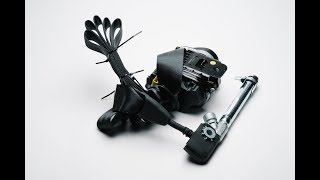
Shop the Parts Behind B1432
Below are the parts most often responsible for code B1432, ranked by how frequently each one is the actual culprit (per the diagnosis above). Tap any to see what we have for your vehicle.




The information in this article is provided for general reference and educational purposes only. Vehicle specifications, procedures, and part compatibility can vary by production date, trim level, and region. Always consult your vehicle's factory service manual and verify part numbers before purchasing or performing repairs. Safety-critical components such as airbags, seat belts, and braking systems should be installed by a qualified professional.
- 🧭 Diagnostic Flowchart
- 🎬 Helpful Videos
- 🛍️ Shop This Part
- What Does B1432 Mean?
- Can I Drive With B1432?
- Common Causes
- Symptoms
- Common Fixes & Costs
- Used vs. New Parts: Buying Guide
- What Happens If You Wait — Timeline
- Cost of Not Fixing It
- Diagnosis Steps
- When This Code Triggers (Freeze-Frame Conditions)
- Related Codes
- Climate & Environmental Factors
- How to Talk to a Mechanic About This Code
- Where to Take It: Dealer vs Independent vs Chain
- When to Walk Away From the Repair
- What Scan Tool You Need for This Code
- How to Clear the Code After You Fix It
- Will This Fail Emissions / State Inspection?
- Most Commonly Affected Vehicles
- Manufacturer-Specific Notes
- Real Owner Stories
- 2017 Nissan Kicks with Airbag Light after Minor Collision
- 2021 Ford F-150 with Intermittent Wipers
- 2007 Toyota Sienna with Annoying Clicking in Dash
- How to Prevent This Code From Triggering
- Frequently Asked Questions
- I searched for B1432 and found an oil filter for a Chevy/GMC truck. What's going on?
- My airbag light is on with code B1432. Can I just reset it myself?
- What are common misdiagnosis pitfalls for B1432?
- Could a weak battery cause a B1432 code?
- My airbag light is on with code B1432. Is it safe to drive?
- Can I fix a B1432 code myself?
- Is a seat belt repair for code B1432 covered by warranty?
- Key Takeaways
- 🎟️ Get 5% Off