

B1441 on 2016-2019 Lexus GS F: Passenger Air Mix Servo Failure Causes and Fixes
Code B1441 on a 2016-2019 Lexus GS F indicates a failure of the passenger-side air mix servo motor. This is a very common problem causing incorrect passenger-side air temperature, often stuck on full hot. The part itself is relatively inexpensive, but its location deep in the dashboard makes replacement extremely labor-intensive. Dealerships and shops may quote between $1,900 and $4,100 for the repair due to 8-12 hours of labor for dashboard disassembly.
- B1441 on a Lexus GS F almost certainly means the passenger-side air mix servo has failed.
- Symptoms include incorrect passenger air temperature (usually stuck hot) and clicking/grinding sounds from the dash.
- This is a known, widespread defect acknowledged by Lexus through TSBs and a warranty extension program (20LE01) that has mostly expired.
- The repair is extremely expensive ($1900-$4100+) not because of the part, but because of the 8-12 hours of labor required to remove the dashboard and HVAC unit for access.
What's Unique About the 2016-2019 Lexus GS F
The 4th generation Lexus GS platform (chassis code GRL1#), including the GS F, is notorious for premature HVAC servo motor failures. The problem was so widespread that Lexus issued multiple Technical Service Bulletins (TSBs) and a Customer Support Program (20LE01) acknowledging the issue across the GS, IS, and RC platforms which share these components. Owners often find that when one servo motor fails, others may soon follow, leading to multiple HVAC-related codes appearing at once. While older generation servos could sometimes be repaired by cleaning internal contacts, the servos in this generation are typically replaced entirely.
Diagnostic Flowchart
Tap your situation to follow the diagnostic path that matches what you're seeing on this vehicle.
Symptoms You May Notice
- Incorrect air temperature on the passenger side (often stuck on full hot or full cold).
- Uneven temperature between the driver and passenger side vents.
- Clicking, ticking, or grinding noises from behind the passenger side of the dashboard, especially when changing temperature settings.
- Inability to change air flow modes correctly (e.g., stuck on defrost or floor vents), often indicates multiple servo failures.
- Little to no air flow from specific vents.
- Low refrigerant charge. While low refrigerant can cause poor cooling, it typically affects both sides of the vehicle, will not cause a specific servo motor code like B1441, and does not produce clicking noises from the dashboard.
Most Likely Causes
- Failed Passenger Air Mix Damper Servo Motor 🔴 High Probability → Shop HVAC Mode Door Actuator This is a well-documented, common failure part on this and other Lexus models of the era, as confirmed by multiple TSBs and a Customer Support Program (20LE01). The internal electrical contacts and motor wear out prematurely, causing a loss of position sensing or motor function.
How to confirm: Use a diagnostic scan tool (like Toyota Techstream) to monitor the 'Passenger Air Mix' servo's 'target pulse' vs 'actual pulse'. A discrepancy between the commanded and actual values confirms the failure. A simpler method is to listen for a persistent clicking sound from the passenger side dash when changing temperature settings. An 'Active Test' in Techstream can also command the servo to move, making diagnosis definitive.
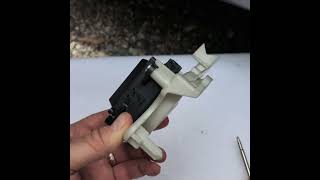
Typical fix: Replace the faulty servo motor (part #87106-30550). 🎬 Watch: A quick walkthrough of the servo motor replacement process. Due to the extreme labor involved (full dash removal), many shops and owners recommend replacing all accessible servos at the same time as a preventative measure to avoid a repeat of the costly labor.
Est. part cost: $150-$260
Rare But Worth Checking
- Wiring Harness or Connector Damage: While less common than motor failure, the wiring leading to the servo could be damaged or have a loose connection. This should be checked with a multimeter before replacing the servo, especially if prior dash work has been performed.
- Faulty A/C Amplifier (Control Module): → Shop HVAC Control It is very rare for the main HVAC control module to fail. TSBs L-SB-0019-20 and L-SB-0001-21 suggest that reprogramming the A/C amplifier should be performed as a first step, but outright failure of the module is unlikely. This should only be considered after the servo motor and wiring have been definitively ruled out.
Diagnosis Steps
- Confirm the symptoms, such as incorrect passenger-side temperature or clicking noises from the dash when changing temperature.
- Use an OBD-II scanner capable of reading Body (B) codes to confirm B1441 is present.
- If available, use Toyota Techstream software to perform a health check of the A/C system. Attempt a 'Servo Initialization' procedure; some owners report this can temporarily restore function and confirms a failing servo.
- In Techstream, navigate to the Data List for the A/C system. Monitor the 'Passenger Air Mix Servo target pulse' and 'Passenger Air Mix Servo actual pulse' values while changing the passenger temperature from hot to cold. If the actual pulse does not follow the target, the servo has failed.
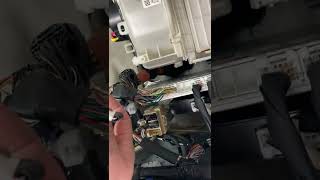
- Listen closely to the passenger side of the dashboard while changing the passenger temperature. Clicking or grinding sounds strongly indicate a failed servo motor with a stripped internal gear. 🎬 Watch: How to access and replace a failing blend door actuator.
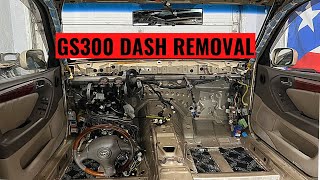
- If the servo does not respond electronically, the next step is physical access. This requires significant dashboard disassembly. 🎬 See this video for a guide on removing the instrument panel.
- Once the servo connector is accessible, use a multimeter to check for power and ground according to the vehicle's wiring diagram to rule out a wiring issue.
- If power and ground are present but the motor does not function correctly, the servo motor is confirmed to be faulty and must be replaced.
Parts You'll Likely Need
- Damper Servo Sub-Assembly, Air Conditioner Radiator, No. 4
(OEM #87106-30550)— This is the specific OEM servo motor identified by Lexus TSB L-SB-0001-21 Rev for the B1441 fault code on the GS/RC/IS platform. It is the direct cause of the failure.
Trusted brands: Lexus (Genuine OEM)
OEM price range: $150-$260
Aftermarket price range: $80-$150
Related Codes That Often Appear With This One
- B1442 — Points to the Air Inlet Damper Servo. These servos are part of the same HVAC unit and are known to fail concurrently.
- B1443 — Points to the Air Outlet Damper Servo. Like other servos in the HVAC unit, it is prone to similar failures and is often replaced at the same time.
- B1446 — Points to the Driver Side Air Mix Servo. It's very common for both driver and passenger side air mix servos to fail, leading to temperature control issues on both sides of the vehicle.
- B1454 — Points to the Passenger Side Cool Air Bypass Servo. It is located in the same area and is another common failure point addressed by the same TSBs.
Technical Service Bulletins (TSBs) & Recalls
- L-SB-0019-20: Addresses HVAC conditions including uneven temperature and lists B1441 as a potential DTC for 2017-2019 models. Suggests a software update for the A/C amplifier.
- L-SB-0001-21 Rev: A comprehensive TSB for 2016-2017 models that lists B1441, provides part numbers, and details the difficult replacement procedure requiring A/C unit removal.
- 20LE01 (Customer Support Program): An official Lexus program extending warranty coverage for this specific failure. Primary coverage expired Jan 12, 2022, with secondary coverage for 7 years/125k miles.
Platform-Specific Known Issues
- Lexus issued Technical Service Bulletin L-SB-0001-21 Rev, which covers the 2016-2017 GS F, for HVAC servo motor malfunctions. The procedure involves checking for codes, potentially reprogramming the A/C amplifier, and, if necessary, replacing the faulty servos. This TSB explicitly states that replacing the B1441 servo requires removing the entire A/C unit.
- Lexus also released TSB L-SB-0019-20, which includes the 2017-2019 GS F, for the same set of symptoms and fault codes, indicating the problem persists across the specified model years. The primary remedy in this TSB is a software update for the A/C amplifier.
- Lexus initiated Customer Support Program 20LE01 due to the high failure rate. This program extended the warranty for this specific issue. Primary coverage ended on January 12, 2022. Secondary coverage lasts for 7 years or 125,000 miles from the vehicle's in-service date, whichever comes first. This means some 2019 models may still be covered, but most 2016-2018 vehicles are now outside this coverage period.
Mechanic-Grade Diagnostic Values
- Servo Motor Bench Test (Hot) — expected: Connect positive (+) lead from battery to terminal 5 and negative (-) lead to terminal 4; lever should turn to 'MAX. HOT' position smoothly.. Failure: Lever does not move, moves erratically, or makes grinding noises.
- Servo Motor Bench Test (Cool) — expected: Connect positive (+) lead from battery to terminal 4 and negative (-) lead to terminal 5; lever should turn to 'MAX. COOL' position smoothly.. Failure: Lever does not move, moves erratically, or makes grinding noises.
- Continuity between A/C Amplifier and Servo Connector — expected: Below 1 Ω. Failure: Resistance above 1 Ω indicates a wiring issue between the amplifier and the servo motor.
Scan Tool Commands That Help
- Toyota Techstream: Servo Motor Initialization — Required after replacing the servo motor, disconnecting the battery, or replacing the A/C amplifier to relearn the damper endpoint positions. Some users report this can temporarily restore function to a failing servo.
- Toyota Techstream: Active Test: Air Mix Servo Targ Pulse (P) — To command the passenger air mix servo to move to specific positions (e.g., full hot, full cold) while observing its actual position in the Data List. This definitively confirms if the motor is responding to commands from the A/C amplifier.
- Toyota Techstream: Utility: Servo Cleaning Process — As per TSB L-SB-0001-21, this is a dealer-level utility run before replacement. It cycles the servos to attempt to clear internal contact issues and then reports which servos, if any, still fail the test and require replacement.
Wiring & Ground Locations
- Passenger Air Mix Servo Connector — Located on the passenger side of the main HVAC unit, deep behind the dashboard and glove box area. Access requires significant disassembly and removal of the HVAC unit itself as per TSB L-SB-0001-21 Rev1.. This is the direct connection point for the faulty component. Checking for power, ground, and signal at this connector is the final step to condemn the servo motor versus a wiring or A/C amplifier fault.
- Main Body Ground — A primary ground point runs from the battery negative terminal to the right inner fender. Additional grounds connect the firewall to the engine block.. While a general ground issue is unlikely to cause a single servo code, a poor or corroded ground connection for the body control modules could cause a variety of difficult-to-diagnose electrical issues, including erratic behavior of HVAC components.
Real Owner Repair Stories
- Toyota/Lexus forum user (Lexus (model not specified, but common issue)) — No heat on the passenger side; uneven temperature between driver and passenger.
❌ Tried (didn't work) Heater core flush, Air bleeding from cooling system, Considering replacement of actuators/servos and sensors
✅ What actually fixed it Performing a 'INITIALIZE SERVOMOTOR' function using Toyota Techstream software recalibrated the blend doors and restored proper function without replacing any parts.
Model Year Variations Within This Range
- 2017-2019: For these model years, TSB L-SB-0019-20 suggests the first step in diagnosis is to reprogram the A/C Amplifier with updated software. This indicates the issue could be logic-based, whereas earlier models primarily point to mechanical failure.
- 2016-2017: TSB L-SB-0001-21 Rev1, which applies to these years, focuses on a 'Servo Cleaning Process' utility and mechanical replacement, without mentioning a software update as the primary fix. It explicitly classifies the B1441 servo as 'Group C', requiring removal of the entire A/C unit for replacement.
Helpful Videos

We Have This Part in Stock

The information in this article is provided for general reference and educational purposes only. Vehicle specifications, procedures, and part compatibility can vary by production date, trim level, and region. Always consult your vehicle's factory service manual and verify part numbers before purchasing or performing repairs. Safety-critical components such as airbags, seat belts, and braking systems should be installed by a qualified professional.
- Lexus GS F:
- 🧭 Diagnostic Flowchart
- 🎬 Helpful Videos
- 🛍️ Shop This Part
- What's Unique About the 2016-2019 Lexus GS F
- Symptoms You May Notice
- Most Likely Causes
- Rare But Worth Checking
- Diagnosis Steps
- Parts You'll Likely Need
- Related Codes That Often Appear With This One
- Technical Service Bulletins (TSBs) & Recalls
- Platform-Specific Known Issues
- Mechanic-Grade Diagnostic Values
- Scan Tool Commands That Help
- Wiring & Ground Locations
- Real Owner Repair Stories
- Model Year Variations Within This Range
- 🎟️ Get 5% Off