

B1441 on 2013-2017 Lexus GS HYBRID: Passenger Air Mix Servo Failure and Fixes
B1441 indicates a failure of the front passenger-side air mix damper servo motor. This is a very common problem causing incorrect air temperature on the passenger side. The fix is to replace the servo motor (OEM Part #87106-30550), but the repair is extremely labor-intensive and costly as it requires removing the entire dashboard and A/C unit. Lexus acknowledged this widespread issue with Customer Support Program 20LE01, but its primary coverage expired in January 2022.
- B1441 on your GS Hybrid is a definitive code for a failed passenger-side temperature blend motor.
- Symptoms are almost always incorrect air temperature on the passenger side, sometimes with a clicking sound.
- The cause is a faulty servo motor (Part #87106-30550), which is a known weak point acknowledged by Lexus.
- While the part is relatively affordable, the repair is one of the most labor-intensive jobs on the vehicle, requiring full dashboard removal and costing thousands at a shop.
- This is not a DIY-friendly repair due to its complexity and the need for special tools like Toyota Techstream for proper diagnosis and initialization.
What's Unique About the 2013-2017 Lexus GS HYBRID
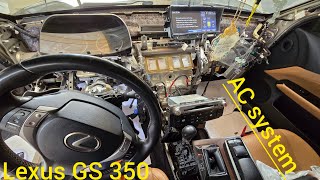
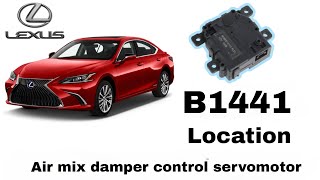
This is a widely documented issue on the fourth-generation Lexus GS platform (L10) and its platform mates like the IS and RC. Lexus acknowledged the high failure rate of these servo motors by issuing Technical Service Bulletins (TSBs) and a Customer Support Program (20LE01) covering approximately 328,700 vehicles. The B1441 servo, in particular, is notoriously difficult to access. 🎬 Watch: See the exact location of the B1441 servo motor. According to Lexus's own repair documents (TSB L-SB-0001-21 Rev), it is in 'Replacement Procedure Group C', which requires the complete removal of the dashboard and the entire HVAC unit from the vehicle 🎬 Watch: Full walkthrough of the dashboard and HVAC removal process. to replace the part, making the labor cost exceptionally high.
Diagnostic Flowchart
Tap your situation to follow the diagnostic path that matches what you're seeing on this vehicle.
Symptoms You May Notice
- Incorrect air temperature on the passenger side (e.g., stuck on full hot or full cold).
- Uneven temperature between driver and passenger vents.
- Clicking, ticking, or grinding noises from behind the passenger side of the dashboard, especially on startup or when changing temperature.
- Little to no air flow from specific vents if a mode servo also fails.
- Center console area becomes unusually hot if the servo fails in a position that allows constant flow from the heater core.
- An error message may appear on the climate control display.
- Pressing the front defrost button may trigger the fault, causing mode doors to get stuck.
- Recharging the A/C system
- Replacing the heater core
- Replacing the climate control head unit
- Assuming it's a simple software glitch when the servo has physically failed
Most Likely Causes
- Failed Passenger-Side Air Mix Servo Motor 🔴 High Probability The internal components of the servo motor, specifically the potentiometer's carbon traces and electrical contacts, wear out prematurely. This is a known manufacturing defect across many Lexus models of this era, leading to multiple TSBs and a warranty extension program (Customer Support Program 20LE01).
How to confirm: Listen for clicking from the passenger side dash. Use a capable OBD-II scanner to confirm the B1441 code. A professional technician can use Toyota's Techstream software to directly command the servo and observe if the 'actual position' value changes in the live data stream to match the 'target position'.
Typical fix: Replace the faulty servo motor. Due to the extreme labor involved, some owners and shops opt to have all 8 servos replaced at the same time as a preventative measure, though this significantly increases cost.
Est. part cost: $150-$260
Rare But Worth Checking
- HVAC Control Module (A/C Amplifier) Fault: → Shop HVAC Control This is very unlikely. The servo motor itself is almost always the point of failure. Some Reddit users have mentioned a software reflash for the A/C amplifier that resolved issues for some owners, but physical servo failure is more common for a persistent B1441 code. TSB L-SB-0001-21 Rev outlines a procedure to reflash the A/C amplifier and then run a 'servo cleaning process' before replacing parts. Only consider this after a new, known-good servo motor fails to operate.
- Wiring Harness Damage: Damage to the wires or connector for the servo motor could cause this code, but it's uncommon unless other repairs have been performed in the dashboard area. A service manual suggests checking for a wire harness caught between the links of the motors and dampers.
Diagnosis Steps
- Confirm the symptom: Verify that the passenger side temperature does not change when commanded and listen for clicking noises from the dash.
- Scan for Codes: Use an OBD-II scanner capable of reading Body (B) codes to confirm B1441 is present. Note any other HVAC codes.
- Attempt Servo Re-initialization: Using advanced software like Toyota Techstream, a technician or advanced DIYer can run a 'Servo Motor Initialization' routine. Sometimes this can temporarily restore function by re-learning the stop points, or confirm a definite hardware failure if it doesn't work. Multiple forum users report this can be a temporary fix for weeks or months.
- Use Techstream Active Test: In Techstream, use the 'Active Test' function to command the passenger air mix servo to move. Monitor the 'Passenger Air Mix' target vs. actual position values. A large discrepancy between the 'target pulse' and 'actual pulse' for the passenger air mix servo indicates a failure.
- Confirm Part Failure: Given the known issue and extreme labor, diagnosis is typically confirmed by the code and symptoms alone. The definitive test is to supply power directly to the motor's terminals, but this is not feasible without first removing the entire dashboard and HVAC unit.
Parts You'll Likely Need
- Damper Servo Sub-assy, Air Conditioner Radiator, No. 4
(OEM #87106-30550)— This is the specific OEM part number identified in Lexus TSBs and parts diagrams for the B1441 fault on the GS model. It is the component that fails.
Trusted brands: Lexus (OEM)
OEM price range: $150-$260
Aftermarket price range: $50-$100
Related Codes That Often Appear With This One
- B1442 — This code for the Air Inlet Damper Servo often appears with other HVAC servo codes as they are part of the same system and prone to similar failures.
- B1443 — This code for the Air Outlet Damper Servo is another common failure in the same HVAC unit.
- B1446 — This is the equivalent code for the driver's side air mix servo. It's common for multiple servos to fail around the same time.
- B1453 — This code for the Driver Side Air Outlet Damper is also frequently seen, as noted by owners on Reddit forums.
Technical Service Bulletins (TSBs) & Recalls
- L-SB-0019-20: Notes B1441 as a potential DTC for various HVAC issues.
- L-SB-0001-21 Rev & L-SB-0001-21: The primary TSB for this issue, which outlines symptoms, applicable models including the GS450H, and the difficult 'Group C' repair procedure. It identifies the specific part number for the B1441 servo and provides detailed diagnostic flowcharts.
- Customer Support Program 20LE01: A formal program by Lexus acknowledging the defect. It extended warranty coverage for the servo motors, but the primary coverage period has expired.
Platform-Specific Known Issues
- Lexus issued Customer Support Program 20LE01 to cover this exact issue. Primary coverage (unlimited mileage) expired on January 12, 2022. Secondary coverage lasts for 7 years or 125,000 miles from the vehicle's first use date, whichever comes first.
- TSB L-SB-0001-21 Rev explicitly details the B1441 code and repair procedure. It classifies this specific servo replacement as 'Group C', meaning the entire A/C unit must be removed from the vehicle, confirming the high labor cost.
- Owners on ClubLexus forums report dealer quotes ranging from $1,900 to over $4,100 for this specific repair. One owner was quoted $6,100 to replace all 16 servos on an LS model, and a GS owner on Reddit was quoted $5,000 for all 8 servos.
- A temporary fix reported by many owners involves using Toyota Techstream software to run the 'Servo Motor Initialization' utility. This can sometimes get the servo working again for a period of time before it ultimately fails again.
Mechanic-Grade Diagnostic Values
- Techstream Live Data: 'Passenger Air Mix Actual Pulse' vs. 'Passenger Air Mix Target Pulse' — expected: The 'Actual Pulse' value should closely match the 'Target Pulse' value as temperature settings are changed.. Failure: A large, persistent discrepancy between the actual and target pulse values indicates a fault. For example, a target of 152 and an actual of 254 confirms an error.
- Servo Position Sensor Resistance (at the servo connector) — expected: 3.6 to 6.7 kΩ when the servo is manually moved to the MAX COOL position.. Failure: A resistance reading outside of this range indicates a failed internal position sensor.
- Servo Position Sensor Resistance (at the servo connector) — expected: 0.8 to 1.6 kΩ when the servo is manually moved to the MAX HOT position.. Failure: A resistance reading outside of this range indicates a failed internal position sensor.
Hidden / Shadow Codes Worth Checking
- History vs. Current: While there are no specific 'shadow' codes, the B1441 code can be stored as a 'History' code. If the fault becomes active during diagnosis, Techstream will show it as a 'Current' code, confirming an immediate problem that needs to be addressed. (see via Toyota Techstream software, under the 'Air Conditioner' system menu.)
Scan Tool Commands That Help
- Toyota Techstream: Servomotor Initialization — Use this utility after replacing a servo, after disconnecting the battery, or as a first diagnostic step. It forces the A/C amplifier to re-learn the end-points of all servos. It can sometimes temporarily (or even permanently) fix a stuck servo without part replacement.
- Toyota Techstream: Active Test: Air Mix Servo Targ Pulse(P) — This bidirectional control allows a technician to command the passenger air mix servo to specific positions (e.g., full hot, full cold) and observe the 'Actual Pulse' data parameter to confirm if the motor is physically responding to commands.
- Toyota Techstream: AC damper servo operation check tool — This is a special software function referenced in TSBs L-SB-0001-21 and L-SB-0009-22. It is used *after* flash reprogramming the A/C amplifier. It runs the servos through a 'cleaning cycle' to potentially restore function without replacement.
Wiring & Ground Locations
- Passenger Air Mix Servo Connector — Located on the passenger side of the main HVAC unit, deep inside the dashboard. It is notoriously difficult to access, positioned behind the A/C amplifier and heater pipes.. This is the primary electrical connection for the faulty component. Checking for power, ground, and signal at this connector's pins is the definitive electrical test, though it is not feasible without significant dashboard disassembly.
- A/C Amplifier (HVAC Control Module) — Located behind the glove box assembly. The glove box must be removed for access.. This module sends the control signals to all servo motors. A loose connection at the amplifier could potentially mimic a servo failure, and it must be accessed or removed for certain diagnostic procedures like an amplifier reflash or to gain better access to the servos.
Real Owner Repair Stories
- ClubLexus user 'Lexus-rules' (2007 Lexus IS250 (platform with similar HVAC system)) — No heat on the passenger side, uneven temperature.
❌ Tried (didn't work) Heater core flush, Bleeding the cooling system
✅ What actually fixed it The user connected Techstream software and ran the 'INITIALIZE SERVOMOTOR' utility under the AirCon diagnostics. This recalibrated the servos and fully restored proper operation without replacing any parts. - ClubLexus user 'gckcmc' (2011 RX350 (similar servo failure issue)) — Passenger side stuck on full hot, B1441 code present.
❌ Tried (didn't work) Initial attempts at servo initialization (first 4 tries failed).
✅ What actually fixed it On the 5th try, running the 'servo initialization' with the car running and A/C fan off finally worked, and proper cold air function was restored. The user noted they had no idea how long the fix would last.
OEM Part Supersession History
87106-30550→87106-30550— No supersession found. This part number appears to be stable for the specified vehicle range.
Heads up: While parts catalogs may refer to this part as 'No. 3' or 'No. 4', the OEM number 87106-30550 is the correct one for the passenger side air mix fault (B1441) on this platform.
Model Year Variations Within This Range
- 2013-2017: No significant variations in the cause, diagnosis, or repair for code B1441 have been documented within this model year range for the GS HYBRID. The same TSBs and part numbers apply throughout.
Helpful Videos
Used OEM Parts in Stock
New Aftermarket Parts Available

The information in this article is provided for general reference and educational purposes only. Vehicle specifications, procedures, and part compatibility can vary by production date, trim level, and region. Always consult your vehicle's factory service manual and verify part numbers before purchasing or performing repairs. Safety-critical components such as airbags, seat belts, and braking systems should be installed by a qualified professional.
- Lexus GS HYBRID:
- 🧭 Diagnostic Flowchart
- 🎬 Helpful Videos
- 🛍️ Shop This Part
- What's Unique About the 2013-2017 Lexus GS HYBRID
- Symptoms You May Notice
- Most Likely Causes
- Rare But Worth Checking
- Diagnosis Steps
- Parts You'll Likely Need
- Related Codes That Often Appear With This One
- Technical Service Bulletins (TSBs) & Recalls
- Platform-Specific Known Issues
- Mechanic-Grade Diagnostic Values
- Hidden / Shadow Codes Worth Checking
- Scan Tool Commands That Help
- Wiring & Ground Locations
- Real Owner Repair Stories
- OEM Part Supersession History
- Model Year Variations Within This Range
- 🎟️ Get 5% Off