

B1441 on 2016-2019 Lexus IS 300: Passenger Air Mix Servo Failure and Fixes
Code B1441 on a 2016-2019 Lexus IS 300 almost always means the passenger-side air mix servo motor has failed. This causes incorrect temperature control on the passenger side, often with a clicking noise from the dash. The part itself (OEM #87106-30550) is relatively inexpensive, but labor can be significant due to its difficult-to-access location behind the glove box. This is a very common failure across multiple Lexus models.
- B1441 on a 2016-2019 IS 300 points directly to a failed passenger-side temperature blend door servo motor.
- The most common symptoms are air stuck on hot or cold on the passenger side and a distinct clicking noise from the dash.
- The fix is to replace the servo motor (OEM Part #87106-30550) and potentially update the A/C ECU software.
- While the part is not overly expensive, the repair is labor-intensive due to the servo's location deep within the dashboard, leading to high dealer quotes.
- Before paying for a repair, check with a Lexus dealer for any potential coverage under Customer Support Program 21LE01, even if the primary period has expired.
What's Unique About the 2016-2019 Lexus IS 300
This is a widely documented issue on third-generation Lexus IS models, as well as other Lexus vehicles from the same era like the GS and RC. The failure was so common that Lexus initiated a Customer Support Program (20LE01) to cover repairs, though its primary coverage has expired. Lexus has issued multiple Technical Service Bulletins (TSBs) acknowledging that these servo motors can fail due to internal electrical malfunctions. The failure is common enough that many owners have experienced it, and the diagnostic path is well-established due to the frequency of the problem.
Diagnostic Flowchart
Tap your situation to follow the diagnostic path that matches what you're seeing on this vehicle.
Symptoms You May Notice
- Incorrect air temperature on the passenger side (e.g., stuck on full hot or full cold).
- A clicking, ticking, or buzzing sound from behind the passenger side of the dashboard, especially on startup or when changing temperature settings. 🎬 Watch: Hear what a failing servo motor sounds like.
- Inability to change temperature for the passenger vents.
- Uneven temperature between driver and passenger vents.
- In some cases, the center console area can become noticeably hot if the servo is stuck directing air through the heater core, making drinks in the cupholder warm.
- Low refrigerant charge. While low refrigerant can cause poor A/C performance, it typically affects both sides of the vehicle and does not cause a specific servo motor circuit code like B1441.
- Bad heater core. A clogged heater core would cause a lack of heat, but it would not cause a circuit fault code or the inability to blend between hot and cold.
Most Likely Causes
- Failed Passenger Air Mix Servo Motor 🔴 High Probability This is a known weak point on this platform, as acknowledged by multiple Lexus TSBs (L-SB-0019-20, L-SB-0001-21 Rev1) and a Customer Support Program (20LE01). The internal components of the Denso-made servo motor are prone to electrical failure.
How to confirm: Listen for a clicking noise from behind the glove box. Use a scan tool with active test capabilities (like Toyota Techstream) to command the servo and observe if its position value changes. If it doesn't move or makes noise, it has failed. A servo initialization test in Techstream may sometimes temporarily restore function, which also confirms a failing servo.
Typical fix: Replace the passenger-side air mix damper servo motor. This requires removing the glove box and the blower motor housing for access. Per the TSBs, the A/C amplifier (ECU) may also need to be reprogrammed (re-flashed) with updated software to prevent a recurrence.
Est. part cost: $150-$295
Rare But Worth Checking
- Wiring Harness Issue: A damaged wire or loose connection between the A/C amplifier and the servo motor can mimic a failed motor. This is worth checking if a new servo motor does not resolve the issue, though it is much less common than motor failure.
- Faulty A/C Amplifier (ECU): → Shop HVAC Control In very rare cases, the control module itself can fail. This should only be considered after the servo motor and wiring have been thoroughly tested. The TSBs do call for a software update to the amplifier, but complete hardware failure is uncommon.
- Mechanical Obstruction: Rarely, the blend door or its linkage can become physically stuck or broken. Repair manuals advise confirming that no mechanical problem is present, as this can trigger the servo motor circuit code.
Diagnosis Steps
- Confirm the symptoms: Verify that the passenger side temperature control is not working and listen for clicking noises from behind the glove box.
- Scan for codes: Use an OBD-II scanner capable of reading Body (B) codes to confirm B1441 is present. Note any other HVAC codes. Toyota Techstream is the preferred tool.
- Analyze Live Data (Techstream): Monitor 'Air Mix Servo Targ Pulse (P)' and 'Air Mix Servo Actual Pulse (P)'. The 'Actual' value should closely follow the 'Target' as you change temperature settings. If the 'Actual' value is stuck or does not match the 'Target', the servo or its circuit is faulty.
- Attempt Servo Initialization: Using a compatible scan tool like Toyota Techstream, perform a 'Servo Motor Initialization' utility. This forces the system to relearn the damper positions. Some owners report this can be a temporary fix after multiple attempts, confirming a control/servo issue.
- Access the Servo: Remove the passenger side lower dash panel and the glove box assembly. The blower motor assembly will likely also need to be removed to create enough space to work.
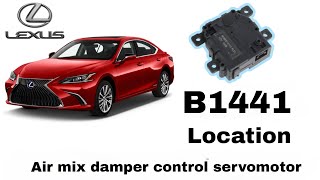
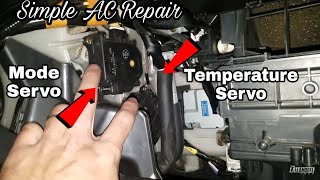
- Visual and Auditory Inspection: The passenger air mix servo is typically the lowest of the servos visible 🎬 See this video to locate the specific B1441 servo motor. on the side of the HVAC unit. Have an assistant change the passenger temperature settings from full hot to cold. Observe if the servo's linkage arm attempts to move and listen for clicking or grinding. A healthy servo moves smoothly and quietly.
- Test the Circuit: If the servo is not moving, disconnect the electrical connector. Use a multimeter to check for power and ground at the connector when the climate control is on. Check for continuity on the signal wires between the servo connector and the A/C amplifier connector. Resistance should be below 1 Ω. This rules out a wiring issue.
- Replace the Servo: If power, ground, and signal are present but the motor does not function correctly, the servo motor has failed and must be replaced.
Parts You'll Likely Need
- Damper Servo Sub-Assembly, Air Conditioner Radiator, No. 4
(OEM #87106-30550)— This is the specific OEM servo motor that controls the passenger side air mix and is the direct cause of code B1441. It is also referred to as a Blend Door Actuator.
Trusted brands: Lexus (Genuine OEM), Denso (The original equipment manufacturer)
OEM price range: $180-$295
Aftermarket price range: $150-$200
Related Codes That Often Appear With This One
- B1442 — This code is for the Air Inlet Damper Control Servo Motor Circuit. These servos are of similar design and age, and often fail around the same time.
- B1443 — This code is for the Air Outlet Damper Control Servo Motor Circuit. Like B1442, it's another HVAC servo that is prone to failure on this platform.
- B1446 — This is the equivalent code for the Driver Side Lower Air Mix servo. It's common to see multiple servo codes appear together as they age.
Technical Service Bulletins (TSBs) & Recalls
- L-SB-0019-20: Addresses HVAC servo motor malfunctions, including B1441, on 2017-2019 IS, GS, and RC models. The procedure may involve flash reprogramming the A/C amplifier.
- L-SB-0001-21 (and Rev1): Addresses HVAC servo motor malfunctions on 2013-2017 models, including the 2016-2017 IS 300. It provides detailed diagnostic flowcharts and part replacement procedures.
Platform-Specific Known Issues
- Lexus issued Technical Service Bulletin L-SB-0019-20 for 2017-2019 models and L-SB-0001-21 for 2016-2017 models, which both address this code. The official repair procedure can involve reprogramming (flashing) the A/C amplifier with new software in addition to replacing the failed servo.
- Accessing this specific servo is known to be extremely difficult. While some DIYers manage by removing the glove box and blower motor, 🎬 Watch: A step-by-step walkthrough of the IS300 servo replacement. many shops quote high labor costs. Forum users describe it as a 'nightmare' and a 'PITA' due to the tight space and inability to see the mounting screws.
- Lexus previously acknowledged this widespread issue with Customer Support Program 20LE01 (Campaign ID 21LE01), which extended warranty coverage for this specific failure. Primary coverage ended in early 2022, but some vehicles may fall under secondary coverage (7 years/125,000 miles). Owners should check with a dealer.
Mechanic-Grade Diagnostic Values
- Techstream Live Data: 'Air Mix Servo Actual Pulse (P)' vs 'Air Mix Servo Targ Pulse (P)' — expected: The 'Actual Pulse' value should change in near-real-time to match the 'Target Pulse' value as the passenger temperature is adjusted. The values typically range from 0 to 255.. Failure: The 'Actual Pulse' value is stuck (often at 254 or 255), or it does not change when the 'Target Pulse' value changes. This indicates the servo is not moving or its position sensor has failed.
- Harness continuity check between servo connector and A/C Amplifier connector — expected: Below 1 Ω. Failure: High resistance or an open circuit (OL) indicates a break in the wiring harness.
- Servo Motor Bench Test — expected: Connecting a battery's positive (+) lead to terminal 5 and negative (-) lead to terminal 4 should cause the servo arm to move smoothly to the 'MAX HOT' position. Reversing the polarity (positive to 4, negative to 5) should move it smoothly to 'MAX COOL'.. Failure: The servo arm does not move, moves erratically, or makes grinding noises.
Scan Tool Commands That Help
- Toyota Techstream: Servo Motor Initialization — Use this after replacing a servo, disconnecting the battery, or as a diagnostic step. It forces the A/C amplifier to relearn the end points of all servo motors. If running this utility temporarily restores function to a faulty servo, it confirms the motor itself is the point of failure.
- Toyota Techstream: Active Test — Use this to directly command a specific servo motor (e.g., 'Passenger Air Mix') to move. This allows a technician to isolate and test an individual servo without using the main climate controls, helping to confirm if the motor is receiving commands and is capable of movement.
- Toyota Techstream: AC damper servo operation check tool — Mentioned in TSB L-SB-0001-21, this is a specific tool used in conjunction with a new ECU calibration file to verify servo operation after a software update.
Wiring & Ground Locations
- Passenger Air Mix Servo Connector — Located on the side of the HVAC unit, accessible after removing the glove box and typically the blower motor assembly. It is a small black box with a multi-pin connector.. This is the primary connection point to test for power, ground, and signal from the A/C amplifier. Verifying signals here is critical to differentiate between a failed motor and a wiring/ECU issue.
- A/C Amplifier Connector (e.g., A8, A11, A15) — Located behind the center dash/radio area. Access requires removing trim panels and the head unit.. This is the source of the control signals for the servo. A technician would test for continuity between the pins at this connector (e.g., A11-19) and the corresponding pins at the servo motor connector to rule out a wiring break.
Real Owner Repair Stories
- ClubLexus Forum User (Lexus RX (similar HVAC design)) — B1441 code, passenger side A/C stuck on full hot, making the center console warm.
❌ Tried (didn't work) Initial attempts at 'Servo Initialization' via Techstream (4 times) did not work.
✅ What actually fixed it (Temporarily) Running the 'Servo Initialization' a fifth time with the car running and A/C fan off successfully recalibrated the servo and restored cold air. This confirms a failing servo that can sometimes be forced back into operation. - Reddit user r/LexusIS (2016 IS200t) — DTC B1441 (passenger side) and B1453 (driver's side).
❌ Tried (didn't work) N/A - user was asking for advice prior to repair.
✅ What actually fixed it The user proposed a workaround: perform a servo re-initialization to get the system working, then disconnect the faulty servo to lock it in the full cold position. This highlights a common owner thought process for avoiding the costly repair in climates where heat is not needed.
OEM Part Supersession History
Unknown→87106-30550— This is the current, widely-used part number for the passenger air mix servo across many Lexus models from this era.
Model Year Variations Within This Range
- 2016-2017: These model years are covered by TSB L-SB-0001-21 Rev1, which provides a comprehensive flowchart for diagnosing multiple servo failures.
- 2017-2019: These model years are covered by TSB L-SB-0019-20. The repair procedure for these later models may specifically involve flash reprogramming the A/C amplifier with updated software as part of the fix, in addition to replacing the servo.
Helpful Videos

Used OEM Parts in Stock
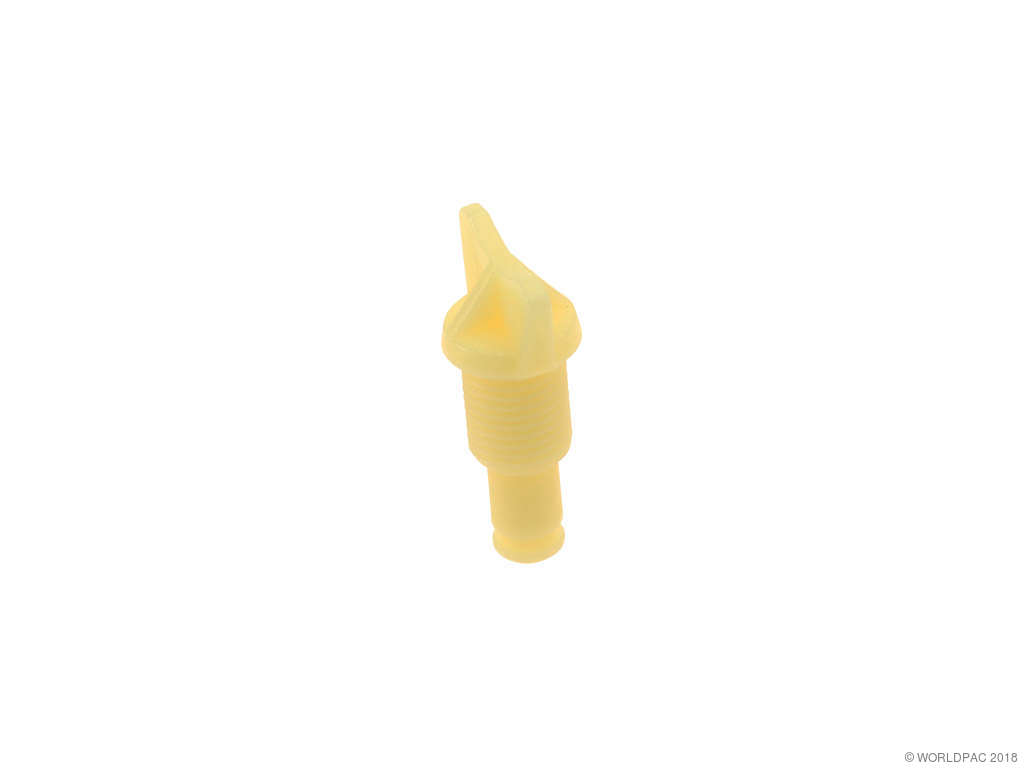
New Aftermarket Parts Available

The information in this article is provided for general reference and educational purposes only. Vehicle specifications, procedures, and part compatibility can vary by production date, trim level, and region. Always consult your vehicle's factory service manual and verify part numbers before purchasing or performing repairs. Safety-critical components such as airbags, seat belts, and braking systems should be installed by a qualified professional.
- Lexus IS 300:
- 🧭 Diagnostic Flowchart
- 🎬 Helpful Videos
- 🛍️ Shop This Part
- What's Unique About the 2016-2019 Lexus IS 300
- Symptoms You May Notice
- Most Likely Causes
- Rare But Worth Checking
- Diagnosis Steps
- Parts You'll Likely Need
- Related Codes That Often Appear With This One
- Technical Service Bulletins (TSBs) & Recalls
- Platform-Specific Known Issues
- Mechanic-Grade Diagnostic Values
- Scan Tool Commands That Help
- Wiring & Ground Locations
- Real Owner Repair Stories
- OEM Part Supersession History
- Model Year Variations Within This Range
- 🎟️ Get 5% Off