

OBD-II Code B1442: A/C, Door Latch, or Ignition Circuit Fault
What B1442 means, why it triggers, and how to fix it
- Code B1442 means three completely different things depending on your brand: a failed HVAC air inlet servo (Toyota/Lexus), a faulty door latch (Ford), or an open ignition circuit (GM).
- Toyota and Lexus owners will experience a clicking noise behind the glovebox, a flashing 'Auto' A/C light, and a system stuck in either fresh or recirculated air.
- Ford owners face a critical safety risk where doors fail to latch shut or unexpectedly open while driving, an issue covered by free replacement under NHTSA safety recall 16S30.
- Lexus HVAC servo replacements cost between $1,800 and $3,400 because they require complete dashboard removal, whereas Toyota RAV4 owners can often fix the code for $0 by reseating a dislodged plastic linkage arm behind the glovebox.
- Never pay for a B1442 repair without checking your VIN first; Lexus Customer Support Program 20LE01 and Ford Recall 16S30 cover the most expensive hardware failures for free.
What Does B1442 Mean?

B1442 is a body control module (BCM) code with three distinct meanings depending on your manufacturer. For Toyota and Lexus, it signals a failed servo motor controlling the HVAC fresh air vent. For Ford, it indicates a shorted door latch switch or hood latch sensor. For General Motors, it flags an open circuit in the ignition switch.
Technical definition: Toyota/Lexus: 'Air Inlet Damper Control Servo Motor Circuit'. Ford: 'Door Latch Switch Circuit Short to Ground' or 'Front Engine Closure Switch Circuit'. Chevrolet/GMC: 'Device Ignition OFF, RUN, and CRANK Circuit Open'.
Can I Drive With B1442?

Yes, But With Caution. Toyota and Lexus vehicles are safe to drive, though a stuck fresh air vent impairs defrosting and reduces visibility. Ford vehicles are unsafe to drive; a faulty latch causes doors to unexpectedly open while driving, posing a severe injury risk addressed in Ford Safety Recall 16S30.
Common Causes

- Failed HVAC Air Inlet Damper Servo Motor (Toyota/Lexus) (Very Common) — The electric motor controlling the fresh air/recirculation flap fails internally due to worn plastic gears and contacts. Lexus acknowledges this widespread failure in Customer Support Program 20LE01.
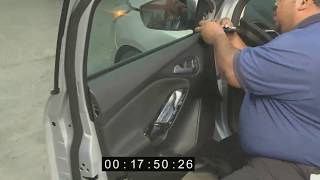
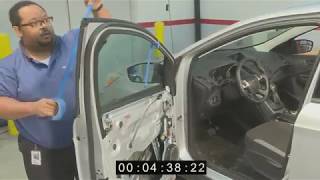
- Faulty Door Latch Switch or Assembly (Ford) (Common) — The door latch switch fails to signal if the door is open or closed. This stems from a fractured pawl spring tab inside the latch, triggering massive Ford recalls like 16S30.
- Jammed HVAC Damper Door or Linkage (Toyota) (Less Common) — The plastic linkage arm for the air inlet door pops off its track, or the door itself gets stuck. This frequently happens on RAV4s if a cabin air filter is forced in incorrectly.
- A/C Amplifier Software Glitch (Toyota/Lexus) (Less Common) — On 2017-2019 Toyota and Lexus models, a software glitch in the A/C amplifier falsely triggers servo motor codes (TSB L-SB-0019-20). A module reflash fixes this without hardware replacement.
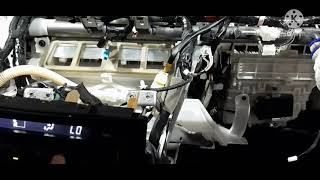
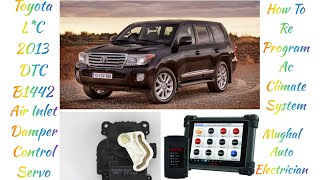
- Failed Servo Re-initialization (Less Common) — After a battery disconnect, the HVAC system must re-initialize the servo motors to relearn their end-points. An interrupted process logs a B1442 code 🎬 Watch: How to reprogram and initialize your climate control servos. even if the motor is mechanically sound.
- Wiring or Connector Issue (Rare) — A damaged wire or corroded connector pin in the HVAC servo, door latch, or ignition switch circuit causes a short or open. This usually follows recent dash/door repairs or rodent damage.
- Faulty Body Control Module (BCM) or A/C Amplifier (Rare) — The control module commanding the servo motor or reading the latch status fails. Consider this only after ruling out the component and its wiring.
Symptoms

- Cannot switch between fresh and recirculated air — The HVAC air source button stops working, locking the system in one mode. If stuck on 'fresh air', exhaust fumes and outside odors constantly enter the cabin.
- Clicking or grinding noise from the dashboard — An audible, repetitive clicking comes from behind the passenger-side glove box as the broken servo motor struggles to move the damper door.
- A/C 'Auto' light flashes on startup — On Lexus models, the climate control 'Auto' light flashes for 30 seconds after starting the car, indicating an HVAC self-diagnostic failure.
- Door will not lock, unlock, or latch properly — Ford power door locks act erratically, doors fail to latch shut, or doors unexpectedly unlatch while driving. The interior dome light or 'Door Ajar' dash warning stays illuminated.
- Vehicle will not start or has electrical issues — On Chevrolet/GMC vehicles, the ignition circuit fault causes a no-start condition or erratic electrical behavior.
- Uneven air temperature or flow from vents (also visible on scanner) — While B1442 targets the air inlet, its failure often accompanies other servo failures (like B1446), causing uneven air temperatures between the driver and passenger sides.
Diagnostic Flowchart
Tap your situation to follow the diagnostic path that matches what you're seeing on this code.
Common Fixes & Costs
- Replace Air Inlet Damper Servo Motor — Parts: $60-$250, Labor: $450-$3450, ~8 hr book time (Professional)
- Replace Door Latch Assembly/Actuator — Parts: $30-$200, Labor: $155-$250, ~1.5 hr book time (Intermediate)
- Reseat HVAC Damper Linkage Arm — Parts: $0, Labor: $100-$300, ~1 hr book time (DIY)
- Reprogram A/C Amplifier — Parts: $0, Labor: $100-$200, ~0.5 hr book time (Professional)
- Repair Damaged Wiring or Connector — Parts: $5-$20, Labor: $150-$400, ~2 hr book time (Professional)
Used vs. New Parts: Buying Guide
When a used part is worth it: For a complex, high-labor part like a Lexus HVAC servo, a used part is never recommended due to the high risk of premature failure. For a Ford door latch assembly, a used OEM part from a low-mileage, non-accident vehicle is a cost-effective alternative to a new aftermarket part, as OEM quality is superior.
Donor-vehicle mileage cap: roughly under 60000 miles for the part to have meaningful remaining life.
Donor quality checklist:
- Verify the part number matches exactly.
- For door latches, choose donors from regions without harsh winters to avoid parts stressed by freezing.
- Avoid aftermarket parts for critical functions like door latches, as their internal components are of lower quality.
Decision logic:
- If The part is an HVAC servo motor with a known high failure rate (e.g., Lexus GS/IS/RC) → Buy a new OEM or high-quality aftermarket (e.g., Denso) part. The labor cost is too high to risk using a part with an unknown history.
- If The part is a door latch assembly and budget is a primary concern → A used OEM part is often a better choice than a cheap, new aftermarket part.
- If The vehicle is older and the cost of a new OEM part is prohibitive → A reputable aftermarket brand like Dorman is an acceptable compromise, but OEM is preferred for fit and longevity.
Warranty tradeoff: Used parts typically come with a 30-90 day warranty. Aftermarket new parts often have a 1-year to limited-lifetime warranty. New OEM parts carry the manufacturer's warranty (typically 1 year).
Worst-case if a used part fails: $500-$3500 if a used or cheap part fails after installation, requiring a repeat of the high-cost labor.
What Happens If You Wait — Timeline
- 0-1 month: For HVAC: Intermittent clicking from dash or flashing 'Auto' light on startup. For Door Latch: 'Door ajar' light flickers, or one power lock works intermittently. (MPG impact: 0%% · Added cost: $0)
- 1-3 months: For HVAC: Constant clicking noise; system gets stuck on fresh or recirculate. For Door Latch: 'Door ajar' light stays on, draining the battery. Door requires several slams to latch shut, posing a security risk. (MPG impact: 0%% · Added cost: $0-$250 (for a new battery if drained by the 'door ajar' light))
- 3-6 months: For HVAC: Servo motor burns out, stopping the noise but leaving the damper permanently stuck. Defrost performance is impaired. For Door Latch: Latch mechanism fails completely. The door gets stuck shut, requiring complex labor to open, or fails to latch at all. (MPG impact: 0%% · Added cost: $200-$500 (extra labor if a stuck door must be forced open))
- 6+ months / Immediate Risk: For HVAC: The problem is permanent but typically does not cause further damage. For Door Latch: Catastrophic failure where the door unlatches while the vehicle is in motion. This is the critical safety risk cited in Ford's recall 16S30. (MPG impact: 0%% · Added cost: Potential for major costs related to an accident or injury.)
Cost of Not Fixing It
- Immediate: For HVAC faults: Annoyance from clicking noises, inability to control air source, and entry of outside odors. For Ford door latch faults: A door fails to lock, posing a security risk, or fails to latch, posing a significant safety risk. (Added cost: Negligible)
- 1-6 months: For HVAC faults: Inability to use defrost effectively impairs visibility. For Ford door latch faults: Continued stress on a failing latch mechanism leads to a complete failure where the door cannot be opened or becomes stuck shut, requiring destructive entry. (Added cost: $0-$300)
- 6+ months: For HVAC faults: A failed servo motor burns out completely, stopping the clicking noise but leaving the system permanently in a failed state. For Ford door latch faults: The risk of the door unlatching while driving persists and increases over time, potentially leading to an accident or injury. (Added cost: Potential for significant costs related to safety incidents.)
Diagnosis Steps
- Identify the Correct Definition for Your Vehicle
Determine what B1442 means for your specific car. Toyota/Lexus indicates the HVAC servo, Ford indicates a door/hood latch, and GM indicates the ignition circuit. This dictates your entire diagnostic path.
Tools: OBD-II Scanner, Google Search (Beginner) - Scan for Other Codes and Check TSBs
Use a scanner to check for related codes. Multiple HVAC servo codes (B1441, B1443, B1446) indicate a systemic failure. Check Technical Service Bulletins (TSBs) to see if a software update is the required fix.
Tools: OBD-II Scanner (Beginner) - Listen for Noises and Test Functions
For HVAC issues, press the recirculation button and listen for clicking behind the glove box. For door latch issues, operate all power locks and physically verify each door latches securely.
Tools: None (Beginner) - Inspect the Component and Connector
Visually inspect the suspected part. Remove the glove box to view the HVAC servo, or the interior door panel for the latch. On a RAV4, specifically check if the white plastic linkage arm popped off the motor.
Tools: Screwdriver, Trim Removal Tools (Intermediate) - Perform a Servo Motor Initialization
If your scan tool supports it, run the 'Servo Motor Initialization' utility. This forces all HVAC servos to relearn their end-stop positions, resolving codes caused by battery changes rather than hardware failure.
Tools: Advanced Bi-Directional Scan Tool (Intermediate) - Perform an Active Test & Analyze Live Data
Use a bi-directional scan tool to command the 'Air Inlet Damper' to move. Monitor the 'Target Pulse' and 'Actual Pulse' data PIDs. If the 'Actual Pulse' is stuck at 255 or unresponsive, the servo motor is dead.
Tools: Advanced Bi-Directional Scan Tool (Intermediate) - Test the Circuit with a Multimeter
With the component disconnected, check for power, ground, and signal at the connector using a vehicle-specific wiring diagram. A typical Toyota servo requires 11-14V at the IG+ terminal with the ignition ON.
Tools: Multimeter, Vehicle-Specific Wiring Diagram (Advanced) - Bench Test the Servo Motor
Apply a 12V power source and ground directly to the removed servo motor pins. The motor must move smoothly to its stop and reverse when polarity is flipped, confirming mechanical functionality.
Tools: 12V Power Source, Jumper Wires, Multimeter (Advanced) - Test Servo Position Sensor Resistance
Measure the resistance between the position sensor terminals on a removed Toyota/Lexus servo. A reading outside the specified range (e.g., 0.6 to 1.1 kΩ) confirms internal sensor failure.
Tools: Multimeter (Advanced) - Test GM Ignition Circuit Voltage
Probe the 'Ignition OFF/RUN/CRANK' circuit at the BCM on GM vehicles. The BCM supplies a 5V reference; a 0V reading when voltage is expected confirms the open circuit triggering the code.
Tools: Multimeter, Vehicle-Specific Wiring Diagram (Advanced)
When This Code Triggers (Freeze-Frame Conditions)
- Vehicle State: Ignition ON (The code sets when the ignition is on and the BCM or A/C amplifier is active.)
- Time: 30 seconds (For Toyota/Lexus, the code sets if the servo's actual position doesn't match the target for 30 continuous seconds.)
- User Action: Button Press (The fault is detected immediately after the driver presses the A/C recirculation button or operates the power door locks.)
- System State: Self-Test (Many HVAC systems perform a self-test upon startup; if the servo doesn't initialize or report its position correctly, the code sets.)
Related Codes
- B1441 — This code is for the passenger-side air mix servo. If B1441 and B1442 appear together, it strongly indicates a systemic issue with the servo motors of that generation. TSBs and Lexus Customer Support Program 20LE01 group these codes together.
- B1443 — Points to the air outlet servo motor. Like B1441, seeing B1443 alongside B1442 suggests a common design flaw or that the servos are failing from age.
- B1446 — This is for the driver-side air mix servo. Service bulletins note that when B1441, B1442, B1443, and B1446 are all present, it points to a common malfunction pattern across the HVAC servo system.
- B1497 — This is a communication bus error. If B1497 is present with B1442, diagnostic procedures state to troubleshoot B1497 first. Its presence points the fault away from the servo motor itself and towards a problem with the wiring harness or the A/C amplifier module.
Climate & Environmental Factors
- Cold Temperatures: On Ford vehicles, cold weather causes water to enter the latch mechanism and freeze, or makes the pawl spring tab brittle and prone to breaking. Ford issued TSB 16-0155 and Customer Satisfaction Program 19N06 to address door latches freezing in cold temperatures.
How to Talk to a Mechanic About This Code
Say this: "For Toyota/Lexus: 'I have a B1442 code and a clicking dash noise. Please check for TSB L-SB-0019-20 or Customer Support Program 20LE01 coverage before quoting a replacement.' For Ford: 'I have a B1442 code and my door ajar light is on. Is my VIN covered by door latch recall 16S30?' For GM: 'I have a B1442 code indicating an open ignition circuit. Please test the ignition switch circuit at the BCM.'"
This specific language shows you've done your research. It directs the technician to the most likely cause for your specific vehicle, mentions known free fixes (recalls and TSBs), and prevents them from starting a broad, expensive diagnostic process from scratch.
Avoid saying:
- 'Just fix whatever's wrong'
- 'My car is making a weird noise, can you look at it?'
- 'The internet said it's the servo motor, just replace it'
Questions to ask before authorizing the repair:
- For Toyota/Lexus: Did you confirm the failure by checking the servo's live data pulse counts with a scan tool?
- For Toyota/Lexus: If it needs replacement, what is the quoted labor time and does that involve full dashboard removal?
- For Ford: If the recall doesn't apply, what was the specific failure point you found in the door latch circuit?
- Is this repair covered by a recall, a technical service bulletin, or a manufacturer customer support program?
- What is the warranty on the parts and labor for this specific repair?
Where to Take It: Dealer vs Independent vs Chain
- Dealer:
Required or Highly Recommended. You MUST go to a dealer for recall and warranty program work. They are also the best, albeit most expensive, choice for the extremely difficult Lexus dashboard removal or for manufacturer-specific software updates.
Best for: Ford vehicles to get the door latch recall (16S30) performed for free., Lexus/Toyota vehicles to check for eligibility under Customer Support Program 20LE01 or to perform an A/C amplifier software update (TSB L-SB-0019-20)., Complex, dash-removal HVAC servo replacements on Lexus models, as they have the most experience.
Downsides: Highest labor rates., May be unwilling to attempt simpler fixes (like the RAV4 linkage reseat) and default to expensive full-part replacement. (Typical cost: +50% vs. baseline) - Independent Shop:
Good Choice for Specific Repairs. A trusted independent shop is the most cost-effective option for straightforward repairs, like the RAV4 linkage fix or a non-recall Ford latch swap. Be cautious about asking them to perform the 10+ hour Lexus dashboard removal unless they can prove they've done it before.
Best for: Out-of-warranty repairs on common models., The simple Toyota RAV4 linkage arm reseat, which is done for 1-2 hours of labor., A standard Ford door latch replacement if your vehicle is not under recall., Diagnosing and replacing a GM ignition switch.
Downsides: Quality and experience vary greatly. Ensure they have experience with your specific vehicle., May not have the expensive, specialized tools or software subscriptions to perform HVAC initializations or module reflashing. (Typical cost: +0% vs. baseline) - Chain Shop:
Not Recommended. The complexity and vehicle-specific nature of the B1442 code make it a very poor fit for a chain repair shop. The risk of misdiagnosis (e.g., trying to find an HVAC fault on a Ford) or an incomplete repair is extremely high.
Best for: Tires, batteries, and oil changes.
Downsides: Technician skill varies widely., High pressure to upsell., Unlikely to correctly diagnose a code with three different manufacturer-specific meanings., Not equipped for complex electronic diagnostics, software flashes, or major interior disassembly. (Typical cost: -10% vs. baseline)
When to Walk Away From the Repair
If the estimated repair cost exceeds 40-50% of the car's private-party value (e.g., from Kelley Blue Book), you should pause and consider if the investment is worthwhile.
- Car worth $15000, fix is $3400: Fix It (but seek alternatives first). This is for a Lexus GS 350 needing a servo replacement. The cost is high (~23% of value), but the fix restores full functionality. Before paying, exhaust all options for free repair via Customer Support Program 20LE01.
- Car worth $14000, fix is $800: Get a Second Opinion. This is for a Toyota RAV4 quoted for a new servo. The cost is low relative to value, but the actual problem might be a dislodged linkage arm that is fixed for under $200 in labor.
- Car worth $5000, fix is $0: Fix It Immediately. This is for a Ford with a door that won't latch, covered by a safety recall. The repair is free and addresses a critical safety failure.
- Car worth $4000, fix is $2200: Walk Away. If a 2013 Lexus GS is quoted $2,200 for the servo fix and is not covered by the warranty program, the repair cost is over 50% of the car's value. It's not an economical repair.
What Scan Tool You Need for This Code
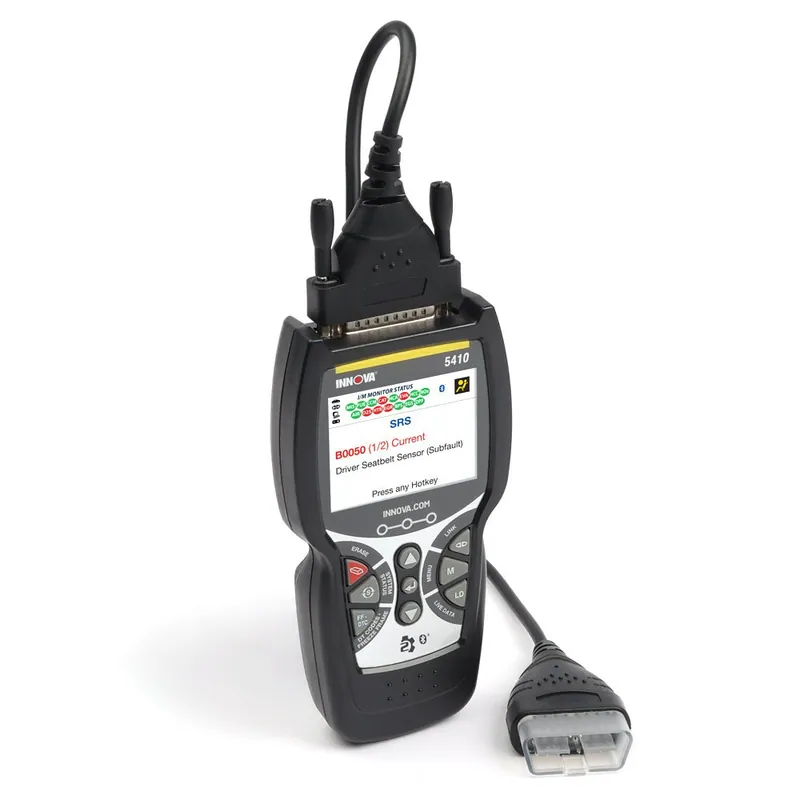
Minimum: A scanner that can read manufacturer-specific Body Control Module (BCM) codes (B-codes). A basic engine-only (P-code) reader will not see this fault.
A cheap $20 scanner shows 'No Codes Found' because it cannot access the Body Control Module. For a proper diagnosis of the Toyota/Lexus HVAC issue, you need a bi-directional tool to command the servo motor to move and to perform a system re-initialization.
Budget: BlueDriver Pro (~$119) — Reads and clears B-codes from the BCM, correctly identifying B1442 and its definition for your car. It displays live data but lacks the bi-directional control needed to command the servo motor for advanced testing.
Mid-range: Foxwell NT510 Elite (~$180) — The ideal choice for a serious DIYer. It offers full system diagnostics, including reading B-codes. Crucially, it has bi-directional control ('Active Test') to command the HVAC servo motor to move and performs the 'Servo Motor Initialization' procedure, which sometimes fixes the issue without replacing parts.
Professional: Autel MaxiCOM MK808S / MK808BT (~$450) — Offers full professional-level diagnostics. It has powerful bi-directional controls for all systems, including the HVAC servos. It provides comprehensive live data graphing and performs all necessary resets and initializations after a repair.
Rent vs buy: You can rent a basic scanner from a parts store to confirm the B1442 code exists, but it lacks the bi-directional functions needed for a full diagnosis of the HVAC servo. If you have the Toyota/Lexus HVAC issue, buying a mid-range bi-directional scanner like the Foxwell NT510 is a smart investment, as it's cheaper than one hour of diagnostic labor at a shop and allows you to perform the crucial 'Active Test' and 'Initialization' functions yourself.
How to Clear the Code After You Fix It
- Reconnect any disconnected components (e.g., battery, servo motor).
- Use an OBD-II scan tool to clear the diagnostic trouble code from the BCM or A/C module.
- Perform a servo motor initialization procedure using a capable scan tool if an HVAC servo was replaced.
- Operate the repaired function (e.g., press the recirculation button multiple times, lock/unlock doors) to confirm the fix.
Drive cycle (~15 minutes): For a B-series code, a specific drive cycle is not required. After clearing the code, start the vehicle and operate the affected system (HVAC or door locks) through all its functions for several minutes to ensure the code does not return.
Readiness monitors affected: Not applicable for a Body (B) code.
Watch out for:
- Simply disconnecting the battery does not clear the code from the BCM's memory and is not the recommended procedure.
- Forgetting to perform the servo motor initialization after replacing a Toyota/Lexus HVAC servo causes the code to return even with a new part.
- Clearing the code without fixing the root cause results in the code returning almost immediately upon using the function.
Will This Fail Emissions / State Inspection?
No — by itself this code doesn't fail OBD inspection (but it can keep readiness monitors from setting, which causes a separate fail).
- California: A B-series code like B1442 will not cause a failure of the smog check, which is primarily concerned with engine (P-series) codes and readiness monitors. However, the check engine light must not be illuminated.
- New York: The NYS inspection includes a safety check. While B1442 is not an emissions failure, an inoperative defroster (a consequence of an HVAC fault) or a door that cannot be opened from the inside and outside leads to a safety inspection failure.
- Texas: As of 2025, most non-commercial vehicles in Texas are no longer subject to a safety inspection. Vehicles in certain counties must still pass an emissions test, but a B1442 code will not cause a failure.
Most Commonly Affected Vehicles
- Lexus RC F / RC 350 (2015-2019) — Extremely common failure of the air inlet servo motor. Lexus acknowledged the issue with Customer Support Program 20LE01 for 2015-2017 models. The recommended replacement part is OEM P/N 87106-30500.
- Lexus IS 350 / IS 300 (2014-2019) — Prone to a failed air inlet damper servo motor. TSB L-SB-0001-21 Rev applies. The original part number 87106-30480 has been superseded by 87106-30481.
- Lexus GS 350 / GS F (2013-2019) — Widespread failure of the air inlet servo motor. Repair is very labor-intensive, requiring full dashboard removal. Dealer quotes exceed $2,000.
- Toyota RAV4 (2016-2020) — Subject to air inlet servo motor circuit faults. In many cases, the issue is a dislodged linkage arm that can be reseated without new parts after removing the glove box, making for a much cheaper repair.
- Toyota Land Cruiser (2016-2017) — This model is noted in TSB T-SB-0002-21 as potentially exhibiting B1442 along with other HVAC servo codes, indicating a known issue with the servo motors.
- Toyota Prius / Prius c (Aqua) (2004-2019) — The B1442 code is a common fault on multiple Prius generations, pointing to the air inlet damper control servo motor circuit. Diagnosis is similar to other Toyota models.
- Ford Transit Connect (2014-2016) — On these vehicles, B1442 typically relates to a door latch fault. This issue was widespread enough to be included in Ford safety recall 16S30 for a pawl spring tab that breaks and causes the door to not latch properly.
- Chevrolet Colorado (2008-2012) — For this model, B1442 is defined as 'Device Ignition OFF, RUN, and CRANK Circuit Open'. Diagnosis focuses on the ignition switch and its wiring to the BCM, not the HVAC or doors.
Manufacturer-Specific Notes
- Toyota / Lexus: This code almost always refers to the 'Air Inlet Damper Control Servo Motor Circuit'. The failure is so common that Lexus issued Customer Support Program 20LE01, extending warranty coverage for affected 2013-2017 GS, IS, and RC models. For some 2017+ models, TSB L-SB-0019-20 recommends a software update for the A/C amplifier as the first step.
- Toyota (RAV4 Specific): While the code points to the servo circuit, on many RAV4s the root cause is purely mechanical. The servo motor's plastic linkage arm pops out of place, especially after a cabin air filter change. This is fixed in under an hour by removing the glovebox and reseating the arm, with no parts required.
- Ford: On many Ford vehicles, B1442 is not related to the HVAC system. It points to a 'Door Latch Switch Circuit Short to Ground'. Diagnosis focuses on door lock actuators and latch switches. Recalls like 16S30 were issued for a faulty pawl spring tab on millions of Ford models, which is the system this code pertains to.
- Chevrolet / GMC: On GM vehicles like the Chevrolet Colorado, B1442 indicates 'Device Ignition OFF, RUN, and CRANK Circuit Open'. This is an electrical fault related to the ignition switch position signal sent to the Body Control Module (BCM) and is completely unrelated to HVAC or door locks.
Real Owner Stories
2016 Toyota RAV4 with B1442
Owner scanned the vehicle and found code B1442. The recirculation flap was stuck closed, preventing fresh air from entering the cabin.
What they tried:
- Scanned the car to confirm the B1442 code.
- Removed the glove box and blower motor assembly to access the servo motor.
- Observed that the servo motor itself was functional, but its gear mechanism had popped out of its socket.
Outcome: The owner carefully reseated the gear back into place, reassembled the components, and cleared the code. The total cost was $0 in parts, and the repair took less than an hour.
Lesson: On a Toyota RAV4, before buying a new servo motor for a B1442 code, always inspect the linkage arm first. It's a common and free fix requiring only basic tools.
2015 Lexus GS 350 with multiple HVAC codes
The A/C system was malfunctioning, and the dealer quoted over $3,000 for the repair, citing the need for a full dashboard removal to replace the servo motors.
What they tried:
- The owner received a letter for Lexus Customer Support Program 20LE01, which covered A/C servo motor malfunctions.
- The dealer diagnosed the issue as a failed servo motor, a known common problem.
Outcome: Lexus covered the repair free of charge under the Customer Support Program. The repair is extremely labor-intensive, with some owners being quoted 8-12 hours of labor.
Lesson: If you own a 2013-2017 Lexus GS, IS, or RC with HVAC issues, check your VIN for eligibility under Customer Support Program 20LE01 before paying for repairs. This known issue is fixed for free at a dealership.
2014 Ford Fusion with door latch failure
The driver's door would not stay shut, creating a dangerous situation. The owner was aware of a recall but had not yet had the repair performed.
What they tried:
- The owner had to use ratchet straps to hold the door closed to safely drive the car to the dealership.
- Contacted the Ford dealer to perform the repair under safety recall 16S30.
Outcome: The dealer replaced the faulty door latch free of charge under the recall. The failure is due to a broken pawl spring tab inside the latch.
Lesson: For a Ford with a B1442 code and door latch symptoms, immediately check if your vehicle is covered by safety recalls 15S16, 16S30, or 20S30. The repair is free and addresses a critical safety defect.
2015 Lexus RC 350 with intermittent B1442
The B1442 code appeared only when the HVAC was set to fresh air mode. The battery was also dying, leading to suspicion of a parasitic draw.
What they tried:
- Clearing the code. It would only return when the system was in the 'fresh air' position.
- Disconnecting the battery for 15-30 minutes to force the HVAC servos to re-initialize.
Outcome: Disconnecting the battery provided a temporary fix, with the system working correctly for months. Another user found that a bi-directional scan tool could perform the servo reset without disconnecting the battery, resolving the issue temporarily.
Lesson: For an intermittent B1442 on a Lexus, try simple fixes first. Disconnecting the battery or using a scan tool to perform a 'Servo Motor Initialization' resolves calibration glitches and delays expensive dashboard removal.
How to Prevent This Code From Triggering
- Replace cabin air filter regularly (every 12-15k miles). (Once per year) — A clogged cabin air filter restricts airflow, causing the HVAC system to work harder and putting extra stress on the blend doors and servo motors. It also prevents debris from jamming the damper doors.
- Lubricate Ford door latch mechanisms. (Every 1-2 years) — Applying a silicone or white lithium grease to the latch assembly displaces moisture and prevents the mechanism from freezing or binding in cold weather, reducing stress on the internal pawl spring tab.
- Periodically cycle the HVAC recirculation function. (Monthly) — If the air inlet damper is left in one position for extended periods, the linkage becomes stiff or seizes. Cycling it from fresh to recirculate ensures the servo motor and door assembly move through their full range of motion.
- Ensure door drain holes are clear. (Annually) — On Ford vehicles, clogged drain holes at the bottom of the doors trap water, increasing humidity inside the door cavity. This moisture penetrates the door latch assembly, promoting corrosion and failure.
Frequently Asked Questions
Can I fix a B1442 code myself?
It depends on the vehicle. Reseating a dislodged HVAC linkage arm on a Toyota RAV4 is a simple DIY fix requiring only glove box removal. However, replacing the servo motor on a Lexus GS or a door latch on a Ford requires extensive interior disassembly best left to professionals.
Why is the labor cost so high to replace the HVAC servo motor on a Lexus?
The servo motor is buried deep behind the dashboard. The official procedure for models like the GS and IS requires removing the entire dashboard and HVAC unit assembly. This takes a technician 8-12 hours, leading to repair bills exceeding $2,000.
My A/C 'Auto' light is flashing on startup. Is this related to B1442?
Yes, on many Lexus vehicles, this is a direct symptom. When the car starts, the HVAC system runs a self-test and flags a fault if the air inlet damper servo fails to report its position. The flashing 'Auto' light visually indicates this internal failure.
Is there a shortcut to avoid the expensive Lexus dashboard removal?
Unfortunately, for most Lexus models like the GS, IS, and RC, there is no well-documented shortcut. The entire dashboard must be removed to access the air inlet servo. This contrasts with some Toyota models where simpler mechanical fixes exist.
Is a B1442 repair covered by warranty?
Yes, under the basic bumper-to-bumper warranty. Additionally, Lexus issued Customer Support Program 20LE01 to extend warranty coverage for this specific failure on many 2013-2017 models. Ford door latch issues are often covered free of charge under safety recalls like 16S30.
What are the most common mistakes when diagnosing B1442?
The biggest mistake is ignoring the manufacturer-specific definition and trying to fix an HVAC issue on a Ford. Another pitfall is immediately replacing the servo motor on a newer Toyota/Lexus without checking for TSBs that recommend a simple software reflash.
My mechanic wants to reprogram the A/C module first. Is this necessary?
Yes, for 2017-2019 Lexus and Toyota models, TSB L-SB-0019-20 recommends reprogramming the A/C amplifier as the first step. This crucial diagnostic step rules out a software glitch before you pay for an expensive hardware replacement.
Key Takeaways
- Code B1442 means three completely different things depending on your brand: a failed HVAC air inlet servo (Toyota/Lexus), a faulty door latch (Ford), or an open ignition circuit (GM).
- Toyota and Lexus owners will experience a clicking noise behind the glovebox, a flashing 'Auto' A/C light, and a system stuck in either fresh or recirculated air.
- Ford owners face a critical safety risk where doors fail to latch shut or unexpectedly open while driving, an issue covered by free replacement under NHTSA safety recall 16S30.
- Lexus HVAC servo replacements cost between $1,800 and $3,400 because they require complete dashboard removal, whereas Toyota RAV4 owners can often fix the code for $0 by reseating a dislodged plastic linkage arm behind the glovebox.
- Never pay for a B1442 repair without checking your VIN first; Lexus Customer Support Program 20LE01 and Ford Recall 16S30 cover the most expensive hardware failures for free.
Helpful Videos
Shop the Parts Behind B1442
Below are the parts most often responsible for code B1442, ranked by how frequently each one is the actual culprit (per the diagnosis above). Tap any to see what we have for your vehicle.



The information in this article is provided for general reference and educational purposes only. Vehicle specifications, procedures, and part compatibility can vary by production date, trim level, and region. Always consult your vehicle's factory service manual and verify part numbers before purchasing or performing repairs. Safety-critical components such as airbags, seat belts, and braking systems should be installed by a qualified professional.
- 🧭 Diagnostic Flowchart
- 🎬 Helpful Videos
- 🛍️ Shop This Part
- What Does B1442 Mean?
- Can I Drive With B1442?
- Common Causes
- Symptoms
- Common Fixes & Costs
- Used vs. New Parts: Buying Guide
- What Happens If You Wait — Timeline
- Cost of Not Fixing It
- Diagnosis Steps
- When This Code Triggers (Freeze-Frame Conditions)
- Related Codes
- Climate & Environmental Factors
- How to Talk to a Mechanic About This Code
- Where to Take It: Dealer vs Independent vs Chain
- When to Walk Away From the Repair
- What Scan Tool You Need for This Code
- How to Clear the Code After You Fix It
- Will This Fail Emissions / State Inspection?
- Most Commonly Affected Vehicles
- Manufacturer-Specific Notes
- Real Owner Stories
- 2016 Toyota RAV4 with B1442
- 2015 Lexus GS 350 with multiple HVAC codes
- 2014 Ford Fusion with door latch failure
- 2015 Lexus RC 350 with intermittent B1442
- How to Prevent This Code From Triggering
- Frequently Asked Questions
- Can I fix a B1442 code myself?
- Why is the labor cost so high to replace the HVAC servo motor on a Lexus?
- My A/C 'Auto' light is flashing on startup. Is this related to B1442?
- Is there a shortcut to avoid the expensive Lexus dashboard removal?
- Is a B1442 repair covered by warranty?
- What are the most common mistakes when diagnosing B1442?
- My mechanic wants to reprogram the A/C module first. Is this necessary?
- Key Takeaways
- 🎟️ Get 5% Off