

B1446 on 2013-2017 Lexus GS 350: Driver's Side Air Mix Servo Failure Causes and Fixes
Code B1446 on a 2013-2017 Lexus GS 350 indicates a fault in the driver's side lower air mix servo motor circuit. This typically means the servo motor has failed, causing incorrect temperature from the driver's side vents, often stuck on full heat. The fix is usually replacing the servo motor, which can be a costly and labor-intensive repair due to difficult access behind the dashboard. In some cases, a re-initialization using Toyota's Techstream software may temporarily resolve the issue.
- B1446 points directly to a problem with the driver's side lower temperature blend door servo motor.
- This is a very common and well-documented failure on 4th generation Lexus GS models.
- The root cause is typically an internal electrical failure of the servo motor itself.
- Repair is expensive due to high labor costs for dashboard disassembly, with dealer quotes often exceeding $2,000.
- A temporary fix by re-initializing the servos with Techstream is possible but the problem will likely return.
- An official Lexus Customer Support Program existed but has likely expired for most vehicles.
What's Unique About the 2013-2017 Lexus GS 350
The fourth-generation Lexus GS, like many modern Lexus vehicles, uses a sophisticated dual-zone climate control system with numerous servo motors (nine in total for some configurations) to provide precise air distribution and temperature. While this allows for a high degree of comfort, these servo motors are a known common failure point due to internal electrical malfunctions. Lexus has issued multiple Technical Service Bulletins (TSBs) that cover a wide range of these servo motor circuit codes, including B1446, indicating a pattern of failure across the model line. A Customer Support Program (ZLZ for interior panels, and a separate one for servos) was initiated to address these frequent failures, though the coverage periods have largely expired.
Diagnostic Flowchart
Tap your situation to follow the diagnostic path that matches what you're seeing on this vehicle.
Symptoms You May Notice
- Uneven temperature from vents (e.g., hot air on the driver's side when AC is on).
- Inability to adjust the temperature for the driver's side vents.
- Air stuck on full hot or full cold on the driver's side.
- Clicking or ticking noises from behind the driver's side of the dashboard, especially when changing temperature settings.
- Improper air flow or mode control function.
- A/C system seems to work intermittently or not at all on one side.
- Replacing the HVAC control head on the dashboard.
- Recharging the A/C system with refrigerant, as the issue is with air temperature blending, not the A/C's cooling ability itself.
Most Likely Causes
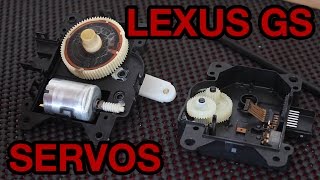
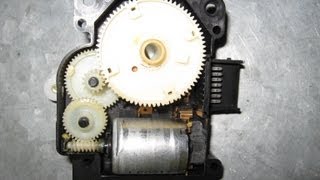
- Failed Driver Side Lower Air Mix Servo Motor 🔴 High Probability Lexus has acknowledged a high failure rate for these components due to internal electrical issues, prompting TSBs and a customer support program. The failure is often within the servo's internal circuit board or position sensor, not just the motor or gears. 🎬 See how to open and clean the internal servo contacts.
How to confirm: Using a diagnostic tool like Toyota's Techstream, command the servo motor to move and observe if its position value ('Air Mix Servo Actual Pulse (D)') changes. If the value is stuck or does not match the command ('Air Mix Servo Targ Pulse (D)'), the motor has failed. Another method is to listen for clicking from the motor, which indicates a fault. A temporary fix that sometimes works is re-initializing the servos via Techstream, which can restore function for a short period.
Typical fix: Replace the faulty servo motor. After replacement, the HVAC system's servo motors must be re-initialized using a compatible scan tool like Techstream.
Est. part cost: $80-$200 - Damaged Wiring or Connector ⚪ Low Probability While less common than servo failure, wiring can be damaged during other repairs or due to chafing over time. The issue is rarely the wiring itself.
How to confirm: Visually inspect the wiring harness and connector leading to the servo motor for any signs of damage, corrosion, or loose pins. Use a multimeter to check for proper voltage and ground at the connector when the climate control is operated, referencing a wiring diagram.
Typical fix: Repair the damaged section of the wiring harness or replace the connector.
Est. part cost: $10-$50 - Mechanical Obstruction of Damper Door ⚪ Low Probability
How to confirm: Service manuals note that a mechanically locked damper or link can trigger this code. If the motor is removed, attempt to move the damper door by hand to check for smooth operation. This is a rare cause.
Typical fix: Remove the obstruction or repair the damper linkage.
Est. part cost: $0-$100
Rare But Worth Checking
- Faulty HVAC Control Module (Amplifier): → Shop HVAC Control This is the least likely cause. The module should only be suspected if a new servo motor does not resolve the issue and the wiring has been confirmed to be intact. TSBs also mention the possibility of reprogramming the amplifier before replacing parts.
Diagnosis Steps
- Confirm the symptom: Verify that the driver's side temperature control is not working correctly, often blowing only hot air.
- Scan for codes: Use an OBD-II scanner capable of reading Body (B) codes to confirm B1446 is present.
- Use advanced diagnostics (Techstream): Connect a capable scan tool to monitor the live data for the 'Air Mix Servo Actual Pulse (D)' and 'Air Mix Servo Targ Pulse (D)'. Command the temperature up and down and check if the servo's target position and actual position match. A stuck value indicates failure.
- Attempt Re-initialization: Before disassembly, perform the 'Servomotor Initialization' utility in Techstream or another advanced scanner. This can sometimes temporarily restore function and confirms a servo-related issue.
- Listen for noises: Turn the ignition on and adjust the driver's temperature settings. Listen for clicking or buzzing from the lower driver's side dash area, which indicates a failing motor.
- Inspect the servo motor: If accessible, visually inspect the servo motor and its connector. This is labor-intensive and usually the last step before replacement.
- Test the damper door: If the motor is removed, manually move the damper linkage to ensure it is not stuck or blocked.
- Replace the component: If the motor receives power but does not operate correctly, or if re-initialization fails, it is faulty and needs to be replaced.
Parts You'll Likely Need
- Damper Servo Sub-Assembly, Air Conditioner Radiator, No. 5
(OEM #87106-30570)— This is the specific servo motor that controls the driver's side lower air temperature blend door. It is the most common point of failure for code B1446. Its part description is 'DAMPER SERVO SUB-ASSY, AIR CONDITIONER RADIATOR, NO.5' and it is located on the Front Left Lower side of the HVAC unit. 🎬 Watch: This video shows the exact location of the servo motor.
Trusted brands: Lexus (OEM), Aisin
OEM price range: $150-$250
Aftermarket price range: $85-$130
Related Codes That Often Appear With This One
- B1441 — This code is for the passenger-side air mix servo. It's common for multiple servo motors to fail around the same time, leading to codes for both driver and passenger sides.
- B1443 — This code relates to the Air Outlet Damper Control Servo. Like other HVAC codes, it can appear alongside B1446 as part of a broader system-wide servo failure.
- B1448 — This code is for the Passenger Side Face Servo Motor Circuit. A user on ClubLexus reported having B1446 and B1448 simultaneously.
Technical Service Bulletins (TSBs) & Recalls
- L-SB-0001-21 Rev: 'HVAC Servo Motor Malfunction' (Feb 11, 2021) - Provides a comprehensive list of affected vehicles (including 2013-2017 GS350), DTCs including B1446, part numbers, and detailed repair procedures involving potential reprogramming, cleaning, or replacement.
- L-SB-0019-20: 'HVAC Servo Motor Malfunction' (April 24, 2020) - Similar to the above TSB, addresses servo motor issues for 2017-2019 models and lists B1446 as a potential DTC.
- Customer Support Program for A/C Servos (related to L-SB-0001-21) - Provided extended coverage for this specific failure, but the coverage period has largely expired.
Platform-Specific Known Issues
- Lexus issued a Customer Support Program to extend the warranty coverage for failing A/C servo motors on certain 2013-2017 GS models. This program covered reprogramming and/or replacement of the servo motors free of charge. However, the primary coverage ended in January 2022, and secondary coverage was for 7 years/125,000 miles, meaning most vehicles are now out of this coverage period.
- TSB L-SB-0001-21 Rev1 outlines the diagnostic and repair procedures for a list of HVAC servo motor codes, including B1446, and provides the correct part numbers and repair flowcharts. The procedure may involve reprogramming the A/C amplifier, cleaning the servos with a utility, or replacement.
- The high repair cost is a major point of discussion among owners. Dealer quotes can range from $1,900 to over $5,000, with a significant portion being labor to remove the dashboard for access. Some owners report that dashboard removal is not always necessary and that the servos can be accessed by removing the glove box and lower dash panels.
Mechanic-Grade Diagnostic Values
- Techstream Live Data: 'Air Mix Servo Targ Pulse (D)' vs 'Air Mix Servo Actual Pulse (D)' — expected: The 'Actual Pulse' value should closely follow the 'Targ Pulse' value as the temperature setting is changed. For example, MAX COLD may be a pulse value of 6 and MAX HOT may be 93.. Failure: The 'Actual Pulse' value does not change or is stuck at a specific number (e.g., 255) when the 'Targ Pulse' value is commanded to change.
- Servo Motor Bench Test — expected: When 12V is applied to terminals 4 and 5, the motor should move smoothly to the MAX HOT or MAX COOL position. Reversing the polarity should move it smoothly in the opposite direction.. Failure: The servo motor lever does not move or moves erratically when voltage is applied.
Scan Tool Commands That Help
- Toyota Techstream: Servomotor Initialization — Use this function after replacing a servo motor or as a first diagnostic step. It forces the A/C amplifier to relearn the end points of all servo motors. It can sometimes temporarily fix a sticky servo.
- Toyota Techstream: AC Damper Servo Operation Check Tool (Servo Cleaning Utility) — This is a special utility referenced in TSB L-SB-0001-21. After reprogramming the A/C amplifier, this tool cycles the servos for 8-14 minutes to clean the internal contacts. If any DTCs are present after the cleaning process, the related servo must be replaced.
- Toyota Techstream: Active Test — Allows the technician to command a specific servo motor to move to a desired position (e.g., MAX HOT, MAX COOL) to verify its operation while observing live data, without having to change the main temperature controls.
Wiring & Ground Locations
- N6 — Left side of the dash.. This is a ground point for the A/C Amplifier, which controls the servo motor. A poor ground here could cause erratic behavior of the entire HVAC system.
- Left Cowl Side J/B — Behind the left end of the dash.. This junction block (fuse box) contains the 'A/C' fuse (7.5A) and 'LH-IG' fuse (10A) which supply power to the A/C Amplifier and related systems. A problem here would likely affect more than just one servo.
- A/C Amplifier Connector — Behind the center of the dash.. This is the main control module. The wiring for the driver's side air mix servo (B1446) runs from this connector to the servo itself. A diagnostic manual shows the relevant pins are 14 (MCOOL), 15 (MHOT), 20 (SG-1), and 23 (TPD).
Real Owner Repair Stories
- YouTube user 'Pakistan Car Doctor' (2013 Lexus GS 350) — Hot air from all vents, regardless of A/C setting.
❌ Tried (didn't work) Re-initializing (programming) the servos would only fix the problem for about 5 minutes. The issue would return after restarting the car.
✅ What actually fixed it The driver's side and passenger's side heater servo motors were faulty and were replaced. The video shows the location of the driver's side motor and states that the dashboard does not need to be removed for access, only lower panels.
OEM Part Supersession History
87106-30530→87106-30570— Unknown, likely an internal revision for improved reliability to address the common failures.
Model Year Variations Within This Range
- 2013-2015 vs 2016-2017: The original part number for the servo motor was 87106-30530 for earlier models, which was later superseded by 87106-30570. While the parts are interchangeable, this indicates a design change occurred during the production run, likely to improve reliability.
Helpful Videos


Used OEM Parts in Stock
New Aftermarket Parts Available

The information in this article is provided for general reference and educational purposes only. Vehicle specifications, procedures, and part compatibility can vary by production date, trim level, and region. Always consult your vehicle's factory service manual and verify part numbers before purchasing or performing repairs. Safety-critical components such as airbags, seat belts, and braking systems should be installed by a qualified professional.
- Lexus GS 350:
- 🧭 Diagnostic Flowchart
- 🎬 Helpful Videos
- 🛍️ Shop This Part
- What's Unique About the 2013-2017 Lexus GS 350
- Symptoms You May Notice
- Most Likely Causes
- Rare But Worth Checking
- Diagnosis Steps
- Parts You'll Likely Need
- Related Codes That Often Appear With This One
- Technical Service Bulletins (TSBs) & Recalls
- Platform-Specific Known Issues
- Mechanic-Grade Diagnostic Values
- Scan Tool Commands That Help
- Wiring & Ground Locations
- Real Owner Repair Stories
- OEM Part Supersession History
- Model Year Variations Within This Range
- 🎟️ Get 5% Off