

B1446 on 2013-2017 Lexus GS HYBRID: Driver's Air Mix Servo Failure and Fixes
This code means the driver's side temperature blend door servo motor has failed. Your A/C will likely blow air at the wrong temperature on the driver's side, often stuck on full hot. The fix is to replace the servo motor, a part costing around $170-$250 OEM, but labor is intensive and can bring the total shop cost to over $1000 due to dashboard disassembly.
- B1446 on your Lexus GS Hybrid points directly to a failed driver's side temperature control servo motor.
- Symptoms are unmistakable: wrong temperature air (usually stuck on hot) and/or clicking sounds from the driver's side dash.
- The vehicle is safe to drive, but your climate control comfort will be compromised.
- Before paying for a repair, contact a Lexus dealer with your VIN to check if your vehicle is covered by Customer Support Program 20LE01 for a free repair.
- The fix is replacing OEM part 87106-30570, a labor-intensive job due to deep dashboard access.
What's Unique About the 2013-2017 Lexus GS HYBRID
The 4th generation Lexus GS, like many other Lexus models from this era (including the IS, RC, and ES), is known for HVAC servo motor failures. These components are in constant motion to maintain precise cabin temperatures, leading to wear on the internal motor, plastic gears, and potentiometer position sensor over time. The issue is not a design flaw unique to the GS Hybrid but rather a common failure point for the type of servo motor used across the Lexus lineup. Lexus acknowledged this by issuing TSB L-SB-0001-21 Rev, which addresses this widespread issue and even created a Customer Support Program (20LE01) to extend warranty coverage for these specific parts due to the high failure rate.
Diagnostic Flowchart
Tap your situation to follow the diagnostic path that matches what you're seeing on this vehicle.
Symptoms You May Notice
- Inability to control air temperature on the driver's side.
- Air is stuck blowing full hot or full cold from the driver's side vents, regardless of temperature setting.
- Clicking, grinding, buzzing, or 'gerbil-like' noises coming from behind the driver's side of the dashboard, especially when starting the car or changing temperature settings. 🎬 See a demonstration of that common clicking sound under the dash.
- Uneven temperature between driver and passenger side vents.
- A/C system seems to work intermittently on the driver's side.
- Recharging A/C refrigerant. Refrigerant levels have no effect on the air blend door's function, which is purely mechanical and electrical.
- Replacing the main A/C control panel on the dashboard. The logic is typically in the separate A/C amplifier module, not the user interface.
- Replacing the wrong servo motor. The HVAC unit contains multiple servos; B1446 specifically points to the driver's side lower air mix servo.
Most Likely Causes
- Failed Driver's Side Lower Air Mix Servo Motor 🔴 High Probability These servo motors are in near-constant use, and the internal components (motor, plastic gears, and potentiometer position sensor) wear out over time, leading to electrical or mechanical failure. This is a well-documented issue across many Lexus models, acknowledged by Lexus TSBs.
How to confirm: Listen for clicking from the driver's side lower dash when changing temperature settings. A professional scan tool (like Toyota's Techstream) can command the servo and read its position. Monitor 'Air Mix Servo Targ Pulse (D)' and 'Air Mix Servo Actual Pulse (D)'; if the actual value doesn't follow the target, the servo has failed.
Typical fix: Replace the servo motor sub-assembly. In some cases, a 'Servo Initialization' procedure using Techstream can temporarily restore function, confirming the diagnosis before replacement.
Est. part cost: $170-$250 - Damaged Wiring or Loose Connector ⚪ Low Probability
How to confirm: Visually inspect the wiring harness and connector at the servo motor for any signs of damage, corrosion, or loose pins. Use a multimeter to check for proper voltage and ground at the connector pins (specifically pins MCOOL, MHOT, and SG-1 on the servo connector, which correspond to pins 14, 15, and 20 on the A/C amplifier).
Typical fix: Repair or replace the damaged section of the wiring harness or secure the connector.
Est. part cost: $5-$50 - Jammed Air Mix Damper Door ⚪ Low Probability Foreign objects falling into the vents can potentially obstruct the damper door, though it is uncommon.
How to confirm: If the servo motor is removed, attempt to move the damper door linkage by hand. It should move smoothly through its range of motion. If it is stuck, something may be obstructing it inside the HVAC case.
Typical fix: Disassemble the HVAC unit to clear the obstruction. This is a very labor-intensive job.
Est. part cost: $0
Rare But Worth Checking
- Faulty A/C Amplifier (HVAC Control Module): → Shop HVAC Control This is very rare. The module should only be replaced after the servo motor and its wiring have been definitively ruled out as the cause. Diagnostic procedures in the service manual list this as the final step.
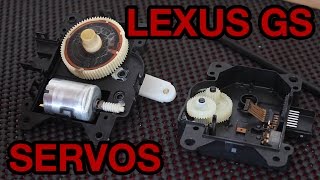
- Software Glitch: Lexus issued TSBs (L-SB-0019-20 and L-SB-0001-21) that involve reprogramming the A/C amplifier for servo-related issues. The TSB also details a 'servo cleaning' procedure that can be run with Techstream. 🎬 Watch this video for a guide on servo repair and cleaning. While often a precursor to mechanical failure, a software update or initialization should be considered as part of the diagnosis.
Diagnosis Steps
- Confirm the presence of code B1446 using an OBD-II scanner capable of reading Body (B) codes.
- Listen carefully to the driver's side lower dashboard area while changing the temperature setting from full cold to full hot. A clicking or grinding sound strongly suggests a failing servo motor.
- Using a scan tool like Toyota Techstream, access the HVAC data list. Select 'Air Mix Servo Targ Pulse (D)' and 'Air Mix Servo Actual Pulse (D)'. Command the temperature to change and observe if the servo's actual position follows the target. A stuck or non-responsive value confirms a faulty servo.
- As a preliminary step, perform a 'Servo Initialization' using Techstream. This recalibrates the servos and can sometimes temporarily fix the issue, which further confirms a servo problem.
- If the servo does not move, gain access to the servo motor located in the driver's side footwell area for physical inspection.
- Inspect the wiring and connector for any visible damage. If possible, test for power at the connector.
- Before replacing, check with a Lexus dealer for any open Customer Support Programs (like 20LE01) related to TSB L-SB-0001-21 Rev, as the repair might be covered.
- If no software or warranty solutions apply, replace the servo motor. The official service manual states the motor cannot be tested off the vehicle and recommends replacement as the diagnostic step.
Parts You'll Likely Need
- Damper Servo Sub-Assembly, Air Conditioner Radiator, No. 5
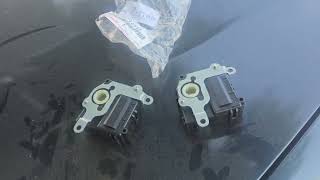
(OEM #87106-30570)— This is the specific servo motor identified by Lexus in TSBs for the B1446 code on this platform. It is the direct cause of the fault. Its location is specified as Front Left Lower.
Trusted brands: Lexus (Genuine OEM)
OEM price range: $170-$250
Aftermarket price range: $50-$120
Related Codes That Often Appear With This One
- B1441 — This is the code for the passenger-side air mix servo. It is very common for these servos to fail around the same time due to similar age and wear.
- B1443 — This code is for the Air Outlet Damper Control Servo. Multiple HVAC servo codes appearing together can indicate a system-wide issue or simply that multiple motors are reaching the end of their service life.
Technical Service Bulletins (TSBs) & Recalls
- L-SB-0019-20: HVAC Servo Motor Malfunction
- L-SB-0001-21 Rev: HVAC Servo Motor Malfunction
- Customer Support Program 20LE01
Platform-Specific Known Issues
- Lexus issued Technical Service Bulletin L-SB-0001-21 Rev, which covers HVAC servo motor malfunctions, including code B1446, for 2013-2017 GS models. The full procedure can involve reprogramming the A/C amplifier, running a 'servo cleaning' utility via Techstream, or replacing the servo motor.
- Accessing the driver-side servo for replacement requires removing the driver's side knee airbag assembly, making the repair more complex and potentially hazardous for DIYers.
- Lexus initiated a Customer Support Program (20LE01) to extend the warranty on these failing servo motors for certain vehicles. Owners should contact a dealer with their VIN to check for eligibility, which could result in a no-cost repair.
Mechanic-Grade Diagnostic Values
- Techstream Live Data: 'Air Mix Servo Targ Pulse (D)' vs 'Air Mix Servo Actual Pulse (D)' — expected: The 'Actual Pulse' value should closely follow the 'Targ Pulse' value as the temperature is changed. For example, on some LHD models, MAX HOT is a pulse value of 5 and MAX COOL is 92.. Failure: The 'Actual Pulse' value does not change, is intermittent, or is stuck at a specific number (e.g., 255) when the 'Targ Pulse' is commanded to change.
- Servo Motor Bench Test — expected: When 12V is applied to terminals 4 (MHOT) and 5 (MCOOL), the motor should move smoothly to the MAX HOT or MAX COOL position. Reversing the polarity should move it smoothly in the opposite direction.. Failure: The servo motor lever does not move, moves erratically, or makes grinding noises when voltage is applied.
Scan Tool Commands That Help
- Toyota Techstream: Utility: Servomotor Initialization — This is a mandatory calibration step after replacing a servo motor or disconnecting the battery to teach the A/C amplifier the new motor's travel limits. It can also be used as a first diagnostic step, as a successful (even if temporary) re-initialization confirms the issue is with the servo.
- Toyota Techstream: Active Test: Manually command servo position — Used to verify if the motor is physically capable of responding to commands from the A/C amplifier, isolating the problem to the motor itself versus the control module or wiring.
- Toyota Techstream: Utility: Servo Cleaning Process — As detailed in TSB L-SB-0001-21, this is a specific utility run with a special tool to address certain servo malfunctions before resorting to replacement. It may be performed as part of a dealer diagnosis.
Wiring & Ground Locations
- A/C Amplifier Assembly — Located behind the center of the dashboard.. This is the control module for the entire HVAC system. All wiring from the B1446 servo motor (pins MCOOL, MHOT, SG-1, etc.) terminates here. Electrical tests for the circuit are performed at this module's connectors if the servo connector is inaccessible.
- Servo Motor Connector — On the driver's side of the HVAC unit, in the footwell area. Access requires removing lower dash panels and potentially the driver's knee airbag.. This is the direct connection to the faulty component. It's where a visual inspection for damage or corrosion and a bench test of the motor would be performed.
Real Owner Repair Stories
- ClubLexus user 'rustlerski' (Lexus model with similar Techstream diagnostics) — Climate settings resetting and no heat on the driver's side.
❌ Tried (didn't work) Visual inspection for mechanical issues.
✅ What actually fixed it Connected Techstream, found B1446. The data list showed the driver's side servo values would not change when commanded. An attempt to fix via the 'Initialization' utility failed, confirming the servo itself had failed and required replacement. - YouTube channel 'YOUSAF AUTO Electrician' (2013 Lexus GS350) — Hot air blowing from both sides. Resetting/programming the system would fix it for about 5 minutes, but the problem would return after restarting the car.
❌ Tried (didn't work) Reprogramming/re-initializing the servo motors.
✅ What actually fixed it The user identified the heater motors (servos) as the fault. They replaced both the left and right side servos to fix the problem, noting that dashboard removal was not necessary if you remove the blower fan assembly for access.
OEM Part Supersession History
87106-30530→87106-30570— Likely an internal design change to improve reliability and address the high failure rate.
Heads up: The parts are reported to be interchangeable, but using the latest part number (87106-30570) is recommended for the improved design.
Model Year Variations Within This Range
- 2013-2015 vs 2016-2017: The original part number for the servo motor was 87106-30530 for earlier models, which was later superseded by 87106-30570. This indicates a design change occurred during the production run.
Helpful Videos
Used OEM Parts in Stock
New Aftermarket Parts Available

The information in this article is provided for general reference and educational purposes only. Vehicle specifications, procedures, and part compatibility can vary by production date, trim level, and region. Always consult your vehicle's factory service manual and verify part numbers before purchasing or performing repairs. Safety-critical components such as airbags, seat belts, and braking systems should be installed by a qualified professional.
- Lexus GS HYBRID:
- 🧭 Diagnostic Flowchart
- 🎬 Helpful Videos
- 🛍️ Shop This Part
- What's Unique About the 2013-2017 Lexus GS HYBRID
- Symptoms You May Notice
- Most Likely Causes
- Rare But Worth Checking
- Diagnosis Steps
- Parts You'll Likely Need
- Related Codes That Often Appear With This One
- Technical Service Bulletins (TSBs) & Recalls
- Platform-Specific Known Issues
- Mechanic-Grade Diagnostic Values
- Scan Tool Commands That Help
- Wiring & Ground Locations
- Real Owner Repair Stories
- OEM Part Supersession History
- Model Year Variations Within This Range
- 🎟️ Get 5% Off