

B1446 on 2015-2019 Lexus RC 350: Driver's Air Mix Servo Causes and Fixes
Code B1446 on a 2015-2019 Lexus RC 350 almost always means the driver's side lower air mix servo motor has failed. This is a common issue covered by Lexus TSBs and a Customer Support Program (20LE01). The failure is due to worn internal components. The fix is to replace the servo motor (OEM Part #87106-30570), which costs about $180-$250, but labor can be very high ($1,900+ at a dealer) due to its difficult location inside the dashboard.
- B1446 on your Lexus RC 350 means the driver's side temperature blend door servo has failed. This is a very common problem.
- The main symptom will be incorrect air temperature from the driver's side, usually stuck on hot, and you may hear a clicking from the dash.
- The repair involves replacing the servo motor (Part #87106-30570), but labor costs are high due to its difficult-to-access location.
- Check with a Lexus dealer about coverage under Customer Support Program 20LE01, as the repair may have been covered under an extended warranty.
What's Unique About the 2015-2019 Lexus RC 350
The first-generation Lexus RC, built on the Toyota New N platform, shares its HVAC design and components with platform-mates like the Lexus IS and GS. This entire family of vehicles has a well-documented history of HVAC servo motor failures. Lexus has issued multiple Technical Service Bulletins (TSBs) and a Customer Support Program (20LE01) acknowledging that these servo motors are a common failure item. The issue isn't a design flaw unique to the RC 350, but rather a high failure rate of the specific servo component (part #87106-30570) used across the Lexus lineup during this period, making B1446 a very common and predictable fault.
Diagnostic Flowchart
Tap your situation to follow the diagnostic path that matches what you're seeing on this vehicle.
Symptoms You May Notice
- Incorrect air temperature from the driver's side vents, often stuck on full hot even when the A/C is on.
- Inability to adjust the temperature for the driver's side.
- Clicking, ticking, or grinding noises from behind the driver's side of the dashboard, especially when changing temperature settings or on startup. 🎬 Watch: Hear the clicking noise and see the installation process.
- Uneven temperature between the driver and passenger sides.
- Low Refrigerant Charge. While low refrigerant can cause poor A/C performance, it will not cause one side to blow full hot and will not trigger a specific servo motor circuit code like B1446.
Most Likely Causes
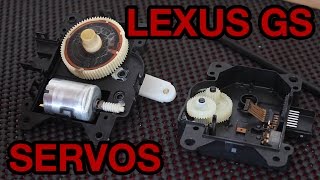
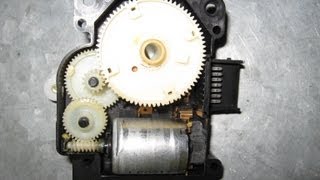
- Failed Driver Side Lower Air Mix Servo Motor 🔴 High Probability As documented in multiple Lexus TSBs (L-SB-0019-20, L-SB-0001-21), these specific servo motors have a high rate of internal failure due to wear on the electrical contacts 🎬 See how to open and clean the internal servo contacts. and circuit board. This was common enough for Lexus to initiate a Customer Support Program (20LE01) to cover repairs.
How to confirm: Using a diagnostic tool like Toyota's Techstream, command the 'Air Mix Servo (D)' to move and observe the 'Actual Pulse' value. If the value is stuck (often at 255) or does not change to match the 'Targ Pulse' value, the motor is faulty. You may also be able to hear the servo clicking or not moving by reaching up under the driver's side dash.
Typical fix: Replace the faulty servo motor. The correct part is the 'Damper Servo Sub-assy, Air Conditioner Radiator, No. 5'. After replacement, an initialization procedure must be performed with a scan tool to calibrate the new motor.
Est. part cost: $180-$250 - Wiring or Connector Issue ⚪ Low Probability
How to confirm: Visually inspect the wiring harness and connector going to the servo motor for any signs of damage, corrosion, or loose pins. The servo is located high up in the driver's footwell, near the center console.
Typical fix: Repair the damaged wiring or clean/replace the connector.
Est. part cost: $5-$50 - Faulty A/C Amplifier (Climate Control ECU) ⚪ Low Probability → Shop HVAC Control
How to confirm: This is diagnosed by exclusion. If the servo motor and wiring are confirmed to be good, but the servo still does not operate correctly, the A/C amplifier may be the cause. TSBs also mention the possibility of a software update for the amplifier. This is a very rare failure compared to the servo itself.
Typical fix: Reprogram or replace the A/C Amplifier.
Est. part cost: $400-$700
Rare But Worth Checking
- Mechanical Obstruction: It's possible for the damper door or linkage to become physically jammed, preventing the servo from moving. Service manuals and TSBs recommend checking for mechanical binding before replacing parts.
Diagnosis Steps
- Confirm the primary symptom, which is typically hot air blowing from the driver's side vents when cold is requested.
- Scan the vehicle's Body Control Module for codes using a scanner capable of reading 'B' codes. Confirm that B1446 is present.
- Listen carefully under the driver's side dashboard while changing the temperature from hot to cold. A clicking or grinding sound points to a failing servo motor.
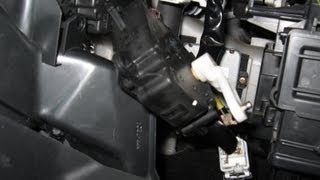
- Gain access to the servo motor. It is located high in the driver's footwell, above the gas pedal area. TSB L-SB-0001-21 Rev1 notes that this requires removing the knee airbag assembly and No. 1 air duct sub-assembly for access.
- Visually inspect the servo's wiring connector for damage or a poor connection.
- If using an advanced scan tool like Toyota Techstream, monitor the live data for the 'Air Mix Servo (D) Target Pulse' and 'Actual Pulse'. Command the temperature to change and verify if the 'Actual Pulse' value changes to match the target. If it is stuck (e.g., at 255) or does not follow the command, the servo has failed.
- If the servo is confirmed to be faulty, replace it with the new part.
- After installation, perform the 'Servo Motor Initialization' procedure using a compatible scan tool to ensure the new motor is properly calibrated.
Parts You'll Likely Need
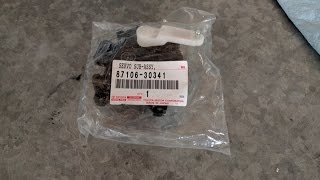
- Damper Servo Sub-assy, Air Conditioner Radiator, No. 5
(OEM #87106-30570)— This is the specific servo motor that controls the driver's side lower air mix. It is the component that fails and triggers code B1446. This part is used across many Lexus models including the IS, GS, RC, CT, LS, LX, and RX.
Trusted brands: Lexus (Genuine OEM)
OEM price range: $170-$250
Aftermarket price range: $50-$120
Related Codes That Often Appear With This One
- B1441 — This is the code for the passenger-side air mix servo. It is common for multiple HVAC servo motors to fail around the same time due to having similar lifespans and being part of the same known issue.
- B1443 — This code relates to the Air Outlet Damper Control Servo. A general weakness in the servo motor design means multiple faults can appear together, and they are often grouped in the same TSBs.
- B1448 — This code is for the Passenger Side Face Servo Motor Circuit. A forum user reported having B1446 and B1448 appear at the same time, indicating a simultaneous failure of two different servos.
Technical Service Bulletins (TSBs) & Recalls
- L-SB-0019-20: HVAC Servo Motor Malfunction (covers 2017-2019 models).
- L-SB-0001-21 Rev1: HVAC Servo Motor Malfunction (covers 2015-2017 models). This TSB provides detailed diagnostic flowcharts, part numbers, and specifies that the knee airbag must be removed for access to the B1446 servo.
- Customer Support Program 20LE01: Acknowledges the high failure rate and provides extended coverage for diagnosis and repair.
Platform-Specific Known Issues
- Lexus issued Technical Service Bulletin L-SB-0001-21 Rev1 and L-SB-0019-20, which directly address malfunctions in the HVAC servo motor system, including the one that causes code B1446.
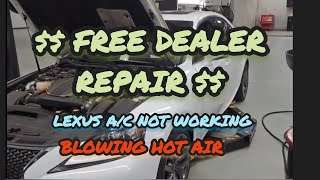
- Lexus initiated Customer Support Program 20LE01 to address this specific condition. Primary coverage ended January 12, 2022, but secondary coverage was offered for 7 years or 125,000 miles from the date of first use. This program covered reprogramming and/or replacement of failed servo motors free of charge at a dealership.
Mechanic-Grade Diagnostic Values
- Techstream Live Data: 'Air Mix Servo Targ Pulse (D)' vs 'Air Mix Servo Actual Pulse (D)' — expected: For LHD vehicles, 'Targ Pulse' should be approximately 92 at MAX COOL and 5 or 6 at MAX HOT. The 'Actual Pulse' value should closely follow the 'Targ Pulse' value as the temperature is changed.. Failure: The 'Actual Pulse' value does not change, is stuck at a fixed number (e.g., 255), or does not match the 'Targ Pulse' value when commanded to change.
- Servo Motor Bench Test — expected: Connect a 12V power source to terminals 4 and 5 of the disconnected servo motor. The motor's lever should move smoothly to one end. Reversing the polarity on the terminals should cause the lever to move smoothly to the opposite end.. Failure: The servo motor lever does not move, moves erratically, or makes grinding noises when voltage is applied.
Hidden / Shadow Codes Worth Checking
- Two-Digit Flash Codes (e.g., '46'): Through a specific sequence of button presses on the HVAC control panel, the system can flash two-digit codes on the display, which correspond to the last two digits of the full 'B' code. A flash code of '46' indicates a fault with the component related to B1446. (see via On-board diagnostic mode, accessed without a scan tool by pressing and holding specific buttons on the climate control unit while turning the ignition on.)
Scan Tool Commands That Help
- Toyota Techstream: Servomotor Initialization — This is a critical first step in diagnosis and a required final step after replacement. It forces the A/C amplifier to relearn the start and end points of all HVAC servos. It can sometimes temporarily fix a servo that is stuck due to losing its position.
- Toyota Techstream: Active Test — Allows a technician to command a single servo, such as the 'Air Mix Servo (D)', to a specific position (e.g., MAX HOT or MAX COOL) to isolate and verify its function while observing live data, without affecting other servos.
- Toyota Techstream: AC Damper Servo Operation Check Tool (Servo Cleaning Utility) — As specified in TSB L-SB-0001-21, this utility is used after reprogramming the A/C amplifier. It cycles the servos for 8-14 minutes to clean the internal electrical contacts. If DTCs return after this procedure, the TSB directs replacement of the faulty servo.
Wiring & Ground Locations
- A/C Amplifier Ground (N6) — Located on the left side of the dash.. The A/C Amplifier is the control module for all HVAC servos. A poor ground at this location could cause erratic behavior or communication faults for any of the servos it controls, including the one that sets B1446.
- A/C and LH-IG Fuses — Located in the Left Cowl Side Junction Block (J/B), which is behind the left end of the dashboard.. The 7.5A 'A/C' fuse and 10A 'LH-IG' fuse supply power to the A/C Amplifier. A problem with these fuses or the junction block would likely cause multiple HVAC codes or a total loss of climate control function, not just B1446.
- Instrument Panel Wire Harness (Dash Harness) — The main, complex harness running behind the entire dashboard, connecting the A/C amplifier to all servos.. A break, short, or corroded pin in the section of this harness between the A/C Amplifier and the driver's air mix servo would cause code B1446. This is a rare cause compared to servo failure.
Real Owner Repair Stories
- ClubLexus user, post on 'Ac Servo motor SOLVED rc250/300/350' (2015 Lexus RC350) — Driver's side blows warm air while the passenger side is cold.
❌ Tried (didn't work) Considering replacement of the servo motor.
✅ What actually fixed it The user removed the driver's side servo motor, opened the casing, and cleaned the internal copper contact points and the circular trace on the board. After re-greasing and reassembly, the servo functioned correctly, resolving the code and symptoms without needing a new part. - ClubLexus user, post on 'Servo motor recall notice.' (2015 Lexus GS (shares platform and issue)) — Unspecified HVAC issue related to servo motors.
❌ Tried (didn't work) Preparing for dashboard disassembly and servo replacement.
✅ What actually fixed it The dealership performed a firmware update on the A/C controller as per a service campaign. This resolved the issue without replacing any hardware. The service advisor noted this software fix is effective in about 50% of cases.
OEM Part Supersession History
87106-30570→87106-30570— No supersession found. This part number appears to be the consistent and correct part for the entire model range and related platforms.
Model Year Variations Within This Range
- 2015-2017 vs 2017-2019: The diagnostic approach recommended by Lexus TSBs varies slightly. TSB L-SB-0001-21 Rev1 (for earlier models) details a procedure involving reprogramming, followed by a 'servo cleaning utility', and then replacement if codes persist. TSB L-SB-0019-20 (for later models) prioritizes flash reprogramming the A/C amplifier as the first step before further diagnosis or replacement.
Helpful Videos
Used OEM Parts in Stock
New Aftermarket Parts Available

The information in this article is provided for general reference and educational purposes only. Vehicle specifications, procedures, and part compatibility can vary by production date, trim level, and region. Always consult your vehicle's factory service manual and verify part numbers before purchasing or performing repairs. Safety-critical components such as airbags, seat belts, and braking systems should be installed by a qualified professional.
- Lexus RC 350:
- 🧭 Diagnostic Flowchart
- 🎬 Helpful Videos
- 🛍️ Shop This Part
- What's Unique About the 2015-2019 Lexus RC 350
- Symptoms You May Notice
- Most Likely Causes
- Rare But Worth Checking
- Diagnosis Steps
- Parts You'll Likely Need
- Related Codes That Often Appear With This One
- Technical Service Bulletins (TSBs) & Recalls
- Platform-Specific Known Issues
- Mechanic-Grade Diagnostic Values
- Hidden / Shadow Codes Worth Checking
- Scan Tool Commands That Help
- Wiring & Ground Locations
- Real Owner Repair Stories
- OEM Part Supersession History
- Model Year Variations Within This Range
- 🎟️ Get 5% Off