

OBD-II Code B1451: A/C Compressor Control Solenoid Circuit Malfunction
The Ultimate Guide to What B1451 Means, Why It Triggers, and How to Fix It
- On Toyota and Lexus vehicles, B1451 indicates a direct electrical failure in the A/C compressor control circuit, disabling the air conditioning.
- On Hyundai and Mitsubishi models, B1451 is a critical airbag safety code (Side Impact Sensor), not an A/C fault.
- The three most common causes are a broken wiring harness, a corroded connector pin, or a failed compressor control solenoid.
- A definitive diagnosis requires testing the compressor solenoid resistance, which must measure between 10.1 and 11.1 Ohms on most Toyota models.
- Driving with an A/C-related B1451 code is 100% safe and causes $0 in secondary engine damage, though you will lack cabin cooling.
What Does B1451 Mean?

Code B1451 indicates the climate control computer (A/C amplifier) detects an electrical fault in the air conditioning compressor's control circuit. This is an open wire, a shorted wire, or a faulty electronic control solenoid on the compressor itself. The computer sends a duty-cycled signal to this solenoid to turn the A/C on and precisely adjust how hard it works. The computer sets the B1451 code when it detects this signal is not received or the current in the circuit is incorrect for 30 seconds or more.
Technical definition: The official SAE/ISO definition for B1451 is "Compressor Solenoid Circuit." This indicates the air conditioning control module detects an open or short circuit condition in the electrical circuit for the A/C compressor's variable displacement control solenoid. On Toyota and Lexus vehicles, this displays as B1451/51.
Can I Drive With B1451?
Yes. Driving with code B1451 does not cause damage to your engine, transmission, or other critical systems. It is a comfort-related code, and the only direct consequence is that your air conditioning will not function until the fault is repaired.
Common Causes

- Damaged or Corroded Wiring/Connectors (Very Common) — The wiring harness running to the A/C compressor is exposed to engine heat, vibration, and road moisture. Over time, wires break internally, chafe through insulation, or develop connector corrosion, causing an open or short circuit. A loose or corroded ground wire also creates high resistance, triggering the fault.
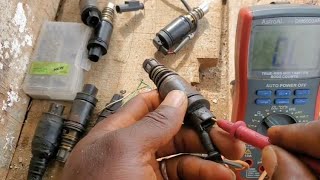
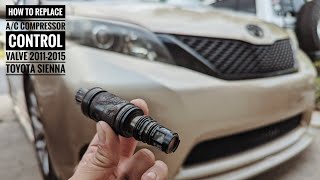
- Failed A/C Compressor Control Solenoid (Common) — The electronic solenoid valve on the A/C compressor fails when its internal coil winding develops an open or short circuit, preventing it from responding to the computer's commands. 🎬 See this walkthrough on replacing the compressor control valve.
- Failed A/C Amplifier / Climate Control Module (Less Common) — The A/C amplifier fails internally when the driver circuit that sends the signal to the compressor solenoid burns out, preventing it from sending the correct signal.
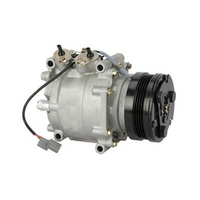
- Failed A/C Compressor Clutch Assembly (Uncommon) — On some vehicle models, the control solenoid is an integral part of the A/C compressor's magnetic clutch assembly. A failure in the clutch affects the solenoid circuit, leading to this code.
- System Overcharged or Incorrect Refrigerant (Rare) — In advanced climate control systems, an extreme overcharge condition causes the compressor to draw abnormal current, which the A/C amplifier interprets as a circuit malfunction.
Symptoms

- Air conditioning does not blow cold air — The compressor does not engage, preventing refrigerant circulation.
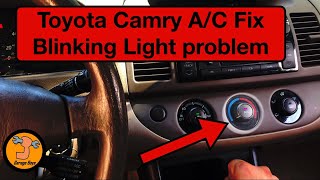
- A/C button flashes — On Toyota, Lexus, and Scion vehicles, the A/C light flashes to indicate a fault is detected in the climate control system. 🎬 Watch: How to diagnose a blinking Toyota A/C light.
- A/C works intermittently — A loose connection, a breaking wire, or a failing solenoid causes the A/C to work briefly and then cut out as the connection is lost.
- Check Engine Light or A/C service light is on — The vehicle's computer system illuminates a warning light on the dashboard to alert the driver of the fault.
Diagnostic Flowchart

Tap your situation to follow the diagnostic path that matches what you're seeing on this code.
Common Fixes & Costs
- Replacing the A/C Compressor Control Solenoid — Parts: $50-$175, Labor: $150-$350, ~2.5 hr book time (Intermediate)
- Repairing Damaged Wiring or Connector — Parts: $10-$50, Labor: $125-$250, ~1.5 hr book time (Intermediate)
- Replacing the A/C Amplifier / Climate Control Module — Parts: $250-$700, Labor: $100-$200, ~1.2 hr book time (Intermediate)
- Replacing the A/C Compressor Assembly — Parts: $350-$900, Labor: $450-$750, ~4.5 hr book time (Professional)
- Replacing the A/C Compressor Clutch Assembly — Parts: $150-$400, Labor: $200-$350, ~2.5 hr book time (Professional)
Used vs. New Parts: Buying Guide
When a used part is worth it: A used A/C Amplifier (control module) from a reputable salvage yard is a good value, as they are not wear items. For the A/C compressor or control solenoid, buying used is very risky and not recommended.
Donor-vehicle mileage cap: roughly under 80000 miles for the part to have meaningful remaining life.
Donor quality checklist:
- For modules, match the part number exactly.
- For compressors/solenoids, avoid parts from vehicles with high mileage or those that sat for a long time.
- Ask for a warranty; reputable sellers offer at least 30-90 days on used parts.
Decision logic:
- If The failed part is the A/C Amplifier and the OEM part is over $500 → A used part with a matching number and a short-term warranty is a reasonable choice.
- If The failed part is the A/C compressor or control solenoid → Buy a new or remanufactured part. A used compressor failure spreads debris throughout the A/C system, causing a much more expensive repair later.
- If Budget is the absolute primary concern for a compressor → A remanufactured compressor offers a good balance of cost savings and reliability, and usually includes a warranty.
Warranty tradeoff: Used parts typically have a 30-90 day warranty. New aftermarket parts carry a 1-year to limited lifetime warranty. New OEM parts offer the best warranty but at the highest cost.
Worst-case if a used part fails: $800-$1500 if a used compressor fails after installation. This includes the cost of a second replacement compressor, flushing the entire A/C system of debris, and repeating the labor and refrigerant service.
What Happens If You Wait — Timeline
- Immediate: Code B1451 is set. The A/C control module disables the signal to the compressor. The A/C system stops producing cold air. On many Toyotas, the A/C light flashes. (MPG impact: 0%% · Added cost: $0)
- 0-12 months: No further damage occurs to the A/C system itself, as it is disabled. The only consequence is a lack of air conditioning. The vehicle remains safe to drive. (MPG impact: 0%% · Added cost: $0)
- 12-24+ months: The A/C compressor pulley bearing, which spins with the serpentine belt regardless of A/C operation, begins to fail from age or lack of use, starting as a rumbling noise. (MPG impact: 0%% · Added cost: $0)
- 24+ months (if pulley bearing fails): Catastrophic failure of the compressor pulley bearing. The pulley seizes, shredding the serpentine belt. This causes an immediate loss of the water pump, power steering, and alternator. (MPG impact: N/A (Vehicle is disabled)% · Added cost: $200-$2500+)
Cost of Not Fixing It
- Immediate: No air conditioning. This is a comfort issue and does not affect the vehicle's driveability. (Added cost: $0)
- 1-6 months: Continued operation does not cause further damage, as the control module has disabled the compressor circuit. (Added cost: $0)
- 6+ months: If the compressor pulley bearing seizes from age or lack of use, it shreds the serpentine belt. This causes an immediate loss of power steering, the alternator, and the water pump, leading to engine overheating and a breakdown. (Added cost: $500 - $2500+)
Diagnosis Steps
- Check for All Trouble Codes
Use a quality OBD-II scanner to read codes from ALL modules, not just the engine computer. B1451 is a Body code, and there are often related codes in the HVAC module. Document all codes, clear them, and see which return immediately to isolate the primary fault.
Tools: OBD-II Scanner (Beginner) - Visual Inspection
Perform a thorough visual inspection of the A/C compressor area. Look closely at the wiring harness and connector going to the compressor control solenoid. Search for frayed or burnt wires, green or white corrosion on the connector pins, or a loose connector.
Tools: Flashlight, Inspection mirror (Beginner) - Test the Compressor Solenoid Resistance
Disconnect the A/C compressor's electrical connector. Use a multimeter set to Ohms (Ω) to measure the resistance across the two pins on the compressor solenoid. Compare this reading to the manufacturer's specification. For many Toyota/Lexus models, the spec is between 10.1 and 11.1 Ohms at 77°F (25°C). A reading of 'OL' indicates an open circuit (bad solenoid). A reading near zero Ohms indicates a short circuit (bad solenoid).
Tools: Multimeter (Intermediate) - Check for Power and Ground at the Connector
Identify the power/signal and ground wires at the harness-side connector using a wiring diagram. The ground wire must have continuity to the chassis ground (less than 1 Ohm). With the engine running and A/C commanded ON, the power/signal wire shows a duty-cycled voltage.
Tools: Multimeter, Vehicle-specific wiring diagram (Intermediate) - Check Harness Continuity and for Shorts
Disconnect both the A/C compressor connector and the A/C amplifier module connector. Use a multimeter to check for continuity on the signal wire between the two connectors; resistance must be less than 1 Ohm. Check that same wire for a short to ground by testing continuity between the wire and a known good chassis ground; the reading must be 'OL'. Check the signal wire for a short to power by turning the ignition on (engine off) and probing the wire for voltage; it must read 0V.
Tools: Multimeter, Vehicle-specific wiring diagram (Advanced) - [PRO TIP] Active Test with a Bi-Directional Scan Tool
Navigate to the HVAC module and find the function for the 'Compressor Solenoid' or 'Regulator Control Current'. Command the solenoid ON and OFF while monitoring the PID for 'REG CTRL CURRNT'. The current fluctuates between 0 Amps and approximately 0.997 Amps. If the current changes, the module and wiring are good. If the current stays at 0, it confirms an open circuit.
Tools: Bi-directional Scan Tool (Advanced) - Test the A/C Amplifier
If the solenoid tests good (resistance within 10.1-11.1 Ω) and the wiring has no opens (<1 Ω continuity) or shorts (>10 kΩ to ground), the A/C amplifier is the culprit. Diagnosis is confirmed by substitution with a known-good part.
Tools: Multimeter, Bi-directional Scan Tool (Advanced) - [PRO TIP] Analyze the Signal with an Oscilloscope
Connect an oscilloscope to the solenoid signal wire and ground. With the A/C on, you see a square wave (a duty-cycled signal). A sharp square wave confirms the A/C amplifier is sending the command correctly. A flat line at 0V or 12V, or a noisy pattern, points to a failed A/C amplifier or a short in the wiring.
Tools: Oscilloscope, Back-probe connectors (Professional)
When This Code Triggers (Freeze-Frame Conditions)
- Engine Coolant Temp: 180-210°F (Engine at full operating temperature.)
- Engine RPM: 650-3000 RPM (The fault is detected at idle or during normal driving when the A/C is commanded on.)
- A/C Command: ON (The climate control system must be actively requesting compressor operation.)
- System Voltage: 11-14.5V (Normal vehicle operating voltage; the code sets after the circuit fault is detected for a continuous period (e.g., 30 seconds).)
Related Codes
- B1479 — Common on Toyota vehicles for an 'A/C Flow Sensor Circuit'. A non-functional compressor (due to B1451) causes a lack of refrigerant flow, triggering B1479 as a secondary symptom code. Diagnose and fix B1451 first.
- B1423 — This code for the 'Pressure Sensor Circuit' also disables the A/C compressor. If the A/C amplifier sees an invalid pressure reading, it won't command the compressor to turn on.
- P0531 — This is a powertrain code for the 'A/C Refrigerant Pressure Sensor Circuit'. If the compressor isn't running due to a B1451 fault, system pressures won't change as expected, causing this code.
- U0164 — This code means 'Lost Communication With HVAC Control Module'. If you see this with B1451, the problem is with the A/C module itself or its power/ground supply.
Climate & Environmental Factors
- High Humidity & Salty Air (Coastal Regions): Copper and aluminum components corrode up to five times faster in coastal air. Salt spray accelerates corrosion on the A/C compressor's wiring harness and connector pins, significantly increasing the likelihood of an open or short circuit that triggers code B1451.
- Winter Road Salt: Salty slush splashes into the engine bay and onto the A/C compressor and its wiring. This damages insulation and electrical connections over time, leading to circuit faults.
How to Talk to a Mechanic About This Code
Say this: "I have a B1451 code and my A/C is not working. I'd like to schedule a diagnostic appointment. Please ensure the technician performs a full electrical circuit diagnosis—testing the compressor solenoid's resistance, and checking the wiring harness for continuity and shorts—before recommending a compressor replacement."
This language signals that you understand B1451 is an electrical code and that the most common misdiagnosis is unnecessarily replacing the entire A/C compressor. It directs the shop to perform the specific tests required for an accurate diagnosis, protecting you from being upsold.
Avoid saying:
- 'My A/C is broken, can you fix it?'
- 'The A/C light is flashing, I think I need a new compressor.'
- 'Just do whatever it takes to get the cold air back.'
Questions to ask before authorizing the repair:
- What was the resistance reading on the compressor control solenoid? Was it within the manufacturer's spec?
- Did you confirm the wiring harness has good continuity between the A/C amplifier and the compressor connector, and that it's not shorted to ground?
- Can you confirm you can command the solenoid on and off with a scan tool and see the current change?
- Is the replacement of the entire compressor necessary, or can just the failed component (like the solenoid or a section of wiring) be replaced?
- What is the warranty on the parts and labor for this specific repair?
Where to Take It: Dealer vs Independent vs Chain
- Dealer:
A safe but expensive option. Recommended if the vehicle is under warranty or if it's a brand where B1451 has an unusual meaning (like Hyundai or Mitsubishi).
Best for: Vehicles under warranty., Complex, intermittent electrical issues where brand-specific knowledge is a major advantage., When an independent shop has already failed to diagnose it correctly.
Downsides: Significantly higher labor rates and parts costs., Defaults to replacing the entire compressor assembly rather than a cheaper, component-level repair (like the solenoid). (Typical cost: +50% vs. baseline) - Independent Shop:
Best fit for most situations, especially on a Toyota/Lexus. A good independent shop performs the necessary electrical tests and offers a cost-effective wiring or solenoid repair instead of a full compressor replacement.
Best for: Out-of-warranty vehicles, especially common models like Toyota and Lexus where B1451 is a well-known issue., Vehicle owners seeking the best value., Building a long-term relationship with a trusted mechanic.
Downsides: Quality and expertise vary widely. Ensure the shop has strong electrical diagnostic capabilities and ASE-certified technicians. (Typical cost: +0% vs. baseline) - Chain Shop:
High risk, not recommended. This code requires specific electrical diagnosis that is beyond the scope of a typical chain shop's business model.
Best for: Simple A/C services like a refrigerant recharge (which is NOT the fix for B1451).
Downsides: Technician skill is inconsistent., Lacks the advanced diagnostic tools or experience for a nuanced electrical fault., High risk of an incorrect diagnosis leading to unnecessary parts replacement. (Typical cost: -10% vs. baseline)
When to Walk Away From the Repair
If the estimated repair cost for the A/C system exceeds 40-50% of the car's private-party value, pause and consider your options.
- Car worth $4000, fix is $1650: Walk away. The repair cost is a significant percentage of the car's value. It is not economically sensible unless the car is in otherwise perfect condition.
- Car worth $12000, fix is $250: Fix it. A low-cost wiring or connector repair is a small investment to restore a critical comfort feature and maintain resale value.
- Car worth $8000, fix is $1200: Borderline. This is a judgment call. If the car is reliable and you plan to keep it for several more years, the repair is worth it for your comfort. Get a second opinion to confirm the diagnosis before proceeding.
What Scan Tool You Need for This Code
Minimum: A scanner that reads manufacturer-specific Body ('B') codes. A basic engine-only code reader will NOT see the B1451 code.
A standard $20 engine code reader only sees 'P' (Powertrain) codes. B1451 is a Body code stored in the HVAC or Body Control Module. Without the ability to read these systems, you won't know the code exists.
Budget: BlueDriver Pro Scan Tool (~$100) — Reads and clears enhanced codes (including Body codes like B1451) for most major brands, displays freeze-frame data, and allows live data graphing. This confirms the code and monitors related data.
Mid-range: Foxwell NT510 Elite (~$180) — Provides full system diagnostics, including reading B-codes. Crucially, it offers bi-directional control, allowing you to actively command the A/C compressor solenoid ON and OFF to test the circuit.
Professional: Autel MaxiCOM MK808S / MK900BT (~$450-900) — Offers full bi-directional control, extensive live data PIDs (like the specific solenoid control current), and a user-friendly tablet interface. This level of tool allows for the most thorough and efficient diagnosis.
Rent vs buy: Most auto parts stores read your codes for free, but their basic scanners miss Body codes. Buying a capable scanner like the BlueDriver is a better investment as it guarantees you can read the correct module.
How to Clear the Code After You Fix It
- Use a compatible OBD-II scan tool to erase the trouble codes from the HVAC module.
- Disconnecting the negative battery terminal for 15 minutes also clears the code, but resets all vehicle readiness monitors.
- Perform a drive cycle to confirm the fix and allow readiness monitors to run.
Drive cycle (~20 minutes): After a cold soak (sitting for 8+ hours), start the engine and let it idle for 5-10 minutes with the A/C turned on. Drive for 10-15 minutes with a mix of city and highway speeds (up to 55 mph). The goal is to run the A/C under various engine loads to confirm the repair is successful.
Readiness monitors affected: If the battery is disconnected, all readiness monitors (Catalyst, O2 Sensor, EVAP, etc.) reset to 'Not Ready'.
Before emissions retest: drive at least 50 miles to fully set monitors.
Watch out for:
- Clearing the code without fixing the underlying electrical issue results in the code returning quickly.
- Using a basic engine code reader fails to clear codes from the Body/HVAC control module; an advanced scanner is required.
- Forgetting to perform the drive cycle leaves the system in a 'not ready' state for an emissions test.
Will This Fail Emissions / State Inspection?
No — by itself this code doesn't fail OBD inspection (but it can keep readiness monitors from setting, which causes a separate fail).
- General Note: Code B1451 is a Body Control Module (BCM) or HVAC module code. Emissions tests (smog checks) only fail vehicles for Powertrain Control Module (PCM) codes that activate the main 'Check Engine Light' (MIL). B1451 will not cause a smog check failure.
- California: The California Smog Check program primarily looks for MIL illumination and set readiness monitors. A B1451 code without an accompanying Check Engine Light will not fail the inspection.
- New York: The NYS inspection checks for the illumination of the MIL. A body code like B1451 does not cause a failure unless it triggers the MIL.
- Texas: In the 17 Texas counties requiring emissions testing, the inspection fails if the MIL is commanded on. A B1451 code alone will not cause a failure. However, clearing the code by disconnecting the battery resets all readiness monitors and fails the test until a complete drive cycle is performed.
Most Commonly Affected Vehicles
- Toyota Camry (2006-2017) — Extremely common on this model, often due to a failed compressor control solenoid. The diagnostic procedure is well-documented for the 2AR-FE and 2GR-FE engines.
- Toyota Corolla (2009-2018) — The control solenoid circuit is a known failure point. Diagnosis is consistent with other Toyota models of this era.
- Toyota Sienna (2007-2015) — Owners frequently report this code when the A/C stops cooling. The fault is typically the solenoid or the wiring harness leading to it.
- Toyota Venza (2009-2015) — Service manuals for the Venza provide specific diagnostic procedures for B1451, indicating it is a recognized issue.
- Lexus ES350 (2007-2012) — Shares the 2GR-FE powertrain with the Camry, and likewise has a high incidence of B1451. The diagnostic and repair process is virtually identical.
- Hyundai Santa Fe (2010-2012) — CRITICAL: On many Hyundai models, B1451 is an AIRBAG code for 'Side Impact Sensor (SIS) rear-Driver Circuit Short to Ground'. It is NOT an A/C code. Misdiagnosis is dangerous.
Manufacturer-Specific Notes
- Toyota / Lexus: This code is extremely common and well-documented, often appearing as B1451/51. It almost always relates to the A/C compressor solenoid circuit. The solenoid resistance specification of 10.1-11.1 Ω is a key diagnostic data point.
- Chevrolet / GM: On GM vehicles like the 2009 Corvette, B1451 means 'Device Ignition ACCESSORY Circuit Short to Ground' or 'Short to Battery', managed by the Body Control Module (BCM). This is not an A/C-related code.
- Ford / Lincoln: Ford uses P1451 (a powertrain code) for an 'EVAP System Vent Control Valve Circuit' issue. A 'B' code like B1451 on a Ford is unlikely to be related to the A/C system.
- Hyundai / Kia: On many Hyundai and Kia vehicles, B1451 is a critical safety system code indicating a 'Side Impact Sensor (SIS) rear-Driver Circuit Short to Ground' within the airbag system (SRSCM).
- Mitsubishi: For many Mitsubishi models, B1451 is a critical airbag system code meaning 'Curtain Air Bag Module (LH) (Squib) System (Open Circuit)'.
- Suzuki: On some Suzuki vehicles, B1451 means 'Control Module Power Supply. Signal Too High', set when the battery voltage exceeds 16V for more than a second.
Real Owner Stories
2007 Lexus ES350 with intermittent A/C
The A/C worked perfectly in the morning but stopped blowing cold air 15km into the hot afternoon drive (113-115°F). The B1451 code only appeared when the A/C was not working.
Outcome: Forum members identified the issue as the A/C amplifier (climate control module) or its wiring, a common failure mode for intermittent issues triggering B1451.
Lesson: Intermittent failures related to ambient temperature point to failing electronic modules or wiring, not the compressor itself. The B1451 code is the key to diagnosis, not secondary symptoms.
2012 Toyota Camry quoted $1,300 for compressor
The A/C stopped working and a mechanic diagnosed a bad compressor clutch, quoting over $1,300 for a full compressor replacement.
Outcome: Testing the flow sensor's voltage proved it was faulty. The sensor was replaced by removing a single snap ring without evacuating the A/C system, saving over a thousand dollars.
Lesson: B1451 points to an electrical fault. Do not accept a diagnosis for a full mechanical replacement without confirming the specific electrical cause (solenoid, wiring, or related sensors).
Misdiagnosis: 2012 Hyundai Elantra with B1451
A warning light appeared. Using a generic code reader and definition, the owner assumed it was a minor A/C issue.
Outcome: The diagnosis shifted from a comfort system to a critical safety system. The repair involved inspecting the sensor wiring and replacing the side impact sensor.
Lesson: The same code number means drastically different things on different car brands. Always verify the code's definition for your specific make, model, and computer module.
How to Prevent This Code From Triggering
- Clean Engine Bay and Electrical Connectors (Every 1-2 years) — Road salt, dirt, and moisture accelerate corrosion on the exposed A/C compressor connector. Cleaning the engine bay and applying dielectric grease to critical connectors seals out moisture and prevents corrosion.
- Inspect and Secure Wiring Harnesses (During every oil change) — Engine vibration causes wiring harnesses to rub against brackets or hot engine components. Ensuring harnesses are properly secured prevents chafing that wears through insulation and leads to a short circuit.
- Use High-Temperature Wire Loom/Tape for Repairs (As needed during any under-hood electrical repair) — The engine bay exceeds 250°F. Standard electrical tape melts. Using dedicated high-temperature cloth harness tape or split-loom conduit protects wiring from heat and abrasion.
- Perform an A/C System Performance Check (Every 2-3 years) — Checking system pressures identifies underlying issues before they cause the compressor to work harder, generating excess heat and stress on electrical components.
Frequently Asked Questions
Why is my A/C light flashing?
On Toyota and Lexus vehicles, a flashing A/C light indicates the system has detected a fault and stored a trouble code. It disables the A/C system to prevent potential damage. You must use a scanner to read the specific code (like B1451) to know why it is flashing.
Can I just replace the solenoid or do I need a whole new compressor?
It depends on your vehicle. On many common cars like the Toyota Camry, the control solenoid is available as a separate, replaceable part, saving hundreds of dollars. However, on models where the solenoid is integral to the compressor, a full replacement is required.
What is the difference between code B1451 and P1451?
They are completely different codes for different systems. B1451 is a Body ('B') code, most commonly for an A/C compressor circuit on Toyota/Lexus. P1451 is a Powertrain ('P') code, most commonly used by Ford for a problem in the EVAP system vent circuit.
How much does it cost to diagnose a B1451 code?
Most repair shops charge a diagnostic fee equivalent to one hour of labor. Expect to pay between $100 and $200 for a professional diagnosis. This fee covers the technician's time to perform electrical tests, not just read the code from a scanner.
Can a low refrigerant level cause a B1451 code?
No. A low refrigerant level causes the A/C to not cool and sets pressure-related codes (like P0531 or B1423), but it does not cause an electrical circuit fault code like B1451. B1451 specifically points to an electrical open or short in the solenoid's control circuit.
I cleared the code and my A/C worked for a little while. What does that mean?
This strongly suggests an intermittent problem. The cause is likely a loose wire in a connector, a corroded pin that makes contact sometimes, or a wire that is frayed and about to break completely. The fault will inevitably return.
What is the most common misdiagnosis for B1451?
The most common and costly mistake is replacing the entire A/C compressor without performing electrical tests first. The actual problem is often a $5 broken wire or a poor connection at the A/C amplifier. Always insist on a full circuit diagnosis before authorizing a compressor replacement.
Is it safe to drive with code B1451?
Yes, it is safe, provided the code is correctly identified as an A/C system fault. It affects cabin comfort only and does not impact the engine's performance. However, if your vehicle is a Hyundai or Mitsubishi where B1451 indicates an airbag fault, it is NOT safe and requires immediate inspection.
Key Takeaways
- On Toyota and Lexus vehicles, B1451 indicates a direct electrical failure in the A/C compressor control circuit, disabling the air conditioning.
- On Hyundai and Mitsubishi models, B1451 is a critical airbag safety code (Side Impact Sensor), not an A/C fault.
- The three most common causes are a broken wiring harness, a corroded connector pin, or a failed compressor control solenoid.
- A definitive diagnosis requires testing the compressor solenoid resistance, which must measure between 10.1 and 11.1 Ohms on most Toyota models.
- Driving with an A/C-related B1451 code is 100% safe and causes $0 in secondary engine damage, though you will lack cabin cooling.
Helpful Videos
Shop the Parts Behind B1451
Below are the parts most often responsible for code B1451, ranked by how frequently each one is the actual culprit (per the diagnosis above). Tap any to see what we have for your vehicle.



The information in this article is provided for general reference and educational purposes only. Vehicle specifications, procedures, and part compatibility can vary by production date, trim level, and region. Always consult your vehicle's factory service manual and verify part numbers before purchasing or performing repairs. Safety-critical components such as airbags, seat belts, and braking systems should be installed by a qualified professional.
- 🧭 Diagnostic Flowchart
- 🎬 Helpful Videos
- 🛍️ Shop This Part
- What Does B1451 Mean?
- Can I Drive With B1451?
- Common Causes
- Symptoms
- Common Fixes & Costs
- Used vs. New Parts: Buying Guide
- What Happens If You Wait — Timeline
- Cost of Not Fixing It
- Diagnosis Steps
- When This Code Triggers (Freeze-Frame Conditions)
- Related Codes
- Climate & Environmental Factors
- How to Talk to a Mechanic About This Code
- Where to Take It: Dealer vs Independent vs Chain
- When to Walk Away From the Repair
- What Scan Tool You Need for This Code
- How to Clear the Code After You Fix It
- Will This Fail Emissions / State Inspection?
- Most Commonly Affected Vehicles
- Manufacturer-Specific Notes
- Real Owner Stories
- 2007 Lexus ES350 with intermittent A/C
- 2012 Toyota Camry quoted $1,300 for compressor
- Misdiagnosis: 2012 Hyundai Elantra with B1451
- How to Prevent This Code From Triggering
- Frequently Asked Questions
- Why is my A/C light flashing?
- Can I just replace the solenoid or do I need a whole new compressor?
- What is the difference between code B1451 and P1451?
- How much does it cost to diagnose a B1451 code?
- Can a low refrigerant level cause a B1451 code?
- I cleared the code and my A/C worked for a little while. What does that mean?
- What is the most common misdiagnosis for B1451?
- Is it safe to drive with code B1451?
- Key Takeaways
- 🎟️ Get 5% Off