

OBD-II Code B1453: Manufacturer-Specific Body Code
What B1453 means, why it triggers, and how to fix it on various vehicles
- Code B1453 indicates a failed HVAC servo motor on 2013-2019 Lexus vehicles, requiring a $1,000+ dashboard disassembly repair.
- On 2011-2019 Ford and Lincoln models, B1453 signals a critical failure in either the windshield wiper motor or the power liftgate latch.
- Lexus owners must check their VIN against Customer Support Program 20LE01, which extends warranty coverage for the B1453 servo failure up to 10 years.
- Ford liftgate failures logging B1453 often require a simple $150 module reprogram rather than a $600 physical latch replacement.
- Driving a Ford with a B1453 wiper fault is illegal in all 50 states during precipitation and guarantees a safety inspection failure.
What Does B1453 Mean?
B1453 is a manufacturer-specific code with different definitions depending on your car. For Lexus and Toyota, it signals a failed servo motor in the climate control system. For Ford, Lincoln, and Mercury, it points to a fault in the windshield wiper system or the power liftgate latch. For GM vehicles, it indicates a power circuit issue with the Serial Data Gateway Module.
Technical definition: The formal definition varies by manufacturer. For Toyota/Lexus: 'Driver Side Air Outlet Damper COOL Control Servo Motor Circuit'. For Ford/Lincoln: 'Wiper High/Low Speed Circuit Failure', 'Wiper Wash/Delay Switch Circuit Short to Ground', or 'Tailgate/Liftgate/Boot/Trunk Latch Position Switch Circuit'. For Mazda: 'B1453:62 - Tailgate/Liftgate/Boot/Trunk Latch Position Switch'.
Can I Drive With B1453?
Yes, But With Caution. If the code relates to climate control (Lexus/Toyota), it is safe to drive, though comfort is compromised. If it affects windshield wipers (Ford/Lincoln), it is a major safety hazard and illegal to operate in precipitation; repair immediately. If it affects the power liftgate (Ford/Lincoln/Mazda), it poses a security risk if the latch fails to lock; repair soon.
Common Causes
- Failed HVAC Servo Motor (Lexus/Toyota) (Very Common) — The small electric motor controlling the driver's side temperature blend door fails internally. The conductive grease on its internal contacts degrades over time, causing a poor electrical connection and loss of position sensing.
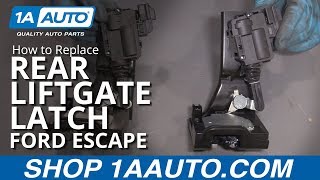
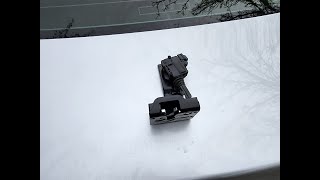
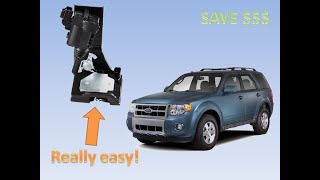
- Faulty Liftgate Latch Assembly (Ford/Lincoln/Mazda) (Common) — The position switch inside the power liftgate latch fails, preventing 🎬 Watch: How to replace the rear liftgate latch assembly. the gate from opening, closing, or locking correctly.
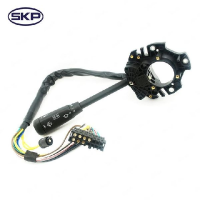
- Faulty Multifunction/Wiper Switch (Ford) (Common) — The steering column switch controlling wiper speed fails, sending incorrect resistance or voltage signals to the control module.
- Defective Wiper Motor (Ford) (Common) — The wiper motor or its internal 'smart' circuit board fails, preventing the wipers from operating at the correct speed or parking properly.
- Software/Calibration Issue (Ford/Lexus) (Less Common) — Ford power liftgate issues often stem from a software glitch in the Liftgate/Trunk Module (LTM) requiring a reprogram (TSB 13-6-21 or 19-2104). Lexus A/C Amplifiers sometimes require a calibration update.
- Low Battery Voltage (Ford) (Less Common) — A weak battery causes the Ford Liftgate/Trunk Module (LTM) to behave erratically and set fault codes. The module requires stable voltage to operate.
- Wiring or Connector Issue (Less Common) — A broken wire, corroded pin, or loose connector interrupts the signal. On Lexus models, the specific driver-side servo connector is blue.
- Faulty A/C Amplifier (Lexus/Toyota) (Rare) — If multiple HVAC servo codes appear simultaneously, the main A/C control unit (A/C Amplifier) has likely failed.
Symptoms
- Windshield wipers malfunction — On Ford models, the high or low-speed setting fails, or the wipers refuse to turn off and park in the correct position. Often, only the high-speed setting works as a fail-safe.
- Warm air from driver's side vents when A/C is on (also visible on scanner) — The primary symptom for Lexus/Toyota vehicles. The blend door is stuck in a position blocking cold air. You will often hear a clicking or grinding noise from the dashboard as the broken servo tries to move.
- Power liftgate won't open, close, or latch (also visible on scanner) — On Ford, Lincoln, and Mazda models, the Body Control Module detects a latch fault and disables the power liftgate. You hear a click, but the gate does not move, and the 'Liftgate Ajar' warning light illuminates.
Diagnostic Flowchart
Tap your situation to follow the diagnostic path that matches what you're seeing on this code.
Common Fixes & Costs
- Replace HVAC Servo Motor (Lexus/Toyota) — Parts: $150-$250, Labor: $850-$2250, ~8.5 hr book time (Professional)
- Replace Windshield Wiper Motor (Ford) — Parts: $75-$400, Labor: $150-$350, ~1.8 hr book time (Intermediate)
- Replace Power Liftgate Latch (Ford/Lincoln/Mazda) — Parts: $150-$300, Labor: $150-$350, ~2.2 hr book time (Intermediate)
- Replace Multifunction (Wiper) Switch (Ford) — Parts: $40-$180, Labor: $80-$150, ~0.8 hr book time (DIY)
- Reprogram Liftgate/Trunk Module (Ford) — Parts: $0, Labor: $100-$200, ~1 hr book time (Professional)
Used vs. New Parts: Buying Guide
When a used part is worth it: For purely electronic parts like a multifunction switch, a used OEM part is a cost-effective choice. For electro-mechanical parts like servo motors or latches, buy new OEM to avoid repeating expensive labor.
Donor-vehicle mileage cap: roughly under 75000 miles for the part to have meaningful remaining life.
Donor quality checklist:
- Verify the donor vehicle was not scrapped due to flood or fire.
- Match the OEM part number exactly to ensure correct software and pinout.
- Purchase from sellers offering a 30-90 day warranty and clear return policy.
Decision logic:
- If The part is purely electronic (multifunction switch) and the vehicle is over 100k miles → Used OEM is a strong value proposition.
- If The part is electro-mechanical (motor, latch) and labor for replacement is high (Lexus servo) → Buy new OEM. The risk of a used part failing and requiring a second expensive labor job is too high.
- If The part is electro-mechanical, labor is low (Ford wiper motor), and budget is strict → A used part is an acceptable risk.
Warranty tradeoff: Used parts offer a 30-90 day warranty covering the part only. New OEM parts carry a 1-2 year warranty, covering labor if installed by a dealer.
Worst-case if a used part fails: $1500 if a used Lexus servo fails prematurely, requiring a repeat of the 8-hour dashboard disassembly.
What Happens If You Wait — Timeline
- 0-1 month: Lexus: Faint clicking from the dash. Ford Liftgate: Fails to open once, works fine the next time. Ford Wipers: Low speed fails once but works after restart. (MPG impact: 0%% · Added cost: $0)
- 1-4 months: Lexus: Clicking becomes consistent; one side feels less cool. Ford Liftgate: 'Liftgate Ajar' light appears intermittently, causing slight battery drain. Ford Wipers: Low speeds permanently inoperative; only high speed works. (MPG impact: 0%% · Added cost: $50 (Potential cost of a jump start from a drained battery))
- 4-8 months: Lexus: Affected side stuck on warm air. Ford Liftgate: Latch fails to secure the gate, creating a security risk. Ford Wipers: Vehicle is permanently unsafe and illegal to drive in precipitation. (MPG impact: 0%% · Added cost: $150-$500 (Potential fine for wiper defect or loss from theft))
- 8+ months: Lexus: Total loss of driver comfort. Ford Liftgate: Complete failure; latch will not respond to any input. Ford Wipers: No change from Stage 3. (MPG impact: 0%% · Added cost: Variable (Cost of a locksmith forcing entry if liftgate fails shut))
Cost of Not Fixing It
- Immediate: For Ford Wiper Fault: Vehicle is unsafe and illegal to operate in rain or snow. Results in a traffic ticket and major safety risk. (Added cost: $150-$500 (Potential fine for defective safety equipment))
- 0-3 Months: For Ford/Mazda Liftgate Fault: Loss of convenience and severe security risk. The liftgate fails to latch and lock, leaving the vehicle unsecured. (Added cost: Variable (Potential loss from theft))
- Ongoing: For Lexus HVAC Fault: No risk of mechanical damage to other components. Results in a total loss of driver-side climate control comfort. (Added cost: $0)
Diagnosis Steps
- Verify the Code and Vehicle
Use an OBD-II scanner capable of reading Body ('B') codes to confirm B1453. Basic scanners only read Powertrain ('P') codes. Note your vehicle make to determine which system the code targets.
Tools: OBD-II Scanner (reads B-codes) (Beginner) - Test the Component's Basic Function
For HVAC: Change temperature from hot to cold and listen for servo motor movement. For Wipers: Test all speed settings. For Liftgate: Try opening with the button, key fob, and interior switch.
Tools: None (Beginner) - Check Fuses and Relays
Consult your owner's manual to locate and inspect the fuses and relays related to the affected system (HVAC, Wipers, or Liftgate).
Tools: Owner's Manual, Fuse Puller (Beginner) - Inspect the Wiring
Visually inspect the wiring harness and connectors going to the servo motor, wiper motor, wiper switch, or liftgate latch. Look for damage, corrosion, or loose connections.
Tools: Flashlight (Intermediate) - Pro Tip (Lexus): Monitor Servo Pulse Data
Using a bi-directional scanner, access the HVAC Data List. Monitor 'Cool A/M Servo Pulse (D)'. Compare the 'Target Pulse' to the 'Actual Pulse' while changing the temperature. A persistent discrepancy confirms a failed servo.
Tools: Bi-Directional Scan Tool (Advanced) - Pro Tip (Ford Wipers): Test the Multifunction Switch
Disconnect the multifunction switch. Using a multimeter, measure the resistance across the pins for each wiper speed setting per the service manual. An out-of-specification reading indicates a faulty switch.
Tools: Multimeter, Vehicle Service Manual (Advanced) - Pro Tip (Ford Liftgate): Test the Latch Position Switch Circuit
Disconnect the liftgate latch connector. Use a multimeter to check for continuity to ground on the ground wire pin (< 5 Ohms). Check the signal wire for a short to ground or power. The switch state must change when manually operating the latch with a screwdriver.
Tools: Multimeter, Screwdriver (Advanced) - Pro Tip (Ford Wipers): Check LIN Bus Voltage
Probe the LIN bus wire at the wiper motor connector with a multimeter set to DC Volts Peak Min/Max. A healthy bus toggles between ~1V and battery voltage (~12V). A steady 12V or 0V indicates a communication failure or short.
Tools: Multimeter with Peak Min/Max (Advanced)
When This Code Triggers (Freeze-Frame Conditions)
- System State (Lexus HVAC): N/A (Sets immediately when the A/C Amplifier commands the servo motor to move and the motor's position sensor fails to report the expected change.)
- System State (Ford Wipers): N/A (Sets when the Body Control Module receives an out-of-range resistance value from the multifunction switch or loses the LIN bus signal from the wiper motor.)
- System State (Ford Liftgate): N/A (Sets when the Liftgate/Trunk Module detects a mismatch between the latch's two internal position switches (e.g., one reports 'closed' while the other reports 'open').)
Related Codes
- B1454 — On Lexus vehicles, B1454 is the passenger side cool air servo, while B1453 is the driver side. They frequently fail simultaneously.
- B1441-B1458 Family (Lexus) — This range relates to all HVAC servo motors. Multiple codes stored together suggest a systemic issue with the servos or the main A/C Amplifier.
- B1131 — On Ford vehicles, B1131 points specifically to a 'Wiper Motor Module' communication failure on the LIN bus. If present with B1453, diagnose the data line first.
- B1453:62 — The ':62' Failure Type Byte used by Ford and Mazda means 'Signal Compare Failure', pointing directly to the liftgate latch's internal position switches.
- C2006:19 — Appears with B1453 on Ford Escapes. C2006:19 means liftgate motor current is too high. Together, they indicate a physically jammed or misaligned latch straining the motor.
Climate & Environmental Factors
- Extreme Cold: Ford, Lincoln, and Mazda power liftgate latches become sluggish or fail in sub-freezing temperatures due to thickened lubricants or frozen moisture inside the assembly.
- Extreme Heat: High ambient temperatures and repeated heat cycles accelerate the degradation of the internal conductive grease inside Lexus/Toyota HVAC servo motors.
How to Talk to a Mechanic About This Code
Say this: "For Lexus: 'I have a B1453 code and my driver's side A/C is warm. Please check if my VIN is covered under Customer Support Program ZLE or 20LE01.' For Ford Wipers: 'I have a B1453 code and my wipers only work on high speed. Please diagnose whether it's the multifunction switch or the wiper motor module.' For Ford Liftgate: 'My vehicle has a B1453 code and the power liftgate is acting up. Please check for TSBs related to a module reprogram before quoting a latch replacement.'"
Directs the technician to the most common failures, saving diagnostic time. It forces a proper diagnosis between a cheap part and an expensive one, or a software fix versus a hardware replacement.
Avoid saying:
- 'My A/C is broken.' (Invites expensive and unnecessary A/C system diagnostics.)
- 'My wipers are acting weird.' (Fails to mention the code, the key piece of data.)
- 'Just fix it.' (Gives the shop a blank check to replace parts without proper diagnosis.)
Questions to ask before authorizing the repair:
- For Lexus: 'Did you confirm my VIN is not covered by the ZLE/20LE01 warranty extension?'
- For Ford Wipers: 'Did you test the resistance values from the multifunction switch to rule it out?'
- For Ford Liftgate: 'Did you perform a module reset and check for software updates per Ford's TSBs?'
- For any repair: 'Is the replacement part OEM or aftermarket, and what is the warranty?'
Where to Take It: Dealer vs Independent vs Chain
- Dealer:
Recommended first stop for Lexus to check warranty coverage and for Ford liftgate software issues.
Best for: Lexus HVAC issues, to check for coverage under the ZLE/20LE01 Customer Support Program., Ford liftgate issues requiring a module reprogram (software update).
Downsides: Significantly higher labor rates for out-of-warranty work., Defaults to replacing entire assemblies rather than repairing wiring. (Typical cost: +50% vs. baseline) - Independent Shop:
Best fit for replacing physical parts like wiper motors, switches, and latches on out-of-warranty vehicles.
Best for: Out-of-warranty repairs on Ford/Lincoln/Mazda systems., Cost-effective alternative for the high-labor Lexus servo replacement.
Downsides: Lacks the specific software needed for a Ford liftgate module reprogram., Quality varies; ensure the shop has experience with complex dashboard work. (Typical cost: +0% vs. baseline) - Chain Shop:
Not recommended. The diagnostic complexity involving TSBs and multiple potential systems is a poor match.
Best for: Simple, bolt-on parts like a Ford multifunction switch replacement.
Downsides: Technicians lack training to diagnose manufacturer-specific Body Control Module codes., High risk of misdiagnosis (e.g., blaming an A/C compressor for a Lexus servo issue). (Typical cost: -10% vs. baseline)
When to Walk Away From the Repair
If the estimated repair cost exceeds 40-50% of the car's private-party value, seriously consider selling or trading in the vehicle.
- Car worth $4000, fix is $2200: Walk away. The repair for a Lexus HVAC servo exceeds 50% of the car's value. Sell the car 'as-is'.
- Car worth $15000, fix is $2200: Fix it. The repair cost for the Lexus servo is ~15% of the vehicle's value. Check for warranty coverage first.
- Car worth $7000, fix is $350: Fix it. The cost to replace a Ford Escape liftgate latch is 5% of the car's value and restores security.
What Scan Tool You Need for This Code
Minimum: A scanner that reads manufacturer-specific Body ('B') codes. Basic code readers only show powertrain ('P') codes and will not see code B1453.
B1453 is a Body Control Module code. A basic scanner shows 'No Codes Found,' leading to misdiagnosis.
Budget: BlueDriver Pro Scan Tool (~$100) — Connects to a smartphone app and reads enhanced codes (Body, ABS, Airbag) to correctly identify B1453.
Mid-range: Foxwell NT510 Elite / XTOOL A30M (~$150) — Offers bi-directional control to command the Lexus servo motor to move, confirming if it is dead.
Professional: Autel MaxiCOM MK808 / Launch X431 (~$500-800) — Provides OEM-level diagnostics to read live data streams, perform module initializations, and execute software updates.
Rent vs buy: Auto parts stores rent scanners, but verify their specific rental tool reads Body ('B') codes. Buying a budget pick is a worthwhile investment.
How to Clear the Code After You Fix It
- Use an OBD-II scan tool capable of reading Body codes to clear the B1453 fault.
- For Lexus HVAC: Perform a servo motor re-initialization using a scan tool or the specific climate control button sequence.
- For Ford Liftgate: Disconnect the negative battery terminal for one minute, reconnect, manually close the gate, and use an interior button to cycle it to complete the re-learn procedure.
Drive cycle (~5 minutes): Operate the affected system through all functions multiple times (cycle temperature hot-to-cold, test all wiper speeds, cycle liftgate open/close) to confirm the repair.
Readiness monitors affected: None. Body codes do not affect emissions readiness monitors.
Watch out for:
- Clearing the code without fixing the mechanical fault causes the code to return immediately.
- Skipping the system-specific re-initialization procedure leaves the system inoperative even with new parts installed.
Will This Fail Emissions / State Inspection?
No — by itself this code doesn't fail OBD inspection (but it can keep readiness monitors from setting, which causes a separate fail).
- California: Will not fail Smog Check. Operating a vehicle with defective wipers violates CVC §26706 and results in a 'fix-it' ticket.
- New York: The NYS Vehicle Inspection includes a wiper function check. Inoperative wipers guarantee a safety inspection failure.
- Texas: Inoperative wipers are a citable, unsafe condition during the inspection process in the 17 emissions counties.
Most Commonly Affected Vehicles
- Lexus GS 350 / GS F (2013-2019) — Extremely common HVAC servo motor failure. Covered by Lexus Customer Support Program 20LE01 (ZLE) extending warranty coverage.
- Lexus IS 350 / IS 200t / IS 300 (2014-2018) — Shares the faulty HVAC servo motor design (Part #87106-30610). Covered under Customer Support Program ZLE.
- Lexus LS500 / LS500h (2018-2019) — Affected by the same HVAC servo motor issues. Addressed in TSB L-SB-0010-22.
- Ford Escape (2013-2019) — Code points to a faulty power liftgate latch position switch. Addressed in TSB 13-6-21 (module reprogram) and TSB 19-2056 (striker alignment).
- Ford F-150 (2011-2016) — Code indicates a faulty wiper switch or a communication error with the wiper motor module over the LIN bus.
- Ford Expedition (2018-2022) — Appears alongside B1452 when the rear liftgate latch fails, causing a 'Liftgate Ajar' warning.
- Lincoln MKX / Ford Edge (2011-2015) — Associated with power liftgate latch failures. A module reset by disconnecting the battery is a common temporary fix.
- Lincoln Aviator (2020-2022) — Prone to intermittent power liftgate failures where the latch will not release due to latch assembly or module calibration issues.
- Mazda CX-5 / CX-9 (2016-2021) — Appears as B1453:62, indicating a 'Latch condition malfunction' within the power liftgate system.
Manufacturer-Specific Notes
- Lexus/Toyota: HVAC servo motor failure is so widespread that Lexus issued Customer Support Program 20LE01 (ZLE) to extend warranty coverage to 10 years from the date of first use with no mileage limit.
- Ford: Modern Ford wiper motors are 'smart' modules on a LIN data network. For liftgates, Ford requires a module re-initialization procedure (disconnecting the battery) as the first diagnostic step.
- General Motors (Chevrolet/GMC): B1453 relates to a 'Run and Crank Power Circuit' fault or a 'Wakeup Control' issue tied to the Serial Data Gateway Module, requiring a completely different diagnostic path.
- Mazda: Mazda uses Failure Type Bytes. B1453:62 specifies a 'Latch condition malfunction', confirming the issue is the latch assembly itself rather than a general circuit fault.
Real Owner Stories
2015 Lexus RC F at 35K miles - HVAC blowing warm
The passenger side A/C blew warm air. The dealer quoted $3,100 for the repair, citing 22 hours of labor to replace the servo motor.
What they tried:
- The owner researched the issue and discovered Lexus Customer Support Program 20LE01 (ZLE).
- Contacted Lexus corporate, who confirmed the vehicle was covered.
- Returned to the dealer with the campaign information.
Outcome: The dealer replaced the servo motors under the warranty extension program. The final cost to the owner was $0.
Lesson: ALWAYS check for coverage under Customer Support Program ZLE (20LE01) before paying for Lexus HVAC repairs. Dealers do not always volunteer this information.
2012 Ford F-150 - Wipers only work on high speed
The windshield wipers only functioned on the highest speed setting. Low, intermittent, and washer fluid functions were dead.
What they tried:
- Replaced the multifunction switch on the steering column, a common and inexpensive part.
- When the new switch failed to solve the problem, diagnosis shifted to the wiper motor assembly.
Outcome: The internal circuit board on the wiper motor failed. Replacing the entire wiper motor assembly resolved all functions.
Lesson: The 'high-speed only' symptom on modern Fords points to the wiper motor's integrated electronics. Testing the switch first is smart, but prepare to replace the motor.
2017 Ford Escape - Liftgate clicks but won't open
The liftgate would not open. Pressing the release button caused a click under the glovebox and triggered the 'Liftgate Ajar' warning.
What they tried:
- Lubricated the latch mechanism with lithium grease.
- Performed a module reset by disconnecting the battery for several minutes.
Outcome: The liftgate latch actuator failed internally. Lubrication and resets provided temporary relief. Replacing the entire latch assembly permanently solved the issue.
Lesson: A battery disconnect is a valid first step for Ford liftgates. However, a weak click indicates the latch actuator motor is failing and requires replacement.
How to Prevent This Code From Triggering
- Clean Cowl Drains (Ford Wiper applications) (Annually) — Clogged cowl drains cause water to overflow and short out the wiper motor's electronics.
- Lubricate Liftgate Latch Mechanism (Ford/Mazda) (Every 1-2 years) — Cleaning and applying silicone lubricant keeps the mechanism moving freely, reducing strain on the electronic actuator.
- Maintain a Healthy Battery (Ford/Mazda Liftgate) (Ongoing) — A weak battery provides inconsistent power, causing the liftgate module to glitch and set false codes.
- Use a Windshield Sunshade (Lexus HVAC) (Daily in hot climates) — Reducing extreme interior temperatures lessens the severity of heat cycles that accelerate the breakdown of servo motor plastics and grease.
Frequently Asked Questions
Can I just reset the B1453 code?
You can clear the code, but it returns immediately if the mechanical fault remains. For Lexus, a servo re-initialization provides a temporary fix. For Ford liftgates, a battery disconnect temporarily restores function.
Why is the repair cost so high for a Lexus with this code?
The servo motor part is inexpensive, but it is buried deep inside the dashboard. The high cost comes from the 5 to 10 hours of labor required to disassemble the dash to access it.
My wipers work on high speed but not low. Is that code B1453?
Yes, this is a classic symptom on affected Ford models. The high-speed setting uses a hardwired fail-safe circuit that bypasses the failed control module logic.
What does the number after the code mean, like B1453:62?
That is a Failure Type Byte (FTB) used by Ford and Mazda. The ':62' indicates a 'Signal Compare Failure', pointing directly to a broken liftgate latch mechanism.
What are common misdiagnosis mistakes for B1453?
For Lexus, mechanics mistakenly assume an A/C problem is low refrigerant because basic scanners don't read 'B' codes. For Ford wipers, technicians replace the expensive motor when the cheaper switch is at fault.
Can I just unplug the faulty servo motor on my Lexus?
Yes, as a temporary workaround. After re-initializing the servo to a desirable position (e.g., full cold), disconnect the blue electrical connector. The door remains in that position permanently.
Why did several of my Lexus A/C servo codes appear at once?
While multiple servos can fail simultaneously, this often points to a failure of the central A/C Amplifier (climate control ECU) that controls all the motors.
Can I fix a B1453 myself?
Replacing a Ford multifunction switch is an easy DIY job, and replacing a Ford liftgate latch is suitable for intermediate DIYers. Replacing the Lexus HVAC servo requires professional-level dashboard disassembly.
Key Takeaways
- Code B1453 indicates a failed HVAC servo motor on 2013-2019 Lexus vehicles, requiring a $1,000+ dashboard disassembly repair.
- On 2011-2019 Ford and Lincoln models, B1453 signals a critical failure in either the windshield wiper motor or the power liftgate latch.
- Lexus owners must check their VIN against Customer Support Program 20LE01, which extends warranty coverage for the B1453 servo failure up to 10 years.
- Ford liftgate failures logging B1453 often require a simple $150 module reprogram rather than a $600 physical latch replacement.
- Driving a Ford with a B1453 wiper fault is illegal in all 50 states during precipitation and guarantees a safety inspection failure.
Helpful Videos
Shop the Parts Behind B1453
Below are the parts most often responsible for code B1453, ranked by how frequently each one is the actual culprit (per the diagnosis above). Tap any to see what we have for your vehicle.





The information in this article is provided for general reference and educational purposes only. Vehicle specifications, procedures, and part compatibility can vary by production date, trim level, and region. Always consult your vehicle's factory service manual and verify part numbers before purchasing or performing repairs. Safety-critical components such as airbags, seat belts, and braking systems should be installed by a qualified professional.
- 🧭 Diagnostic Flowchart
- 🎬 Helpful Videos
- 🛍️ Shop This Part
- What Does B1453 Mean?
- Can I Drive With B1453?
- Common Causes
- Symptoms
- Common Fixes & Costs
- Used vs. New Parts: Buying Guide
- What Happens If You Wait — Timeline
- Cost of Not Fixing It
- Diagnosis Steps
- When This Code Triggers (Freeze-Frame Conditions)
- Related Codes
- Climate & Environmental Factors
- How to Talk to a Mechanic About This Code
- Where to Take It: Dealer vs Independent vs Chain
- When to Walk Away From the Repair
- What Scan Tool You Need for This Code
- How to Clear the Code After You Fix It
- Will This Fail Emissions / State Inspection?
- Most Commonly Affected Vehicles
- Manufacturer-Specific Notes
- Real Owner Stories
- 2015 Lexus RC F at 35K miles - HVAC blowing warm
- 2012 Ford F-150 - Wipers only work on high speed
- 2017 Ford Escape - Liftgate clicks but won't open
- How to Prevent This Code From Triggering
- Frequently Asked Questions
- Can I just reset the B1453 code?
- Why is the repair cost so high for a Lexus with this code?
- My wipers work on high speed but not low. Is that code B1453?
- What does the number after the code mean, like B1453:62?
- What are common misdiagnosis mistakes for B1453?
- Can I just unplug the faulty servo motor on my Lexus?
- Why did several of my Lexus A/C servo codes appear at once?
- Can I fix a B1453 myself?
- Key Takeaways
- 🎟️ Get 5% Off