

B1453 on 2016-2019 Lexus GS F: Driver's Cool Air Servo Motor Fixes
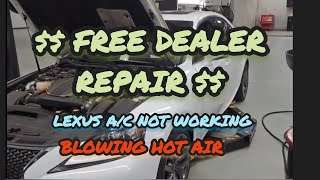
Code B1453 indicates a failure in the driver's side cool air mix servo motor. This is a very common issue on this platform, acknowledged by Lexus through TSBs and a Customer Support Program (20LE01). The fix is to replace the servo motor (Part No. 87106-30610), but this is a labor-intensive job due to its location deep in the dashboard. Access requires removing lower dash panels and the driver's knee airbag, with shop costs ranging from $700 to over $3,000.
- B1453 means the driver's side cool air blending motor has failed; this is a known issue for the 2016-2019 Lexus GS F.
- The main symptom will be warm air from the driver's vents when the A/C is on.
- The fix is to replace the servo motor (87106-30610), a very labor-intensive repair.
- Check if your vehicle is covered under Lexus Customer Support Program 20LE01 (ZLE) before paying for repairs.
What's Unique About the 2016-2019 Lexus GS F
The 2016-2019 Lexus GS F, along with its platform mates (GS, IS, RC models), is known for widespread HVAC servo motor failures. The issue became so common that Lexus issued multiple Technical Service Bulletins (TSBs) and a Customer Support Program (CSP) designated '20LE01' (internally known as ZLE) to address the problem. This program acknowledged an 'internal electrical malfunction' in the servos and extended the warranty coverage for this specific failure, covering approximately 328,700 vehicles across various models, including 1,790 GS F units. This means that a B1453 code on this specific vehicle is overwhelmingly likely to be the known component failure rather than a random wiring issue.
Diagnostic Flowchart
Tap your situation to follow the diagnostic path that matches what you're seeing on this vehicle.
Symptoms You May Notice
- Warm or ambient temperature air blowing from the driver's side vents when the A/C is set to cold.
- Inability to adjust the temperature on the driver's side.
- Uneven air temperature between the driver and passenger side vents.
- Clicking, buzzing, or grinding noises from behind the driver's side dashboard as the faulty servo attempts to move or gets stuck.
- A/C controls may become unresponsive for a period of time after starting the car.
- Recharging the A/C system. While low refrigerant can cause poor cooling, it typically affects both sides of the vehicle, whereas B1453 points specifically to a driver's side blend door control issue.
- A bad climate control head unit. While possible, the issue is far more likely to be the servo motor itself, which is a known weak point.
Most Likely Causes
- Failed Driver Side Cool Air Mix Servo Motor 🔴 High Probability These servo motors are a documented weak point across many Lexus models from this era, with high rates of internal electrical failure, as acknowledged by Lexus TSBs L-SB-0001-21 and L-SB-0019-20. The failure is often due to the internal grease on the position sensor contacts becoming contaminated or conductive over time, preventing the A/C amplifier from knowing the servo's position.
How to confirm: Use a diagnostic tool like Toyota Techstream to monitor the 'target pulse' vs 'actual pulse' of the 'Cool A/M Servo (D)'. A large discrepancy between the values when changing temperature settings confirms the failure. Alternatively, listen for clicking from the driver's side dash when changing temperatures; the B1453 servo specifically has a blue electrical connector.
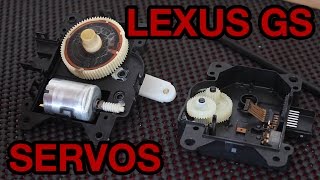
Typical fix: Replace the faulty servo motor. The part is located deep within the driver's side dashboard, and TSB L-SB-0001-21 Rev confirms its location as position in the service diagram. Some owners have attempted to clean the internal contacts and re-apply non-conductive dielectric grease as a temporary fix. 🎬 See how to clean and repair your existing servo motor.
Est. part cost: $150-$250 - Wiring or Connector Issue ⚪ Low Probability
How to confirm: After gaining access to the servo motor, inspect the blue connector and its wiring for any signs of damage, corrosion, or being unsecured. Use a multimeter to check for power, ground, and signal wires at the connector when the climate control is commanded to change temperature.
Typical fix: Repair the damaged wire or clean/replace the connector.
Est. part cost: $5-$50 - A/C Amplifier (ECU) Fault ⚪ Low Probability Some TSBs involve reprogramming the A/C Amplifier, suggesting software glitches can occur, but hardware failure is less common than the servo itself.
How to confirm: This is diagnosed by exclusion. If the servo motor and wiring are confirmed to be good, but the servo does not operate correctly, the A/C Amplifier is the likely culprit. A dealership-level scan tool can perform a health check on the module and check for available software updates.
Typical fix: Reprogram or replace the A/C Amplifier module. Replacement requires a dealership or specialized shop.
Est. part cost: $400-$800
Diagnosis Steps
- Confirm the symptom: Verify that the driver's side vents blow warmer air than the passenger side when both are set to full cold. A thermometer can be used to show the temperature difference.
- Scan the system with an OBD-II scanner capable of reading Body 'B' codes to confirm B1453 is active or stored.
- Use a professional scan tool (like Toyota Techstream) to perform a 'Servo Motor Initialization' utility. Some owners report this can temporarily restore function, but the problem often returns.
- In the scan tool's Data List for the A/C system, monitor the live data for the 'Cool A/M Servo (D)'. Compare the 'Target Pulse' and 'Actual Pulse' values while adjusting the driver's temperature setting. A failure for the actual pulse to match the target pulse indicates a problem with the servo or its circuit.
- If a scan tool is not available, listen carefully for clicking or buzzing noises from the driver's side of the dashboard when changing the temperature from hot to cold. This indicates the motor is trying to move but is stuck or has a faulty position sensor.
- If the servo is unresponsive, the next step is to gain physical access. TSB L-SB-0001-21 states this requires removing the driver's knee airbag and the No. 1 Air Duct Sub-Assembly. 🎬 Watch a technician replace a similar Lexus GS dash motor.
- Visually inspect the blue connector and wiring going to the servo motor for any visible damage.
- If wiring appears intact, test for power and ground at the connector with a multimeter. If power and ground are present when commanded, the servo motor is confirmed to be faulty and must be replaced.
Parts You'll Likely Need
- Damper Servo Sub-assy, Air Conditioner Radiator, No. 2
(OEM #87106-30610)— This is the specific servo motor that controls the driver's side cool air mix. It is the component that fails internally, causing code B1453. This part number is explicitly referenced in TSBs and owner forums.
Trusted brands: Lexus (Genuine OEM), Denso
OEM price range: $180-$250
Aftermarket price range: $150-$200
Related Codes That Often Appear With This One
- B1454 — This is the corresponding code for the Passenger Side Air Outlet Damper COOL Control Servo Motor. These servos are of the same design and often fail around the same time.
- B1441, B1443, B1446, etc. — Lexus TSBs L-SB-0001-21 and L-SB-0019-20 list a wide range of HVAC servo motor codes that are part of this common failure pattern. It is not unusual to find multiple servo-related codes stored at once as they are all of a similar design and age.
Technical Service Bulletins (TSBs) & Recalls
- L-SB-0001-21 Rev: HVAC Servo Motor Malfunction, lists B1453 and provides repair guidance for 2016-2017 GS F models.
- L-SB-0019-20: HVAC Servo Motor Malfunction, covers 2017-2019 GS F models and lists B1453. This TSB also mentions the possibility of flash reprogramming the A/C amplifier.
- Customer Support Program 20LE01 (ZLE): Not a TSB, but an official Lexus program extending warranty coverage for this specific failure on 2016-2017 GS F models, among others.
Platform-Specific Known Issues
- Lexus issued Technical Service Bulletin L-SB-0001-21 Rev, which covers the 2016-2017 GS F and explicitly lists B1453 as a known DTC related to HVAC servo motor malfunction. It provides detailed replacement procedures.
- Lexus also issued TSB L-SB-0019-20 for 2017-2019 models, including the GS F, which also addresses B1453 as part of a pattern of servo failures and may involve reprogramming the A/C amplifier.
- Lexus launched Customer Support Program 20LE01 (ZLE) in January 2021, extending warranty coverage for these specific servo motor failures due to 'internal electrical malfunction'. This covered 2016-2017 GS F models, among others. Owners reported receiving letters offering a free repair, though a diagnostic fee could apply if the servo was not the confirmed cause.
Mechanic-Grade Diagnostic Values
- Techstream Live Data: 'Cool A/M Servo Pulse (D)' — expected: The 'Actual Pulse' value should closely track the 'Target Pulse' value as the temperature is changed on the control panel.. Failure: The 'Actual Pulse' value does not change or shows a large, persistent discrepancy from the 'Target Pulse' value.
- Servo Motor Bench Test — expected: Applying 12V directly to the two motor pins should cause the motor to spin. Reversing polarity should cause it to spin in the opposite direction.. Failure: The motor does not spin when 12V is applied.
Scan Tool Commands That Help
- Toyota Techstream: AC Servomotor Initialization — This utility, found under Body Electrical -> Air Conditioner -> Utility, forces the A/C amplifier to relearn the position of all servo motors. It should be performed after replacing a servo. Some owners report that running this function 2-3 times can temporarily un-stick a faulty servo and restore function for weeks or months, confirming the servo is the problem but delaying the repair.
- Toyota Techstream: Health Check — This function scans all vehicle ECUs, including the Air Conditioning Amplifier, for any stored Diagnostic Trouble Codes (DTCs). It is the first step to confirm B1453 and check for other related servo motor codes.
- Toyota Techstream: Data List (Live Data) — Used to monitor real-time data from the A/C system. For B1453, a technician would monitor 'Cool A/M Servo Pulse (D)' to compare the target and actual pulse counts, which is the definitive way to confirm a malfunctioning servo motor electronically.
Wiring & Ground Locations
- B1453 Servo Motor Connector — On the driver's side of the HVAC unit, deep in the dashboard above the accelerator pedal area. It is one of three servos in a row and is identifiable by its blue electrical connector.. This is the specific connector for the 'Driver Side Air Outlet Damper COOL Control Servo Motor'. Visually identifying it is critical for testing and replacement, as multiple servos are located in the same area.
- Instrument Panel Ground Points — General ground points for the instrument panel are located at the left and right kick panels and on the instrument panel brace itself (designated IF, IG, IH, II on similar models).. A poor ground connection for the A/C Amplifier or related wiring could potentially cause communication errors with the servo motors, though this is a very rare cause for this specific code.
- Main Battery Ground — The main battery ground cable connects to a painted bracket on the chassis in the engine bay, which can provide a poor connection.. Owners have discovered that the factory ground connection from the battery to the chassis is often poor due to being bolted to a painted surface. While not a direct cause of B1453, cleaning this ground point to bare metal is a recommended preventative maintenance item on the GS F to prevent a wide range of unrelated electrical issues.
Real Owner Repair Stories
- ClubLexus user on a 2016 GS350 (shared platform) (2016 Lexus GS350) — Passenger side AC blowing warmer than driver's side.
❌ Tried (didn't work) The owner was about to replace the servo motor.
✅ What actually fixed it Using Toyota Techstream, the owner ran the 'AC Servomotor Initialization' utility 2-3 times in a row. This unstuck the servo and restored normal operation without replacing any parts. The fix was reported to be holding for an extended period. - Reddit user on r/LexusIS (shared platform) (Lexus IS (3IS generation), Right-Hand Drive) — DTC B1453 stored.
✅ What actually fixed it The user replaced the servo motor (part #87106-30610) themselves. For a Right-Hand Drive car, access was through the glovebox area. A key tip was to remove the two screws holding the servo to its bracket, rather than the bracket to the A/C box, which was much easier. After replacement, a servo re-initialization was performed to complete the fix.
OEM Part Supersession History
87106-30530→87106-30610— Part revision to address the common internal electrical failure. The newer part is specified in later TSBs.
Heads up: TSB L-SB-0001-21 Rev lists both part numbers for the same B1453 code depending on the vehicle's production date, but 87106-30610 is the current replacement part for this application. Some parts sites show 87106-30610 as discontinued, but it is still available through dealer networks.
Model Year Variations Within This Range
- 2016-2017: Primarily covered by TSB L-SB-0001-21 Rev and the associated Customer Support Program 20LE01 (ZLE). The fix is a direct replacement of the faulty servo motor.
- 2017-2019: Covered by TSB L-SB-0019-20, which in addition to servo replacement, also mentions the potential need to flash reprogram the A/C Amplifier ECU, suggesting a software component to the issue on later models.
Helpful Videos
We Have This Part in Stock

The information in this article is provided for general reference and educational purposes only. Vehicle specifications, procedures, and part compatibility can vary by production date, trim level, and region. Always consult your vehicle's factory service manual and verify part numbers before purchasing or performing repairs. Safety-critical components such as airbags, seat belts, and braking systems should be installed by a qualified professional.
- Lexus GS F:
- 🧭 Diagnostic Flowchart
- 🎬 Helpful Videos
- 🛍️ Shop This Part
- What's Unique About the 2016-2019 Lexus GS F
- Symptoms You May Notice
- Most Likely Causes
- Diagnosis Steps
- Parts You'll Likely Need
- Related Codes That Often Appear With This One
- Technical Service Bulletins (TSBs) & Recalls
- Platform-Specific Known Issues
- Mechanic-Grade Diagnostic Values
- Scan Tool Commands That Help
- Wiring & Ground Locations
- Real Owner Repair Stories
- OEM Part Supersession History
- Model Year Variations Within This Range
- 🎟️ Get 5% Off