

OBD-II Code B1454: Passenger Climate Control Motor Failure
What B1454 means, why it triggers, and how to fix it
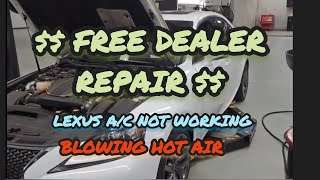
- Code B1454 indicates a failed passenger-side temperature blend door servo motor, a highly common issue on 2013-2019 Lexus IS, GS, and RC models.
- The primary symptoms are a repetitive clicking noise from behind the glove box and the passenger vents permanently blowing hot air.
- Before paying for repairs, ask a Lexus dealer to check your VIN for free replacement eligibility under Customer Support Program 20LE01, which lasts 7 years or 125,000 miles.
- Avoid the $1,500+ dealership dashboard removal quote by finding an independent shop that uses the 2-hour glove box shortcut method, reducing the total cost to around $350-$550.
What Does B1454 Mean?
The climate control module (A/C Amplifier) detects an electrical problem with the passenger-side temperature control motor (servo). This servo moves a blend door inside the dashboard to mix hot and cold air. The computer sets this code when the motor fails to respond to commands or its reported position mismatches the target position for over 30 seconds.
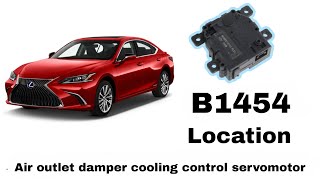
Technical definition: Toyota and Lexus define this as 'Passenger Side Air Outlet Damper COOL Control Servo Motor Circuit'. 🎬 See exactly where this specific B1454 servo motor is located. The A/C Amplifier logs this fault when the servo's actual position, reported via pulse signals, fails to match the commanded target position.
Can I Drive With B1454?
Yes, But With Caution. It is safe to drive with this code active. It does not affect primary safety or engine systems, only passenger-side temperature control. However, if accompanied by code B1455 (driver's side defrost), it poses a safety risk in cold weather by impairing windshield visibility.
Common Causes
- Failed Passenger Cool Air Servo Motor (Internal Wear/Contamination) (Very Common) — The internal position sensor or plastic gears wear out, or the conductive grease degrades, causing poor electrical contact. Lexus acknowledges this high failure rate via Customer Support Program 20LE01.
- Outdated A/C Amplifier Software (Common) — Software glitches cause the module to misinterpret servo signals. TSB L-SB-0019-20 requires a software update as the first fix for 2017-2019 models before replacing hardware.
- Servo Motor Calibration Lost (Less Common) — The motor's learned endpoints drop out due to a dead battery or software error. A 'Servo Motor Initialization' via scan tool recalibrates the limits.
- Damaged Wiring or Loose Connector (Rare) — The blue connector or wiring harness to the servo suffers damage or corrosion, interrupting the 5V reference or signal lines.
- Binding Blend Door (Rare) — Debris or warped plastic physically jams the HVAC blend door, preventing the servo from moving it.
Symptoms
- Passenger vents stuck blowing hot or warm air — The system fails in a position that allows hot air from the heater core to mix in, creating uneven temperatures between the driver and passenger.
- Clicking or grinding noise from passenger dashboard — A repetitive clicking or buzzing sounds behind the glove box when adjusting the temperature, caused by the broken servo motor's gears slipping.
- Intermittent temperature control — The fault temporarily clears after restarting the car, restoring temperature control briefly before the servo binds again.
Diagnostic Flowchart
Tap your situation to follow the diagnostic path that matches what you're seeing on this code.
Common Fixes & Costs
- Replace Passenger Cool Air Servo Motor — Parts: $120-$200, Labor: $150-$1500, ~2 hr book time (Intermediate)
- Update A/C Amplifier Software — Parts: $0, Labor: $100-$200, ~1 hr book time (Professional)
- Perform Servo Motor Initialization — Parts: $0, Labor: $0-$150, ~0.5 hr book time (DIY)
- Repair Damaged Wiring — Parts: $5-$25, Labor: $150-$300, ~1.5 hr book time (Intermediate)
Used vs. New Parts: Buying Guide
When a used part is worth it: Never. The failure mode is internal wear-and-tear. A used part has a high probability of failing immediately, forcing you to pay the high labor costs twice.
Donor-vehicle mileage cap: roughly under 10000 miles for the part to have meaningful remaining life.
Donor quality checklist:
- Verify the donor vehicle has extremely low mileage.
- Ensure the part number is an exact match, including superseded numbers.
Decision logic:
- If The labor cost is high → Always buy a new OEM part. The small savings on a used part are not worth the risk of repeat labor.
Warranty tradeoff: Used parts offer 30-day warranties, which is insufficient for a wear-related failure. New OEM parts carry a 1-year warranty.
Worst-case if a used part fails: $1500. If the used part fails, you pay the full labor cost again.
What Happens If You Wait — Timeline
- 0-3 Months: Intermittent failure. The passenger side occasionally ignores temperature changes, or a faint clicking is heard. Restarting the car temporarily resolves it. (Added cost: $0)
- 3-6 Months: Consistent failure with noise. The clicking or grinding sound occurs every time the temperature changes. The passenger side frequently sticks on warm air. (Added cost: $0)
- 6-12 Months: Mechanical gear failure. The internal plastic gears strip completely. The clicking sound becomes frantic as the motor continuously hunts for its position. (Added cost: $0)
- 12+ Months: Complete burnout. The electric motor burns out from constant strain. The clicking stops, and the blend door permanently sticks in its last position. (Added cost: $0)
Cost of Not Fixing It
- 0-3 Months: Passenger discomfort and a persistent clicking noise from the dashboard. (Added cost: $0)
- 3-12 Months: The servo motor's internal gears strip completely, leaving the blend door permanently stuck on hot. (Added cost: $0)
- 1+ Year: Continued lack of passenger climate control. Other aging servo motors (like the driver's side) fail, leading to widespread HVAC issues. (Added cost: $350)
Diagnosis Steps
- Confirm Symptoms & Listen for Noise
Set A/C to full cold. If the passenger side blows significantly warmer than the driver's side, and you hear a repetitive clicking behind the glove box when changing temperatures, the servo has failed.
Tools: Hands and ears (Beginner) - Scan for Body Codes
Connect a scanner capable of reading 'B' codes. Confirm B1454 is active and note any other servo codes (like B1453 or B1455) to rule out a broader A/C amplifier issue.
Tools: OBD-II Scanner (with Body/Chassis capability) (Beginner) - Monitor Target vs. Actual Pulse
Command the temperature from max cold to max hot using a pro scanner. If the 'Actual Pulse' data does not match the 'Target Pulse' (e.g., Target is 152 but Actual is stuck at 254), the servo requires replacement.
Tools: Bi-directional Scan Tool (Advanced) - Visually Inspect & Check for Binding
Remove the glove box to access the middle servo with the blue connector. Watch the arm while changing the temperature; if it struggles or clicks, remove it and manually move the blend door linkage to ensure the door itself isn't physically jammed.
Tools: Screwdriver, trim removal tool (Intermediate) - Test Circuit & Motor Resistance
Disconnect the 5-pin servo connector. Verify a 5V reference and ground on the harness side. Measure resistance across the motor terminals (pins 4 and 5); expect 18-22 ohms. Infinite or zero resistance confirms internal motor failure.
Tools: Digital Multimeter (Advanced)
When This Code Triggers (Freeze-Frame Conditions)
- Ignition Status: ON (The climate control module is powered and running self-diagnostics.)
- Passenger Temperature Setting: Changing (The code sets when the user adjusts the passenger temperature, commanding the servo to move.)
- Servo Position Mismatch: Target vs. Actual Pulse Mismatch (The A/C amplifier commands the motor to a specific position (Target Pulse) but the motor's internal sensor reports a different position (Actual Pulse).)
- Fault Duration: > 30 seconds (The mismatch between the target and actual position persists for 30 seconds before the code logs.)
Related Codes
- B1453 — Identical code for the driver's side cool air servo motor. These servos often fail around the same time due to age.
- B1441 — Code for the passenger side lower air mix servo (floor vents).
- B1455 — Code for the driver's side foot/defrost servo motor.
Climate & Environmental Factors
- Extreme Temperature Cycling: Frequent swings between max hot and max cold accelerate the degradation of the plastic gears and internal lubricating grease within the servo motor.
How to Talk to a Mechanic About This Code
Say this: "I have a B1454 code on my Lexus and symptoms of a failed passenger blend door servo. Are you familiar with the shortcut method for this repair that avoids removing the entire dashboard?"
This signals you know about the high-cost dealer method vs. the affordable shortcut, helping you quickly filter for shops that perform the repair efficiently.
Avoid saying:
- 'My A/C is broken'
- 'My passenger side is blowing hot air, can you fix it?'
- 'Just fix whatever is wrong'
Questions to ask before authorizing the repair:
- Is your quote based on the 8-hour dashboard removal or the 2-hour shortcut method?
- Have you checked my VIN for eligibility under Lexus Customer Support Program 20LE01?
- Does the repair include a 'Servo Motor Initialization' after the new part is installed?
- Are you using a genuine OEM Lexus part?
Where to Take It: Dealer vs Independent vs Chain
- Dealer:
Your FIRST stop to check for warranty coverage. If not covered, avoid them due to the exorbitant dashboard removal labor costs.
Best for: Checking for warranty coverage under Customer Support Program 20LE01., Performing manufacturer-specific software updates to the A/C Amplifier.
Downsides: If out of warranty, they quote the 8+ hour dashboard removal procedure, resulting in a $1,500+ bill., Highest labor rates. (Typical cost: +100% vs. baseline) - Independent Shop:
Best fit for an out-of-warranty repair. You MUST confirm they quote based on the 2-hour shortcut method to get a fair price.
Best for: Out-of-warranty repairs where cost is the primary concern., Toyota/Lexus specialist shops familiar with the glove box shortcut method.
Downsides: May lack the software to perform A/C Amplifier updates if required by a TSB. (Typical cost: +0% vs. baseline) - Chain Shop:
AVOID. This repair requires specific model knowledge generally lacking at chain shops.
Best for: Simple jobs like oil changes and tires.
Downsides: Technicians lack experience with this specific, nuanced repair., High risk of damaging delicate dashboard trim panels. (Typical cost: -10% vs. baseline)
When to Walk Away From the Repair
If the estimated repair cost exceeds 40% of the car's private-party value, consider selling the car as-is.
- Car worth $15000, fix is $1500: Fix it, but NOT for this price. Find an independent shop to do the shortcut method for under $550.
- Car worth $15000, fix is $450: Fix it. This is a fair price for the shortcut method.
- Car worth $4000, fix is $1500: Walk away. The repair cost is nearly 40% of the car's value.
What Scan Tool You Need for This Code
Minimum: A scanner that reads manufacturer-specific Body ('B') codes for Toyota/Lexus and displays live data.
A standard $20 engine code reader CANNOT see or clear 'B' codes like B1454. To properly diagnose, you need to see the 'Target Pulse' vs 'Actual Pulse' live data.
Budget: BlueDriver Pro (~$99) — Reads Lexus-specific 'B' codes and provides live data, but lacks the bi-directional ability to perform a 'Servo Motor Initialization'.
Mid-range: Foxwell NT510 Elite / Autel MaxiCOM MK808S (~$150) — The recommended tier for DIY. Offers full-system diagnostics, graphs 'Target vs. Actual Pulse' live data, and performs the mandatory 'Servo Motor Initialization'.
Professional: Toyota Techstream / Autel MaxiSys (~$500-1200) — Provides full, dealer-level diagnostic and bi-directional functions. Overkill for a single repair but standard for professional shops.
Rent vs buy: Buy. Free loaner tools from auto parts stores are basic engine code readers that cannot diagnose this specific 'B' code.
How to Clear the Code After You Fix It
- Use an OBD-II scan tool capable of reading Body codes to clear the B1454 fault.
- Perform a 'Servo Motor Initialization' using a bi-directional scan tool to calibrate the new motor.
- Cycle the passenger temperature from full cold to full hot several times to confirm correct operation.
Drive cycle (~5 minutes): A traditional drive cycle is not required. The critical step is the software initialization and manually sweeping the temperature controls to verify movement.
Readiness monitors affected: None
Watch out for:
- Clearing the code without replacing the motor results in immediate code return.
- Skipping the 'Servo Motor Initialization' causes incorrect temperature control even with a brand new motor.
- Basic engine code readers cannot see or clear 'B' codes.
Will This Fail Emissions / State Inspection?
No — by itself this code doesn't fail OBD inspection (but it can keep readiness monitors from setting, which causes a separate fail).
- California: A B1454 code will NOT cause a smog check failure. California tests check for active Check Engine Lights and powertrain codes.
- New York: This code will NOT cause a failure in NY. The inspection focuses on emissions performance, and body codes are exempt.
- Texas: A B1454 code will NOT cause an emissions test failure. The test checks for MIL status and emissions-related codes.
Most Commonly Affected Vehicles
- Lexus IS 250 / IS 300 / IS 350 / IS 200t (2014-2019) — Covered by TSBs L-SB-0001-21 and L-SB-0019-20, and the 20LE01 warranty extension due to a known high failure rate. Common part number is 87106-30481.
- Lexus GS 350 / GS 200t / GS F (2013-2017) — Specifically mentioned in Customer Support Program 20LE01 for high rates of servo failure. OEM part number is 87106-30610.
- Lexus RC 300 / RC 350 / RC F (2015-2019) — Shares HVAC components with the IS and GS and suffers identical servo motor failures.
- Lexus LS 500 / LS 500h (2018-2019) — TSB L-SB-0023-19 lists B1454 among codes fixed with a software update for the A/C Amplifier.
- Honda Accord / Civic / CR-V (2016-2023) — CRITICAL: On Honda vehicles, code P1454 refers to an EVAP system fuel tank pressure sensor fault. It is completely unrelated to climate control.
Manufacturer-Specific Notes
- Lexus / Toyota: Lexus issued Customer Support Program 20LE01, extending the warranty for this specific failure to 7 years or 125,000 miles from the vehicle's first use date.
- Honda: Honda's P1454 code indicates a fault in the EVAP system's Fuel Tank Pressure sensor, an emissions issue entirely unrelated to HVAC.
- Kia: On Kia models like the Borrego, B1454 points to a Rear-Passenger Side Impact Sensor fault in the airbag system, a critical safety issue.
Real Owner Stories
2017 Lexus GS350 at 51,758 miles with B1454
The owner noticed the passenger side air was significantly warmer than the driver's side. A diagnostic scan at the dealership confirmed the B1454 code.
What they tried:
- The dealer performed a 'Servo Motor Initialization' using a scan tool. The code returned immediately, indicating hardware failure.
Outcome: The dealer replaced the passenger side cool airmix servo under a 'goodwill' claim from Lexus, resolving the issue at no cost despite being slightly out of warranty.
Lesson: If your vehicle is just outside the warranty period, ask the dealership for a 'goodwill' repair or check for active Customer Support Programs.
2015 Lexus IS350 F-Sport with clicking noise
The owner complained of a persistent clicking noise from the passenger dash and hot air blowing when set to MAX COOL.
What they tried:
- A technician attempted the initialization utility via Techstream, but the B1454 code returned.
Outcome: The technician replaced the servo motor (Part No. 87106-30480). A post-repair scan confirmed the 'Target Pulse' and 'Actual Pulse' synchronized at 258, clearing the code.
Lesson: Live data showing a mismatch between Target and Actual Pulse definitively proves the motor is dead and requires replacement.
DIY Repair on a Lexus IS-platform vehicle
A DIYer decided to replace the faulty servo motor to avoid a $1,800 dealership labor quote.
What they tried:
- The repair was done using the shortcut method, removing the glove box and lower trim panels instead of the entire dashboard.
Outcome: Using a stubby Phillips screwdriver, the DIYer successfully replaced the servo motor in two hours and performed an initialization to calibrate it.
Lesson: The DIY repair is achievable with patience and a stubby screwdriver. Always perform an initialization after installing the new part.
How to Prevent This Code From Triggering
- Avoid rapid, repeated temperature changes (Daily habit) — Reducing full-range temperature sweeps lessens mechanical wear on the motor's internal plastic gears and electrical contacts.
- Perform a 'Servo Motor Initialization' (Every 2 years or after battery replacement) — Forces the system to relearn its endpoints, maintaining calibration and redistributing internal grease.
Frequently Asked Questions
Can I fix B1454 myself?
Yes, intermediate DIYers can perform this repair by removing the glove box and blower motor. The hardest part is accessing the tight screws holding the servo motor. A stubby Phillips screwdriver or a 1/4" ratchet with a Phillips bit is mandatory.
Why did my mechanic quote me $1,800 for the repair?
Official manufacturer procedures require removing the entire dashboard, billing 8+ hours of labor. Independent shops use a shortcut method that only removes the glove box, cutting labor to 1-3 hours. Always ask shops if they use the glove box shortcut to save over $1,000.
What is the difference between B1454 on a Lexus and P1454 on a Honda?
On a Lexus or Toyota, B1454 is a 'Body' code indicating a failed passenger-side climate control servo motor. On a Honda, P1454 is a 'Powertrain' code indicating a fault in the fuel tank's evaporative emissions (EVAP) system. They are completely unrelated issues.
What does 'Target Pulse vs. Actual Pulse' mean in a scan tool?
Target Pulse is the position the A/C computer commands, while Actual Pulse is the motor's reported position. In a healthy system, these numbers match exactly. When they mismatch, it confirms the motor is stuck and triggers the B1454 code.
Can I just unplug the motor to stop the clicking noise?
Disconnecting the servo motor stops the clicking noise but leaves the blend door permanently stuck. You will have no temperature control on the passenger side, usually resulting in constant hot air. This is a temporary noise-reduction measure, not a repair.
Should I use a cheaper aftermarket servo motor?
Always use a genuine OEM Lexus/Toyota part for this repair. Aftermarket servos suffer from calibration issues and premature failure. Given the difficult labor required to access the part, installing a cheap alternative risks paying for the repair twice.
What is a 'Servo Motor Initialization'?
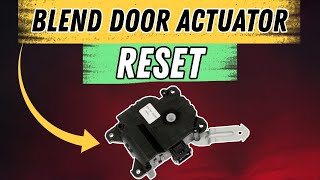
This software procedure forces the A/C control module to move all blend doors to their physical endpoints. It allows the computer to relearn the full range of motion for a newly installed motor. You must perform this step with a bi-directional scan tool to ensure accurate temperature control.
Key Takeaways
- Code B1454 indicates a failed passenger-side temperature blend door servo motor, a highly common issue on 2013-2019 Lexus IS, GS, and RC models.
- The primary symptoms are a repetitive clicking noise from behind the glove box and the passenger vents permanently blowing hot air.
- Before paying for repairs, ask a Lexus dealer to check your VIN for free replacement eligibility under Customer Support Program 20LE01, which lasts 7 years or 125,000 miles.
- Avoid the $1,500+ dealership dashboard removal quote by finding an independent shop that uses the 2-hour glove box shortcut method, reducing the total cost to around $350-$550.
Helpful Videos
Shop the Parts Behind B1454
Below are the parts most often responsible for code B1454, ranked by how frequently each one is the actual culprit (per the diagnosis above). Tap any to see what we have for your vehicle.



The information in this article is provided for general reference and educational purposes only. Vehicle specifications, procedures, and part compatibility can vary by production date, trim level, and region. Always consult your vehicle's factory service manual and verify part numbers before purchasing or performing repairs. Safety-critical components such as airbags, seat belts, and braking systems should be installed by a qualified professional.
- 🧭 Diagnostic Flowchart
- 🎬 Helpful Videos
- 🛍️ Shop This Part
- What Does B1454 Mean?
- Can I Drive With B1454?
- Common Causes
- Symptoms
- Common Fixes & Costs
- Used vs. New Parts: Buying Guide
- What Happens If You Wait — Timeline
- Cost of Not Fixing It
- Diagnosis Steps
- When This Code Triggers (Freeze-Frame Conditions)
- Related Codes
- Climate & Environmental Factors
- How to Talk to a Mechanic About This Code
- Where to Take It: Dealer vs Independent vs Chain
- When to Walk Away From the Repair
- What Scan Tool You Need for This Code
- How to Clear the Code After You Fix It
- Will This Fail Emissions / State Inspection?
- Most Commonly Affected Vehicles
- Manufacturer-Specific Notes
- Real Owner Stories
- 2017 Lexus GS350 at 51,758 miles with B1454
- 2015 Lexus IS350 F-Sport with clicking noise
- DIY Repair on a Lexus IS-platform vehicle
- How to Prevent This Code From Triggering
- Frequently Asked Questions
- Can I fix B1454 myself?
- Why did my mechanic quote me $1,800 for the repair?
- What is the difference between B1454 on a Lexus and P1454 on a Honda?
- What does 'Target Pulse vs. Actual Pulse' mean in a scan tool?
- Can I just unplug the motor to stop the clicking noise?
- Should I use a cheaper aftermarket servo motor?
- What is a 'Servo Motor Initialization'?
- Key Takeaways
- 🎟️ Get 5% Off