

OBD-II Code B1456: The Ultimate Guide to Door Ajar Circuit Malfunctions
What B1456 means, why it triggers, and how to fix it for good
- Code B1456 indicates a faulty door ajar switch or broken door jamb wiring, tricking the vehicle's computer into thinking a closed door is open.
- Spray penetrating lubricant followed by white lithium grease into the affected door latch and cycle it 15 times to fix the most common sticking switch issue.
- Inspect the flexible rubber boot in the door jamb for broken wires, which causes over 80% of B1456 codes on 2009-2014 Ford F-150 trucks.
- Fix this code immediately to prevent the interior dome lights from draining a standard 12V car battery in under 8 hours.
- Do not confuse the B1456 body code with the P1456 powertrain code, which indicates an EVAP system leak on Honda and Nissan vehicles.
What Does B1456 Mean?
B1456 means your car's Body Control Module (BCM) is receiving a signal that a door is open when it is actually closed. This is caused by a faulty switch within the door latch mechanism or a break in the wiring between the switch and the BCM, resulting in a persistent 'Door Ajar' warning.
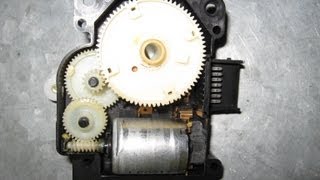
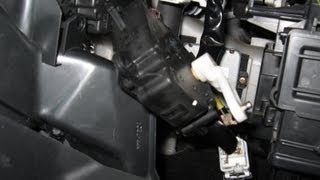
Technical definition: The official definition for B1456 varies by manufacturer. For Ford, Lincoln, and Mercury, it is defined as "Door Ajar Circuit Malfunction." On specific vehicles, like 2007-2019 Lexus LS/LX models, this code is reused for a completely different system, indicating a "Foot/Defrost Air Outlet Damper Control Servo Motor Circuit" fault in the HVAC system.
Can I Drive With B1456?
Yes, But With Caution. Yes, you can drive with this code, but it presents significant annoyances and risks. The interior lights stay on, draining a standard battery in 4-8 hours. Ignoring it leaves you stranded with a dead battery. This also prevents doors from auto-locking, creating a security risk for you and your belongings.
Common Causes
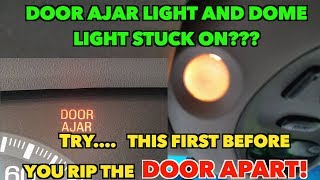
- Sticking or Dirty Door Latch Switch 🎬 Watch: Try this easy lubrication fix before tearing apart your door. (Very Common) — Dirt, moisture, and old grease accumulate inside the door latch, preventing the small electrical switch from moving freely. It gets stuck in the 'open' position, constantly telling the car the door is open.
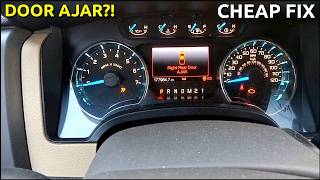
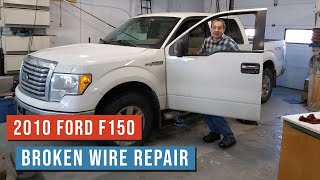
- Broken Wires in Door Jamb (Very Common) — Wires inside the flexible rubber boot between the door and the car's body bend every time the door opens. Over thousands of cycles, these wires fatigue and break, creating an open circuit. This is the primary cause on 2009-2014 Ford F-150s. 🎬 See how to replace a broken rear door wiring harness.
- Failed Door Latch Assembly (Common) — The door ajar switch is typically an integral part of the door latch assembly. If the switch fails electrically or mechanically and cannot be freed with lubrication, the entire latch assembly requires replacement.
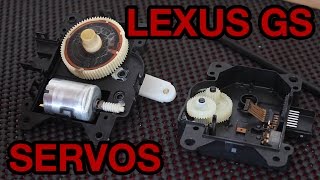
- Faulty HVAC Damper Motor (Lexus Specific) (Rare) — On Lexus models like the LS460 and LS500, code B1456 has nothing to do with the doors. It indicates a fault in an HVAC servo motor that controls airflow direction. 🎬 Watch: How to clean and repair a faulty Lexus servo motor.
- Misaligned Door or Striker (Less Common) — A sagging or damaged door does not close tightly enough to fully depress the switch. Even a 1/8-inch misalignment prevents the latch from engaging the switch properly.
- Water Intrusion and Connector Corrosion (Less Common) — Water from clogged sunroof drains or bad window seals leaks into the cabin, dripping onto electrical connectors in the kick panel. This corrosion creates high resistance, triggering the fault.
- Aftermarket Accessory Interference (Rare) — Improperly installed aftermarket remote starters or alarms tap into the door trigger circuit. A bad splice or faulty module sends stray voltage, triggering a false door ajar signal.
- Faulty Body Control Module (BCM) (Rare) — Rarely, the BCM itself fails. A specific input driver on the module's circuit board malfunctions, causing it to misread the signal from the door switch.
Symptoms
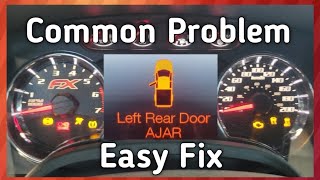
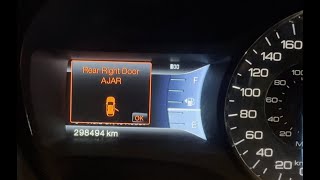
- 'Door Ajar' Warning Light and Chime — A persistent warning light on the instrument cluster indicates a door is open, accompanied by a repetitive beeping or chiming sound while driving.
- Interior Dome Lights Stay On (Causing Dead Battery) — The car believes a door is open, keeping the interior courtesy lights illuminated. Left overnight, this completely drains the battery and prevents the car from starting.
- Doors Won't Auto-Lock While Driving — Most vehicles disable the automatic door locking safety function if the system detects that a door is not properly closed.
- Car Alarm Randomly Goes Off — The faulty switch intermittently signals the security system that a door has been opened while armed, triggering the alarm unexpectedly.
- Radio/Infotainment Stays On After Exiting — On many General Motors and Ford vehicles, the radio stays on until a door is opened. If the car never receives the 'door open' signal, the radio remains on, draining the battery.
Diagnostic Flowchart
Tap your situation to follow the diagnostic path that matches what you're seeing on this code.
Common Fixes & Costs
- Clean and Lubricate Door Latch — Parts: $10-$20, Labor: $0, ~0.3 hr book time (DIY)
- Repair Broken Wires in Door Jamb — Parts: $10-$30, Labor: $150-$300, ~1.5 hr book time (Intermediate)
- Replace Door Latch Assembly
— Parts: $100-$250, Labor: $150-$350, ~2.0 hr book time
(Intermediate)
Ford Edge (2011-2014): OEM
Ford F-150 (2009-2014): OEM - Adjust Door Striker — Parts: $0, Labor: $50-$100, ~0.5 hr book time (DIY)
- Replace Body Control Module (BCM) — Parts: $400-$800, Labor: $200-$400, ~1.5 hr book time (Professional)
Used vs. New Parts: Buying Guide
When a used part is worth it: A used OEM door latch assembly from a low-mileage vehicle is a good value for older vehicles where new OEM parts are expensive or discontinued.
Donor-vehicle mileage cap: roughly under 60000 miles for the part to have meaningful remaining life.
Donor quality checklist:
- Verify the donor vehicle was not in a side-impact collision.
- Avoid parts from regions with heavy road salt usage to minimize internal corrosion.
- Match the part number exactly, including suffixes, as internal electronics vary by trim level.
Decision logic:
- If The vehicle is a model with a very high failure rate for this part (e.g., 2011-2014 Ford Edge). → Buy a new OEM or high-quality aftermarket part. A used part likely has the same inherent defect.
- If The vehicle is over 10 years old and the cost of a new OEM part exceeds $250. → A used part from a reputable salvage yard with a warranty is a reasonable choice.
- If The cause of failure was a broken wire in the door jamb, not the latch itself. → Repair the wire. Do not replace the latch assembly.
Warranty tradeoff: Used parts from professional salvage yards typically come with a 30-90 day functional warranty. New aftermarket parts carry a 1-year to limited lifetime warranty. Labor is never covered by a used part warranty.
Worst-case if a used part fails: $200-$450 if a used part fails prematurely, requiring repeat labor for replacement.
What Happens If You Wait — Timeline
- 0-2 Weeks: Intermittent 'Door Ajar' light, often triggered by bumps or temperature changes. Warning chime sounds occasionally. (Added cost: $0)
- 2 Weeks - 2 Months: Warning light becomes persistent. Interior dome lights stay on, creating a high probability of a dead battery overnight. The car cannot be securely locked. (Added cost: $150-$300 for a new battery and potential tow.)
- 2-6 Months: The primary battery is repeatedly deep-cycled, shortening its life and putting significant strain on the alternator. The alarm system triggers randomly. (Added cost: $600-$1100 for a new battery plus a replacement alternator.)
- 6+ Months: Prolonged moisture exposure leads to corrosion spreading to other circuits or modules, like the BCM. A simple fault cascades into a complex electrical problem. (Added cost: $800-$2000 for BCM or wiring harness replacement.)
Cost of Not Fixing It
- 0-1 week: Significant annoyance from chimes and lights. Stranded with a dead battery is highly probable due to interior lights staying on. (Added cost: $150-$300 for a new battery and potential towing.)
- 1-3 months: Vehicle security is compromised as doors do not auto-lock and the alarm is unreliable. Repeatedly deep-cycling the battery shortens its lifespan and stresses the alternator. (Added cost: $500-$900 for a replacement alternator in addition to a new battery.)
- 3+ months: Potential damage to the Body Control Module (BCM) from prolonged exposure to an open circuit or short. (Added cost: $600-$1200 for BCM replacement and programming.)
Diagnosis Steps
- Isolate the Faulty Door (Scanner or Manual)
Connect an advanced OBD-II scanner and view the BCM live data to see exactly which door reads 'Ajar'. If you lack a scanner, firmly open and shut every single door, including the liftgate, trunk, and hood, to see if the light flickers or turns off.
Tools: Advanced OBD-II Scanner (recommended) (Beginner) - Clean and Lubricate the Latch
Generously spray a penetrating lubricant (like WD-40) directly into the latch mechanism of the affected door. Follow immediately with white lithium grease or silicone spray. Open and close the door firmly 15 times to work the lubricant in and free the sticking switch.
Tools: Penetrating lubricant, White lithium grease or silicone spray (Beginner) - Inspect the Door Jamb Wiring Harness
Peel back the rubber accordion boot in the door jamb of the affected door. Visually inspect the wires for breakage, chafing, or green corrosion. Gently tug on each wire to check for internal breaks beneath the insulation.
Tools: Flashlight, Trim tool (Intermediate) - Perform a Jumper Wire Test
Remove the door panel and unplug the electrical connector for the door latch. Use a paperclip or jumper wire to bridge the two terminals for the ajar switch on the harness side. If the 'Door Ajar' light goes out, the wiring and BCM are good, confirming the latch assembly is faulty.
Tools: Trim removal tools, Jumper wire or paperclip, Vehicle-specific wiring diagram (Advanced) - Test the Switch with a Multimeter
Set a multimeter to continuity (Ohms). Place the probes on the two pins for the ajar switch on the unplugged latch. With the latch open, it should read 'OL' (infinite resistance). Manually close the latch with a screwdriver; it should read near zero Ohms. If it doesn't change state, the switch is dead.
Tools: Multimeter, Screwdriver (Advanced) - Inspect for Door/Striker Misalignment
Examine the alignment of the door with the body. Check if the U-shaped door striker on the body is loose. Loosen the striker bolts and adjust its position slightly inward to ensure the door closes tightly enough to activate the switch.
Tools: Torx or socket set (Intermediate) - Inspect the BCM and Connectors
If all wiring and switches test good, locate the BCM (usually behind the glove box or kick panel). Check its connectors for water damage, corrosion, or pushed-out pins before condemning the module itself.
Tools: Flashlight, Socket set (Advanced)
When This Code Triggers (Freeze-Frame Conditions)
- Vehicle Speed: > 0 mph (The BCM expects doors to be closed while the vehicle is in motion.)
- Door Switch Status (PID): Open (The code sets when the BCM sees a specific door switch signal as 'Open' for a continuous period when it should be closed.)
- Ignition Status: RUN (The fault is actively monitored when the vehicle's ignition is on.)
- Battery Voltage: 11-14V (Normal operating voltage; the fault is not caused by low system voltage, but causes it.)
Related Codes
- P1456 — This is a Powertrain code, not a Body code. On Honda and Nissan vehicles, P1456 indicates an EVAP system leak, often caused by a loose gas cap. It triggers the 'Check Engine' light, not the 'Door Ajar' light.
- B1318 — This code for 'Battery Voltage Low' is a symptom of B1456. The door ajar fault keeps interior lights on, draining the battery. Fix the B1456 fault first, then charge the battery.
- U0140 — This means 'Lost Communication With Body Control Module.' If present with B1456, the problem is likely the BCM itself or its main power/ground connection, not the door switch.
- B1323 — A Ford-specific code for 'Door Ajar Warning Lamp Circuit Failure.' B1456 means the BCM gets a bad signal FROM the switch; B1323 means the BCM detects a fault sending the signal TO the dashboard light.
Climate & Environmental Factors
- Cold Weather: Freezing temperatures cause the grease inside the latch mechanism to thicken and harden, preventing the small switch from moving freely. This is why the problem frequently appears on cold mornings.
- High Humidity / Rain: Moisture penetrates the door latch and electrical connectors, accelerating corrosion on the switch contacts and wiring, leading to high resistance.
- Road Salt (Rust Belt Regions): Salty mist works its way into the door jamb and onto wiring, significantly accelerating corrosion of wires and connectors.
How to Talk to a Mechanic About This Code
Say this: "I have a 'Door Ajar' warning light that stays on, and my scanner shows code B1456. I've already tried lubricating the latches. I'd like to book a diagnostic appointment to determine if the cause is a broken wire in the door jamb or a faulty latch switch."
This signals that you have done basic research and performed the first-line fix. It focuses the technician's efforts on the two most likely electrical causes, saving diagnostic time and money.
Avoid saying:
- 'My interior lights won't turn off.' (Too vague, could be many things)
- 'My car thinks a door is open.' (Better, but lacks the specific code)
- 'Just fix the door light.' (Gives the shop a blank check to replace parts without proper diagnosis)
Questions to ask before authorizing the repair:
- Did you use a scan tool to see which specific door the BCM is flagging as open?
- If it's a broken wire, will you use solder and heat shrink for the repair or just butt connectors?
- If the latch needs replacement, what is the cost difference between an OEM and an aftermarket part?
- Can you confirm the problem is not present on the other doors?
Where to Take It: Dealer vs Independent vs Chain
- Dealer:
Recommended if your vehicle is a Ford known for this issue (to check for warranty extensions) or a Lexus. Otherwise, an independent shop is more cost-effective.
Best for: Vehicles under warranty or covered by a specific Customer Satisfaction Program (like Ford's 19N09)., Complex electrical issues involving the BCM., Lexus models where B1456 points to an HVAC issue.
Downsides: Highest labor rates., Defaults to replacing the entire latch assembly when a cheaper wiring repair suffices. (Typical cost: +50% vs. baseline) - Independent Shop:
Best fit for most vehicles with this code. An experienced independent mechanic diagnoses and fixes this common problem efficiently.
Best for: Most out-of-warranty vehicles., Diagnosing and repairing common failures like broken wires in a door jamb., Cost-conscious owners.
Downsides: Quality varies; look for shops with ASE-certified technicians specializing in electrical work., May lack access to the latest manufacturer-specific Technical Service Bulletins (TSBs). (Typical cost: +0% vs. baseline) - Chain Shop:
AVOID for this repair. This is not a simple parts-swap job and requires specific diagnostic skills.
Best for: Simple, unrelated services like oil changes or new batteries.
Downsides: Technician skill for electrical diagnosis varies dramatically., Often lack the advanced scan tools needed to read BCM live data., Not equipped to perform detailed wiring harness repairs. (Typical cost: -10% vs. baseline)
What Scan Tool You Need for This Code
Minimum: A scanner that reads Body Control Module (BCM) codes and views BCM live data.
A basic $20 engine code reader will NOT see 'B' (Body) codes like B1456. You need a tool that communicates with the BCM to view the live status of each door switch to quickly identify the culprit.
Budget: BlueDriver Pro (~$100) — Connects to your smartphone and reads/clears BCM codes on popular makes. It displays live data, allowing you to see which door switch reads 'Open' or 'Closed' in real-time.
Mid-range: Foxwell NT510 Elite (~$180) — A handheld tool offering manufacturer-specific diagnostics. It reads BCM live data with great detail and includes bidirectional controls.
Professional: Autel MaxiCOM MK808S (~$450) — A professional-level tablet scanner providing comprehensive diagnostics for all vehicle systems. It offers fast, detailed live data graphing.
Rent vs buy: If you only need to identify the faulty door, auto parts stores scan your car for free, though their scanners may not read BCM live data. Buying a tool like the BlueDriver is a worthwhile investment for DIY diagnosis.
How to Clear the Code After You Fix It
- Use an OBD-II scan tool to clear the code from the Body Control Module (BCM).
- Cycle the ignition off and on.
- Open and close the repaired door several times to confirm the 'Door Ajar' light extinguishes.
Drive cycle (~5 minutes): Body codes like B1456 do not require a complex drive cycle. The BCM continuously monitors the door switch status. Once the repair is made, the fault condition is immediately resolved. Clearing the code with a scanner and cycling the ignition is sufficient.
Watch out for:
- Disconnecting the battery does not clear the code from the BCM's non-volatile memory.
- The code returns immediately if the root cause (stuck switch, broken wire) is not properly fixed.
Will This Fail Emissions / State Inspection?
No — by itself this code doesn't fail OBD inspection (but it can keep readiness monitors from setting, which causes a separate fail).
- California: This code does not cause a failure of the OBD-II emissions test, as it is a body code. However, technicians may refuse to test if a warning light is on, or it may fail a separate safety inspection.
- New York: New York performs an annual safety inspection. While the 'Door Ajar' light is not an explicit failure, non-functional interior lights or doors that don't latch securely lead to a failure.
Most Commonly Affected Vehicles
- Ford Edge (2011-2014) — Extremely high failure rate. Subject of NHTSA investigation PE16-011 and Ford's Customer Satisfaction Program 19N09 for the driver's side door latch.
- Ford Explorer (2013-2014) — Commonly experiences failures of the switch inside the latch. Covered under Customer Satisfaction Program 19N09.
- Ford F-150 (2009-2014) — The primary cause is almost always broken wires inside the flexible rubber boot between the door and the body, not the latch itself.
- Ford Taurus / Mercury Sable (2000-2007) — Known for the grease inside the latch mechanism gumming up over time. The lubrication fix is highly effective on these models.
- Nissan Rogue (2014-2020) — Door latch and lock actuator failures are common. Do not confuse the B1456 body code with Nissan's P1456 EVAP code.
- Lexus LS460 / LS500 (2007-2019) — On these models, B1456 specifically indicates a fault with an HVAC air outlet damper servo motor, completely unrelated to the doors.
- Chevrolet Silverado EV (2024) — Early production models were delivered with the rear door sensor circuits disconnected from the factory, causing a persistent fault.
Manufacturer-Specific Notes
- Ford / Lincoln: Ford has the highest incidence of this code. For SUVs like the Edge and Explorer, the cause is typically the latch itself. For F-150 trucks, the cause is almost always broken wires in the door jamb.
- General Motors (GM): A faulty door ajar switch prevents the radio and accessories from turning off after the key is removed and the door is opened, leading to a drained battery.
- Honda / Acura: These brands do not use the B1456 code for door issues. They use P1456 for EVAP system leaks, fixed by tightening the gas cap.
- Lexus / Toyota: On luxury models like the Lexus LS, B1456 is repurposed for the HVAC system and indicates a problem with an air blend door actuator, not a door latch.
Real Owner Stories
2013 Ford F-150 at 110K miles
Intermittent 'Driver Side Rear Door Ajar' warning in cold weather. Dome light stayed on, and the door lock became unreliable.
What they tried:
- Replaced the door latch assembly, which seemed to fix it for a few weeks, but the problem returned.
- Inspected the rubber door jamb boot and found two broken wires.
Outcome: Spliced the broken wires using butt connectors and heat shrink. The problem was permanently resolved. The original latch was likely not faulty.
Lesson: On 2009-2014 Ford F-150s, always inspect the door jamb wiring for breaks before spending money to replace the latch assembly.
2012 Ford Edge at 85K miles
Persistent 'Door Ajar' light that would not turn off, leading to a dead battery overnight.
What they tried:
- Spraying WD-40 into the latch provided a temporary fix for a day, but the issue returned.
- A mechanic diagnosed a failed internal switch in the driver's door latch.
Outcome: Replaced the entire driver's side door latch assembly with a new Motorcraft part. The repair cost $400 at a shop and completely fixed the warning light.
Lesson: For Ford Edge models of this era, a sticking switch that lubrication can't permanently fix requires the replacement of the entire latch assembly.
2013 Lexus LS460 at 95K miles
Check engine light came on with code B1456. No door ajar warnings, but the HVAC system was not directing air to the floor vents.
What they tried:
- An independent shop misdiagnosed the code as a door switch issue.
- A Lexus dealership correctly identified B1456 as a 'Foot/Defrost Air Outlet Damper Control Servo Motor Circuit' fault.
Outcome: The technician cleaned the HVAC servo motor's internal contacts and re-lubricated the mechanism, clearing the code and restoring HVAC function.
Lesson: Always verify the code definition for your specific make. On Lexus vehicles, B1456 points to a specific HVAC servo motor fault, not the doors.
How to Prevent This Code From Triggering
- Lubricate Door Latches Annually (Once per year, ideally before winter.) — Flushes out dirt and moisture while restoring smooth mechanical action. Use penetrating oil first, followed by silicone or white lithium grease to prevent the switch from sticking.
- Clean Door Jambs and Weather Stripping (Every 3-6 months.) — Removes debris that clogs drain holes. Clogged drains lead to water retention, which seeps into the door and corrodes electrical connectors and the latch mechanism.
- Inspect Door Wiring Boots (Annually.) — A visual inspection of the rubber boot between the door and body reveals early signs of tearing. Addressing a damaged boot prevents water from accelerating wire corrosion.
- Apply Dielectric Grease to Connectors (Anytime a connector is disconnected for service.) — Applying dielectric grease to the latch connector repels moisture and prevents corrosion on the electrical pins, ensuring a reliable connection.
Frequently Asked Questions
Why does my 'Door Ajar' light stay on when all my doors are shut tight?
The electronic sensor that tells the car the door is closed has failed. Most likely, the switch inside the door latch is stuck from dirt, or a wire leading to it has broken inside the rubber boot in the door jamb.
The lubricant trick didn't work. What's the next most likely fix?
After lubrication fails, the next most common cause is a broken wire inside the rubber boot between the door and the car's body. Before buying any parts, peel back the boot on the affected door and carefully inspect the wires for breaks.
Can I just unplug the sensor or pull a fuse to stop the light and battery drain?
This is not recommended. Disconnecting the sensor or pulling a fuse turns off the light, but defaults the car to a 'door open' state. This prevents doors from locking and disables the alarm, compromising vehicle security.
Why does my car alarm keep going off for no reason?
The faulty door sensor tricks the security system. The car's computer intermittently thinks a door is being forced open while the alarm is armed, triggering it. Fixing the B1456 code solves the random alarm problem.
What are the most common mistakes when diagnosing a B1456 code?
The top mistakes are confusing it with the P1456 EVAP code, immediately buying a new door latch when the actual problem is a broken wire, and forgetting to check the trunk or hood. Always inspect the door jamb wiring first.
Is fixing a B1456 code expensive?
It ranges from very cheap to moderately expensive. It costs $10 for a can of lubricant, $150-$300 for a wiring repair at a shop, or $250-$600 for a full door latch replacement at a dealership.
Why does my door ajar light seem to come on more when it's cold?
Cold temperatures cause the grease inside the latch mechanism to thicken, making the switch stickier. It also causes old, brittle plastic components within the switch to contract and fail to make contact properly.
My door seems to close fine, but could it still be a misalignment issue?
Yes. Even if the door looks flush, it might not close with enough force to fully depress the switch. Test this by having someone push firmly on the outside of the closed door while you watch the 'Door Ajar' light to see if it turns off.
Key Takeaways
- Code B1456 indicates a faulty door ajar switch or broken door jamb wiring, tricking the vehicle's computer into thinking a closed door is open.
- Spray penetrating lubricant followed by white lithium grease into the affected door latch and cycle it 15 times to fix the most common sticking switch issue.
- Inspect the flexible rubber boot in the door jamb for broken wires, which causes over 80% of B1456 codes on 2009-2014 Ford F-150 trucks.
- Fix this code immediately to prevent the interior dome lights from draining a standard 12V car battery in under 8 hours.
- Do not confuse the B1456 body code with the P1456 powertrain code, which indicates an EVAP system leak on Honda and Nissan vehicles.
Helpful Videos
Shop the Parts Behind B1456
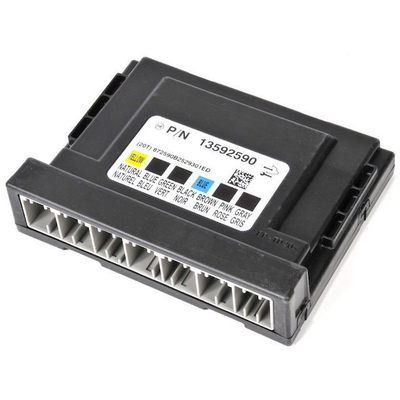
Below are the parts most often responsible for code B1456, ranked by how frequently each one is the actual culprit (per the diagnosis above). Tap any to see what we have for your vehicle.




The information in this article is provided for general reference and educational purposes only. Vehicle specifications, procedures, and part compatibility can vary by production date, trim level, and region. Always consult your vehicle's factory service manual and verify part numbers before purchasing or performing repairs. Safety-critical components such as airbags, seat belts, and braking systems should be installed by a qualified professional.
- 🧭 Diagnostic Flowchart
- 🎬 Helpful Videos
- 🛍️ Shop This Part
- What Does B1456 Mean?
- Can I Drive With B1456?
- Common Causes
- Symptoms
- Common Fixes & Costs
- Used vs. New Parts: Buying Guide
- What Happens If You Wait — Timeline
- Cost of Not Fixing It
- Diagnosis Steps
- When This Code Triggers (Freeze-Frame Conditions)
- Related Codes
- Climate & Environmental Factors
- How to Talk to a Mechanic About This Code
- Where to Take It: Dealer vs Independent vs Chain
- What Scan Tool You Need for This Code
- How to Clear the Code After You Fix It
- Will This Fail Emissions / State Inspection?
- Most Commonly Affected Vehicles
- Manufacturer-Specific Notes
- Real Owner Stories
- 2013 Ford F-150 at 110K miles
- 2012 Ford Edge at 85K miles
- 2013 Lexus LS460 at 95K miles
- How to Prevent This Code From Triggering
- Frequently Asked Questions
- Why does my 'Door Ajar' light stay on when all my doors are shut tight?
- The lubricant trick didn't work. What's the next most likely fix?
- Can I just unplug the sensor or pull a fuse to stop the light and battery drain?
- Why does my car alarm keep going off for no reason?
- What are the most common mistakes when diagnosing a B1456 code?
- Is fixing a B1456 code expensive?
- Why does my door ajar light seem to come on more when it's cold?
- My door seems to close fine, but could it still be a misalignment issue?
- Key Takeaways
- 🎟️ Get 5% Off