

Ultimate Guide to OBD-II Code B1458: A Manufacturer-Specific Body Fault
The definitive guide to understanding, diagnosing, and fixing code B1458
- Code B1458 is manufacturer-specific, meaning you must look up the exact definition for your vehicle's make before starting any diagnosis.
- This code disables the side airbags on Mitsubishi vehicles, disables windshield washers on Fords, and breaks rear HVAC airflow on Toyotas.
- Damaged wiring or corroded connectors cause over 50% of B1458 codes, making a $15 multimeter your most valuable diagnostic tool.
- Never attempt to DIY a Mitsubishi B1458 airbag sensor repair; accidental deployment causes severe injury, so tow the vehicle to a certified shop.
What Does B1458 Mean?
B1458 is a manufacturer-specific body control module (BCM) trouble code. Its definition changes depending on your vehicle's make. Unlike standardized 'P' (Powertrain) codes, carmakers use 'B' (Body) codes for comfort, convenience, or safety systems. Identifying your vehicle's specific definition is the mandatory first step in any diagnosis.
Technical definition: The formal definition for code B1458 varies significantly by manufacturer. The most common definitions are: * **Ford, Lincoln, Mercury, Land Rover:** Wiper Washer Pump Motor Relay Circuit Failure * **Toyota, Lexus:** Air Outlet Damper Control Servo Motor Circuit (Passenger Side Front A/C Rear Air Flow) * **Mitsubishi:** Rear Side Impact Sensor (LH) Communication Error * **Lancia:** Wiper Washer Pump Motor Relay Coil Circuit Failure * **Jaguar:** Wiper Washer Pump Relay Circuit Failure
Can I Drive With B1458?
Yes, But With Caution. You can drive with B1458, but it carries specific risks depending on your vehicle. On Mitsubishi vehicles, the affected side airbags are disabled, creating a severe safety risk in a side-impact crash—repair this immediately. On Ford and Land Rover, driving is safe, but inoperative windshield washers compromise visibility in poor weather. On Toyota and Lexus, it is strictly a comfort issue with no mechanical risk.
Common Causes
- Damaged Wiring or Loose Connectors (Very Common) — This is the most frequent cause across all variations. Wires fray, short to ground, melt, or break. Connectors loosen, corrode, or have backed-out pins, causing intermittent or total communication loss.
- Failed Component (Sensor, Relay, or Motor) (Common) — The component has failed internally. This includes a faulty side impact sensor, a bad windshield washer relay, or a burned-out climate control servo motor.
- Water Intrusion (Ford GEM Specific) (Common For Model) — On 1998-2005 Ford trucks and SUVs, a leaking windshield drips water directly onto the interior fuse box and Generic Electronic Module (GEM), causing corrosion and widespread electrical failures.
- Blown Fuse or Faulty Fusible Link (Common) — A fuse protecting the specific circuit (SRS, wipers, HVAC) has blown due to a short or overload. Always check fuses before replacing expensive parts.
- Mechanical Jam or Blockage (HVAC Specific) (Less Common) — For the Toyota/Lexus HVAC version, a foreign object or broken damper door physically blocks the servo motor's movement, triggering a position error.
- CAN Bus Communication Failure (Mitsubishi Specific) (Less Common) — For Mitsubishi's SRS code, the fault is often the Controller Area Network (CAN) bus wiring. A fault on this data line prevents the SRS-ECU from receiving the impact sensor signal.
- Faulty Control Module (SRS-ECU, GEM, A/C Amplifier) (Less Common) — The primary computer controlling the system has an internal fault. Suspect this only after verifying all circuit components.
- Low Battery Voltage (Uncommon) — A weak battery causes voltage drops during startup, glitching control modules. This generates random codes, including B1458, that disappear once you replace the battery and clear the codes.
Symptoms
- Airbag Warning Light is On — On Mitsubishi vehicles, the primary symptom is an illuminated airbag or SRS warning light, indicating a disabled safety system.
- Windshield Washer Inoperative — For Ford and Land Rover vehicles, pressing the washer button results in no action. The washer pump motor does not activate.
- Incorrect Airflow or Temperature from Vents — On Toyota and Lexus models, you experience uneven air temperature or a complete lack of airflow to the passenger rear seating area.
- Multiple, Unrelated Electrical Issues (Ford) — If the cause is a faulty GEM module, you experience erratic power windows, interior lights staying on, or 4x4 system errors alongside the washer failure.
- Audible Clicking or Ticking from Dashboard — With a failing Toyota/Lexus HVAC servo, you hear a repetitive clicking sound from behind the dashboard as the motor's broken internal gears attempt to move the damper door.
Diagnostic Flowchart
Tap your situation to follow the diagnostic path that matches what you're seeing on this code.
Common Fixes & Costs
- Repairing Damaged Wiring or Connector — Parts: $5-$25, Labor: $120-$350, ~1.5 hr book time (Intermediate)
- Replacing the Wiper Washer Pump Relay — Parts: $15-$60, Labor: $0-$75, ~0.1 hr book time (DIY)
- Replacing a Side Impact Sensor — Parts: $80-$400, Labor: $100-$200, ~1.2 hr book time (Professional)
- Replacing the HVAC Blend Door Actuator (Servo) — Parts: $40-$250, Labor: $200-$2,500, ~8.5 hr book time (Advanced)
- Replacing the Generic Electronic Module (GEM) — Parts: $75-$250, Labor: $150-$300, ~1.5 hr book time (Intermediate)
- Reprogramming or Replacing the A/C Amplifier (Toyota/Lexus) — Parts: $0-$980, Labor: $100-$200, ~0.8 hr book time (Professional)
Used vs. New Parts: Buying Guide
When a used part is worth it: For a Ford GEM module on an older truck, a used or remanufactured unit is a cost-effective repair, provided the part number matches exactly. For an easily accessible Toyota HVAC servo, a used part is a low-risk gamble.
Donor-vehicle mileage cap: roughly under 100000 miles for the part to have meaningful remaining life.
Donor quality checklist:
- For airbag sensors, NEVER buy used. The risk of a non-functional or damaged part is too high.
- For electronic modules like a GEM, verify the donor vehicle was not scrapped for electrical or flood issues.
- Match part numbers exactly. A slightly different number means different programming or features.
- Buy from a reputable recycler that offers at least a 30-day warranty.
Decision logic:
- If The part is a safety component like an airbag sensor → Buy new OEM only. The safety risk is not worth the savings.
- If The part is a Ford GEM module and the vehicle is over 15 years old → A used or remanufactured module is a practical choice. Ensure the water leak is fixed first.
- If The part is an HVAC servo motor that requires dashboard removal to access → Buy a new OEM or quality aftermarket part. The labor cost is too high to risk using a worn-out used part.
Warranty tradeoff: Used parts typically have a 30-90 day warranty. New aftermarket parts carry a 1-year to limited lifetime warranty. New OEM parts have a 1-2 year warranty.
Worst-case if a used part fails: $400-$2500 if a used part fails after a labor-intensive installation (e.g., a dashboard-out HVAC servo), requiring you to pay for the labor all over again.
What Happens If You Wait — Timeline
- 0-1 month: Mitsubishi: SRS light is on, side airbags are disabled. Ford: Washers fail intermittently, especially in wet weather. Toyota: Occasional clicking from dash, minor airflow inconsistency. (MPG impact: 0%% · Added cost: $0)
- 1-6 months: Mitsubishi: Continued high risk of injury in a side-impact crash. Ford (GEM issue): Water intrusion continues. More electrical gremlins appear (flickering lights, battery drain). Toyota: Clicking becomes constant. Airflow is stuck in one position. (MPG impact: 0%% · Added cost: $0-$500)
- 6-12 months: Mitsubishi: The safety risk remains unchanged but prolonged. Ford (GEM issue): The fuse box itself corrodes and requires replacement along with the GEM. The vehicle becomes unreliable, with potential no-start conditions. Toyota: The clicking servo motor burns out completely, stopping the noise but leaving the function permanently inoperative. (MPG impact: 0%% · Added cost: $500-$1200)
- 12+ months: Mitsubishi: A side-impact collision occurs with no side airbag deployment, leading to severe injury or death. Ford (GEM issue): Widespread wiring harness corrosion occurs, leading to extremely difficult and expensive electrical diagnosis. Toyota: No further damage, but the HVAC system remains compromised, affecting comfort and defrost capability. (MPG impact: 0%% · Added cost: $1500+)
Cost of Not Fixing It
- Immediate: Mitsubishi: Side/curtain airbags on the affected side are disabled, creating a severe safety risk. Ford: Windshield washers are inoperative, a safety hazard in poor weather. Toyota: HVAC system has incorrect airflow or temperature. (Added cost: $0)
- 1-6 months: Ford (with GEM issue): Continued water intrusion causes further corrosion, leading to widespread and erratic electrical failures (no-start, battery drain). Toyota: A constantly running/clicking HVAC servo motor burns out completely. (Added cost: $300-$1000)
- 6+ months: Mitsubishi: The risk of serious injury or death in a side-impact collision remains. Ford (GEM): The GEM and fuse box are damaged beyond repair, requiring replacement of both units and fixing the water leak. (Added cost: $500-$1500)
Diagnosis Steps
- Confirm the Code's Meaning for Your Vehicle
Search online with your specific year, make, and model (e.g., '2010 Ford F-150 B1458') to confirm the affected system. Diagnosis for an airbag sensor differs completely from a wiper relay.
Tools: Internet access (Beginner) - Perform a Full System Scan and Check Fuses
Use an OBD-II scanner to check for codes in all modules. Note any other 'B', 'C', or 'U' codes. Locate the fuse box and inspect the fuses for the relevant system (SRS, Wipers, HVAC).
Tools: OBD-II scanner, fuse puller, owner's manual (Beginner) - Inspect for Water Damage (Ford)
On 1998-2005 Ford trucks, physically inspect the interior fuse box under the driver's side dash. Look for rust, corrosion, or moisture on the GEM module caused by a leaking windshield.
Tools: Flashlight, trim removal tools (Intermediate) - Test the Circuit with a Multimeter
Disconnect the component's connector. Check for battery voltage (12V) on the power wire with the key on. Check the ground wire for continuity to the chassis (less than 1 ohm). A missing voltage or ground indicates a wiring issue.
Tools: Multimeter (Intermediate) - Pro Tip (Mitsubishi): Swap Side Impact Sensors
Disconnect the battery, wait 30 minutes, and swap the left rear (B1458) and right rear (B1448) impact sensors. Reconnect and rescan. If the code changes to B1448, the sensor is faulty. If it remains B1458, the wiring is bad.
Tools: Socket set, trim removal tools (Advanced) - Pro Tip (Toyota): Use Techstream for Active Test
Use Toyota's Techstream software to perform an 'Active Test' on the servo motor. Compare the 'Target Pulse' to the 'Actual Pulse'. If the Actual Pulse doesn't change when commanded, the servo or circuit is faulty.
Tools: Toyota Techstream or equivalent pro scan tool (Advanced) - Pro Tip (Mitsubishi): Diagnose the CAN Bus First
For Mitsubishi SRS codes, the factory manual mandates checking the CAN bus line before testing components. Use a professional scan tool to run a CAN bus diagnostic.
Tools: Professional scan tool (Advanced) - Advanced Diagnosis: Test Wiper Relay and Circuit (Ford)
Remove the wiper relay. Test the coil resistance between pins 85 and 86 (should be 67-72 ohms). Check the relay socket for battery voltage at the power supply pin and continuity at the ground pin.
Tools: Multimeter, relay puller (Advanced) - Advanced Diagnosis: Test CAN Bus Resistance (Mitsubishi)
With the battery disconnected, measure resistance between the CAN High and CAN Low pins at the DLC. A healthy bus reads approximately 60 ohms. 120 ohms indicates an open circuit.
Tools: Multimeter, wiring diagram (Advanced)
When This Code Triggers (Freeze-Frame Conditions)
- System Voltage: 11.5-14.5V (During system self-test or when the fault occurred.)
- Ignition Status: Key On, Engine Off or Key On, Engine Running (Code sets during initial power-up self-check or during active use.)
- Component Status: Commanded ON (e.g., washer pump) or Active Monitoring (e.g., SRS sensor) (The fault logs when the BCM tries to use the component or receives an invalid signal from it.)
- Fault Type: Circuit Open, Short to Ground, Communication Error (The BCM records the specific electrical nature of the failure it detected.)
Related Codes
- B1459 (Mitsubishi) — This code is a direct partner to B1458. While B1458 means 'communication error' (intermittent signal), B1459 means 'communication impossible' (total signal loss). B1459 strongly suggests a complete wiring break or a dead sensor.
- B1448 / B1449 (Mitsubishi) — These are for the right-hand side impact sensors, mirroring B1458/B1459 for the left. If your B1458 code moves and becomes a B1448 code after swapping sensors, the sensor is bad.
- B1441, B1443, B1446 (Toyota/Lexus) — These are codes for different servo motors within the same HVAC unit. B1458 is specific to the Passenger Side Rear Air Flow servo. A professional scan tool is needed to run active tests on each servo individually.
- B1302, B1446, B1476 (Ford) — These are other codes related to the Generic Electronic Module (GEM). If you have multiple GEM-related codes at once, it strongly suggests a failing GEM module caused by water intrusion.
Climate & Environmental Factors
- High Humidity / Rain / Snow: This is a primary trigger for the B1458 code on older Ford vehicles. Moisture from a leaking windshield seal wicks into the cabin and drips directly onto the Generic Electronic Module (GEM) and interior fuse box, causing corrosion and short circuits.
- Extreme Cold: For the Toyota/Lexus HVAC variant, extremely cold temperatures make the plastic internal gears of the servo motors brittle. This increases the likelihood of gear teeth breaking when the system first activates, leading to the clicking sound and failure.
Where to Take It: Dealer vs Independent vs Chain
- Dealer:
Recommended for Mitsubishi SRS faults and initial Toyota/Lexus TSB-related diagnostics. Use caution for other repairs where they upsell.
Best for: Vehicles under warranty, Mitsubishi airbag (SRS) system faults due to safety criticality and specific diagnostic paths (CAN bus check), Toyota/Lexus HVAC issues where a TSB software update is the first step
Downsides: Highest labor rates, Recommends replacing an entire HVAC unit or module assembly when only a single component has failed (Typical cost: +50% vs. baseline) - Independent Shop:
Best overall fit for most B1458 repairs, especially on out-of-warranty Fords and Toyotas. A good independent shop specializing in electrical work is ideal.
Best for: Out-of-warranty Ford electrical issues (GEM module, wiring), Toyota/Lexus HVAC servo replacement (especially if it's an accessible servo not requiring dash removal), General wiring and circuit diagnostics
Downsides: Quality varies greatly; ensure the shop is ASE-certified and has experience with modern vehicle electronics., Lacks manufacturer-specific scan tools like Toyota Techstream or Mitsubishi M.U.T.-III. (Typical cost: +0% vs. baseline) - Chain Shop:
AVOID for diagnosing B1458. Only use if you have already diagnosed the problem yourself and it's a simple part swap like a relay.
Best for: Simple, unambiguous fixes like a blown fuse or a plug-in wiper relay replacement.
Downsides: Technician skill is highly variable., Not equipped for in-depth electrical or SRS diagnostics., High pressure to upsell based on code alone without proper diagnosis. (Typical cost: -10% vs. baseline)
When to Walk Away From the Repair
If the estimated repair cost for the B1458 fault exceeds 40% of the car's private-party value, reconsider the repair. For older, high-mileage cars, this threshold is even lower.
- Car worth $3000, fix is $2200: Walk away. The repair cost is over 70% of the car's value. This is especially true if the fix is a dashboard-out HVAC repair on an old Toyota.
- Car worth $15000, fix is $600: Fix it. The repair is a small fraction of the car's value and, if it's a Mitsubishi SRS fault, it's a critical safety repair.
- Car worth $4500, fix is $1800: Borderline. This is a 40% ratio. Get a second opinion. If the car has other pending issues, it's time to sell. If the car is otherwise in great shape, the repair is justified.
What Scan Tool You Need for This Code
Minimum: A scanner that reads and clears 'B' (Body) and 'C' (Chassis) codes, specifically for the SRS (Airbag) and BCM (Body Control Module) systems. A basic engine-only code reader will not see or clear code B1458.
A $20 engine code reader cannot communicate with the Body Control, HVAC, or SRS modules where this code is stored. You will not even know the code is present, let alone be able to diagnose or clear it.
Budget: Ancel BD310 or Motopower MP69033 (~$60) — These provide a blend of corded use and Bluetooth app functionality. They read and clear codes from essential systems like ABS and SRS, which is the minimum needed to see the B1458 code and reset it after a repair.
Mid-range: Foxwell NT510 Elite or Innova 5610 (~$180) — This is the sweet spot for DIY. These scanners offer bidirectional control, allowing you to perform 'Active Tests' on components like the Toyota HVAC servos or Ford wiper relays to see if they work when commanded. This is crucial for confirming a failed part before you buy a new one.
Professional: Autel MaxiCOM MK808 / MK808BT (~$350-450) — Offers full OE-level diagnostics for all systems. It reads, graphs live data, clears codes, and performs bidirectional tests and service functions like HVAC recalibration or SRS module resets. This is the level of tool an independent shop uses.
Rent vs buy: If this is a one-time fix, some auto parts stores rent scanners, but ensure their rental tool reads SRS/Body codes. For this code, buying a mid-range scanner is a better investment, as it empowers you to properly diagnose the issue and avoid paying a shop's diagnostic fee, which runs $100-$150.
How to Clear the Code After You Fix It
- Reconnect any disconnected components.
- Reconnect the battery's negative terminal if it was removed.
- Use a compatible OBD-II scan tool to erase the B-prefix trouble codes from the Body Control Module or SRS Module.
- Cycle the ignition off and on, then operate the affected system (e.g., use windshield washers, cycle HVAC controls) to verify the code does not return.
Drive cycle (~10 minutes): A formal drive cycle is not required. After clearing the code, a simple key cycle and functional test is sufficient. For SRS codes, the light extinguishes after the initial 5-7 second system check upon startup. For other systems, operate the component through its full range of functions.
Watch out for:
- Using a basic engine-only code reader that cannot access or clear 'B' (Body) codes.
- Simply disconnecting the battery fails to clear the code from the module's memory, especially for SRS systems.
- Failing to perform a recalibration procedure after replacing HVAC servos, which requires a professional scan tool.
Will This Fail Emissions / State Inspection?
No — by itself this code doesn't fail OBD inspection (but it can keep readiness monitors from setting, which causes a separate fail).
- General: A 'B' code like B1458 will NOT cause a failure of an emissions or 'smog' test, which focuses on powertrain ('P') codes and readiness monitors.
- California: An airbag light will not fail a standard smog check. However, it causes a failure of the more comprehensive 'Brake and Lamp' or 'Vehicle Safety Systems' inspection required for revived salvage vehicles.
- New York: The inspector is required to note if the airbag warning lamp is on, but it is for advisement only and is NOT a cause for inspection failure.
- Texas: An illuminated airbag light is NOT an item on the official state safety inspection checklist and does not cause a failure.
Most Commonly Affected Vehicles
- Toyota Land Cruiser (2016-2019) — Highly susceptible to HVAC servo motor failures. Toyota issued TSBs T-SB-0048-20 and T-SB-0002-21 involving reprogramming the A/C amplifier, performing a servo cleaning procedure, or replacement.
- Mitsubishi Lancer, Outlander (2008-2017) — B1458 points to a communication failure with the left rear side impact sensor. The diagnostic procedure involves checking the CAN bus and swapping sensors side-to-side to confirm the failure.
- Ford F-150 (2009-2014) — This code is common for a wiper washer pump relay circuit failure on the 12th generation F-150. The issue is the relay, wiring, or the GEM/BCM itself.
- Lexus LS 500, LX 570 (2016-2019) — Shares the same HVAC servo motor issues as Toyota. Lexus issued TSB L-SB-0010-22 to address the problem with software updates or servo replacement.
- Ford Explorer, Excursion (1998-2005) — B1458 and other electrical issues are frequently caused by a water-damaged Generic Electronic Module (GEM) due to a leaking windshield seal.
- Land Rover Discovery, Range Rover (2005-2016) — Shares the Ford definition for B1458, indicating a 'Windshield wiper motor pump relay - failure of circuit'. Diagnosis is identical to Ford models.
- Lancia Delta (2008-2014) — This code points to a damaged coil in the windscreen washer pump motor relay.
- Jaguar Various Models (2000-2008) — On some Jaguar models, B1458 relates to a wiper washer pump relay circuit failure, stemming from their shared history and technology with Ford.
Manufacturer-Specific Notes
- Ford / Lincoln / Mercury: On trucks and SUVs from the late 90s to mid-2000s, the Generic Electronic Module (GEM) is notoriously vulnerable to water damage from leaking windshields. Ford issued SSM 15773 advising dealers to replace both the GEM and fuse box and reseal the windshield if corrosion is found.
- Toyota / Lexus: The B1458 HVAC code is so common that multiple Technical Service Bulletins exist. The official procedure starts with a software update for the A/C amplifier or running a 'servo cleaning' utility via the Techstream scan tool before replacing parts.
- Mitsubishi: This is a critical safety code indicating a communication problem with the left rear side impact sensor. Diagnosis must begin with a CAN bus check, as a data line issue mimics a sensor failure. Swapping the left and right sensors is the definitive diagnostic tactic.
- Jaguar / Land Rover: Due to their past association with Ford, these brands share similar DTC definitions and underlying electrical architecture. For B1458, the fault points to the wiper washer pump relay circuit.
Real Owner Stories
2002 Ford F-150 with 155K miles - The Classic Water Leak
After a heavy rain, the owner found the radio and HVAC blower motor stayed on with the key out. The wipers and power windows worked intermittently. Multiple codes were present, including B1458 for the wiper circuit.
What they tried:
- Initially suspected a bad ignition switch or relay.
- Read on a forum about the common windshield leak affecting the GEM module.
- Removed the driver's side A-pillar trim and poured water on the windshield, confirming a leak that dripped down onto the interior fuse box.
Outcome: The owner removed the GEM and fuse box, found visible water and corrosion, and dried both components thoroughly. After cleaning the contacts and reassembling, most electrical functions returned to normal. The owner sealed the top of the windshield with silicone as a temporary fix before a full reseal.
Lesson: On older Ford trucks with multiple, bizarre electrical issues after rain, suspect a water-damaged GEM module before replacing individual components. A simple water test confirms the leak, and drying the module fixes it temporarily.
2017 Toyota Land Cruiser at 60K miles - The Clicking Dash
Owner heard a constant clicking noise from the passenger side of the dashboard. The HVAC system would not blow air correctly to the rear passenger area, and the temperature was inconsistent. Code B1458 was stored.
What they tried:
- A dealership quoted over $2,000 for the repair, stating the entire dashboard had to be removed to replace the servo motor assembly.
- The owner found TSB T-SB-0002-21, which described the exact issue.
- An independent shop familiar with the TSB first attempted the 'Servo Cleaning Operation' using Techstream software, but the problem returned.
Outcome: The independent shop replaced only the single failed servo motor (Passenger Side Rear Air Flow), which was accessible without full dash removal, for a total cost of around $600. The new servo fixed the clicking and restored proper HVAC function.
Lesson: For Toyota/Lexus HVAC servo codes, always check for relevant TSBs. A software update or cleaning procedure fixes it without part replacement. Even if a servo needs replacement, determine if it's one of the accessible ones before agreeing to a costly full dashboard removal.
2010 Mitsubishi Lancer with 110K miles - A Misleading Airbag Light
The SRS airbag warning light came on suddenly. A scan revealed code B1458, pointing to a communication error with the left rear side impact sensor.
What they tried:
- The owner's first thought was that the sensor itself had failed and they prepared to buy a new one for over $200.
- Following a forum recommendation, they disconnected the battery and swapped the left rear sensor with the right rear sensor (which triggers code B1448 if faulty).
- After swapping the sensors and reconnecting the battery, a rescan still showed code B1458. This proved the sensor was not the problem.
Outcome: The owner inspected the wiring harness leading to the left rear sensor's location and found a section under the rear seat that had been pinched and damaged. Repairing the broken wire cost less than $10 in materials and cleared the B1458 code and the SRS light.
Lesson: For Mitsubishi SRS communication codes, use the sensor swap test to confirm if the sensor is truly bad before buying a replacement. If the code does not move to the other side, the fault is in the wiring or connectors, which is a much cheaper fix.
How to Prevent This Code From Triggering
- Inspect and Maintain Windshield Seals (Ford) (Every 6-12 months) — On older Fords, the primary cause of B1458 is a leaking windshield seal allowing water to drip on the GEM module. Periodically cleaning the seal and applying a rubber conditioner prevents it from drying out, cracking, and leaking.
- Clean Debris from Windshield Cowl and Door Drains (Every 6 months) — Leaves and pine needles clog drainage channels at the base of the windshield and in the doors. This causes water to back up and find alternative paths into the cabin, reaching sensitive electronics like the GEM or SRS sensors.
- Replace Cabin Air Filter Regularly (Toyota/Lexus) (Every 12-18 months) — A clean cabin air filter maintains proper airflow through the HVAC system. A clogged filter puts extra strain on the blower motor and allows debris to enter the HVAC case, physically obstructing and damaging delicate servo motor gears.
- Perform an HVAC 'Self-Test' or 'Initialization' (After disconnecting the battery or replacing a component) — Many modern HVAC systems, especially Toyota/Lexus, require an initialization procedure to relearn the servo motor positions. Performing this prevents the servos from becoming 'lost' or mis-timed, which leads to stripped gears and premature failure.
- Use Dielectric Grease on Connectors (When a component is replaced or inspected) — Applying a small amount of dielectric grease to electrical connectors, especially those in areas prone to moisture (like under seats or behind the dash), seals out water and prevents the corrosion that leads to 'circuit failure' codes.
Frequently Asked Questions
Why does my code scanner give different definitions for B1458?
B1458 is a manufacturer-specific 'B' (Body) code, not a universal 'P' (Powertrain) code. Each automaker assigns it a unique meaning. A Ford reports a wiper issue while a Toyota reports an HVAC issue for the exact same code.
Is it safe to drive with a B1458 code?
It depends entirely on the manufacturer. On a Mitsubishi, it disables your side airbags, creating a severe safety risk. On a Ford or Toyota, it is a convenience issue (no washers or faulty A/C) and is mechanically safe to drive.
Can I fix code B1458 myself?
Yes, if the cause is a blown fuse or a plug-in relay in the fuse box. However, replacing an HVAC servo deep in the dashboard requires extensive disassembly. Any repair involving the airbag system must be left to a professional due to safety protocols.
My windshield washers work fine, but the B1458 code is present. Why?
The fault is intermittent. The control module detected a momentary short or open in the circuit that is not currently active. Clear the code; if it returns, you have a loose connection or a failing relay.
What is the difference between code B1458 and P1458?
The first letter dictates the system. B1458 is a 'Body' code for interior and safety electronics. P1458 is a 'Powertrain' code for engine emissions, such as an EVAP system fault. They are completely different and not interchangeable.
What is the most common misdiagnosis for B1458?
Replacing an expensive control module (GEM, SRS-ECU, A/C Amplifier) before testing the circuit. Wiring, connectors, or the end component (sensor/relay/motor) fail far more often than the computer itself.
Can a bad battery cause a B1458 code?
Yes. A weak battery causes low voltage spikes during engine cranking, confusing sensitive electronic modules. This generates false trouble codes that disappear once you install a new battery and clear the system memory.
Key Takeaways
- Code B1458 is manufacturer-specific, meaning you must look up the exact definition for your vehicle's make before starting any diagnosis.
- This code disables the side airbags on Mitsubishi vehicles, disables windshield washers on Fords, and breaks rear HVAC airflow on Toyotas.
- Damaged wiring or corroded connectors cause over 50% of B1458 codes, making a $15 multimeter your most valuable diagnostic tool.
- Never attempt to DIY a Mitsubishi B1458 airbag sensor repair; accidental deployment causes severe injury, so tow the vehicle to a certified shop.
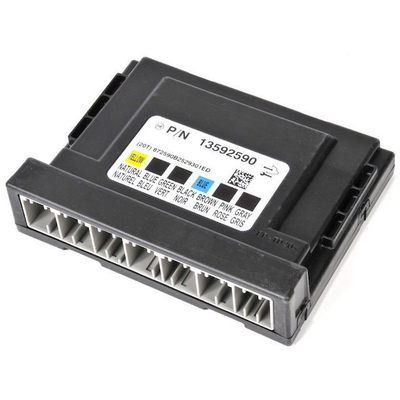
Shop the Parts Behind B1458
Below are the parts most often responsible for code B1458, ranked by how frequently each one is the actual culprit (per the diagnosis above). Tap any to see what we have for your vehicle.





The information in this article is provided for general reference and educational purposes only. Vehicle specifications, procedures, and part compatibility can vary by production date, trim level, and region. Always consult your vehicle's factory service manual and verify part numbers before purchasing or performing repairs. Safety-critical components such as airbags, seat belts, and braking systems should be installed by a qualified professional.
- 🧭 Diagnostic Flowchart
- 🛍️ Shop This Part
- What Does B1458 Mean?
- Can I Drive With B1458?
- Common Causes
- Symptoms
- Common Fixes & Costs
- Used vs. New Parts: Buying Guide
- What Happens If You Wait — Timeline
- Cost of Not Fixing It
- Diagnosis Steps
- When This Code Triggers (Freeze-Frame Conditions)
- Related Codes
- Climate & Environmental Factors
- Where to Take It: Dealer vs Independent vs Chain
- When to Walk Away From the Repair
- What Scan Tool You Need for This Code
- How to Clear the Code After You Fix It
- Will This Fail Emissions / State Inspection?
- Most Commonly Affected Vehicles
- Manufacturer-Specific Notes
- Real Owner Stories
- 2002 Ford F-150 with 155K miles - The Classic Water Leak
- 2017 Toyota Land Cruiser at 60K miles - The Clicking Dash
- 2010 Mitsubishi Lancer with 110K miles - A Misleading Airbag Light
- How to Prevent This Code From Triggering
- Frequently Asked Questions
- Why does my code scanner give different definitions for B1458?
- Is it safe to drive with a B1458 code?
- Can I fix code B1458 myself?
- My windshield washers work fine, but the B1458 code is present. Why?
- What is the difference between code B1458 and P1458?
- What is the most common misdiagnosis for B1458?
- Can a bad battery cause a B1458 code?
- Key Takeaways
- 🎟️ Get 5% Off