

OBD-II Code B1466: Driver's Seat Position Sensor Circuit Malfunction
What B1466 means, why it triggers, and how to fix it
- Code B1466 disables the driver's dual-stage airbag due to a fault in the seat position sensor circuit, posing an immediate safety risk.
- Over 80% of B1466 codes stem from damaged wiring or loose connectors under the driver's seat, making a 5-minute visual inspection your mandatory first step.
- Repairing a broken under-seat wire costs under $20 in parts, while replacing a fully integrated seat track assembly on models like Subaru exceeds $1,000.
- Always use an SRS-capable OBD-II scanner to diagnose B1466, as basic $20 code readers cannot access the Restraints Control Module to clear the fault.
What Does B1466 Mean?
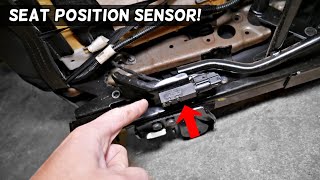
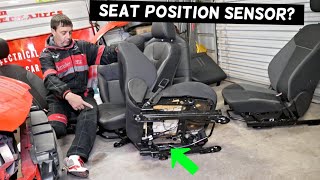
Code B1466 indicates the Restraints Control Module (RCM) lost communication with the driver's seat track position sensor. 🎬 Watch: What a seat position sensor does and why it triggers the airbag light. This sensor tells the Supplemental Restraint System (SRS) how close the driver is to the steering wheel, dictating how forcefully the dual-stage airbag deploys in an accident.
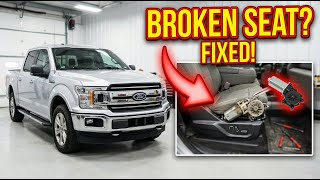
Technical definition: The SAE/ISO definition is "Driver Seat Track Position Sensor Circuit Malfunction." The RCM detects an open circuit, short circuit, or invalid signal from the sensor monitoring the fore/aft position of the driver's seat. The sensor is typically a Hall effect or magneto-resistive type 🎬 See a demonstration of how these sensors work on Ford vehicles. providing a discrete voltage signal to the RCM.
Can I Drive With B1466?
Yes, But With Caution. Yes, but it poses a severe safety risk. The Restraints Control Module (RCM) disables or defaults the driver's dual-stage airbag when this code is active. In a collision, the airbag either fails to deploy or deploys at maximum force regardless of your seat position. Maximum force deployment for a driver positioned close to the steering wheel causes serious secondary injuries like facial fractures or chest trauma.
Common Causes
- Damaged Wiring or Corroded Connector Under the Seat (Very Common) — The under-seat wiring harness is constantly moved, stretched, and kicked by rear passengers. Broken wires, unseated connectors, or pins corroded by spilled liquids and winter road salt account for the vast majority of B1466 codes.
- Failed Seat Track Position Sensor (Common) — The electronic sensor mounted on the seat track fails internally due to age, vibration, or repeated physical impacts.
- Incorrect or Failed SRS Recalibration (Common) — After a battery replacement, jump-start, or SRS repair, the system requires a recalibration procedure. Skipping this step prevents the module from recognizing the sensor's default position, triggering the code even with functional hardware.
- Debris or Obstruction on the Seat Track (Less Common) — Foreign objects like coins, pens, or heavy debris jam the seat track or physically block the sensor's magnetic trigger point, preventing accurate position readings.
- Low Vehicle Voltage (Less Common) — A failing battery or alternator drops system voltage below the RCM's operating threshold, logging sporadic fault codes across multiple sensors. This is highly common during extreme cold.
- Faulty or Glitched Restraints Control Module (RCM) (Rare) — The control module itself suffers a software glitch or internal hardware failure. This is the absolute last component to suspect after verifying the sensor and entire wiring harness.
Symptoms
- Airbag Warning Light is On or Flashing — The primary symptom is a solid or flickering airbag/SRS light on the dashboard. Flickering directly correlates with moving the seat, confirming a loose wire.
- Power Seat Memory Malfunction — Vehicles with seat memory tied to the position sensor lose their memory settings or move in short, jerky bursts ('jog mode').
- Seat Belt Warning Light Stays On — Because the SRS and seat belt systems are interconnected, a B1466 fault forces the seat belt warning light to remain illuminated even when buckled.
- Failed Safety Inspection — Jurisdictions requiring annual safety inspections automatically fail vehicles with an active SRS/airbag warning light.
Diagnostic Flowchart
Tap your situation to follow the diagnostic path that matches what you're seeing on this code.
Common Fixes & Costs
- Repairing or Cleaning Under-Seat Wiring/Connectors — Parts: $5-$20, Labor: $130-$250, ~1.5 hr book time (Intermediate)
- Replacing the Seat Track Position Sensor
— Parts: $60-$350, Labor: $130-$200, ~1.2 hr book time
(DIY)
: OEM
: OEM - Recalibrating the SRS System — Parts: $0, Labor: $50-$150, ~0.8 hr book time (Professional)
- Replacing the Entire Seat Track Assembly
— Parts: $500-$1500, Labor: $250-$450, ~2.5 hr book time
(Professional)
: OEM
Used vs. New Parts: Buying Guide
When a used part is worth it: Buying a used sensor is rarely recommended due to the high labor cost of repeat failures. Used parts only make sense when replacing an entire, prohibitively expensive seat track assembly (e.g., Subaru).
Donor-vehicle mileage cap: roughly under 50000 miles for the part to have meaningful remaining life.
Donor quality checklist:
- Verify exact part number matches.
- Reject parts from flood-damaged vehicles or high-humidity regions.
- Ensure the donor vehicle's airbags did not deploy in an accident.
Decision logic:
- If The part is a standalone sensor or wiring pigtail → Buy new. The $60-$100 cost is worth the warranty and peace of mind.
- If The required part is an integrated seat track assembly costing over $1,000 new → Source a used assembly from a low-mileage, non-collision donor vehicle.
Warranty tradeoff: Salvage yard parts carry 30-day warranties that never cover the $150+ labor cost of swapping a defective unit. New OEM parts carry 1-year minimum warranties.
Worst-case if a used part fails: $300 for repeat labor and diagnostic fees if a used sensor fails.
What Happens If You Wait — Timeline
- Immediately: The SRS light illuminates. The driver's airbag defaults to a disabled or maximum-force state, creating an immediate safety hazard. (MPG impact: 0%% · Added cost: $0)
- At next safety inspection: The vehicle fails mandatory state safety inspections, preventing legal registration. (MPG impact: 0%% · Added cost: $20-$50 (Failed inspection fee))
- In the event of a collision: The airbag fails to deploy properly, resulting in severe injury. Insurance companies may deny claims due to the ignored safety fault. (MPG impact: 0%% · Added cost: Thousands in denied claims and medical bills.)
Cost of Not Fixing It
- Immediately: The driver's airbag defaults to a disabled or maximum-force state, drastically increasing the risk of severe injury or death in a collision. (Added cost: N/A (Severe Safety Risk))
- At next state inspection: The vehicle automatically fails mandatory safety inspections, preventing legal registration renewal. (Added cost: $20-$50 (Failed inspection fee))
- In case of an accident: Insurance companies investigate known, ignored safety faults and potentially deny medical or liability claims. (Added cost: Thousands in denied claims.)
Diagnosis Steps
- Scan for All Codes
Use an OBD-II scanner capable of reading SRS/Body ('B') codes to confirm B1466. Basic $20 engine scanners cannot read airbag modules and will falsely show 'No Codes Found'.
Tools: SRS-capable OBD-II Scanner (Beginner) - Visually Inspect and Reseat Under-Seat Connectors
Move the seat fully forward and up. Inspect the wiring harness for severed wires, pinch points, or kicked connectors. Disconnect the sensor plug, check for green/white corrosion, and firmly click it back into place. Wiggle the harness while watching the dash light to expose intermittent breaks.
Tools: Flashlight (Beginner) - Analyze Live Data with a Scan Tool
Access the RCM live data stream with an advanced scanner. Monitor the 'Driver Seat Position' PID. Slide the seat back and forth; the value must switch between 'Forward' and 'Rear' states. A stuck value confirms a hard fault in the sensor or wiring.
Tools: Advanced OBD-II Scanner with Live Data (Advanced) - Test the Circuit for Power and Ground
Turn the key ON (engine off). Disconnect the sensor and use a multimeter to verify the RCM is sending reference voltage (typically 5V or 12V) and providing a solid ground to the connector pins. Missing voltage proves the wiring harness is broken.
Tools: Multimeter, Vehicle-specific wiring diagram (Intermediate) - Test the Signal Wire Voltage
Back-probe the signal wire with the sensor plugged in and key ON. Slowly move the seat. The DC voltage must switch cleanly between two states (e.g., 0V to 5V) as it passes the trigger point. Erratic or missing voltage changes indicate a dead sensor.
Tools: Multimeter, Back-probe kit (Advanced) - Check for a Short to Ground or Power
Disconnect the harness at both the sensor and the RCM. Test the signal wire for continuity to ground and stray voltage. Any reading above zero confirms a short circuit requiring harness repair.
Tools: Multimeter, Vehicle-specific wiring diagram (Advanced) - Analyze the Signal with an Oscilloscope
Connect an oscilloscope to the signal wire. Moving the seat generates a sharp square wave. A noisy, slow-rising, or flat waveform definitively condemns the sensor.
Tools: Oscilloscope, Back-probe kit (Advanced)
When This Code Triggers (Freeze-Frame Conditions)
- System State: Key-On Self-Test (The RCM tests the seat position sensor circuit every time the ignition turns ON. The code logs instantly during this 3-second check.)
- Circuit Voltage/Resistance: Out of Range (The module triggers the code immediately upon detecting an open circuit, short to ground, or voltage reading outside expected parameters.)
- Seat Movement: During Adjustment (Intermittent wire breaks lose contact only when the seat slides, logging the code precisely during movement.)
Related Codes
- B00A0 — B1466 tracks the driver's seat forward/backward position. B00A0 tracks the passenger's seat weight. Do not confuse the two during parts ordering.
- B0070 — Indicates a fault in the driver's seat belt pretensioner. If B1466 and B0070 appear together, the shared under-seat wiring harness is severed or unplugged.
- U0151 — Means 'Lost Communication With Restraints Control Module'. The entire SRS system is offline. Diagnose main power and ground to the RCM before addressing B1466.
- B1467 — On older Fords, this generic code number means 'Wiper Motor Short'. Always use a scanner that provides module-specific definitions to avoid chasing the wrong system.
Climate & Environmental Factors
- High Humidity and Road Salt: Moisture from wet shoes and winter road salt accumulates under the seat, rapidly corroding connector pins and causing permanent open circuits.
- Extreme Cold: Freezing temperatures make plastic wire insulation brittle. Moving the seat in sub-zero weather frequently snaps aged wiring harnesses.
How to Talk to a Mechanic About This Code
Say this: "I have an airbag light on with code B1466 for the driver's seat position sensor. I've cleared the area under the seat. Please start by testing the under-seat wiring harness and connector for voltage before quoting a new sensor."
Directs the technician to the most common, cheapest failure point (wiring) and prevents them from immediately firing the parts cannon at an expensive sensor.
Avoid saying:
- My airbag light is on, can you just fix it?
- I need a new seat sensor.
- Just do whatever it takes to turn the light off.
Questions to ask before authorizing the repair:
- Did you find a specific broken wire or corroded pin in the harness?
- What were the voltage and ground readings at the sensor connector?
- If replacing the sensor, does the SRS system require recalibration afterward?
- Does your warranty cover both parts and labor if the light returns?
Where to Take It: Dealer vs Independent vs Chain
- Dealer:
Necessary only for integrated sensor replacements or complex recalibrations. Overkill for basic wiring fixes.
Best for: Vehicles under warranty., Subaru models requiring full seat track assembly replacement., Repairs requiring mandatory SRS recalibration.
Downsides: Highest labor rates ($180-$250/hr)., Often refuses to repair wiring, insisting on replacing the entire $800 harness. (Typical cost: +50% vs. baseline) - Independent Shop:
The best option. A certified independent shop easily handles 90% of B1466 causes at a fair price.
Best for: Out-of-warranty vehicles., Diagnosing and repairing broken wires or corroded connectors., Standard sensor replacements.
Downsides: Must verify they own an advanced, bi-directional SRS scan tool. (Typical cost: +0% vs. baseline) - Chain Shop:
Do not use. Airbag systems require specialized diagnostic skills that chain lube shops lack.
Best for: Tires and oil changes.
Downsides: High risk of misdiagnosis on complex SRS electrical faults., Often lack the specialized scan tools required for airbag systems. (Typical cost: -10% vs. baseline)
When to Walk Away From the Repair
If the repair cost exceeds 50% of the vehicle's private-party value, consider selling. However, safety systems often justify higher repair ratios.
- Car worth $8000, fix is $250: Fix it. Minor cost for a critical safety system.
- Car worth $4000, fix is $1200: Borderline. Get a second opinion on a used seat track assembly, but fixing it is likely cheaper than buying another car.
- Car worth $2000, fix is $1500: Walk away. The repair is 75% of the car's value.
What Scan Tool You Need for This Code
Minimum: An OBD-II scanner specifically advertised to read and clear SRS/Airbag codes.
Standard $20 code readers only access the engine computer (PCM). They cannot see the Restraints Control Module and will falsely report '0 Codes Found'.
Budget: BlueDriver Pro or Foxwell NT630 Plus (~$100) — Reads and clears the B1466 code from the RCM. Provides access to live SRS data on most models to verify sensor operation.
Mid-range: Autel MaxiCOM MK808 (~$350) — Offers comprehensive SRS diagnostics, live data graphing, and the ability to perform SRS module recalibrations after a repair.
Professional: Autel MaxiSys Series (~$1000+) — Provides full OEM-level bi-directional control, advanced coding, and module programming. Overkill for DIYers.
Rent vs buy: Auto parts store loaner tools rarely read airbag codes. Buy the $100 budget pick to diagnose this code and verify the fix yourself.
How to Clear the Code After You Fix It
- Verify the physical repair is complete and connectors are seated.
- Reconnect the negative battery terminal.
- Connect an SRS-capable OBD-II scan tool to the vehicle.
- Select the RCM module and execute the 'Clear DTCs' command.
- Cycle the ignition off, then back on. The airbag light illuminates for 3-5 seconds and turns off permanently.
Drive cycle (~5 minutes): SRS codes do not require a drive cycle. A single ignition cycle forces the RCM to re-run its self-test. If the light stays off, the repair is verified.
Readiness monitors affected: None. SRS faults do not impact emissions monitors.
Watch out for:
- Using a basic engine code reader that cannot communicate with the SRS module.
- Assuming disconnecting the battery clears hard SRS codes (it does not).
- Failing to fix the root electrical issue, causing the light to return instantly upon key-on.
Will This Fail Emissions / State Inspection?
No — by itself this code doesn't fail OBD inspection (but it can keep readiness monitors from setting, which causes a separate fail).
- California: Passes the emissions-only Smog Check, but remains unsafe and illegal to sell to a private party without disclosure.
- New York: Automatically fails the mandatory annual safety inspection per state law S6334.
- Virginia: Automatically fails the state safety inspection if the airbag readiness light remains illuminated.
Most Commonly Affected Vehicles
- Ford F-150, Focus, Edge, Explorer (2004-2018) — Highly susceptible to under-seat wiring damage. Ensure the code is B1466 and not a passenger occupant sensor recall issue (e.g., NHTSA 14V-710).
- Dodge / Chrysler / Jeep Charger, Grand Caravan, Journey, Grand Cherokee (2005-2019) — Frequently triggered by wiring harness failures. If accompanied by horn or wiper issues, suspect a failing Totally Integrated Power Module (TIPM).
- Subaru Outback, Legacy, Forester (2005-2015) — The sensor is permanently integrated into the seat track assembly. A simple sensor failure requires a $1,000+ seat track replacement.
- Toyota Camry, Prius, Highlander, 4Runner (2004-2020) — Uses a Hall effect sensor mounted on the inner seat rail. Replacement sensors are readily available and relatively easy to swap.
- GMC / Chevrolet Sierra, Silverado, Tahoe, Suburban (2007-2014) — Prone to physical damage of the sensor housing from debris sliding under the seat.
- Hyundai / Kia Elantra, Santa Fe, Forte, Sportage (2018-2023) — Wiring under the seat is a common failure point. Check for related TSBs regarding SRS harness routing.
- Nissan Versa, Note, Sentra (2014-2022) — Often misdiagnosed. Verify the scanner specifies the driver's seat position (B1466) and not the passenger weight sensor (B00A0).
- Honda Accord, Civic, CR-V (2008-2017) — Damage is almost exclusively caused by objects (water bottles, umbrellas) jammed under the seat severing the harness.
Manufacturer-Specific Notes
- Ford: On pre-2010 models, basic scanners misinterpret B1466 as "Wiper Hi/Low Speed Not Switching." You must read the code specifically from the Restraints Control Module.
- Mitsubishi: On mid-2000s models (e.g., Eclipse), B1466 defines an "Analog G-Sensor System" failure inside the SRS-ECU, completely unrelated to the seat track.
- Subaru: Subaru integrates the position sensor directly into the seat track assembly. You cannot buy the sensor separately, forcing a highly expensive full-track replacement.
Real Owner Stories
2011 Ford F-150 at 103K miles
Airbag light flickered when adjusting the seat, eventually staying on permanently.
Outcome: Spliced the broken wire with a butt connector and heat shrink. Cleared codes with an SRS scanner. Total cost: $10. Light stayed off.
Lesson: An intermittent light tied to seat movement guarantees a wiring problem. Always inspect the harness before buying sensors.
2013 Subaru Outback at 150K miles
Solid airbag light with code B1466. Wiring tested perfectly.
Outcome: Purchased a used seat track assembly from a salvage yard for $400 to avoid the $1,100 OEM price. Installed, cleared codes, and restored function.
Lesson: Subaru owners face massive repair bills for this code. Confirm your vehicle's specific design before assuming a cheap fix.
2008 Dodge Grand Caravan at 120K miles
Airbag light appeared suddenly. Replaced the sensor, but the code returned instantly.
Outcome: Specialist found the RCM had an internal circuit failure. Replaced and reprogrammed the RCM for $350.
Lesson: Never fire the parts cannon. Proper diagnosis requires testing the circuit all the way back to the module.
How to Prevent This Code From Triggering
- Secure Under-Seat Wiring (Once) — Zip-tying loose harnesses to the seat frame prevents them from snagging on tracks or being kicked by rear passengers.
- Keep the Under-Seat Area Clear (Daily) — Water bottles and umbrellas sliding under the seat are the #1 cause of severed SRS wiring.
- Apply Dielectric Grease to Connectors (During any repair) — Sealing the connector blocks moisture and winter road salt, preventing the pin corrosion that triggers open circuits.
Frequently Asked Questions
Will my airbag still deploy with code B1466?
It might not, or it deploys incorrectly. The system disables the driver's airbag entirely or defaults to maximum force regardless of seating position. This is highly dangerous for smaller drivers sitting close to the wheel.
Can I just clear the code to turn the airbag light off?
You can clear it, but if the electrical fault persists, the SRS module detects it during the next key-on self-test. The light returns immediately. Clearing the code never fixes a hard electrical fault.
Is the seat track position sensor the same as the passenger occupant sensor?
No. The driver's seat track position sensor (B1466) tracks forward/backward seat position. The passenger occupant classification sensor (B00A0) is a weight sensor detecting passenger presence.
Why does the repair cost vary so much?
Costs depend entirely on the required fix. A simple wiring repair is mostly labor ($130-$250). However, replacing an integrated seat track assembly on models like Subaru exceeds $1,000 in parts alone.
Do I need to disconnect the battery before working on the sensor?
Yes. Disconnect the negative battery terminal and wait 30 minutes before touching airbag components. This discharges backup capacitors and prevents accidental airbag deployment.
What are the most common misdiagnosis mistakes for B1466?
The biggest mistake is replacing the sensor without testing the wiring harness first. Technicians frequently find a broken wire after a new sensor fails to fix the code. Another pitfall is confusing the driver's position sensor (B1466) with the passenger weight sensor (B00A0).
Can a bad clock spring cause a B1466 code?
No. A bad clock spring triggers its own SRS codes (like B1932) and disables steering wheel buttons or the horn. It does not cause a B1466 code, which is strictly isolated to the seat track circuit.
Key Takeaways
- Code B1466 disables the driver's dual-stage airbag due to a fault in the seat position sensor circuit, posing an immediate safety risk.
- Over 80% of B1466 codes stem from damaged wiring or loose connectors under the driver's seat, making a 5-minute visual inspection your mandatory first step.
- Repairing a broken under-seat wire costs under $20 in parts, while replacing a fully integrated seat track assembly on models like Subaru exceeds $1,000.
- Always use an SRS-capable OBD-II scanner to diagnose B1466, as basic $20 code readers cannot access the Restraints Control Module to clear the fault.
Helpful Videos
Shop the Parts Behind B1466
Below are the parts most often responsible for code B1466, ranked by how frequently each one is the actual culprit (per the diagnosis above). Tap any to see what we have for your vehicle.


The information in this article is provided for general reference and educational purposes only. Vehicle specifications, procedures, and part compatibility can vary by production date, trim level, and region. Always consult your vehicle's factory service manual and verify part numbers before purchasing or performing repairs. Safety-critical components such as airbags, seat belts, and braking systems should be installed by a qualified professional.
- 🧭 Diagnostic Flowchart
- 🎬 Helpful Videos
- 🛍️ Shop This Part
- What Does B1466 Mean?
- Can I Drive With B1466?
- Common Causes
- Symptoms
- Common Fixes & Costs
- Used vs. New Parts: Buying Guide
- What Happens If You Wait — Timeline
- Cost of Not Fixing It
- Diagnosis Steps
- When This Code Triggers (Freeze-Frame Conditions)
- Related Codes
- Climate & Environmental Factors
- How to Talk to a Mechanic About This Code
- Where to Take It: Dealer vs Independent vs Chain
- When to Walk Away From the Repair
- What Scan Tool You Need for This Code
- How to Clear the Code After You Fix It
- Will This Fail Emissions / State Inspection?
- Most Commonly Affected Vehicles
- Manufacturer-Specific Notes
- Real Owner Stories
- 2011 Ford F-150 at 103K miles
- 2013 Subaru Outback at 150K miles
- 2008 Dodge Grand Caravan at 120K miles
- How to Prevent This Code From Triggering
- Frequently Asked Questions
- Will my airbag still deploy with code B1466?
- Can I just clear the code to turn the airbag light off?
- Is the seat track position sensor the same as the passenger occupant sensor?
- Why does the repair cost vary so much?
- Do I need to disconnect the battery before working on the sensor?
- What are the most common misdiagnosis mistakes for B1466?
- Can a bad clock spring cause a B1466 code?
- Key Takeaways
- 🎟️ Get 5% Off