

OBD-II Code B1471: Manufacturer-Specific Fault Guide
What B1471 means, why it triggers, and how to fix it across Ford, Toyota, Jaguar, and Mitsubishi
- Diagnose B1471 based on your manufacturer: it indicates a multi-contour seat failure on Fords, a high-voltage A/C inverter fault on Toyotas, a headlight circuit issue on Jaguars, or a critical airbag fault on Mitsubishis.
- For 2015-2020 Ford and Lincoln vehicles, fix B1471 by replacing the corroded seat module connector pigtail (part KU2Z-14S411-FA) as outlined in TSB 19-2390, rather than buying a $1,200 replacement module.
- Stop driving Toyota hybrids immediately if B1471 appears alongside a stalled inverter cooling pump; continuing to drive overheats the inverter and causes upwards of $3,000 in hybrid system damage.
- Never attempt a DIY repair on a Mitsubishi displaying B1471, as it points to a 2.0-3.0 ohm open circuit in the seatbelt pretensioner squib that requires professional SRS system recalibration.
What Does B1471 Mean?
B1471 is a Body Control Module (BCM) code indicating an electrical circuit failure, but the specific circuit varies entirely by manufacturer. On Ford and Lincoln vehicles, it points to an open circuit in the multi-contour power seat controls. On Toyota hybrids, it indicates a fault in the high-voltage A/C inverter system. On Jaguars, it refers to an open headlamp circuit, and on Mitsubishi models, it flags a critical open circuit in the seat belt pretensioner.
Technical definition: There is no universal SAE/ISO definition for B1471. Manufacturers define it based on their proprietary body systems. Ford defines it as 'Seat Switch Input Circuit Open' for its multi-contour seat system. Toyota defines it as 'A/C Inverter High Voltage Power Resource System Malfunction.' Jaguar uses 'Lamp Headlamp Input Circuit Open.' Advanced scanners display sub-codes like B1471:11 (Circuit Short to Ground) or B1471:13 (Circuit Open) to pinpoint the exact electrical failure type.
Can I Drive With B1471?
Yes, But With Caution. For Ford and Lincoln vehicles, B1471 disables comfort features like massaging seats, making the vehicle perfectly safe to drive. However, the severity escalates for other brands. On a Toyota hybrid, this code indicates a high-voltage A/C inverter fault; driving with a failing inverter causes a total loss of motive power and destroys the hybrid battery. On a Jaguar, it signifies a headlight circuit failure, creating an immediate nighttime safety hazard. For a Mitsubishi, it indicates an SRS/airbag system open circuit, meaning the airbags will not deploy in a crash. Tow Toyota and Mitsubishi vehicles to a specialist immediately.
Common Causes
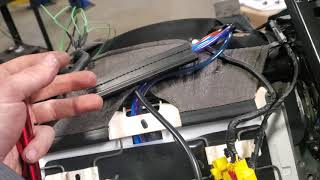
- Fretting Corrosion at Multi-Contour Seat Module Connector (Ford/Lincoln) (Very Common) — This is the definitive cause on affected 2015-2020 Ford and Lincoln models. Normal vehicle vibrations cause microscopic rubbing on the electrical connector pins for the seat control module (SCMG/SCMH). This strips the protective plating, causing oxidation and an open circuit. Ford issued Technical Service Bulletin (TSB) 19-2390 🎬 Watch: How to fix Ford massaging seats using TSB 19-2390. specifically to address this design flaw.
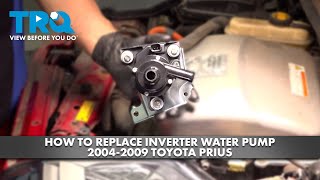
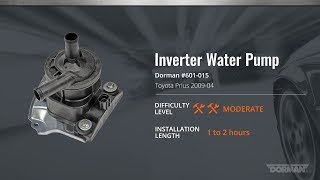
- Failed A/C Inverter Cooling Pump (Toyota Hybrid) (Common) — The hybrid inverter relies on a dedicated 12V electric water pump for cooling. When this pump fails—a frequent issue on aging Prius models—the A/C inverter overheats, shuts down to protect the high-voltage system, and logs code B1471.
- Incorrect or Incompatible Replacement Parts (Jaguar) (Common) — Replacing an original Jaguar HID headlight ballast with an aftermarket or incorrect part triggers B1471. The Air Suspension Module (ASM) fails to communicate with the incompatible ballast's leveling system, detecting an open circuit and logging a fault.
- Damaged or Pinched Wiring Harness (Common) — Wiring harnesses located under seats (Ford/Mitsubishi) or behind bumpers (Jaguar) get pinched, chafed, or broken from seat movement, stored items, or road debris. On Ford F-150s, the ground wire frequently chafes against the sharp edge of the backrest heater mat connector.
- Blown Circuit Fuse (Less Common) — A short circuit blows the dedicated fuse for the affected module. For Ford F-150 seats, this is typically fuse #19 (10A) in the under-hood fuse box. For 2020+ Explorers, a shorted lumbar motor wire blows a 7.5A fuse in the passenger compartment.
- Software or Configuration Glitch (Ford/Lincoln) (Rare) — Following a battery replacement or module update, the seat module loses its configuration data, setting a B1471:13 code. Ford Special Service Message (SSM) 52174 documents this issue, which requires reprogramming the module using FDRS or FORScan.
- Failed Electronic Control Module (Rare) — The Seat Control Module or the A/C Inverter itself fails internally. This is the most frequent misdiagnosis by dealerships; the actual root cause is almost always the wiring connector (Ford) or the cooling pump (Toyota).
Symptoms
- Inoperative Seat Massage or Lumbar Functions (Ford/Lincoln) — The multi-contour or massaging seat functions stop working completely. The on-screen menu for controlling the seat features becomes unresponsive or 'grayed out' on the SYNC display.
- Air Conditioning Failure and Hybrid Warning Light (Toyota) — The A/C system stops blowing cold air because the electric compressor is disabled by the overheating inverter. This is immediately followed by a master hybrid system warning light on the dashboard.
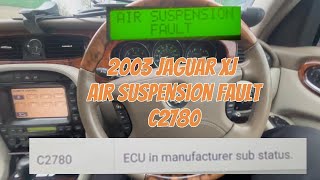
- Malfunctioning Headlights and Air Suspension Fault (Jaguar) — A headlight becomes inoperative, gets stuck on, or flickers. This triggers an 'Air Suspension Fault' message on the dash, as the air suspension module relies on 🎬 Watch: Understanding Jaguar air suspension faults and module communication. the headlight leveling system data.
- SRS/Airbag Warning Light (Mitsubishi) — The red airbag warning light illuminates on the dashboard, indicating a severed connection to the seat belt pretensioner squib. The system is disabled.
- Lost Communication Codes U024B or U024C (Ford/Lincoln) (scan-tool only — no driver-felt sign) — The Body Control Module logs U024B or U024C, indicating it cannot communicate with the seat module. This confirms the physical connector failure outlined in TSB 19-2390.
Diagnostic Flowchart
Tap your situation to follow the diagnostic path that matches what you're seeing on this code.
Common Fixes & Costs
- Replace Seat Module Connector Pigtail (Ford/Lincoln TSB 19-2390) — Parts: $40-$70, Labor: $300-$600, ~3.5 hr book time (Intermediate)
- Replace Inverter Coolant Pump or Main Inverter (Toyota Hybrid) — Parts: $1500-$3500, Labor: $500-$1000, ~5.0 hr book time (Professional)
- Replace Headlight Ballast (Jaguar) — Parts: $150-$300, Labor: $150-$250, ~1.5 hr book time (Intermediate)
- Repair Damaged Wiring Harness — Parts: $5-$20, Labor: $150-$400, ~2.0 hr book time (Intermediate)
- Replace Seat Belt Pretensioner (Mitsubishi) — Parts: $200-$500, Labor: $100-$200, ~1.5 hr book time (Professional)
- Replace Blown Fuse — Parts: $1-$5, Labor: $0, ~0.1 hr book time (DIY)
Used vs. New Parts: Buying Guide
When a used part is worth it: Purchasing a used part from a low-mileage salvage vehicle offers massive savings for expensive electronic modules like a Toyota Inverter or Jaguar Headlight Ballast.
Donor-vehicle mileage cap: roughly under 80000 miles for the part to have meaningful remaining life.
Donor quality checklist:
- Verify the donor vehicle was salvaged for a rear-end collision, not a flood or electrical fire.
- Match the part number exactly. Superseded part numbers contain incompatible software.
- Purchase exclusively from sellers offering a minimum 30-day warranty.
Decision logic:
- If The part is a low-cost wear item (e.g., Ford connector pigtail) → Always buy new OEM. The savings from a used part are negligible and guarantee a repeat failure.
- If The vehicle is over 10 years old and the repair cost exceeds $1,500 → Buy a used module. It is an acceptable risk to keep an older vehicle economically viable.
- If The part is a critical safety component (e.g., Mitsubishi pretensioner) → Always buy new OEM or certified remanufactured parts to guarantee deployment in a crash.
Warranty tradeoff: Used parts carry a 30-90 day warranty. New aftermarket parts offer 1-year warranties. New OEM parts carry a 1-2 year warranty but cost 300% more.
Worst-case if a used part fails: $1000
What Happens If You Wait — Timeline
- Immediate: Ford/Lincoln: Seat massage stops working. Jaguar: One headlight dies. Mitsubishi: Airbag warning light illuminates. (MPG impact: 0%% · Added cost: $0)
- 0-2 months (Toyota Hybrid): A/C stops blowing cold as the inverter overheats and shuts down the compressor. The hybrid system warning light illuminates. The car remains drivable but sluggish. (MPG impact: 5%% · Added cost: $50)
- Immediate (Jaguar/Mitsubishi): Critical safety failure. Mitsubishi airbags will not deploy in an accident. Jaguar nighttime visibility is severely reduced, inviting traffic citations. (MPG impact: 0%% · Added cost: Infinite (risk to life and limb).)
- 2-12 months (Toyota Hybrid): Continued driving with a failed cooling pump causes chronic inverter overheating. The vehicle enters limp mode or stalls completely. Sustained thermal stress permanently damages the main hybrid battery. (MPG impact: 15%% · Added cost: $3000)
Cost of Not Fixing It
- Immediate (Ford/Lincoln): Permanent loss of comfort features (massaging seats, lumbar support). No further damage to the vehicle occurs. (Added cost: $0)
- Immediate (Jaguar/Mitsubishi): Critical safety risk. The Jaguar headlight failure reduces visibility and invites police citations. The Mitsubishi airbag system is disabled and will not deploy in a crash. (Added cost: Infinite (risk to life and limb).)
- 1-6+ Months (Toyota Hybrid): A faulty A/C inverter causes erratic charging cycles and severe overheating. This destroys the main hybrid inverter and permanently degrades the high-voltage hybrid battery cells. (Added cost: $2000-$5000)
Diagnosis Steps
- Identify the Correct Definition for Your Vehicle
Determine exactly what B1471 means for your specific car brand before opening the hood. Ford/Lincoln indicates seats, Toyota indicates hybrid A/C inverter, Jaguar indicates headlights, and Mitsubishi indicates airbags.
Tools: Owner's Manual or Online Search (Beginner) - Scan for All Trouble Codes
Use a full-system OBD-II scanner. On Ford/Lincoln, look for U024B or U024C, which guarantees a connector failure. On Toyota, look for P0A78 (Inverter Performance) or P324E (Inverter Over Temperature).
Tools: OBD-II Scanner (Body/Chassis capable) (Beginner) - Inspect the Seat Control Module Connector (Ford/Lincoln)
Disconnect the battery. Remove the rear seat cover panel to access the module inside the seatback. Unplug the main connector (C341-D) and look for tiny black smudges, corrosion, or backed-out pins. This fretting corrosion is the root cause in 95% of Ford cases.
Tools: Trim Removal Tools, Socket Set (Intermediate) - Inspect Inverter Cooling System (Toyota Hybrid)
Turn the vehicle to 'READY' mode. Open the hood and locate the clear coolant reservoir for the hybrid inverter system. Look for turbulence or listen for a hum from the electric water pump. Dead silence means the pump failed, causing the inverter to overheat and trigger B1471.
Tools: Flashlight (Intermediate) - Perform a Visual and Wiggle Test
Look under the seats (Ford/Mitsubishi) or behind the headlight assembly (Jaguar) for pinched, chafed, or severed wires. Operate the malfunctioning feature while wiggling the main harness; if the feature flickers on, you have located the broken connection.
Tools: Flashlight (Beginner) - Check the Circuit Fuse
Locate the specific fuse for the failed system using the owner's manual (e.g., Fuse #19 under the hood for F-150 seats). Pull the fuse and inspect the metal bridge. Replace it if blown, but prepare to hunt for the short circuit that caused it.
Tools: Owner's Manual, Fuse Puller (Beginner) - Pro Tip: Test the Seat Switch Circuit (Ford/Lincoln)
If the connector is clean, test the switch. Set a multimeter to resistance. Probe the switch input pins at the SCMG/SCMH connector. Resistance must drop from open (OL) to near zero ohms when pressing the massage buttons. If it does, the switch is good and the wiring is broken.
Tools: Multimeter, Vehicle-Specific Wiring Diagram (Advanced) - Pro Tip: Test the Pretensioner Circuit Resistance (Mitsubishi)
WARNING: Disconnect the battery for 15 minutes before touching SRS components. Unplug the seat belt pretensioner. Measure resistance across the two pins on the pretensioner side. A healthy squib reads 2.0 to 3.0 ohms. A reading of infinity (OL) confirms an internally blown pretensioner.
Tools: Multimeter, Service Manual (Advanced) - Pro Tip: Use Bidirectional Scan Tool Controls
Use an advanced scanner (FORScan for Ford, Techstream for Toyota) to command the component directly. Command the Ford seat massage pump to activate. If it turns on via the scanner but not the physical button, the module is fine and the switch or input wiring has failed.
Tools: Advanced Bidirectional Scanner (Advanced)
When This Code Triggers (Freeze-Frame Conditions)
- Ignition Status: On (Run) (The code sets immediately during the module's power-on self-test.)
- Battery Voltage: 11.5-12.5V (KOEO) or 13.5-14.5V (KOER) (Normal operating voltage confirms the fault is a hard circuit failure, not a low-voltage glitch.)
- Component State (Ford): Commanded On (The fault logs the exact moment the user attempts to activate the massage/lumbar function via the physical switch or SYNC screen.)
- Module Status (All): Fault Detected (The respective control module (BCM, SRS, A/C) detects an open, short, or out-of-range signal during its internal circuit check.)
Related Codes
- U024B / U024C — Means 'Lost Communication With Seat Control Module G/H'. On Ford/Lincoln vehicles, these codes appear alongside B1471. Their presence guarantees the fault is the physical connector or wiring harness, as the bad connection severs both power and data lines.
- B1471:13 — A sub-code specifying 'Circuit Open'. It directly points to a broken wire or the known Ford connector failure. It also appears after a battery replacement if the module loses its configuration data (Ford SSM 52174).
- B1471:11 — A sub-code for 'Circuit Short to Ground'. This indicates the control module detects the input circuit is shorted to ground, caused by a chafed wire in the seat harness making contact with the bare metal seat frame.
- P0AA6 — For Toyota hybrids, this means 'Hybrid Battery Voltage System Isolation Fault'. A high-voltage insulation leak causes a short circuit that damages the A/C inverter, subsequently triggering the B1471 fault.
- C2302 / C2303 — Jaguar air suspension codes ('Levelling Plausibility Error'). A B1471 headlight fault triggers these codes because the Air Suspension Module relies on input from the headlight leveling sensors to operate.
Climate & Environmental Factors
- Vibration and Thermal Cycling: Constant micro-vibrations from driving and extreme temperature swings wear down the protective metal plating on Ford/Lincoln seat connector pins. This exposes the base metal to oxygen, causing the fretting corrosion that triggers the code.
- High Ambient Temperature: Extreme summer heat forces the Toyota hybrid inverter cooling system to run at maximum capacity. If the cooling pump is weak, the high ambient heat pushes the inverter past its thermal limit, triggering B1471 and shutting down the vehicle.
How to Talk to a Mechanic About This Code
Say this: "{'ford_lincoln': 'I have a B1471 code on my Ford and the massage seats are dead. I am aware of TSB 19-2390. Can I get a quote to replace the seat module connector pigtail, rather than replacing the entire module?', 'toyota_hybrid': "My Prius has a B1471 code and the A/C isn't cold. Before touching the A/C refrigerant, please inspect the hybrid inverter cooling system to confirm if the inverter coolant pump is running.", 'jaguar': 'I have a B1471 code and an air suspension warning. Please focus the diagnosis on the headlight ballast and its leveling circuit, as I believe the suspension warning is a secondary symptom.', 'mitsubishi': 'My SRS light is on with a B1471 code, indicating an open circuit in the seat belt pretensioner. Please test the pretensioner squib resistance and provide a quote for replacement.'}"
This manufacturer-specific language proves you are an informed consumer. It forces the shop to bypass expensive, unnecessary diagnostic paths and prevents them from immediately quoting a costly, incorrect component replacement.
Avoid saying:
- My seat/AC/headlight is broken, can you fix it?
- The check engine light is on, just fix whatever is wrong.
- The internet said it was the module, just replace that part.
Questions to ask before authorizing the repair:
- For Ford: Did you find physical evidence of fretting corrosion on the connector pins as described in the TSB?
- For Toyota: Is the inverter coolant pump operating? Are there any other hybrid system codes stored?
- For Mitsubishi: What was the exact resistance reading on the pretensioner squib?
- Will the repair be warrantied, and for how long?
Where to Take It: Dealer vs Independent vs Chain
- Dealer:
Mandatory for Toyota and Mitsubishi due to the specialized, high-risk nature of the repairs. A reasonable, but expensive, choice for Ford and Jaguar.
Best for: Vehicles under factory warranty., Complex, high-voltage repairs (Toyota hybrid inverter)., Critical safety system repairs (Mitsubishi airbag/pretensioner).
Downsides: Highest labor rates., Defaults to expensive module replacement instead of the known wiring repair for Ford seats. (Typical cost: +50% vs. baseline) - Independent Shop:
Excellent choice for the Ford/Lincoln seat repair. AVOID for Toyota hybrid inverter or Mitsubishi SRS repairs unless they are a certified specialist.
Best for: Out-of-warranty vehicles., Executing the Ford TSB 19-2390 soldering repair., General repairs on non-hybrid systems (Jaguar headlights).
Downsides: Quality varies greatly., Lacks hybrid/SRS-specific training and depowering tools. (Typical cost: +0% vs. baseline) - Chain Shop:
AVOID for all variants of B1471. These repairs require a level of specialization not found at chain shops.
Best for: Simple maintenance like tires and oil changes.
Downsides: Technician skill varies dramatically., Lacks advanced diagnostic tools for body, SRS, and hybrid codes., High pressure to upsell unnecessary services. (Typical cost: -10% vs. baseline)
When to Walk Away From the Repair
If the estimated repair cost exceeds 40% of the car's private-party value, pause and consider alternatives like selling the car as-is.
- Car worth $18000, fix is $600: Fix it. (Ford F-150 seat repair). The cost is minor relative to the vehicle's value.
- Car worth $7000, fix is $4500: Walk away. (Toyota Prius inverter replacement). The repair cost is over 60% of the car's value. Sell the car 'as-is' to a specialist or source a used part.
- Car worth $3500, fix is $350: Fix it. (Mitsubishi pretensioner). The safety implication is critical and the cost is reasonable.
What Scan Tool You Need for This Code
Minimum: A scanner that reads manufacturer-specific Body (B), Chassis (C), and Network (U) codes. For Ford, a tool with access to module self-tests is mandatory.
A basic $20 code reader only shows powertrain (P) codes. It will not see B1471 or the related communication codes (U024B/C) critical for diagnosis, leaving you completely blind.
Budget: BlueDriver Pro Scan Tool (~$100) — Reads and clears enhanced codes (ABS, Airbag, BCM) for most major brands, allowing you to see the B1471 code and its definition.
Mid-range: Foxwell NT510 Elite (~$180) — Provides full-system diagnostics and bidirectional controls. This allows you to command the Ford seat pump or Toyota A/C compressor directly from the tool, isolating the failed part without disassembly.
Professional: Autel MaxiCOM MK808S (~$400) — Offers OE-level diagnostics, extensive bidirectional controls, and advanced service functions. It performs module configuration, necessary for the rare Ford seat module software glitch (SSM 52174).
Rent vs buy: Auto parts store loaner tools are basic code readers and cannot diagnose a B1471 code. Buying a capable scanner like the BlueDriver or Foxwell NT510 is a mandatory investment for this repair.
How to Clear the Code After You Fix It
- Reconnect the 12V battery if disconnected for repair.
- Use an OBD-II scan tool capable of reading 'B' codes to clear the fault from the specific module (SCMG, SRS, or BCM).
- Cycle the ignition off, then back to the ON position.
- Attempt to operate the repaired function (massage seat, A/C, or headlights) to confirm the fix.
Drive cycle (~5 minutes): A complex drive cycle is not required. A simple key-on, function-test, key-off cycle forces the module to re-run its self-test and confirm the hardware repair.
Readiness monitors affected: None
Watch out for:
- Using a basic $20 powertrain-only scanner that lacks access to Body (B) codes.
- Assuming disconnecting the battery clears the code; modern modules store hard faults in non-volatile memory.
- Clearing the code without fixing the broken wire; the code returns instantly.
Will This Fail Emissions / State Inspection?
No — by itself this code doesn't fail OBD inspection (but it can keep readiness monitors from setting, which causes a separate fail).
- California: B1471 does not illuminate the Check Engine Light and will pass a smog check. However, the illuminated airbag light on a Mitsubishi remains a critical safety hazard.
- New York: NYS conducts a strict safety inspection. An illuminated airbag light (Mitsubishi) or an inoperative headlight (Jaguar) causes an automatic failure and invites traffic citations.
- Texas: The state safety inspection checks for illuminated airbag lights and functioning headlights. The Mitsubishi and Jaguar variants of this code guarantee an inspection failure.
Most Commonly Affected Vehicles
- Ford F-150 (2015-2020) — Highly prone to the multi-contour seat module connector failure detailed in TSB 19-2390.
- Ford Explorer (2015-2020) — Covered by TSB 19-2390 for the identical seat module connector fretting issue.
- Lincoln MKZ (2013-2020) — One of the primary vehicles affected by the seat module connector problem under TSB 19-2390.
- Ford Super Duty (F-250/F-350) (2017-2020) — Affected by the same multi-contour seat wiring issue as the F-150.
- Lincoln Continental (2017-2020) — Experiences intermittent 'Perfect Position' seat failure due to the faulty connector.
- Lincoln MKX / Nautilus (2016-2020) — Covered by TSB 19-2390 for the seat module connector fretting issue.
- Ford Expedition (2018-2020) — Listed in TSB 19-2390 as being affected by the seat module connector fretting issue.
- Lincoln Navigator (2018-2020) — Listed in TSB 19-2390 for the same multi-contour seat connector problem.
- Toyota Prius / Prius V (2010-2017) — Sets code B1471 due to a malfunction in the A/C inverter, almost always preceded by failure of the inverter's dedicated cooling pump.
- Jaguar XJ (X350/X351) (2003-2015) — Sets B1471 for a headlight circuit fault, triggering an air suspension warning after an incorrect headlight assembly is installed.
Manufacturer-Specific Notes
- Ford / Lincoln: The code exclusively refers to a 'Seat Switch Input Circuit Open' for the multi-contour seats. The root cause is fretting corrosion at the module connector, documented in TSB 19-2390. There are no safety recalls for this issue.
- Toyota / Lexus (Hybrid): B1471 indicates an 'A/C Inverter High Voltage Power Resource System Malfunction'. The A/C control module detects a high-voltage power failure to the electric A/C compressor. Diagnosis must begin by checking the inverter cooling pump.
- Jaguar: The code means 'Headlamp Circuit - Open Circuit or Short to Ground'. This causes headlight failure and triggers an 'Air Suspension Fault' message because the suspension module monitors the headlight leveling circuit.
- Mitsubishi: B1471 means 'FL Pretensioner Squib Open', indicating a severed connection in the driver's side seat belt pretensioner. This is a critical SRS airbag system fault requiring immediate professional repair.
Real Owner Stories
2016 Ford F-150 Platinum at 75K miles
Driver's side massage and lumbar functions intermittently stopped working. The controls on the SYNC screen were grayed out.
What they tried:
- Dealer diagnosed a failed Seat Control Module (SCMG) and quoted over $1,200 for replacement.
- Owner found TSB 19-2390 online and decided to try the connector fix first.
Outcome: The owner purchased the KU2Z-14S411-FA pigtail for $50. They disassembled the seatback, cut out the corroded connector, and soldered the new one in place. The 3-hour repair fully restored the massage functions and the codes never returned.
Lesson: For Ford/Lincoln vehicles, B1471 is almost always the $50 connector, not the $1,200 module. Always perform the TSB 19-2390 pigtail replacement before authorizing a module replacement.
2012 Toyota Prius V at 140K miles
A/C suddenly stopped blowing cold air, followed by the hybrid system warning light illuminating on the dashboard.
What they tried:
- A local mechanic recharged the A/C refrigerant, which did not solve the problem.
- A hybrid specialist found code B1471 and noted the inverter coolant reservoir was completely still.
Outcome: The specialist diagnosed a failed inverter coolant pump. Replacing the pump and Toyota pink coolant cost $450. The inverter temperature normalized, the B1471 code cleared, and A/C function was restored.
Lesson: On a Toyota hybrid, sudden A/C failure indicates a critical hybrid cooling issue. Never assume it is low refrigerant; check the inverter cooling pump immediately to prevent catastrophic inverter failure.
2006 Jaguar XJ8 at 210K miles
An 'Air Suspension Fault' message appeared on the dash, but the suspension height was normal. A scanner revealed code B1471 for a headlamp open circuit.
What they tried:
- The owner checked all wiring between the Air Suspension Module (ASM) and headlights, finding no issues.
- Further testing showed the headlight self-leveling function (a dip and return on startup) was dead.
Outcome: The problem was traced to a failed headlight ballast containing the leveling control logic. Replacing the ballast with a used OEM part from eBay for $60 resolved both the B1471 code and the suspension warning.
Lesson: Jaguar control modules are highly interconnected. A fault in the headlight leveling system triggers warnings in the air suspension system. Diagnose the specific stored code, not the dashboard message.
2017 Lincoln Continental at 90K miles
Both front massaging seats stopped working completely after the vehicle had a dead battery replaced.
What they tried:
- The dealer performed the TSB 19-2390 pigtail replacement, but the fault persisted.
- Consulting Ford's technical hotline revealed Special Service Message (SSM) 52174 regarding module configuration loss.
Outcome: The technician used the Ford Diagnostic & Repair System (FDRS) to reprogram the Seat Control Modules. This restored the configuration data, and all seat functions began working immediately.
Lesson: If the TSB wiring fix fails, or if the code appears immediately after a battery swap, the module requires software reprogramming via FDRS or FORScan.
How to Prevent This Code From Triggering
- Apply Dielectric Grease to Connectors (Once, during repair) — Applying dielectric grease to the new Ford pigtail connector pins seals them from oxygen and moisture. This lubricates the pins, preventing the micro-abrasion (fretting) that causes the open circuit.
- Change Hybrid Inverter Coolant (Every 60,000 miles (Toyota)) — Old coolant loses its ability to transfer heat, causing the inverter to run hotter and stressing the cooling pump. Proactively changing the fluid extends the life of the multi-thousand-dollar inverter.
- Visually Inspect Inverter Coolant Pump (Every oil change (Toyota)) — Checking the clear inverter coolant reservoir for turbulence takes 10 seconds. It provides early warning that the pump is failing before the inverter overheats and triggers a fault.
- Avoid Storing Items Under Seats (Daily habit) — Critical wiring harnesses for seats and airbags run under the front seats. Water bottles or umbrellas roll under and get crushed in the seat tracks, severing wires and causing 'B' codes.
Frequently Asked Questions
Why does the B1471 code have so many different meanings?
OBD-II 'B' (Body) codes are not standardized across brands. Manufacturers assign B1471 to their own specific systems, meaning it points to seats on a Ford, A/C on a Toyota, and headlights on a Jaguar.
What is the most common misdiagnosis for B1471 on a Ford or Lincoln?
The most costly mistake is replacing the $1,200 Multi-Contour Seat Module when the actual fault is a $50 electrical connector pigtail. TSB 19-2390 confirms the connector is the root cause in almost all cases. Always perform the connector repair before considering module replacement.
Can I just clean the connector on my Ford/Lincoln seat to fix it?
No, cleaning the connector with contact cleaner only provides a temporary fix. The underlying issue is 'fretting'—micro-vibrations that permanently damage the metal contacts. You must replace the connector pigtail by soldering the wires to create a permanent, corrosion-resistant connection.
Is it safe to drive my car with a B1471 code?
It depends entirely on the manufacturer. Ford and Lincoln vehicles are safe to drive since the code only disables seat massage features. However, Jaguar, Mitsubishi, and Toyota owners must stop driving immediately, as the code indicates critical headlight, airbag, or high-voltage hybrid system failures.
What is a TSB and do I have to pay for the repair?
A Technical Service Bulletin (TSB) is an official manufacturer repair procedure for a known, common defect. Unlike a safety recall, a TSB is not a legally mandated free repair. You must pay for the repair out-of-pocket unless your vehicle is still under its original factory warranty.
Will clearing the code with my scanner fix the problem?
No. Clearing the code only temporarily erases the fault from the module's memory. Because B1471 indicates a physical hardware problem like a broken wire or failed pump, the code returns immediately upon the next system self-test.
Can a bad battery cause a B1471 code?
Yes, a weak 12V battery causes voltage drops that trigger false 'B' codes across multiple control modules. If your battery is over four years old, test and replace it before spending money on deep electrical diagnostics.
Key Takeaways
- Diagnose B1471 based on your manufacturer: it indicates a multi-contour seat failure on Fords, a high-voltage A/C inverter fault on Toyotas, a headlight circuit issue on Jaguars, or a critical airbag fault on Mitsubishis.
- For 2015-2020 Ford and Lincoln vehicles, fix B1471 by replacing the corroded seat module connector pigtail (part KU2Z-14S411-FA) as outlined in TSB 19-2390, rather than buying a $1,200 replacement module.
- Stop driving Toyota hybrids immediately if B1471 appears alongside a stalled inverter cooling pump; continuing to drive overheats the inverter and causes upwards of $3,000 in hybrid system damage.
- Never attempt a DIY repair on a Mitsubishi displaying B1471, as it points to a 2.0-3.0 ohm open circuit in the seatbelt pretensioner squib that requires professional SRS system recalibration.
Helpful Videos
Shop the Parts Behind B1471
Below are the parts most often responsible for code B1471, ranked by how frequently each one is the actual culprit (per the diagnosis above). Tap any to see what we have for your vehicle.



The information in this article is provided for general reference and educational purposes only. Vehicle specifications, procedures, and part compatibility can vary by production date, trim level, and region. Always consult your vehicle's factory service manual and verify part numbers before purchasing or performing repairs. Safety-critical components such as airbags, seat belts, and braking systems should be installed by a qualified professional.
- 🧭 Diagnostic Flowchart
- 🎬 Helpful Videos
- 🛍️ Shop This Part
- What Does B1471 Mean?
- Can I Drive With B1471?
- Common Causes
- Symptoms
- Common Fixes & Costs
- Used vs. New Parts: Buying Guide
- What Happens If You Wait — Timeline
- Cost of Not Fixing It
- Diagnosis Steps
- When This Code Triggers (Freeze-Frame Conditions)
- Related Codes
- Climate & Environmental Factors
- How to Talk to a Mechanic About This Code
- Where to Take It: Dealer vs Independent vs Chain
- When to Walk Away From the Repair
- What Scan Tool You Need for This Code
- How to Clear the Code After You Fix It
- Will This Fail Emissions / State Inspection?
- Most Commonly Affected Vehicles
- Manufacturer-Specific Notes
- Real Owner Stories
- 2016 Ford F-150 Platinum at 75K miles
- 2012 Toyota Prius V at 140K miles
- 2006 Jaguar XJ8 at 210K miles
- 2017 Lincoln Continental at 90K miles
- How to Prevent This Code From Triggering
- Frequently Asked Questions
- Why does the B1471 code have so many different meanings?
- What is the most common misdiagnosis for B1471 on a Ford or Lincoln?
- Can I just clean the connector on my Ford/Lincoln seat to fix it?
- Is it safe to drive my car with a B1471 code?
- What is a TSB and do I have to pay for the repair?
- Will clearing the code with my scanner fix the problem?
- Can a bad battery cause a B1471 code?
- Key Takeaways
- 🎟️ Get 5% Off