

OBD-II Code B1473: A/C Inverter Start-up Signal Malfunction
What B1473 means, why it triggers, and how to fix it, primarily for Toyota and Lexus hybrid vehicles.
- Code B1473 in Toyota and Lexus hybrids indicates an open or short circuit in the single-wire start-up signal between the Hybrid Control ECU and the electric A/C compressor.
- Do not drive for more than a few days in hot weather with this code; the A/C system cools the high-voltage battery, and overheating causes a $2,000+ battery failure.
- Diagnose code B1498 first if present, as a broader communication bus failure triggers B1473 as a secondary symptom.
- Always test the $50 high-voltage A/C 'sand fuse' located inside the main inverter before authorizing a $2,000 compressor replacement.
- Never use standard PAG oil in a hybrid A/C system; it conducts electricity and instantly destroys the new high-voltage compressor.
What Does B1473 Mean?
IMPORTANT: This code has different meanings depending on your car's manufacturer. For Toyota and Lexus hybrids, B1473 means the main computer (Hybrid Vehicle Control ECU) detected an open or short circuit in the single-wire communication line (STB) that commands the electric A/C compressor to turn on. The computer shuts down the A/C system to prevent damage and stores this code.
Technical definition: A/C Inverter Start-up Signal System Malfunction. The inverter activation signal is sent to the compressor with motor assembly from the hybrid vehicle control ECU. Compressor control is stopped and this DTC is stored if there is an open or short in the signal circuit.
Can I Drive With B1473?
Yes, But With Caution. Yes, but do not drive for extended periods in hot climates. The A/C system in Toyota and Lexus hybrids cools the high-voltage (HV) hybrid battery pack. Driving without A/C elevates battery temperatures, forcing the power management ECU to reduce vehicle performance and permanently shortening the battery's lifespan.
Common Causes
- Damaged wiring or connectors between the Hybrid Control ECU and the A/C compressor. (Very Common) — The single wire sending the start-up signal frequently frays, breaks, or corrodes due to vibration, heat, or physical damage. This is the most common cause and must be checked first.
- Failed A/C Compressor with Motor Assembly. (Common) — Hybrid A/C compressors contain their own inverter and control logic. An internal failure of these electronics prevents the compressor from responding to the start-up signal.
- Blown high-voltage A/C compressor fuse. (Common) — Toyota/Lexus hybrids use a specific, sand-filled high-voltage fuse for the A/C compressor circuit, located inside the inverter assembly. If this fuse blows, it cuts power to the compressor, preventing it from responding to the ECU.
- Failing Inverter Coolant Pump. (Less Common) — The main hybrid inverter is liquid-cooled. If its dedicated coolant pump fails, the inverter overheats. The ECU preemptively shuts down high-draw accessories, including the A/C compressor, triggering B1473 during a startup request.
- Failed Hybrid Vehicle Control ECU. (Rare) — The main computer controlling the hybrid system and A/C compressor can fail internally, preventing it from sending the 5V start-up signal.
Symptoms
- A/C blows warm air. — The compressor fails to engage, preventing refrigerant circulation and cooling.
- A/C system is completely unresponsive. — The A/C button light illuminates, but no cold air flows and the electric compressor remains silent.
- A/C cuts out over bumps or after idling. — A loose wire causes the A/C to cut out over rough roads. A failing inverter coolant pump causes the A/C to stop working after idling but resume when driving cools the system.
- Check Engine or Hybrid System Warning Light is on. — Depending on the vehicle year, this body code triggers a master warning light on the dashboard.
Diagnostic Flowchart
Tap your situation to follow the diagnostic path that matches what you're seeing on this code.
Common Fixes & Costs
- Repair damaged wiring or connector. — Parts: $10-$50, Labor: $200-$500, ~2.5 hr book time (Intermediate)
- Replace the high-voltage A/C fuse.
— Parts: $40-$100, Labor: $250-$450, ~3.0 hr book time
(Professional)
Toyota/Lexus Hybrids (various): OEM 90982-11050 (Alt: N/A) - Replace the A/C Compressor Assembly.
— Parts: $1100-$2100, Labor: $400-$850, ~3.5 hr book time
(Professional)
Toyota Prius (2010-2015): OEM 88370-47030, 88370-47031 (Alt: Denso 471-7010, Four Seasons 167301)
Lexus RX450h (2010-2013): OEM 88370-48030 (Alt: Denso 471-1016)
Toyota Camry Hybrid (2012-2017): OEM Check with dealer by VIN (Alt: Denso 471-1018) - Replace the Hybrid Vehicle Control ECU.
— Parts: $600-$1800, Labor: $200-$400, ~2.0 hr book time
(Professional)
Toyota Camry Hybrid (2012-2017): OEM 89661-06K22 (Alt: N/A)
DIY vs Professional
- Repair damaged wiring or connector. — Beginner:
- Replace the high-voltage A/C fuse. — Beginner:
- Replace the A/C Compressor Assembly. — Beginner:
Used vs. New Parts: Buying Guide
When a used part is worth it: A used hybrid A/C compressor is a high-risk purchase. It contains sensitive high-voltage electronics easily destroyed by moisture or incorrect oil. Only buy used as an absolute last resort for a vehicle nearing the end of its life.
Donor-vehicle mileage cap: roughly under 60000 miles for the part to have meaningful remaining life.
Donor quality checklist:
- Verify the donor vehicle was in a rear-end collision and had a sealed, functioning A/C system.
- Match the OEM part number exactly; hybrid compressors are highly specific.
- Ensure all electrical and refrigerant ports are tightly capped to prevent moisture intrusion.
Decision logic:
- If Vehicle is under 10 years old or has fewer than 150,000 miles. → Buy a new OEM (Denso) compressor. The reliability and warranty justify the cost.
- If A remanufactured unit is available from a highly reputable source. → Use this as a compromise between cost and reliability, provided it includes a 1-year warranty.
- If Budget is the absolute primary concern. → Purchase a used compressor from a verified low-mileage donor, accepting the high risk of repeat labor costs.
Warranty tradeoff: Used parts offer a 30-90 day part-only warranty. New aftermarket parts include a 1-year warranty. New OEM parts offer the best guarantee of quality and fitment.
Worst-case if a used part fails: $1500 (Cost of repeat labor, system evacuation/recharge, and a second replacement part if the used compressor fails).
What Happens If You Wait — Timeline
- 0-1 month: Code B1473 is stored. The A/C system is disabled and blows warm air. No direct mechanical damage occurs. (MPG impact: 0%% · Added cost: $0)
- 1-6 months (in a hot climate): The hybrid battery cooling fan runs constantly at high speed. The hybrid battery begins to experience mild thermal stress. (MPG impact: 0-1%% · Added cost: $0)
- 6-12 months (in a hot climate): Sustained operation at elevated temperatures increases the hybrid battery's internal resistance. The ECU limits vehicle performance to protect the battery. (MPG impact: 1-3%% · Added cost: $500-$1500)
- 12+ months (in a hot climate): Permanent capacity loss and cell damage occur in the high-voltage battery due to chronic overheating, requiring a costly replacement. (MPG impact: 5-10%% · Added cost: $2000-$5000+)
Cost of Not Fixing It
- 0-3 months: No air conditioning. The hybrid battery cooling fan runs constantly at high speeds to compensate for the lack of conditioned air, increasing cabin noise. (Added cost: $0)
- 3-12 months (in hot climate): Prolonged driving without A/C overheats the hybrid battery pack. The ECU reduces engine and motor output ('limp mode') to protect the battery. Thermal stress accelerates battery degradation. (Added cost: $500-$1500 (accelerated degradation))
- 12+ months (in hot climate): Sustained operation at high temperatures permanently destroys the high-voltage hybrid battery cells, requiring a full pack replacement. (Added cost: $2000-$5000+)
Diagnosis Steps
- Check for Other Diagnostic Trouble Codes (DTCs)
Use a professional scan tool to read codes from ALL modules. If code B1498 (A/C Communication Bus Malfunction) is present, diagnose it first. B1498 indicates a broader communication failure that triggers B1473 as a secondary symptom.
Tools: Advanced OBD-II Scanner (e.g., Toyota Techstream) (Beginner) - Perform Active Test with a Scan Tool
Navigate to the A/C system's 'Active Test' menu and command the 'Compressor Target Speed' to a non-zero value. Listen for the compressor to engage. If it does not respond, the issue is a wiring, fuse, or compressor fault, not the ECU's command logic.
Tools: Advanced OBD-II Scanner with bi-directional controls (Intermediate) - Inspect Fuses (Low and High Voltage)
Check all low-voltage A/C fuses. CRITICAL: Inspect the high-voltage A/C fuse (often a large, sand-filled fuse) located inside the hybrid inverter assembly. This requires strict high-voltage safety procedures (disconnecting the service plug and waiting 10 minutes).
Tools: Fuse puller, multimeter, insulated Class 0 gloves, insulated tools (Advanced) - Visually Inspect Wiring and Connectors
Inspect the wiring harness running from the Hybrid Vehicle Control ECU to the A/C compressor. Look for physical damage, melted wires near the exhaust, or corrosion at the compressor connector.
Tools: Flashlight, inspection mirror (Intermediate) - Check Inverter Coolant Pump Operation
If the A/C works intermittently, check the hybrid inverter coolant pump. With the vehicle in 'READY' mode, visually confirm coolant is circulating in the inverter coolant reservoir. A dead pump overheats the inverter, forcing the ECU to cut power to the A/C.
Tools: Flashlight (Beginner) - Test the Signal Wire for Continuity and Shorts
CAUTION: High-voltage system. Disconnect the 12V battery and HV service plug. Wait 10 minutes. Disconnect the connectors at the ECU and A/C compressor. Use a multimeter to check for continuity on the signal wire (STB) between the two connectors (should be <1 Ω). Check for a short to ground (should be >10 kΩ).
Tools: Digital Multimeter, vehicle-specific wiring diagram, insulated gloves (Advanced) - Check for Voltage at the ECU Connector
Reconnect the A/C compressor connector but leave the ECU connector disconnected. Reconnect the 12V battery. Turn the ignition ON. Measure DC voltage on the signal wire pin at the disconnected ECU connector. A healthy compressor sends back a confirmation voltage of 11-14V. If missing, the compressor has failed internally.
Tools: Digital Multimeter, back-probe pins (Advanced) - [PRO TIP] Analyze the STB Signal with an Oscilloscope
Back-probe the STB signal wire at the Hybrid ECU. When the A/C is commanded on, the ECU sends a 5V square wave 'wake-up' signal. The compressor should respond by pulling this voltage up to 12-14V. If the 5V signal is sent but voltage doesn't rise, the compressor or wiring is faulty. If the 5V signal is never sent, the ECU is faulty.
Tools: Automotive Oscilloscope (e.g., PicoScope), back-probe pins (Professional)
When This Code Triggers (Freeze-Frame Conditions)
- A/C Command Status: ON (The code sets the exact moment the driver requests air conditioning and the ECU commands the compressor to start.)
- Vehicle State: READY (The vehicle is on and in a state where A/C operation is permitted.)
- Compressor Start-up Signal (STB): Fault (Open or Short) (The ECU attempts to send the start-up command but detects an immediate electrical fault on the signal line.)
Related Codes
- B1498 — A/C Communication Bus Malfunction. Diagnose this first. B1473 is a failure of a single wire, while B1498 indicates the entire communication bus is down. If the bus is down, the specific start-up signal (B1473) cannot transmit.
- P0A94 — DC/DC Converter Performance. Indicates a problem with the main inverter, which powers the A/C compressor. B1473 is a secondary symptom of this larger hybrid system failure.
- P0AA6 — Hybrid/EV Battery Voltage System Isolation Fault. Indicates a dangerous high-voltage leak to the chassis, often caused by an internal short in the A/C compressor. Stop work immediately and consult a hybrid specialist.
Climate & Environmental Factors
- Extreme Heat: High ambient temperatures increase the thermal load on the hybrid system. The power management system disables the A/C to prevent the main inverter or hybrid battery from overheating, triggering B1473.
- High Humidity: Humidity accelerates corrosion on exposed electrical connectors, particularly the multi-pin connector at the A/C compressor, leading to high resistance in the STB signal wire.
How to Talk to a Mechanic About This Code
Say this: "I have a B1473 code on my Toyota hybrid and the A/C is out. I'd like to schedule a diagnostic, but I want to ensure the technician systematically checks the high-voltage A/C fuse and tests the 'STB' signal wire before assuming the compressor needs replacement."
This signals you understand the common failure points beyond the most expensive part and encourages the shop to perform a thorough diagnosis rather than jumping to a costly conclusion.
Avoid saying:
- 'My A/C is broken, can you fix it?'
- 'The code is B1473, just replace whatever it says is wrong.'
- 'I have no cold air, do whatever you think is best.'
Questions to ask before authorizing the repair:
- Did you test the high-voltage A/C fuse inside the inverter? Was it blown?
- What were the results of the continuity and voltage tests on the STB signal wire between the ECU and the compressor?
- If replacing the compressor, can you confirm you will use the correct non-conductive ND-11 oil and flush the system?
Where to Take It: Dealer vs Independent vs Chain
- Dealer:
A strong, safe choice. Dealers have the specific training and Techstream software crucial for high-voltage system repair.
Best for: Vehicles under warranty., Complex cases involving multiple hybrid system codes alongside B1473.
Downsides: Highest labor rates., May replace a whole assembly (like the inverter) rather than a smaller component (like the HV fuse inside it). (Typical cost: +50% vs. baseline) - Independent Shop:
Recommended only if the shop has ASE L3 hybrid certification or a verifiable track record of repairing hybrid A/C systems.
Best for: Out-of-warranty vehicles where cost is a major factor.
Downsides: Quality varies wildly. MUST be a shop that specializes in hybrid vehicles. (Typical cost: +0% vs. baseline) - Chain Shop:
AVOID. The risk of improper handling of the high-voltage system or using incorrect fluids is extremely high.
Best for: Simple, non-hybrid related services like tires.
Downsides: Technicians lack training for high-voltage systems., High risk of using incorrect, conductive A/C oil, destroying the new compressor. (Typical cost: -10% vs. baseline)
When to Walk Away From the Repair
If the estimated repair cost exceeds 40% of the car's private-party value, pause and consider alternatives to a major repair.
- Car worth $8000, fix is $2500: Fix it. The repair cost is 31% of the vehicle's value, a reasonable investment to restore full functionality.
- Car worth $4500, fix is $2500: Walk away. The repair cost is over 55% of the car's value.
What Scan Tool You Need for This Code
Minimum: A scanner that reads manufacturer-specific Body (B) codes for Toyota/Lexus. Basic code readers only pull Powertrain (P) codes and will not see B1473.
A standard $20 reader shows 'No Codes Found' because it cannot communicate with the Body Control or A/C modules. You need a tool that performs an 'Active Test' to command the compressor on.
Budget: BlueDriver Pro (~$100) — Reads enhanced Body codes for Toyota/Lexus to confirm B1473 exists, but lacks the bi-directional 'Active Test' to command the A/C compressor on.
Mid-range: Foxwell NT510 Elite (with Toyota software) (~$200) — Provides full system diagnostics and offers bi-directional controls to command the A/C compressor on and off directly.
Professional: Autel MaxiCOM MK808 (~$450) — Offers full bi-directional control, all system access, and dealer-level functions to diagnose B1473 and any related hybrid system issues.
Rent vs buy: Buy. Parts store loaner tools are basic code readers and will not read B-codes. For a one-time fix, paying a qualified shop $150 for a diagnosis is cheaper than buying a mid-range scanner.
How to Clear the Code After You Fix It
- Reconnect all high-voltage and 12V components.
- Use a professional OBD-II scan tool to clear the B1473 code from the Body Control Module.
- Start the vehicle in READY mode and turn the A/C ON to verify the compressor engages and the code stays clear.
Drive cycle (~30 minutes): A specific drive cycle is not required for this body code. However, if the 12V battery was disconnected during repair, perform a standard drive cycle (cold start, 5 minutes idle, 15 minutes steady 55 mph, 10 minutes city driving) to reset emissions monitors.
Readiness monitors affected: Evaporative System (EVAP), Catalyst (CAT), Oxygen Sensor (O2)
Before emissions retest: drive at least 50 miles to fully set monitors.
Watch out for:
- Clearing the code without fixing the electrical fault causes B1473 to return instantly when the A/C is requested.
- Disconnecting the 12V battery clears the code but resets all emissions readiness monitors, causing an automatic emissions test failure.
Will This Fail Emissions / State Inspection?
No — by itself this code doesn't fail OBD inspection (but it can keep readiness monitors from setting, which causes a separate fail).
- California: B1473 alone does not cause a smog check failure. However, if the 12V battery was disconnected for repairs, the EVAP monitor will read 'Not Ready', causing an automatic failure until a drive cycle is completed.
- New York: NYVIP3 inspections fail vehicles with an illuminated Check Engine or Hybrid System Warning light. If B1473 triggers the master warning light, the vehicle fails.
- Texas: An illuminated master warning light or Check Engine light results in an automatic emissions failure in testing counties.
Most Commonly Affected Vehicles
- Toyota Prius (2004-2022) — Extremely common across Gen 2, 3, and 4 models. For 2010-2015 models, a faulty main hybrid inverter cuts power to the A/C, triggering this code.
- Lexus RX450h (2010-2015) — The A/C compressor is a known failure point. Diagnosis requires checking the start-up signal from the Power Management Control ECU.
- Toyota Camry Hybrid (2012-2017) — Owners frequently report B1473 appearing alongside B1498, pointing to a communication breakdown caused by melted wiring near the exhaust.
- Lexus CT200h (2011-2017) — Shares the Prius powertrain and experiences identical A/C compressor and inverter failure patterns.
- Toyota Highlander Hybrid (2006-2019) — Older models (2006-2007) require exact OEM compressor matches to avoid fitment and communication issues.
- Toyota RAV4 Hybrid (2016-2022) — Shares the hybrid A/C system design. Ensure the issue is electrical (B1473) and not a physical refrigerant leak from the condenser.
Manufacturer-Specific Notes
- Toyota: Some 2010-2015 Prius models received a warranty extension for the main hybrid inverter. A failing inverter cuts power to the A/C compressor, leading to a B1473 code as a secondary fault.
- Ford: On Ford vehicles, B1473 means 'Lost Communications With Liftgate Module' or 'Wiper Low Speed Circuit Motor Failure', completely unrelated to the A/C.
- Hyundai: For Hyundai models, B1473 indicates 'Inflatable Curtain Airbag Front-Driver Resistance too High'.
Real Owner Stories
2012 Toyota Camry Hybrid with B1473 & B1498
The A/C stopped working and the owner received both B1473 and B1498 codes. They were unsure if the issue was the compressor, wiring, or the hybrid battery.
What they tried:
- The owner visually inspected the wiring harness in the engine bay.
Outcome: The owner found the wire running from the compressor had melted against the hot exhaust manifold, shorting out the circuit. Repairing this wire resolved both codes instantly, saving them from a $2,000 compressor replacement.
Lesson: When B1498 (Communication Malfunction) appears with B1473, diagnose the communication issue first. It almost always points to a wiring problem rather than an expensive component failure.
2013 Toyota Prius with "Check Hybrid System" light after a water pump repair
The owner had the engine water pump replaced. Immediately after leaving the dealership, the 'Check Hybrid System' warning appeared, and the A/C stopped working.
What they tried:
- The dealership diagnosed a failed A/C compressor and quoted $3,000 for a replacement.
Outcome: The failing water pump had slowly leaked coolant onto the high-voltage A/C compressor connector. The repair process introduced enough additional moisture to cause a fatal short circuit inside the compressor.
Lesson: An unrelated repair can trigger a new failure. A coolant leak contaminating the A/C compressor's high-voltage connector causes a short. When a major code appears immediately after a repair, look for cascading failures caused by the original problem.
Gen 2 Toyota Prius with repeat A/C compressor failure
A client's Prius kept losing cooling efficiency shortly after being recharged by a non-specialist shop. The A/C compressor eventually burned out completely.
What they tried:
- The owner brought the car to a hybrid specialist for a second opinion.
Outcome: A teardown revealed the compressor windings had shorted out. The previous technician used standard PAG oil instead of the required non-conductive ND-11 oil. The conductive oil destroyed the high-voltage compressor. The fix required a $2,500 full system flush and a new compressor.
Lesson: Only allow hybrid-certified technicians to service your A/C system. Using incorrect, conductive PAG oil in a high-voltage electric compressor destroys it instantly.
How to Prevent This Code From Triggering
- Service the A/C system using only a hybrid-certified technician. (As needed for performance issues.) — Hybrid A/C systems require special non-conductive ester oil (ND-11). Using standard PAG oil causes an electrical short and destroys the compressor.
- Clean the A/C condenser and radiator. (Annually.) — A clogged condenser cannot dissipate heat effectively, causing high system pressures and forcing the compressor to work harder, leading to premature failure.
- Inspect and clean the hybrid battery cooling air filter. (Every 15,000 miles.) — If the battery's air filter is clogged, it forces the A/C to run more intensely to compensate, increasing wear on the compressor.
Frequently Asked Questions
My mechanic immediately said I need a new compressor for B1473. Is that right?
Not necessarily. While a failed compressor is common, a thorough technician always rules out simpler issues first. They must check for code B1498, inspect the high-voltage A/C fuse, and test the signal wire for continuity before condemning a $2,000 compressor.
Can I fix B1473 myself?
You can fix accessible wiring damage yourself, but replacing the compressor or high-voltage fuse requires professional training. These repairs involve lethal high-voltage systems and require specialized insulated tools, safety protocols, and a professional A/C machine. Stop DIY diagnosis immediately if you must open the inverter or disconnect orange high-voltage cables.
Could a bad hybrid battery cause the A/C to fail with a B1473 code?
Yes, but it is rare as a direct cause. If the high-voltage battery is failing, the vehicle's power management ECU prioritizes power for driving and disables high-draw accessories like the A/C. This is usually accompanied by a master warning light and poor vehicle acceleration.
What is the 'sand fuse' and why is it important for the B1473 code?
Many Toyota and Lexus hybrids protect the A/C compressor with a sand-filled high-voltage fuse inside the main inverter assembly. If this fuse blows, the compressor loses power and ignores the ECU's start-up signal, triggering B1473. Mechanics often miss this $50 fuse and incorrectly recommend a $2,000 compressor replacement.
Why does my A/C only work sometimes?
Intermittent operation usually points to a loose wire making and breaking contact over bumps. Alternatively, a failing inverter coolant pump causes the main inverter to overheat while idling, prompting the computer to shut off the A/C to save power until you start driving again.
Will clearing the code fix the problem?
No. The B1473 code sets instantly when the fault is detected. The moment the computer tries to run the A/C again, the code immediately returns.
Key Takeaways
- Code B1473 in Toyota and Lexus hybrids indicates an open or short circuit in the single-wire start-up signal between the Hybrid Control ECU and the electric A/C compressor.
- Do not drive for more than a few days in hot weather with this code; the A/C system cools the high-voltage battery, and overheating causes a $2,000+ battery failure.
- Diagnose code B1498 first if present, as a broader communication bus failure triggers B1473 as a secondary symptom.
- Always test the $50 high-voltage A/C 'sand fuse' located inside the main inverter before authorizing a $2,000 compressor replacement.
- Never use standard PAG oil in a hybrid A/C system; it conducts electricity and instantly destroys the new high-voltage compressor.
Shop the Parts Behind B1473
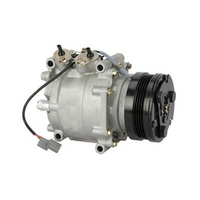
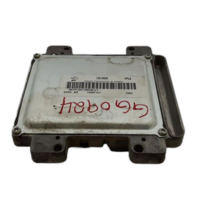
Below are the parts most often responsible for code B1473, ranked by how frequently each one is the actual culprit (per the diagnosis above). Tap any to see what we have for your vehicle.


The information in this article is provided for general reference and educational purposes only. Vehicle specifications, procedures, and part compatibility can vary by production date, trim level, and region. Always consult your vehicle's factory service manual and verify part numbers before purchasing or performing repairs. Safety-critical components such as airbags, seat belts, and braking systems should be installed by a qualified professional.
- 🧭 Diagnostic Flowchart
- 🛍️ Shop This Part
- What Does B1473 Mean?
- Can I Drive With B1473?
- Common Causes
- Symptoms
- Common Fixes & Costs
- DIY vs Professional
- Used vs. New Parts: Buying Guide
- What Happens If You Wait — Timeline
- Cost of Not Fixing It
- Diagnosis Steps
- When This Code Triggers (Freeze-Frame Conditions)
- Related Codes
- Climate & Environmental Factors
- How to Talk to a Mechanic About This Code
- Where to Take It: Dealer vs Independent vs Chain
- When to Walk Away From the Repair
- What Scan Tool You Need for This Code
- How to Clear the Code After You Fix It
- Will This Fail Emissions / State Inspection?
- Most Commonly Affected Vehicles
- Manufacturer-Specific Notes
- Real Owner Stories
- 2012 Toyota Camry Hybrid with B1473 & B1498
- 2013 Toyota Prius with "Check Hybrid System" light after a water pump repair
- Gen 2 Toyota Prius with repeat A/C compressor failure
- How to Prevent This Code From Triggering
- Frequently Asked Questions
- My mechanic immediately said I need a new compressor for B1473. Is that right?
- Can I fix B1473 myself?
- Could a bad hybrid battery cause the A/C to fail with a B1473 code?
- What is the 'sand fuse' and why is it important for the B1473 code?
- Why does my A/C only work sometimes?
- Will clearing the code fix the problem?
- Key Takeaways
- 🎟️ Get 5% Off