

OBD-II Code B1474: Center Speaker Circuit Fault & Other Meanings
What B1474 means, why it triggers, and how to fix it on your vehicle
- On Chrysler, Dodge, and Jeep vehicles, B1474 indicates a failed 3.5-inch center dashboard speaker or damaged wiring.
- This audio fault poses zero safety risk and strictly affects sound quality, making it safe to drive indefinitely.
- Replacing the blown center speaker costs $50 to $150 and takes less than an hour using basic trim tools and a screwdriver.
- On Toyota hybrids, B1474 signals a high-voltage A/C inverter failure, while on Hyundai models, it indicates a critical airbag system fault requiring immediate professional repair.
What Does B1474 Mean?
On Chrysler, Dodge, and Jeep vehicles, B1474 means the audio amplifier detects a fault in the 'Channel 5' center dashboard speaker circuit. The amplifier reports the speaker or its wiring is not responding correctly to electrical signals. For other manufacturers, this code has entirely different and critical meanings, ranging from high-voltage A/C system failures on Toyota hybrids to disabled airbags on Hyundai models.
Technical definition: The most common definition is 'Channel 5 Audio Speaker Output Circuit Fault'. It is often followed by a two-digit suffix, like '-13' for 'Circuit Open' or '-92' for 'Performance', specifying the exact electrical problem. An open circuit is the most frequent failure, pointing directly to a broken wire or a physically failed speaker coil. Alternative definitions include 'A/C Inverter Malfunction' (Toyota), 'Inflatable Curtain Airbag Front-Driver Resistance too Low' (Hyundai), and 'Internal TCM Error' (Ford).
Can I Drive With B1474?
Yes, But With Caution. For Chrysler, Dodge, and Jeep vehicles, this code indicates an audio system fault and is safe to drive with. It does not affect safety, engine performance, or reliability. However, on a Toyota or Lexus hybrid, it signifies a high-voltage A/C inverter failure; driving causes loss of A/C and strains the hybrid cooling system. On a Hyundai, it means a critical airbag system fault, posing a major safety risk as the airbag will not deploy in a crash.
Common Causes
- Failed Center Dash Speaker (Very Common) — The small voice coil inside the center dash speaker breaks, creating an 'open circuit'. Constant exposure to dashboard heat and sunlight degrades the materials, causing premature failure.
- Damaged Speaker Wiring or Connector (Common) — Wires leading to the speaker fray, pinch, or short to ground from vibration. The plastic connector at the speaker also loosens or corrodes, interrupting the amplifier signal.
- Amplifier Software Glitch (Less Common) — On 2015 Dodge Chargers and Chrysler 300s with Harman Kardon audio, a known software bug incorrectly triggers this code. TSB 08-050-15 REV. A specifies a dealer software update as the fix.
- Incorrect Speaker Impedance (Less Common) — Replacing the original speaker with an aftermarket unit featuring the wrong impedance (Ohms) causes an amplifier mismatch. Installing a 4-ohm speaker in a 2-ohm system triggers a 'Performance' (-92) code.
- Faulty Audio Amplifier (Rare) — The internal channel powering the center speaker burns out. This is highly likely if multiple speaker channel codes (like B1479 or B146F) appear simultaneously.
- Water Intrusion / Corrosion (Rare) — A leaking windshield seal or clogged cowl drain allows water to drip onto the dashboard. Moisture seeps into the speaker connector, causing corrosion and an open circuit.
- Partial Failure of Dual Voice Coil (DVC) Speaker (Rare) — Premium audio systems use a center speaker with two voice coils. One coil fails, setting a circuit fault code, while the remaining coil still produces some sound, complicating diagnosis.
Symptoms
- No sound from the center dash speaker — A complete lack of sound comes from the speaker located in the middle of the dashboard.
- Distorted or poor sound quality — The audio sounds 'flat' or manifests as a buzzing or rattling noise because the center channel is missing.
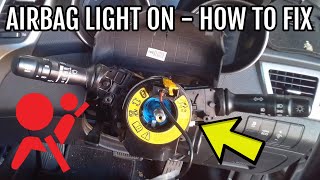
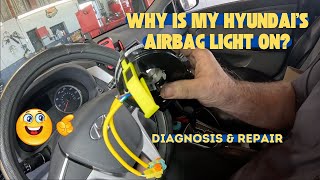
- Airbag light is on — On Hyundai models, this code indicates a fault in the airbag system, illuminating the SRS/airbag warning light.
- A/C system not working — On Toyota and Lexus hybrids, this code points to a failure in the high-voltage A/C inverter, resulting in warm air.
- Audio system warning or code on scan tool (scan-tool only — no driver-felt sign) — The code stores in the audio amplifier or Body Control Module (BCM) and requires a capable OBD-II scanner to read.
Diagnostic Flowchart
Tap your situation to follow the diagnostic path that matches what you're seeing on this code.
Common Fixes & Costs
- Replace Center Dash Speaker — Parts: $30-$80, Labor: $75-$150, ~0.7 hr book time (DIY)
- Amplifier Software Update (Flash) — Parts: $0, Labor: $100-$200, ~1 hr book time (Professional)
- Repair Speaker Wiring or Connector — Parts: $5-$20, Labor: $100-$300, ~1.5 hr book time (Intermediate)
- Replace Audio Amplifier — Parts: $150-$500, Labor: $150-$300, ~1.5 hr book time (Professional)
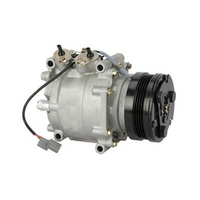
- Replace A/C Compressor with Inverter (Toyota/Lexus) — Parts: $600-$1200, Labor: $400-$800, ~4 hr book time (Professional)
Used vs. New Parts: Buying Guide
When a used part is worth it: For the common audio fault, a used OEM speaker is a cheap option, but carries a high risk of failing again soon due to age and heat exposure. A used amplifier is a reasonable choice if it comes from a reputable seller with a warranty.
Donor-vehicle mileage cap: roughly under 50000 miles for the part to have meaningful remaining life.
Donor quality checklist:
- For speakers, avoid parts from sun-belt states where heat damage is more likely.
- Match the part number exactly, especially for amplifiers.
- Ensure any used part comes with at least a 30-day warranty.
Decision logic:
- If The fault is a Chrysler/Dodge center speaker → Buy a new aftermarket speaker. It provides better sound quality for a similar or lower price than a new OEM part.
- If The fault is a failed amplifier → A warrantied used amplifier is a good cost-saving measure. A new OEM unit is very expensive.
- If The fault is a Toyota A/C compressor/inverter → Buy a new OEM (Denso) or high-quality new aftermarket part. A used part is too risky given the high labor cost to install it.
Warranty tradeoff: Used speakers have virtually no warranty. New aftermarket speakers typically have a 1-year warranty. New OEM parts have a 1-2 year warranty.
Worst-case if a used part fails: $150 if a used speaker fails and you pay for labor again. $800+ if a used A/C compressor fails after installation, requiring repeat labor and system recharge.
What Happens If You Wait — Timeline
- Immediate (Audio Fault - Chrysler/Dodge/Jeep): Code is set in the amplifier module. The center dash speaker stops working, resulting in unbalanced sound. No other symptoms appear. (MPG impact: 0%% · Added cost: $0)
- Ongoing (Audio Fault - Chrysler/Dodge/Jeep): The condition is stable. The speaker remains non-functional. No further damage occurs to the audio system or the vehicle. (MPG impact: 0%% · Added cost: $0)
- Immediate (A/C Fault - Toyota/Lexus Hybrid): Code is set, and the high-voltage A/C compressor is disabled. The A/C system blows warm air. A 'Check Hybrid System' warning appears. (MPG impact: 0-5%% · Added cost: $0, but the necessary repair costs $1500-$2500. Driving strains other hybrid components.)
- Immediate (Airbag Fault - Hyundai): The SRS/airbag warning light illuminates. The driver's side curtain airbag is disabled by the SRS module and will not function in a crash. (MPG impact: 0%% · Added cost: The monetary cost does not increase, but the safety risk is severe and continuous until repaired.)
Cost of Not Fixing It
- Immediate (Audio Fault): No sound from the center dashboard speaker; unbalanced audio. (Added cost: $0)
- Immediate (A/C Fault): Loss of air conditioning. Potential for reduced hybrid battery cooling performance over the long term. (Added cost: Repair cost does not typically increase over time, but comfort is lost.)
- Immediate (Airbag Fault): The driver's side curtain airbag is disabled and will not deploy in an accident, posing a significant safety risk. (Added cost: The potential cost is injury that could have been prevented.)
Diagnosis Steps
- Verify the Symptom and Vehicle Application
Confirm the primary symptom: audio problem, airbag light, or A/C failure. Turn on the radio and use balance/fader controls to isolate the center speaker. If the airbag light is on or A/C is dead, stop DIY diagnosis immediately and consult a professional.
Tools: Your ears and eyes (Beginner) - Read the Full Trouble Code with Suffix
Use an OBD-II scanner capable of reading 'B' (Body) codes to confirm B1474. Note the two-digit suffix (e.g., -13 for Open Circuit), as this dictates the exact repair path.
Tools: OBD-II Scanner (capable of reading Body codes) (Beginner) - Access the Center Dash Speaker
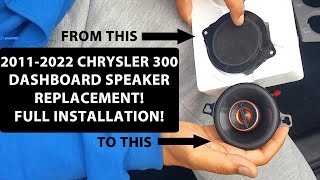
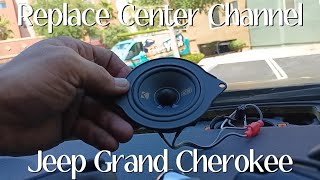
Use a plastic trim removal tool to pry up the center dashboard speaker grille. Remove the two 7mm or Phillips screws and lift the speaker out to access the connector.
Tools: Plastic trim removal tool, 7mm socket or Phillips screwdriver (Beginner) - Test Speaker Resistance
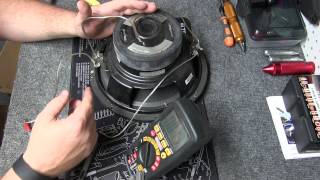
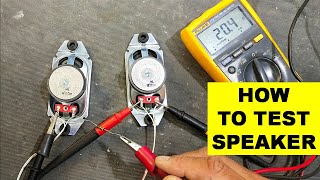
Disconnect the speaker harness. Set a multimeter to Ohms (Ω) and probe the speaker terminals. A good OEM Chrysler speaker reads 2.0 to 3.0 ohms. A reading of 'OL' (Open Loop) confirms a blown internal coil requiring replacement.
Tools: Digital Multimeter (Intermediate) - Check Signal Voltage at Connector
If the speaker tests good, reconnect the harness. Turn the radio on and set the multimeter to AC Volts (V~). Probe the back of the connector wires. Fluctuating voltage means the amplifier works and the speaker has an intermittent fault; zero voltage points to bad wiring or a dead amplifier.
Tools: Digital Multimeter (Intermediate) - Inspect Wiring and Connectors
Visually inspect the speaker wiring harness for pinches, cuts, or corrosion. Perform a continuity test on the two speaker wires between the amplifier connector and the speaker connector to locate hidden breaks.
Tools: Flashlight, Digital Multimeter (Advanced) - Load Test the Speaker Circuit
Disconnect the speaker and amplifier. Connect the two speaker wires together at the dash. At the amplifier connector, wire a 12V headlight bulb in series with a battery to the speaker wires. A brightly lit bulb confirms the wiring can carry a load; a dim bulb indicates high resistance.
Tools: 12V test light or headlight bulb, 12V power source (Advanced) - Check Amplifier Output with Oscilloscope
Connect oscilloscope leads to the center channel output wires at the amplifier. A clean audio waveform confirms proper amplifier function. A flat line or clipped wave proves the amplifier channel is dead.
Tools: Oscilloscope (Advanced) - A/C Inverter Voltage Check (Toyota/Lexus - DANGER)
For Toyota/Lexus hybrids, this requires high-voltage certification. After disconnecting the HV battery and waiting for discharge, test the high-voltage fuse within the inverter assembly using a CAT III multimeter. Normal readings exceed 200V DC.
Tools: CAT III Multimeter, High-Voltage Safety Gloves, Professional Scan Tool (Expert Only)
When This Code Triggers (Freeze-Frame Conditions)
- Module State: Ignition ON (The control module (Amplifier, SRS, A/C) performs a self-test at every power-on cycle.)
- System Command: Active (For audio, the code sets during playback. For A/C, it sets when A/C is requested. For SRS, monitoring is continuous.)
- Circuit Resistance (Audio/SRS): Out of Range (The module detects resistance that is too high (open circuit) or too low (short circuit) on the specific channel.)
- CAN Bus Status (A/C): Error Message Received (The main A/C controller receives a fault message from the high-voltage inverter via the CAN bus communication system.)
Related Codes
- B1479 — Code for a 'Channel 6 Audio Speaker Output' fault. TSB 08-050-15 REV. A lists B1474 and B1479 together. Seeing both codes indicates a software glitch or faulty amplifier, not two simultaneously failed speakers.
- B146F — Code for a 'Channel 4 Audio Speaker Output' fault. Multiple speaker channel codes appearing at once point to a central problem like the amplifier or its wiring, rather than individual speakers failing.
- B1463 — Code for a 'Channel 1 Audio Speaker Output' fault. Its presence alongside B1474 is a strong indicator of a wider system issue, shifting diagnostic focus to the amplifier.
- B1478 — Code for 'Channel 5 Audio Speaker Output - Circuit Shorted Together'. This specifically means the positive and negative wires for the center speaker are touching, ruling out a failed speaker coil and pointing directly to a wiring problem.
Climate & Environmental Factors
- Extreme Heat / Sunlight: Constant exposure to direct sunlight and high temperatures on the dashboard degrades the speaker's cone, surround, and voice coil adhesives, leading to physical failure and an open circuit.
- High Humidity: Moisture accelerates corrosion on the speaker connector terminals and compromised wiring insulation, creating high resistance or an open circuit.
How to Talk to a Mechanic About This Code
Say this: "{'audio_fault_chrysler': "I have a B1474 code on my Chrysler/Dodge, and the center dash speaker is not working. I'd like to schedule a diagnostic to confirm the speaker has failed with a resistance test before replacing it, to rule out a wiring or amplifier issue.", 'ac_fault_toyota': "My Toyota hybrid has a B1474 code and the A/C is blowing warm. Are you certified for hybrid high-voltage system repairs? I'd like to schedule a diagnosis and have you check if my VIN is covered by any warranty extensions or recalls for the A/C inverter.", 'airbag_fault_hyundai': "My Hyundai has the airbag light on and I've pulled a B1474 code. I need to schedule a diagnostic for the SRS system to find the specific cause of the circuit resistance fault before any parts are replaced."}"
This language directs the technician toward a logical diagnostic path, preventing them from just replacing the most expensive part. It establishes you as an informed customer, reducing the likelihood of unnecessary upsells.
Avoid saying:
- 'My radio sounds funny.' (Too vague, invites a broad and expensive diagnosis).
- 'My airbag light is on, just fix it.' (This gives the shop a blank check).
- 'I read on a forum it's the speaker, just put a new one in.' (This makes you responsible if the diagnosis is wrong; always have the shop confirm the failure).
Questions to ask before authorizing the repair:
- Can you show me the failed part or the multimeter reading that confirms the failure?
- Is this repair covered by any warranty, either from the vehicle manufacturer or on the part itself?
- Could you provide a written estimate that breaks down the cost of parts and labor?
- For the audio fault, have you checked for any TSBs related to an amplifier software update?
- For the Toyota A/C fault, have you confirmed my vehicle is not eligible for a warranty extension or recall program?
- For the airbag fault, is the replacement part a new OEM component?
Where to Take It: Dealer vs Independent vs Chain
- Dealer:
Best for: Vehicles under warranty., The Toyota/Lexus high-voltage A/C fault (due to specialized training and equipment)., The Chrysler/Dodge amplifier software update (TSB fix).
Downsides: Highest labor rates, typically 1.5-2x more than independent shops., May recommend replacing an entire assembly when a smaller component has failed. (Typical cost: +50% vs. baseline) - Independent Shop:
{'audio_fault': 'Excellent fit. A good independent shop or even a dedicated car audio shop handles this easily and cost-effectively.', 'ac_fault': 'AVOID, unless they are a certified and well-regarded hybrid specialist. This is a high-voltage system requiring specific expertise.', 'airbag_fault': 'Good fit, but be selective. Choose a top-rated shop confident in SRS diagnostics.'}
Best for: The common Chrysler/Dodge audio fault., The Hyundai airbag fault, provided the shop is reputable and has experience with SRS systems.
Downsides: Quality and expertise vary widely; vet shops by reviews and ASE certifications., May lack the specific tools for hybrid HV systems or dealer-level software flashing. (Typical cost: +0% vs. baseline) - Chain Shop:
{'audio_fault': 'Risky. Might be able to replace the speaker but could misdiagnose a wiring or amplifier issue.', 'ac_fault': 'DO NOT USE. They are not equipped or trained for high-voltage hybrid repairs.', 'airbag_fault': 'DO NOT USE. Airbag system repairs require a level of precision and expertise not typically found at chain shops.'}
Best for: Simple maintenance like oil changes and tires.
Downsides: Technician skill varies dramatically., High pressure to upsell services; lacks in-depth diagnostic capability for non-standard codes like B1474. (Typical cost: -10% vs. baseline)
When to Walk Away From the Repair
If the estimated repair cost exceeds 50% of the car's private-party value, you should seriously consider replacing the car instead of repairing it.
- Car worth $8000, fix is $200: Fix it. For the common Chrysler audio fault, the repair cost is minimal and will not approach the threshold.
- Car worth $7000, fix is $2200: Borderline. A $2,200 A/C repair on an older Toyota Prius worth $7,000 is a tough call. Get a second opinion and check for other needed maintenance before deciding.
- Car worth $4000, fix is $2500: Walk away. The repair cost is over 60% of the car's value. It is not financially sound to proceed with the repair.
What Scan Tool You Need for This Code
Minimum: A scanner that can read manufacturer-specific Body (B) and SRS (Airbag) codes. Basic engine-only (P-code) readers will not see this code.
A cheap $20 scanner from a gas station only reads generic powertrain codes and shows 'No Codes Found' for B1474. The fault is stored in a separate computer module (Amplifier, Body Control Module, or SRS Module) that basic tools cannot access.
Professional: Autel MaxiCOM MK808S/MK808Z (~$500) — A professional-level tablet scanner offering comprehensive diagnostics for all vehicle systems. It includes bidirectional controls to command components directly, confirming if a wiring or module issue exists.
Rent vs buy: For a one-time diagnosis, many auto parts stores offer a free tool loaner program. You must specifically ask for a scanner that reads 'Body' or 'Airbag' codes. If you plan to do your own maintenance regularly, buying a tool like the BlueDriver is a worthwhile investment.
How to Clear the Code After You Fix It
- Use an OBD-II scan tool capable of reading Body codes to clear the fault.
- Cycle the ignition off and then on.
- Operate the affected system (e.g., turn on the radio, run the A/C) to confirm the code does not return.
Drive cycle (~5 minutes): A specific drive cycle is not required for this body code. After clearing the code, a simple ignition cycle and activation of the related system is sufficient for the module to re-run its self-test.
Watch out for:
- Using a basic scanner that cannot access the specific module (Amplifier, BCM, SRS) to clear the code.
- Not fixing the root cause, which causes the code to reappear immediately on the next self-test.
- Disconnecting the battery to clear the code, which erases emissions readiness monitors and causes a failed smog test.
Will This Fail Emissions / State Inspection?
No — by itself this code doesn't fail OBD inspection (but it can keep readiness monitors from setting, which causes a separate fail).
- California: This code will NOT cause a smog check failure. California inspections fail for an illuminated Check Engine Light and related 'P' codes, not 'B' body codes.
- New York: This code will NOT cause an emissions inspection failure. NYVIP3 testing focuses on the Check Engine Light and OBD-II emissions-related data.
- Texas: This code will NOT cause an inspection failure. Texas inspections check for safety items and OBD-II emissions faults that trigger the Check Engine Light.
Most Commonly Affected Vehicles
- Chrysler 300 (2011-2023) — Extremely common issue with premium Alpine, Beats, or Harman Kardon audio systems. The center dash speaker is a known failure point.
- Dodge Charger (2011-2023) — Shares the same platform and audio components as the Chrysler 300. A TSB (08-050-15 REV. A) was issued for 2015 models for this exact code.
- Dodge Challenger (2011-2023) — Shares audio system architecture with the Charger and 300. On 2012-2014 SRT models, a B1474-92 code points to a faulty amplifier.
- Dodge Durango (2014-2023) — Vehicles with premium sound systems use a similar amplifier and speaker setup, making them susceptible to the same speaker circuit faults.
- Jeep Grand Cherokee (2014-2021) — Models with premium audio options log this code for a center speaker fault, specifically B1474-13 for an open circuit.
- Toyota Prius (2010-2015) — CRITICAL NOTE: Indicates 'A/C Inverter Malfunction', a serious issue with the high-voltage air conditioning system requiring a certified technician.
- Lexus RX400h (2006-2008) — CRITICAL NOTE: Points to a fault in the high-voltage A/C inverter, not the audio system.
- Hyundai i20 (2012-2015) — CRITICAL NOTE: Indicates 'Inflatable Curtain Airbag Front-Driver Resistance too Low', a fault in the SRS system requiring immediate professional diagnosis.
- Ford Various (2015-2023) — Not a standard code and has various meanings, including 'Internal TCM Error' or 'Fuel System Rich'. Diagnosis requires a model-specific manual.
Manufacturer-Specific Notes
- Chrysler / Dodge / Jeep: For 2015 Chrysler 300 and Dodge Charger models with Harman Kardon audio, TSB 08-050-15 REV. A states codes B1474-13 and B1479-13 are caused by an amplifier software problem. The fix is a dealer reflash, not hardware replacement.
- Toyota / Lexus: On hybrid vehicles, B1474 means 'A/C Inverter Malfunction'. This repair involves dangerous high-voltage components and must be handled by a certified technician. Toyota has issued recalls and extended warranties for inverter failures on certain Prius models.
- Ford: Ford uses B1474 for several different issues. Depending on the model and year, it indicates 'Fuel System Rich', 'Internal TCM Error', or 'Battery Saver Power Relay Circuit Short To Battery'. A generic reading is not sufficient.
- Hyundai / Kia: On some models, B1474 indicates a critical safety system fault, such as 'Inflatable Curtain Airbag Front-Driver Resistance too Low'. This code must be diagnosed immediately by a professional.
Real Owner Stories
2013 Chrysler 300 - The Classic Speaker Failure
Owner noticed the sound system sounded 'flat' and that no audio was coming from the center of the dashboard. A scan revealed code B1474-13 (Circuit Open).
What they tried:
- Used balance/fader controls to confirm the center channel was dead.
- Removed the dash grille and tested the speaker with a multimeter, which read 'OL' (Open Loop), confirming the speaker's voice coil was broken.
Outcome: Replaced the OEM center dash speaker (part #05091912AA) with a new one. The code cleared, and audio function was fully restored in under 30 minutes.
Lesson: For Chrysler/Dodge vehicles, always confirm the speaker is bad with a simple multimeter test before ordering parts to avoid wasting money.
2015 Dodge Charger - The TSB Software Glitch
Owner experienced intermittent buzzing from the dash speaker and poor sound quality. Codes B1474-13 and B1479-13 were both present.
What they tried:
- Initially suspected a bad speaker and was about to order a replacement.
Outcome: After finding TSB 08-050-15 REV. A online, the owner took the vehicle to the dealership. The dealer reprogrammed the Harman Kardon amplifier, resolving both codes without replacing hardware.
Lesson: If you have a 2015 Charger/300 with Harman Kardon audio and see B1474 alongside B1479, check for the TSB first. A dealer software update is the correct fix.
2013 Toyota Prius - A/C Failure Misdiagnosis
The A/C started blowing warm air. A local shop scanned the car and found code B1474, but was unfamiliar with its meaning on a Prius.
What they tried:
- The shop initially suspected a refrigerant leak and performed an evacuation and recharge, but the A/C still did not work.
Outcome: Further research determined B1474 on a Prius indicates an 'A/C Inverter Malfunction'. A hybrid specialist confirmed the fault in the high-voltage A/C compressor assembly and replaced it.
Lesson: The same code number has drastically different meanings on different brands. On a Toyota hybrid, B1474 is a serious high-voltage system fault.
2012 Hyundai Tucson - Airbag System Fault
The airbag warning light on the dashboard turned on and would not go off. There were no other symptoms.
What they tried:
- The owner took the car to a dealership for diagnosis due to the safety-critical nature of the warning light.
Outcome: A scan revealed code B1474: 'Inflatable Curtain Airbag Front-Driver Resistance too Low'. The technician repaired a faulty connector in the driver-side A-pillar, resolving the issue.
Lesson: Never ignore an airbag light. On a Hyundai, B1474 indicates a critical fault in the airbag system that prevents deployment in a crash.
How to Prevent This Code From Triggering
- Use a windshield sunshade when parked (Daily, especially in sunny climates) — Reduces extreme heat and direct UV exposure on the dashboard, preventing the speaker cone and voice coil degradation that causes the audio fault.
- Avoid playing audio at maximum volume for extended periods (Daily habit) — Prevents the factory amplifier from 'clipping' the audio signal, which sends distorted power that overheats and damages the speaker's voice coil.
- Ensure vehicle cowl and sunroof drains are clear (Annually or semi-annually) — Prevents water from overflowing and leaking behind the dashboard, which corrodes speaker wiring, connectors, and the amplifier.
- For Toyota Hybrids, keep the inverter cooling system maintained (Per manufacturer's service interval) — Ensuring the dedicated inverter cooling system has proper coolant levels helps prevent the overheating that causes the A/C inverter failure.
- Ensure amplifier has adequate ventilation (During any interior work) — Amplifiers generate heat and fail if cooling is obstructed. Ensure carpets or debris do not block the amplifier to prevent overheating.
Frequently Asked Questions
Can I just ignore code B1474?
Yes, if it is an audio code on a Chrysler/Dodge/Jeep, as it only affects sound quality. However, on Toyota or Hyundai vehicles, this code indicates serious high-voltage A/C or airbag failures. You must verify the code's meaning for your specific vehicle before ignoring it.
What are common misdiagnosis mistakes for B1474?
The most common mistake is replacing the speaker without testing it with a multimeter first. Another pitfall is ignoring the two-digit suffix or other simultaneous speaker codes. If you have a '-92' performance code or multiple speaker codes, the problem is likely the amplifier or software, not the speaker.
I replaced my speaker with an aftermarket one and the code is still there. Why?
First, the original problem was likely the wiring or the amplifier, not the speaker itself. Second, you may have installed an aftermarket speaker with the incorrect impedance (Ohms). Installing a 4-ohm speaker in a 2-ohm system causes the amplifier to detect a mismatch and keep the code active.
Why did my dash speaker fail?
Dashboard speakers endure extreme heat and direct UV exposure from the sun. This constant heat cycle causes the flexible cone surround to become brittle. Eventually, the tiny voice coil wires break, creating an open circuit.
Do I need a special scanner to read this code?
Yes, basic code readers only check for 'P' (Powertrain) codes that trigger the Check Engine Light. B1474 is a 'B' (Body) code stored in a separate module like the audio amplifier or SRS computer. You need an advanced scanner capable of reading manufacturer-specific body codes.
Should I use an OEM speaker or is an aftermarket one okay?
Either works, but you must match the impedance (Ohms) of the factory speaker to prevent amplifier mismatch codes. Aftermarket speakers often provide better sound quality for less money. Always use a wiring adapter harness for a plug-and-play installation without cutting factory wires.
The code came back after I replaced the speaker. Now what?
If a new, tested speaker does not fix the code, the problem lies upstream in the wiring or amplifier. Thoroughly check the wiring between the speaker and the amplifier for breaks or shorts. If the wiring is intact, check for applicable TSBs for amplifier software updates before replacing the amplifier.
What does the suffix B1474-13 mean?
The '-13' suffix specifically means 'Circuit Open', indicating the amplifier does not detect a complete electrical path. The most common cause is a broken wire inside the speaker's voice coil. It also points to a broken wire or disconnected plug anywhere between the amplifier and the speaker.
Key Takeaways
- On Chrysler, Dodge, and Jeep vehicles, B1474 indicates a failed 3.5-inch center dashboard speaker or damaged wiring.
- This audio fault poses zero safety risk and strictly affects sound quality, making it safe to drive indefinitely.
- Replacing the blown center speaker costs $50 to $150 and takes less than an hour using basic trim tools and a screwdriver.
- On Toyota hybrids, B1474 signals a high-voltage A/C inverter failure, while on Hyundai models, it indicates a critical airbag system fault requiring immediate professional repair.
Helpful Videos
Shop the Parts Behind B1474
Below are the parts most often responsible for code B1474, ranked by how frequently each one is the actual culprit (per the diagnosis above). Tap any to see what we have for your vehicle.



The information in this article is provided for general reference and educational purposes only. Vehicle specifications, procedures, and part compatibility can vary by production date, trim level, and region. Always consult your vehicle's factory service manual and verify part numbers before purchasing or performing repairs. Safety-critical components such as airbags, seat belts, and braking systems should be installed by a qualified professional.
- 🧭 Diagnostic Flowchart
- 🎬 Helpful Videos
- 🛍️ Shop This Part
- What Does B1474 Mean?
- Can I Drive With B1474?
- Common Causes
- Symptoms
- Common Fixes & Costs
- Used vs. New Parts: Buying Guide
- What Happens If You Wait — Timeline
- Cost of Not Fixing It
- Diagnosis Steps
- When This Code Triggers (Freeze-Frame Conditions)
- Related Codes
- Climate & Environmental Factors
- How to Talk to a Mechanic About This Code
- Where to Take It: Dealer vs Independent vs Chain
- When to Walk Away From the Repair
- What Scan Tool You Need for This Code
- How to Clear the Code After You Fix It
- Will This Fail Emissions / State Inspection?
- Most Commonly Affected Vehicles
- Manufacturer-Specific Notes
- Real Owner Stories
- 2013 Chrysler 300 - The Classic Speaker Failure
- 2015 Dodge Charger - The TSB Software Glitch
- 2013 Toyota Prius - A/C Failure Misdiagnosis
- 2012 Hyundai Tucson - Airbag System Fault
- How to Prevent This Code From Triggering
- Frequently Asked Questions
- Can I just ignore code B1474?
- What are common misdiagnosis mistakes for B1474?
- I replaced my speaker with an aftermarket one and the code is still there. Why?
- Why did my dash speaker fail?
- Do I need a special scanner to read this code?
- Should I use an OEM speaker or is an aftermarket one okay?
- The code came back after I replaced the speaker. Now what?
- What does the suffix B1474-13 mean?
- Key Takeaways
- 🎟️ Get 5% Off