

Ultimate Guide to OBD-II Code B1476: A/C, Airbag, or Wiper System Failure
The Definitive Resource for Diagnosing and Fixing B1476 on Toyota, Mitsubishi, Ford, and More
- Code B1476 indicates an A/C inverter fault on Toyota hybrids, an SRS power drop on Mitsubishi/Hyundai, or a wiper motor failure on Fords.
- If your Mitsubishi or Hyundai airbag light is on, the SRS is disabled; load-test the 12V battery first, as voltage drops below 10V during cranking trigger this code.
- For Toyota hybrids blowing warm air, do not replace the $1,500 electric A/C compressor before paying $200-$300 for a professional refrigerant evacuate and recharge.
- Always diagnose and repair accompanying U-series communication codes (like U0155) before troubleshooting B1476, as network faults cause false power supply codes.
What Does B1476 Mean?
Code B1476 is a manufacturer-specific code. On Toyota and Lexus hybrids, it signifies an abnormal electrical load from the high-voltage A/C compressor. On Mitsubishi, Hyundai, and Kia vehicles, it indicates a critical voltage drop to the Supplemental Restraint System (SRS) control module. On older Ford models, it points to a failure in the wiper motor's high-speed circuit.
Technical definition: Definitions vary by manufacturer. Toyota: 'A/C Inverter Load System Malfunction' (compressor power draw is out of range). Mitsubishi: 'Power Supply Voltage Drops Abnormally' (IG1 voltage to the SRS module drops below 9V for 5+ seconds). Ford: 'Wiper High Speed Circuit Motor Failure'.
Can I Drive With B1476?
Yes, But With Caution. Driving with code B1476 carries system-dependent risks. If the airbag light is on (Mitsubishi, Hyundai), the SRS is disabled and will not deploy in a crash, making driving a severe safety risk. If the A/C fails (Toyota hybrids), the vehicle remains safe to drive, but you lose cabin cooling and window defogging capabilities. If wipers fail (Ford), do not drive in precipitation.
Common Causes
- (Airbag) Weak or failing 12V battery (Very Common) — On Mitsubishi and Hyundai vehicles, a 12V battery dropping below 10V during engine cranking starves the SRS module of power, immediately triggering this code.
- (A/C) Incorrect refrigerant level (Very Common) — On Toyota hybrids, overcharging or undercharging the A/C system forces the electric compressor to draw abnormal current, triggering the inverter load malfunction code.
- (Ford) Failed wiper motor or park switch (Common) — The internal park switch or high-speed circuit inside the wiper motor assembly fails, causing dead or erratic wipers.
- (A/C) Failing electric A/C compressor (Common) — The high-voltage compressor fails internally. Toyota issued TSB T-SB-0059-13 for 2012-2013 Prius models recommending an updated compressor for this specific code.
- (Airbag) Blown fuse or damaged wiring to SRS module (Less Common) — A blown interior fuse (e.g., fuse #16 on an Outlander) or corroded ground wire cuts power to the airbag module.
- (A/C) Condenser cooling fan malfunction (Less Common) — If the radiator/condenser fan fails, A/C system pressure spikes, overloading the electric compressor and triggering the code.
Symptoms
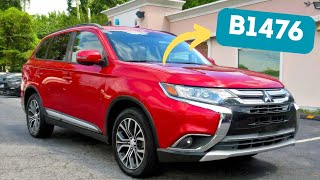
- Airbag warning light remains illuminated — The primary symptom for Mitsubishi, Hyundai, and Kia. 🎬 Watch: Understanding why Mitsubishi vehicles trigger this airbag code. The SRS system is disabled.
- A/C blows warm air or fails to engage — The primary symptom for Toyota hybrids. The inverter shuts down the compressor to prevent electrical damage.
- Wipers fail on high speed or do not park — The primary symptom for Ford models, indicating a wiper motor circuit failure.
- Constant electrical humming from rear hatch — Specific to the Toyota Prius; the HV inverter emits a hum when the B1476 code is active, even with the A/C off.
Diagnostic Flowchart
Tap your situation to follow the diagnostic path that matches what you're seeing on this code.
Common Fixes & Costs
- Replace 12V Vehicle Battery (Airbag Fault) — Parts: $150-$250, Labor: $50-$100, ~0.5 hr book time (DIY)
- Evacuate and Recharge A/C System (A/C Fault) — Parts: $50-$100, Labor: $150-$300, ~1.5 hr book time (Professional)
- Replace Wiper Motor Assembly (Wiper Fault) — Parts: $85-$200, Labor: $100-$200, ~1.0 hr book time (DIY)
- Replace Electric A/C Compressor (A/C Fault) — Parts: $1200-$1800, Labor: $400-$600, ~3.5 hr book time (Professional)
- Replace or Reset SRS Control Module (Airbag Fault) — Parts: $200-$800, Labor: $150-$300, ~1.5 hr book time (Professional)
Used vs. New Parts: Buying Guide
When a used part is worth it: For a Mitsubishi SRS Module, use a mail-in reset service on your original part to avoid dealer VIN programming. For a Toyota Electric A/C Compressor, buy a new aftermarket or OEM unit; used high-voltage compressors carry too much risk of internal contamination. For a Ford Wiper Motor, buy new aftermarket.
Donor-vehicle mileage cap: roughly under 60000 miles for the part to have meaningful remaining life.
Donor quality checklist:
- SRS Modules: A 'reset service' on your original part is superior to a used part.
- A/C Compressors: Avoid used high-voltage compressors entirely unless budget is strictly limited; verify the donor system was sealed.
- Avoid parts from flood-damaged vehicles.
Decision logic:
- If Part is an SRS Airbag Module → Use a mail-in reset service on your original module.
- If Part is a high-voltage A/C compressor → Buy a new aftermarket or OEM unit to guarantee internal cleanliness and electrical integrity.
- If Part is a wiper motor → Buy a new aftermarket part for reliability and warranty.
Warranty tradeoff: Used parts offer 30-90 days. New aftermarket parts offer 1-year to lifetime warranties. Mail-in SRS resets guarantee crash data clearance.
Worst-case if a used part fails: $1500 if a used hybrid A/C compressor fails internally, contaminating the entire high-voltage A/C system.
What Happens If You Wait — Timeline
- Immediate (Airbag System): Code sets and airbag warning light illuminates. The SRS system is disabled as a fail-safe. (MPG impact: 0%% · Added cost: $0 (but incalculable safety risk))
- Immediate (A/C System): The A/C inverter disables the compressor to prevent electrical damage. A/C blows warm air. (MPG impact: 0%% · Added cost: $0)
- Immediate (Wiper System): Wipers fail to operate, resulting in an immediate loss of visibility during precipitation. (MPG impact: 0%% · Added cost: $0)
Cost of Not Fixing It
- Immediate (Airbag System): The SRS system is disabled, and airbags will NOT deploy in a crash. This is a critical safety failure. (Added cost: Incalculable safety risk.)
- Immediate (Wiper System): Inability to clear the windshield during precipitation, leading to a severe driving hazard. (Added cost: Negligible mechanical cost, high accident risk.)
- Short-Term (A/C System): Loss of A/C and window defrosting capability. The hybrid inverter disables the compressor to prevent electrical damage. (Added cost: $0)
Diagnosis Steps
- Identify the System at Fault & Read All Codes
Determine your primary symptom (Airbag light, dead A/C, or dead wipers). Scan all modules for codes. The presence of U-series communication codes or B1477 dictates your diagnostic path.
Tools: Advanced OBD-II Scan Tool (Beginner) - (Airbag) Load-Test the 12V Battery
For Mitsubishi/Hyundai, a weak battery is the most common cause. Load-test the 12V battery. It must maintain at least 10V during engine cranking. Replace if it fails.
Tools: Battery Load Tester or Multimeter (Beginner) - (A/C) Verify Refrigerant Charge by Weight
For Toyota hybrids, do not replace the compressor yet. Have a professional evacuate the system and recharge it to the exact weight specified on the under-hood sticker. Incorrect charge is the #1 cause.
Tools: Professional A/C Recovery/Recharge Machine (Professional) - (Ford) Test Wiper Motor Power and Ground
Disconnect the wiper motor. Command the wipers to high speed. Verify 12V power and solid ground at the harness connector. If power exists but the motor fails, replace the motor assembly.
Tools: Multimeter (Intermediate) - (Airbag) Measure Voltage at SRS Module
If the battery is good, disconnect the SRS module. Turn the ignition ON. Measure voltage at the IG1 power supply pin. It must be >9V. If lower, trace the wiring back to the fuse box.
Tools: Multimeter, Vehicle Wiring Diagram (Advanced) - (A/C) Monitor Compressor Live Data
Use a scan tool to view 'Compressor Current' and 'High-Side Pressure'. If current is near zero when commanded ON, the compressor or inverter has failed. If current spikes alongside pressure, check the cooling fans.
Tools: Advanced Scan Tool (Advanced)
When This Code Triggers (Freeze-Frame Conditions)
- (Mitsubishi SRS) Battery Voltage: < 9.0V for 5+ seconds (Sets during engine cranking, especially in cold weather, when a weak 12V battery's voltage drops significantly.)
- (Toyota A/C) A/C System Pressure: Abnormally High or Low (Triggers when the A/C inverter detects the compressor drawing too much or too little current, directly resulting from incorrect refrigerant charge or a restriction.)
- (Ford Wiper) Wiper Switch Position: High Speed (Logs when the driver switches wipers to the high-speed setting and the motor fails to respond due to an internal circuit fault.)
Related Codes
- B1477 — Mitsubishi SRS secondary power circuit. If B1476 and B1477 appear together, it guarantees a global voltage drop (failing 12V battery) rather than a single broken wire.
- B14B8 — Toyota 'Refrigerant Shortage' code. If present with B1476, the abnormal compressor load is definitively caused by low refrigerant.
- U-Series Codes (e.g., U0155) — CAN bus communication faults. These MUST be diagnosed first, as network drops cause modules to falsely report power supply codes like B1476.
- C1241 — Toyota 'Low 12V Battery Voltage'. If present alongside A/C codes, replace the 12V auxiliary battery before diagnosing the A/C system.
Climate & Environmental Factors
- Cold Weather: Drops 12V battery voltage significantly during engine cranking, triggering the SRS power supply version of B1476 on Mitsubishi vehicles.
- Hot Weather: Increases A/C system pressure. If condenser airflow is restricted, the electric compressor overloads, triggering the Toyota A/C version of B1476.
How to Talk to a Mechanic About This Code
Say this: "I have a B1476 code. For my Toyota, please verify the A/C refrigerant charge by weight before diagnosing the compressor. For my Mitsubishi, please load-test the 12V battery before checking the SRS module. For my Ford, please check for power at the wiper motor."
Directs the shop to the most common, inexpensive causes first, preventing them from jumping straight to a $1,500 compressor or $800 SRS module replacement.
Avoid saying:
- 'My car has a B1476 code, just fix it.'
- 'My airbag light is on, can you look at it?'
- 'Whatever you recommend is fine.'
Questions to ask before authorizing the repair:
- (Toyota) What is the specified refrigerant weight for my vehicle, and exactly how much did you recover?
- (Mitsubishi) What was the battery voltage during the load test?
- Will you provide a written estimate with a clear breakdown of parts and labor?
Where to Take It: Dealer vs Independent vs Chain
- Dealer:
Necessary if a new SRS module requires VIN programming, but otherwise too expensive for initial diagnosis.
Best for: Vehicles under warranty., Complex SRS module VIN programming., High-voltage hybrid A/C diagnostics.
Downsides: Highest labor rates., Quick to recommend expensive module replacements over simple battery tests. (Typical cost: +40% vs. baseline) - Independent Shop:
Best overall choice. Ensure they have hybrid A/C certification for Toyotas or strong electrical diagnostic skills for Mitsubishis.
Best for: Out-of-warranty vehicles., Diagnosing weak batteries or wiper motors., Hybrid-specialist shops are ideal for the Toyota A/C issue.
Downsides: May lack OEM software to program a new SRS module. (Typical cost: +0% vs. baseline) - Chain Shop:
Avoid for diagnosis. Use only for simple battery or wiper motor swaps.
Best for: Replacing a 12V battery after you've confirmed it's the cause.
Downsides: Not equipped for high-voltage hybrid A/C service., High risk of misdiagnosis on SRS systems. (Typical cost: -10% vs. baseline)
When to Walk Away From the Repair
If the estimated repair cost exceeds 40-50% of the car's private-party value, consider selling it as-is.
- Car worth $4000, fix is $1800: Walk away. An $1800 A/C compressor replacement on a $4000 Prius is 45% of the vehicle's value.
- Car worth $12000, fix is $200: Fix it. A $200 battery replacement to fix the airbag light is a minor cost that restores a critical safety feature.
What Scan Tool You Need for This Code
Minimum: A scanner that reads manufacturer-specific Body ('B') codes from SRS and HVAC modules. Basic engine readers will report 'No Codes Found'.
A $20 generic reader only communicates with the engine. It is completely blind to the airbag and A/C modules where B1476 lives.
Budget: BlueDriver Pro (~$119) — Reads specific B-codes from SRS and HVAC modules on most makes, providing the essential first step of diagnosis.
Mid-range: Foxwell NT510 Elite (~$189) — Offers bi-directional control, allowing you to command the A/C cooling fan or wipers to test functionality.
Professional: Autel MaxiCOM MK808S (~$450) — Provides live data graphing to monitor A/C compressor current draw and SRS module voltage in real-time.
Rent vs buy: Buy a budget scanner. Auto parts store free scanners often cannot read SRS or HVAC codes, leaving you blind to the actual fault.
How to Clear the Code After You Fix It
- Repair the specific system fault (e.g., replace 12V battery, recharge A/C, replace wiper motor).
- Clear the code from the specific module (SRS, BCM, or HVAC) using an advanced OBD-II scan tool; basic engine readers cannot clear B-codes.
- For SRS faults, cycle the ignition to 'ON' after repair to verify the airbag light self-extinguishes.
- Drive the vehicle for 15-20 minutes to verify the system operates normally under load.
Drive cycle (~20 minutes): A standard drive cycle includes a cold start, 3 minutes of idling, 15 minutes of mixed city driving (25-45 mph), and 5 minutes of steady highway speed (55-65 mph).
Readiness monitors affected: B1476 is a Body code and does not directly affect emissions readiness monitors., However, clearing codes often resets all modules, requiring a full drive cycle before a smog test.
Watch out for:
- Using a basic $20 code reader that cannot access or clear codes from the SRS or HVAC modules.
- Disconnecting the battery to clear an SRS code; it returns immediately until the fault is fixed.
- Adding DIY A/C refrigerant cans, which overcharges the system and immediately triggers the code again.
Will This Fail Emissions / State Inspection?
No — by itself this code doesn't fail OBD inspection (but it can keep readiness monitors from setting, which causes a separate fail).
- General: B1476 will not illuminate the Check Engine Light (CEL) or fail an emissions-only test. However, an illuminated airbag light causes an automatic failure in states with safety inspections.
- New York: An illuminated airbag light is an automatic failure of the annual safety inspection.
- Texas: Safety inspections fail vehicles with an illuminated airbag light. The CEL dictates the emissions portion.
- California: No separate safety inspection exists. An airbag light does not fail a smog check, but remains a critical safety hazard.
Most Commonly Affected Vehicles
- Toyota Prius (2004-2022) — Extremely common for the A/C Inverter Load System Malfunction. TSB T-SB-0059-13 addresses this for 2012-2013 models.
- Mitsubishi Outlander (2015-2022) — Prone to the SRS Power Supply Voltage code, almost always triggered by a failing 12V battery.
- Toyota Camry Hybrid (2007-2017) — Shares the Prius hybrid A/C system and experiences identical compressor load faults.
- Ford Ranger / Explorer (1998-2011) — Logs B1476 for 'Wiper High Speed Circuit Motor Failure' due to internal motor faults.
- Hyundai Sonata / Elantra (2005-2015) — Logs this code for SRS voltage drops or curtain airbag circuit faults.
Manufacturer-Specific Notes
- Toyota/Lexus: Exclusively refers to 'A/C Inverter Load System Malfunction' on hybrid models with high-voltage electric compressors.
- Mitsubishi: Consistently means 'Power Supply Voltage Drops Abnormally' for the SRS (airbag) control module.
- Ford: Indicates 'Wiper High Speed Circuit Motor Failure', completely unrelated to A/C or airbags.
Real Owner Stories
2017 Mitsubishi Outlander with Airbag Light
Airbag warning light stayed on permanently with codes B1476 and B1477 present.
What they tried:
- Owner suspected a complex SRS module failure.
- A load test at an auto parts store revealed the 12V battery was dropping to 8.5V under load.
Outcome: Replaced the 12V battery for $200. The codes cleared and the airbag light stayed off. The dual codes confirmed a global voltage drop, not a module failure.
Lesson: For a Mitsubishi with B1476 and B1477, the 12V battery is the primary suspect. Always load-test it before assuming an expensive SRS module fault.
2010 Toyota Prius with A/C Failure
A/C blew warm air and logged code B1476. The compressor would not engage.
What they tried:
- A general mechanic incorrectly diagnosed a bad A/C compressor and quoted $1,900.
- A hybrid specialist performed a proper A/C system evacuate and recharge by weight.
Outcome: The $250 A/C service cleared the code and restored cold air. The root cause was an incorrect refrigerant charge, not a failed compressor.
Lesson: Never replace a hybrid A/C compressor for B1476 without first verifying the refrigerant charge by weight.
2002 Ford Ranger with Intermittent Wipers
Wipers died completely and stored code B1476.
What they tried:
- Owner replaced wiper relays with no success.
- Tested the wiring harness at the wiper motor and confirmed 12V power was present when switched to high.
Outcome: Replaced the wiper motor assembly for $100. The internal park switch had failed. Testing for power at the connector prevented unnecessary steering column teardowns.
Lesson: On older Fords, test for power at the wiper motor connector first to isolate the motor from the switch and relays.
How to Prevent This Code From Triggering
- Load-test the 12V battery annually. (Annually) — Identifies a weakening battery before it causes the voltage drop that triggers the B1476 airbag code.
- Run the A/C system for 10 minutes monthly, even in winter. (Monthly) — Circulates oil to keep compressor seals lubricated, preventing refrigerant leaks that trigger the Toyota A/C code.
- Clean debris from the A/C condenser. (Every 6 months) — Prevents system pressure spikes that overload the electric compressor.
Frequently Asked Questions
Why does my scan tool give a different definition for B1476?
Because B1476 is a manufacturer-specific code. It means an A/C fault on Toyotas, an airbag fault on Mitsubishis, and a wiper fault on Fords. Always diagnose based on your specific vehicle make.
Are my airbags disabled if the light is on with code B1476?
Yes. The SRS system shuts down entirely as a fail-safe when a fault is detected. Airbags will not deploy in a crash until the code is cleared and the light is off.
Can I just add a can of A/C refrigerant to fix my Toyota?
No. Overcharging the system causes the exact same B1476 overload code and damages the electric compressor. A shop must evacuate the system and weigh the exact refrigerant charge.
Can a weak car battery really cause an airbag code?
Yes. The SRS module is highly sensitive to voltage drops. A weak battery dropping below 10V during engine cranking triggers this code on many Mitsubishi and Hyundai vehicles.
Can I reset the airbag light myself?
You need an advanced scan tool to clear SRS codes; basic readers will not work. However, if the underlying voltage or wiring issue isn't fixed, the light returns immediately.
Key Takeaways
- Code B1476 indicates an A/C inverter fault on Toyota hybrids, an SRS power drop on Mitsubishi/Hyundai, or a wiper motor failure on Fords.
- If your Mitsubishi or Hyundai airbag light is on, the SRS is disabled; load-test the 12V battery first, as voltage drops below 10V during cranking trigger this code.
- For Toyota hybrids blowing warm air, do not replace the $1,500 electric A/C compressor before paying $200-$300 for a professional refrigerant evacuate and recharge.
- Always diagnose and repair accompanying U-series communication codes (like U0155) before troubleshooting B1476, as network faults cause false power supply codes.
Helpful Videos
Shop the Parts Behind B1476
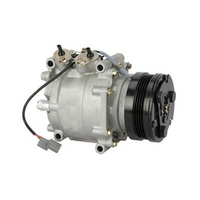
Below are the parts most often responsible for code B1476, ranked by how frequently each one is the actual culprit (per the diagnosis above). Tap any to see what we have for your vehicle.



The information in this article is provided for general reference and educational purposes only. Vehicle specifications, procedures, and part compatibility can vary by production date, trim level, and region. Always consult your vehicle's factory service manual and verify part numbers before purchasing or performing repairs. Safety-critical components such as airbags, seat belts, and braking systems should be installed by a qualified professional.
- 🧭 Diagnostic Flowchart
- 🎬 Helpful Videos
- 🛍️ Shop This Part
- What Does B1476 Mean?
- Can I Drive With B1476?
- Common Causes
- Symptoms
- Common Fixes & Costs
- Used vs. New Parts: Buying Guide
- What Happens If You Wait — Timeline
- Cost of Not Fixing It
- Diagnosis Steps
- When This Code Triggers (Freeze-Frame Conditions)
- Related Codes
- Climate & Environmental Factors
- How to Talk to a Mechanic About This Code
- Where to Take It: Dealer vs Independent vs Chain
- When to Walk Away From the Repair
- What Scan Tool You Need for This Code
- How to Clear the Code After You Fix It
- Will This Fail Emissions / State Inspection?
- Most Commonly Affected Vehicles
- Manufacturer-Specific Notes
- Real Owner Stories
- 2017 Mitsubishi Outlander with Airbag Light
- 2010 Toyota Prius with A/C Failure
- 2002 Ford Ranger with Intermittent Wipers
- How to Prevent This Code From Triggering
- Frequently Asked Questions
- Why does my scan tool give a different definition for B1476?
- Are my airbags disabled if the light is on with code B1476?
- Can I just add a can of A/C refrigerant to fix my Toyota?
- Can a weak car battery really cause an airbag code?
- Can I reset the airbag light myself?
- Key Takeaways
- 🎟️ Get 5% Off