

OBD-II Code B1481: Driver Airbag Circuit Fault
The Ultimate 2026 Guide: What B1481 means, why it triggers, and how to fix it for good
- Code B1481 disables the driver's airbag, meaning it will not deploy in a frontal crash and poses a critical safety risk.
- A failed clock spring causes over 80% of B1481 codes, frequently accompanied by a broken horn or dead steering wheel buttons.
- Hyundai and Kia models from 2011-2016 have a 15-year/unlimited mileage warranty extension for this exact clock spring failure.
- Never use a standard multimeter to test airbag circuits; the internal current triggers accidental deployment, requiring a 2.2-ohm dummy resistor for safe testing.
What Does B1481 Mean?
Code B1481 indicates the Supplemental Restraint System (SRS) module detects high electrical resistance in the driver's airbag circuit. This prevents the system from deploying the airbag correctly in an accident and permanently illuminates the dashboard airbag warning light.
Technical definition: B1481 specifically indicates 'Driver Airbag Resistance too High (2nd stage)'. Modern dual-stage airbags use two separate initiator circuits (squibs) to control deployment force based on crash severity. The SRS Control Module continuously monitors these circuits. Normal operating resistance is 2.2-3.5 ohms. Code B1481 triggers when the second-stage circuit resistance exceeds the manufacturer's threshold, typically 6.0 ohms, indicating an open circuit or degraded connection.
Can I Drive With B1481?
No — Do Not Drive. Do not drive the vehicle. Code B1481 signifies the driver's airbag is disabled and will not deploy in a frontal collision, dramatically increasing the risk of severe head and chest injuries. While the car operates mechanically, you are driving without a primary life-saving safety system. Knowingly operating a vehicle with a disabled airbag carries significant insurance and liability implications in the event of an accident.
Common Causes
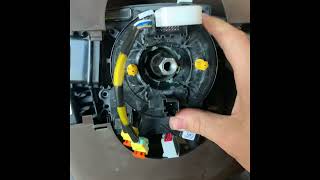
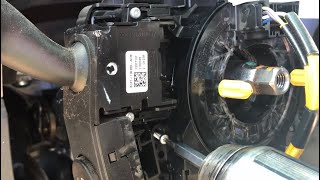
- Faulty Clock Spring (Very Common) — The clock spring maintains the electrical connection to the steering wheel. Its internal ribbon wires fatigue and break from millions of rotations, causing an open circuit. This causes over 80% of B1481 codes.
- Poor Connection or Damaged Wiring (Common) — Yellow SRS connectors under the dash or at the steering column become loose, corroded, or suffer bent pins. A partially seated connector fails to retract internal safety shorting bars, causing immediate resistance faults.
- Previous Accident or Improper Repair (Common) — Heat from a previous airbag deployment melts the clock spring or wiring harness. These one-time-use components are sometimes overlooked during collision repairs, triggering codes months later.
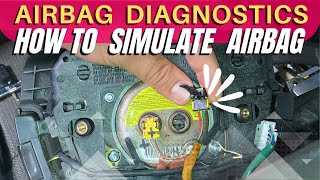
- Faulty Driver's Airbag Module (Less Common) — The airbag's internal pyrotechnic squib fails. Professional diagnosis using a 2.2-ohm dummy resistor is required to confirm this before replacing the expensive module. 🎬 See how to build and use a DIY airbag tester
- Weak or Failing Car Battery (Less Common) — Low battery voltage causes the SRS module to fail its startup self-test, logging spurious resistance faults. Verify battery health if the light appeared immediately after a jump-start.
- Faulty SRS Control Module (Rare) — The main SRS computer malfunctions due to internal hardware defects or water damage from cabin leaks. Suspect this only after ruling out the clock spring and wiring.
Symptoms
- Airbag Warning Light is On — The airbag or 'SRS' icon stays illuminated on the dashboard after the initial startup check.
- Steering Column Controls Inoperative — The horn, cruise control, and radio volume buttons stop functioning because their wiring shares the broken clock spring ribbon cable.
- Intermittent Airbag Light When Turning — The airbag light flickers or triggers only at specific steering angles. The broken internal ribbon wire makes and breaks contact 🎬 Watch: Top 5 symptoms of a bad clock spring during rotation.
- Driver's Airbag is Disabled (scan-tool only — no driver-felt sign) — The SRS module disables the driver's airbag as a safety precaution, preventing deployment in a crash.
Diagnostic Flowchart
Tap your situation to follow the diagnostic path that matches what you're seeing on this code.
Common Fixes & Costs
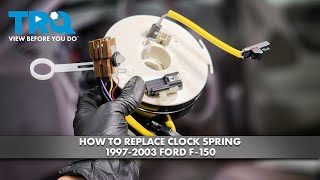
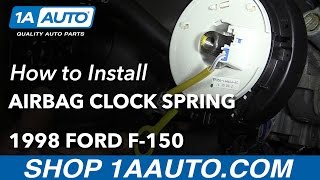
- Replace the Clock Spring
— Parts: $75-$600, Labor: $150-$350, ~1.5 hr book time
(Intermediate)
Hyundai Sonata (2011-2014): OEM 93490-3X040 (Alt: Standard Motor Products CSP138)
Kia Sorento (2011-2015): OEM 93490-2P170 (Alt: Dorman 525-121)
Ford F-150 (2015-2020): OEM HL3Z-14A664-A (Alt: Standard Motor Products CSP293) - Repair or Clean Wiring Connectors — Parts: $5-$20, Labor: $50-$150, ~0.8 hr book time (DIY)
- Replace the Driver's Airbag Module — Parts: $400-$1200, Labor: $50-$150, ~0.5 hr book time (Professional)
- Reset or Replace the SRS Control Module — Parts: $200-$800, Labor: $150-$300, ~1.5 hr book time (Professional)
- Repair Connector Pigtail — Parts: $20-$50, Labor: $75-$175, ~1.2 hr book time (Advanced)
Used vs. New Parts: Buying Guide
When a used part is worth it: Never buy a used clock spring unless a new OEM or aftermarket part is completely unavailable. The safety risk outweighs the savings.
Donor-vehicle mileage cap: roughly under 60000 miles for the part to have meaningful remaining life.
Donor quality checklist:
- Ensure the part number matches exactly.
- Verify the donor vehicle was not in a front-end collision.
- Inspect connectors for corrosion or cut wires.
- Avoid parts from flood or rust-belt regions.
Decision logic:
- If The vehicle is under warranty or part of a recall/warranty extension → Use a new OEM part from the dealer; the repair is free.
- If A new aftermarket part is available for under $150 → Buy the new aftermarket part. The savings on a used part isn't worth the risk.
- If The vehicle is over 10 years old and a new OEM part costs over $500 → A certified, warrantied used OEM part from a reputable recycler is a reasonable alternative.
Warranty tradeoff: Used parts offer a 30-90 day warranty. New aftermarket parts offer 1-year to limited lifetime warranties. New OEM parts carry a 1-year/12,000-mile warranty.
Worst-case if a used part fails: $200-$400 if a used part fails prematurely, requiring a second labor charge.
What Happens If You Wait — Timeline
- Immediate (0 seconds): The SRS module detects the high resistance fault, logs code B1481, and disables the driver's airbag. (MPG impact: 0%% · Added cost: $0)
- 1 week - 6 months: If the cause is a failing clock spring, the horn, cruise control, or steering wheel radio buttons fail. (MPG impact: 0%% · Added cost: $100-$350)
- At next state inspection: Automatic failure in strict states, preventing vehicle registration renewal. (MPG impact: 0%% · Added cost: $50-$200)
- In the event of an accident: The disabled airbag fails to deploy, dramatically increasing the risk of severe or fatal injury. (MPG impact: 0%% · Added cost: Potentially infinite)
Cost of Not Fixing It
- Immediate: The driver's airbag is disabled and will not deploy in an accident, creating a critical safety risk. (Added cost: N/A)
- Ongoing: Failure of shared steering wheel components like the horn and cruise control. (Added cost: N/A)
- During State Inspection: Automatic failure of safety inspections in strict jurisdictions, preventing registration. (Added cost: $50-$200)
- In Case of Accident: Increased risk of severe injury and potential insurance claim denial due to a known safety fault. (Added cost: Potentially infinite)
Diagnosis Steps
- Scan for Codes
Use an SRS-capable OBD-II scanner to confirm B1481. Note if B1346 (1st stage resistance high) is also present, which definitively points to a failed clock spring.
Tools: SRS-capable OBD-II Scanner (Beginner) - [PRO TIP] Analyze Live Data While Turning
View live data for driver's airbag resistance (Stage 2). Normal is 2.2-3.5 ohms. Slowly turn the steering wheel lock-to-lock. If resistance fluctuates wildly, spikes, or reads 'OL', the clock spring is broken.
Tools: Advanced OBD-II Scanner with Live Data (Intermediate) - Check Battery Voltage
Test the battery. A low voltage event stores a persistent SRS code. If the light appeared after a dead battery, charge it and clear the code first.
Tools: Multimeter or Battery Tester (Beginner) - Disconnect Battery (CRITICAL SAFETY STEP)
Disconnect the negative battery terminal and wait 15-30 minutes. This discharges backup capacitors, preventing accidental airbag deployment.
Tools: Wrench Set (Beginner) - Visually Inspect Connectors
Inspect the yellow airbag connectors under the dash and steering column. Look for corrosion, pushed-out pins, or unseated locking tabs.
Tools: Flashlight, Mirror (Beginner) - Perform a Harness Wiggle Test
With live data active, wiggle the wiring harness leading to the clock spring. Resistance changes indicate an intermittent poor connection.
Tools: Advanced OBD-II Scanner with Live Data (Intermediate) - [PRO TIP] Isolate with a Dummy Resistor
With the battery disconnected, unplug the airbag and insert a 2.2-ohm SRS dummy resistor into the clock spring connector. Reconnect battery and clear codes. If B1481 disappears, the airbag module is faulty. If it persists, the clock spring or wiring is bad.
Tools: SRS Dummy Resistor Set, Trim Removal Tools, Torx/Screwdriver Set (Advanced) - Inspect the Clock Spring and Airbag Module
Remove the airbag and inspect connectors for melted plastic or bent pins. Ensure the clock spring is properly centered.
Tools: Trim removal tools, Torx/screwdriver set (Intermediate) - [ADVANCED] Check Circuit Integrity to Ground
With battery disconnected and airbag unplugged, measure resistance between the clock spring harness pins and chassis ground. A reading other than 'OL' indicates a short to ground.
Tools: Digital Multimeter (Advanced)
When This Code Triggers (Freeze-Frame Conditions)
- Ignition Status: ON / RUN (The SRS module performs a self-test at ignition and continuously monitors circuits while driving.)
- System Voltage: 11-15 Volts (The code sets during normal system voltage. Separate codes flag voltage extremes.)
- Driver Airbag Stage 2 Resistance: > 6.0 ohms (The SRS module sends a safe diagnostic current through the circuit. Resistance above 6.0 ohms (or 7.3 ohms depending on the manufacturer) flags an open circuit.)
- Time Delay: 2-4 seconds (The high resistance must persist for 2-4 continuous seconds to log the hard code, preventing momentary glitches from triggering a persistent fault.)
Related Codes
- B1346 — Driver Airbag Resistance too High (1st Stage). Seeing B1481 and B1346 together guarantees a failed clock spring.
- B1482 — Driver Airbag Resistance too Low (2nd stage). Indicates a short circuit, often caused by a partially seated connector failing to retract the safety shorting bar.
- B1483 / B1484 — Short to ground or battery. Indicates compromised wire insulation touching the chassis or power wire.
- B1620 — Internal SRS Module Fault. Makes the control module the primary suspect.
Climate & Environmental Factors
- High Humidity / Moisture: Moisture seeps into the cabin, corroding connector pins and increasing resistance.
- Extreme Temperature Fluctuations: Thermal expansion and contraction degrade electrical connections and embrittle the clock spring ribbon.
- Dust and Debris: Fine particles abrade the clock spring ribbon cable, accelerating failure.
How to Talk to a Mechanic About This Code
Say this: "My scanner shows code B1481 for high resistance in the driver's airbag second stage. Please check my VIN for clock spring warranty extensions before diagnosing. If not covered, please isolate the fault between the clock spring, wiring, and airbag module using a dummy resistor."
This signals you are an informed customer. It directs the technician toward a logical diagnostic process rather than just replacing the most expensive part, and it protects you from paying for a repair that should be free.
Avoid saying:
- 'My airbag light is on, can you fix it?'
- 'Just do whatever it takes to turn the light off.'
- 'I heard it's the clock spring, just replace it.' (Don't authorize a repair without diagnosis).
Questions to ask before authorizing the repair:
- Have you checked my VIN for any open recalls or warranty extensions related to the clock spring or SRS system?
- What were the live resistance readings from the driver's airbag circuits when turning the steering wheel?
- Did you need to use a dummy resistor to confirm if the fault was in the clock spring or the airbag module?
- If the clock spring needs replacement, is the new part OEM or aftermarket, and what is the warranty on the part and labor?
Where to Take It: Dealer vs Independent vs Chain
- Dealer:
First choice for Hyundai/Kia owners to check for free warranty work. For other makes, use for in-warranty repairs or if an independent shop is unable to diagnose the issue.
Best for: Hyundai and Kia vehicles, due to the high likelihood of a free repair under warranty extension., Vehicles under the original manufacturer's warranty., Very new models (like a 2023+ Ford) that may be part of a specific recall.
Downsides: Highest labor rates and part costs for out-of-warranty repairs., May be less flexible with aftermarket part options. (Typical cost: +50% vs. baseline) - Independent Shop:
Best choice for out-of-warranty repairs. Ensure the shop is ASE-certified in SRS systems.
Best for: Most out-of-warranty vehicles from brands like Ford, Chevy, Nissan, etc., Owners who have a trusted relationship with a local ASE-certified mechanic., Cost-sensitive repairs where aftermarket parts are a viable option.
Downsides: Quality can vary greatly; must find a reputable shop., May not have the latest TSBs or be aware of warranty extensions unless you bring it up. (Typical cost: +0% vs. baseline) - Chain Shop:
AVOID. Chain shops lack the specialized training and tools for critical pyrotechnic safety systems.
Best for: Simple maintenance like oil changes and tires.
Downsides: Technicians often lack the specialized training for SRS diagnostics., High pressure to upsell unnecessary services., May not have the proper diagnostic tools to even read SRS codes correctly. (Typical cost: -10% vs. baseline)
When to Walk Away From the Repair
Walk away if the repair exceeds 50% of the vehicle's value, unless it's a free warranty fix.
- Car worth $4500, fix is $650: Fix it. The repair cost is well below the threshold and ensures the car is safe and can pass inspection.
- Car worth $3000, fix is $1400: Walk away. The repair cost is nearly 50% of the car's value. Unless the car is otherwise mechanically perfect, it's not a sound financial decision.
- Car worth $15000, fix is $800: Fix it without question. This is a routine repair cost for a modern vehicle and is critical for safety.
What Scan Tool You Need for This Code
Minimum: A scan tool that can read and clear SRS (Supplemental Restraint System) / Airbag codes. A basic engine-only code reader will NOT see or interact with the B1481 code.
A standard $20-$50 OBD-II reader only communicates with the engine control unit (ECU). The B1481 code is stored in the separate SRS module. Without an SRS-capable scanner, you won't be able to confirm the code, view live data to diagnose it, or clear it after the repair.
Budget: Foxwell NT301 / Ancel AD310 (~$50-70) — Nothing. Basic readers cannot access the SRS module. They are listed here as a warning of what NOT to buy for this specific problem.
Mid-range: BlueDriver Pro / Autel ML629 / Foxwell NT604 Elite (~$100-200) — Reads/clears SRS codes and displays live resistance data to diagnose the clock spring.
Professional: Autel MaxiCOM MK808 / Launch CRP919E (~$400-700) — Provides full bidirectional controls and graphing for professional diagnostics.
Rent vs buy: Most auto parts stores will read your CHECK ENGINE light for free, but their loaner tools typically do not read SRS codes. You will likely need to purchase your own SRS-capable scanner or pay a professional for a diagnosis.
How to Clear the Code After You Fix It
- Ensure all SRS components are correctly reconnected.
- Reconnect the negative battery terminal.
- Use an SRS-capable OBD-II scan tool to access the SRS module.
- Select 'Clear Codes' or 'Erase DTCs' within the SRS menu.
Drive cycle (~10 minutes): Turn the ignition off, then start the vehicle. The SRS light illuminates for a 6-second bulb check and turns off. If the light stays off, the repair is successful. A 10-minute drive confirms the fix.
Readiness monitors affected: This code does not affect engine emissions readiness monitors.
Watch out for:
- A standard engine code reader cannot communicate with the SRS module.
- Disconnecting the battery does not clear hard SRS codes.
- If the physical fault remains, the code reappears within seconds of clearing.
Will This Fail Emissions / State Inspection?
No — by itself this code doesn't fail OBD inspection (but it can keep readiness monitors from setting, which causes a separate fail).
- California: An airbag light does not fail a California Smog Check.
- New York: Noted as an advisory during NYS safety inspection but does not fail the vehicle.
- Texas: Does not fail Texas safety inspections.
- Virginia / Pennsylvania: Triggers an automatic failure in states with strict safety inspections.
Most Commonly Affected Vehicles
- Hyundai Sonata (2011-2014) — Covered under 15-year/unlimited mile warranty extension (TSB 21-BE-003H-1).
- Kia Sorento (2011-2015) — Covered under 15-year warranty extension (Campaign WE 16-14).
- Kia Optima (2011-2015) — Shares Sonata platform and clock spring failures.
- Hyundai Elantra (2011-2016) — Covered by 15-year warranty extension.
- Kia Forte / Rio (2012-2015) — Covered by 15-year warranty extension (TSB ELE218).
- Ford F-150 (2004-2023) — 2023 models recalled (23S63) for insufficient clock spring welds.
- Chevrolet Silverado 1500 (1999-2019) — Known clock spring wear issue across multiple generations.
- Nissan Altima (2013-2018) — Clock spring failures average $600 to repair.
Manufacturer-Specific Notes
- Hyundai / Kia: Almost exclusively a clock spring failure. Check for 15-year warranty extensions before paying for repairs.
- Chrysler / Dodge / Jeep: B1481 means 'Lost Communication With Brake Control Module', an ABS issue unrelated to airbags.
- Mitsubishi: Can mean 'Combined Instrument Panel No Data' on some models, but correctly flags the 2nd squib open circuit on Lancers and Outlanders.
- Mercedes-Benz: Defined as a short to ground in the right headlamp range adjustment motor.
- Ford: 2023 F-150s recalled for defective clock spring welds causing this code.
Real Owner Stories
2012 Hyundai Sonata with B1481
Airbag light came on for no apparent reason during normal commuting. No other symptoms were present initially.
What they tried:
- Took to a local mechanic who scanned the code B1481 and recommended going to a dealer.
- Owner researched online and suspected the clock spring, which was covered under an extended warranty.
- Dealer wanted to charge a $145 diagnostic fee before performing warranty work.
Outcome: Owner confirmed 15-year warranty extension. Dealer waived diagnostic fee and replaced clock spring for free.
Lesson: For Hyundai/Kia vehicles, always check for warranty extensions before paying for a B1481 diagnosis. A diagnostic fee is standard, but it should be waived if the covered part is the cause.
2024 Kia Forte GT with B1481 at 11k miles
Brand new car, airbag light came on and would not turn off, even after disconnecting the battery. Horn and steering wheel buttons continued to work.
What they tried:
- Attempted to reset the system by disconnecting the battery.
- Took the vehicle to the dealership for warranty service.
Outcome: Brand new car threw B1481. Dealer replaced defective clock spring under standard warranty.
Lesson: Even on new vehicles, a clock spring can fail. The absence of other symptoms like a non-working horn does not rule out the clock spring as the cause.
2012 Kia Rio with B1481 and B2502
Owner had code B1481, replaced the clock spring himself. This fixed B1481, but a new code, B2502 (Passenger Airbag Indicator Fault), appeared.
What they tried:
- Replaced the clock spring to fix the initial B1481 code.
Outcome: DIY clock spring fix triggered B2502. Owner realized they forgot to plug in the passenger airbag indicator light during reassembly.
Lesson: A simple oversight causes confusing secondary codes. Double-check that all connectors, especially indicator lights, are properly reconnected after dashboard work.
How to Prevent This Code From Triggering
- Apply dielectric grease to SRS connectors (When performing any related electrical work) — Apply dielectric grease to the outside of connector seals to prevent moisture intrusion.
- Avoid turning the steering wheel to full lock with force (Daily driving habit) — Avoid slamming the steering wheel against its full-lock stops to reduce mechanical stress on the clock spring ribbon.
- Address cabin water leaks immediately (As needed) — Fix windshield or sunroof leaks to prevent water from pooling on the SRS control module under the center console.
- Be careful with under-seat wiring (When cleaning or adjusting seats) — Avoid shoving items under the seats, which snags and unplugs yellow SRS connectors.
Frequently Asked Questions
Is it safe to drive with code B1481?
No. The driver's airbag is deactivated and will not deploy in an accident. This dramatically increases the risk of serious injury or death in a frontal crash.
Why did my airbag light come on after the battery died?
The SRS module logs a low voltage event as a hard fault. This code persists even after replacing the battery. It must be cleared with an SRS-capable scan tool.
Can I fix code B1481 myself?
Replacing a clock spring is possible for advanced DIYers, but carries the risk of accidental airbag deployment. Stop DIY and go to a shop if you lack the specific tools or confidence to handle pyrotechnic devices safely.
Will clearing the code fix the problem?
No. B1481 is an active, hard fault. The SRS module immediately re-detects the high resistance and turns the light back on within seconds of clearing.
My horn and steering wheel buttons stopped working. Is that related?
Yes. The clock spring contains the coiled wiring for the airbag, horn, and steering wheel controls. Simultaneous failure confirms the clock spring's internal ribbon is broken.
My airbag light flickers when I turn. What does that mean?
This confirms a failing clock spring. The broken internal wire makes and breaks contact as the steering wheel rotates.
What is a common misdiagnosis for B1481?
Replacing the expensive airbag module instead of the much cheaper clock spring. Professionals use dummy resistors to isolate the fault and avoid unnecessary parts replacement.
Should I pay a diagnostic fee if the clock spring is under warranty?
Yes, a diagnostic fee is standard to verify the clock spring is the actual cause. If the diagnosis confirms the warrantied part failed, the dealer waives the fee.
Key Takeaways
- Code B1481 disables the driver's airbag, meaning it will not deploy in a frontal crash and poses a critical safety risk.
- A failed clock spring causes over 80% of B1481 codes, frequently accompanied by a broken horn or dead steering wheel buttons.
- Hyundai and Kia models from 2011-2016 have a 15-year/unlimited mileage warranty extension for this exact clock spring failure.
- Never use a standard multimeter to test airbag circuits; the internal current triggers accidental deployment, requiring a 2.2-ohm dummy resistor for safe testing.
Helpful Videos
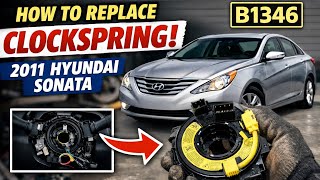
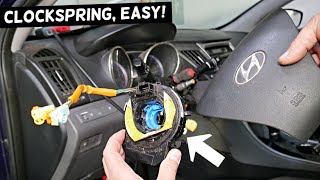

Shop the Parts Behind B1481
Below are the parts most often responsible for code B1481, ranked by how frequently each one is the actual culprit (per the diagnosis above). Tap any to see what we have for your vehicle.



The information in this article is provided for general reference and educational purposes only. Vehicle specifications, procedures, and part compatibility can vary by production date, trim level, and region. Always consult your vehicle's factory service manual and verify part numbers before purchasing or performing repairs. Safety-critical components such as airbags, seat belts, and braking systems should be installed by a qualified professional.
- 🧭 Diagnostic Flowchart
- 🎬 Helpful Videos
- 🛍️ Shop This Part
- What Does B1481 Mean?
- Can I Drive With B1481?
- Common Causes
- Symptoms
- Common Fixes & Costs
- Used vs. New Parts: Buying Guide
- What Happens If You Wait — Timeline
- Cost of Not Fixing It
- Diagnosis Steps
- When This Code Triggers (Freeze-Frame Conditions)
- Related Codes
- Climate & Environmental Factors
- How to Talk to a Mechanic About This Code
- Where to Take It: Dealer vs Independent vs Chain
- When to Walk Away From the Repair
- What Scan Tool You Need for This Code
- How to Clear the Code After You Fix It
- Will This Fail Emissions / State Inspection?
- Most Commonly Affected Vehicles
- Manufacturer-Specific Notes
- Real Owner Stories
- 2012 Hyundai Sonata with B1481
- 2024 Kia Forte GT with B1481 at 11k miles
- 2012 Kia Rio with B1481 and B2502
- How to Prevent This Code From Triggering
- Frequently Asked Questions
- Is it safe to drive with code B1481?
- Why did my airbag light come on after the battery died?
- Can I fix code B1481 myself?
- Will clearing the code fix the problem?
- My horn and steering wheel buttons stopped working. Is that related?
- My airbag light flickers when I turn. What does that mean?
- What is a common misdiagnosis for B1481?
- Should I pay a diagnostic fee if the clock spring is under warranty?
- Key Takeaways
- 🎟️ Get 5% Off