

OBD-II Code B1483: Brake Pedal Signal Failure
What B1483 means, why it triggers, and how to fix it
- Code B1483 has 3 completely different meanings depending on your car: a brake circuit failure on Fords, a broken airbag clock spring on Hyundai/Kias, or a faulty audio amplifier on Chrysler/Dodges.
- For brake-related B1483 codes, a faulty $15 to $70 brake light switch is the culprit over 80% of the time and can usually be replaced at home in under an hour.
- Never drive with a brake-related B1483 code; driving without functioning brake lights creates an immediate rear-end collision hazard and is a ticketable offense in all 50 states.
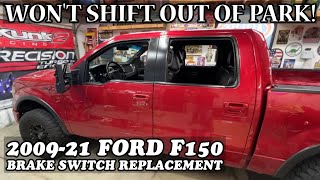
- A failed brake switch does more than disable your brake lights—it locks your gear shifter in Park, disables cruise control, and causes intermittent engine stalling on many Ford models.
- If you own a 2004-2015 Hyundai or Kia with this code, check your VIN for warranty extensions TXXC or WTY017, which cover clock spring replacements for 15 years with unlimited mileage.
What Does B1483 Mean?
Code B1483 means your car's main computer is receiving an unclear or irrational signal from the brake pedal switch. This switch tells the body, brake, and engine control modules when you are pressing the brakes. A confused computer causes immediate problems with your brake lights, cruise control, ABS, and gear shifter. The exact definition of this code varies significantly by manufacturer.
Technical definition: The official SAE/OBD-II definition for code B1483 is "Brake Pedal Input Circuit Failure". This indicates a control module (like the ABS or Body Control Module) detected a fault in the electrical circuit connected to the brake pedal position sensor. The module sets this code when the switch signal is missing, irrational, or contradicts other inputs like brake pressure or wheel speed.
Can I Drive With B1483?
No — Do Not Drive. No. The primary danger is that your brake lights fail to illuminate, creating a significant rear-end collision hazard. This is a ticketable offense in all 50 states. On some vehicles (notably Fords), this fault causes the engine to stall or not start, leaving you stranded. The financial risk of a collision far outweighs the cost of a timely repair.
Common Causes
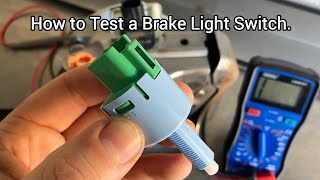
- Faulty or Misadjusted Brake Light Switch (Very Common) — Located by the brake pedal arm, this switch activates every time you brake and is the #1 cause of this code. 🎬 Watch: A quick guide on how to test your brake switch.
- Blown Fuse (Common) — If the dedicated brake light fuse blows, the switch loses power and triggers the B1483 code.
- Damaged Wiring or Connectors (Common) — Wires leading to the brake switch often corrode, fray, or short out in the driver's footwell. The plastic connector at the switch also becomes loose over time.
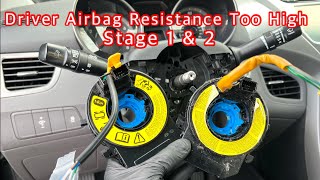
- Faulty Clock Spring (Hyundai/Kia only) (Less Common) — On Hyundai and Kia models, B1483 indicates an airbag system fault caused by a broken clock spring in the steering column, 🎬 See this step-by-step walkthrough for replacing a Hyundai clock spring. completely unrelated to the brakes.
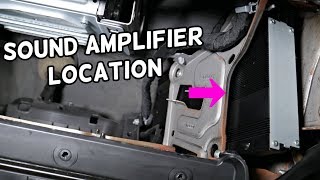
- Software Glitch in Amplifier (Chrysler/Dodge only) (Less Common) — On specific Chrysler and Dodge models, a software issue in the audio amplifier triggers this code, which relates to a speaker fault, not the brakes.
- Incorrect Bulb Type or Aftermarket LEDs (Less Common) — Control modules monitor electrical resistance to verify bulb function. Aftermarket LED bulbs have lower resistance than incandescent bulbs, tricking the module into setting a B1483 code.
- Low Battery Voltage or Charging System Fault (Less Common) — A weak battery or failing alternator causes low system voltage, leading various control modules to generate spurious error codes.
- Failing Control Module (ABS/BCM) (Rare) — The Anti-lock Brake System (ABS) module or Body Control Module (BCM) rarely fails internally, but can misinterpret signals if damaged.
Symptoms
- Brake Lights Don't Work or Stay On — Your brake lights fail to illuminate when you press the pedal, or they stay stuck on even when your foot is off the brake.
- Cannot Shift Out of Park — Most automatic cars require you to press the brake before shifting out of Park. If the signal is lost, the shifter remains locked.
- Engine Hard to Start or Stalls — On Fords, a faulty brake signal interferes with the engine computer, causing starting problems or a 'dead pedal' with no throttle response.
- ABS and/or Traction Control Warning Light is On — The computer uses the brake signal for ABS and traction control. A bad signal turns on these warning lights and disables the systems.
- Cruise Control Won't Turn On or Disengage — Cruise control will not engage if the car cannot confirm brake pedal status. In a dangerous failure, it fails to disengage when you brake.
- Airbag Light is On (Hyundai/Kia only) — In Hyundai and Kia vehicles, this code indicates an airbag system fault, illuminating the airbag warning light on the dashboard.
Diagnostic Flowchart
Tap your situation to follow the diagnostic path that matches what you're seeing on this code.
Common Fixes & Costs
- Replace Brake Light Switch/Sensor — Parts: $10-$70, Labor: $80-$160, ~0.8 hr book time (DIY)
- Replace Blown Fuse — Parts: $1-$5, Labor: $0, ~0.1 hr book time (DIY)
- Repair Wiring or Connector — Parts: $5-$20, Labor: $100-$200, ~1.5 hr book time (Intermediate)
- Replace Clock Spring (Hyundai/Kia) — Parts: $110-$430, Labor: $250-$595, ~1.5 hr book time (Professional)
- Reprogram or Replace Audio Amplifier (Chrysler/Dodge) — Parts: $0-$450, Labor: $150-$825, ~2.5 hr book time (Professional)
Used vs. New Parts: Buying Guide
When a used part is worth it: For a simple brake light switch, buying used is impractical. For expensive components like a clock spring or audio amplifier, a used part from a reputable salvage yard with a warranty is cost-effective for older vehicles.
Donor-vehicle mileage cap: roughly under 80000 miles for the part to have meaningful remaining life.
Donor quality checklist:
- Verify the exact part number matches; modules are not interchangeable.
- For clock springs, avoid parts from vehicles with a deployed airbag.
- Ensure the salvage yard offers at least a 30-day warranty.
- Check electronic modules for signs of water damage or corrosion.
Decision logic:
- If The part is a brake light switch → Always buy new; the savings are negligible and the failure rate of used switches is unknown.
- If The part is a clock spring or amplifier and the vehicle is over 10 years old → A tested, used OEM part with a warranty is a reasonable choice to save money.
- If The part is a clock spring on a Hyundai/Kia → Check for warranty extensions first. If not covered, favor a new OEM part due to the high failure rate of this component.
Warranty tradeoff: Used parts typically come with a 30-90 day functional warranty. New aftermarket parts have a 1-year to limited lifetime warranty. New OEM parts carry a 1-2 year warranty.
Worst-case if a used part fails: $200-$500 if a used electronic part fails after installation, requiring you to pay for labor a second time.
What Happens If You Wait — Timeline
- 0-1 week: Intermittent fault. The code appears, and the ABS or Traction Control light flashes occasionally. Brake lights flicker or have a slight delay but mostly work. (MPG impact: 0%% · Added cost: $0)
- 1 week - 2 months: Consistent fault. Brake lights fail to work or get stuck on. Cruise control is disabled, and shifting from Park becomes difficult. On Fords, intermittent stalling begins. (MPG impact: 0-1%% · Added cost: $150 (Potential cost for a new battery if brake lights stick on and drain it).)
- 2-6 months (Brake Fault): Vehicle is disabled or a major safety risk. The car is permanently stuck in Park, or fails to start reliably. The risk of a rear-end collision is extremely high. (MPG impact: 0%% · Added cost: $500 - $10,000+ (Cost of a tow, plus potential insurance deductible and liability from a collision).)
- 2-6 months (Hyundai/Kia Airbag Fault): The airbag warning light is constantly on. The driver's side airbag is deactivated and WILL NOT deploy in an accident. Steering wheel controls fail. (MPG impact: 0%% · Added cost: Incalculable (Risk of severe injury or death in a frontal collision due to a non-deploying airbag).)
Cost of Not Fixing It
- Immediate: Brake lights fail, creating a high risk of a rear-end collision. You are at fault in an accident and receive a traffic ticket. (Added cost: $500 - $10,000+ (Insurance deductible, liability costs, traffic fines))
- 0-1 month: Inability to shift out of Park, disabling the vehicle. The engine stalls unexpectedly, leaving you stranded. If brake lights are stuck on, the battery drains. (Added cost: $75 - $200 (Towing service, new battery))
- 1-6 months: For Hyundai/Kia, ignoring the airbag light means the driver's airbag will not deploy in a crash, drastically increasing the risk of serious injury or death. (Added cost: Incalculable (Severe personal injury))
Diagnosis Steps
- Check Brake Light Function
Have a friend stand behind the car while you press and release the brake pedal. See if the brake lights work correctly, flicker, or stay on. This is the simplest way to confirm a physical switch problem.
Tools: A helper (Beginner) - Inspect the Brake Light Fuse
Find the fuse box under the dashboard or in the engine bay. Locate the fuse for the brake lights using your owner's manual. Pull the fuse and check if the metal strip inside is broken.
Tools: Owner's manual, fuse puller or pliers (Beginner) - Visually Inspect the Brake Light Switch
Look under the dashboard, near the top of the brake pedal arm. Check if the small switch is securely mounted and if the wiring and connector look clean and undamaged. Look for broken plastic pieces on the floor mat.
Tools: Flashlight (Beginner) - Scan for Codes and Live Data
Use an OBD-II scanner capable of reading Body (B) and Chassis (C) codes. Note the specific module that stored the B1483 code. Access the live data stream and monitor the PID for the brake pedal switch. The status must change from 'Off' to 'On' the instant you press the pedal.
Tools: Advanced OBD-II scanner (Intermediate) - Test the Switch with a Multimeter (Continuity)
Disconnect the switch's electrical connector. Set your multimeter to 'Continuity'. Touch the probes to the two primary electrical terminals on the switch. With the plunger out, the multimeter should beep. When you press the plunger in, the beeping must stop. If it behaves otherwise, replace the switch.
Tools: Multimeter (Intermediate) - Check for Voltage at the Connector
Turn the ignition key to 'ON'. Set your multimeter to 'DC Volts'. Identify the power supply wire at the switch's connector. Connect the black probe to a metal ground. Touch the red probe to the power wire's pin. You should see 12V. If there is no voltage, the circuit is broken before the switch.
Tools: Multimeter, vehicle wiring diagram (Intermediate) - Verify Live Data PID Correlation (Advanced)
On a scan tool, view the live data PIDs for Brake Pedal Position (BPP) and Brake Pressure Sensor. When you press the brake, the BPP PID must change state instantly. On Ford models, compare the BPP signal with the Brake Pressure Sensor PID; they must correlate perfectly to avoid setting a code.
Tools: Advanced OBD-II scanner (Advanced) - Perform a Voltage Drop Test
Connect your multimeter in parallel with the switch. With the brake pedal pressed, a good switch and wiring has a voltage drop of less than 0.1 volts. A higher reading indicates high resistance in the switch contacts or wiring.
Tools: Multimeter (Advanced) - Analyze the Signal with an Oscilloscope (Pro Tip)
Backprobe the signal wire at the control module. When you press the brake pedal, you must see a clean, sharp transition from high to low voltage. A noisy, flickering, or slow-sloping waveform indicates a failing switch or poor connection that a multimeter misses.
Tools: Oscilloscope, wiring diagram (Professional)
When This Code Triggers (Freeze-Frame Conditions)
- Vehicle Speed: 0 mph (When starting the vehicle or attempting to shift from Park. The code sets if the brake isn't detected.)
- Brake Pedal Status: On/Pressed (During braking. The fault logs when the pedal is pressed, but the signal is intermittent or conflicts with another sensor.)
- System Voltage: 11.8-14.5V (Normal operating voltage. The code sets during normal driving when an electrical inconsistency is detected.)
- RPM: 650-2500 RPM (Across idle, city, and highway driving. The fault is captured as part of the data snapshot when the electrical error occurs.)
Related Codes
- P0571 — This is a generic powertrain code for 'Brake Switch 'A' Circuit Malfunction'. Seeing both B1483 and P0571 means the Engine Control Module and the Body Control Module are reporting a problem with the same switch, confirming the switch is the root cause.
- P0703 — This code means 'Brake Switch 'B' Circuit Malfunction'. Many vehicles use a dual-circuit switch. Seeing both codes almost always means the entire switch assembly has failed.
- C1288 — This ABS code for 'Brake Pressure Sensor Circuit Fault' appears with B1483. If the pressure sensor reading increases when you press the pedal but the brake switch status doesn't change, the switch is bad.
- U0100 — This code means 'Lost Communication With ECM/PCM'. On Fords, it appears with B1483 if the brake switch fault disrupts the CAN bus. Fix the B1483 first, as it is the root cause.
Climate & Environmental Factors
- High Humidity: Moisture penetrates connectors and circuit boards, leading to corrosion. This increases electrical resistance or causes short circuits in the brake switch connector, triggering a B1483 code. Symptoms appear more frequently after rain.
- Road Salt: Salty slush kicks up into the engine bay and undercarriage. Wiring passing through the firewall and control modules are exposed to this corrosive environment, degrading connectors over time.
How to Talk to a Mechanic About This Code
Say this: "I have a B1483 code and my symptoms are [mention your primary symptom, e.g., 'my ABS light is on but the brake lights work,' or 'I can't shift out of park']. I know this code means different things depending on the car. My car is a [Your Make, Model, Year]. Can you please diagnose the brake pedal input circuit, keeping the manufacturer-specific meaning in mind?"
This shows you understand the code's complexity. It directs the technician to the correct system (brakes, airbag, or audio) and prevents them from wasting time on a generic diagnosis, saving you money.
Avoid saying:
- 'My ABS light is on, can you check it?' (Too vague, invites a broad and expensive diagnostic process).
- 'Just fix whatever is wrong with the brakes.' (You authorize unnecessary work if the problem is actually the clock spring or amplifier).
- 'I think I need a new brake switch.' (Don't diagnose it for them; let them confirm the failure. It could be a simple fuse or wiring issue).
Questions to ask before authorizing the repair:
- What specific module (ABS, BCM, SRS, AMP) stored the B1483 code?
- Did you test the brake switch/circuit directly, or just read the code?
- If you are recommending a clock spring or amplifier replacement, are you certain this is not covered by a warranty extension or TSB?
- Can you provide a written estimate with a clear breakdown of parts and labor?
- What is your warranty on this specific repair?
Where to Take It: Dealer vs Independent vs Chain
- Dealer:
Recommended for Hyundai, Kia, Chrysler, and Dodge due to the unique, non-brake related causes of B1483 on those vehicles and potential for warranty or TSB-related fixes.
Best for: Hyundai/Kia vehicles where the issue is likely the clock spring (to check for warranty coverage)., Chrysler/Dodge vehicles where the issue is likely the audio amplifier (for TSB software updates)., Vehicles still under warranty.
Downsides: Highest labor rates., May be less willing to diagnose complex wiring issues and default to replacing entire modules. (Typical cost: +50% vs. baseline) - Independent Shop:
Best fit for most common brake-related B1483 faults, provided the shop is reputable and has modern diagnostic tools.
Best for: Ford, GM, and other makes where B1483 is a standard brake circuit fault., Out-of-warranty vehicles where the most likely cause is a simple brake light switch or wiring., Owners who have a trusted relationship with a local mechanic.
Downsides: Quality and diagnostic capabilities vary widely., May not be aware of the manufacturer-specific quirks of this code without access to professional databases. (Typical cost: +0% vs. baseline) - Chain Shop:
Acceptable for a straightforward brake switch replacement, but AVOID for initial diagnosis of complex wiring or manufacturer-specific issues.
Best for: Simple, confirmed brake light switch replacement if you are unable to do it yourself.
Downsides: Technicians lack the experience to diagnose intermittent electrical or logic faults., High pressure to upsell services; recommends unnecessary work based on a simple code read. (Typical cost: -10% vs. baseline)
When to Walk Away From the Repair
If the estimated repair cost exceeds 50% of your car's private-party value (check Kelley Blue Book), seriously consider selling or trading in the vehicle.
- Car worth $5000, fix is $350: Fix it. This repair is a small fraction of the car's value and is critical for safety.
- Car worth $3000, fix is $600: Likely fix it. While approaching 20% of the car's value, this repair resolves a major safety and operational issue.
- Car worth $2000, fix is $1200: Walk away. The repair cost is over 50% of the vehicle's value. It is not economically sensible to proceed.
What Scan Tool You Need for This Code
Minimum: A scanner that reads and clears codes from the ABS (Anti-lock Brake System) and SRS (Airbag) modules. A basic engine-only code reader will not see a 'B' (Body) code like B1483.
A standard $20 OBD-II reader only accesses powertrain (P-codes) from the engine computer. It cannot communicate with the Body Control Module, ABS Module, or SRS module where code B1483 originates. You will plug it in and see 'No Codes Found.'
Budget: BlueDriver Pro (~$99) — Connects to your smartphone via Bluetooth and reads codes from all modules, including ABS and SRS. It displays live data for the brake pedal switch, essential for confirming if the switch is working correctly.
Mid-range: Innova 5610 or Foxwell NT630 Plus (~$300) — Powerful handheld units offering bidirectional controls. This allows you to actively test components like ABS solenoids, ruling out a bad ABS module. They provide in-depth manufacturer-specific data.
Professional: Autel MaxiCOM MK808 / XTOOL D7 (~$500-800) — Professional-level tablet scanners offering full bidirectional control, access to all vehicle modules, and advanced functions like module programming. They easily pinpoint which module set the B1483 code and provide OEM-level diagnostic information.
Rent vs buy: For a one-time fix, auto parts stores scan your car for free, but often use basic scanners that miss B-codes. Buy an affordable ABS/SRS-capable scanner; it pays for itself by avoiding a single diagnostic fee at a shop.
How to Clear the Code After You Fix It
- Perform the physical repair.
- Use an OBD-II scan tool to clear the Diagnostic Trouble Codes (DTCs) from the specific module (ABS, BCM, etc.).
- Perform a drive cycle to allow the vehicle's self-diagnostics to run and confirm the fix.
Drive cycle (~20 minutes): A 15-20 minute drive with mixed city/highway conditions is sufficient. Use the brakes normally multiple times, engage cruise control, and restart the vehicle to confirm the code does not return.
Readiness monitors affected: Not applicable. Body codes do not affect emissions readiness monitors.
Watch out for:
- Disconnecting the battery clears the code but resets unrelated vehicle systems and emissions monitors.
- If the code returns immediately, it indicates a hard fault (blown fuse or dead short) that was not fixed.
- For Hyundai/Kia airbag faults, the airbag light requires a specialized scanner to reset after clock spring replacement.
Will This Fail Emissions / State Inspection?
No — by itself this code doesn't fail OBD inspection (but it can keep readiness monitors from setting, which causes a separate fail).
- California: A B-code like B1483 does not cause a smog check failure. However, if an associated warning light like the ABS light is on, it fails the safety portion of the inspection.
- New York: The NYS inspection checks for illuminated malfunction indicator lights. An illuminated ABS light related to B1483 fails the safety inspection.
- Texas: A B-code alone does not cause an emissions failure, but malfunctioning brake lights fail safety inspections and remain a ticketable offense.
Most Commonly Affected Vehicles
- Ford Explorer (1998-2017) — The ABS module sets this code if the brake switch input doesn't match signals from the booster pedal force switch and brake pressure switch. This causes a no-start issue.
- Ford Fusion (2006-2012) — The ABS module is highly sensitive to mismatched signals. A logic failure here is a common cause for B1483.
- Ford F-150 / F-250 (2002-2008) — Often appears with P0703. Causes a 'dead pedal', no-start, or long crank, especially on 6.0L and 7.3L diesel models.
- Hyundai Sonata (2004-2014) — B1483 means 'Driver Airbag Squib Circuit - Short to Ground' and is almost always caused by a bad clock spring. Hyundai extended the warranty for this part to 15 years/unlimited miles (Campaign TXXC).
- Kia Sorento (2011-2015) — Points to an airbag circuit fault. Kia extended the warranty for the clock spring to 15 years/unlimited miles (Campaign WTY017).
- Chevrolet / GMC Silverado / Sierra (2003-2014) — Brake light switch failure is very common, causing B1483 along with cruise control faults and an inability to shift from Park.
- Dodge Challenger (2012-2014) — B1483 is an audio system code for 'Channel 8 speaker output fault'. It is caused by a faulty amplifier on SRT models, addressed by TSB 08-056-14.
- Chrysler 300 (2012-2013) — Indicates an audio speaker fault. The cause is a software glitch in the amplifier requiring a dealer update per TSB 08-033-13.
Manufacturer-Specific Notes
- Hyundai / Kia: B1483 is NOT related to the brake system. It means 'Driver Airbag Squib Circuit - Short to Ground' and points to a faulty clock spring. Both manufacturers issued 15-year/unlimited-mileage warranty extensions for this part.
- Ford: Ford's ABS module sets code B1483 if the brake switch signal doesn't perfectly match inputs from the brake booster pressure switch. This logic fault occurs even if the brake lights work and causes intermittent no-start issues.
- Chrysler / Dodge: On 2012-2014 models, B1483 is an audio system code for a speaker output fault. It has nothing to do with the brakes. The fix is a software update or a new amplifier.
- Mazda: While Mazda rarely uses the B1483 code, they exhibit identical symptoms from a faulty brake light switch, such as a 'Depress brake pedal to start engine' message even when the pedal is pressed.
Real Owner Stories
2006 Ford F-250 6.0L with 150K miles
Truck had a long crank time when hot, intermittent 'dead pedal' with no throttle response, and sometimes failed to start.
What they tried:
- Replaced both batteries and the alternator due to low voltage, but the starting and stalling issues continued.
Outcome: A scan revealed code B1483 from the GEM module. The root cause was a faulty brake pedal switch. Replacing the $30 switch resolved the no-start, long crank, and dead pedal symptoms.
Lesson: On Ford trucks, a B1483 code causes severe engine-related symptoms that seem unrelated to the brakes. Always scan for body codes before assuming major engine problems.
2011 Hyundai Sonata with 110K miles
Airbag light was on, cruise control stopped working, and steering wheel volume buttons became glitchy.
What they tried:
- Researched symptoms online and found they pointed to a faulty clock spring.
- Contacted a dealer who wanted a $210 diagnostic fee, then called a second dealer who confirmed diagnosis is free under Hyundai's extended warranty.
Outcome: The second dealership confirmed the faulty clock spring and replaced it at no charge under Hyundai's 15-year/unlimited mileage warranty extension (Campaign TXXC).
Lesson: For Hyundai/Kia, B1483 is an airbag code. Check warranty extension campaigns for your VIN before paying for a diagnosis. You are likely entitled to a free repair.
2013 Dodge Challenger SRT with 75K miles
The center dash speaker was not working, and the entire audio system cut out at higher volumes.
What they tried:
- Owner initially suspected a blown speaker or bad wiring.
- A shop scanned the vehicle and found code B1483-92, indicating a performance fault of the channel 8 speaker output.
Outcome: The shop identified TSB 08-056-14, pointing to a faulty audio amplifier. Replacing the $400 amplifier fixed the audio cutouts and cleared the code.
Lesson: On Chrysler/Dodge models, B1483 is an audio system code. Always check for TSBs related to the specific code to avoid needlessly tearing apart the dashboard.
Honda with ~100K miles
Brake lights were stuck on, causing the battery to die overnight.
What they tried:
- Owner found small, broken pieces of blue plastic on the driver's side floor mat.
Outcome: The issue was a small plastic grommet (pedal stopper) on the brake pedal arm that disintegrated with age. The switch's plunger passed through the empty hole, keeping the lights on. Replacing the $5 grommet instantly fixed the problem.
Lesson: If your brake lights are stuck on, check the floor for broken plastic bits before replacing the switch. A failed pedal stopper is a common, cheap fix often misdiagnosed as a bad switch.
How to Prevent This Code From Triggering
- Clean Battery Terminals and Check Grounds (Every 6 months) — Corrosion on battery terminals creates unwanted resistance, causing low voltage to modules and leading to spurious codes like B1483.
- Apply Dielectric Grease to Connectors (When replacing switch or if working nearby) — Applying dielectric grease to the brake light switch's electrical connector seals out moisture and prevents corrosion, a primary cause of circuit failures.
- Inspect Brake Pedal Stopper Pad (Every 2-3 years on older (10+ years) vehicles) — A small plastic pad on the brake pedal arm makes contact with the switch. These become brittle and disintegrate, causing the lights to stick on. Visual inspection prevents a dead battery.
- Avoid Aggressive Pedal Stomping (Daily habit) — Repeatedly stomping hard on the brake pedal causes physical stress, leading to premature wear, misadjustment, or cracking of the switch housing.
Frequently Asked Questions
What are the most common misdiagnosis mistakes for B1483?
The biggest mistake is ignoring the manufacturer-specific definition. On a Hyundai, Kia, Chrysler, or Dodge, a technician using a generic code definition wastes hours diagnosing the brake system when the fault is in the airbag or audio system. Always verify the code definition for your specific make and model before replacing parts.
My brake lights work, but I still have code B1483. Why?
This happens for two main reasons: the switch is failing intermittently, or the control module detected a logic failure. For example, on many Fords, the ABS module compares the brake switch signal to a brake pressure sensor. If the pressure sensor shows a change but the brake switch doesn't, the module sets the code even if the lights eventually work.
Can a bad brake light switch stop my car from shifting out of park?
Yes. Modern automatic vehicles use a shift interlock safety feature that requires a signal from the brake light switch to release the gear selector from Park. If the switch fails, the computer never gets this signal and the shifter remains locked.
Can I replace the brake light switch myself?
Yes, replacing the brake light switch is a common DIY repair. The switch is inexpensive and located above the brake pedal, requiring only basic hand tools. The primary challenge is physical access in the cramped footwell.
How much does it cost to fix code B1483?
A brake light switch replacement costs between $80 and $160 for parts and labor at a repair shop. A faulty clock spring on a Hyundai/Kia costs $250-$595, but is often covered by a 15-year warranty extension. An audio amplifier on a Chrysler/Dodge ranges from a $150 software update to over $825 for a new unit.
Why are my ABS and traction control lights on with a brake code?
These safety systems require real-time braking data to function correctly. If the brake signal is lost or unreliable, the computer disables the ABS and traction control as a precaution and illuminates their warning lights.
Can a bad brake switch affect the transmission?
Yes. Besides locking the shifter in Park, an erratically failing switch causes modern transmissions with a 'neutral-idle' feature to shift in and out of gear while stopped at a light. This creates a jerky, unpredictable driving experience.
Key Takeaways
- Code B1483 has 3 completely different meanings depending on your car: a brake circuit failure on Fords, a broken airbag clock spring on Hyundai/Kias, or a faulty audio amplifier on Chrysler/Dodges.
- For brake-related B1483 codes, a faulty $15 to $70 brake light switch is the culprit over 80% of the time and can usually be replaced at home in under an hour.
- Never drive with a brake-related B1483 code; driving without functioning brake lights creates an immediate rear-end collision hazard and is a ticketable offense in all 50 states.
- A failed brake switch does more than disable your brake lights—it locks your gear shifter in Park, disables cruise control, and causes intermittent engine stalling on many Ford models.
- If you own a 2004-2015 Hyundai or Kia with this code, check your VIN for warranty extensions TXXC or WTY017, which cover clock spring replacements for 15 years with unlimited mileage.
Helpful Videos
Shop the Parts Behind B1483
Below are the parts most often responsible for code B1483, ranked by how frequently each one is the actual culprit (per the diagnosis above). Tap any to see what we have for your vehicle.



The information in this article is provided for general reference and educational purposes only. Vehicle specifications, procedures, and part compatibility can vary by production date, trim level, and region. Always consult your vehicle's factory service manual and verify part numbers before purchasing or performing repairs. Safety-critical components such as airbags, seat belts, and braking systems should be installed by a qualified professional.
- 🧭 Diagnostic Flowchart
- 🎬 Helpful Videos
- 🛍️ Shop This Part
- What Does B1483 Mean?
- Can I Drive With B1483?
- Common Causes
- Symptoms
- Common Fixes & Costs
- Used vs. New Parts: Buying Guide
- What Happens If You Wait — Timeline
- Cost of Not Fixing It
- Diagnosis Steps
- When This Code Triggers (Freeze-Frame Conditions)
- Related Codes
- Climate & Environmental Factors
- How to Talk to a Mechanic About This Code
- Where to Take It: Dealer vs Independent vs Chain
- When to Walk Away From the Repair
- What Scan Tool You Need for This Code
- How to Clear the Code After You Fix It
- Will This Fail Emissions / State Inspection?
- Most Commonly Affected Vehicles
- Manufacturer-Specific Notes
- Real Owner Stories
- 2006 Ford F-250 6.0L with 150K miles
- 2011 Hyundai Sonata with 110K miles
- 2013 Dodge Challenger SRT with 75K miles
- Honda with ~100K miles
- How to Prevent This Code From Triggering
- Frequently Asked Questions
- What are the most common misdiagnosis mistakes for B1483?
- My brake lights work, but I still have code B1483. Why?
- Can a bad brake light switch stop my car from shifting out of park?
- Can I replace the brake light switch myself?
- How much does it cost to fix code B1483?
- Why are my ABS and traction control lights on with a brake code?
- Can a bad brake switch affect the transmission?
- Key Takeaways
- 🎟️ Get 5% Off