

OBD-II Code B1488: Multi-System Fault (Manufacturer Specific)
What B1488 means, why it triggers, and how to fix it across different car brands
- Code B1488 has 4 completely different manufacturer definitions, ranging from a harmless Dodge audio glitch to a critical Mitsubishi airbag failure.
- On Toyota and Lexus vehicles, B1488 indicates a failed HVAC air mix servo motor, a repair costing between $250 and $1,500 depending on dashboard removal requirements.
- Driving a Mitsubishi or Kia with code B1488 is dangerous because it disables the entire SRS system, meaning airbags will not deploy in a crash.
- Dodge, Ram, and Jeep owners seeing B1488 have a 'Cabin EQ Mismatch' software bug that requires a $150 to $250 dealer re-flash to resolve.
- You must use an advanced OBD-II scanner capable of reading Body (B) and Chassis (C) codes to diagnose B1488, as a basic $20 engine code reader will show 'No Codes Found'.
What Does B1488 Mean?
The meaning of code B1488 varies significantly by automaker. On Toyota/Lexus, it indicates a fault with the rear passenger-side air mix damper controlling HVAC temperature. On Dodge/Jeep, it signals an audio communication error between the radio and amplifier. For Mitsubishi/Kia, it points to a critical short circuit in the passenger airbag system. On Chevrolet/GM, it relates to a high-voltage condition in the alternator circuit.
Technical definition: The official SAE/ISO definition for code B1488 is manufacturer-specific. For Toyota/Lexus, it is 'Rear Air Mix Damper Control Servo Motor Circuit,' indicating the A/C amplifier commanded the servo motor to move, but its position sensor reported an incorrect location. For Dodge/Chrysler/Jeep, it is 'Cabin EQ Mismatch Performance,' where the radio's acoustic equalization curve does not match the amplifier's stored value. For Mitsubishi, it is 'Air Bag Off Indicator Lamp Circuit Malfunction,' indicating the SRS-ECU detects a short to ground.
Can I Drive With B1488?
YES, BUT.... Driving with code B1488 presents vastly different risks depending on your vehicle's manufacturer. For Toyota/Lexus, it is a safe but uncomfortable climate control issue. For Dodge/Jeep, it is a harmless audio system fault. However, driving a Mitsubishi or Kia with B1488 is dangerous because it indicates a critical short circuit that completely disables the SRS airbag system.
Common Causes
- Failed Air Mix Damper Servo Motor (Toyota/Lexus) (Very Common) — The small electric motor moving the blend door is the most frequent failure. Internal plastic gears strip, the motor burns out, or internal contacts get dirty, causing it to stick.
- A/C Amplifier Software/Logic Failure (Toyota/Lexus) (Very Common) — The A/C amplifier's software develops a fault requiring a re-flash. Toyota/Lexus issues Technical Service Bulletins (TSBs) where reprogramming the module is the mandatory first step before replacing parts.
- Shorted 'Airbag Off' Indicator Light Circuit (Mitsubishi/Kia) (Common) — The wiring for the passenger airbag status light shorts to ground, or the bulb fails. The SRS control unit sets this code and disables the entire airbag system as a precaution.
- Audio System Software Mismatch (Dodge/Ram/Jeep) (Common) — Occurring after a software update, battery replacement, or radio/amp swap, the audio components lose their correct configuration and trigger the 'Cabin EQ Mismatch' code.
- Alternator L-Terminal Circuit Fault (Chevrolet/GM) (Common) — A high voltage condition in the alternator's L-terminal circuit triggers this code, pointing to a failing internal voltage regulator or damaged wiring harness.
- Jammed or Obstructed Damper Door (Toyota/Lexus) (Less Common) — Debris, like a pen or leaf, falls into the vents and physically blocks the damper door from moving. The linkage connecting the motor to the door also breaks or pops off.
- Faulty Wiring or Poor Connection (Less Common) — Wires leading to the affected component become damaged, frayed, or disconnected, especially if recent work occurred inside the dashboard or under a seat.
- Failed Control Module (A/C Amp or SRS-ECU) (Rare) — The control module itself fails internally. This consistently triggers multiple related codes simultaneously, rather than just B1488 in isolation.
Symptoms
- Airbag Warning Light is On (Mitsubishi/Kia) — The SRS warning light on the instrument cluster illuminates, indicating a critical safety system fault. The 'Passenger Airbag Off' light also behaves erratically.
- Incorrect temperature from vents (Toyota/Lexus) — The air coming from the passenger side vents is stuck on full hot or full cold, regardless of the climate control settings.
- Clicking or knocking noise from the dashboard (Toyota/Lexus) — A repetitive clicking or tapping sound emits from behind the glovebox when the car starts or temperature settings change. This is the sound of stripped servo motor gears.
- Alternator or Charging System Warning (Chevrolet/GM) — A high voltage condition in the alternator's L-terminal circuit illuminates the red battery or charging system warning light on the dash.
- Audio system issues (Dodge/Ram/Jeep) — While usually symptomless, this code sometimes causes crackling speakers or erratic volume changes when adjusting tone settings.
Common Fixes & Costs
- Replace the Air Mix Damper Servo Motor (Toyota/Lexus) — Parts: $50-$250, Labor: $200-$1200+ (Varies wildly by model; some require full dashboard removal), ~1.5-10.0 hr book time (Intermediate)
- Reprogram the A/C Amplifier or BCM/Radio — Parts: $0, Labor: $150-$250, ~1.0-1.5 hr book time (Professional)
- Repair Wiring or Connector to Component — Parts: $10-$30, Labor: $150-$400, ~1.0-2.5 hr book time (Intermediate)
- Replace Alternator (Chevrolet/GM) — Parts: $200-$450, Labor: $150-$350, ~1.0-2.5 hr book time (Intermediate)
- Replace the A/C Amplifier or SRS-ECU — Parts: $500-$1200+, Labor: $150-$300, ~1.0-2.0 hr book time (Professional)
Used vs. New Parts: Buying Guide
When a used part is worth it: For the Toyota/Lexus HVAC servo motor, a used OEM part from a low-mileage vehicle is a cost-effective alternative. For electronic modules like an A/C Amplifier, a used part is viable but must be an exact part number match.
Donor-vehicle mileage cap: roughly under 80000 miles for the part to have meaningful remaining life.
Donor quality checklist:
- Match the part number exactly; superseded numbers are not always compatible.
- For servo motors, source from a vehicle in a warmer climate to avoid plastics made brittle by cold cycles.
- NEVER buy a used SRS Control Module. These are single-use, safety-critical components that store crash data and are VIN-locked.
Decision logic:
- If The part is an SRS Control Module (Mitsubishi/Kia) → ALWAYS buy new from the dealer. Do not use aftermarket or used parts.
- If The part is an HVAC servo motor with easy access (<2 hours labor) → Buy a new OEM or high-quality aftermarket part. The small savings on a used part isn't worth the risk of premature failure.
- If The part is an HVAC servo motor requiring dashboard removal (>5 hours labor) → Buy a new OEM part to minimize the chance of repeating the extensive labor. A used part carries too high a risk.
Warranty tradeoff: Used parts typically come with a 30-90 day warranty, which does not cover labor costs. New aftermarket parts offer a 1-year to limited lifetime warranty. New OEM parts have a 1-year warranty.
Worst-case if a used part fails: $800-$1500 if a used servo motor fails after installation on a dash-removal job, due to repeat labor costs.
What Happens If You Wait — Timeline
- Immediate (Mitsubishi/Kia - Airbag): Code sets and SRS warning light illuminates. The entire airbag system is immediately disabled as a fail-safe. (MPG impact: 0%% · Added cost: $0 (Safety risk is total and immediate))
- 0-3 months (Toyota/Lexus - HVAC): Intermittent clicking from the dashboard as the faulty servo motor tries to find its position. Temperature control becomes slow or slightly inaccurate. (MPG impact: 0%% · Added cost: $0)
- 3-6 months (Toyota/Lexus - HVAC): The clicking becomes constant. The affected vent is permanently stuck on hot or cold, creating a significant annoyance. (MPG impact: 0%% · Added cost: $0)
- 0-2 months (Chevrolet/GM - Alternator): Code sets, charging system light illuminates. The alternator provides incorrect voltage to the battery and electrical system. (MPG impact: 0-5%% · Added cost: $200-$400 (Cost of a new battery damaged by improper charging))
- 2-6 months (Chevrolet/GM - Alternator): Sustained improper voltage damages sensitive electronic modules. The vehicle experiences random electrical issues, stalling, or a no-start condition. (MPG impact: 5-10%% · Added cost: $1000+ (Cost of replacing the alternator, battery, and damaged control modules))
- Ongoing (Dodge/Ram/Jeep - Audio): Code is stored in the Body Control Module. There are no symptoms and no progression. The fault is a static software mismatch. (MPG impact: 0%% · Added cost: $0)
Cost of Not Fixing It
- Immediate (Mitsubishi/Kia): Complete failure of the Supplemental Restraint System (SRS). Airbags will not deploy in a crash, leading to a drastically increased risk of serious injury or death. (Added cost: N/A (Safety Risk))
- 0-6 months (Toyota/Lexus): Discomfort due to lack of temperature control. A continuously clicking servo motor becomes a significant annoyance. (Added cost: Negligible)
- Ongoing (Dodge/Jeep): None. The code indicates a software mismatch in the audio system that has no audible symptoms or impact on vehicle functionality. (Added cost: $0)
- 0-3 months (Chevrolet/GM - Alternator): A faulty alternator L-terminal circuit leads to improper battery charging, shortening battery life and causing a no-start condition. (Added cost: $200)
Diagnosis Steps
- Verify the Code's Meaning for YOUR Vehicle
Confirm what B1488 means for your specific make and model. A fault on a Toyota is a comfort issue; on a Mitsubishi, it is a critical safety failure. Misinterpreting the code leads to dangerous misdiagnosis.
Tools: Internet access (Beginner) - Scan for All System Codes
Use an OBD-II scanner capable of reading Body (B) codes. Note any other codes present. On a Toyota/Lexus, multiple HVAC codes (B1441, B1446) point towards the A/C amplifier. On a Mitsubishi, CAN bus errors suggest a broader communication problem.
Tools: OBD-II Scanner with Body/Chassis code capability (Beginner) - Check for Technical Service Bulletins (TSBs)
Search for TSBs related to your vehicle's make and year. Manufacturers like Toyota, Lexus, and Dodge issue specific bulletins (e.g., T-SB-0002-21, 08-083-15) recommending a software update as the primary fix.
Tools: Internet access (Beginner) - Perform System-Specific Initial Checks
For Toyota/Lexus: Listen for clicking from the dash when changing temperature. For Dodge/Ram: Note if recent audio work occurred. For Mitsubishi: Check the 'Passenger Airbag Off' light's behavior when starting the car.
Tools: Flashlight, eyes, ears (Beginner) - Access and Visually Inspect the Component
For Toyota/Lexus, remove the glove box to see the passenger rear servo motor. Watch its lever while changing temperature settings. If it stutters, the motor is bad. For Mitsubishi, inspect the wiring under the passenger seat for damage.
Tools: Screwdriver, trim removal tools, flashlight (Intermediate) - [PRO TIP] Analyze Scan Tool Live Data (Toyota/Lexus)
Using an advanced scan tool, monitor live data for 'A/M Servo Targ Pulse' and 'Actual Pulse'. Command the temperature from MAX HOT to MAX COLD. If the 'Actual' value is stuck or doesn't match the 'Target', the servo motor has failed internally.
Tools: Advanced Bi-directional Scan Tool (Advanced) - [PRO TIP] Test the Toyota/Lexus Servo Circuit
Disconnect the servo motor and A/C amplifier. Check for continuity and shorts in the harness between the amplifier and servo connector. Resistance should be below 1 Ω. Check for a short to ground; resistance should be 10 kΩ or higher.
Tools: Multimeter, vehicle wiring diagram (Advanced) - Test Damper Door Movement Manually (Toyota/Lexus)
With the servo motor removed, move the damper door's lever by hand. It must move smoothly through its full range. If it binds, there is an internal obstruction in the HVAC case requiring dashboard removal.
Tools: Hands, flashlight (Intermediate) - Diagnose 'Cabin EQ Mismatch' with a Scan Tool (Dodge/Ram)
Access the Amplifier module with a capable scan tool. Read the Cabin EQ value sent by the radio and the value stored in the amp. If they do not match, it confirms the software conflict requiring a module re-flash.
Tools: Advanced Bi-directional Scan Tool (Professional) - [PRO TIP] Test Mitsubishi Airbag Indicator Circuit
Disconnect the battery and wait 5 minutes. Disconnect the SRS-ECU and indicator connector. Measure resistance of the wiring harness; it must be below 1 Ω. Measure resistance from the signal wire to ground; a reading below 10 kΩ indicates a short to ground.
Tools: Multimeter, vehicle-specific wiring diagram (Professional)
When This Code Triggers (Freeze-Frame Conditions)
- Vehicle System: Varies by Make (The code sets during a self-test performed by the relevant control module shortly after the ignition turns on.)
- Ignition/Battery Voltage: 10-16V (The module must see a stable voltage to run its self-tests; the code sets when voltage is within the normal operating range.)
- Component Command State (Toyota/Lexus): Active Change (The A/C Amplifier commands the servo motor to move, but the position sensor feedback does not match the command within a set time.)
- Component State (Mitsubishi/Kia): Continuous Monitoring (The SRS-ECU continuously monitors the airbag indicator lamp circuit. The code sets if it detects a short to ground or an open circuit.)
Related Codes
- B1441 — Toyota/Lexus: Fault in the 'Front Passenger Side Lower Air Mix' damper circuit. If seen with B1488, it points strongly to a central A/C amplifier or wiring harness issue.
- B1446 — Toyota/Lexus: Fault in the 'Driver Side Lower Air Mix' damper circuit. Seeing B1441, B1446, and B1488 together almost always indicates a failed A/C amplifier.
- B1443 — Toyota/Lexus: 'Air Outlet Damper Control Servo Motor Circuit,' controlling where air blows. Seeing this with B1488 indicates a common wiring problem or failing A/C amplifier.
- B1499 — Mitsubishi: 'Air bag deployment determined by SRS-ECU'. If seen with B1488, the vehicle was in a collision and the SRS module requires professional reset or replacement.
Climate & Environmental Factors
- Extreme Temperature Cycles (Hot and Cold): For Toyota/Lexus models, repeated expansion and contraction of plastic components within the HVAC case accelerates wear. Plastic gears become brittle in extreme cold and strip easily.
- High Humidity / Road Salt: For Mitsubishi models, high humidity and road salt exposure cause corrosion in under-seat connectors and sensor housings. This corrosion increases electrical resistance and creates short circuits, disabling the airbag system.
How to Talk to a Mechanic About This Code
Say this: "{'Toyota/Lexus': 'I have a B1488 code and a clicking noise from the passenger side of the dashboard. Before replacing any parts, please check for any Technical Service Bulletins related to reprogramming the A/C amplifier.', 'Dodge/Ram/Jeep': "I have a B1488 code, which is the 'Cabin EQ Mismatch' fault. Please provide a quote to perform a software re-flash of the audio amplifier as per TSB 08-083-15. I do not want to replace any hardware.", 'Mitsubishi/Kia': "My airbag warning light is on with a B1488 code. I need to schedule a diagnostic for the SRS system, specifically to check the 'Airbag Off' indicator light circuit and the connectors under the passenger seat.", 'Chevrolet/GM': "My battery light is on with a B1488 code pointing to the alternator's L-terminal circuit. Please perform a full charging system test to confirm the alternator is the root cause before replacing it."}"
This language shows you understand the specific nature of the code for your vehicle. It guides the technician toward the most efficient diagnostic path, preventing them from starting from scratch or suggesting unnecessary, expensive repairs.
Avoid saying:
- 'My car is making a weird noise.' (Too vague, invites a broad and expensive diagnostic process.)
- 'The light is on, just fix it.' (Gives the shop a blank check to replace parts without proper diagnosis.)
- 'I think it's an A/C problem.' (On a Mitsubishi, this is dangerously incorrect and misleads the technician.)
Questions to ask before authorizing the repair:
- Can I get a written estimate that itemizes parts and labor before you begin the work?
- For the Toyota/Lexus HVAC repair: Does the labor estimate account for a full dashboard removal if required?
- For the Mitsubishi/Kia airbag repair: Are you using a new OEM SRS component, and what is the warranty?
- For the Dodge/Ram software flash: Does this price include the full procedure to resolve the TSB, and what happens if the flash doesn't solve the issue?
- Will you call me for authorization if you find that additional parts or labor are needed beyond this estimate?
Where to Take It: Dealer vs Independent vs Chain
- Dealer:
Best for: Repairs under warranty or covered by a manufacturer's Customer Support Program., Software-only fixes like the Dodge/Ram/Jeep audio re-flash, as they have guaranteed access to proprietary software., Critical SRS/airbag repairs (Mitsubishi/Kia) if you lack a trusted independent specialist.
Downsides: Highest labor rates and part costs., Defaults to replacing entire assemblies rather than performing component-level repairs. (Typical cost: +40% vs. baseline) - Independent Shop:
For Toyota/Lexus or Chevy, a reputable independent shop is best. For the Dodge/Ram software issue, the dealer is more efficient. For the Mitsubishi/Kia airbag fault, prioritize a shop with proven SRS expertise.
Best for: Out-of-warranty vehicles where cost is a factor., Common, well-documented problems like the Toyota/Lexus HVAC servo or the Chevy alternator fault., Brand-specific specialists offering dealer-level expertise at a lower cost.
Downsides: Quality varies widely; vet shops carefully through reviews and ASE certifications., Lacks the expensive, subscription-based tools required for certain software flashes. (Typical cost: +0% vs. baseline) - Chain Shop:
AVOID for this code. The diagnosis for B1488 is too specific and nuanced for a general repair chain. The risk of misdiagnosis is extremely high.
Best for: Simple, routine maintenance like oil changes or tires.
Downsides: Technician skill varies dramatically., High pressure to upsell services and parts., Lacks specific diagnostic software for any of the B1488 variants. (Typical cost: -10% vs. baseline)
When to Walk Away From the Repair
If the estimated repair cost exceeds 50% of your car's private-party market value, seriously consider selling or trading in the vehicle instead of repairing it.
- Car worth $15000, fix is $1800: Fix it. The repair cost is well below the 50% threshold and restores full functionality.
- Car worth $4000, fix is $1800: Borderline. The cost is 45% of the car's value. Get a second opinion and assess the car's overall health before proceeding.
- Car worth $3000, fix is $750: Fix it. The cost for a Mitsubishi airbag repair or Chevy alternator replacement is a reasonable investment to keep a running vehicle safe.
- Car worth $2500, fix is $1800: Walk away. The repair cost is over 70% of the car's value. It is not a sound financial decision.
What Scan Tool You Need for This Code
Minimum: A scanner that reads manufacturer-specific Body (B), SRS (B), and Chassis (C) codes. A basic engine-only (P) code reader will NOT see code B1488.
A cheap, engine-only scanner shows 'No Codes Found' because it cannot communicate with the Body, SRS, or Audio modules where code B1488 is stored.
Professional: Innova 5610 or Autel MS906Pro (~$320-1200) — Offers OEM-level diagnostics and bi-directional control. These tools perform system initializations for a new Toyota servo and access the Dodge/Ram amplifier module to check software versions.
Rent vs buy: AutoZone offers a 'Loan-A-Tool' program where you borrow a scanner for a refundable deposit. Ensure the loaned tool reads Body/SRS codes, not just engine codes.
How to Clear the Code After You Fix It
- Use an OBD-II scanner capable of reading 'B' (Body) codes to clear the fault.
- For Toyota/Lexus HVAC repairs, perform a 'Servo Motor Initialization' using a scan tool or a specific button-press sequence.
- For Mitsubishi/Kia SRS repairs, the code must be cleared with a capable scan tool; disconnecting the battery will not clear it.
- For Dodge/Jeep audio faults, a successful software re-flash clears the code automatically.
Drive cycle (~15 minutes): A specific drive cycle is not required for this body code. After clearing the code, operate the affected system. For HVAC, cycle through all temperatures. For SRS, the light extinguishes after the initial self-test. For audio, simply using the radio is sufficient.
Readiness monitors affected: None
Watch out for:
- Disconnecting the battery will not clear SRS codes and causes the loss of HVAC calibration on Toyota/Lexus models, creating more codes.
- Using a basic OBD-II scanner that only reads 'P' (Powertrain) codes cannot see or clear 'B' codes.
- Failing to perform the HVAC initialization procedure on a Toyota/Lexus after replacing a servo causes the new part to malfunction and the code to return.
Will This Fail Emissions / State Inspection?
No — by itself this code doesn't fail OBD inspection (but it can keep readiness monitors from setting, which causes a separate fail).
- General Rule: As a 'B' (Body) code, B1488 does not illuminate the Check Engine Light and will not cause a failure of an OBD-II emissions test. However, if the code causes the airbag light to stay on, it fails a state safety inspection.
- California: A vehicle with an illuminated airbag light passes a smog check, as the inspection only concerns emissions-related systems.
- New York: An illuminated airbag warning light is noted as an advisory during a safety inspection but is NOT a cause for failure.
- Texas: An illuminated airbag light is not an item on the state safety inspection checklist and will not cause a failure.
Most Commonly Affected Vehicles
- Lexus RX350 / RX450h (2010-2015) 🎬 Watch: Step-by-step passenger side air mix actuator replacement guide. — Extremely common failure point for multiple HVAC servo motors and the A/C amplifier. Repair costs are high due to labor.
- Toyota Land Cruiser (2016-2017) — Subject of Toyota TSB T-SB-0002-21 and Customer Support Program 20TE01. The fix involves a software update and potentially servo replacement.
- Lexus LX570 (2016-2019) — Covered under Lexus TSB L-SB-0019-20 and Customer Support Program 20LE01. The procedure starts with reprogramming the A/C amplifier via Techstream.
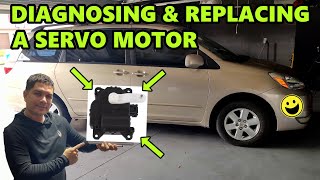
- Toyota Sienna (2011-2018) 🎬 See how to diagnose and repair Sienna blend door issues. — The rear air mix servo is a frequent failure point on models with rear climate control. Repair costs are high due to access difficulty.
- Dodge / Ram Ram 1500/2500/3500, Durango, Charger (2014-2018) — Commonly affected by the 'Cabin EQ Mismatch Performance' issue after radio swaps or software updates. TSB 08-083-15 provides details for a software re-flash.
- Jeep Wrangler (JL), Grand Cherokee (WK2) (2014-2023) — B1488 is the 'Cabin EQ Mismatch Performance' audio fault, often seen after dealer software updates or aftermarket stereo installations.
- Mitsubishi Outlander, Lancer (2007-2017) 🎬 Watch: How to diagnose and fix Mitsubishi airbag light faults. — B1488 indicates 'Air Bag Off Indicator Lamp Circuit Malfunction.' This is a critical safety fault disabling the entire airbag system.
- Kia Optima, Sorento (2011-2018) — B1488 indicates 'Passenger Airbag Short To Power Feed (VSS)', a critical safety system fault requiring immediate diagnosis.
- Ford / Lincoln Focus, Escape (2012-2018) — B1488 means 'Door Handle Right Front Circuit Open', related to a failed keyless entry handle sensor.
Manufacturer-Specific Notes
- Mitsubishi / Kia: B1488 means 'Air Bag Off Indicator Lamp Circuit Malfunction'. This is a HIGH SEVERITY issue. The SRS control unit detects a short and disables the ENTIRE Supplemental Restraint System. Airbags will NOT deploy in a crash until fixed.
- Dodge / Ram / Chrysler / Jeep: B1488 means 'Cabin EQ Mismatch Performance.' This is an audio system software fault, not a hardware failure. It happens when the radio and amplifier's acoustic settings do not match. The fix is a software re-flash by a dealer.
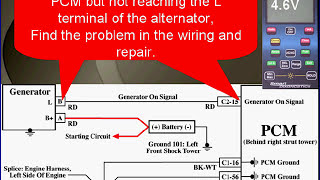
- Chevrolet / GM: B1488 is defined as 'Generator L-Terminal Circuit High Voltage'. This points to a problem with the alternator's control circuit, caused by a faulty alternator, damaged wiring, or an Engine Control Module (ECM) issue.
- Ford / Lincoln: B1488 is defined as 'Door Handle Right Front Circuit Open'. This indicates the Body Control Module detected an open circuit in the passenger door handle sensor, disabling the keyless entry feature for that door.
- Toyota / Lexus: Toyota/Lexus issued Customer Support Programs (20TE01 and 20LE01) for this issue on specific models. These programs involve reprogramming the A/C amplifier and replacing failed servo motors free of charge, even outside standard warranty.
Real Owner Stories
2011 Toyota Sienna with clicking dash and incorrect passenger-side temperature
Owner experienced a constant clicking noise from behind the glovebox, and the passenger vents were stuck blowing hot air.
What they tried:
- Researched the issue online and identified the passenger-side blend door actuator (servo motor) as the culprit.
Outcome: Purchased a replacement servo motor for $150 and replaced it themselves. The repair involved removing the glove box for access and took 2 hours, resolving both the noise and temperature problem.
Lesson: A clicking dash on a Toyota/Lexus is a classic sign of a failing HVAC servo. If accessible behind the glovebox, this is a highly manageable DIY repair that saves hundreds on labor.
2015 Ram 1500 with B1488 after an audio system upgrade
After upgrading from a stock 6-speaker system to a 7-speaker system with an amplifier, the owner found a stored B1488 'Cabin EQ Mismatch' code.
What they tried:
- Attempted to clear the code with a basic scan tool, but it immediately returned.
- Used AlfaOBD diagnostic software to change the vehicle configuration, but no exact match was available.
Outcome: The code remained stored with no audible issues. The owner chose to ignore the benign code rather than pay for a dealer re-flash.
Lesson: On Dodge/Ram vehicles, B1488 is a software code triggered by replacing audio components. A trip to the dealer for a $150-$250 software re-flash is required to make the modules communicate correctly.
2011 Mitsubishi Outlander Sport with 'Airbag System Service Required' message
Immediately after having the windows tinted, the airbag warning message appeared. The technician had pushed the passenger seat aggressively backward.
What they tried:
- Checked the wiring harness under the seat and pushed the yellow connectors together securely.
- Attempted to reset the system by disconnecting the battery, but the light remained on.
Outcome: The owner learned that Mitsubishi SRS codes must be cleared with a professional scan tool. The issue was a momentarily loose connector, but the code latched in the module's memory.
Lesson: If a Mitsubishi airbag light appears after moving the passenger seat, check the yellow under-seat connectors first. You must visit a shop with a proper scan tool to clear the code; a battery disconnect will not work.
How to Prevent This Code From Triggering
- Cycle HVAC Temperature and Modes Periodically (Monthly) — Moving the Toyota/Lexus HVAC servo motors through their full range of motion prevents internal contacts from oxidizing and plastic gears from seizing due to inactivity.
- Keep Underseat Areas Clean and Dry (During vehicle cleaning) — Critical Mitsubishi/Kia SRS connectors are located under the passenger seat. Spilled liquids or excessive moisture cause corrosion and short circuits, triggering airbag faults.
- Use a Battery Tender for Long-Term Storage (When vehicle is parked for 2+ weeks) — Maintains a stable voltage, preventing modern control modules from losing their memory, which triggers software-based faults like B1488 on Dodge/Jeep or requires re-initialization on Toyota/Lexus.
- Inspect and Secure Wiring After Dash/Seat Work (After any interior repairs) — Working under the dash or seats risks pinching a wire or leaving a connector loose. Verifying system function immediately catches wiring issues before they become intermittent problems.
Frequently Asked Questions
Why does OBD-II code B1488 have so many different meanings?
Codes starting with 'P' (Powertrain) are standardized by the SAE. However, codes starting with 'B' (Body) are manufacturer-specific. This allows automakers to create codes for unique systems, meaning B1488 points to HVAC in Toyota, airbags in Mitsubishi, and audio in Dodge.
What is the most common misdiagnosis for B1488?
For Toyota/Lexus, it is replacing the servo motor when the root cause is software in the A/C amplifier. For Dodge/Ram, it is replacing the expensive amplifier when a simple software re-flash is needed. The most dangerous misdiagnosis is ignoring B1488 on a Mitsubishi, assuming it is a minor issue rather than a critical airbag failure.
I replaced the Toyota servo motor, but the clicking continues. What now?
The system likely needs re-initialization with a scan tool to learn the new part's position. Alternatively, the problem was never the motor, but the A/C amplifier that controls it. If multiple HVAC codes are present, the amplifier is the prime suspect.
Can I fix the HVAC blend door actuator (servo motor) myself?
Yes, for many vehicles this is a manageable DIY repair if you are comfortable working in tight spaces. Access is the biggest challenge; some servos are easily reached behind the glove box, while others require removing the entire dashboard. The part itself is usually inexpensive.
My car has the Mitsubishi version of B1488. Is it safe to drive?
It is strongly advised NOT to drive the vehicle until it is repaired. This code indicates the entire airbag system is disabled as a safety precaution. In a collision, the airbags and seatbelt pretensioners will not deploy, drastically increasing injury risk.
Why is the repair cost for a blend door actuator so high?
The high cost is almost entirely due to labor. While the actuator part costs $50-$250, accessing it on some vehicles requires a technician to remove the entire instrument panel assembly, a job taking 8-10 hours.
What is 'Cabin EQ Mismatch Performance' on my Dodge/Jeep?
It is a software communication error where the radio's acoustic settings do not match the external amplifier. This is not a hardware failure and causes no audible symptoms. A dealer must reprogram the modules so they match to clear the code.
Can I just clear the B1488 code?
You can clear the code with a scanner, but it returns immediately if the underlying fault remains. For software issues, the code stays away temporarily but comes back. For a hardware fault, the code reappears as soon as the module runs its self-test.
Key Takeaways
- Code B1488 has 4 completely different manufacturer definitions, ranging from a harmless Dodge audio glitch to a critical Mitsubishi airbag failure.
- On Toyota and Lexus vehicles, B1488 indicates a failed HVAC air mix servo motor, a repair costing between $250 and $1,500 depending on dashboard removal requirements.
- Driving a Mitsubishi or Kia with code B1488 is dangerous because it disables the entire SRS system, meaning airbags will not deploy in a crash.
- Dodge, Ram, and Jeep owners seeing B1488 have a 'Cabin EQ Mismatch' software bug that requires a $150 to $250 dealer re-flash to resolve.
- You must use an advanced OBD-II scanner capable of reading Body (B) and Chassis (C) codes to diagnose B1488, as a basic $20 engine code reader will show 'No Codes Found'.
Helpful Videos



Shop the Parts Behind B1488
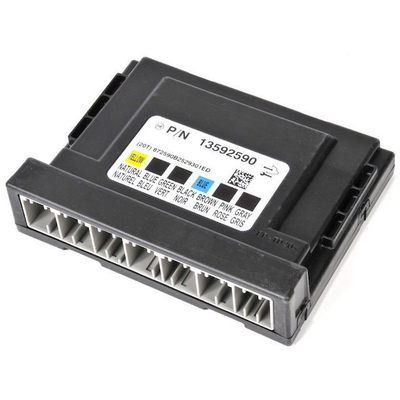
Below are the parts most often responsible for code B1488, ranked by how frequently each one is the actual culprit (per the diagnosis above). Tap any to see what we have for your vehicle.



The information in this article is provided for general reference and educational purposes only. Vehicle specifications, procedures, and part compatibility can vary by production date, trim level, and region. Always consult your vehicle's factory service manual and verify part numbers before purchasing or performing repairs. Safety-critical components such as airbags, seat belts, and braking systems should be installed by a qualified professional.
- 🎬 Helpful Videos
- 🛍️ Shop This Part
- What Does B1488 Mean?
- Can I Drive With B1488?
- Common Causes
- Symptoms
- Common Fixes & Costs
- Used vs. New Parts: Buying Guide
- What Happens If You Wait — Timeline
- Cost of Not Fixing It
- Diagnosis Steps
- When This Code Triggers (Freeze-Frame Conditions)
- Related Codes
- Climate & Environmental Factors
- How to Talk to a Mechanic About This Code
- Where to Take It: Dealer vs Independent vs Chain
- When to Walk Away From the Repair
- What Scan Tool You Need for This Code
- How to Clear the Code After You Fix It
- Will This Fail Emissions / State Inspection?
- Most Commonly Affected Vehicles
- Manufacturer-Specific Notes
- Real Owner Stories
- 2011 Toyota Sienna with clicking dash and incorrect passenger-side temperature
- 2015 Ram 1500 with B1488 after an audio system upgrade
- 2011 Mitsubishi Outlander Sport with 'Airbag System Service Required' message
- How to Prevent This Code From Triggering
- Frequently Asked Questions
- Why does OBD-II code B1488 have so many different meanings?
- What is the most common misdiagnosis for B1488?
- I replaced the Toyota servo motor, but the clicking continues. What now?
- Can I fix the HVAC blend door actuator (servo motor) myself?
- My car has the Mitsubishi version of B1488. Is it safe to drive?
- Why is the repair cost for a blend door actuator so high?
- What is 'Cabin EQ Mismatch Performance' on my Dodge/Jeep?
- Can I just clear the B1488 code?
- Key Takeaways
- 🎟️ Get 5% Off