

OBD-II Code B1495: Comprehensive Guide to a Critical Safety Fault
What B1495 means, why it triggers, and how to fix it for good
- A B1495 code disables your vehicle's airbags and seat belt pretensioners, increasing fatality risk by 29% in a frontal crash; do not drive until repaired.
- Always disconnect the negative battery terminal and wait 15 minutes before touching the bright yellow SRS connectors to prevent accidental deployment.
- Inspect the wiring under the front seats first, as 80% of SRS circuit faults stem from loose or damaged yellow connectors caused by seat movement.
- Never use a standard $20 OBD-II engine scanner for a B1495 code; you must use an advanced scanner capable of reading Body (B-prefix) and SRS modules.
- Check for Technical Service Bulletins (TSBs) before buying parts, as vehicles like the 2006-2009 Hyundai Azera have active recalls (Campaign 094) that fix this code for free.
What Does B1495 Mean?
The B1495 code means your car's body control module (BCM) or Supplemental Restraint System (SRS) module has detected a critical electrical fault in a safety circuit. This is most often a damaged wire or loose sensor connection in the seat belt or airbag system. The computer illuminates the airbag warning light to alert you that the affected safety system is disabled to prevent accidental deployment.
Technical definition: The official SAE/ISO definition for B1495 varies significantly by manufacturer. A generic definition is "Decklid Punch-Out Sensor Circuit Failure." However, automakers frequently use it to indicate a specific circuit fault in the Supplemental Restraint System (SRS). For example, Hyundai defines it as "Passenger Seat Belt Pretensioner Resistance Low," while Kia uses it for an "Engine Time-out Error" on the CAN bus. Ford uses it for hands-free liftgate sensor failures. In all cases, it points to a circuit that is open, shorted, or has out-of-range resistance.
Can I Drive With B1495?
No — Do Not Drive. No, it is not safe to drive. A B1495 code means a critical safety system, such as your airbags or seat belt pretensioners, is disabled by the vehicle's computer. In a crash, these systems will not deploy, significantly increasing the risk of serious injury or death. Frontal airbags alone reduce driver fatalities by 29%. Driving with this light on also causes automatic failure during state safety inspections and carries severe insurance liability in an accident.
Common Causes
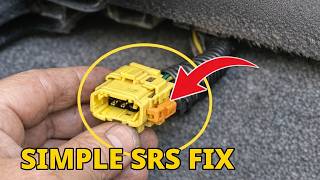
- Damaged, Loose, or Corroded Under-Seat Wiring (Very Common) — The wiring for the seat belt pretensioner and occupant sensors runs under the front seats. Constant seat movement, stored items, or spilled liquids pull, chafe, and corrode these bright yellow connectors, causing a high-resistance fault. 🎬 Watch: How to fix loose under-seat SRS connectors
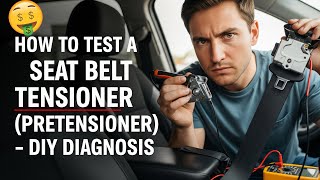
- Faulty Seat Belt Pretensioner (Common) — The seat belt pretensioner is a pyrotechnic charge that tightens the belt during a crash. If the pretensioner's internal resistance fails or the squib ages out of specification, the SRS module triggers this code.
- Low Battery Voltage or Post-Replacement Glitches (Common) — A weak battery causes low voltage conditions that trigger spurious faults in sensitive electronic modules. Owners frequently report this code appearing immediately after jump-starting the vehicle or replacing the battery, requiring a hard module reset.
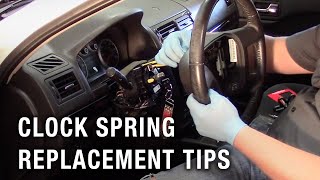
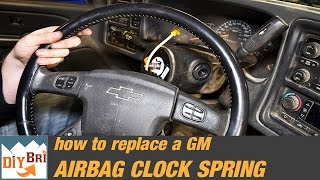
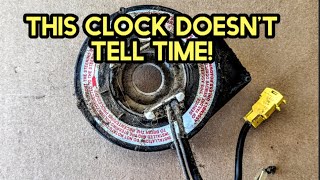
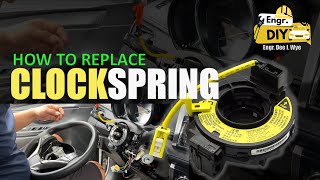
- Faulty Clock Spring (Common) — The clock spring is a coiled wire in the steering column maintaining the electrical connection for the driver's airbag. A broken ribbon cable inside the clock spring causes an open or shorted circuit, triggering an SRS code. 🎬 Watch this step-by-step guide to replacing a clock spring
- Shorted Rear Bumper/Liftgate Harness (Rare) — On Ford and Mazda vehicles, B1495 relates to the hands-free liftgate. A short circuit in the rear bumper wiring harness, usually from moisture or physical damage, blows a fuse and disables the liftgate function.
- Faulty SRS Airbag Module (Rare) — The SRS airbag module is the main computer for the safety system. It fails due to internal shorts, water damage, or after storing crash data from an accident. This is the last component to suspect after ruling out all wiring.
Symptoms
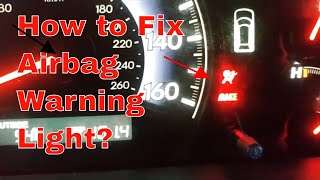
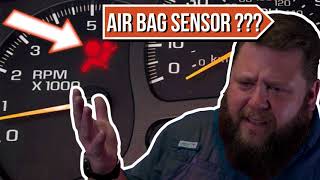
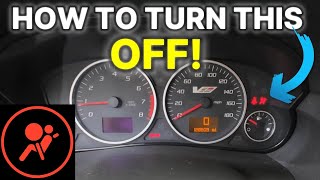
- Airbag Warning Light is On — The airbag light stays illuminated continuously while the engine is running, indicating an active SRS fault.
- Safety Systems Disabled — The affected airbag and seat belt pretensioner will not deploy or tighten during a collision.
- Warning Message on Instrument Cluster — The dashboard displays a text message such as 'Service Airbag System' or 'Restraint System Fault'.
- Hands-Free Liftgate Not Working — On specific Ford and Mazda models, the hands-free foot sensor fails to open the rear liftgate.
Common Fixes & Costs
- Repairing Under-Seat Wiring/Connector — Parts: $5-$20, Labor: $125-$275, ~1.5 hr book time (Intermediate)
- Replacing Seat Belt Pretensioner Assembly
— Parts: $250-$550, Labor: $150-$350, ~1.2 hr book time
(Professional)
: OEM - Replacing Clock Spring
— Parts: $100-$400, Labor: $150-$300, ~1.8 hr book time
(Intermediate)
: OEM - Replacing Hands-Free Liftgate Sensor/Harness
— Parts: $150-$300, Labor: $100-$200, ~1.0 hr book time
(Intermediate)
: OEM - Resetting the SRS Airbag Module — Parts: $0-$60, Labor: $100-$200, ~1.0 hr book time (Professional)
Used vs. New Parts: Buying Guide
When a used part is worth it: For pyrotechnic parts (pretensioners), used parts are strongly discouraged due to safety liability. Rebuild services from reputable companies are a safe alternative. For non-pyrotechnic parts like wiring harnesses, a used part from a low-mileage donor is acceptable.
Donor-vehicle mileage cap: roughly under 60000 miles for the part to have meaningful remaining life.
Donor quality checklist:
- Never buy a used, non-deployed pyrotechnic device from a private seller due to unknown history.
- For rebuild services, choose established companies offering warranties (e.g., Safety Restore).
- For used wiring, match the part number exactly and verify the donor vehicle lacks flood damage.
Decision logic:
- If The part is a pyrotechnic device (pretensioner, airbag). → Buy new OEM, or use a professional rebuild service. Do NOT buy used.
- If The part is a simple sensor or wiring harness and the vehicle is high-mileage. → A used part from a certified recycler is a budget-friendly option.
- If The cost of a new OEM part is less than $150. → Buy new for peace of mind and warranty.
Warranty tradeoff: Used junkyard parts have a 30-90 day warranty. Professional rebuild services offer limited lifetime warranties. New OEM parts carry a 1-year/12,000-mile warranty.
Worst-case if a used part fails: $2000+ if a faulty used safety component fails to operate in a crash, leading to severe injury.
Cost of Not Fixing It
- Immediate: Airbags and seat belt pretensioners are disabled and will not deploy in a crash, drastically increasing the risk of serious injury or death. (Added cost: N/A)
- 0-12 months: Failure to pass mandatory state safety inspections, leading to fines and inability to renew registration. (Added cost: $50 - $500 in fines and re-inspection fees.)
- At next accident: Insurance claim denial or reduced payout for personal injuries due to negligent maintenance of a critical safety system. (Added cost: Potentially thousands in denied claims or legal liability.)
Diagnosis Steps
- Read the Manufacturer-Specific Fault Code
Use an OBD-II scanner capable of reading SRS/Body (B-prefix) codes. Basic engine readers will not see them. Note the full manufacturer-specific definition (e.g., 'Passenger Pretensioner Resistance Low' vs. 'Decklid Sensor'), as this dictates the entire diagnostic path.
Tools: OBD-II Scanner (with SRS/BCM capability) (Beginner) - Check for Technical Service Bulletins (TSBs)
Search online for your vehicle's make, model, year, and "B1495 TSB". Manufacturers release bulletins for known problems, such as Hyundai's Recall Campaign 094 for the 2006-2009 Azera, which fixes this exact code for free.
Tools: Internet access (Beginner) - Visually Inspect Under the Seats
Look under both front seats for loose connectors or damaged wires. Airbag system connectors are bright yellow. Check for unplugged harnesses, stretched wires, or worn insulation caused by seat movement.
Tools: Flashlight (Beginner) - Secure Connectors and Clear Codes
Disconnect the negative battery terminal and wait 15 minutes to discharge the backup power. Unplug and firmly reconnect the yellow connectors under the seat. Use a zip tie to hold the connector halves tightly together. Reconnect the battery and clear the codes.
Tools: Wrench or socket for battery terminal, zip ties (Beginner) - Measure Pretensioner Circuit Resistance
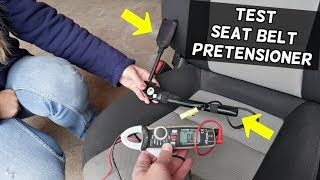
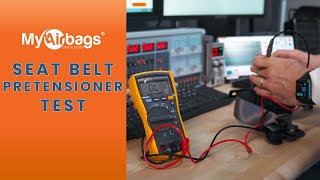
With the battery disconnected, unplug the pretensioner connector. Use a multimeter to measure resistance across the two pins on the pretensioner side. A healthy squib reads between 2.0 and 3.0 ohms. 🎬 See how to perform a pretensioner resistance test Near zero ohms indicates a short; an open loop (OL) indicates a broken circuit.
Tools: Digital Multimeter, vehicle-specific service manual (Advanced) - Analyze Live SRS Data PIDs
Using an advanced scan tool, access the live data stream for the SRS module. Monitor the 'Passenger Seat Belt Pretensioner Resistance' PID. A reading of 0 ohms or above 5 ohms confirms a hard fault the module sees in real-time.
Tools: Advanced OBD-II Scanner (with Live Data & SRS capability) (Advanced) - Inspect Related Fuses (Liftgate Issues)
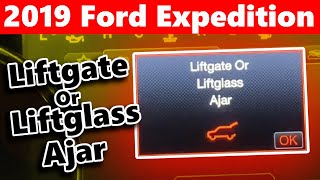
For non-SRS B1495 codes, such as the Ford Expedition's hands-free liftgate fault, check the related fuses in the Body Control Module (BCM). A shorted harness in the rear bumper blows the fuse, disabling the circuit.
Tools: Fuse puller, owner's manual (Intermediate) - Test the SRS Module
If all wiring and components pass inspection, the SRS module itself is faulty. This requires a professional-grade scan tool to perform module self-tests and is a job for a certified technician.
Tools: Professional diagnostic scan tool (Professional)
When This Code Triggers (Freeze-Frame Conditions)
- System Self-Test: KOEO (Key On, Engine Off) (The SRS module performs a self-check of all components every time the ignition turns on. Most B1495 faults are detected before the engine starts.)
- Vehicle Speed: 0 mph (Faults register at startup. Intermittent wiring faults trigger the code at any speed when a connection is momentarily lost due to vibration.)
- Battery Voltage: 11.8V - 12.5V (The fault logs during the pre-crank phase when system voltage is lowest. A weak battery causes voltage to dip below the module's operating threshold.)
- Component Resistance: 0 Ohms or > 5 Ohms (The module monitors resistance. A value near 0 indicates a short circuit, while a high reading indicates a broken wire. Normal reading is 2-3 Ohms.)
Related Codes
- B1489 — Indicates 'Occupant Classification System' faults and appears with B1495 on Hyundai vehicles. The wiring for both sensors shares the same harness under the passenger seat.
- B1491 — On Hyundai models, this indicates 'Resistance High' (open circuit), the exact opposite of B1495's 'Resistance Low' (short circuit). A multimeter test easily differentiates them.
- B0052 — A generic code for 'Passenger Seatbelt Sensor Circuit' pointing to the same underlying issue as a manufacturer-specific B1495 code.
- U0140 — Indicates 'Lost Communication With Body Control Module'. If present with B1495, it proves a broader network communication problem rather than a single failed sensor.
Climate & Environmental Factors
- High Humidity / Moisture: Moisture from rain, snowmelt, or spills seeps under carpets and into electrical connectors. This corrodes the pins for pretensioners or seat sensors, increasing circuit resistance and triggering faults.
- Extreme Cold: Cold temperatures temporarily increase resistance in wiring and lower battery output voltage during cranking. This causes sensitive SRS modules to register spurious faults that often disappear after the cabin warms up.
- Road Salt: Road salt accelerates corrosion of wiring and sensors located on the vehicle's underbody or in the bumpers, directly causing shorts in hands-free liftgate sensors.
How to Clear the Code After You Fix It
- Ensure the underlying electrical or component fault is physically repaired.
- Reconnect the main vehicle battery if disconnected for safety.
- Use an SRS-capable OBD-II scan tool to connect to the Restraint Control Module.
- Select the 'Clear DTCs' or 'Erase Codes' function.
- Cycle the ignition off and back on to verify the airbag light extinguishes after the initial self-check.
Drive cycle (~10 minutes): SRS systems do not require a complex drive cycle. After clearing the code, a 10-minute drive with turns confirms that intermittent wiring issues do not cause the fault to return. The primary test is the key-on self-check.
Readiness monitors affected: Not applicable to SRS codes
Watch out for:
- Using a basic engine code reader that cannot communicate with the SRS module.
- Failing to fix the root cause; the code reappears instantly upon the next key cycle.
- Assuming disconnecting the battery clears a 'hard fault' stored in the SRS module's memory.
- Ignoring post-crash 'hard codes' that require professional module replacement.
Will This Fail Emissions / State Inspection?
No — by itself this code doesn't fail OBD inspection (but it can keep readiness monitors from setting, which causes a separate fail).
- California: An airbag light does NOT cause a smog check failure. However, a lit airbag light fails broader safety inspections required for salvaged vehicles.
- New York: An illuminated airbag warning light is an advisement, not a cause for rejection during a safety inspection. The vehicle still passes.
- Texas: An illuminated airbag light is NOT a cause for failure in the Texas state safety inspection.
Most Commonly Affected Vehicles
- Hyundai Azera (2006-2009) — Subject to Recall Campaign 094 and TSB 10-01-008 for a shorted Belt Tension Sensor wire harness. The dealer fixes this free of charge.
- Ford Mustang Mach-E (2021-2022) — Appears as 'Decklid Punch-Out Sensor Circuit Failure' affecting the hands-free liftgate. Often triggered by over-the-air (OTA) software updates.
- Ford Expedition (2018-2020) — Caused by a blown fuse resulting from a shorted electrical harness in the rear bumper due to moisture ingress.
- Kia Optima / Sorento (2010-2015) — B1495 indicates 'Engine Time-out Error (TC-SST)', a communication problem on the CAN bus network between the ECM and transmission, not an SRS fault.
- Mazda CX-9 (2020-2022) — Service Alert SA-039/20 addresses DTC B1495:87 appearing after an accessory trailer hitch is installed without completing the liftgate foot sensor deactivation.
- Jeep Wrangler (JL) (2018-2022) — Appears alongside B0050 after battery replacement or jump-starts due to voltage changes in the complex dual-battery system.
- Chrysler Pacifica (2017-2021) — Points to a faulty seat belt tension sensor. The wiring harness running through the sliding door jamb chafes and breaks over time.
Manufacturer-Specific Notes
- : B1495 means 'Passenger Seat Belt Pretensioner Resistance Low,' pointing to a short circuit. However, on 2010-2015 Kia models, B1495 means 'Engine Time-out Error,' a CAN bus communication issue completely unrelated to the SRS system.
- : Ford uses B1495 for multiple unrelated systems. It means 'LF In ABS Solenoid Circuit Short To Ground' on older models, but on modern SUVs with hands-free liftgates, it means 'Decklid Punch-Out Sensor Circuit Failure'.
- : On the CX-9, B1495 is accompanied by a sub-code like B1495:87, indicating a 'LIN Communication Error' with the liftgate sensor. This is a known issue triggered by improper installation of an accessory trailer hitch.
- : On the Pacifica or Wrangler, B1495 relates to the seat belt tension sensor. Spurious codes frequently appear immediately after battery replacement due to voltage fluctuations, requiring a module reset.
Frequently Asked Questions
What is the most common misdiagnosis for B1495?
The most costly mistake is replacing the seat belt pretensioner or SRS module when the actual problem is a loose wire under the seat. Always perform a thorough visual inspection of the yellow under-seat connectors before ordering parts.
Why won't my cheap OBD-II scanner see the B1495 code?
Inexpensive scanners only read generic powertrain codes (P-codes) from the engine control unit. B1495 is a Body code (B-code) stored in the SRS or Body Control Module. You must use an advanced scanner with specific software to communicate with these modules.
Can I just clear the B1495 code to turn off the airbag light?
You can clear the code with a capable scanner, but if the electrical problem remains, the code returns immediately as a 'hard fault'. Your airbags remain disabled until the physical fault is repaired.
Is it safe to work on airbag wiring myself?
It is safe only if you disconnect the negative battery terminal and wait 15 minutes before handling any yellow airbag connectors. This discharges the backup power capacitors, preventing accidental deployment and serious injury.
Why is the airbag connector always yellow?
Automakers use bright yellow for all SRS wiring as a universal warning. This alerts technicians and first responders that they are handling a high-stakes safety system containing pyrotechnic charges.
Will my car pass inspection with code B1495?
No. In jurisdictions with safety inspections, an illuminated airbag warning light is an automatic failure. The B1495 code directly causes this light to illuminate.
My airbag light came on after I adjusted the seat. What should I do?
This guarantees the problem is a loose wire or connector under that seat. Disconnect the battery, wait 15 minutes, then unplug and firmly reconnect the yellow connector. Secure it with a zip tie to prevent future movement.
What does the sub-code like ':87' mean on my Mazda B1495 code?
The two digits are a Failure Type Byte (FTB) providing specific diagnostic data. For example, B1495:87 on a Mazda CX-9 indicates a 'LIN Communication Error'. This points directly to a communication network problem rather than a simple sensor failure.
Key Takeaways
- A B1495 code disables your vehicle's airbags and seat belt pretensioners, increasing fatality risk by 29% in a frontal crash; do not drive until repaired.
- Always disconnect the negative battery terminal and wait 15 minutes before touching the bright yellow SRS connectors to prevent accidental deployment.
- Inspect the wiring under the front seats first, as 80% of SRS circuit faults stem from loose or damaged yellow connectors caused by seat movement.
- Never use a standard $20 OBD-II engine scanner for a B1495 code; you must use an advanced scanner capable of reading Body (B-prefix) and SRS modules.
- Check for Technical Service Bulletins (TSBs) before buying parts, as vehicles like the 2006-2009 Hyundai Azera have active recalls (Campaign 094) that fix this code for free.
Helpful Videos

Shop the Parts Behind B1495
Below are the parts most often responsible for code B1495, ranked by how frequently each one is the actual culprit (per the diagnosis above). Tap any to see what we have for your vehicle.



The information in this article is provided for general reference and educational purposes only. Vehicle specifications, procedures, and part compatibility can vary by production date, trim level, and region. Always consult your vehicle's factory service manual and verify part numbers before purchasing or performing repairs. Safety-critical components such as airbags, seat belts, and braking systems should be installed by a qualified professional.
- 🎬 Helpful Videos
- 🛍️ Shop This Part
- What Does B1495 Mean?
- Can I Drive With B1495?
- Common Causes
- Symptoms
- Common Fixes & Costs
- Used vs. New Parts: Buying Guide
- Cost of Not Fixing It
- Diagnosis Steps
- When This Code Triggers (Freeze-Frame Conditions)
- Related Codes
- Climate & Environmental Factors
- How to Clear the Code After You Fix It
- Will This Fail Emissions / State Inspection?
- Most Commonly Affected Vehicles
- Manufacturer-Specific Notes
- Frequently Asked Questions
- What is the most common misdiagnosis for B1495?
- Why won't my cheap OBD-II scanner see the B1495 code?
- Can I just clear the B1495 code to turn off the airbag light?
- Is it safe to work on airbag wiring myself?
- Why is the airbag connector always yellow?
- Will my car pass inspection with code B1495?
- My airbag light came on after I adjusted the seat. What should I do?
- What does the sub-code like ':87' mean on my Mazda B1495 code?
- Key Takeaways
- 🎟️ Get 5% Off