

OBD-II Code B1496: Traction Control Switch Circuit Open
What B1496 means, why it triggers, and how to fix it
- On Ford, Lincoln, and Mercury vehicles, B1496 almost always indicates a failed traction control switch, which costs under $100 to replace and is usually caused by spilled liquids.
- If you drive a Hyundai or Kia, B1496 triggers the airbag light and means the passenger Occupant Classification System (OCS) requires a $150-$200 dealer recalibration.
- Driving with code B1496 is mechanically safe, but completely disables your traction and stability control systems, requiring increased following distances on wet or icy roads.
- Before buying parts, spend 5 minutes testing the traction control switch for continuity with a multimeter; a reading of 'O.L.' when pressed confirms the switch is dead.
- Never replace a $500+ ABS or Body Control Module for this code until you have verified the 5V or 12V reference signal at the switch connector and checked the related 10-amp fuses.
What Does B1496 Mean?
Code B1496 means the vehicle's control module detects an open electrical circuit at the traction control on/off switch. The computer receives no signal when you press the button, prompting it to disable the traction control system as a safety precaution.
Technical definition: The SAE defines B1496 as "Traction Control Switch Circuit Open." The Anti-Lock Brake System (ABS) or Body Control Module (BCM) detects a loss of electrical continuity in the driver-operated traction control switch circuit. Note: On Hyundai and Kia vehicles, this exact code indicates an uncalibrated passenger airbag Occupant Classification System (OCS) 🎬 Watch: Quick tip for resetting the Hyundai occupant detection system..
Can I Drive With B1496?
Yes, But With Caution. Driving is mechanically safe, as your primary brakes remain fully functional. However, your Traction Control (TCS) and Electronic Stability Control (ESC) systems are completely disabled. This drastically increases the risk of skidding during emergency maneuvers or on wet, snowy, or gravel roads. Drive with extreme caution until repaired.
Common Causes
- Spilled Liquid on the Switch (Very Common) — The traction control switch is often located in the center console, making it a prime target for drinks. Liquid seeps into the switch, causing immediate short circuits or long-term corrosion that breaks the electrical connection.
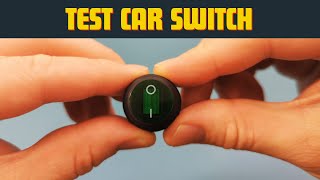
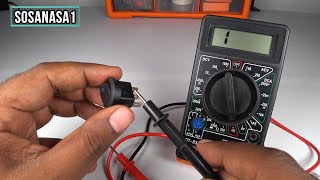
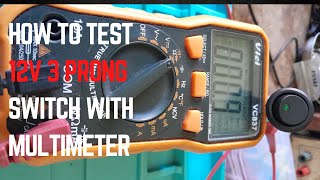
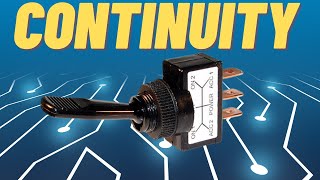
- Failed Traction Control Switch (Common) — The switch is a mechanical part with internal contacts that wear out or snap from repeated use. This internal failure prevents the switch from completing the circuit when pressed. 🎬 Watch: A simple guide on how to test a switch.
- Uncalibrated Occupant Classification System (OCS) (Common On Specific Makes) — On Hyundai and Kia models, B1496 does not relate to the traction switch. It means the passenger seat Occupant Classification System (OCS) lost its calibration. This airbag system fault frequently triggers after a battery replacement or seat removal. 🎬 See how to fix Hyundai and Kia airbag light issues.
- Damaged Wiring or Connector (Common) — Wires leading to the switch fray, pinch, or cut under the dash or center console. The connector plugging into the switch also loosens or corrodes, breaking the circuit.
- Blown Fuse (Less Common) — A dedicated fuse protects the traction control switch circuit. If this fuse blows due to a power surge or short, the circuit loses power and registers as open.
- Damaged Clock Spring (Less Common) — The clock spring is a coiled wire assembly in the steering column. If your traction control button is on the steering wheel and the internal ribbon cable breaks, it causes an open circuit, usually accompanied by an airbag light.
- Rodent Damage to Harness (Less Common) — Rodents chew on wiring harnesses, causing unexplained open circuits. This frequently happens to wires running under seats or through the firewall.
- Faulty Control Module (ABS/BCM/SRSCM) (Rare) — The control module reading the switch's signal fails internally. This is the least likely cause and requires ruling out all switches, fuses, and wiring first.
Symptoms
- Traction Control (TCS/ESC) Warning Light is On — The dashboard light depicting a car with squiggly lines stays illuminated, indicating the traction and stability systems are disabled.
- Airbag Warning Light is On — On Hyundai and Kia vehicles, the primary symptom is an illuminated SRS/Airbag warning light, indicating the passenger seat sensor is uncalibrated.
- Traction Control Button Unresponsive — Pressing the button to toggle the traction control system has no effect, and the status light on the button remains off.
- ABS Warning Light is On — Because traction control utilizes the Anti-Lock Braking System (ABS) hardware, a TCS fault often triggers the ABS warning light simultaneously.
Common Fixes & Costs
- Replace Traction Control Switch — Parts: $30-$100, Labor: $100-$150, ~0.8 hr book time (DIY)
- Recalibrate Occupant Classification System (OCS) — Parts: $0, Labor: $150-$200, ~1 hr book time (Pro Only)
- Clean Switch and Connector — Parts: $10-$20, Labor: $0-$100, ~0.5 hr book time (DIY)
- Replace Blown Fuse — Parts: $2-$5, Labor: $0, ~0.1 hr book time (DIY)
- Repair Damaged Wiring — Parts: $10-$30, Labor: $150-$300, ~2 hr book time (Intermediate)
- Replace Clock Spring — Parts: $100-$350, Labor: $150-$300, ~1.5 hr book time (Advanced)
- Replace OCS Sensor Mat — Parts: $300-$1000, Labor: $200-$400, ~2.5 hr book time (Pro Only)
DIY vs Professional
- Replace Traction Control Switch 🟢 Beginner
Tools: Trim removal tools, screwdriver set, socket set (sometimes). - Clean Switch and Connector 🟢 Beginner
Tools: Trim removal tools, electrical contact cleaner, small brush. - Repair Damaged Wiring 🟢 Beginner
Tools: Multimeter, wire strippers, soldering iron, solder, heat-shrink tubing. - Replace Blown Fuse 🟢 Beginner
Tools: Fuse puller or needle-nose pliers. - Recalibrate Occupant Classification System (OCS) 🟢 Beginner
Tools: Manufacturer-specific diagnostic scan tool (e.g., Hyundai GDS, Kia KDS). - Replace Clock Spring 🟢 Beginner
Tools: Steering wheel puller, socket set, torque wrench, scan tool (for SAS reset).
Used vs. New Parts: Buying Guide
When a used part is worth it: For a simple traction control switch, a used OEM part from a reputable recycler is a cost-effective option. For a safety-critical OCS sensor mat, buying used is highly risky and not recommended unless sourced from a certified reseller guaranteeing non-deployed status.
Donor-vehicle mileage cap: roughly under 100000 miles for the part to have meaningful remaining life.
Donor quality checklist:
- Verify the used part is an exact match by part number.
- For switches, ensure there is no physical damage or sticky residue from liquid spills.
- For OCS sensors, only buy from certified automotive recyclers who verify the part's history.
- Avoid parts from vehicles with flood or fire damage.
Decision logic:
- If Part is a simple switch and a new OEM part is under $100 → Buy new for peace of mind and a longer lifespan.
- If Part is a safety-critical OCS sensor mat or clock spring → Buy a new OEM part. The risk of a used part failing in an accident is too high.
- If Vehicle is very old and budget is the primary concern → A used switch is acceptable. A used OCS mat is an absolute last resort.
Warranty tradeoff: Used parts from salvage yards offer a 30-90 day warranty. New aftermarket parts offer a 1-year to limited lifetime warranty. New OEM parts carry a 12-month/12,000-mile warranty.
Worst-case if a used part fails: $200-$500 if a used part fails after installation, requiring repeat labor costs plus the cost of another replacement part.
Cost of Not Fixing It
- Immediate: Loss of traction control and electronic stability control. Significantly increased risk of losing vehicle control in slippery conditions or during an emergency maneuver. (Added cost: N/A)
- Immediate (Hyundai/Kia OCS Fault): The passenger airbag system disables or fails to deploy correctly in an accident, posing a major safety risk to the front passenger. (Added cost: N/A)
- Next State Inspection: Vehicle fails state safety inspection in many jurisdictions due to the illuminated ABS, TCS, or Airbag warning light. (Added cost: $20-$70 (for re-inspection fee))
Diagnosis Steps
- Check for Spills and Obvious Damage
Visually inspect the traction control switch. Look for sticky residue from spilled drinks, physical damage to the button, or debris jamming the switch's movement.
Tools: Flashlight (Beginner) - Verify Fuse Integrity
Locate the fuse box and find fuses labeled ABS, BCM, ESC, or SRS. Remove each fuse and inspect the internal metal strip. Replace any broken fuse with one of the exact same amperage.
Tools: Owner's manual, fuse puller or needle-nose pliers (Beginner) - Analyze Scan Tool Live Data (Hyundai/Kia Only)
If diagnosing a Hyundai or Kia, connect an advanced scan tool. Navigate to the Occupant Classification System live data. If the sensor reads an error or fails to change status when someone sits in the passenger seat, the OCS requires recalibration.
Tools: Advanced OBD-II Scan Tool (with SRS/Body functions) (Advanced) - Inspect the Switch Connector
Remove the trim panel to access the back of the switch. Unplug the electrical connector and check for bent, loose, or corroded pins. Ensure the connector seats firmly when plugged back in.
Tools: Trim removal tool or flathead screwdriver (Intermediate) - Test the Switch with a Multimeter (Continuity Test)
With the switch unplugged, set a multimeter to continuity. Place the probes on the two primary pins. It must show an open circuit ('O.L.'). Press and hold the button; the multimeter must beep or show near 0 ohms. If it fails either test, replace the switch.
Tools: Multimeter (Intermediate) - Test for Power and Ground at the Connector
Turn the ignition ON. Set a multimeter to DC Volts. Connect the black probe to a chassis ground and use the red probe to test the harness-side connector pins. One pin must show a reference voltage (5V or 12V), and another must be ground. Missing voltage indicates an upstream wiring issue.
Tools: Multimeter (Intermediate) - [Advanced] Perform a Voltage Drop Test
With the ignition ON, connect the red multimeter lead to the power-feed pin at the switch connector and the black lead to the positive battery terminal. A reading above 0.2 volts proves excessive resistance in the power circuit. Repeat for the ground side using the negative battery terminal.
Tools: Multimeter (Advanced) - [Advanced] Perform a Wiggle Test
With the ignition ON and multimeter probes connected to the signal and ground wires at the back of the connector, gently wiggle the wiring harness. If the voltage reading flickers or drops out, you found the exact location of the wire break.
Tools: Multimeter (Advanced)
When This Code Triggers (Freeze-Frame Conditions)
- Vehicle State: Key On, Engine Off (KOEO) or Key On, Engine Running (KOER) (The fault is detected during the module's self-test immediately after the ignition turns on.)
- Ignition Voltage: > 11V (The control module requires adequate power to perform diagnostics and set the code.)
- Switch Input Signal: Open / No Signal (The module expects a specific voltage or ground signal from the switch circuit but receives none, indicating a break.)
- Fault Status: Active / Current (This is a hard fault, meaning the open circuit is present at the time of the scan, not a historical issue.)
Related Codes
- B1342 — This Ford-specific code means 'ECU is Defective'. If the switch and wiring test perfectly but both codes are present, the module is faulty. If only B1496 is present, the module is fine.
- C1288 — This is a pressure sensor circuit failure. B1496 is an input fault from the driver's switch, while C-codes relate to hardware faults detected within the ABS/TCS system itself.
- U0230 — A communication code for 'Lost Communication With Rear Gate/Trunk Module'. On Fords, the same fuse powers the trunk module and the hands-free sensor that sets a B1496 variant.
- B1490 / B1764 — These codes relate to OCS/PODS defects on Kia/Hyundai. Seeing these alongside B1496 confirms the problem is in the passenger seat sensor system, not the traction control switch.
Climate & Environmental Factors
- High Humidity / Rain: Moisture accelerates corrosion on electrical connectors, pins, and wires, increasing resistance and causing open circuits. This is a primary cause of failure for exposed connectors where liquid spilled.
- Cold Weather: Extreme cold causes materials in sensors and wiring to contract, creating intermittent open circuits that disappear as the vehicle's cabin warms up.
- Road Salt (Winter Climates): Salty slush splashes onto under-vehicle wiring and harnesses (like OCS sensors under the seat), causing aggressive corrosion and wire degradation.
How to Talk to a Mechanic About This Code
Say this: "I have a B1496 code. On my [Ford/Lincoln], my traction control light is on, and I suspect a faulty switch or wiring. On my [Hyundai/Kia], my airbag light is on, and I believe it needs an OCS system diagnosis and possible recalibration."
This immediately tells the shop you understand the code's different meanings by make. For Fords, it focuses them on the simple failure. For Hyundai/Kia, it directs them to the correct airbag system, preventing wasted diagnostic time.
Avoid saying:
- 'My traction control light is on, can you fix it?' (This is too vague and leads a shop down the wrong path on a Hyundai/Kia).
- 'Just fix whatever is wrong.'
- 'I think I need a new ABS module.' (Don't suggest the most expensive fix first).
Questions to ask before authorizing the repair:
- For a Ford: Did you test the switch for continuity and check for power at the connector before recommending a replacement?
- For a Hyundai/Kia: Does your scan tool have the specific software to read Hyundai SRS codes and perform an OCS recalibration?
- Can you confirm the part number for the replacement switch/sensor?
- What is the warranty on the part and the labor for this repair?
Where to Take It: Dealer vs Independent vs Chain
- Dealer:
Required for Hyundai/Kia OCS recalibration. Recommended for other makes only if the issue is not a simple switch or wire.
Best for: Hyundai/Kia vehicles where the code means 'OCS Not Calibrated', requiring a proprietary dealer-level scan tool., Vehicles still under warranty., Complex electrical issues that an independent shop failed to diagnose.
Downsides: Highest labor rates., May recommend replacing an entire seat cushion for an OCS sensor when only recalibration is needed. (Typical cost: +50% vs. baseline) - Independent Shop:
Best fit for the common Ford/Lincoln problem. A good choice for wiring repairs on any make, but confirm they handle SRS systems if applicable.
Best for: Ford, Lincoln, and Mercury vehicles where the cause is a common switch or wiring failure., Out-of-warranty vehicles where cost is a primary concern.
Downsides: Quality and diagnostic capabilities vary greatly. Ensure the shop has experience with ABS/SRS systems., May lack the specialized tools for OCS recalibration on Hyundai/Kia models. (Typical cost: +0% vs. baseline) - Chain Shop:
Acceptable only for a straightforward traction control switch replacement on a Ford. AVOID for any B1496 code on a Hyundai/Kia or for complex wiring diagnostics.
Best for: Simple, obvious fixes like a fuse replacement.
Downsides: Technician skill varies dramatically., Lack the advanced diagnostic tools for anything beyond basic code reading., High pressure to upsell leads to unnecessary recommendations. (Typical cost: -10% vs. baseline)
When to Walk Away From the Repair
If the estimated repair cost exceeds 50% of the car's private-party value, seriously consider selling or trading it in.
- Car worth $4000, fix is $2200: Walk away. The repair cost is over half the car's value.
- Car worth $12000, fix is $800: Fix it. The repair cost is well below the threshold and restores a critical safety feature.
- Car worth $2500, fix is $1500: Walk away. It is not financially sound to invest this much into an older, low-value vehicle.
What Scan Tool You Need for This Code
Minimum: An OBD-II reader that accesses and reads codes from the ABS (Anti-lock Brake System) and SRS (Airbag) modules. A basic engine-only code reader will not see this 'B' (Body) code.
A standard $20 scanner only reads 'P' (Powertrain) codes and shows 'no codes found,' leaving you blind. You need a tool that communicates with the body and safety systems.
Budget: BlueDriver Pro (~$100) — Reads and clears ABS and SRS trouble codes, provides freeze-frame data, and offers live data graphing. It confirms the B1496 code on a Ford, but cannot perform OCS recalibration.
Mid-range: Foxwell NT510 Elite (~$180) — Offers brand-specific, dealer-level diagnostics. It reads and clears ABS/SRS codes and views live sensor data. Crucially, it performs special functions like OCS/SAS calibration on select makes.
Professional: Autel MaxiCOM MK808/MK808BT (~$500) — Provides full-system diagnostics with bidirectional control to test components directly. It performs advanced service functions like OCS recalibration on a wide range of vehicles, including Hyundai/Kia.
Rent vs buy: For a one-time diagnosis on a Ford, auto parts stores scan ABS/SRS codes for free. For the Hyundai/Kia OCS issue, renting is not an option as the required calibration function is only on professional tools. Buy a scanner if you plan to do your own maintenance regularly.
How to Clear the Code After You Fix It
- Perform the physical repair (e.g., replace switch, fix wire).
- Use an OBD-II scan tool to access the appropriate module (ABS, BCM, or SRS) and select the 'Clear Codes' or 'Erase DTCs' function.
- Cycle the ignition off, then back on. Verify the warning light does not return.
Drive cycle (~5 minutes): A complex drive cycle is not required. After clearing the code, a simple ignition cycle (off for 30 seconds, then on) allows the module to re-run its self-test and confirm the repair. A short 5-minute drive confirms normal operation.
Readiness monitors affected: None
Watch out for:
- Disconnecting the battery does not reliably clear this code from the module's memory.
- The code returns immediately if the underlying open circuit remains unfixed.
- For Hyundai/Kia OCS faults, clearing the code fails; the system requires recalibration with a professional scan tool.
Will This Fail Emissions / State Inspection?
No — by itself this code doesn't fail OBD inspection (but it can keep readiness monitors from setting, which causes a separate fail).
- California: While B1496 does not affect emissions readiness monitors, California's safety inspection requires all dashboard warning lights to be off. An illuminated ABS, TCS, or Airbag light causes a failure.
- New York: NYS inspection regulations explicitly state that an illuminated ABS or Airbag warning light is grounds for failure.
- Texas: Texas safety inspections do not typically fail a vehicle for an illuminated ABS or Airbag light, as long as the check engine light is off. However, individual inspection stations enforce stricter policies.
Most Commonly Affected Vehicles
- Ford Explorer (2002-2010) — Switch is located on the center console, making it highly susceptible to liquid spills. A straightforward switch replacement is the most common fix.
- Lincoln Town Car (1998-2011) — Shares the Panther platform with Crown Victoria/Grand Marquis. Experiences frequent switch failures and wiring issues in the dash.
- Ford F-150 (2009-2018) — On 2015+ models, B1496 indicates a 'Decklid Punch-Out Sensor Open Circuit' or 'Trailer Backup Assist Input Sensor' fault, unrelated to the traction control switch.
- Mercury Grand Marquis (1998-2011) — Shares the same platform and components as the Ford Crown Victoria and Lincoln Town Car, making it prone to identical switch failures.
- Kia Optima, Sedona (2006-2018) — B1496 relates to the Occupant Classification System (OCS). It is caused by damaged wiring under the passenger seat or a faulty OCS mat sensor.
- Chevrolet / GMC Silverado, Suburban, Tahoe (2007-2014) — IMPORTANT: On GM vehicles, B1496 is defined as 'Exterior lamp power circuit range/performance' and is completely unrelated to traction control.
- Hyundai Santa Fe (2007-2012) — B1496 almost always means the Occupant Classification System (OCS) for the passenger seat lost calibration. Hyundai issued recalls for related OCS components.
- Mitsubishi Endeavor, Outlander (2004-2011) — B1496 means 'Rear Wheel Speed Signal Erratic' or relates to a memory error in the SRS (airbag) ECU. Diagnosis points toward wheel speed sensors or the SRS module.
- Ford Expedition (2003-2006) — Switch failure due to wear or liquid spills is a commonly reported issue leading to this code.
Manufacturer-Specific Notes
- Ford / Lincoln / Mercury: This code overwhelmingly appears on Ford products with the standard 'Traction Control Switch Circuit Open' definition. The diagnostic path leads directly to the physical switch, its connector, or immediate wiring.
- Hyundai / Kia: B1496 means 'Passenger Occupant Classification (OC) System Not Calibrated'. The primary symptom is an airbag light. Diagnosis must focus entirely on the passenger seat sensor system and requires a dealer-level scan tool.
- Chevrolet / GM: On Chevrolet and GM vehicles, B1496 is defined as 'Exterior lamp power circuit range/performance'. This is completely unrelated to the traction control system and requires diagnosing lighting circuits.
- Mitsubishi: Defines B1496 as 'Rear Wheel Speed Signal Erratic' or an internal memory error within the SRS (airbag) control unit. Diagnosis points toward wheel speed sensors or the SRS module.
Frequently Asked Questions
Can I pass a state inspection with code B1496?
It depends on your state's regulations. In many jurisdictions, an illuminated ABS, traction control, or airbag warning light results in an automatic safety inspection failure. Resolve the issue before your inspection date.
Will clearing the code fix the problem?
No. B1496 is a hard code indicating a currently active electrical fault. Clearing it only turns the light off for a few seconds before the computer re-detects the open circuit.
What is the difference between traction control and stability control?
Traction control prevents wheel spin during acceleration. Stability control (ESC) brakes individual wheels to prevent skidding in a turn. A fault disabling traction control automatically disables stability control as well.
Why did my ABS and Airbag lights come on with the traction control light?
These safety systems share interconnected modules and hardware. On Hyundai and Kia vehicles, B1496 is strictly an airbag system fault, not a traction control issue. The computer disables related systems as a precaution when one detects a fault.
What does 'PODS Not Calibrated' mean?
PODS stands for Passenger Occupant Detection System, also known as the OCS. If a Hyundai or Kia shows this definition for B1496, the passenger seat weight sensor requires a professional recalibration to ensure proper airbag deployment.
Is it okay to just splice a broken wire to the switch?
Yes, a professional wire repair is a permanent, cost-effective solution. You must solder the wires and seal the connection with heat-shrink tubing to block moisture. Avoid cheap crimp connectors or electrical tape, as they quickly fail.
Could a bad wheel speed sensor cause code B1496?
Generally, no. A bad wheel speed sensor triggers a 'C' code (like C0051), while B1496 isolates the fault to the driver's switch circuit or a manufacturer-specific airbag fault. The only exception is on certain Mitsubishi vehicles where B1496 indicates an erratic rear wheel speed signal.
What is a clock spring and could it cause this code?
A clock spring is a rotary electrical connector in the steering column that powers wheel-mounted buttons and the airbag. If your traction control switch is on the steering wheel, a broken clock spring causes B1496, accompanied by an airbag light and dead steering wheel buttons.
Key Takeaways
- On Ford, Lincoln, and Mercury vehicles, B1496 almost always indicates a failed traction control switch, which costs under $100 to replace and is usually caused by spilled liquids.
- If you drive a Hyundai or Kia, B1496 triggers the airbag light and means the passenger Occupant Classification System (OCS) requires a $150-$200 dealer recalibration.
- Driving with code B1496 is mechanically safe, but completely disables your traction and stability control systems, requiring increased following distances on wet or icy roads.
- Before buying parts, spend 5 minutes testing the traction control switch for continuity with a multimeter; a reading of 'O.L.' when pressed confirms the switch is dead.
- Never replace a $500+ ABS or Body Control Module for this code until you have verified the 5V or 12V reference signal at the switch connector and checked the related 10-amp fuses.
Helpful Videos



Shop the Parts Behind B1496
Below are the parts most often responsible for code B1496, ranked by how frequently each one is the actual culprit (per the diagnosis above). Tap any to see what we have for your vehicle.



The information in this article is provided for general reference and educational purposes only. Vehicle specifications, procedures, and part compatibility can vary by production date, trim level, and region. Always consult your vehicle's factory service manual and verify part numbers before purchasing or performing repairs. Safety-critical components such as airbags, seat belts, and braking systems should be installed by a qualified professional.
- 🎬 Helpful Videos
- 🛍️ Shop This Part
- What Does B1496 Mean?
- Can I Drive With B1496?
- Common Causes
- Symptoms
- Common Fixes & Costs
- DIY vs Professional
- Used vs. New Parts: Buying Guide
- Cost of Not Fixing It
- Diagnosis Steps
- When This Code Triggers (Freeze-Frame Conditions)
- Related Codes
- Climate & Environmental Factors
- How to Talk to a Mechanic About This Code
- Where to Take It: Dealer vs Independent vs Chain
- When to Walk Away From the Repair
- What Scan Tool You Need for This Code
- How to Clear the Code After You Fix It
- Will This Fail Emissions / State Inspection?
- Most Commonly Affected Vehicles
- Manufacturer-Specific Notes
- Frequently Asked Questions
- Can I pass a state inspection with code B1496?
- Will clearing the code fix the problem?
- What is the difference between traction control and stability control?
- Why did my ABS and Airbag lights come on with the traction control light?
- What does 'PODS Not Calibrated' mean?
- Is it okay to just splice a broken wire to the switch?
- Could a bad wheel speed sensor cause code B1496?
- What is a clock spring and could it cause this code?
- Key Takeaways
- 🎟️ Get 5% Off