

OBD-II Code B1500: Body System Circuit Malfunction
What B1500 means, why it triggers, and how to fix it
- Code B1500 has no universal definition; you must look up your vehicle's specific make and year to determine if it points to the fuel system, turn signals, or keyless entry.
- A failed fuel level sensor is the leading cause for Subaru and Toyota models, typically costing $280 to $800 to replace at a repair shop.
- Ford vehicles almost exclusively use B1500 to indicate a broken left turn signal switch, which is a straightforward $150 to $400 repair.
- Do not replace the entire $600+ fuel pump assembly; use a multimeter to test the fuel sender's resistance (often failing above 550 Ω) and replace only the $80-$250 sensor.
What Does B1500 Mean?
B1500 is a manufacturer-specific Body Control Module (BCM) code indicating an electrical fault. Its meaning changes entirely depending on your vehicle's make and model. It most commonly points to an open circuit in the fuel level sensor or the turn signal switch. Identifying your vehicle's specific definition is the mandatory first step in diagnosis.
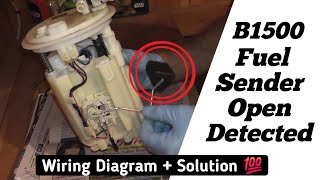
Technical definition: B1500 lacks a standardized SAE/ISO definition. Common definitions include 'Fuel Sender Open Detected' (Toyota, Subaru), which triggers when fuel sender resistance exceeds a threshold like 550 Ω. For Ford, it means 'Lamp Turn Signal Left Circuit Open'. For some Subarus, it indicates 'Keyless UART Communication Malfunction'.
Can I Drive With B1500?
Yes, But With Caution. You can drive, but with extreme caution. If the code relates to the fuel gauge, you risk running out of gas. Running a fuel tank dry destroys the electric fuel pump, turning a minor issue into a $500-$1,200 repair. If the code relates to turn signals, it is a direct safety hazard and illegal to drive.
Common Causes
- Faulty Fuel Level Sensor (Sending Unit) (Very Common) — The sensor's resistor strip wears out or the float arm breaks, causing an open circuit. This is the leading cause on Subaru, Toyota, and Chrysler/Jeep models.
- Defective Turn Signal Switch (Common) — On Ford vehicles, B1500 specifically points to an open circuit in the multifunction switch (turn signal stalk) due to worn internal contacts.
- Damaged Wiring or Corroded Connectors (Common) — Wires leading to the fuel pump or turn signal switch fray or short. Corrosion on connector pins, especially under the rear seat near the fuel pump access panel, accelerates in climates using road salt.
- Poor Ground Connection (Common) — A loose or corroded ground wire for the instrument cluster or the component itself causes erratic voltage readings, triggering false codes.
- Faulty Keyless Entry or Security Module (Less Common) — On specific Subaru models (e.g., 2014-2015 Forester), B1500 indicates a communication error with the keyless entry system, completely unrelated to the fuel system.
- Faulty Instrument Cluster (Combination Meter) (Less Common) — The instrument cluster fails to interpret the sensor's signal correctly, most notably on older Toyota models. 🎬 See this walkthrough for fixing B1500 on a Toyota Camry.
- Failing Body Control Module (BCM) (Rare) — The BCM itself fails or suffers water intrusion damage. This is the last item to diagnose after exhausting all wiring and component tests.
Symptoms
- Inaccurate or Erratic Fuel Gauge — The fuel gauge sticks on empty, full, or jumps randomly. This is the primary symptom when the fuel sender fails.
- Turn Signals Fail to Activate — The left or right turn signal does not activate when moving the stalk. This is the primary symptom on Ford vehicles.
- Key Fob or Keyless Entry Fails — The remote key fob stops locking or unlocking the doors, specifically on certain Subaru models.
- Dashboard Warning Message — A specific text warning appears on the instrument display, such as 'Low Fuel Distance To Empty Please Refuel', even with a full tank.
- High Voltage Reading on Scan Tool (scan-tool only — no driver-felt sign) — Live data for the fuel level sensor circuit shows an abnormally high reading (near 5.0 volts), indicating an open circuit.
Diagnostic Flowchart
Tap your situation to follow the diagnostic path that matches what you're seeing on this code.
Common Fixes & Costs
- Replace the Fuel Level Sensor(s) — Parts: $80-$250, Labor: $200-$550, ~2.5 hr book time (Professional)
- Replace the Turn Signal/Multifunction Switch — Parts: $50-$200, Labor: $100-$200, ~1.5 hr book time (Intermediate)
- Repair Damaged Wiring or Connectors — Parts: $10-$50, Labor: $150-$400, ~2.0 hr book time (Intermediate)
- Replace the Instrument Cluster (Combination Meter) — Parts: $150-$600, Labor: $100-$200, ~1.5 hr book time (Professional)
- Replace the Body Control Module (BCM) — Parts: $200-$700, Labor: $200-$400, ~2.0 hr book time (Professional)
DIY vs Professional
- Replace the Fuel Level Sensor(s) — Beginner: No
Tools: Socket set, trim removal tools, fuel line disconnect tools, fire extinguisher. - Replace the Turn Signal/Multifunction Switch — Beginner: Maybe
Tools: Screwdriver set, Torx bits, trim removal tools. - Repair Damaged Wiring or Connectors — Beginner: No
Tools: Multimeter, wire strippers, crimpers, soldering iron, heat shrink tubing. - Replace the Instrument Cluster (Combination Meter) — Beginner: No
Tools: Trim removal tools, screwdrivers, OEM programming software. - Replace the Body Control Module (BCM) — Beginner: No
Tools: Socket set, OEM programming software.
Used vs. New Parts: Buying Guide
When a used part is worth it: For a simple turn signal switch on an older, high-mileage vehicle where budget is the primary concern.
Donor-vehicle mileage cap: roughly under 100000 miles for the part to have meaningful remaining life.
Donor quality checklist:
- For switches, look for clean contacts and smooth mechanical action.
- For fuel senders, avoid parts from vehicles that sat with old fuel.
- Match the part number exactly to avoid incompatibility.
Decision logic:
- If The part is a fuel level sending unit → Buy new OEM or quality aftermarket. The labor to access the fuel tank is high; do not risk doing the job twice with a used part.
- If The part is a turn signal switch → New aftermarket is the best value. It is a common wear item, providing a longer lifespan for a minimal price difference.
Warranty tradeoff: Used parts offer a 30-90 day warranty covering only the part, not the labor to replace it again. New parts offer 1-year to lifetime warranties.
Worst-case if a used part fails: $600 if a used fuel sender fails, requiring you to pay labor to drop the tank a second time.
What Happens If You Wait — Timeline
- 0-1 month: Code B1500 appears. The fuel gauge becomes intermittent, or the turn signal fails intermittently. No physical damage yet. (MPG impact: 0%% · Added cost: $0)
- 1-3 months: The symptom becomes constant. The fuel gauge is completely unreliable. A failed turn signal poses a daily safety risk. (MPG impact: 0%% · Added cost: $50-$250 in potential fines for a non-working turn signal.)
- 3-6 months: The owner runs the fuel tank dry. The fuel pump runs without cooling, causing accelerated wear on the pump motor. (MPG impact: 0%% · Added cost: $0-$50 in wasted time/roadside assistance.)
- 6+ months: The weakened fuel pump fails completely. The vehicle is immobile. The initial $300 sending unit repair becomes a $1,200 repair. (MPG impact: 100% (vehicle won't run)% · Added cost: $800-$1,500 (failed fuel pump replacement + towing).)
Cost of Not Fixing It
- Immediate: For turn signal failure: Increased risk of an accident and traffic tickets. (Added cost: $50-$250 in fines.)
- 1-3 Months: Repeatedly running the fuel tank dry due to an inaccurate gauge causes the electric fuel pump to overheat and fail. (Added cost: $500-$1,200 for fuel pump replacement.)
- 3+ Months: An intermittent short in the wiring damages the driver circuit within the Body Control Module (BCM). (Added cost: $600-$1,500 for BCM replacement.)
Diagnosis Steps
- Identify the Vehicle-Specific Definition
Use a repair manual or search engine to find what B1500 means for your specific make, model, and year. This dictates whether you test the fuel system, turn signals, or keyless entry.
Tools: Internet Access, Repair Manual (Beginner) - Check for Technical Service Bulletins (TSBs)
Manufacturers release TSBs for known B1500 problems. Look up TSBs for your vehicle (like Subaru's 09-63-16 for fuel sensors) to find the exact diagnostic procedure.
Tools: Internet Access (Beginner) - Use a Scan Tool for Live Data and Active Tests
Monitor live data for 'Fuel Level Sensor Resistance'. Use the 'Active Test' function to command the fuel gauge to sweep from empty to full. If the gauge moves, the cluster is good, isolating the fault to the sender or wiring.
Tools: Advanced OBD-II Scan Tool (Advanced) - Inspect Fuses and Test Battery
Check fuses for the BCM and the affected system. Test the battery and charging system; low voltage causes the BCM to trigger false codes.
Tools: Multimeter, Fuse Puller (Beginner) - Visual Inspection of Wiring and Grounds
Inspect the wiring harness and connectors for chafing, corrosion, or loose pins at the component (e.g., top of the fuel tank) and the BCM. Ensure all ground straps are clean and tight.
Tools: Flashlight, Trim Removal Tools (Intermediate) - Perform Component-Specific Resistance Test
Disconnect the component and measure its resistance. A Toyota fuel sender reads 13.5-16.5 Ω (Full) and 405.5-414.5 Ω (Empty). An infinite reading (OL) confirms a dead component.
Tools: Multimeter, Service Manual (Advanced) - Test the Circuit for Opens or Shorts
Disconnect the component and the BCM. Check for continuity on the signal and power wires from end to end (must be < 1 Ω). Check for continuity between the ground pin and the chassis (must be < 1 Ω).
Tools: Multimeter, Service Manual (Advanced) - Advanced Test: Fuel Sender Voltage Check
With the ignition on, back-probe the combination meter connector. Voltage between the fuel sender signal wire and ground must be between 0.2V and 4.7V. Readings outside this range indicate a cluster fault.
Tools: Multimeter, Back-probe Kit (Advanced) - Advanced Test: Turn Signal Switch Voltage Check
Disconnect the multifunction switch. With the ignition on, check for 12V power on the input pin. If 12V is present at the input but absent at the output pin when the stalk moves, the switch is defective.
Tools: Multimeter, Wiring Diagram (Advanced)
When This Code Triggers (Freeze-Frame Conditions)
- Fault Detection Time: 2-5 minutes (The BCM sets the code after detecting a continuous open or short circuit for a predetermined period.)
- Ignition Status: ON (The BCM actively monitors these circuits whenever the ignition is in the 'ON' or 'RUN' position.)
- Circuit Voltage: > 4.9V or < 0.1V (For a fuel level sensor, the code triggers when the signal voltage goes outside its normal operating range.)
Related Codes
- P0462 / P0463 — Powertrain codes for 'Fuel Level Sensor Circuit Low/High Input'. Seeing a P-code alongside B1500 confirms a hard fault in the fuel sender circuit itself.
- U0140 — Means 'Lost Communication With Body Control Module'. If present with B1500, diagnose U0140 first by checking BCM power and grounds.
- B1342 — Indicates an internal failure of an ECU. Seeing this alongside B1500 points to a defective Body Control Module or Instrument Cluster.
Climate & Environmental Factors
- Road Salt / High Humidity: Accelerates corrosion of wiring harnesses and ground points on the vehicle's undercarriage. Saltwater acts as an electrolyte, destroying copper wires and triggering high-resistance faults.
- Extreme Cold: Makes plastic connectors and wire insulation brittle, causing them to crack from vibration and exposing wires to moisture.
How to Talk to a Mechanic About This Code
Say this: "I have a B1500 code and my primary symptom is an erratic fuel gauge (or non-working turn signal). Please confirm the code's definition for my vehicle and test the specific circuit—the fuel sender or multifunction switch—before recommending a full assembly replacement."
This directs the technician to perform a logical diagnosis. It discourages them from skipping straight to an expensive, unnecessary repair like replacing the entire fuel pump assembly when only the sensor is bad.
Avoid saying:
- 'Just fix whatever's wrong'
- 'My check engine light is on, can you look at it?'
- 'Whatever you recommend'
Questions to ask before authorizing the repair:
- Did you test the component directly? For a fuel sender, what was the resistance reading?
- Is it possible to replace just the failed component instead of the entire assembly?
- If it's a wiring issue, can you show me where the corrosion or break is located?
- What is the warranty on the recommended parts and the labor?
Where to Take It: Dealer vs Independent vs Chain
- Dealer:
Best for: Vehicles under warranty, Complex manufacturer-specific quirks (like the Subaru dual-meaning code), Repairs requiring module programming (BCM, Instrument Cluster)
Downsides: Higher labor rates, More likely to replace an entire assembly rather than a smaller component. (Typical cost: +50% vs. baseline) - Independent Shop:
Best fit for most B1500 scenarios. A good independent shop diagnoses and repairs common causes cost-effectively.
Best for: Out-of-warranty vehicles, Common fixes like a Ford turn signal switch or a Toyota fuel sender, Getting a second opinion on a high dealership quote
Downsides: Diagnostic equipment varies greatly; vet shops based on reviews. (Typical cost: +0% vs. baseline) - Chain Shop:
Use with caution. Acceptable for a straightforward turn signal switch replacement, but avoid for diagnosing ambiguous electrical faults.
Best for: Simple parts replacement after a definitive diagnosis has already been made elsewhere.
Downsides: Diagnostic capabilities are limited., High pressure to upsell leads to unnecessary repairs. (Typical cost: -10% vs. baseline)
When to Walk Away From the Repair
If the estimated repair cost exceeds 40-50% of the car's Kelley Blue Book (KBB) private-party value, pause and consider alternatives.
- Car worth $5000, fix is $800: Fix it. This repair is below the threshold and restores a critical function.
- Car worth $3500, fix is $1500: Borderline. The repair cost approaches 50% of the car's value. Get a second opinion before authorizing.
- Car worth $2000, fix is $1200: Walk away. The repair cost is too high relative to the vehicle's value.
What Scan Tool You Need for This Code
Minimum: A scanner that reads manufacturer-specific Body Control Module (BCM) codes and displays live data.
A basic $20 code reader will not see 'B' codes. You must know the specific definition for your make/model and see live data to find the fault without guessing.
Budget: XTool A30D or Mucar BT200 Max (~$90) — These Bluetooth dongles offer full-system scanning, including the BCM. They read the specific B1500 definition and view live data.
Mid-range: Foxwell NT510 Elite or Innova 5610 (~$180) — These handheld scanners offer robust manufacturer-specific diagnostics and bidirectional control to perform active tests.
Professional: Autel MaxiCOM MK808S (~$450-700) — Provides full bidirectional control, access to all modules, and OEM-level diagnostic functions essential for complex wiring issues.
Rent vs buy: Rent with caution. Free 'loaner' scanners from parts stores are basic code readers that cannot access the BCM or live data needed for B1500.
How to Clear the Code After You Fix It
- Use an OBD-II scan tool to clear the B-codes from the Body Control Module.
- Perform several key cycles (OFF to ON) to ensure the code does not immediately return.
- Perform a functional test of the repaired system (watch the fuel gauge respond, test turn signals).
Drive cycle (~20 minutes): Drive the vehicle normally for 20 minutes, including a mix of city and highway speeds, to confirm the fix is stable.
Readiness monitors affected: EVAP System Monitor (if related P-code like P0463 was present)
Before emissions retest: drive at least 50 miles to fully set monitors.
Watch out for:
- Clearing codes without fixing the root cause results in the code returning immediately.
- Disconnecting the battery clears the code but resets all other modules and learned values.
- Forgetting to check for related Powertrain (P) codes. If a P-code was present, its associated readiness monitor needs resetting before an emissions test.
Will This Fail Emissions / State Inspection?
No — by itself this code doesn't fail OBD inspection (but it can keep readiness monitors from setting, which causes a separate fail).
- California: A B1500 code alone will not fail the OBD-II check. However, if the underlying fault prevents the EVAP readiness monitor from completing, the vehicle fails for not being ready.
- New York: Inoperative turn signals cause an immediate safety inspection failure.
- Texas: Texas requires an annual safety inspection checking turn signal lamps. A B1500 code related to a turn signal failure results in a failed inspection.
Most Commonly Affected Vehicles
- Subaru Forester, Impreza, Outback, Crosstrek (2012-2020) — Extremely common failure of the fuel level sensors (TSB 09-63-16). On 2014-2015 models, B1500 also means 'Keyless UART Communication Malfunction' (TSB 07-83-14).
- Toyota Camry, Matrix, RAV4, Highlander (2005-2021) — Indicates an open circuit in the fuel sender. The code triggers when resistance exceeds a specific threshold (e.g., >550 Ω).
- Ford Focus, F-150, Fiesta (2005-2020) — Triggered by an internal open circuit in the turn signal (multifunction) switch. If only one direction fails, the switch is the culprit.
- Hyundai / Kia Elantra, Sonata, Optima (2011-2020) — Relates to the fuel level sending unit failing due to worn resistor contacts.
- Jeep / Ram Grand Cherokee, Ram 1500 (2006-2018) — Related to a failing fuel level sensor. On Ram trucks, this fault disables the remote start feature.
- Chevrolet / GM Silverado, Astra (2004-2019) — Relates to various body electronics, including keyless entry or personal identification sensors.
- Volkswagen Jetta, Golf, Passat (2008-2021) — Points to a range of issues within the body electronics, requiring a brand-specific scan tool (VCDS) for accurate diagnosis.
Manufacturer-Specific Notes
- Subaru: B1500 has a dual meaning. On most models, it means 'Fuel Sender Open Detected' (TSB 09-63-16). On 2014-2015 models, it means 'Keyless UART Communication Malfunction' (TSB 07-83-14). Diagnosis must start with the primary symptom.
- Ford: B1500 almost always translates to 'Lamp Turn Signal Left Circuit Open,' pointing directly to the turn signal stalk. The hazard lights usually still work correctly.
- Toyota / Lexus: Consistently means 'Fuel Sender Open Detected'. The code triggers when circuit resistance exceeds a specific threshold (e.g., >550 Ω), which is easily verified with a multimeter.
- General Motors (Chevy, GMC): Uses B1500 for a variety of body electronic issues, requiring careful diagnosis based on symptoms and a professional scan tool.
Real Owner Stories
2014 Subaru Forester at 115K miles with erratic fuel gauge
Fuel gauge stuck on full, then dropped to empty with the low fuel light on. Code B1500 was present.
What they tried:
- Tracked fuel with the trip meter.
- Took it to an independent shop after running out of gas.
Outcome: The shop identified TSB 09-63-16. They tested both fuel level senders and found the sub-sender had an open circuit. Replaced the sub-sender only. Total cost was $480 ($150 part, $330 labor).
Lesson: On Subarus, an erratic fuel gauge with B1500 is a failed fuel level sensor. Confirm with a resistance test and replace the specific failed sensor.
2012 Ford Focus at 85K miles with turn signal failure
The left turn signal stopped working completely. The right signal and hazard lights worked fine. Code B1500 was stored.
What they tried:
- Replaced the left turn signal bulbs.
- Checked the turn signal fuse.
Outcome: The owner learned B1500 on a Ford means 'Lamp Turn Signal Left Circuit Open'. They purchased a new multifunction switch for $65 and replaced it themselves in an hour.
Lesson: If only one turn signal direction fails but hazard lights work, the multifunction switch is the culprit. This is an affordable DIY repair.
2014 Jeep Grand Cherokee at 98K miles with multiple issues
Fuel gauge read empty, check engine light was on, and remote start was disabled. Codes B1500 and P0463 were present.
What they tried:
- Dealership quoted $1,100 to replace the entire fuel pump assembly.
Outcome: The owner found a corroded connector on top of the fuel tank access panel under the rear seat. They cleaned the pin and applied dielectric grease. This resolved all symptoms for $15.
Lesson: Inspect wiring and connectors before replacing expensive components. Corrosion is a common failure point that can be fixed for a fraction of the cost.
How to Prevent This Code From Triggering
- Apply dielectric grease to connectors (During any related repair or inspection) — Dielectric grease seals out moisture, preventing corrosion on connector pins in high-humidity or salt-prone areas.
- Regularly wash the vehicle's undercarriage (Monthly during winter in 'rust belt' areas) — Road salt corrodes wiring and ground points. Washing it off reduces corrosive buildup.
- Keep the fuel tank at least 1/4 full (Daily habit) — Fuel cools the electric fuel pump. Running the tank near empty causes the pump to run hotter, shortening its life.
Frequently Asked Questions
Can I fix code B1500 myself?
Simple fixes like replacing a turn signal switch are DIY-friendly. Replacing a fuel sender requires dropping the gas tank, which carries a fire risk and demands intermediate skills. Stop DIY and go to a shop if you lack the tools to safely lower a fuel tank.
How much does it cost to fix code B1500?
A wiring repair costs $150-$400. Replacing a turn signal switch costs $150-$400. Replacing a fuel level sensor costs $280-$800 at a shop, depending on tank accessibility.
What is a common mistake when diagnosing B1500?
The biggest mistake is failing to confirm the code's meaning for your specific vehicle. Another costly error is replacing the entire $600+ fuel pump assembly when only the $80-$250 sending unit failed.
Can a weak battery cause a B1500 code?
Yes. A failing battery causes low voltage and electrical noise that confuses the BCM, triggering false codes. Always test the battery and charging system before starting complex diagnostics.
My Subaru has a B1500 code, what should I check first?
Check your symptoms. If the fuel gauge is erratic, the fuel level sensor circuit failed (TSB 09-63-16). If the keyless entry fails, the keyless communication module is at fault (TSB 07-83-14).
How do you test a fuel level sending unit?
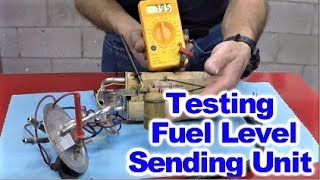
Disconnect the sensor and measure resistance with a multimeter while moving the float arm. Resistance must change smoothly from low (full) to high (empty), such as 15 Ω to 410 Ω. An infinite (OL) reading confirms a dead sensor.
Can a bad ground cause code B1500?
Yes. A poor ground connection creates high resistance, which the BCM interprets as a circuit fault. Always clean and tighten ground connections during diagnosis, especially in rust-prone areas.
What is the difference between B1500 and P0463?
B1500 is a Body code set by the BCM for the fuel gauge. P0463 is a Powertrain code set by the PCM for emissions testing. Seeing both confirms a hard fault in the fuel level sensor or its wiring.
Key Takeaways
- Code B1500 has no universal definition; you must look up your vehicle's specific make and year to determine if it points to the fuel system, turn signals, or keyless entry.
- A failed fuel level sensor is the leading cause for Subaru and Toyota models, typically costing $280 to $800 to replace at a repair shop.
- Ford vehicles almost exclusively use B1500 to indicate a broken left turn signal switch, which is a straightforward $150 to $400 repair.
- Do not replace the entire $600+ fuel pump assembly; use a multimeter to test the fuel sender's resistance (often failing above 550 Ω) and replace only the $80-$250 sensor.
Helpful Videos
Shop the Parts Behind B1500
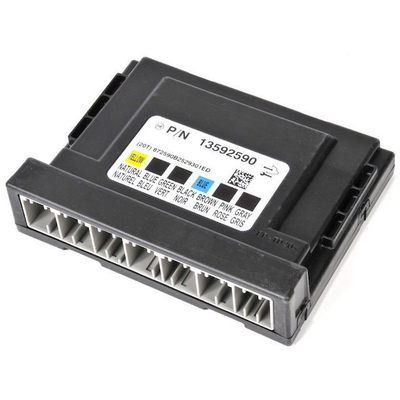
Below are the parts most often responsible for code B1500, ranked by how frequently each one is the actual culprit (per the diagnosis above). Tap any to see what we have for your vehicle.




The information in this article is provided for general reference and educational purposes only. Vehicle specifications, procedures, and part compatibility can vary by production date, trim level, and region. Always consult your vehicle's factory service manual and verify part numbers before purchasing or performing repairs. Safety-critical components such as airbags, seat belts, and braking systems should be installed by a qualified professional.
- 🧭 Diagnostic Flowchart
- 🎬 Helpful Videos
- 🛍️ Shop This Part
- What Does B1500 Mean?
- Can I Drive With B1500?
- Common Causes
- Symptoms
- Common Fixes & Costs
- DIY vs Professional
- Used vs. New Parts: Buying Guide
- What Happens If You Wait — Timeline
- Cost of Not Fixing It
- Diagnosis Steps
- When This Code Triggers (Freeze-Frame Conditions)
- Related Codes
- Climate & Environmental Factors
- How to Talk to a Mechanic About This Code
- Where to Take It: Dealer vs Independent vs Chain
- When to Walk Away From the Repair
- What Scan Tool You Need for This Code
- How to Clear the Code After You Fix It
- Will This Fail Emissions / State Inspection?
- Most Commonly Affected Vehicles
- Manufacturer-Specific Notes
- Real Owner Stories
- 2014 Subaru Forester at 115K miles with erratic fuel gauge
- 2012 Ford Focus at 85K miles with turn signal failure
- 2014 Jeep Grand Cherokee at 98K miles with multiple issues
- How to Prevent This Code From Triggering
- Frequently Asked Questions
- Can I fix code B1500 myself?
- How much does it cost to fix code B1500?
- What is a common mistake when diagnosing B1500?
- Can a weak battery cause a B1500 code?
- My Subaru has a B1500 code, what should I check first?
- How do you test a fuel level sending unit?
- Can a bad ground cause code B1500?
- What is the difference between B1500 and P0463?
- Key Takeaways
- 🎟️ Get 5% Off