

B1500 on 2012-2016 Subaru Impreza: Fuel Level Sensor Fault Causes and Fixes
On a 2012-2016 Subaru Impreza, code B1500 almost always means one of the two fuel level sensors in the gas tank has failed. The most common fix is to replace the faulty sensor, which can be accessed from under the rear seat. Expect to pay $80-$250 for the part and 1-2 hours for labor.
- Code B1500 on a 2012-2016 Impreza points directly to a problem with the fuel level sending units.
- The car has two sensors (main and sub); diagnosis with a multimeter is required to determine which one has failed.
- The most common fix is replacing the faulty sensor, which is a moderately difficult DIY job that can be done by accessing panels under the rear seat.
- Always follow safety procedures when working with the fuel system, such as disconnecting the battery, pulling the fuel pump fuse, and ensuring good ventilation.
- Do not replace the expensive instrument cluster unless the sensors and wiring have been tested and confirmed to be in good working order.
What's Unique About the 2012-2016 Subaru IMPREZA
Like many all-wheel-drive vehicles, this generation of Impreza uses a saddle-style fuel tank to accommodate the driveshaft. This design requires two separate fuel level sending units—a main sensor (on the passenger side) and a sub-sensor (on the driver's side)—to get an accurate reading. Subaru has issued a Technical Service Bulletin (TSB 09-63-16) acknowledging that diagnosing this code often leads to the replacement of one or both of these sensors, indicating it's a known issue on this platform and its platform-mates like the XV Crosstrek.
Diagnostic Flowchart
Tap your situation to follow the diagnostic path that matches what you're seeing on this vehicle.
Symptoms You May Notice
- Inaccurate or erratic fuel gauge (e.g., stuck on empty, full, or jumps around)
- Low fuel warning light stays on even with a full tank
- Check Engine Light is illuminated
- Fuel gauge reads empty after a fill-up, or reads half-full when empty
- Replacing the entire fuel pump assembly when only the serviceable level sensor is at fault.
- Replacing the instrument cluster (combination meter) before thoroughly testing the sensors and wiring.
- Assuming only the main sensor on the fuel pump assembly has failed, when the sub-sensor is also a common culprit.
- Confusing the B1500 'Fuel Sender' code on an Impreza with the B1500 'Keyless UART Communication Malfunction' code found on other contemporary Subaru models like the 2014-2015 Forester.
Most Likely Causes
- Faulty Main or Sub Fuel Level Sensor 🔴 High Probability → Shop Fuel Tank Sending Unit This is a recognized issue by Subaru, as documented in TSB 09-63-16. The resistive contacts on the sensor can get dirty or wear out from contaminants in fuel or simply from age, causing erratic or out-of-spec resistance readings. The sub-sensor (driver's side) is reportedly more expensive and can be a common failure point.
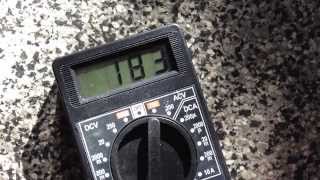
How to confirm: Access the sensor connectors under the rear seat. Use a multimeter on the Ohms setting to measure resistance. A good sensor should show a smooth sweep from ~4-5 Ohms (Full) to ~45-52 Ohms (Empty). An infinite reading (open circuit) or jumpy, inconsistent readings while moving the float arm confirms a bad sensor. 🎬 Watch: How to test and replace the fuel level sensor. More precise service manual values are also available (see Specific Diagnostic Values).
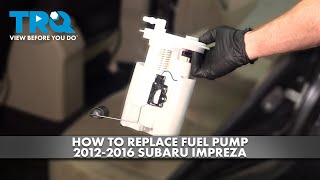
Typical fix: Replace the failed fuel level sensor. The main and sub sensors are separate parts and can be replaced individually. Access is via panels under the rear seat cushion. It is recommended to have less than 2/3 of a tank of fuel before starting.
Est. part cost: $80-$250 - Damaged Wiring or Corroded Connector ⚪ Low Probability
How to confirm: Visually inspect the wiring and connectors leading to both fuel level sensors for any signs of damage, corrosion, or loose pins. Perform a continuity test from the sensor connector to the combination meter connector. Check for less than 1 Ω of resistance on the signal wire and over 10k Ω to ground.
Typical fix: Repair the damaged section of the harness or clean/replace the corroded connector.
Est. part cost: $5-$50 - Faulty Combination Meter (Instrument Cluster) ⚪ Low Probability
How to confirm: This is diagnosed by exclusion. If both fuel level sensors and all associated wiring test perfectly within specification, the internal circuitry of the combination meter is the likely culprit. A dealer-level scan tool can perform an 'Active Test' to command the fuel gauge to sweep, confirming if the gauge motor itself works.
Typical fix: Replace or send out the combination meter for repair. This often requires special programming.
Est. part cost: $400-$800
Diagnosis Steps
- Confirm the presence of DTC B1500 using an OBD-II scanner capable of reading Body codes.
- Check live data if your scanner supports it. Observe the resistance values reported by the main and sub fuel level sensors. A reading over 550 Ohms is a definitive fault condition.
- To depressurize the fuel system, pull the fuel pump fuse from the engine bay fuse box and run the engine until it stalls. Then, disconnect the battery.
- Remove the rear seat bottom cushion to access the service covers for the main (passenger side) and sub (driver side) fuel level sensors.
- Disconnect the electrical connectors and measure the resistance of each sensor with a multimeter. Compare the readings to specifications: approximately 4-5 Ohms at Full and 45-52 Ohms at Empty. (See 'Specific Diagnostic Values' for more precise ranges).
- If a sensor reads open (infinite resistance) or has erratic readings, it has failed and needs to be replaced.
- If sensor resistance seems plausible, check the wiring harness for continuity between the sensors and the combination meter. Check for <1 Ω on signal/ground wires and >10k Ω from each wire to chassis ground.
- If both sensors and wiring are confirmed to be good, the fault lies with the combination meter.
- After repair, clear the DTC and verify the fuel gauge operates correctly.
Parts You'll Likely Need
- Primary Fuel Level Sensor
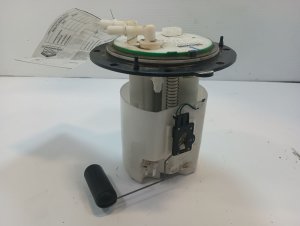
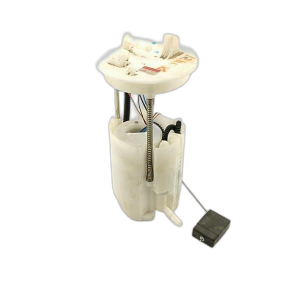
(OEM #42081FJ040)— This is one of the two sensors that commonly fails, triggering code B1500. It is located on the main fuel pump assembly on the passenger side of the tank. 🎬 See this walkthrough for replacing the main fuel pump assembly.
Trusted brands: Subaru (Genuine)
OEM price range: $82-$120
Aftermarket price range: $60-$90 - Sub Fuel Level Sensor
(OEM #42081FJ010)— This is the second of the two sensors that commonly fails. It is located on the driver's side of the fuel tank on the sub-pump assembly and is often more expensive than the primary sensor.
Trusted brands: Subaru (Genuine)
OEM price range: $170-$252
Aftermarket price range: $150-$200 - Fuel Pump Assembly Gasket / O-Ring — It is best practice to replace the large rubber gasket for the access panel anytime the fuel pump or sensor assembly is removed to prevent fuel leaks and vapor smells. This is often a one-time-use part.
Trusted brands: Subaru (Genuine)
OEM price range: $15-$30
Aftermarket price range: $10-$20
Technical Service Bulletins (TSBs) & Recalls
- 09-63-16: Reminds technicians to follow proper diagnostic procedures when a B1500 code leads to replacing a faulty main and/or sub fuel level sensor. It also specifies that the fuel tank should be less than 2/3 full before removal and to inspect the tank for debris.
Platform-Specific Known Issues
- Subaru TSB 09-63-16 directly addresses this code and points to the failure of the main and/or sub fuel level sensors, confirming it as a known issue for this model range.
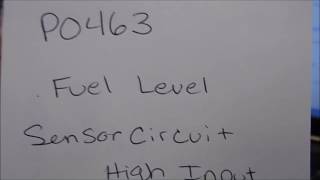
- The issue is not isolated to the Impreza; the platform-mate Subaru XV Crosstrek (2013-2017) uses the same fuel tank and sensor setup and experiences the identical B1500 code and failure mode. 🎬 Watch: Diagnosing fuel level sensor circuit issues on a Crosstrek.
Mechanic-Grade Diagnostic Values
- DTC B1500 Trigger Threshold — expected: < 550 Ω. Failure: An average input signal of 550 Ω or more detected 3 consecutive times will set the code.
- Main Fuel Level Sensor Resistance — expected: Float at Full: 6.5 to 8.5 Ω. Float at Empty: 184.8 to 188.8 Ω.. Failure: Readings outside this range, infinite resistance (open), or erratic/jumpy readings while moving the float arm.
- Sub Fuel Level Sensor Resistance — expected: Float at Full: 6.5 to 8.5 Ω. Float at Empty: 220.7 to 225.7 Ω.. Failure: Readings outside this range, infinite resistance (open), or erratic/jumpy readings while moving the float arm.
- Harness Continuity (Meter to Sensor) — expected: Below 1 Ω. Failure: Resistance higher than 1 Ω indicates an open or high resistance in the wiring.
- Harness Integrity (Short to Ground) — expected: 10 kΩ or higher. Failure: Resistance lower than 10 kΩ indicates a short to ground in the harness.
Scan Tool Commands That Help
- Subaru Select Monitor (or equivalent): Active Test: Fuel Meter Operation — After confirming sensors and wiring are good, this command tests the instrument cluster itself by forcing the gauge to sweep between EMPTY, 1/2, and FULL. If the gauge fails to move correctly, the combination meter is faulty.
- Subaru Select Monitor (or equivalent): Current Data Display: Fuel Input — Used during initial diagnosis to view the fuel level in liters as reported by the combination meter, which can help identify discrepancies between sensor readings and gauge display.
- Subaru Select Monitor (or equivalent): Work Support: Draining Fuel with Select Monitor — As recommended by TSB 09-63-16, this function uses the vehicle's own fuel pump to safely drain the tank to below 2/3 full before removing the sensor assemblies.
Wiring & Ground Locations
- i10 / E46 / P25 — Main electrical connector(s) at the back of the Combination Meter (Instrument Cluster).. This is the termination point for the fuel level sensor circuits. Voltage and continuity checks are performed at these pins to isolate a fault between the sensors, wiring, and the meter itself.
- L20 / X17 — Electrical connector on the main fuel pump and sending unit assembly (passenger side).. This is the starting point for testing the main fuel level sensor and its associated wiring back to the combination meter.
- i10, Pin 10 — Pin #10 on a connector for the Combination Meter.. This is a ground circuit for the combination meter. A poor ground here can cause various gauge malfunctions, including an incorrect fuel reading. Resistance between this pin and chassis ground should be less than 1 Ω.
Model Year Variations Within This Range
- 2014-2015: While the 2012-2016 Impreza uses B1500 for the fuel level sensor, its platform-mate, the XV Crosstrek, may use B1500 to indicate a 'Keyless UART Communication Malfunction' in the 2014-2015 model years, per TSB 07-83-14. This highlights the critical need to verify the DTC definition for the exact model and year being serviced, as even platform-mates can have different diagnostic paths for the same code.
Helpful Videos

Used OEM Parts in Stock
New Aftermarket Parts Available

The information in this article is provided for general reference and educational purposes only. Vehicle specifications, procedures, and part compatibility can vary by production date, trim level, and region. Always consult your vehicle's factory service manual and verify part numbers before purchasing or performing repairs. Safety-critical components such as airbags, seat belts, and braking systems should be installed by a qualified professional.
- Subaru IMPREZA:
- 🧭 Diagnostic Flowchart
- 🎬 Helpful Videos
- 🛍️ Shop This Part
- What's Unique About the 2012-2016 Subaru IMPREZA
- Symptoms You May Notice
- Most Likely Causes
- Diagnosis Steps
- Parts You'll Likely Need
- Technical Service Bulletins (TSBs) & Recalls
- Platform-Specific Known Issues
- Mechanic-Grade Diagnostic Values
- Scan Tool Commands That Help
- Wiring & Ground Locations
- Model Year Variations Within This Range
- 🎟️ Get 5% Off