

Ultimate Guide to OBD-II Code B1509: A Manufacturer-Specific Malfunction
Why B1509 is the most confusing body code, what it means for your specific car, and how to fix it right the first time.
- Look up your vehicle's specific B1509 definition before buying parts, as this code means a failed ignition switch on a 2009-2014 Ford F-150 but a broken ambient temperature sensor on a 2013 Toyota Corolla.
- Test the $30 multifunction switch and its wiring harness first, as mechanical wear on these steering column contacts causes over 60% of non-manufacturer-specific B1509 codes.
- Stop driving immediately if you own a Mitsubishi with this code, as B1509 indicates an incompatible SRS-ECU is installed and your airbags will not deploy in a crash.
- Use a bidirectional OBD-II scanner capable of reading Body Control Module (BCM) data to verify switch inputs in real-time, saving you from replacing a $500 BCM when the actual fault is a $10 broken wire.
What Does B1509 Mean?
B1509 is a manufacturer-specific Body Diagnostic Trouble Code (DTC) indicating the Body Control Module (BCM) detected an electrical fault in a monitored circuit. Unlike standardized 'P' (Powertrain) codes, B1509's meaning depends entirely on the vehicle's manufacturer. It signifies anything from a malfunctioning turn signal switch to an improperly installed airbag computer. The BCM registers a voltage or resistance reading outside its expected range, pointing to a short to ground, a short to power, an open circuit, or an incorrect input signal.
Technical definition: The formal SAE/OBD-II definition of code B1509 varies significantly by manufacturer. Common definitions include: 'Key Off Switch Circuit Short To Ground' (Ford), 'Hazard Flasher Switch Circuit Short to Positive' (Alfa Romeo), 'Flash To Pass Switch Circuit Short To Battery' (General Motors), 'Improper Installation of SRS-ECU' (Mitsubishi), 'Open in Ambient Temperature Sensor Circuit' (Toyota/Scion), and 'Cockpit Control Signal Input' (Subaru). You must verify the specific definition for your vehicle's make, model, and year before attempting any diagnosis.
Can I Drive With B1509?
Yes, But With Caution. Driving with code B1509 carries significant safety risks depending on your vehicle. If it disables your turn signals or hazard lights, you create an immediate safety hazard by failing to communicate your intentions to other drivers. If the code links to the SRS/airbag system (standard in Mitsubishi), your airbags will not deploy in a crash; do not drive the vehicle. If linked to the ABS system (seen in BMW), you lose anti-lock and stability control, increasing stopping distances. Address this code urgently to restore full vehicle safety.
Common Causes
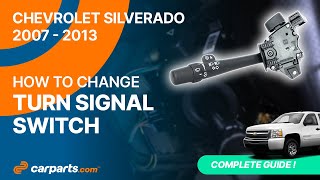
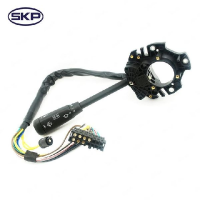
- Faulty Turn Signal / Multifunction Switch (Very Common) — The internal contacts of the switch assembly on the steering column 🎬 Watch: How to replace the multifunction switch on older Silverados. wear out from daily use, causing intermittent or total failure of turn signals, hazard lights, or high beams.
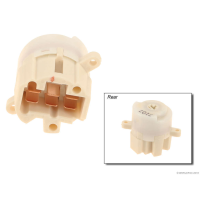
- Faulty Ignition Lock Cylinder or Switch (Common) — On many Ford vehicles, this code targets the small switch detecting whether the key is physically present in the ignition cylinder. Failure causes a 'short to ground' condition, resulting in a non-stop 'key-in-ignition' warning chime.
- Faulty Ambient Temperature Sensor (Common) — For Toyota and Scion vehicles, B1509 specifically means an open circuit related to the ambient temperature sensor. This sensor, located near the front grille, provides outside air temperature data for the climate control system.
- Incorrect SRS-ECU Installed (Common) — On Mitsubishi vehicles, B1509 indicates a fundamental mismatch between the installed Supplemental Restraint System (SRS) Electronic Control Unit (ECU) and the vehicle's factory configuration. This happens after a collision repair using an incompatible airbag module.
- Shorted, Open, or Damaged Wiring (Common) — Wires within the steering column harness chafe, break, or short out against metal parts due to steering wheel rotation and tilt function use. This interrupts the signal between the switch and the BCM.
- Incorrect or Faulty Clock Spring (Less Common) — The clock spring maintains the electrical connection for the airbag and steering wheel controls. A damaged clock spring disrupts signals from the multifunction switch, triggering B1509 even if the switch itself functions perfectly.
- Blown Fuse or Faulty Relay (Less Common) — A blown fuse in a circuit monitored by the BCM sets this code. A failing flasher relay produces symptoms identical to a bad multifunction switch.
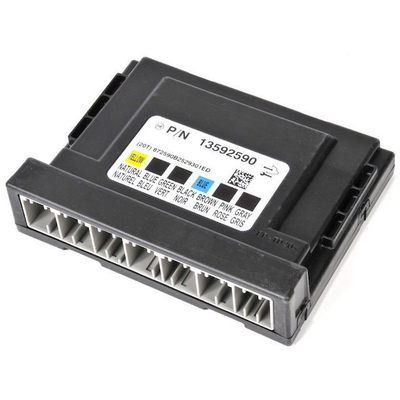
- Faulty Body Control Module (BCM) (Rare) — While the BCM sets the code, it rarely causes the problem. Consider BCM failure only after exhaustively testing and ruling out every switch, sensor, and wire.
Symptoms
- Turn signals or hazard lights are inoperative or erratic — The signals fail completely, work only on one side, or function intermittently. Using a turn signal sometimes incorrectly activates the hazard lights.
- 'Key-in-ignition' chime sounds with no key — A hallmark symptom on many Ford models, where the warning chime continues to sound even after removing the key from the ignition.
- Incorrect outside temperature display and AC problems — On Toyota/Scion models, the external temperature reading on the dash shows a nonsensical value (like -22°F) and the automatic climate control fails to cool the cabin.
- Airbag (SRS) warning light is on — For Mitsubishi vehicles, the primary symptom of a B1509 code is the illumination of the SRS warning light, indicating a critical fault and disabled airbag system.
- High beams or 'flash-to-pass' feature not working — On GM vehicles where the code relates to the 'Flash To Pass Switch Circuit', the high beams fail to activate when pulling the lever.
- Warning light on the dashboard — A Check Engine Light, BCM-specific light, or a symbol for the lighting system illuminates. Depending on the manufacturer, this accompanies an ABS, Traction Control, or SRS warning light.
- Live data shows incorrect switch/sensor state (scan-tool only — no driver-felt sign) — Using a professional scan tool, a technician sees the BCM registering the incorrect input (e.g., the turn signal switch PID reads 'Off' when the lever is physically activated).
Diagnostic Flowchart
Tap your situation to follow the diagnostic path that matches what you're seeing on this code.
Common Fixes & Costs
- Replace Turn Signal / Multifunction Switch
— Parts: $30-$150, Labor: $130-$200, ~1.5 hr book time
(Intermediate)
: OEM - Replace Ignition Lock Cylinder / Switch
— Parts: $40-$150, Labor: $130-$250, ~1.5 hr book time
(Intermediate)
: OEM - Replace Ambient Temperature Sensor
— Parts: $25-$90, Labor: $65-$130, ~0.8 hr book time
(Beginner)
: OEM - Repair Damaged Wiring Harness — Parts: $10-$30, Labor: $200-$450, ~3.0 hr book time (Professional)
- Replace Body Control Module (BCM)
— Parts: $400-$800, Labor: $150-$300 (plus programming), ~2.0 hr book time
(Professional)
: OEM
Used vs. New Parts: Buying Guide
When a used part is worth it: For purely mechanical components or simple sensors from low-mileage vehicles, used parts are a cost-effective option. An ambient temperature sensor or a multifunction switch from a vehicle under 80,000 miles scrapped for non-electrical reasons is a safe bet.
Donor-vehicle mileage cap: roughly under 80000 miles for the part to have meaningful remaining life.
Donor quality checklist:
- Verify the exact part number matches; visual similarity is not enough.
- For switches, check for smooth mechanical action without binding or excessive play.
- Avoid parts from flood-damaged or rust-belt vehicles, as corrosion is a primary failure mode for electronics.
Decision logic:
- If The part is a simple sensor (like an ambient temp sensor) and the new price is under $100 → Buy new for peace of mind and a longer warranty, as the savings are minimal.
- If The part is a multifunction switch for a high-mileage vehicle and budget is the main concern → A used OEM part is often more reliable than a cheap, new aftermarket part. Expect a shorter lifespan.
- If The part is an electronic module like an SRS-ECU or BCM → Avoid used parts. These modules are VIN-locked and require professional programming. A used module is often unprogrammable to your vehicle, wasting your money.
Warranty tradeoff: Used parts typically come with a 30-90 day warranty for part replacement only (no labor). New aftermarket parts offer a 1-year to limited lifetime warranty. New OEM parts carry a 1-2 year warranty.
Worst-case if a used part fails: $200-$500 if a used switch or sensor fails after installation, requiring repeat labor costs plus the price of another part.
What Happens If You Wait — Timeline
- 0-1 month: Code is set. An intermittent fault begins, such as a turn signal failing to activate once, the key chime sticking for a moment, or the temperature reading being slightly off. The issue may not be noticeable every day. (MPG impact: 0%% · Added cost: $0)
- 1-3 months: The fault becomes consistent. The turn signal fails frequently, the key chime stays on for an entire trip, or the temp sensor reads a nonsensical value, disabling the auto A/C. A warning light (SRS, BCM, or CEL) permanently illuminates. This causes a failed state safety/emissions inspection. (MPG impact: 0-1% (due to inefficient A/C compressor use in Toyota cases)% · Added cost: $50-$150 (Inspection re-test fees, minor wasted fuel))
- 3-6 months: Ignoring a wiring short leads to cascading issues. The repeated electrical spikes or current draws blow fuses repeatedly. In a worst-case scenario, the insulation on the shorted wire melts, increasing the risk of it contacting other wires or the chassis, potentially damaging the BCM driver circuit for that component. (MPG impact: 0%% · Added cost: $250-$1200 (Cost of a tow if a critical fuse blows, or potential cost of a BCM replacement if the module is damaged))
- 6+ months: Catastrophic failure. A persistent, ignored short circuit overheats, melting connectors or posing a fire risk. For a Mitsubishi, continued driving means the airbag system remains disabled, creating a massive safety liability. For a Toyota, prolonged inefficient A/C use causes premature wear on the compressor clutch. The cost of repair is now significantly higher due to damage to other components. (MPG impact: 0%% · Added cost: $800-$2000 (BCM replacement and programming, A/C compressor work, or harness repair))
Cost of Not Fixing It
- Immediate: Safety Hazard: Inoperative turn signals or hazard lights significantly increase the risk of an accident. For Mitsubishi, a disabled airbag system means no deployment in a crash. For BMW, disabled ABS/DSC increases stopping distance and risk of losing control. (Added cost: Varies (Traffic ticket up to the cost of an accident))
- 1-3 Months: Failed State Inspection: A vehicle fails inspection for an illuminated Check Engine Light, SRS light, or non-functional safety equipment like turn signals. Continued driving with a faulty ignition switch (Ford) leads to a no-start condition, requiring a tow. (Added cost: $100-$250 (Towing and re-inspection fees))
- 3+ Months: Cascading Failures: Ignoring a wiring short damages the Body Control Module (BCM) itself, turning a simple repair into a very expensive one. On Toyota models, a faulty ambient temp sensor leads to inefficient A/C compressor cycling, causing premature wear. (Added cost: $800-$1500 (BCM replacement or A/C system repairs))
Diagnosis Steps
- Confirm the Manufacturer-Specific Code Definition
Before touching any tools, use a reliable service manual to find the exact definition of B1509 for your vehicle's make, model, and year. The diagnostic path for a Ford ignition switch is completely different from a Toyota temperature sensor.
Tools: Vehicle-Specific Service Manual or Online Database (Beginner) - Systematically Test All Related Functions
Operate every function associated with the suspected component. For a multifunction switch, test left/right signals, hazards, high/low beams, flash-to-pass, and wipers. For a Ford, listen for the key chime. For a Toyota, observe the temperature display. Note precisely what works and what fails.
Tools: None (Beginner) - Perform a Comprehensive Fuse and Relay Check
Consult your owner's manual to locate all relevant fuse boxes. Visually inspect and test every fuse associated with the BCM, instrument cluster, lighting, turn signals, hazard lights, and SRS/airbag systems. Check the flasher relay if equipped.
Tools: Owner's Manual, Fuse Puller, Multimeter (Beginner) - Visually Inspect Wiring and Connectors
Access the component in question. Unplug the primary electrical connector and meticulously inspect for corrosion, moisture, bent pins, and harness damage like chafing, melting, or breaks.
Tools: Trim Removal Tools, Screwdriver Set, Flashlight (Intermediate) - Advanced Scan Tool Data Analysis
Use a professional-grade scan tool to view live data from the BCM. Monitor the switch status in real-time as you operate it. For a Toyota, read the exact temperature value the meter receives from the sensor. This instantly confirms if the BCM sees the correct input.
Tools: Professional OBD-II Scan Tool with Live Data Capability (Advanced) - Component-Level Resistance/Voltage Checks
With a wiring diagram and a multimeter, perform precise electrical tests. For a switch, check for continuity between specific pins as you activate its functions. For a Toyota ambient temp sensor, measure the resistance between its two terminals; it must match the specified temperature curve (e.g., 2.45 kΩ at 68°F/20°C). An open circuit (infinite resistance) confirms a failed component.
Tools: Multimeter, Vehicle-Specific Wiring Diagram, Thermometer (Advanced) - Quantitative Voltage Drop and Signal Testing
For suspected shorts or open circuits, measure voltage directly. A 'short to ground' code (Ford ignition switch) means the signal wire voltage is stuck near 0V. Back-probe the signal wire at the BCM; a reading below 1.0V confirms the short. An 'open circuit' code (Toyota sensor) means the BCM sees maximum voltage (typically 5V).
Tools: Multimeter with back-probe pins, Wiring Diagram (Advanced) - Isolate the Faulty Component vs. Circuit
If the component receives correct power/ground but its output signal is wrong, the component itself is bad. If there is no power at the component's connector, the fault is 'upstream' in the wiring or fuse box. If the component tests good and sends a correct signal, but the function fails, the problem is 'downstream' in the wiring to the BCM.
Tools: Multimeter, Wiring Diagram (Advanced) - Verify CAN Bus Integrity (Mitsubishi/Subaru)
For vehicles where B1509 indicates a module or communication error, check the Controller Area Network (CAN) bus. Power down the vehicle and measure the resistance between the CAN High and CAN Low pins at the OBD-II port. A healthy CAN bus reads approximately 60 Ohms. A reading of 120 Ohms indicates a missing terminating resistor; an open or shorted reading points to a wiring problem.
Tools: Manufacturer-Specific Scan Tool, Multimeter (Professional)
When This Code Triggers (Freeze-Frame Conditions)
- Battery Voltage: 11.5-12.5V (Key On, Engine Off) or 13.5-14.5V (Engine Running) (The BCM logs faults during its power-on self-test; voltage is a key parameter to rule out a dying battery.)
- Ignition Status: On / Run / Accessory (The fault detection occurs during a specific key cycle state, crucial for diagnosing ignition switch versus other component issues.)
- Component Status: On / Off / Active / Inactive (For a switch-related code, the freeze frame shows the exact switch position at the moment the fault logged.)
- Odometer: Mileage reading (e.g., 123,456 miles) (Indicates the exact mileage at which the fault first occurred, helping track the history of an intermittent problem.)
Related Codes
- B1359 — A Ford-specific code for 'Ignition Run/Accessory Circuit Failure'. B1509 relates to the key's presence, while B1359 relates to the key's position (Run/Acc). Seeing both strongly points to a failed ignition switch assembly.
- B1499 — A Mitsubishi-specific code. Diagnostic procedures for B1509 state that if B1499 ('Lamp in switch is open') appears after clearing codes, the SRS-ECU is confirmed faulty and requires replacement.
- B10F1 — A Ford code for 'Ignition Switch Circuit Short to Ground or Open'. This is a more generic ignition switch fault compared to the specific 'Key Off Switch Circuit' of B1509. They frequently appear together.
- U-Series Codes (e.g., U0140, U0155) — Communication codes like U0140 (Lost Communication with BCM) indicate a network problem. A B1509 code means the BCM is online but sees a fault in a circuit it controls. A U-code suggests the BCM or another module is offline entirely.
Climate & Environmental Factors
- High Humidity and Salt Air: Coastal regions or areas with high humidity accelerate corrosion on electrical connectors, wiring, and switch contacts. Salt acts as an electrolyte, speeding up the oxidation process that leads to open circuits or shorts in vulnerable areas like the multifunction switch connector or ambient temperature sensor.
- Cold Weather: Extreme cold makes plastic components and wire insulation brittle and prone to cracking, especially within the steering column where wires flex. It also increases electrical resistance in circuits and causes condensation to form on contacts as temperatures fluctuate, leading to intermittent faults.
- Road Salt (Winter Climates): In regions using road salt for de-icing, the salty slush sprayed onto the undercarriage and front of the vehicle is highly corrosive. This is a primary cause of failure for externally mounted components like Toyota's ambient temperature sensor and degrades wiring harnesses over time.
How to Talk to a Mechanic About This Code
Say this: "I have a B1509 code on my [Insert Make/Model/Year]. I know this is a manufacturer-specific code and I'd like to schedule a diagnostic appointment to pinpoint the exact electrical fault. Based on my symptoms, I suspect it might be the [e.g., 'ignition key switch,' 'ambient temperature sensor,' 'multifunction switch'], but I need a proper circuit test before authorizing any part replacement."
This signals to the shop that you're an informed customer. It directs them toward a specific diagnostic path, discourages them from simply replacing parts without testing, and establishes that you expect a detailed diagnosis, not just a code read.
Avoid saying:
- 'My check engine light is on, can you just fix it?'
- 'I read online it's the turn signal switch, just replace that.'
- 'Do whatever you think is right.'
Questions to ask before authorizing the repair:
- What is the specific definition of B1509 for my vehicle?
- Can you show me the failed component or the test results (e.g., voltage/resistance readings) that confirm it's bad?
- What is the diagnostic procedure you followed to isolate this part as the cause?
- Is the recommended part an OEM, aftermarket, or used part, and what is the warranty on both the part and the labor?
Where to Take It: Dealer vs Independent vs Chain
- Dealer:
Recommended for complex cases. If B1509 on your vehicle means an SRS-ECU or CAN bus fault, the dealer is the safest and often only choice.
Best for: Mitsubishi, Subaru, or other vehicles where the code requires manufacturer-specific programming or diagnostic tools (e.g., M.U.T.-III)., Vehicles still under warranty., Complex electrical issues that involve CAN bus network diagnosis.
Downsides: Typically the highest labor rates and part costs., Defaults to replacing larger assemblies rather than attempting a wiring repair. (Typical cost: +50% vs. baseline) - Independent Shop:
Best overall fit for most B1509 scenarios. A good independent shop with experienced diagnosticians provides the best balance of expertise and value for the majority of B1509 causes.
Best for: Common, well-documented B1509 faults (e.g., Ford ignition switch, Toyota temp sensor, GM multifunction switch)., Out-of-warranty vehicles where cost is a major factor., Shops that specialize in electrical diagnostics.
Downsides: Quality and diagnostic capability vary widely; you must vet the shop., Lacks the expensive, manufacturer-specific tools for programming-intensive fixes. (Typical cost: +0% vs. baseline) - Chain Shop:
Avoid for diagnosis. Only use if you are 100% certain of the required fix and it is a simple part replacement. This code's complexity makes it a poor fit for this type of shop.
Best for: Simple, clear-cut part replacements where the diagnosis is already certain (e.g., you've diagnosed a bad Toyota temp sensor yourself).
Downsides: Generally not equipped for complex electrical diagnosis., Technician skill and experience is inconsistent., Business model encourages unnecessary upselling rather than in-depth diagnosis. (Typical cost: -10% vs. baseline)
When to Walk Away From the Repair
If the estimated repair cost exceeds 40-50% of the car's private-party value, it's time to seriously consider selling or trading it in.
- Car worth $15000, fix is $350: Fix it. A $350 repair for a multifunction switch is a small fraction of the car's value and essential for safety.
- Car worth $4000, fix is $1200: Borderline. A $1,200 BCM replacement is 30% of the car's value. Get a second opinion to confirm the diagnosis before proceeding.
- Car worth $2500, fix is $1500: Walk away. The repair cost is 60% of the car's value. It is not economically sensible to proceed.
What Scan Tool You Need for This Code
Minimum: A scanner that reads and clears codes from the Body Control Module (BCM), not just the Powertrain Control Module (PCM). It must support manufacturer-specific body ('B') codes.
A cheap, engine-only code reader will not see B1509 at all, as the code is stored in the BCM. For proper diagnosis, you need a scanner that displays live data from the BCM to see what the switch or sensor reports in real-time.
Budget: Autel MaxiAP AP200 (~$60) — This Bluetooth dongle pairs with your smartphone. It reads and clears codes from all modules, including the BCM, and displays live data. It is an excellent entry-level tool for diagnosing B1509.
Mid-range: Foxwell NT510 Elite (~$180) — This handheld scanner offers deep, OE-level diagnostics for a specific car brand. It provides full BCM access, live data graphing, and bidirectional controls to command components, which is invaluable for confirming if a switch or wiring is at fault.
Professional: Autel MaxiCOM MK808S / MK808BT (~$450-550) — A full-featured diagnostic tablet that communicates with every module on the vehicle. It offers extensive live data, graphing, a user-friendly interface, and a wide range of service functions. This level of tool is essential for a shop or a very serious DIYer.
How to Clear the Code After You Fix It
- Reconnect the battery if disconnected for the repair.
- Use a capable OBD-II scan tool to navigate to the Body Control Module (BCM) and select the option to clear Diagnostic Trouble Codes (DTCs).
- Cycle the ignition off, then on, and test all related functions (e.g., turn signals, wipers, key chime) to confirm the repair was successful and the code does not immediately return.
Drive cycle (~15 minutes): B-codes do not require a complex drive cycle. After clearing the code, a simple 10-15 minute drive that includes operating the repaired component (e.g., using the turn signals multiple times) is sufficient for the BCM to confirm the fix.
Readiness monitors affected: None. B-codes do not affect the emissions-related readiness monitors required for state inspections.
Watch out for:
- Disconnecting the battery fails to clear the code from the BCM's permanent memory on modern vehicles.
- The code returns instantly if the root electrical fault (short, open, bad component) remains unfixed.
- Basic code readers that only communicate with the Powertrain Control Module (PCM) cannot read or clear codes from the BCM.
Will This Fail Emissions / State Inspection?
Yes — this code typically fails an OBD-II emissions inspection.
- California: An active B1509 that illuminates the Malfunction Indicator Lamp (Check Engine Light) is an automatic failure. If it illuminates the SRS light, that is a safety inspection failure. Non-operational turn signals fail the safety portion of the inspection.
- New York: An illuminated Check Engine Light results in an automatic OBD-II emissions test failure. Inoperative turn signals are a safety failure. An illuminated airbag light is currently an advisory but pending legislation may change this to a failure.
- Texas: In counties requiring emissions testing, an illuminated Check Engine Light is an automatic failure. In all counties, a vehicle fails the safety inspection for non-functional turn signals, horn, or other safety equipment affected by a B1509 fault.
Most Commonly Affected Vehicles
- Ford F-150 (2009-2014) — Extremely common for this code to mean 'Key In Switch Circuit Short to Ground' due to a failed ignition switch. The primary symptom is the key-in-chime staying on.
- Ford Focus (2008-2011) — Commonly experiences ignition switch circuit failures triggering B1509 and the associated key chime symptom.
- Chevrolet / GMC Silverado / Sierra 1500 (2003-2007) — Issues with the multifunction switch or flasher relay are common, leading to erratic turn signal and hazard light behavior.
- Dodge / Chrysler / Jeep Grand Caravan, Town & Country, Wrangler (2001-2016) — On many Chrysler group vehicles, B1509 points to a general multifunction switch failure.
- Toyota / Scion FR-S, 86, Corolla, RAV4 (2012-2020) — Code B1509 almost always means 'Open in Ambient Temperature Sensor Circuit'. The fix is replacing the sensor (OEM P/N 88790-22131).
- Mitsubishi Lancer, Outlander (2008-2017) — B1509 means 'Improper Installation of SRS-ECU'. This is a critical safety code indicating the airbag control module is incorrect for the vehicle, often after a repair. It requires diagnosis with a M.U.T.-III scan tool.
- Subaru Outback, Legacy (2020-2024) — Sets code B1509 for 'Cockpit Control Signal Input', indicating a CAN bus communication error between the large infotainment display and the instrument cluster.
- BMW 3-Series, 4-Series (2012-2018) — While not a standard BMW fault, B1509 triggers as a secondary code when a fault occurs in an ABS wheel speed sensor circuit, illuminating ABS and DSC warning lights.
Manufacturer-Specific Notes
- Ford: The code almost always points to the ignition switch that detects the key, not the turn signals. The giveaway symptom is the 'key-in' chime sounding when no key is present. The repair involves replacing the switch in the ignition lock cylinder.
- Toyota / Scion: Ignore the steering column. B1509 points directly to an 'Open in Ambient Temperature Sensor Circuit'. The fix is to test and replace the small, inexpensive sensor located at the front of the vehicle, usually clipped near the radiator.
- Mitsubishi: This code has a unique and critical safety meaning: the wrong airbag computer (SRS-ECU) is installed. This is a configuration error, usually from a previous incorrect repair. The airbag system remains non-functional until the correct ECU is installed.
- General Motors: A common symptom is the hazard lights flashing when you activate a turn signal. This points to the multifunction switch, but always check for a faulty flasher relay first, which is a common and simpler fix.
- Subaru: On newer models with the large central touchscreen, B1509 ('Cockpit Control Signal Input') indicates a data communication error between the infotainment system and the instrument panel. This is a network issue requiring CAN bus diagnosis, not a simple switch failure.
Real Owner Stories
2010 Ford F-150 at 137K miles
The 'key-in-ignition' chime sounded constantly whenever the driver's door was open, even with the key removed. No other symptoms were present.
What they tried:
- Waited for warmer weather, assuming it was a cold-related issue, with no change.
- Researched wiring diagrams to understand the circuit.
- Sprayed electrical contact cleaner into the ignition lock cylinder and inserted/removed the key several times.
Outcome: Spraying contact cleaner into the ignition cylinder immediately fixed the problem. The internal switch, which detects the key's presence, was stuck and the cleaner freed it. The code was cleared and did not return.
Lesson: On Ford vehicles with this specific symptom, the simplest fix is often the correct one. Before replacing the entire ignition switch assembly ($150+), try cleaning the lock cylinder with a quality electrical contact cleaner.
2013 Toyota Corolla at 75K miles
The outside temperature display on the dashboard was stuck at -22°F, causing the automatic A/C system to function poorly. The B1509 code was present.
What they tried:
- Initially suspected a complex BCM or climate control head unit issue.
- Searched online forums for 'Toyota B1509' and found numerous reports pointing to the ambient temperature sensor.
- Located the sensor behind the front grille, visually inspected it, and saw no obvious damage.
Outcome: Replaced the ambient temperature sensor (Part No. 88790-22131) with a new one costing about $45. The repair took 15 minutes using basic hand tools. After replacement, the temperature display immediately read correctly and the A/C system returned to normal operation.
Lesson: For Toyota and Scion vehicles, B1509 is almost exclusively related to the ambient temperature sensor. Don't waste time diagnosing other systems until you have tested or replaced this inexpensive and easy-to-access part.
2005 Chevy Colorado at 277K miles
Turn signals acted erratically. The left signal sometimes failed to work, and pressing the brake pedal caused the right signal to flash.
What they tried:
- Suspected a bad multifunction switch, flasher relay, or even a faulty BCM.
- Checked for bad grounds under the hood.
- Discovered that the trailer hitch wiring harness, which interrupts the main taillight circuit, was corroded and causing a short between circuits.
Outcome: The owner bypassed the faulty trailer hitch harness by unplugging it and reconnecting the factory taillight connectors directly. This completely resolved the erratic signal behavior at no cost. The permanent fix required replacing the trailer wiring harness.
Lesson: If your vehicle has an aftermarket or factory trailer wiring harness, inspect it first for lighting problems. These harnesses are exposed to the elements and are a very common point of failure, creating shorts that cause bizarre symptoms.
2008 Mitsubishi Lancer after accident repair
The SRS/Airbag warning light turned on immediately after the vehicle was returned from a body shop for front-end collision repair. A scan revealed code B1509.
What they tried:
- The owner returned the vehicle to the body shop.
- The shop initially tried to just clear the code, but it returned instantly.
- A diagnosis at a Mitsubishi dealership with a M.U.T.-III scanner confirmed the definition 'Improper Installation of SRS-ECU'.
Outcome: The investigation revealed the body shop installed a used SRS-ECU from a different vehicle that was not compatible. The ECU was designed for a model with only a driver's airbag, while the owner's car had both driver and passenger airbags. The body shop was required to purchase and install a brand new, correct SRS-ECU and have it programmed by the dealer, which resolved the code and restored airbag functionality.
Lesson: On a Mitsubishi, B1509 is a critical safety code indicating the wrong airbag computer is installed. Never accept a vehicle back from repair with the SRS light on, and be wary of shops that use incorrect used electronic modules, as they disable life-saving systems.
How to Prevent This Code From Triggering
- Apply Dielectric Grease to Exposed Connectors (Every 2-3 years or during any related repair) — Applying a thin layer of non-conductive dielectric grease to the seals and metal pins of connectors (like the ambient temp sensor or trailer harness) seals out moisture and oxygen, preventing the corrosion that leads to open circuits and shorts.
- Use Electrical Contact Cleaner on Switches (As needed when symptoms appear) — For intermittent switch issues (like the Ford key chime), spraying contact cleaner into the mechanism flushes out dust and mild corrosion from the contacts, restoring proper electrical flow without requiring full replacement.
- Inspect and Secure Wiring Harnesses (Annually) — Periodically check wiring, especially in the steering column and under the vehicle, for signs of chafing, rubbing, or looseness. Securing harnesses with new zip ties or conduit prevents wires from rubbing against sharp metal edges, which causes shorts or breaks over time.
- Operate Switches Gently (Daily habit) — The primary failure mode for multifunction switches is mechanical wear on the internal plastic cams and electrical contacts. Avoiding forceful or abrupt operation of the turn signal stalk extends the mechanical life of these high-use components.
- Ensure Weather Seals are Intact (During car washes or rain) — A leak in a door or window seal allows water to drip onto interior fuse boxes or the BCM itself, causing widespread electrical havoc. Addressing water leaks promptly prevents catastrophic module failure.
Frequently Asked Questions
Can a bad battery cause code B1509?
Yes. A weak battery provides unstable voltage, causing the BCM to set erroneous codes. Test your battery and alternator before chasing a B1509 fault.
I replaced the multifunction switch, but the code came back. What now?
Verify you used a high-quality OEM part, as cheap aftermarket switches fail frequently. Next, meticulously inspect the wiring harness connector for pushed-out pins. Finally, test the clock spring and downstream wiring leading to the BCM.
Can B1509 cause my airbag light to come on?
Yes, specifically on Mitsubishi vehicles where B1509 means 'Improper Installation of SRS-ECU'. On other makes, it indicates a fault in the clock spring, which shares wiring with the steering wheel airbag and column switches.
Is replacing a multifunction switch a DIY job?
Replacing a multifunction switch is a manageable DIY job requiring basic hand tools and steering column cover removal. You must disconnect the battery and wait 15 minutes to discharge the airbag capacitors before starting. If the clock spring requires removal, the job becomes advanced.
My turn signals blink fast (hyperflash). Is that related to B1509?
Usually, no. Hyperflashing is almost always caused by a burned-out bulb or the installation of an incorrect LED bulb without a built-in resistor. Check your bulbs first, as they are the most common cause of fast blinking.
Can I pass a state inspection with code B1509 active?
No. If the code illuminates the Check Engine Light or SRS light, you will fail immediately. You will also fail the safety inspection if the fault disables required equipment like turn signals or hazard lights.
How do I reset code B1509?
Clear the code from the BCM's memory using a capable OBD-II scanner. However, simply clearing the code does not fix the problem. The BCM will trigger the code again immediately upon the next key cycle if the underlying electrical fault remains.
Key Takeaways
- Look up your vehicle's specific B1509 definition before buying parts, as this code means a failed ignition switch on a 2009-2014 Ford F-150 but a broken ambient temperature sensor on a 2013 Toyota Corolla.
- Test the $30 multifunction switch and its wiring harness first, as mechanical wear on these steering column contacts causes over 60% of non-manufacturer-specific B1509 codes.
- Stop driving immediately if you own a Mitsubishi with this code, as B1509 indicates an incompatible SRS-ECU is installed and your airbags will not deploy in a crash.
- Use a bidirectional OBD-II scanner capable of reading Body Control Module (BCM) data to verify switch inputs in real-time, saving you from replacing a $500 BCM when the actual fault is a $10 broken wire.
Helpful Videos
Shop the Parts Behind B1509
Below are the parts most often responsible for code B1509, ranked by how frequently each one is the actual culprit (per the diagnosis above). Tap any to see what we have for your vehicle.

The information in this article is provided for general reference and educational purposes only. Vehicle specifications, procedures, and part compatibility can vary by production date, trim level, and region. Always consult your vehicle's factory service manual and verify part numbers before purchasing or performing repairs. Safety-critical components such as airbags, seat belts, and braking systems should be installed by a qualified professional.
- 🧭 Diagnostic Flowchart
- 🎬 Helpful Videos
- 🛍️ Shop This Part
- What Does B1509 Mean?
- Can I Drive With B1509?
- Common Causes
- Symptoms
- Common Fixes & Costs
- Used vs. New Parts: Buying Guide
- What Happens If You Wait — Timeline
- Cost of Not Fixing It
- Diagnosis Steps
- When This Code Triggers (Freeze-Frame Conditions)
- Related Codes
- Climate & Environmental Factors
- How to Talk to a Mechanic About This Code
- Where to Take It: Dealer vs Independent vs Chain
- When to Walk Away From the Repair
- What Scan Tool You Need for This Code
- How to Clear the Code After You Fix It
- Will This Fail Emissions / State Inspection?
- Most Commonly Affected Vehicles
- Manufacturer-Specific Notes
- Real Owner Stories
- 2010 Ford F-150 at 137K miles
- 2013 Toyota Corolla at 75K miles
- 2005 Chevy Colorado at 277K miles
- 2008 Mitsubishi Lancer after accident repair
- How to Prevent This Code From Triggering
- Frequently Asked Questions
- Can a bad battery cause code B1509?
- I replaced the multifunction switch, but the code came back. What now?
- Can B1509 cause my airbag light to come on?
- Is replacing a multifunction switch a DIY job?
- My turn signals blink fast (hyperflash). Is that related to B1509?
- Can I pass a state inspection with code B1509 active?
- How do I reset code B1509?
- Key Takeaways
- 🎟️ Get 5% Off