

B1517 on 2007-2011 GMC Sierra Denali: Why 'Service Charging System' May Be Normal
On 2007-2011 GMC Sierra models, code B1517 often appears with a low voltage reading on the gauge for a few minutes after a cold start. According to GM Technical Service Bulletin #PIT4813C and its successors, this is frequently a normal characteristic, especially on diesel engines, and no repairs should be made if the condition is temporary and resolves on its own.
- Before attempting any repairs for code B1517, check if the symptom is temporary. If it only happens for a few minutes after a cold start, it is likely normal and requires no action per GM TSBs.
- Do not immediately replace the battery or alternator based on this code alone without proper testing.
- If the low voltage condition is persistent, the most likely culprits are a weak battery, a failing alternator, or a poor connection. A very common and easily missed cause is the small wire for the battery current sensor on the negative terminal being loose or damaged, especially after a battery change.
What's Unique About the 2007-2011 Gmc SIERRA DENALI
The GMT900 platform (which includes the 2007-2011 Sierra) utilizes a Regulated Voltage Control (RVC) system to manage alternator output and improve fuel economy. This system can intentionally lower voltage when the battery is charged, which can be confusing. Furthermore, GM has explicitly documented in TSBs PIT4813C, D, and E that on diesel models, the high electrical load from glow plugs (up to 110 amps) and intake air heaters (up to 130 amps) during a cold start can temporarily overwhelm the alternator's output at idle, triggering this code as a normal consequence.
Diagnostic Flowchart
Tap your situation to follow the diagnostic path that matches what you're seeing on this vehicle.
Symptoms You May Notice
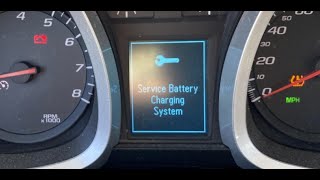
- "Service Charging System" message on the Driver Information Center (DIC).
- Voltage gauge on the instrument cluster reads low (around 11-12 volts), particularly for the first several minutes after a cold start.
- In cases of a persistent fault, the engine may crank slowly or not at all.
- In rare cases involving BCM issues, other electrical gremlins like lights, wipers, or horn activating on their own may occur alongside a B1517 code.
- Replacing the alternator or battery when the low voltage condition only occurs temporarily on cold starts, as this is often normal behavior described in TSB #PIT4813C and its successors.
Most Likely Causes
- Normal Cold Start Operation (Especially Diesel) 🔴 High Probability As documented in GM TSB #PIT4813C and its successors, high electrical loads from systems like intake air heaters (up to 130 amps) and glow plugs (up to 110 amps) on cold starts can exceed the alternator's output at idle, causing a temporary voltage drop that the BCM flags as a fault.
How to confirm: Observe if the code and low voltage reading only occur for the first 5-10 minutes after a cold start (below 100°F / 40°C coolant temp) and then return to normal (typically 13.5-14.5V).
Typical fix: No repair is necessary. Per the TSB, this is a normal characteristic and dealers are instructed to communicate this to the customer and share a copy of the bulletin.
Est. part cost: $0 - Weak or Failing Battery 🟡 Medium Probability → Shop Vehicle Battery
How to confirm: If the low voltage condition is persistent and not just on cold starts, have the battery professionally load tested. A healthy battery should read over 12 volts with the engine off.
Typical fix: Replace the battery if it fails the load test.
Est. part cost: $150-$350 - Failing Alternator ⚪ Low Probability → Shop Alternator
How to confirm: With the engine running, test the voltage at the battery terminals. If it's consistently below 13.2V, especially with accessories on, the alternator is likely failing. Conversely, if it's charging over 15V, the internal regulator may be bad, which can also trigger the warning.
Typical fix: Replace the alternator.
Est. part cost: $200-$500
Rare But Worth Checking
- Loose or Corroded Battery/Ground Connections: → Shop Vehicle Battery A poor connection at the battery terminals or a faulty ground strap can cause intermittent voltage issues. Another GM bulletin, PIC6439, notes that a small black wire on the negative battery terminal (for the battery current sensor) can become loose or damaged after a battery replacement and cause a B1517 code, sometimes with symptom 5A.
- BCM Software Calibration Issue: On similar GM platforms of the era, a separate TSB (PIT5289A) indicates that the BCM software itself can be too sensitive, falsely triggering the code on 2012-2014 Express/Savana vans. The fix is a software re-calibration by a dealer. While PIT4813C is more specific to the Sierra, this remains a possibility if all hardware checks out.
- Faulty Battery Current Sensor: → Shop Vehicle Battery The battery current sensor, a small module on the negative battery cable, tells the BCM the battery's state of charge. If this sensor fails, the BCM may command an incorrect voltage, triggering the code. A bad sensor is a likely culprit if both the battery and alternator test good.
- Parasitic Drain / BCM Malfunction: In some cases, a B1517 code (specifically with symptom 5A) can be a symptom of a larger electrical problem, such as a parasitic drain caused by a malfunctioning module or water intrusion affecting the BCM or a fuse block. One owner on a forum reported a cascade of electrical failures including a B1517 code, which was suspected to be caused by a warped cowl allowing water into the cabin electronics.
Diagnosis Steps
- Verify the conditions when the code appears. If it's ONLY for a few minutes after a cold start and then normalizes, consult TSB #PIT4813C/D/E. No further action is needed.
- If the low voltage is persistent, begin with a visual inspection. Check that the battery terminals are clean and tight.
- Inspect the main ground straps from the battery to the body and from the frame to the engine block for corrosion or damage.
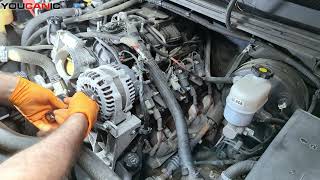
- Per TSB PIC6439, closely inspect the small black wire and its connection to the negative battery terminal clamp. Ensure it is secure, not rotated or damaged, as this is a known cause of B1517, especially after a battery service. 🎬 Watch: How to fix the Service Battery Charging System message.
- Have the battery tested using a conductance or load tester to confirm its health. A reading below 12V with the engine off indicates a weak battery.
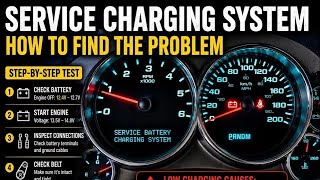
- If the battery is good, start the engine and measure the voltage directly at the battery terminals. A healthy charging system should read between 13.5V and 14.8V. If the voltage is low, the alternator is the likely culprit.
- If the battery and alternator test good, the battery current sensor on the negative terminal is the next most likely cause.
Parts You'll Likely Need
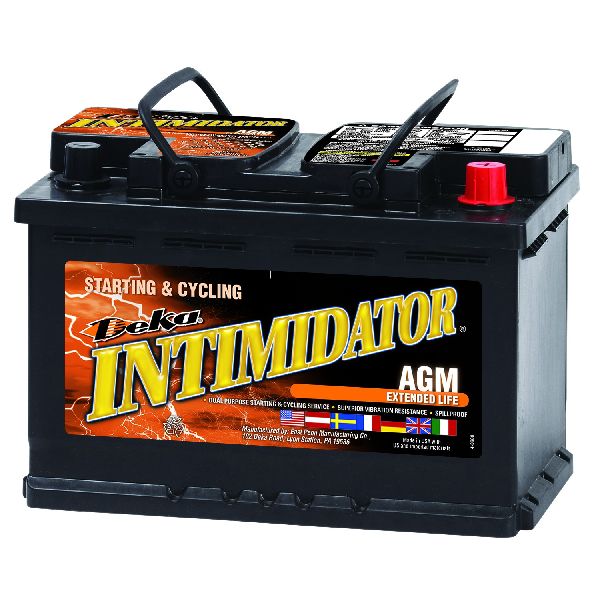
- Battery — If the low voltage condition is persistent and the battery fails a load test, it is the most common hardware failure.
Trusted brands: ACDelco, Interstate, DieHard
OEM price range: $200-$350
Aftermarket price range: $150-$250 - Alternator
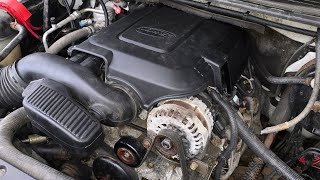
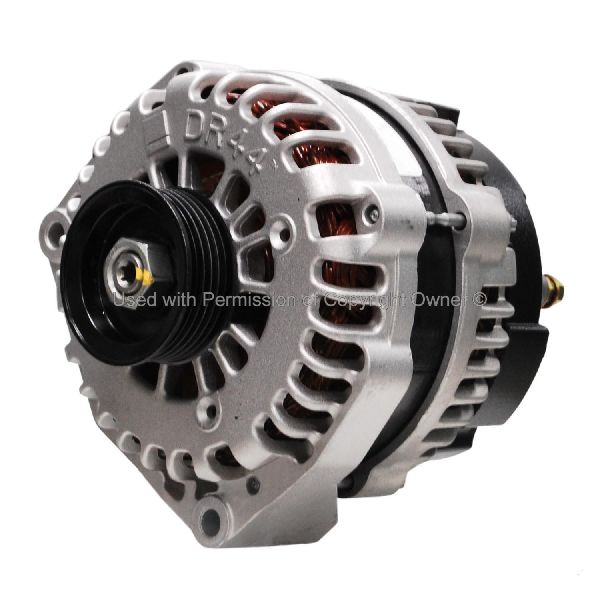
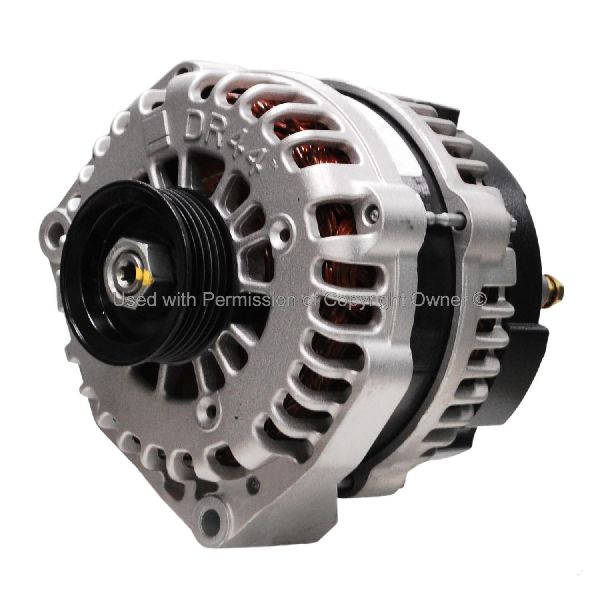
(OEM #ACDelco 84143543 (150 Amp), ACDelco 334-2742A (Reman), ACDelco 335-1196 (160 Amp))— If the battery is healthy but the system voltage remains low while the engine is running, the alternator is not providing an adequate charge.
Trusted brands: ACDelco, Denso, Bosch
OEM price range: $350-$550
Aftermarket price range: $200-$400 - Battery Current Sensor
(OEM #GM 13505369 (replaces 25809382), GM 22870307, GM 13545953)— If the battery and alternator are confirmed good, this sensor, which informs the BCM's charging strategy, may be faulty. It is a common point of failure and is often damaged during battery replacement.
Trusted brands: ACDelco / GM Genuine Parts
OEM price range: $40-$80
Aftermarket price range: $25-$50
Technical Service Bulletins (TSBs) & Recalls
- Bulletin #PIT4813C, D, E: States that a temporary low voltage reading and DTC B1517 after a cold start is a normal characteristic due to high loads from glow plugs and intake heaters on diesel engines. Instructs technicians not to perform repairs if the condition resolves after a few minutes.
- Bulletin #PIC6439: Provides a diagnostic tip for DTC B1517, pointing to a loose or damaged small black wire for the battery current sensor on the negative battery terminal, often occurring after a battery replacement.
- Bulletin #PIT5289A: Notes that on some GM models (2012-14 Savana/Express), a sensitive BCM calibration can cause this code, requiring a software update from the dealer.
Platform-Specific Known Issues
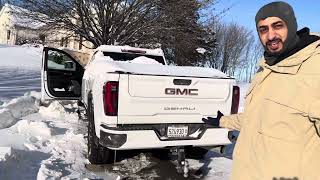
- Per TSB #PIT4813C and its successors (PIT4813D/E), a temporary 'Service Charging System' message and low voltage reading after a cold start is considered normal operation on these trucks, especially diesel models, and does not require repair. 🎬 Watch: See how a diesel cold start affects the system.
Mechanic-Grade Diagnostic Values
- BCM Ground Circuit Resistance — expected: Less than 1.0 ohm. Failure: A reading greater than 1.0 ohm indicates a poor ground connection that needs to be cleaned or repaired.
- B1517 03 Set Condition — expected: System voltage < 11 volts with engine speed > 1,100 RPM for 15 seconds.. Failure: Meeting these conditions will trigger the DTC B1517 sym 03.
- B1517 5A Set Condition — expected: Voltage difference between the two BCM battery sense circuits is > 2 volts for 10 seconds.. Failure: Meeting these conditions will trigger DTC B1517 sym 5A, indicating a plausibility failure.
- Diesel Intake Air Heater Current Draw — expected: Up to 130 amps. Failure: This is a normal high-current draw during a cold start, as noted in TSB PIT4813.
- Diesel Glow Plug Current Draw — expected: Up to 110 amps. Failure: This is a normal high-current draw during a cold start, as noted in TSB PIT4813.
Hidden / Shadow Codes Worth Checking
- B1517 03: 'Battery Voltage Below Threshold'. This is the most common variant, triggered by a low voltage condition (<11V for 15s). It is the code specifically mentioned in TSBs regarding normal cold start behavior on diesels. (see via Most professional scan tools that can read Body Control Module (BCM) codes will display the symptom byte.)
- B1517 07: 'Battery Voltage Above Threshold'. Indicates an over-voltage condition (>16V for 15s), which typically points to a failing alternator with a bad internal voltage regulator. (see via Professional scan tool capable of reading BCM codes.)
- B1517 5A: 'Battery Voltage Plausibility Failure'. This code sets when the BCM's two internal battery sense circuits disagree by more than 2 volts. It strongly suggests a wiring or connection issue, such as the damaged battery current sensor wire noted in TSB PIC6439, rather than a faulty battery or alternator. (see via Professional scan tool capable of reading BCM codes.)
Scan Tool Commands That Help
- GDS2 / Techline: BCM Software Re-calibration — On some similar GM platforms (per TSB PIT5289A), a sensitive BCM calibration was the root cause of B1517. If all hardware and wiring checks out, a dealer may need to perform a software update to correct the issue.
- GDS2 or equivalent professional scan tool: Battery Replacement/State of Charge Reset — After replacing a battery on a vehicle with a Regulated Voltage Control (RVC) system, it is best practice to reset the BCM's learned battery state of charge. If the BCM still thinks the old, weak battery is installed, it may not command the correct charging voltage for the new battery, leading to persistent issues.
Wiring & Ground Locations
- BCM (Body Control Module) — Inside the cabin, behind the driver-side lower dashboard panel, located just above the interior fuse block.. The BCM is the module that monitors system voltage and sets code B1517. Its power and ground connections are critical.
- G103 — At the left rear of the engine compartment, on the cowl (firewall), located above the brake booster.. This is a critical ground point that serves the BCM, Instrument Panel Cluster (IPC), and the Data Link Connector (DLC). A poor connection here can directly cause BCM voltage sensing errors and set a B1517 code.
- Engine Block to Chassis/Firewall Ground — A braided ground strap typically running from the rear of the engine (often a cylinder head) to the firewall/cowl. Its exact location can vary slightly.. This is one of the most important ground paths on the vehicle. If it's corroded or broken, the starter and other components will try to find another path to ground, often through smaller wires, causing widespread voltage drops and bizarre electrical issues, including B1517.
- BCM Ground Pins (C4 Pin 9) — On the harness connector C4 at the BCM. The diagnostic procedure involves testing for less than 1.0 ohm of resistance between this pin and a clean chassis ground.. This is a specific, testable point for a technician to verify the BCM's ground circuit integrity. High resistance here means the BCM itself has a bad ground.
Real Owner Repair Stories
- CarKiller.com Forums (2014 Chevrolet Silverado (similar GMT platform)) — Horn, wipers, lights activating on their own. Code B1517-5A present.
❌ Tried (didn't work) Replacing the battery.
✅ What actually fixed it The user suspected a faulty BCM or a water leak into the electronics from a warped cowl as the root cause, as replacing the battery did not resolve the issue and multiple contradictory electrical codes were present. The final fix was not posted, but the story highlights that B1517-5A can be a symptom of a much larger BCM-related failure.
"I Checked Everything" — The Actual Cause
- A common scenario for a persistent B1517 code is when both the battery and alternator pass diagnostic tests. In these cases, the root cause is frequently a high-resistance connection in the charging circuit that is not immediately obvious. Technicians often find the problem in either a corroded main engine-to-chassis ground strap or, as noted in TSB PIC6439, the small black wire for the battery current sensor on the negative terminal being loose or damaged after a battery replacement. These issues are missed because the primary components test 'good', but the BCM receives inaccurate voltage information due to the faulty connections.
OEM Part Supersession History
25809382, 13502261, 10306471→GM 13505369— Part revision and consolidation by the manufacturer.
Heads up: The new part number (13505369) is the correct replacement for the older numbers and does not require special programming for installation.
Model Year Variations Within This Range
- 2007-2011 (Diesel Engines): Per TSB PIT4813C and its successors, vehicles with the 6.6L Duramax diesel engine have a specific operating characteristic where the high current draw from glow plugs and intake heaters on a cold start can cause a temporary B1517 code. This is considered normal operation and should not be repaired if the condition resolves after the engine warms up.
Helpful Videos
We Have This Part in Stock



The information in this article is provided for general reference and educational purposes only. Vehicle specifications, procedures, and part compatibility can vary by production date, trim level, and region. Always consult your vehicle's factory service manual and verify part numbers before purchasing or performing repairs. Safety-critical components such as airbags, seat belts, and braking systems should be installed by a qualified professional.
- Gmc SIERRA DENALI:
- 🧭 Diagnostic Flowchart
- 🎬 Helpful Videos
- 🛍️ Shop This Part
- What's Unique About the 2007-2011 Gmc SIERRA DENALI
- Symptoms You May Notice
- Most Likely Causes
- Rare But Worth Checking
- Diagnosis Steps
- Parts You'll Likely Need
- Technical Service Bulletins (TSBs) & Recalls
- Platform-Specific Known Issues
- Mechanic-Grade Diagnostic Values
- Hidden / Shadow Codes Worth Checking
- Scan Tool Commands That Help
- Wiring & Ground Locations
- Real Owner Repair Stories
- "I Checked Everything" — The Actual Cause
- OEM Part Supersession History
- Model Year Variations Within This Range
- 🎟️ Get 5% Off