

OBD-II Code B1519: Hood Switch Circuit Malfunction
What B1519 means, why it triggers, and how to fix it
- Code B1519 primarily indicates a failed hood latch switch, which immediately disables remote start and automatic engine stop/start features.
- B1519 definitions vary by manufacturer: it signals a critical airbag fault on Chrysler, Jeep, and Mitsubishi vehicles, but a lighting issue on VW and BMW.
- Always use a bidirectional scan tool to read manufacturer-specific B-codes, as a generic $20 code reader will misdiagnose or completely miss this fault.
- Replacing the integrated hood latch assembly costs between $170 and $350 and resolves the code in over 80% of Ford and GM vehicles.
- Do not drive Chrysler, Jeep, or Mitsubishi vehicles with this code until verifying it is not an active airbag system failure.
What Does B1519 Mean?
B1519 indicates the Body Control Module (BCM) detects a fault in the hood switch circuit. The vehicle cannot verify if the hood is open or closed, automatically disabling dependent safety and convenience systems.
Technical definition: The SAE/OBD-II definition for B1519 is a hood switch circuit malfunction. However, manufacturers frequently repurpose this code. It indicates seat position sensor failures on Chrysler/Jeep, airbag module disconnects on Mitsubishi, exterior door handle faults on Lincoln, or lighting system errors on European brands.
Can I Drive With B1519?
Yes, But With Caution. Yes, you can drive with this code if it indicates a standard hood switch fault. The vehicle remains mechanically safe, though features like remote start, car alarms, and automatic engine stop/start are disabled. However, on Chrysler, Jeep, Dodge, or Mitsubishi vehicles, B1519 indicates a critical airbag system failure. In these specific vehicles, the airbags will not deploy correctly in a crash. Tow the vehicle to a repair facility immediately if you own one of these affected brands.
Common Causes
- Failed or Stuck Hood Latch Switch (Very Common) — The small electronic switch integrated into the hood latch assembly is the most frequent failure point. It binds or breaks from physical wear, constant weather exposure, and high engine-bay temperatures.
- Corroded or Damaged Wiring/Connector (Very Common) — The hood switch wiring lives in the harsh environment of the front grille. Moisture, heat, and vibration cause corrosion on the connector pins or breaks in the wires, creating an open or shorted circuit.
- Misaligned Hood or Worn Rubber Bumpers (Common) — A hood that fails to close tightly cannot depress the switch plunger. Worn-out rubber stoppers or a misaligned hood latch prevent the switch from making electrical contact.
- Poor Ground Connection (Common) — The hood switch circuit requires a solid ground. A corroded or loose chassis ground point causes intermittent signal drops, triggering the B1519 code.
- Blown Fuse (Less Common) — A blown fuse in a related circuit triggers this code, particularly on European vehicles where B1519 ties into the lighting system. Always check the BCM fuse block early in diagnosis.
- Weak Battery or Faulty Charging System (Less Common) — A low battery or failing Intelligent Battery Sensor (IBS) forces the BCM to generate spurious electrical fault codes as it sheds electrical load.
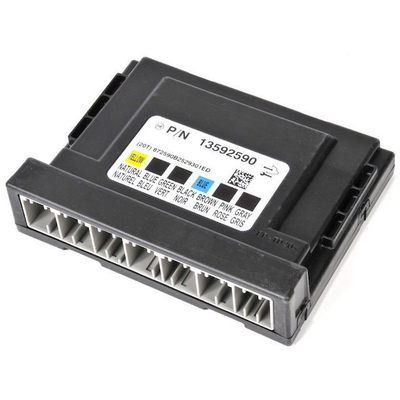
- Faulty Body Control Module (BCM) (Rare) — The main body computer that reads the hood switch signal occasionally fails internally. This requires module replacement and dealer-level programming.
- Improper Aftermarket Alarm Wiring (Rare) — Incorrectly installed aftermarket remote starts or alarms interfere with the factory hood switch circuit. Installers frequently tap the wrong wire or create high-resistance splices.
Symptoms
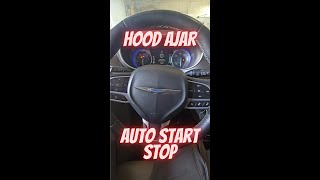
- 'Hood Open' Warning on Dash — A persistent warning light or message on the instrument cluster indicates the hood is ajar, even when securely latched. 🎬 See this Silverado and Sierra hood latch replacement walkthrough.
- Remote Start Disabled — Vehicles disable the remote start function if the system believes the hood is open, preventing the engine from starting during maintenance.
- Engine Stop/Start (ESS) Disabled — Automatic engine shut-off at stoplights is disabled for safety reasons, as the system cannot verify the hood is closed.
- Airbag Warning Light — For Mitsubishi, Chrysler, and Jeep owners, B1519 accompanied by an airbag light points to a failed airbag control module connection or seat sensor.
- Car Alarm Malfunctions — The security system fails to arm, or the alarm triggers randomly because it incorrectly senses hood tampering. 🎬 Watch: How to fix a Ford bonnet warning and alarm.
- Lighting System Malfunctions — On VW, BMW, Audi, and Mercedes, B1519 links to lighting circuits, causing flickering headlights or inoperative interior lights.
Diagnostic Flowchart
Tap your situation to follow the diagnostic path that matches what you're seeing on this code.
Common Fixes & Costs
- Replace Hood Latch Assembly — Parts: $70-$200, Labor: $100-$150, ~1 hr book time (DIY)
- Replace Standalone Hood Plunger Switch — Parts: $15-$50, Labor: $50-$100, ~0.5 hr book time (DIY)
- Repair Damaged Wiring or Connector — Parts: $10-$40, Labor: $100-$250, ~1.5 hr book time (Intermediate)
- Clean and Secure Ground Connection — Parts: $1-$5, Labor: $50-$100, ~0.5 hr book time (DIY)
- Replace Driver Seat Position Sensor — Parts: $30-$100, Labor: $100-$200, ~1.5 hr book time (Intermediate)
- Replace Body Control Module (BCM) — Parts: $500-$1200, Labor: $150-$300, ~2 hr book time (Professional)
Used vs. New Parts: Buying Guide
When a used part is worth it: Buy a used latch assembly from a salvage yard only for vehicles over 10 years old where the switch mounts externally.
Donor-vehicle mileage cap: roughly under 100000 miles for the part to have meaningful remaining life.
Donor quality checklist:
- Visually inspect for rust and excessive wear. Avoid parts from Rust Belt vehicles.
- Ensure the electrical connector and wiring pigtail are intact and free of corrosion.
- Match the part number exactly to ensure correct electrical connectors and mounting points.
Decision logic:
- If The vehicle is less than 10 years old OR the new part costs less than $100 → Buy a new OEM or quality aftermarket part. The savings from a used part are minimal.
- If The vehicle is over 10 years old AND is a common model → A used part is a reasonable choice, but inspect it carefully before purchase.
- If The switch is integrated deep within the latch assembly and known for high failure rates → Buy a new part. A used integrated latch already has significant internal wear.
Warranty tradeoff: Used parts offer a 30-90 day warranty covering only the part. New aftermarket parts include a 1-year to limited lifetime warranty.
Worst-case if a used part fails: $150-$300 if a used latch fails shortly after installation, requiring repeat labor costs.
What Happens If You Wait — Timeline
- Immediate: Code B1519 sets in the BCM. Remote start, car alarms, and auto stop/start are disabled. (MPG impact: 0%% · Added cost: $0)
- 1-6 months (Non-Airbag Fault): Corrosion spreads through the connector and wiring harness. Intermittent connections become permanent open or short circuits. (MPG impact: 0%% · Added cost: $0-$50 if the alarm malfunctions and drains the battery.)
- Ongoing (Airbag-Related Fault): On Chrysler, Jeep, or Mitsubishi vehicles, the airbags fail to deploy in an accident. This is a critical safety failure. (MPG impact: 0%% · Added cost: Potentially infinite (cost of injury or fatality in a crash).)
- 6+ months (Cascading Electrical Issues): High resistance or shorts damage the BCM or affect other components sharing the circuit ground. (MPG impact: 0%% · Added cost: $250-$1500 to diagnose and repair cascading electrical faults or replace the control module.)
Cost of Not Fixing It
- Immediate: Loss of convenience features like remote start, car alarm, and engine auto stop/start. (Added cost: 0)
- Ongoing: On Chrysler, Jeep, Dodge, or Mitsubishi vehicles, airbags fail to deploy in a crash. (Added cost: Potentially infinite (cost of injury/fatality))
- 1-6+ months: Ignoring the fault masks the root cause. A wiring short eventually damages the BCM or other critical systems sharing the harness. (Added cost: $250-$1000)
Diagnosis Steps
- Visual Inspection of Hood and Latch
Open the hood and check alignment. Inspect the adjustable rubber bumpers on the core support; if worn or set too low, the hood cannot press the switch firmly. Close the hood securely and check if the dash warning disappears.
Tools: Flashlight (Beginner) - Check Live Data with a Scan Tool
Connect an OBD-II scanner and access Body Control Module (BCM) live data. Find the 'Hood Switch' PID. The status must change from 'Open' to 'Closed' as you manually operate the latch with a screwdriver. This immediately confirms if the BCM receives the signal.
Tools: OBD-II Scan Tool with Live Data (Intermediate) - Inspect the Hood Switch Connector
Unplug the electrical connector attached to the hood latch. Inspect the pins and wiring for green corrosion, bent pins, or frayed wires. Clean any corrosion with electrical contact cleaner.
Tools: Flashlight, electrical contact cleaner (Beginner) - Test the Switch with a Multimeter (Continuity)
Set a multimeter to continuity. Probe the two pins on the disconnected switch. The meter must show an open circuit. Press the switch plunger; the meter must beep and show near-zero resistance. If it does not change state, replace the switch.
Tools: Multimeter (Intermediate) - PRO TIP: Check Signal Wire Voltage
With the connector unplugged and ignition ON, check the voltage on the signal wire in the harness-side connector. You must see a 5V or 12V reference voltage from the BCM. Zero voltage indicates a broken wire or failed BCM.
Tools: Multimeter (Advanced) - PRO TIP: Test Switch Resistance
Set the multimeter to Ohms. When the switch is closed, resistance must be less than 10 ohms. A reading that is high but not infinite indicates internal switch corrosion, requiring replacement.
Tools: Multimeter (Advanced) - PRO TIP: Perform a Voltage Drop Test
Connect the multimeter positive lead to the ground pin on the harness connector and the negative lead to the battery negative terminal. With the switch plugged in and closed, the reading must be under 0.2 volts. Higher readings indicate high circuit resistance.
Tools: Multimeter (Advanced) - Inspect the Wiring Harness
Trace the wires from the hood switch connector back into the main harness. Look for chafing, melting, or physical breaks where the harness bends or passes near hot engine components.
Tools: Flashlight, trim removal tools (Intermediate) - Check for a Bad Body Control Module (BCM)
If the switch, wiring, and grounds test perfectly, the BCM is faulty. Use a wiring diagram to test for proper voltage and ground directly at the BCM connector pins to confirm the module is failing to process the signal.
Tools: Bidirectional scan tool, multimeter, wiring diagrams (Professional)
When This Code Triggers (Freeze-Frame Conditions)
- Vehicle State: Key ON, Engine OFF/ON (The BCM checks the hood switch status immediately upon ignition ON and continuously while driving.)
- System Voltage: 11.5V - 14.5V (The test runs during normal operating voltage. Very low voltage sets spurious codes.)
- Remote Start/Alarm Command: Signal present (The code sets specifically when a remote start or alarm arming sequence fails due to the hood switch status.)
- Vehicle Speed: 0 mph and >0 mph (The circuit is monitored both when stationary and while driving.)
Related Codes
- P257F — The engine computer's (PCM) version of the hood switch circuit fault. Seeing both codes confirms a hard fault in the hood switch circuit.
- P152F — An engine code related to the hood switch circuit on Jeep, Chrysler, and Dodge vehicles. It points to the exact same physical circuit as B1519.
- B00B5 — Indicates a Driver Seat Track Position Sensor fault on Chrysler/Jeep vehicles. If present with B1519, the seat sensor is the primary failure point.
- U0140 — Lost Communication With Body Control Module. Appearing alongside B1519 indicates a larger CAN bus network or BCM failure.
Climate & Environmental Factors
- High Humidity and Rain: Moisture acts as the primary catalyst for corrosion. Water penetrates the weather seals of the hood switch connector, corroding pins and creating high resistance.
- Winter Conditions (Road Salt): Salt spray coats the latch, switch, and wiring. Saltwater rapidly degrades electrical connections, wiring insulation, and the mechanical latch mechanism.
- Extreme Cold: Plastic switch components and wiring insulation become brittle and break. The mechanical latch stiffens, preventing the switch from fully depressing.
How to Talk to a Mechanic About This Code
Say this: "I have a B1519 code on my [Make, Model, Year]. My main symptom is [the remote start not working / the airbag light is on]. Based on my research for this specific car, the issue is likely the [hood latch switch / driver's seat position sensor / a loose airbag computer connector]. Can I book a diagnostic appointment to confirm this specific part is the problem before replacing anything?"
This directs the technician to the most probable cause based on the vehicle's known quirks, saving diagnostic time and preventing incorrect part replacement.
Avoid saying:
- 'My check engine light is on, can you look at it?'
- 'The car is acting weird, just fix it.'
- 'I have a B1519 code, just replace the hood switch.' (This causes severe misdiagnosis on Chrysler or Mitsubishi).
Questions to ask before authorizing the repair:
- Did you use a scanner to check the live data from the [hood switch / seat position sensor] to confirm it is not responding?
- If it is a wiring issue, can you show me the corroded connector or the damaged wire section?
- For a Mitsubishi, did you first try reseating the SRS-ECU connectors as a no-cost fix?
- What is the warranty on the new part and your labor?
Where to Take It: Dealer vs Independent vs Chain
- Dealer:
Best for: Vehicles under warranty., Airbag-related faults on Chrysler/Jeep/Mitsubishi models., Complex manufacturer-specific issues like lighting faults on VW/BMW or door handle issues on Lincoln., Confirming and performing TSBs.
Downsides: Highest labor rates., Dealerships frequently replace entire expensive assemblies instead of performing targeted wiring repairs. (Typical cost: +50% vs. baseline) - Independent Shop:
Best overall fit for common hood switch problems. For airbag or brand-specific variants, ensure the shop has advanced diagnostic tools.
Best for: Out-of-warranty vehicles with common hood switch failures., Diagnosing and repairing straightforward wiring or ground issues., Owners who have a trusted mechanic with modern, multi-system scan tools.
Downsides: Shop quality and diagnostic tool capability vary greatly., May lack experience with brand-specific code meanings. (Typical cost: +0% vs. baseline) - Chain Shop:
AVOID. The diagnostic complexity and brand-specific nature of code B1519 make chain shops a poor choice.
Best for: Not generally recommended for this code.
Downsides: Technicians lack the advanced scanners required to differentiate the multiple meanings of B1519., High risk of misdiagnosis, leading to unnecessary replacement of parts. (Typical cost: -10% vs. baseline)
When to Walk Away From the Repair
If the estimated repair cost exceeds 50% of the vehicle's private-party value on a non-safety issue, sell or scrap the vehicle.
- Car worth $5000, fix is $250: Fix it. This is a low-cost repair for a common hood switch, well below the threshold.
- Car worth $3000, fix is $1500: Walk away. If the code is caused by a failed BCM and the car has other issues, the repair cost is too high relative to the car's value.
- Car worth $4000, fix is $300: Fix it, regardless of threshold. If the code indicates an airbag fault, it is a critical safety issue that must be repaired.
What Scan Tool You Need for This Code
Minimum: A scanner that reads manufacturer-specific Body (B-codes) and Airbag (SRS) codes and displays live data for those modules.
A basic $20 code reader cannot read B1519. It lacks access to the BCM and SRS modules required to view live switch data.
Budget: BlueDriver Pro / Autel AP200 (~$100) — These Bluetooth dongles connect to a smartphone app, read codes from all modules, and display the live sensor data needed to verify the hood switch.
Mid-range: Foxwell NT530 / Innova 5610 (~$180) — A dedicated handheld tool providing full-system diagnostics, live data graphing, and bidirectional controls to actively test components.
Professional: Autel MaxiCOM MK808 / Launch X431 series (~$450-900) — Provides professional, dealer-level diagnostics with full bidirectional control to command modules and actuators.
Rent vs buy: Buy. Auto parts stores offer free code scanning, but their basic readers cannot access the BCM or SRS systems required to diagnose B1519.
How to Clear the Code After You Fix It
- Reconnect the battery if disconnected during repair.
- Use an OBD-II scan tool to clear the DTC from the Body Control Module (BCM).
- Turn the ignition off, then start the vehicle and let it run for 1-2 minutes.
- Test the related functions (remote start, alarm) to confirm the fix.
Drive cycle (~10 minutes): A formal drive cycle is not required. After clearing the code, operate the affected systems. The BCM re-runs its self-test immediately. A short 10-minute drive confirms the repair.
Readiness monitors affected: None
Watch out for:
- Disconnecting the battery fails to clear the code from the BCM's non-volatile memory.
- If the code returns immediately, the root cause remains unfixed.
- Failing to test the previously disabled functions (remote start, alarm) after repair.
Will This Fail Emissions / State Inspection?
No — by itself this code doesn't fail OBD inspection (but it can keep readiness monitors from setting, which causes a separate fail).
- California: California emissions testing ignores B-codes. The inspection strictly monitors P-codes and emissions readiness monitors.
- New York: The NYS safety inspection fails vehicles with illuminated airbag lights. If B1519 triggers the airbag light, the vehicle fails the safety portion.
- Texas: Texas OBD-II emissions testing focuses exclusively on powertrain P-codes. A B1519 code does not cause an emissions test failure.
Most Commonly Affected Vehicles
- Ford Focus, Fiesta, C-Max, Escape (2012-2019) — Notorious for switch failure inside the hood latch. Replacing the entire latch assembly is the standard fix.
- Chevrolet / GMC Silverado, Sierra, Tahoe, Suburban (2014-2019) — Commonly disables remote start. Technicians frequently find poor ground connections at points like G132/G133 on these trucks.
- Jeep / Chrysler / Dodge Cherokee, Grand Cherokee, Pacifica (2014-2023) — Dual meaning: indicates a hood switch fault or a failed driver's seat position sensor for the airbag system. Live data scanning is mandatory.
- Volkswagen Golf, Passat, Tiguan (2006-2019) — B1519 acts as a generic fault code for lighting systems (headlights or interior lights) and is completely unrelated to the hood.
- BMW 3 Series, 5 Series, X3, X5 (2008-2020) — Indicates a fault within the lighting circuits. A weak battery also causes the BCM to store this as a spurious electrical code.
- Honda / Acura Most models (1996-2024) — B1519 is not a standard Honda code. Cheap scanners misread P1519 (Idle Air Control valve circuit) as B1519.
- Mitsubishi Lancer, Outlander (2008-2017) — Indicates a poor connection at the main airbag computer (SRS-ECU). The fix involves disconnecting the battery and reseating the large C-130/C-131 connectors.
- Lincoln Continental (2017-2017) — TSB 18-2327 links code B1519 directly to a fault in the exterior door handle control module. The fix requires replacing the door handle assembly.
Manufacturer-Specific Notes
- Ford / GM: B1519 strictly points to a problem with the hood latch switch or its wiring, disabling remote start.
- Chrysler / Jeep / Dodge: Indicates either a faulty hood switch disabling engine stop/start, or a failed driver's seat position sensor disabling the airbag system.
- Mitsubishi: B1519 is an airbag system code indicating a loose connector on the SRS-ECU. Disconnect the battery and reseat the main ECU connectors.
- Lincoln: On the 2017 Continental, TSB 18-2327 states B1519 relates to a faulty exterior door handle assembly.
- Many European Brands (VW, BMW, Audi, etc.): B1519 acts as a generic code pointing to faults in lighting systems, such as headlights or interior lights.
- Ford: Customer Satisfaction Program 19B07 extended warranty coverage for hood latch corrosion issues on 2013-2016 Fusions and 2015-2016 Edges.
Real Owner Stories
2015 Ford Focus at 75,000 miles
The remote start stopped working and a 'Hood Ajar' message constantly displayed on the dashboard.
What they tried:
- Slammed the hood shut multiple times.
- Checked the alignment of the hood and rubber bumpers.
- Sprayed the latch mechanism with WD-40.
Outcome: The owner purchased a new hood latch assembly for $85. Replacement took 45 minutes using a basic socket set. The new latch immediately solved the warning and restored remote start.
Lesson: On Ford models, the integrated hood switch is a high-failure item. Replacing the latch assembly is the fastest and most effective fix.
2016 Jeep Grand Cherokee at 92,000 miles
The airbag warning light stayed on permanently. A basic OBD-II scanner pulled no codes.
What they tried:
- Checked under the driver's seat for loose wires.
- Disconnected the battery for 30 minutes to reset the system.
Outcome: An independent shop used an advanced scanner to pull codes B1519 and B00B5, pointing to the Driver Seat Track Position Sensor. The shop replaced the sensor for $280, permanently clearing the airbag light.
Lesson: On Chrysler/Jeep products, B1519 with an airbag light points to the seat position sensor. Basic scanners cannot read these manufacturer-specific body codes.
2012 Mitsubishi Outlander at 110,000 miles
An 'Airbag System Service Required' message appeared. The owner found code B1519 using a capable scanner.
What they tried:
- Received a $500 quote for diagnosis and repair at a general auto shop.
Outcome: Forum research revealed B1519 means a poor connection at the main airbag computer (SRS-ECU). The owner disconnected the battery, located the SRS-ECU under the center console, and reseated its main electrical connectors. The code cleared permanently for $0.
Lesson: Manufacturer-specific knowledge prevents expensive misdiagnosis. For Mitsubishi, B1519 is a known SRS-ECU connection issue fixed by simply reseating the plugs.
2017 Lincoln Continental
The driver-side exterior door handle stopped working electronically, storing code B1519.
What they tried:
- Assumed a wiring issue or simple switch failure within the handle.
Outcome: A search revealed TSB 18-2327 for this exact issue. The dealer confirmed the TSB applied and replaced the exterior door handle assembly under warranty.
Lesson: Always check for Technical Service Bulletins (TSBs). A TSB points directly to a known issue and specific repair procedure, saving diagnostic time.
How to Prevent This Code From Triggering
- Lubricate Hood Latch Mechanism (Every 6 months or every oil change) — Applying white lithium grease prevents mechanical binding, ensuring the switch plunger fully depresses when the hood closes.
- Apply Dielectric Grease to Connector Seal (Once every 1-2 years or when disconnected) — Dielectric grease on the rubber weather seal prevents moisture intrusion, stopping pin corrosion.
- Clean Engine Bay Ground Points (Every 2-3 years, especially in the Salt Belt) — Cleaning main chassis and BCM ground points to bare metal prevents high resistance, ensuring the BCM receives clean sensor signals.
- Inspect and Secure Wiring Harnesses (During any under-hood maintenance) — Securing the wiring harness prevents chafing against hot or sharp engine components.
Frequently Asked Questions
Why did my remote start stop working because of a hood switch?
Vehicles disable remote start if they detect an open hood. This is a hardcoded safety feature preventing the engine from starting while someone performs engine bay maintenance.
My car has a B1519 code and the airbag light is on. Are they related?
Yes, on Chrysler, Jeep, Dodge, or Mitsubishi vehicles, B1519 indicates a serious airbag system fault. Chrysler products link this to a failed driver's seat position sensor, while Mitsubishi links it to a loose airbag control module connector. Diagnose and repair these immediately, as airbags will not deploy in a crash.
What is the most common misdiagnosis for code B1519?
The most common mistake is assuming B1519 always means 'hood switch' across all brands. Technicians failing to check manufacturer-specific definitions often replace the hood latch on a Mitsubishi or Volkswagen, only to find the problem persists. Always verify the code definition for your specific make and model.
Can I just bypass the hood switch to fix this?
Bypassing the switch with a jumper wire permanently tells the car the hood is closed, defeating a critical safety system. This creates a severe injury risk for mechanics and prevents you from finding the actual electrical short. Fix the root cause instead of masking it.
Can a car wash cause the B1519 code?
Yes, high-pressure water forces its way into the hood latch switch or electrical connector, causing a temporary short circuit. If the code appears immediately after a wash, let the engine bay dry completely. Use compressed air and electrical contact cleaner on the connector to displace remaining moisture.
What does B1519 mean on a Ford Focus?
On a Ford Focus, B1519 almost exclusively indicates a fault in the hood latch switch or its circuit. This common problem triggers a 'Hood Ajar' warning and disables the remote start feature. The standard fix is replacing the entire hood latch assembly.
How do I clear a B1519 code?
Clear the code using an OBD-II scanner after completing the repair. If the underlying electrical fault remains, the code returns immediately after the BCM re-runs its self-test upon startup. Clearing the code without fixing the hardware does not solve the problem.
Key Takeaways
- Code B1519 primarily indicates a failed hood latch switch, which immediately disables remote start and automatic engine stop/start features.
- B1519 definitions vary by manufacturer: it signals a critical airbag fault on Chrysler, Jeep, and Mitsubishi vehicles, but a lighting issue on VW and BMW.
- Always use a bidirectional scan tool to read manufacturer-specific B-codes, as a generic $20 code reader will misdiagnose or completely miss this fault.
- Replacing the integrated hood latch assembly costs between $170 and $350 and resolves the code in over 80% of Ford and GM vehicles.
- Do not drive Chrysler, Jeep, or Mitsubishi vehicles with this code until verifying it is not an active airbag system failure.
Helpful Videos
Shop the Parts Behind B1519
Below are the parts most often responsible for code B1519, ranked by how frequently each one is the actual culprit (per the diagnosis above). Tap any to see what we have for your vehicle.


The information in this article is provided for general reference and educational purposes only. Vehicle specifications, procedures, and part compatibility can vary by production date, trim level, and region. Always consult your vehicle's factory service manual and verify part numbers before purchasing or performing repairs. Safety-critical components such as airbags, seat belts, and braking systems should be installed by a qualified professional.
- 🧭 Diagnostic Flowchart
- 🎬 Helpful Videos
- 🛍️ Shop This Part
- What Does B1519 Mean?
- Can I Drive With B1519?
- Common Causes
- Symptoms
- Common Fixes & Costs
- Used vs. New Parts: Buying Guide
- What Happens If You Wait — Timeline
- Cost of Not Fixing It
- Diagnosis Steps
- When This Code Triggers (Freeze-Frame Conditions)
- Related Codes
- Climate & Environmental Factors
- How to Talk to a Mechanic About This Code
- Where to Take It: Dealer vs Independent vs Chain
- When to Walk Away From the Repair
- What Scan Tool You Need for This Code
- How to Clear the Code After You Fix It
- Will This Fail Emissions / State Inspection?
- Most Commonly Affected Vehicles
- Manufacturer-Specific Notes
- Real Owner Stories
- 2015 Ford Focus at 75,000 miles
- 2016 Jeep Grand Cherokee at 92,000 miles
- 2012 Mitsubishi Outlander at 110,000 miles
- 2017 Lincoln Continental
- How to Prevent This Code From Triggering
- Frequently Asked Questions
- Why did my remote start stop working because of a hood switch?
- My car has a B1519 code and the airbag light is on. Are they related?
- What is the most common misdiagnosis for code B1519?
- Can I just bypass the hood switch to fix this?
- Can a car wash cause the B1519 code?
- What does B1519 mean on a Ford Focus?
- How do I clear a B1519 code?
- Key Takeaways
- 🎟️ Get 5% Off