

OBD-II Code B1521: Input Circuit Malfunction
What B1521 means, why it triggers, and how to fix it
- Verify the specific meaning of B1521 for your vehicle make, as it indicates a door ajar switch fault on Fords and GMs, but points to a brake switch on Chryslers or TPMS on VWs.
- Fix this code immediately to prevent a 250-500mA parasitic battery drain caused by the interior lights staying on and the Body Control Module failing to enter sleep mode.
- Diagnose the issue by isolating the faulty door and inspecting the rubber door jamb boot for broken wires, which causes 80% of these failures on older vehicles like the Jeep Grand Cherokee.
- Expect to pay between $150 and $400 at an independent shop to replace a faulty door latch assembly, which is the most common permanent fix for this code.
What Does B1521 Mean?
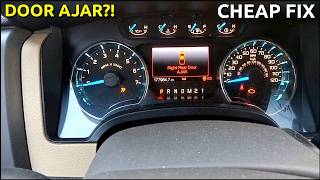
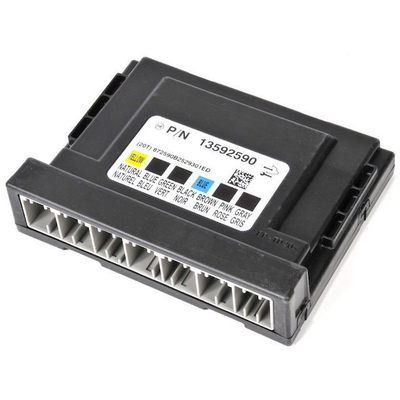
B1521 is a manufacturer-specific Body Diagnostic Trouble Code (DTC) indicating the Body Control Module (BCM) detects a malfunction in a key input circuit. Most commonly, it points to a fault in the door ajar switch circuit, where the BCM receives a signal that a door is open when physically closed. 🎬 See this fast DIY fix for a Ford door ajar light. The code's meaning varies significantly by manufacturer. For some brands, B1521 indicates a fault with the key-in-ignition switch, brake light switch, hood/bonnet switch, HVAC controls, or tire pressure monitoring systems (TPMS).
Technical definition: The official SAE/ISO definition for code B1521 is manufacturer-dependent. For General Motors, it is "Door Ajar Input Circuit Short to Ground." For Ford, it is "Key-in-Ignition Switch Circuit Failure" or "Door Ajar Switch Circuit Failure." For Chrysler/Dodge/Jeep, it relates to the "Brake Lamp Switch Circuit." For Mazda, it is a "Door Ajar Switch Circuit Failure." For Volkswagen/Audi, code 01521 refers to a "Sensor for Tire Pressure." For Hyundai, it means "Power Steering Switch Circuit" or "TP Sensor 5-Volt Supply Circuit Malfunction." For Suzuki, it indicates a "Temperature / Blower Speed / Air Flow Selector Malfunction."
Can I Drive With B1521?
Yes, But With Caution. Yes, you can drive with code B1521. The primary risk is not immediate vehicle failure but significant annoyance and secondary electrical problems. A 'door ajar' light keeps interior dome lights on, draining a healthy battery in 24 to 48 hours. More critically, the Body Control Module (BCM) fails to enter 'sleep mode', causing a persistent parasitic draw of 250-500mA instead of the normal <50mA. This accelerated drain ruins batteries and leaves you stranded. Driving at night with interior lights on also reduces visibility and is illegal in some jurisdictions.
Common Causes
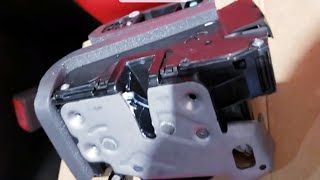
- Faulty Door Ajar Switch / Latch Assembly (Very Common) — The switch, often integrated into the door, hood, or trunk latch assembly, fails electrically or sticks mechanically. It sends a continuous 'open' or 'shorted' signal to the BCM.
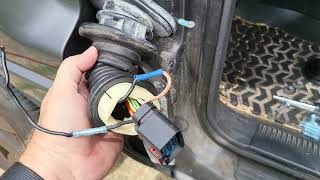
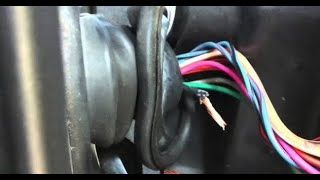
- Broken or Chafed Wires in Door Jamb (Very Common) — The wiring harness passing through the flexible rubber boot between the door and the vehicle body is under constant stress. Over years of opening and closing, wires fatigue, break, or lose insulation, causing an open circuit or a short to ground. This notoriously affects Jeep Grand Cherokees and Dodge Grand Caravans. 🎬 Watch: How to repair broken door jamb wiring on a Jeep.
- Corroded Electrical Connectors (Common) — Moisture and dirt infiltrate connectors at the door switch, the main door harness connector in the kick panel, or the BCM itself, leading to corrosion and poor signal integrity.
- Misaligned Door or Striker (Less Common) — If a door sags or the striker on the B-pillar is out of alignment, it fails to fully depress the switch plunger or engage the latch mechanism correctly, leaving the circuit in the 'open' state.
- Improperly Installed Aftermarket Accessories (Less Common) — Poorly installed remote starters, car alarms, or stereos are often tapped into the door trigger wire. A bad splice or improper grounding feeds a false signal to the BCM.
- Water Intrusion and BCM Damage (Rare) — Clogged sunroof or cowl drains cause water to leak into the cabin, dripping directly onto the BCM or fuse box. This causes widespread corrosion, short circuits, and multiple body codes.
- Faulty Body Control Module (BCM) (Rare) — The BCM's internal driver circuit for monitoring the input fails. This is the last consideration after exhausting all wiring and component checks. A BCM failure presents with multiple, seemingly unrelated electrical issues.
Symptoms
- 'Door Ajar' Warning Light Stays On — A persistent dashboard warning indicates a door is open, even when all doors, the hood, and the trunk are securely closed.
- Interior Dome/Courtesy Light Won't Turn Off — Because the BCM believes a door is open, it keeps the interior lights activated, accelerating battery drain.
- Car Alarm and Locking Issues — The alarm fails to arm or triggers randomly because it detects a door opening. The vehicle also disables auto-lock features if it thinks a door is ajar.
- Power Window or Mirror Malfunction — On older vehicles, the ground circuit for the door ajar switch is shared with the master window switch. A break in this common ground wire causes windows and locks to fail simultaneously with the door ajar light coming on.
- Brake Lights Stay On (Chrysler/Dodge/Jeep) — On specific Chrysler family vehicles, this code points to a brake switch failure, causing the brake lights to remain illuminated even when the pedal is not pressed.
- Parasitic Battery Drain (also visible on scanner) — A faulty door input prevents the BCM from entering its low-power 'sleep mode', causing a significant parasitic draw (250-500mA) that drains the battery overnight or over a few days.
Diagnostic Flowchart
Tap your situation to follow the diagnostic path that matches what you're seeing on this code.
Common Fixes & Costs
- Replace Door Latch Assembly (with integrated switch) — Parts: $50-$150, Labor: $100-$250, ~1.5 hr book time (DIY)
- Repair Wires in Door Jamb — Parts: $10-$50, Labor: $150-$400, ~2.5 hr book time (Intermediate)
- Replace External Door Jamb Switch — Parts: $10-$40, Labor: $25-$75, ~0.5 hr book time (DIY)
- Clean and Lubricate Door Latch — Parts: $10-$20, Labor: $0-$50, ~0.3 hr book time (DIY)
- Replace Body Control Module (BCM) — Parts: $400-$1000+, Labor: $150-$400, ~2 hr book time (Professional)
DIY vs Professional
- Replace Door Latch Assembly 🟢 Beginner
Tools: Socket set, screwdrivers, trim removal tools, Torx bits. - Repair Wires in Door Jamb 🟢 Beginner
Tools: Wire cutters/strippers, soldering iron or quality butt connectors, heat shrink tubing, multimeter. - Clean and Lubricate Door Latch 🟢 Beginner
Tools: Electrical contact cleaner, spray lubricant (silicone or white lithium grease), rags. - Replace Body Control Module (BCM) 🟢 Beginner
Tools: Socket set, diagnostic scan tool with programming capabilities.
Used vs. New Parts: Buying Guide
When a used part is worth it: For a common failure part like a door latch assembly, buying used is a budget-conscious choice for older vehicles. It makes sense if you source a part from a low-mileage vehicle scrapped for unrelated reasons.
Donor-vehicle mileage cap: roughly under 70000 miles for the part to have meaningful remaining life.
Donor quality checklist:
- Verify the donor vehicle's mileage; lower is always better for an electro-mechanical part.
- Avoid parts from flood-damaged or rust-belt vehicles, as corrosion is a key failure mode.
- Match the part number exactly. Door latches have variations based on trim level.
Decision logic:
- If Vehicle is less than 8 years old OR the cost of a new aftermarket part is under $100 → Buy a new aftermarket part. The warranty outweighs the small savings of a used part.
- If Vehicle is over 15 years old AND the budget is very tight → A used OEM part is an acceptable risk. Expect it to have a significantly shorter remaining lifespan.
- If The part is known for high wear and frequent failure (like Ford door latch switches) → Strongly favor a new part. The labor to replace it again negates any initial savings.
Warranty tradeoff: Used parts from salvage yards typically offer a 30-90 day warranty for part replacement only. New aftermarket parts come with a 1-year to limited lifetime warranty. New OEM parts carry a 1-2 year warranty.
Worst-case if a used part fails: $200-$450 if a used part fails shortly after installation, as you pay for labor a second time plus another part.
What Happens If You Wait — Timeline
- 0-1 week: The 'Door Ajar' light stays on continuously. The dome light remains on but can be manually turned off. An annoying chime sounds when driving. (MPG impact: 0%% · Added cost: $0-$20 (Cost of a jump start if the dome light drains the battery).)
- 1 week - 2 months: A persistent parasitic draw of 250-500mA is established because the BCM will not enter sleep mode. The battery drains in 1-2 days, requiring repeated jump-starts. (MPG impact: 0%% · Added cost: $50-$150 (Wasted fuel from recharging, and initial wear on battery life).)
- 2-6 months: The battery becomes permanently damaged from repeated deep discharge cycles and requires premature replacement. The constant low-voltage condition strains the alternator. (MPG impact: 0%% · Added cost: $200-$450 (Cost of a new battery and installation).)
- 6+ months: If the root cause is water intrusion, prolonged moisture exposure leads to severe corrosion on the BCM circuit board, causing cascading failures of other body systems. (MPG impact: 0%% · Added cost: $800-$2000+ (Cost to diagnose and replace a failed BCM).)
Cost of Not Fixing It
- 0-1 Month: Annoyance from the 'door ajar' light and chime. Interior lights staying on cause a dead battery, leading to the inconvenience and cost of jump-starts. (Added cost: $50-$150)
- 1-6 Months: Repeatedly draining the battery due to the parasitic draw permanently damages it, reducing its capacity and lifespan. You must replace the battery prematurely. (Added cost: $150-$350)
- 6+ Months: Chronic battery drain puts extra stress on the alternator. If the root cause is water intrusion, prolonged neglect leads to catastrophic failure of the BCM. (Added cost: $500-$2000+)
Diagnosis Steps
- Verify Code Meaning and Check TSBs
Confirm the specific definition of B1521 for your vehicle's year, make, and model. Search for Technical Service Bulletins (TSBs) as manufacturers provide specific diagnostic procedures for known failures.
Tools: Internet access (Beginner) - Monitor Live Data with a Scan Tool
Connect a scan tool and view live data PIDs for each door ajar switch. The PID must change state from 'Open' to 'Closed' as you operate the door. The door whose PID does not change is the source of the fault. This is the fastest way to isolate the issue.
Tools: Bi-directional scan tool (Advanced) - Isolate the Faulty Input Manually
If you lack a scan tool, use the instrument cluster display or dome light. With the ignition on, open and close each door, trunk, and hood one by one. The latch that fails to change the 'ajar' status is the faulty source.
Tools: None (Beginner) - Inspect the Door Jamb Wiring Harness
Peel back the rubber boot between the faulty door and the vehicle body. Inspect every wire for cracking, chafing, or breakage. Gently tug each wire to check for hidden internal breaks.
Tools: Trim tool, flashlight (Intermediate) - Clean and Lubricate the Latch Mechanism
Vigorously spray the faulty latch mechanism with electrical contact cleaner to flush out dirt, followed by a silicone spray lubricant. Actuate the latch multiple times. This temporarily fixes sticking switches.
Tools: Electrical contact cleaner, spray lubricant, rag (Beginner) - Test the Switch Signal at the Connector
Disconnect the electrical connector at the suspect door latch. Probe the signal wire on the harness side with a multimeter; it should show a 5V or 12V reference voltage. Use a jumper wire to connect this signal pin to ground. If the dash light goes out, the wiring is good and the latch assembly is faulty.
Tools: Multimeter, jumper wire (Advanced) - Check for a Short to Ground
With the latch connector unplugged, set the multimeter to Ohms. Check for continuity between the harness signal wire and a clean chassis ground. A reading of 'OL' is normal. A low resistance reading (under 5 ohms) confirms the signal wire is shorted to ground in the harness.
Tools: Multimeter (Advanced) - Test the Switch Directly
Connect multimeter leads to the two pins on the unplugged switch. Actuate the switch manually by closing the latch with a screwdriver. The multimeter must show continuity (under 1 ohm) in one state and an open circuit ('OL') in the other. If it doesn't change, replace the switch.
Tools: Multimeter, screwdriver (Intermediate) - Perform a Parasitic Draw Test
Connect a multimeter in series with the negative battery cable. Trick all latches closed, lock the vehicle, and wait 75 minutes. A reading above 50mA (e.g., 250mA) confirms a parasitic drain. Pull BCM and interior lighting fuses until the draw drops to isolate the circuit.
Tools: Multimeter with 10A capability (Advanced) - Perform a BCM Hard Reset
Disconnect both battery terminals. Touch the positive and negative cable ends together for 30 seconds to drain residual power from module capacitors. Reconnect the battery. This clears temporary software glitches.
Tools: 10mm wrench (Beginner)
When This Code Triggers (Freeze-Frame Conditions)
- Battery Voltage: 11.5V - 14.5V (The BCM logs battery voltage at the time of the fault. The event triggers with the engine off (key on) or running.)
- Ignition Status: Accessory / On / Run (The code sets when the ignition is on, as the BCM actively monitors body circuits.)
- Fault Event Counter: 1+ (A counter increments each time the fault is detected during a drive cycle, distinguishing between intermittent and hard faults.)
- Odometer Reading: Mileage at time of fault (Modules store the vehicle's mileage when the code is first logged, providing a history of the fault.)
Related Codes
- B1480 — Often appears with B1521, pointing to a door lock/unlock circuit fault. Use a scan tool's live data to differentiate. If the 'Door Ajar' PID is stuck on 'Open', the primary fault is B1521.
- U0140 — Means 'Lost Communication with Body Control Module'. If present with B1521, it is the priority code. The BCM cannot report a door status if it is offline.
- P0571 — On Chrysler vehicles where B1521 means a brake switch fault, this powertrain code for 'Brake Switch 'A' Circuit' is also stored. The presence of both confirms a fault with the brake switch.
- B2204 — A common Ford code for 'Door Latch Driver/Passenger Door Circuit Short to Ground'. It is more specific than B1521 and directly points to a short circuit.
Climate & Environmental Factors
- Cold Weather: Freezing temperatures cause moisture inside the latch mechanism to freeze, preventing the switch from moving freely. Wires become more brittle and prone to breaking when flexed.
- High Humidity / Heavy Rain: Moisture ingress is a primary cause of failure. Water gets into electrical connectors causing corrosion, or into the latch assembly itself, leading to switch failure.
- High Ambient Heat: High temperatures accelerate the degradation of plastic and rubber components within the door latch assembly, leading to cracked pawl springs and mechanical failure.
How to Talk to a Mechanic About This Code
Say this: "I have a B1521 code and the classic symptom of a 'door ajar' light that won't turn off, causing a parasitic battery drain. I'd like a diagnostic to determine if the fault is the door latch assembly or a broken wire in the door jamb."
This signals you understand the two most common causes. It focuses the technician's diagnostic time, preventing them from starting from scratch and protecting you from suggestions to replace unrelated parts.
Avoid saying:
- 'My interior light is stuck on.'
- 'My battery keeps dying, can you check it?'
- 'There's a warning light on my dash.'
Questions to ask before authorizing the repair:
- Can you confirm which specific door is causing the fault?
- Did you test the switch and the wiring separately to confirm the point of failure?
- What is the cost for a wiring repair versus a full latch assembly replacement?
- Is the replacement part OEM or aftermarket, and what is the warranty on the part and your labor?
Where to Take It: Dealer vs Independent vs Chain
- Dealer:
A safe but expensive choice. Best if you suspect a complex BCM or network issue beyond a simple switch or wire.
Best for: Vehicles under warranty., Complex electrical issues where manufacturer-specific TSBs are critical., When the fault is suspected to be the BCM itself, requiring programming.
Downsides: Highest labor rates., Defaults to replacing an entire assembly when a simpler wiring repair suffices. (Typical cost: +50% vs. baseline) - Independent Shop:
Best fit for most B1521 scenarios. An experienced independent technician diagnoses and repairs a faulty switch or broken wire efficiently.
Best for: Out-of-warranty vehicles where cost is a factor., Diagnosing common failures like Ford latch switches or Jeep broken door wires., Shops with a good reputation for electrical diagnostics.
Downsides: Quality and expertise vary greatly. Vet the shop's reviews for electrical work., Lacks specialized tools for BCM programming if necessary. (Typical cost: +0% vs. baseline) - Chain Shop:
AVOID for this code. The diagnostic process for a B1521 requires electrical expertise beyond the scope of most chain shops.
Best for: Simple, unrelated maintenance like oil changes, tires, and brakes.
Downsides: Not equipped for in-depth electrical diagnostics., High risk of misdiagnosis, leading to unnecessary replacement of batteries or alternators., Technician skill varies dramatically. (Typical cost: -10% vs. baseline)
When to Walk Away From the Repair
If the estimated repair cost exceeds 40-50% of the car's private-party value, pause and evaluate whether the investment is worthwhile.
- Car worth $3000, fix is $400: Fix it. The repair cost is a small fraction of the car's value and solves a major usability and battery-draining issue.
- Car worth $2000, fix is $1200: Walk away. This scenario implies the BCM is damaged and requires replacement. The cost is too high relative to the car's value.
- Car worth $8000, fix is $650: Fix it. This represents a more complex wiring harness repair, but is well below the walk-away threshold for a vehicle of this value.
What Scan Tool You Need for This Code
Minimum: A scanner that reads Body Control Module (BCM) codes and displays live data for body system PIDs.
A basic $20 code reader only reads 'P' (Powertrain) codes and won't see 'B' (Body) codes like B1521. You need to see the live status ('Open'/'Closed') of each individual door switch to quickly find the faulty one without tearing every door apart.
Budget: BlueDriver Pro (~$100) — Connects to your smartphone via Bluetooth and accesses BCM codes and live data for many makes and models. This is sufficient to view the status of each door switch.
Mid-range: Foxwell NT510 Elite (~$180) — A powerful handheld tool providing OE-level diagnostics for a specific car brand. It excels at showing live data streams from the BCM, allowing you to graph door switch signals.
Professional: Autel MaxiCOM MK808S / MK808BT (~$450-550) — A professional-grade tablet scanner offering comprehensive all-system diagnosis, including deep BCM access. It provides fast live data, graphing, and bi-directional controls to command modules.
Rent vs buy: For a one-time fix, auto parts stores have loaner tool programs, but free scanners rarely read BCM live data. If you do your own diagnostics regularly, buying a tool like the BlueDriver or Foxwell is a worthwhile investment.
How to Clear the Code After You Fix It
- Fix the underlying mechanical or electrical fault.
- Use an OBD-II scan tool to clear the Diagnostic Trouble Code (DTC) from the Body Control Module.
- Operate the repaired component to confirm the fix and ensure the code does not return.
Drive cycle (~5 minutes): Body codes like B1521 do not require a complex drive cycle. Clearing the code with a scan tool and cycling the ignition while operating the repaired component verifies the repair.
Readiness monitors affected: None
Watch out for:
- Clearing the code without fixing the root cause results in the code returning immediately.
- Disconnecting the battery clears the code but erases radio presets and idle learning, which is unnecessary if you have a scanner.
Will This Fail Emissions / State Inspection?
No — by itself this code doesn't fail OBD inspection (but it can keep readiness monitors from setting, which causes a separate fail).
- California: A B1521 code does not cause a smog check failure. The test focuses on powertrain codes. However, if a BCM failure prevents communication with the OBD-II port, the test cannot be completed.
- New York: The NYS inspection includes a safety portion. While B1521 isn't an automatic failure, if the door cannot be securely latched, it fails the safety inspection.
- Texas: B1521 does not affect emissions and will not cause a failure. However, a related safety issue like a non-latching door is illegal to operate on the road.
Most Commonly Affected Vehicles
- Ford F-150, Ranger, Explorer, Edge (1998-2014) — Extremely common failure of the switch inside the door latch assembly. Spraying lubricant is a well-known temporary fix. For 2009-2014 F-150s, the rear door latch assembly part number is often 9L3Z-1526412-A.
- GM Silverado, Sierra, Tahoe, Suburban, Colorado, Canyon (2007-2019) — Prone to failure of the integrated door latch/switch assembly or broken wires in the driver's door jamb. TSB 19-NA-107 addresses intermittent rear door ajar warnings on 2015-2019 Colorado/Canyon due to latch/striker alignment.
- Jeep Grand Cherokee (WJ) (1999-2004) — Notorious for multiple broken wires inside the rubber boot between the driver's door and the chassis. This causes the power windows, locks, and mirrors to fail along with the door ajar light.
- Chrysler/Dodge Town & Country, Grand Caravan (2008-2016) — The power sliding door wiring harness is a major failure point. Wires break from repeated motion, causing the sliding door to become inoperable and triggering various codes.
- Mazda B-Series, Tribute (1998-2011) — These vehicles are badge-engineered versions of the Ford Ranger and Ford Escape, respectively, and suffer from the exact same door ajar switch/latch failures.
- Volkswagen / Audi Golf, Jetta, Passat, A4 (2005-2015) — Code 01521 on VAG vehicles is not related to doors. It indicates a fault in the Tire Pressure Monitoring System (TPMS), such as 'Sensor for Tire Pressure: Lower Limit Exceeded'.
- Hyundai Various (2010-2020) — The meaning of B1521 on Hyundai vehicles is inconsistent. It is defined as 'TP Sensor 5-Volt Supply Circuit Malfunction' on some models and 'Power Steering Switch Circuit' on others.
- Suzuki SX4, Grand Vitara (2006-2013) — For the Suzuki SX4 and Grand Vitara, code B1521 indicates a 'Blower Speed Selector and/or Its Circuit Malfunction' within the HVAC control system.
Manufacturer-Specific Notes
- Ford: The door ajar switch is almost always integrated into the door latch assembly. Multiple recalls (NHTSA 15S16, 20V177) were issued for faulty door latch pawl springs that break in high-temperature regions.
- General Motors: This code nearly always means the door ajar switch signal circuit is shorted to ground. TSB 19-NA-107 for 2015-2022 Colorado/Canyon trucks points to latch/striker misalignment for rear door ajar warnings.
- Chrysler / Dodge / Jeep: B1521 frequently indicates a fault in the brake lamp switch circuit, causing the brake lights to stay on. On Grand Cherokees (WJ), broken wires in the door jamb are the number one cause.
- Volkswagen / Audi: The VAG-equivalent code 01521 is completely unrelated to doors. It always points to a fault within the Tire Pressure Monitoring System (TPMS).
- Hyundai / Kia: B1521 is not a standardized door ajar code for these manufacturers. It refers to TPMS sensor voltage or power steering switch circuits, requiring specific diagnostic information.
Real Owner Stories
2004 Ford F-150 at 155K miles
Classic 'door ajar' light and dome light stayed on, draining the battery. The chime rang intermittently while driving.
What they tried:
- Sprayed lubricant into the driver's door latch, which worked for a week before the problem returned.
- Replaced the driver's side door latch assembly with a Dorman aftermarket part.
- Cleared the codes with a basic scanner.
Outcome: Replacing the latch assembly permanently fixed the problem. The door ajar light went out, the dome light functioned normally, and the parasitic battery drain was eliminated.
Lesson: Lubricating the latch is a temporary fix for a failing electrical switch. For a permanent solution on high-wear vehicles, replacing the entire latch assembly is required.
2002 Jeep Grand Cherokee (WJ) at 180K miles
The 'door ajar' light was on, and the power windows and power locks stopped working simultaneously. The overhead console display was blank.
What they tried:
- Suspected a bad Body Control Module (BCM) due to multiple failures.
- Peeled back the rubber boot in the driver's door jamb based on forum advice.
- Found several wires, including the large black ground wire, completely broken.
Outcome: The owner repaired the broken wires using butt connectors and heat shrink tubing. All functions returned to normal, and the B1521 code cleared.
Lesson: If multiple electrical components in one door fail simultaneously, inspect the wiring in the flexible boot first. A broken ground wire mimics a serious module failure.
2011 Chrysler Town & Country at 110K miles
The B1521 code was present, and the brake lights were stuck on with the vehicle turned off, draining the battery overnight.
What they tried:
- Replaced the brake light switch, but the problem persisted.
- Performed a hard reset of the TIPM with no change.
- Researched the specific Chrysler definition for B1521.
Outcome: The issue traced to a faulty tail light socket where corrosion created a short, keeping the brake light circuit energized. Replacing the corroded bulb socket resolved the issue.
Lesson: Always verify the specific meaning of a B-code for your vehicle. On Chrysler products, B1521 relates to the brake light circuit, not door switches.
How to Prevent This Code From Triggering
- Periodically lubricate door latch mechanisms (Once every 1-2 years, or annually in harsh climates) — Applying a silicone or white lithium grease spray into the latch assembly prevents mechanical sticking, displaces moisture, and helps the integrated switch move freely.
- Clean and inspect cowl and sunroof drains (Annually, especially before rainy seasons) — Clogged drains cause rainwater to leak into the interior, dripping directly onto the BCM. Keeping drains clear prevents catastrophic water damage to electronics.
- Gently handle the door jamb wiring boot (Whenever working in the area) — Avoid pulling the rubber boot connecting the door to the chassis. Carefully disconnect harnesses instead of letting door panels hang by their wires to reduce fatigue.
- Check door alignment and striker plate (If door becomes hard to close or rattles) — A sagging door forces you to slam it, putting excessive force on the latch mechanism. Ensuring the door closes smoothly prevents premature mechanical failure.
- Apply dielectric grease to critical connectors (When a connector is exposed during other repairs) — Applying dielectric grease to connectors in moisture-prone areas seals out moisture and prevents pin corrosion.
Frequently Asked Questions
Can code B1521 drain my battery?
Yes, absolutely. The fault keeps interior lights on or prevents the Body Control Module (BCM) from entering its low-power sleep mode. This creates a parasitic draw of 250-500mA, draining a healthy battery in one to two days.
Why does my 'door ajar' light stay on when the doors are definitely closed?
This is the classic symptom of a B1521 fault. It means the sensor responsible for detecting the door's position, or its wiring, has failed. The system is sending a constant 'open' signal to the car's computer.
I replaced the door switch/latch but the light is still on. What now?
This indicates the problem is not the switch itself. The next most likely culprit is a broken or shorted wire in the rubber boot harness between the door and the body. Use a multimeter to test the signal wire for continuity to ground.
Why did spraying WD-40 in the latch only fix it temporarily?
Spraying a lubricant displaces moisture and temporarily frees a mechanically sticking switch. However, it cannot fix an electrically failed switch or a broken wire. The effect wears off quickly, and the underlying problem remains.
Is fixing a B1521 code expensive?
Repair costs vary based on the root cause. Replacing a door latch assembly typically costs between $150 and $400 at an independent shop. A wiring repair ranges from $150 to over $500 depending on the severity of the harness damage.
Can I fix code B1521 myself?
Many aspects of this repair are highly DIY-friendly. Cleaning the latch, replacing an external switch, and testing the circuit with a multimeter are manageable for a hobbyist. Tracing a short in a complex harness is best left to professionals to avoid electrical damage.
What does BCM stand for and what does it do?
BCM stands for Body Control Module. It is a central computer controlling body-related electronics like lights, windows, door locks, and the alarm system. It receives inputs from switches and sends commands to activate various accessories.
How do you reset the Body Control Module (BCM)?
Disconnect both battery cables and touch the cable ends together for 30 seconds. This drains the internal capacitors in the BCM, clearing its temporary memory and potentially resolving software glitches. Note that this erases radio presets and other learned settings.
Key Takeaways
- Verify the specific meaning of B1521 for your vehicle make, as it indicates a door ajar switch fault on Fords and GMs, but points to a brake switch on Chryslers or TPMS on VWs.
- Fix this code immediately to prevent a 250-500mA parasitic battery drain caused by the interior lights staying on and the Body Control Module failing to enter sleep mode.
- Diagnose the issue by isolating the faulty door and inspecting the rubber door jamb boot for broken wires, which causes 80% of these failures on older vehicles like the Jeep Grand Cherokee.
- Expect to pay between $150 and $400 at an independent shop to replace a faulty door latch assembly, which is the most common permanent fix for this code.
Helpful Videos


Shop the Parts Behind B1521
Below are the parts most often responsible for code B1521, ranked by how frequently each one is the actual culprit (per the diagnosis above). Tap any to see what we have for your vehicle.



The information in this article is provided for general reference and educational purposes only. Vehicle specifications, procedures, and part compatibility can vary by production date, trim level, and region. Always consult your vehicle's factory service manual and verify part numbers before purchasing or performing repairs. Safety-critical components such as airbags, seat belts, and braking systems should be installed by a qualified professional.
- 🧭 Diagnostic Flowchart
- 🎬 Helpful Videos
- 🛍️ Shop This Part
- What Does B1521 Mean?
- Can I Drive With B1521?
- Common Causes
- Symptoms
- Common Fixes & Costs
- DIY vs Professional
- Used vs. New Parts: Buying Guide
- What Happens If You Wait — Timeline
- Cost of Not Fixing It
- Diagnosis Steps
- When This Code Triggers (Freeze-Frame Conditions)
- Related Codes
- Climate & Environmental Factors
- How to Talk to a Mechanic About This Code
- Where to Take It: Dealer vs Independent vs Chain
- When to Walk Away From the Repair
- What Scan Tool You Need for This Code
- How to Clear the Code After You Fix It
- Will This Fail Emissions / State Inspection?
- Most Commonly Affected Vehicles
- Manufacturer-Specific Notes
- Real Owner Stories
- 2004 Ford F-150 at 155K miles
- 2002 Jeep Grand Cherokee (WJ) at 180K miles
- 2011 Chrysler Town & Country at 110K miles
- How to Prevent This Code From Triggering
- Frequently Asked Questions
- Can code B1521 drain my battery?
- Why does my 'door ajar' light stay on when the doors are definitely closed?
- I replaced the door switch/latch but the light is still on. What now?
- Why did spraying WD-40 in the latch only fix it temporarily?
- Is fixing a B1521 code expensive?
- Can I fix code B1521 myself?
- What does BCM stand for and what does it do?
- How do you reset the Body Control Module (BCM)?
- Key Takeaways
- 🎟️ Get 5% Off