

OBD-II Code B1550: A Comprehensive Guide to a Manufacturer-Specific Fault
What B1550 means, why it triggers, and how to fix it on your specific vehicle
- Identify your vehicle's specific B1550 definition first; Ford uses it for power windows, while Mitsubishi uses it for critical airbag failures.
- Do not drive if B1550 triggers an SRS warning light, as your airbags are disabled and will not deploy in a crash.
- Inspect the wiring harness in high-flex areas like door jambs before replacing parts, as broken wires cause 80% of power window B1550 codes.
- Test the clutch position switch immediately if a Saab 9-3 presents a B1550 code alongside a no-start condition.
What Does B1550 Mean?
B1550 is a manufacturer-specific Body Control Module (BCM) code indicating a circuit malfunction. Its definition changes completely based on the car brand. It points to issues ranging from power windows and cruise control to airbag warning lights or clutch switches. Because the definition is not standardized, identifying the exact meaning for your vehicle's make and model is the mandatory first step in diagnosis.
Technical definition: The formal definition for code B1550 varies by manufacturer. Common definitions include 'Power Window Master Circuit Short To Ground', 'SRS Warning Lamp Circuit Malfunction', 'Clutch Switch Circuit-Signal Stuck High', and 'Cruise Switch Error'. The BCM detects a fault—such as a short to ground, an open circuit, or an out-of-range signal—in the specific system assigned to this code for that exact make and model.
Can I Drive With B1550?
Yes, But With Caution. Driving with a B1550 code depends entirely on your vehicle's manufacturer. If the code relates to the airbag system (common in Mitsubishi), the SRS is disabled and airbags will NOT deploy 🎬 Watch: How to reset the Mitsubishi airbag light with or without a scanner. in a crash. This is a critical safety failure. If it relates to a clutch switch (Saab), the engine will not start, leaving you stranded. For systems like power windows or mirrors (Ford, GM), driving is mechanically safe, but ignoring the underlying electrical fault risks parasitic battery drains or automatic state inspection failures.
Common Causes
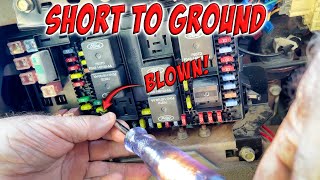
- Damaged or Corroded Wiring and Connectors (Very Common) — This is the most frequent cause across all B1550 variations. Wires fray, pinch, or corrode in high-flex areas like door jambs (power windows), under seats (airbag sensors), or near pedals. Moisture intrusion from failing weather seals accelerates this corrosion, causing intermittent shorts. 🎬 See this guide on finding electrical shorts in modern cars fast.
- Faulty Component (Switch, Sensor, or Module) (Common) — The specific component referenced by the code has failed internally. This includes a master power window switch, an occupant weight sensor, a clutch position switch, or a battery current sensor.
- Blown Fuse or Faulty Fusible Link (Less Common) — A blown fuse in the related circuit triggers this code immediately. Always verify fuse integrity before replacing expensive electronic components.
- Faulty Control Module (SRS-ECU, BCM) (Less Common) — The control module monitoring the circuit fails internally. This requires professional diagnosis and is typically suspected only after ruling out wiring and component failures.
- Improperly Installed Aftermarket Electronics (Rare) — An incorrectly wired aftermarket stereo, alarm, or remote starter interferes with the BCM or CAN bus, triggering unexpected body codes like B1550.
- Low Battery Voltage (Rare) — A corroded battery terminal or failing battery causes erratic signals from sensors, triggering B-codes as modules drop offline due to insufficient voltage.
Symptoms
- System Malfunction — The specific system fails completely. Power windows do not operate, cruise control does not engage, or the vehicle refuses to crank (clutch switch failure).
- Warning Light on Dashboard — An airbag/SRS warning light or check engine light illuminates. An active SRS light confirms the entire airbag system is disabled.
- Intermittent Electrical Issues — Symptoms appear only under specific conditions, such as during heavy rain or after a car wash, indicating a moisture-related short circuit.
- Vehicle Starts in Gear — A dangerous symptom specific to a failed clutch switch where the vehicle cranks without the clutch pedal depressed, causing it to lunge unexpectedly.
Diagnostic Flowchart
Tap your situation to follow the diagnostic path that matches what you're seeing on this code.
Common Fixes & Costs
- Replacing a Faulty Master Power Window Switch (e.g., Ford F-150) — Parts: $40-$100, Labor: $100-$150, ~0.5 hr book time (DIY)
- Replacing a Faulty Clutch Switch (e.g., Saab 9-3) — Parts: $20-$70, Labor: $120-$150, ~1.0 hr book time (DIY)
- Repairing Damaged Wiring or Connectors — Parts: $5-$30, Labor: $150-$350, ~1.5 hr book time (Intermediate)
- Replacing the Airbag Control Module (e.g., Mitsubishi Lancer) — Parts: $200-$850, Labor: $150-$300, ~1.8 hr book time (Professional)
- Resetting the Airbag Control Module After a Collision — Parts: $0, Labor: $50-$150, ~1.2 hr book time (Professional)
Used vs. New Parts: Buying Guide
When a used part is worth it: Buy used for simple mechanical components like power window switches. Never buy a used Airbag Control Module due to severe safety and programming risks.
Donor-vehicle mileage cap: roughly under 100000 miles for the part to have meaningful remaining life.
Donor quality checklist:
- Avoid switches with heavy wear, sticky buttons, or sun damage.
- Prefer donors from dry climates to avoid salt-corroded internal contacts.
- For SRS modules, utilize a mail-in reset service for your original module rather than risking a used part.
Decision logic:
- If The part is an Airbag Control Module → Pay for a professional reset of your original module or buy a new OEM part. Used modules are dangerous and require expensive VIN programming.
- If The part is a simple switch and costs under $50 new → Buy new aftermarket or OEM. The $15 savings on a used part isn't worth the risk of early failure.
Warranty tradeoff: Used parts offer 30-day warranties covering the part only. New aftermarket parts offer 1-year warranties. Professional SRS resets guarantee cleared crash data.
Worst-case if a used part fails: $1000+ if a used airbag module is faulty, requiring repeat diagnostics and a new OEM module.
What Happens If You Wait — Timeline
- Immediate: If B1550 indicates an SRS fault, the system disables immediately. Airbags will not deploy in a crash. (MPG impact: 0%% · Added cost: $0, but the safety risk is critical.)
- 0-2 months: A failing Saab clutch switch progresses from requiring multiple pedal presses to a hard failure, leaving the vehicle unable to start. (MPG impact: 0%% · Added cost: $150 for a tow truck.)
- 1-4 months: A shorted Ford window switch develops into a parasitic drain, preventing the BCM from entering sleep mode. (MPG impact: 0%% · Added cost: $200 for a replacement battery.)
- 6+ months: Ignoring a moisture-related B1550 allows corrosion to spread from the connector pins directly into the BCM circuit board. (MPG impact: 0%% · Added cost: $800+ to replace and program a destroyed Body Control Module.)
Cost of Not Fixing It
- Immediate: If B1550 indicates an SRS fault, airbags will not deploy in a crash, drastically increasing the risk of fatality. (Added cost: Life-altering injury. Financial costs are secondary.)
- 0-3 months: A 'short to ground' in a window switch causes a parasitic battery drain, destroying the battery. A clutch switch fault leaves you stranded. (Added cost: $150-$300 for towing and a replacement battery.)
- At next state inspection: An illuminated SRS warning light triggers an automatic failure in states with safety inspections, preventing legal vehicle registration. (Added cost: $75-$150 for failed inspection fees.)
Diagnosis Steps
- Identify the Code's Meaning for Your Vehicle
Search online for the exact definition of code B1550 for your specific make, model, and year (e.g., '2008 Ford F-150 B1550'). This dictates the entire diagnostic path.
Tools: Internet access (Beginner) - Inspect Fuses
Locate the fuse box using the owner's manual. Find and visually inspect the fuse related to the identified system (e.g., power windows, SRS). Replace if blown.
Tools: Owner's manual, fuse puller or needle-nose pliers (Beginner) - Visually Inspect Wiring and Connectors
Inspect the relevant wiring harness. Check the driver's door jamb boot for window issues, yellow connectors under seats for SRS faults, or the clutch pedal assembly. Look for frayed wires, corrosion, or loose pins.
Tools: Flashlight (Beginner) - Test the Suspected Component
If wiring appears intact, test the component. Use a multimeter in continuity mode to verify a switch opens and closes the circuit. For sensors, measure resistance against service manual specifications.
Tools: Multimeter, vehicle-specific service manual (Intermediate) - Pro Tip: Perform a Voltage Drop Test
Set a multimeter to DC volts. Connect the positive lead to the circuit's power source and the negative lead to the component's power input. Activate the circuit. A reading above 0.5 volts proves excessive resistance, usually from hidden corrosion.
Tools: Multimeter, vehicle-specific wiring diagram (Advanced) - Test the Circuit for Shorts
Disconnect the battery, the control module harness, and the component. Connect a test light between the positive battery terminal and the suspected wire. If the light illuminates, the wire is shorted to ground. Wiggle the harness to pinpoint the short.
Tools: 12V test light, vehicle-specific wiring diagram (Advanced) - Check for Technical Service Bulletins (TSBs)
Manufacturers release TSBs for known factory defects. Search for B1550 TSBs for your vehicle to see if a redesigned part or software update is required.
Tools: Internet access (Beginner) - Advanced: Test a Saab Clutch Switch
For a Saab 9-3 no-start, unplug the clutch switch. Check for continuity between the two pins when the pedal is depressed, and no continuity when released. A failure to change state confirms a bad switch.
Tools: Multimeter, vehicle-specific service manual (Advanced) - Advanced: Test a Ford Power Window Switch
Check for 12V power at the main switch connector wire with the key on, and verify ground. Press a window button; you should see 12V on the corresponding motor wire. Power in but no power out confirms a faulty switch.
Tools: Multimeter, vehicle-specific wiring diagram (Advanced)
When This Code Triggers (Freeze-Frame Conditions)
- Battery Voltage: 11.5V - 14.5V (The BCM monitors voltage. A fault triggers if voltage drops significantly during engine cranking or component activation.)
- Component Command State: On or Off (The code triggers when the BCM commands a component to activate but detects a short to ground instead of the expected voltage draw.)
Related Codes
- U0140 - Lost Communication With Body Control Module — If B1550 and U0140 appear together, the BCM is failing or has lost power/ground. Diagnose the U-code first, as restoring communication often resolves the B-code.
- B1551 — Another manufacturer-specific body code monitoring a different circuit. On a Ford, B1550 is the power window, while B1551 is the decklid release circuit.
- B0052 — An SRS code for the 'Passenger Seat Occupant Classification Sensor'. Seeing this alongside a Mitsubishi B1550 pinpoints the exact failing component in the airbag system.
Climate & Environmental Factors
- High Humidity and Rain: Moisture seeps into connectors, fuse boxes, and switches, causing corrosion and short circuits. This creates intermittent faults that appear only in damp conditions.
- Cold Weather: Low temperatures make plastic connectors and wire insulation brittle, increasing the likelihood of cracked wires in high-flex areas like door jambs.
- Road Salt: Salt spray dramatically accelerates corrosion on wiring, ground points, and exposed connectors.
How to Talk to a Mechanic About This Code
Say this: "I have a [Year/Make/Model] with a B1550 code and the [specific symptom]. I need a diagnostic to test the circuit wiring and grounds, not just a parts swap."
This proves you are an informed customer. It forces the mechanic to perform proper electrical diagnosis rather than blindly replacing the most obvious component.
Avoid saying:
- 'My airbag light is on, can you just reset it?'
- 'The internet said it's the switch, so just replace that.'
Questions to ask before authorizing the repair:
- Did you test the component itself, or just the wiring? What were the exact voltage drop results?
- If you recommend a module replacement, have you 100% ruled out a wiring harness short?
Where to Take It: Dealer vs Independent vs Chain
- Dealer:
Recommended only for SRS faults that independent shops cannot program.
Best for: Vehicles under warranty., Complex SRS/airbag system faults requiring proprietary programming.
Downsides: Highest labor rates., Dealers default to expensive module replacement over detailed wiring repair. (Typical cost: +40% vs. baseline) - Independent Shop:
Best fit for most B1550 issues, provided the shop specializes in electrical diagnostics.
Best for: Out-of-warranty vehicles., Diagnosing and repairing broken wiring harnesses.
Downsides: Electrical expertise varies. Vet shops by checking reviews for 'diagnostic' skills. (Typical cost: +0% vs. baseline) - Chain Shop:
AVOID. The risk of misdiagnosis and unnecessary parts replacement is extremely high.
Best for: Tire rotations and oil changes.
Downsides: Not equipped for complex electrical diagnosis., High pressure to sell unnecessary parts. (Typical cost: -10% vs. baseline)
When to Walk Away From the Repair
If the repair cost exceeds 50% of the car's value, reconsider the repair. However, an unrepaired SRS fault makes the car unsafe to drive and impossible to sell privately without assuming liability.
- Car worth $3000, fix is $1500: Walk away. The repair is 50% of the car's value. Sell 'as-is' to a specialized buyer with full written disclosure of the SRS fault.
- Car worth $10000, fix is $800: Fix it. The cost is well below the threshold and restores a critical safety system.
What Scan Tool You Need for This Code
Minimum: A scanner that reads 'B' (Body) and 'U' (Network) codes. Basic $20 readers only see 'P' (Powertrain) codes and will show 'No Codes Found' even with an active B1550.
Diagnosing B1550 requires communication with the Body Control Module (BCM) or SRS module, which cheap engine-only scanners cannot access.
Rent vs buy: Buy a budget full-system scanner. Auto parts stores only loan basic P-code readers, which are useless for diagnosing B1550.
How to Clear the Code After You Fix It
- Fix the underlying electrical fault.
- Use an OBD-II scan tool capable of reading BCM codes to clear the fault.
- Cycle the ignition off and on, then operate the repaired system to confirm functionality.
Drive cycle (~5 minutes): B-codes do not require a specific drive cycle. Clearing the code with a scanner and operating the affected component confirms the fix.
Readiness monitors affected: None. B-codes do not affect emissions readiness monitors.
Watch out for:
- Using a basic $20 code reader that only sees 'P' (powertrain) codes and cannot clear BCM faults.
- Disconnecting the battery fails to clear permanent BCM memory and erases other module settings.
- SRS 'crash data' is stored permanently and cannot be cleared with a standard scan tool; the module requires professional resetting.
Will This Fail Emissions / State Inspection?
Yes — this code typically fails an OBD-II emissions inspection.
- California: An SRS light does not fail the emissions (smog) check, but remains a critical safety hazard.
- New York: NYS inspections include a safety check. Most stations automatically fail a vehicle for any illuminated safety warning light, including SRS.
- Texas: An illuminated SRS light fails the state safety inspection. While safety inspections end for many counties in 2025, the 17 most populated counties still require emissions testing where this is noted.
Most Commonly Affected Vehicles
- Ford F-150, Focus, Explorer (2000-Present) — B1550 indicates 'Power Window Master Circuit Short To Ground'. Broken wires in the driver's door jamb boot are the most common culprit.
- Saab 9-3 (2003-2011) — B1550 indicates 'Clutch Switch Circuit-Signal Stuck High', causing a complete no-start condition. The clutch pedal position switch fails frequently.
- Mitsubishi Lancer, Outlander (2002-Present) — B1550 means 'SRS warning lamp circuit malfunction'. It points to a fault in the airbag system, often requiring an SRS-ECU replacement or reset.
- Chevrolet / GM Silverado, Impala (2000-Present) — B1550 is defined as a 'Mirror Left Front or Right Front Select Switch Circuit' failure.
- Hyundai Genesis (2009-2016) — B1550 indicates a 'Cruise Switch Error', specifically a short to ground on the signal line from the multi-function switch.
- Nissan Altima, Maxima (2011-2016) — Nissan uses a related P1550 code for a faulty battery current sensor, often caused by corrosion at the battery terminal.
Manufacturer-Specific Notes
- Ford: Ford uses B1550 for power windows, but also to indicate an over-temperature condition in the audio receiver module. A recall (18C01) exists for 2018 Expedition/Navigator window control modules overheating.
- Saab: This code is specific to the clutch pedal switch. A failure here completely disables the starter motor.
- Mitsubishi: B1550 points to an SRS warning lamp circuit malfunction. It is triggered by a faulty SRS-ECU, a bad under-seat connection, or a failing steering column clock spring.
- Tesla: Tesla vehicles show a similar fault for the Occupant Classification System (OCS). A loose connector under the passenger seat is the primary cause.
Real Owner Stories
2007 Ford F-150 with intermittent driver's window
The driver's power window worked intermittently. The owner replaced the master window switch, but the problem persisted.
What they tried:
- Replaced the master window switch.
- Inspected the wiring harness in the driver's door jamb.
Outcome: Found broken wires inside the rubber boot between the door and the truck body. Splicing in new wire sections permanently solved the problem.
Lesson: The wiring harness in the door jamb is a high-failure area. Always inspect it before spending money on replacement switches.
2006 Saab 9-3 with a no-start condition
The car refused to crank despite a fully charged battery. A scan revealed code B1550.
What they tried:
- Tested the battery and starter.
- Bypassed the clutch safety switch, which allowed the car to start.
Outcome: Replaced the clutch pedal position switch (Saab P/N 55701396) for $40. The car started reliably afterward.
Lesson: On a manual Saab 9-3, B1550 accompanied by a no-start condition guarantees a failed clutch switch.
2004 Mitsubishi Lancer with SRS light on
The SRS warning light illuminated without an accident. A scan revealed B1550 for an SRS circuit malfunction.
What they tried:
- Checked under-seat connectors and fuses.
- Paid for professional diagnosis, which condemned the SRS module.
Outcome: Instead of paying $800 for a new dealer module, the owner used a $60 mail-in repair service to reset the internal fault on the original module. The SRS light turned off.
Lesson: Mail-in reset services are a highly cost-effective alternative to buying new SRS modules if the original fails internally.
How to Prevent This Code From Triggering
- Apply Dielectric Grease to Connectors (When servicing electrical connections) — Dielectric grease seals out moisture and salt, preventing the pin corrosion that causes circuit faults.
- Inspect Door and Window Weather Seals (Annually) — Failing rubber seals allow water to leak into the cabin, shorting out modules and fuse boxes located under the dash.
- Ensure Battery Terminals are Clean and Tight (Every oil change) — Corroded terminals cause unstable voltage, forcing sensitive electronic modules like the BCM to trigger false fault codes.
Frequently Asked Questions
Can I fix a B1550 code myself?
Yes, if it is a blown fuse, a dirty connector, or a simple switch replacement like a Ford window switch. However, if the code relates to the airbag system, stop DIY repairs immediately. Tow the vehicle to a certified diagnostic technician due to severe safety risks.
If the code is for my airbags, will they still work in a crash?
No. Assume the airbags will NOT deploy. The BCM disables the entire Supplemental Restraint System (SRS) as a safety precaution when an active fault is detected.
The problem went away on its own. Do I still need to get it checked?
Yes. Intermittent electrical faults caused by moisture or loose connections always return. Ignoring the issue allows corrosion to spread, eventually destroying expensive control modules.
A mechanic replaced the switch but the code came back. What went wrong?
The mechanic misdiagnosed the issue by replacing the component instead of testing the wiring. Broken wires inside the door jamb boot are the actual cause of most recurring power window B1550 codes. A proper diagnosis tests the entire circuit for shorts.
How much does it cost to diagnose a B1550 code?
Most repair shops charge a diagnostic fee ranging from $100 to $180. This covers reading the BCM codes and performing a circuit test to isolate the fault.
My car won't start, could it be a B1550 code?
Yes, if you drive a manual transmission Saab 9-3. On these vehicles, B1550 indicates a failed clutch safety switch, which physically prevents the starter from engaging.
Key Takeaways
- Identify your vehicle's specific B1550 definition first; Ford uses it for power windows, while Mitsubishi uses it for critical airbag failures.
- Do not drive if B1550 triggers an SRS warning light, as your airbags are disabled and will not deploy in a crash.
- Inspect the wiring harness in high-flex areas like door jambs before replacing parts, as broken wires cause 80% of power window B1550 codes.
- Test the clutch position switch immediately if a Saab 9-3 presents a B1550 code alongside a no-start condition.
Helpful Videos


Shop the Parts Behind B1550
Below are the parts most often responsible for code B1550, ranked by how frequently each one is the actual culprit (per the diagnosis above). Tap any to see what we have for your vehicle.



The information in this article is provided for general reference and educational purposes only. Vehicle specifications, procedures, and part compatibility can vary by production date, trim level, and region. Always consult your vehicle's factory service manual and verify part numbers before purchasing or performing repairs. Safety-critical components such as airbags, seat belts, and braking systems should be installed by a qualified professional.
- 🧭 Diagnostic Flowchart
- 🎬 Helpful Videos
- 🛍️ Shop This Part
- What Does B1550 Mean?
- Can I Drive With B1550?
- Common Causes
- Symptoms
- Common Fixes & Costs
- Used vs. New Parts: Buying Guide
- What Happens If You Wait — Timeline
- Cost of Not Fixing It
- Diagnosis Steps
- When This Code Triggers (Freeze-Frame Conditions)
- Related Codes
- Climate & Environmental Factors
- How to Talk to a Mechanic About This Code
- Where to Take It: Dealer vs Independent vs Chain
- When to Walk Away From the Repair
- What Scan Tool You Need for This Code
- How to Clear the Code After You Fix It
- Will This Fail Emissions / State Inspection?
- Most Commonly Affected Vehicles
- Manufacturer-Specific Notes
- Real Owner Stories
- 2007 Ford F-150 with intermittent driver's window
- 2006 Saab 9-3 with a no-start condition
- 2004 Mitsubishi Lancer with SRS light on
- How to Prevent This Code From Triggering
- Frequently Asked Questions
- Can I fix a B1550 code myself?
- If the code is for my airbags, will they still work in a crash?
- The problem went away on its own. Do I still need to get it checked?
- A mechanic replaced the switch but the code came back. What went wrong?
- How much does it cost to diagnose a B1550 code?
- My car won't start, could it be a B1550 code?
- Key Takeaways
- 🎟️ Get 5% Off