

OBD-II Code B1552: Keep Alive Memory (KAM) Error
What B1552 means, why it triggers, and how to fix it
- Code B1552 indicates a control module lost its Keep Alive Memory due to a battery power interruption.
- The most common trigger is a recent battery replacement or jump-start; clear the code with an OBD-II scanner and verify it stays off.
- Test your battery voltage first; a resting voltage below 12.4V or a parasitic draw above 50mA are the primary culprits for recurring B1552 codes.
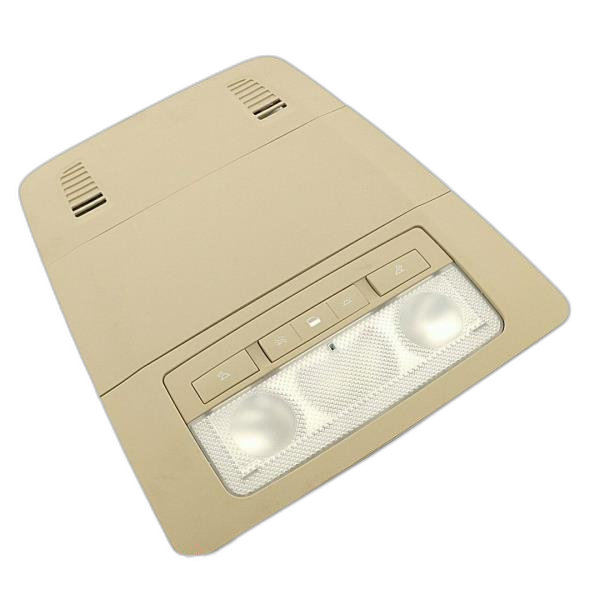
- On 2021+ Jeep models, B1552-2A triggers an 'SOS Call Unavailable' message, which is typically fixed by reseating the main connector in the overhead console.
- A no-crank condition with a B1552 code on a BMW points directly to a deployed Battery Safety Terminal (BST) requiring a $150-$300 replacement.
What Does B1552 Mean?
B1552 indicates a specific computer in your car, such as the Body Control Module (BCM) or Instrument Panel Cluster (IPC), lost its continuous power source. This low-power connection, called 'Keep Alive Memory' (KAM), retains settings like your trip odometer, radio presets, and learned driving habits when the car is off. When this power drops, the module resets to factory defaults and logs B1552.
Technical definition: The official definition for B1552 is 'Keep Alive Memory (KAM) Error'. However, meaning varies by manufacturer. On 2021+ Jeep models, it reads 'Emergency Call Button Stuck'. On Toyota models, it indicates 'Extension Module Malfunction' for a navigation ECU fault.
Can I Drive With B1552?
Yes, But With Caution. Yes, the vehicle is typically safe to drive. However, you lose electronic settings like radio presets and trip data. The primary risk occurs if the fault disables a key safety system or causes a no-start condition. On 2021+ Jeeps, this code deactivates the emergency SOS call feature. On Ford, GM, and BMW models, the underlying electrical issue disables the anti-theft or starter systems, leaving you stranded.
Common Causes
- Recent battery disconnection or replacement (Very Common) — This is the most frequent and harmless cause. Disconnecting the battery cuts power to all modules, wiping their keep-alive memory. The code sets as a historical record when power returns.
- Weak or failing car battery (Common) — An aging battery that cannot hold a stable charge drops below the minimum voltage required to maintain KAM, triggering the code even if the car still starts.
- Loose or corroded battery terminals (Common) — A poor connection at the battery terminals, including main power and ground connections, causes intermittent power loss to the vehicle's modules.
- Parasitic battery drain (Common) — A component drawing power after the car is off drains the battery. When jump-started, modules report the power loss by setting B1552. Common culprits include improperly installed aftermarket electronics, stuck relays, or faulty modules.
- Damaged wiring or loose connector (Less Common) — A wire providing constant power to the module is broken, or a connector at the module is loose. On Jeeps, a loose connector at the overhead console is a highly documented cause.
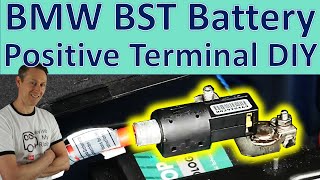
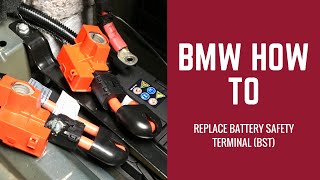
- Blown Battery Safety Terminal (BST) (BMW) (Less Common) — On BMWs, a pyrotechnic device on the positive battery terminal (BST) severs the connection to the starter and alternator in an accident or from a hard jolt. This power cut causes a no-crank condition and triggers KAM errors.
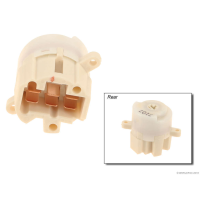
- Faulty ignition switch (Less Common) — Internal wear in the ignition switch fails to send power to necessary modules in the 'ON' or 'RUN' positions, manifesting as a memory-related code on older GM vehicles.
- Blown fuse for a control module (BCM, IPC, MEM) (Rare) — The fuse supplying constant, un-switched power to the affected module blows, cutting off its keep-alive power source.
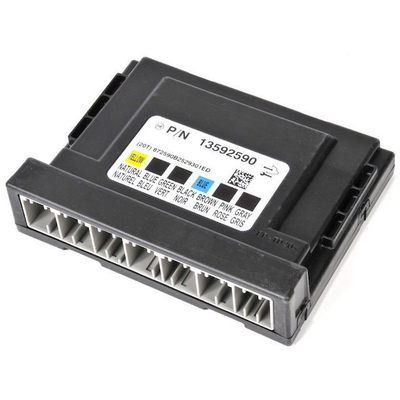
- Failing Body Control Module (BCM) or Instrument Cluster (IPC) (Rare) — The module itself suffers an internal fault and cannot retain memory, even with a verified power and ground supply. This is a diagnosis of exclusion.
Symptoms
- Trip odometer and fuel economy data resets to zero — After turning the car off and on, the trip meter and calculated MPG/LKM return to zero. This is the classic KAM symptom.
- Radio presets, clock, and seat memory are erased — Saved radio stations, the time, and memorized seat positions vanish each time the vehicle shuts off for an extended period.
- Anti-theft or security light is on or flashing rapidly — On Fords and GMT800-platform GM trucks, this code links to the anti-theft system (PATS/Passlock). A rapidly flashing light indicates the system disabled the engine.
- Car cranks but does not start — If tied to the vehicle's anti-theft system (Ford PATS or GM Passlock), the engine disables as a security measure. The starter turns the engine over, but fuel injectors do not fire.
- Car does not crank or start (no click or one click) — On BMWs, a blown Battery Safety Terminal (BST) prevents the starter from receiving power, resulting in a no-crank condition. On GM vehicles, a faulty ignition switch causes the same symptom.
- 'SOS Unavailable' or 'SOS Call Unavailable' message on dash — On 2021+ Jeep models, this code points to a fault in the emergency call system located in the overhead console, disabling the feature.
Diagnostic Flowchart
Tap your situation to follow the diagnostic path that matches what you're seeing on this code.
Common Fixes & Costs
- Clear code after battery service — Parts: $0, Labor: $0-$50, ~0.1 hr book time (DIY)
- Replace weak or dead car battery — Parts: $150-$400, Labor: $50-$100, ~0.8 hr book time (DIY)
- Clean battery terminals and tighten connections — Parts: $0-$10, Labor: $0, ~0.2 hr book time (DIY)
- Jeep Overhead Console Repair (reseat connector or replace) — Parts: $0-$250, Labor: $75-$150, ~1.2 hr book time (Intermediate)
- Replace BMW Battery Safety Terminal (BST) — Parts: $150-$300, Labor: $100-$200, ~1.5 hr book time (Intermediate)
- Replace faulty ignition switch (GM) — Parts: $60-$200, Labor: $100-$250, ~2 hr book time (Intermediate)
- Replace the Body Control Module (BCM) — Parts: $200-$700, Labor: $150-$400 (includes programming), ~2.5 hr book time (Professional)
Used vs. New Parts: Buying Guide
When a used part is worth it: For electronic modules like a BCM or Jeep overhead console, a used part from a reputable recycler offers significant savings. A used BMW BST is a cost-effective repair if guaranteed non-deployed.
Donor-vehicle mileage cap: roughly under 100000 miles for the part to have meaningful remaining life.
Donor quality checklist:
- Verify the exact part number matches.
- For a BMW BST, get photographic proof the pyrotechnic charge has not fired.
- Avoid parts from vehicles with extensive electrical issues, flood, or fire damage.
Decision logic:
- If The part is a safety-critical pyrotechnic device like a BMW BST. → Used is acceptable only if its non-deployed status is 100% verified. A new part eliminates all risk.
- If The part is a complex module like a BCM that requires programming. → Factor in the cost of dealership programming. Pre-programmed used modules from aftermarket suppliers offer good value.
- If The vehicle is over 10 years old and budget is a primary concern. → A used part is a reasonable choice, but the warranty is typically much shorter (30-90 days).
Warranty tradeoff: Used parts typically come with a 30-90 day warranty covering the part only. New aftermarket parts offer 1-year to limited lifetime warranties. New OEM parts carry a 1-2 year warranty.
Worst-case if a used part fails: $300-$800 if a used module fails post-installation, requiring repeat labor and programming costs.
What Happens If You Wait — Timeline
- 0-1 month: A minor parasitic drain (e.g., 100mA) begins. The car starts daily, but B1552 appears after sitting for a weekend. Radio presets and trip meter are lost intermittently. (MPG impact: 0%% · Added cost: $0)
- 1-3 months: Constant drain forces the battery into a repeated state of partial discharge. The car is slow to crank. Jump-starts become frequent. The battery's capacity permanently reduces due to sulfation. (MPG impact: 0%% · Added cost: $20-$50 in wasted fuel and inconvenience.)
- 3-6 months: The battery is significantly damaged and cannot survive the parasitic drain overnight. The vehicle requires a daily jump-start. The B1552 code is permanent. (MPG impact: 0-1%% · Added cost: $150-$400 for a new battery, which will also be damaged if the drain isn't fixed.)
- 6+ months: Repeatedly jump-starting puts severe stress on the alternator, leading to premature alternator failure. The underlying electrical short causing the drain worsens, creating a fire risk. (MPG impact: 1-3%% · Added cost: $500-$1000+ to replace both the ruined battery and the overworked alternator.)
Cost of Not Fixing It
- Immediate: If caused by a weak battery, parasitic drain, or BMW BST fault, you will be stranded with a no-start vehicle. If caused by a Jeep SOS fault, the emergency call feature is disabled. (Added cost: $75-$200 for a tow.)
- 1-3 months: Ignoring a parasitic drain repeatedly discharges the battery, causing sulfation and permanent damage. Continual loss of adaptive memory leads to minor decreases in fuel efficiency. (Added cost: $150-$400 for a new battery.)
- 3+ months: An unstable charging system damages sensitive electronics throughout the vehicle over time. Ignoring a no-start issue related to an anti-theft system fault renders the vehicle unusable. (Added cost: $500-$2000+ for module replacement if damaged by voltage spikes.)
Diagnosis Steps
- Recall Recent Service History
Determine if the battery was disconnected, replaced, or jump-started recently. If so, the code is a side effect. Clear the code with a scanner and verify it does not return after a few drive cycles.
Tools: OBD-II Scanner (Beginner) - Test the Battery
Use a multimeter to test the battery voltage with the car off. A healthy, fully charged battery reads approximately 12.6 volts. A reading below 12.4V suggests a weak battery. A reading below 12.0V indicates a discharged battery unable to maintain KAM.
Tools: Multimeter (Beginner) - Inspect Battery Terminals and Cables
Visually inspect the battery terminals for white or blueish corrosion. Ensure the positive and negative cable clamps are tight and cannot be moved by hand. On BMWs, inspect the positive terminal for a deployed Battery Safety Terminal (BST).
Tools: Wrench set, terminal cleaning brush (Beginner) - Inspect Module Connectors (Manufacturer-Specific)
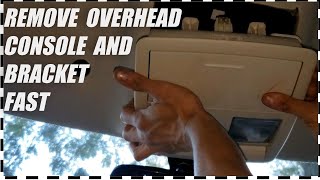
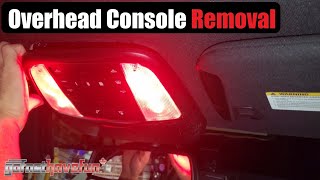
For Jeep owners, carefully lower the overhead console and ensure the main electrical harness is fully plugged in and locked. 🎬 Watch this guide on removing a Jeep overhead console. For other vehicles, inspect the main connectors at the BCM (often behind the glove box or in a kick panel).
Tools: Trim removal tools, screwdriver (Intermediate) - Check Fuses for Keep Alive Power
Locate the interior and engine bay fuse boxes. Find the fuses labeled for the Body Control Module (BCM), Instrument Panel Cluster (IPC), or memory (MEM). Use a multimeter to verify 12V+ power on both sides of the fuse with the key off. Replace blown fuses.
Tools: Fuse puller, Multimeter (Intermediate) - Advanced Test: Parasitic Drain Test
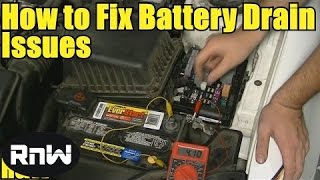
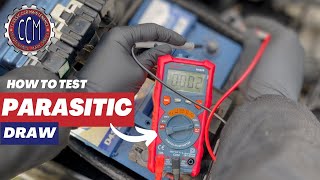
With the vehicle off and doors closed for 30 minutes, disconnect the negative battery terminal. Connect a multimeter set to measure Amps (10A scale) between the cable and the battery post. A normal draw is under 50 milliamps (0.05A). If higher, pull fuses one by one until the draw drops to identify the faulty circuit.
Tools: Multimeter with Amp clamp or 10A setting (Advanced) - Advanced Test: Voltage Drop Test on Power and Ground
Set a multimeter to DC Volts. With the circuit active, place the red lead on the module's ground pin and the black lead on the negative battery terminal. A reading above 0.1V indicates a poor ground. To test power, place the red lead on the module's constant 12V+ pin and the black lead on the positive battery terminal. A reading above 0.2V indicates high resistance in the power feed.
Tools: Multimeter, wiring diagram, back-probe pins (Advanced) - Advanced Test: Check LIN-Bus Signal (Jeep SOS Fault)
For the Jeep B1552-2A code, probe the single LIN-Bus communication wire to the overhead console. A healthy signal is a toggling square wave between 1V and battery voltage (~12V). A flat line at 0V indicates an open circuit or short to ground.
Tools: Oscilloscope or Multimeter with Peak Min/Max, wiring diagram, back-probe pins (Professional)
When This Code Triggers (Freeze-Frame Conditions)
- Event Trigger: Key-On (The code logs at the moment of 'Key-On' following a power loss event, not during a specific driving scenario.)
- Vehicle Speed: 0 mph (Because the power loss occurs when the vehicle is off, freeze frame data captures when the module powers back on before the vehicle moves.)
- Engine RPM: 0 or <500 RPM (Data captures either with the key on and engine off (0 RPM) or during engine cranking when voltage sag triggers the fault (<500 RPM).)
- Battery Voltage: <11.8V or >15V (Freeze frame shows low voltage if a weak battery caused the issue, or normal voltage if captured after power restoration (e.g., after a jump-start).)
Related Codes
- P0603 — The powertrain equivalent of B1552. It means the Powertrain Control Module (PCM) lost its Keep Alive Memory. If B1552 and P0603 appear together, it strongly indicates a total vehicle power loss.
- U114F-00 — On Jeep vehicles, this code for 'Lost Communication with LIN Overhead Console' frequently appears with B1552-2A. It confirms the problem is in the overhead console's main connector or the console itself.
- B1558 — On GM vehicles, 'BCM EPROM Checksum Error' shows up alongside B1552. If B1552 is resolved but B1558 persists, the BCM has internal memory corruption and needs replacement.
- B1600 / B1601 / P1260 (Ford) — On Fords, if the car won't start and B1552 is present, these PATS codes confirm the fault is preventing the transceiver from reading the ignition key chip, disabling the engine.
Climate & Environmental Factors
- Cold Weather: Cold weather significantly increases the likelihood of B1552. Low temperatures reduce a battery's chemical efficiency. The increased power required to start a cold engine causes voltage sag during cranking, dropping below the KAM threshold and triggering the code.
- High Humidity: In humid climates, corrosion on battery terminals, ground straps, and fuse box contacts accelerates. This corrosion introduces unwanted resistance, causing intermittent voltage drops that lead to KAM errors.
How to Talk to a Mechanic About This Code
Say this: "I have a B1552 Keep Alive Memory error, and my car is losing radio presets. I'd like to book a diagnostic appointment. Can you please start by checking the battery's health and performing a parasitic draw test before checking the module itself?"
This signals that you know the most common causes are simple power supply issues, not an expensive module failure. It guides the technician down a logical, cost-effective path.
Avoid saying:
- 'My check engine light is on, can you look at it?'
- 'My car's electronics are acting weird.'
- 'Just fix whatever is wrong.'
Questions to ask before authorizing the repair:
- What was the battery's voltage and the result of the load test?
- What was the parasitic draw in milliamps after the modules went to sleep?
- If you are recommending a module replacement, did you perform a voltage drop test on the power and ground wires to the module first?
- For my Jeep, did you physically inspect the overhead console connector per the TSB?
Where to Take It: Dealer vs Independent vs Chain
- Dealer:
Best for: Vehicles under warranty., Known manufacturer-specific issues like the Jeep SOS fault or BMW BST deployment., Repairs that require module programming.
Downsides: Highest labor rates., Often recommends replacing a module when a simpler wiring or connector fix is possible. (Typical cost: +50% vs. baseline) - Independent Shop:
Best fit for most scenarios. A good independent shop with strong electrical skills efficiently diagnoses the root cause, which is often a simple power supply issue.
Best for: Out-of-warranty vehicles., Diagnosing common electrical issues like bad batteries, faulty alternators, and parasitic drains.
Downsides: Quality varies greatly; ensure the shop has a technician skilled in electrical diagnostics. (Typical cost: +0% vs. baseline) - Chain Shop:
Acceptable for a free battery test as a first step. AVOID for comprehensive diagnosis of a recurring B1552 code.
Best for: Free or low-cost battery testing and replacement.
Downsides: Technicians lack advanced electrical diagnostic skills for parasitic draw or module-level testing., High pressure to upsell parts; incorrectly blames the battery or alternator without proper diagnosis. (Typical cost: -10% vs. baseline)
When to Walk Away From the Repair
If the estimated repair cost exceeds 40-50% of the car's Kelley Blue Book (KBB) private-party value, pause and consider alternatives to a major repair.
- Car worth $3000, fix is $1200: Walk away. The repair cost is a significant percentage of the car's value. The risk of other age-related failures is high.
- Car worth $15000, fix is $800: Fix it. The repair cost is well below the threshold and restores key vehicle functions.
- Car worth $5000, fix is $2200: Borderline. Get a second opinion. If the diagnosis is firm, weigh the cost against the car's overall condition.
What Scan Tool You Need for This Code
Minimum: A scanner that reads and clears Body (B-prefix) and Powertrain (P-prefix) trouble codes, and displays live battery voltage.
The cheapest $20 code readers only read generic P-codes from the engine computer. They will not see the B1552 code stored in a body module.
Budget: XTool A30D or Mucar BT200 Max (~$90) — These Bluetooth scanners connect to your smartphone and offer full-system diagnostics to read B-codes like B1552. They show live data for battery voltage and clear the code after a repair.
Mid-range: Foxwell NT510 Elite or XTOOL D7 (~$250) — Provides full-system diagnostics plus bidirectional controls. For B1552, this allows in-depth testing of specific modules and is necessary to perform a battery registration on a BMW.
Professional: Autel MaxiCOM MK808 / MK906BT (~$500-1200) — Offers full bidirectional control, advanced coding, and programming functions. Necessary if the final diagnosis is a failed BCM requiring replacement and programming to the vehicle's VIN.
Rent vs buy: For a one-time code after a battery change, use the free 'Fix Finder' service at AutoZone to read and clear the code. If the problem is recurring, buying a budget pick for under $100 is a smart investment.
How to Clear the Code After You Fix It
- Reconnect the battery if disconnected for the repair.
- Use an OBD-II scan tool to select 'Clear/Erase Codes' with the key in the 'ON' position, engine off.
- Perform a drive cycle to allow the vehicle's readiness monitors to run their self-tests.
Drive cycle (~20 minutes): 1) Cold start the vehicle and idle for 2-3 minutes. 2) Drive in stop-and-go city traffic for 5 minutes. 3) Drive at a steady highway speed (55-60 mph) for 10-15 minutes. 4) Coast from highway speed to 20 mph. 5) Park and idle for 1-2 minutes before shutting off.
Readiness monitors affected: Catalyst Monitor, Evaporative System (EVAP) Monitor, O2 Sensor Monitor, EGR System Monitor
Before emissions retest: drive at least 50 miles to fully set monitors.
Watch out for:
- Disconnecting the battery clears B1552 but resets all emissions readiness monitors to 'Not Ready', causing an immediate emissions test failure.
- The code returns immediately on the next key-on if the underlying electrical fault is not repaired.
- The EVAP monitor requires specific fuel levels (1/4 to 3/4 tank) and a cool-down period to set.
Will This Fail Emissions / State Inspection?
Yes — this code typically fails an OBD-II emissions inspection.
- California: A vehicle fails if the Check Engine Light is on. After a battery disconnect, all readiness monitors reset. California allows only the EVAP monitor to be incomplete on 2000+ model year vehicles.
- New York: An illuminated Check Engine Light is an automatic failure. NYVIP3 requires monitors to be 'Ready' to pass the OBD-II inspection.
- Texas: In counties requiring emissions testing, an illuminated Check Engine Light results in failure. If readiness monitors are 'Not Ready' due to a battery disconnect, the vehicle will not pass.
Most Commonly Affected Vehicles
- Jeep Grand Cherokee, Wagoneer, Grand Wagoneer (2021-2025) — Sets a B1552-2A variant for a fault in the overhead SOS emergency button system. TSB S2423000008 REV. A notes the cause is usually a loose connector or software glitch.
- Cadillac DeVille, Eldorado (1998-2005) — Frequently logs B1552 in the Instrument Panel Cluster (IPC) after a battery disconnect or due to an aging electrical system. Service manuals suggest checking specific IPC connector pins (A1, B1, A12, B12) for good contact.
- Ford Ranger, Explorer, F-150 (1998-2010) — B1552 accompanied by a rapidly flashing theft light and a no-start condition points to a Passive Anti-Theft System (PATS) fault. The issue is often the transceiver ring around the ignition cylinder.
- Chevrolet / GMC Silverado, Sierra, Tahoe, Yukon (GMT800) (1999-2007) — Experiences B1552 along with a no-start or start-and-die symptom due to a faulty ignition switch or wiring related to the Passlock anti-theft system.
- BMW 3-Series (E46, E90), 5-Series (E60), Z4 (E85/E86) (2000-2013) — Prone to setting this code after the Battery Safety Terminal (BST) on the positive battery cable triggers. This results in a no-crank condition. The BST is a one-time use device and must be replaced.
- Volkswagen Golf, Jetta (Mk4) (1999-2005) — Logs B1552 as a secondary result of the common battery-mounted fuse box melting. High resistance in the alternator wire connection causes intermittent power loss.
- Cadillac Catera (1997-2001) — Known to log B1552 for a loss of Keep Alive Memory in the Body Control Module (BCM), leading to intermittent no-start issues.
- Chrysler Town & Country, Grand Caravan (2001-2007) — Manifests strange electrical behavior and B1552 due to intermittent power loss to the BCM.
Manufacturer-Specific Notes
- General Motors (Cadillac, Chevrolet, GMC): B1552 is considered normal after disconnecting the battery. If it returns on its own, it signals a power supply problem to the IPC or BCM. Massive ignition switch recalls in the mid-2010s were related to switches moving out of the 'Run' position, causing KAM errors and dangerous shutdowns.
- Jeep / Stellantis: The code is typically B1552-2A. Despite the definition 'Emergency Call Button Stuck', the button is rarely the issue. TSB S2423000008 REV. A notes the true cause is usually a loose connector in the overhead console.
- Ford: B1552 often appears as a consequence of a Passive Anti-Theft System (PATS) fault. A no-start with a flashing theft light and code B1552 means diagnosis must focus entirely on the PATS transceiver, key, and related wiring.
- Toyota: On models with navigation, B1552 is defined as 'Extension Module Malfunction' and points to an internal, non-serviceable fault within the navigation ECU itself.
- BMW: B1552 accompanied by a no-crank/no-start requires immediate inspection of the Battery Safety Terminal (BST) on the positive battery post. A deployed BST must be replaced to restore starter power.
Real Owner Stories
2022 Jeep Grand Cherokee with 'SOS Unavailable' message
Owner reported the 'SOS Call Unavailable' message on the dash after requiring a jump-start. Dealer visit found code B1552-2A.
What they tried:
- Technician followed TSB S2423000008 REV. A.
- Lowered the overhead console and found the main electrical connector was not fully latched.
- Unplugged the connector for 30 seconds, then securely reconnected it until it clicked.
Outcome: The technician cleared the B1552-2A and U114F-00 codes. The codes did not return, and the SOS message disappeared. The repair required no parts and 0.5 hours of labor.
Lesson: On modern Jeeps, B1552-2A is rarely a 'stuck button'. It is a communication error typically caused by a loose connector in the overhead console, especially after a battery drain event.
2004 Ford Ranger, 115K miles, with crank-no-start and flashing theft light
Vehicle cranked but did not start. The 'theft' light flashed rapidly. Codes B1552 and P1260 were present.
What they tried:
- Owner tested the battery, which passed.
- Replaced the PATS transceiver ring around the ignition cylinder based on forum advice. The problem persisted.
- A mechanic diagnosed a failing Powertrain Control Module (PCM) failing to communicate with the PATS system.
Outcome: The PCM was replaced and programmed, resolving the no-start condition. The initial B1552 code was a symptom of the broader PATS system failure.
Lesson: A B1552 code accompanied by a flashing theft light and no-start on a Ford points directly to the PATS anti-theft system. While the transceiver ring is a common DIY fix, the fault often lies in the key or the PCM itself.
2007 BMW 328i (E90) with sudden no-crank, no-start
Car was driven, parked, and would not crank an hour later. All lights and radio worked. The owner hit a large pothole earlier. A scan revealed multiple KAM error codes, including B1552.
What they tried:
- Owner tried jump-starting the car with no success.
- Inspected the positive battery terminal in the trunk.
- Found the main cable leading from the terminal was physically loose, indicating the Battery Safety Terminal (BST) deployed.
Outcome: The owner replaced the pyrotechnic portion of the BST with a verified non-deployed unit from a salvage yard for $35. After clearing codes, the car started normally.
Lesson: On a BMW, a sudden no-crank condition where accessories still have power is the classic symptom of a deployed BST. Always inspect the positive battery terminal for a loose main cable before suspecting the starter.
How to Prevent This Code From Triggering
- Periodically clean battery terminals and chassis ground points (Every 1-2 years, or with every oil change in humid/salty climates) — Corrosion creates resistance, causing voltage drops that reset module memory. Cleaning with a wire brush to bare metal ensures a solid electrical connection.
- Use a battery tender or maintainer for stored vehicles (Any time the vehicle sits for more than 2-3 weeks) — A battery tender counteracts normal parasitic draw (~20-50mA), keeping the battery at an optimal charge. This prevents KAM loss and extends battery lifespan by preventing sulfation.
- Ensure regular, sufficient drive times (At least one 20-30 minute drive per week) — Short trips prevent the alternator from fully recharging the battery. Longer drives ensure the battery stays fully charged and healthy.
- Turn off all accessories before shutting off the engine (Daily habit) — Turning off headlights, radio, and climate control reduces the immediate load on the battery, minimizing the risk of voltage spikes or drops during shutdown.
- Test battery voltage quarterly (Every 3 months) — A multimeter test catches a failing battery early. A healthy battery reads ~12.6V when off. A reading consistently at 12.4V or less indicates it is weakening.
Frequently Asked Questions
Why did code B1552 appear right after I replaced my car battery?
This is the most common and harmless reason for the code. Disconnecting the old battery cuts the 'keep alive' power to the car's modules. When you connect the new battery, the modules power up, realize their memory wiped, and log B1552.
My car has a B1552 code and won't start. Are the two issues related?
Yes, they are directly related. In many Ford, GM, and BMW vehicles, the electrical fault interrupting the keep-alive memory also disables the anti-theft system or starter circuit. This results in a no-start or no-crank condition.
What is the most common misdiagnosis when dealing with B1552?
A common mistake is immediately replacing the control module (BCM or IPC) storing the code. The code reports a loss of power, not a failed module. The actual cause is usually a weak battery, corroded ground wire, or loose connector.
Can I fix B1552 myself?
Yes, in most cases. The most common fixes involve clearing the code after a battery change, cleaning corroded battery terminals, or replacing a blown fuse.
Will clearing the code fix the problem?
Only if the original cause was temporary, like a battery change. If the code returns, an ongoing problem like a weak battery, bad fuse, or wiring issue requires diagnosis and repair.
My trip meter and radio stations keep resetting. Is this related to code B1552?
Yes, this is the classic symptom of a Keep Alive Memory error. The constant power saving those settings is interrupted, which triggers the B1552 code.
What does the '-2A' mean in Jeep code B1552-2A?
The '-2A' is a Failure Type Byte (FTB) providing specific diagnostic information. Stellantis/Jeep uses it to indicate an 'Emergency Call Button Stuck' fault. Different suffixes like '-13' indicate entirely different problems, such as an open circuit.
Can a bad ground wire cause code B1552?
Absolutely. A module requires constant power and a solid ground to maintain its memory. A corroded ground strap interrupts the circuit, leading to a KAM error. A voltage drop test on the ground side must show less than 0.1 volts.
Key Takeaways
- Code B1552 indicates a control module lost its Keep Alive Memory due to a battery power interruption.
- The most common trigger is a recent battery replacement or jump-start; clear the code with an OBD-II scanner and verify it stays off.
- Test your battery voltage first; a resting voltage below 12.4V or a parasitic draw above 50mA are the primary culprits for recurring B1552 codes.
- On 2021+ Jeep models, B1552-2A triggers an 'SOS Call Unavailable' message, which is typically fixed by reseating the main connector in the overhead console.
- A no-crank condition with a B1552 code on a BMW points directly to a deployed Battery Safety Terminal (BST) requiring a $150-$300 replacement.
Helpful Videos
Shop the Parts Behind B1552
Below are the parts most often responsible for code B1552, ranked by how frequently each one is the actual culprit (per the diagnosis above). Tap any to see what we have for your vehicle.


The information in this article is provided for general reference and educational purposes only. Vehicle specifications, procedures, and part compatibility can vary by production date, trim level, and region. Always consult your vehicle's factory service manual and verify part numbers before purchasing or performing repairs. Safety-critical components such as airbags, seat belts, and braking systems should be installed by a qualified professional.
- 🧭 Diagnostic Flowchart
- 🎬 Helpful Videos
- 🛍️ Shop This Part
- What Does B1552 Mean?
- Can I Drive With B1552?
- Common Causes
- Symptoms
- Common Fixes & Costs
- Used vs. New Parts: Buying Guide
- What Happens If You Wait — Timeline
- Cost of Not Fixing It
- Diagnosis Steps
- When This Code Triggers (Freeze-Frame Conditions)
- Related Codes
- Climate & Environmental Factors
- How to Talk to a Mechanic About This Code
- Where to Take It: Dealer vs Independent vs Chain
- When to Walk Away From the Repair
- What Scan Tool You Need for This Code
- How to Clear the Code After You Fix It
- Will This Fail Emissions / State Inspection?
- Most Commonly Affected Vehicles
- Manufacturer-Specific Notes
- Real Owner Stories
- 2022 Jeep Grand Cherokee with 'SOS Unavailable' message
- 2004 Ford Ranger, 115K miles, with crank-no-start and flashing theft light
- 2007 BMW 328i (E90) with sudden no-crank, no-start
- How to Prevent This Code From Triggering
- Frequently Asked Questions
- Why did code B1552 appear right after I replaced my car battery?
- My car has a B1552 code and won't start. Are the two issues related?
- What is the most common misdiagnosis when dealing with B1552?
- Can I fix B1552 myself?
- Will clearing the code fix the problem?
- My trip meter and radio stations keep resetting. Is this related to code B1552?
- What does the '-2A' mean in Jeep code B1552-2A?
- Can a bad ground wire cause code B1552?
- Key Takeaways
- 🎟️ Get 5% Off