

OBD-II Code B1556: Airbag Status Indicator Circuit Malfunction
What B1556 means, why it triggers, and how to fix it
- Code B1556 disables the passenger airbag and triggers an automatic failure for state safety inspections in all 15 states that require them.
- Diagnosis depends entirely on the manufacturer: expect a faulty $50 key switch on 1999-2011 Ford/Mazda trucks, or a failed $500+ seat weight sensor on 2003-2013 GM and BMW vehicles.
- You must use an SRS-capable OBD-II scanner to read live data and clear this code; standard $20 engine code readers cannot communicate with the airbag module.
- Disconnect the vehicle battery and wait exactly 15 minutes before inspecting under-seat wiring to prevent accidental and potentially fatal airbag deployment.
What Does B1556 Mean?
Code B1556 signifies the vehicle's primary safety computer (RCM or SRS module) detected an electrical fault in the passenger airbag status indicator circuit. This is the dashboard light labeled 'PASS AIRBAG OFF'. The system performs a self-check at every startup; if it cannot confirm the integrity of this indicator circuit, it assumes a fault that compromises the passenger safety system. As a failsafe, it disables the passenger airbag, illuminates the main airbag warning light, and stores code B1556.
Technical definition: While the generic definition is 'Airbag Status Indicator Circuit Malfunction,' the precise meaning is highly manufacturer-specific. On Ford models, it directly corresponds to the Passenger Airbag Deactivation (PAD) Switch. On GM vehicles, it relates to the Passenger Presence System (PPS) seat mat. On certain Mitsubishi models, it defines a 'Seat Slide Sensor Malfunction' for the driver's seat. On some Toyota/Lexus vehicles, it indicates an 'Extension Module Malfunction' within the Navigation ECU. You must diagnose this code based on your specific vehicle make and model.
Can I Drive With B1556?
No — Do Not Drive. Do not drive with this code active. The Restraint Control Module (RCM) has detected a critical fault and disabled the passenger airbag and corresponding seatbelt pretensioner. In a collision, your passenger lacks intended protection, drastically increasing the risk of serious injury. An illuminated airbag light is also an automatic failure for state safety inspections, making the vehicle illegal to operate on public roads until repaired.
Common Causes
- Faulty Passenger Airbag Deactivation (PAD) Switch (Very Common) — On vehicles equipped with a manual key switch (1999-2011 Ford/Mazda trucks), the internal contacts wear out, get dirty, or corrode over time. This creates an open or high-resistance circuit that the RCM flags as a fault.
- Defective Passenger Presence System (Seat Mat Sensor) (Very Common) — On vehicles without a key switch (GM, BMW), the code triggers from a failure in the passenger seat weight sensor mat. This delicate sensor grid breaks from physical stress (like kneeling on the seat), liquid damage, or age.
- Damaged Wiring or Loose Connectors (Common) — Wiring harnesses under the front seats are highly susceptible to damage. Items pushed under the seat, repeated seat movement, or corrosion in the large yellow SRS connectors cause wires to fray, pinch, or break.
- Burned-Out Passenger Airbag Status Indicator Bulb/LED (Common) — The module checks the indicator light circuit during its self-test. If the bulb or LED is burned out, the change in resistance sets the code. The system defaults to a fault state because it cannot visually confirm the airbag status to the driver.
- Faulty Driver's Seat Slide Sensor (Less Common) — On 2013-2020 Mitsubishi Outlander Sports, B1556 specifically points to a malfunction in the driver's seat slide position sensor harness, even though generic scan tools incorrectly label it as a passenger-side issue.
- Software Glitch in a Control Module (Less Common) — On 2020 Ford Explorer and Lincoln Aviator models, B1556 is triggered by a software bug in the Rear Gate Trunk Module (RGTM), often accompanied by code B1555. A dealer software update is the only fix.
- Low Vehicle/Battery Voltage (Uncommon) — The SRS module requires a stable 10-14V. If the battery is failing or was recently jump-started, the module stores false codes like B1556 due to low voltage during its startup self-test.
- Defective Clock Spring (Uncommon) — A short within the clock spring behind the steering wheel disrupts the entire SRS data bus, leading to various codes including B1556. This is usually accompanied by non-functioning steering wheel buttons or horn.
- Failing Restraint Control Module (RCM/SRS Module) (Rare) — Internal failure of the main airbag computer is rare. Consider this an expensive last resort only after meticulously testing every other component and related wiring.
Symptoms
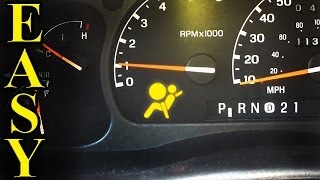
- Airbag Warning Light is On — A continuously illuminated SRS/airbag warning light on the instrument cluster indicates passenger protection is compromised.
- Passenger Airbag Status Light is Off or Incorrect — The 'PASS AIRBAG OFF' indicator fails to light up during the initial system check, stays off when the seat is empty, or remains on with an adult passenger.
- Airbag Light Flashes Code 56 — On older Ford/Mazda vehicles, the airbag light flashes a two-digit Light Flash Code (LFC) upon startup. 🎬 Watch: How to diagnose and fix a flashing airbag light Five flashes, a pause, then six flashes corresponds directly to B1556.
- Inability to Manually Change Airbag Status — For vehicles with a key-operated deactivation switch, turning the key has no effect on the indicator light.
- Steering Wheel Functions Inoperative — If caused by a failing clock spring, the horn, cruise control, or radio buttons on the steering wheel work intermittently or fail completely.
Diagnostic Flowchart
Tap your situation to follow the diagnostic path that matches what you're seeing on this code.
Common Fixes & Costs
- Replace Passenger Airbag Deactivation (PAD) Switch — Parts: $40-$150, Labor: $100-$200, ~1.0 hr book time (Intermediate)
- Replace Passenger Seat Cushion (with Occupant Sensor Mat) — Parts: $200-$800, Labor: $200-$350, ~2.5 hr book time (Professional)
- Repair Damaged Wiring or Connector — Parts: $10-$30, Labor: $150-$300, ~2.0 hr book time (Professional)
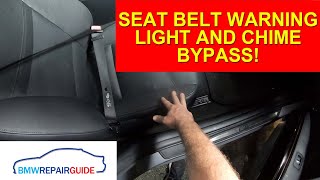
- Install Occupant Sensor Bypass Emulator (BMW) — Parts: $50-$70, Labor: $0-$50, ~0.5 hr book time (Beginner)
- Reprogram Control Module (e.g., Ford RGTM) — Parts: $0, Labor: $120-$250, ~1.0 hr book time (Professional)
- Replace Airbag Control Module (RCM/SRS) — Parts: $600-$1300, Labor: $150-$250, ~1.5 hr book time (Professional)
Used vs. New Parts: Buying Guide
When a used part is worth it: For mechanical parts like a PAD key switch, a used OEM part from a low-mileage vehicle is a cost-effective alternative. For electronic components like a seat occupancy sensor, buying used is highly risky due to high failure rates. Resetting your original airbag control module is always better than buying a used one.
Donor-vehicle mileage cap: roughly under 60000 miles for the part to have meaningful remaining life.
Donor quality checklist:
- Match the part number exactly. Superseded numbers must be verified with a dealer.
- Avoid seat sensors from vehicles in high-humidity climates, as moisture damages the sensor mat.
- Avoid modules from vehicles involved in accidents or with stored crash data.
Decision logic:
- If The part is a simple mechanical switch (e.g., Ford PAD switch) → A used part from a reputable recycler is a reasonable option.
- If The part is an electronic sensor mat or control module → Favor a new OEM/aftermarket part or a professional reset service for your original module.
- If The fix is for a BMW seat mat sensor → Consider a cost-effective bypass emulator, understanding it makes the airbag permanently active.
Warranty tradeoff: Used parts typically come with a 30-90 day warranty covering only the part, not labor. New aftermarket parts offer 1-year to limited lifetime warranties. New OEM parts installed by a dealer carry the best warranty.
Worst-case if a used part fails: $200-$400 if a used part fails after installation, primarily due to repeated labor costs.
What Happens If You Wait — Timeline
- 0 seconds: The SRS module completes its key-on self-test, detects the fault, illuminates the airbag warning light, and disables the passenger airbag system. (MPG impact: 0%% · Added cost: $0)
- Immediate and ongoing: The vehicle can be driven, but the passenger is without airbag protection, creating a significant safety risk and potential legal liability. (MPG impact: 0%% · Added cost: Immeasurable potential cost from injury.)
- At next scheduled state inspection: The vehicle automatically fails the safety inspection, preventing legal registration renewal. The repair becomes mandatory. (MPG impact: 0%% · Added cost: $20-$50 for the failed inspection fee, plus the required repair cost.)
- 6+ months: No direct cascading mechanical damage occurs. However, ignoring the light normalizes driving with a known safety defect. (MPG impact: 0%% · Added cost: The cost of the eventual repair, which does not increase over time, but becomes unavoidable.)
Cost of Not Fixing It
- Immediate: The passenger airbag is disabled. In a frontal collision, it will not deploy, drastically increasing the risk of serious or fatal injury to the front passenger. (Added cost: N/A)
- Next State Inspection: The vehicle automatically fails safety inspections in states that require them, preventing legal registration renewal. (Added cost: $20-$50 (failed inspection fee) + required repair cost)
- Long-Term: Ignoring a warning light normalizes driving with a known safety defect and masks other developing SRS issues. (Added cost: Immeasurable potential cost related to safety risk and liability.)
Diagnosis Steps
- Verify the Symptom and Check Switch Operation
Start the vehicle and observe the airbag warning light. If your vehicle has a manual key switch, insert the key and cycle it between ON and OFF 10-15 times. This scrubs corrosion off internal contacts and temporarily restores function, confirming a faulty switch.
Tools: Vehicle Key (Beginner) - Check for Technical Service Bulletins (TSBs)
Search online for TSBs related to your specific year, make, model, and code B1556. Manufacturer bulletins (like Ford SSM 49015 or Mitsubishi TSB-17-52B-003) provide exact, non-obvious solutions that save hours of diagnostic time.
Tools: Internet Access (Beginner) - Scan for Codes and Review Live Data
Use an SRS-capable OBD-II scanner to confirm B1556. Navigate to the SRS module's live data stream to monitor the 'Passenger Airbag Deactivation Switch' or 'Occupant Classification Sensor'. The data must change in real-time as you operate the key switch or apply weight to the seat. A static reading points to a faulty component or wiring.
Tools: SRS-Capable OBD-II Scanner (Intermediate) - Check SRS Fuses
Consult the owner's manual to locate the fuses for the Supplemental Restraint System (SRS) and Body Control Module (BCM). Visually inspect each fuse and replace any that are blown.
Tools: Owner's Manual, Fuse Puller (Beginner) - Inspect Under-Seat Wiring and Connectors
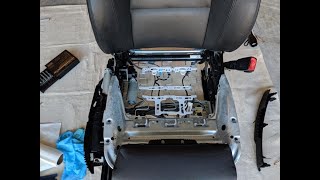
Disconnect the vehicle's battery and wait exactly 15 minutes. Visually inspect all wiring under the passenger seat (and driver's seat for Mitsubishi). Look for chafed wires, corrosion, or pinched harnesses near the large yellow SRS connectors. Disconnect and reconnect them to ensure they are fully seated.
Tools: Flashlight, Socket Set (for seat removal if needed) (Intermediate) - [PRO TIP] Test the PAD Switch with a Multimeter
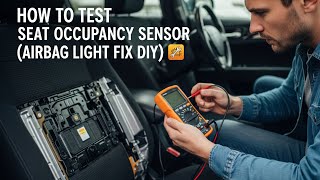
For Ford/Mazda trucks, disconnect the PAD switch connector. Using a multimeter set to Ohms (Ω), probe the two pins on the switch side. A genuine switch reads approximately 270-300 Ω in the 'ON' position and 1180-1200 Ω in the 'OFF' position. An open circuit (OL) confirms a bad switch.
Tools: Multimeter, Trim Removal Tools (Advanced) - [PRO TIP] Test Circuit Integrity with a Live Data Wiggle Test
With the scan tool displaying live resistance data for the suspect circuit, have an assistant wiggle the associated wiring harness under the seat. Watch the scanner for the resistance value to jump or go to 'Open'. A change in the reading confirms a wiring or connector pin-fit issue.
Tools: SRS-Capable OBD-II Scanner with Live Data (Advanced) - Test the Indicator Bulb Circuit
If the indicator light never illuminates, access the light assembly. Test removable bulbs for continuity with a multimeter. For soldered LEDs, use the multimeter (set to DC Volts) to check for 10-14V power and ground at the connector with the key on.
Tools: Multimeter, Trim Removal Tools (Advanced) - [ADVANCED] Analyze Live Data PIDs for Normal Ranges
Monitor live data PIDs from the SRS module. Normal resistance values for most airbag initiator circuits are 1.0 to 5.0 ohms. A reading of 0 ohms indicates a short circuit; 'OL' indicates an open circuit. Battery Voltage PID must be stable between 10-14V.
Tools: Professional SRS-Capable OBD-II Scanner (Advanced)
When This Code Triggers (Freeze-Frame Conditions)
- Fault Timing: Key-On Self-Test (The code sets during the initial power-on self-test the RCM performs every time the vehicle starts, checking the electrical resistance of all critical circuits.)
- System Voltage: < 10V or > 16V (Low or high system voltage during the self-test causes the module to incorrectly flag a circuit fault, common with weak batteries or bad alternators.)
- Occupant Sensor Status: No Change / Invalid (The module expects to see a status change (e.g., 'Empty' to 'Occupied') when weight is applied. Static or irrational data sets the code.)
- PAD Switch Position: Open / Short / Invalid Resistance (If the key switch circuit resistance falls outside the expected range for both 'ON' and 'OFF' positions, the fault triggers immediately at startup.)
Related Codes
- B1555 — On a 2020 Ford Explorer/Aviator, B1555 ('Ignition Switch Run/Start Circuit Malfunction') appearing with B1556 strongly points to the RGTM software glitch, not hardware faults.
- B0092 — This code for 'Passenger Presence System Performance' is common on GM vehicles. If present alongside B1556, the problem is almost certainly the seat sensor mat or its wiring.
- U-codes (e.g., U0230, U1556) — A 'U' code indicates a network communication error. If present alongside B1556, the communication fault must be diagnosed and fixed first, as it is likely the root cause.
- B1193 / B1231 — Ford-specific codes for 'Crash Data Stored'. The vehicle was in an accident severe enough to lock the RCM. The module must be replaced or reset; B1556 is a secondary fault.
Climate & Environmental Factors
- High Humidity / Moisture: Moisture accelerates corrosion on wiring connectors under the seats. This increases circuit resistance, which the SRS module interprets as a fault, triggering B1556. Dielectric grease on connector seals prevents this.
- Extreme Cold/Heat: In cold weather, plastic wiring insulation becomes brittle and metal connector pins contract, causing intermittent connections. In extreme heat, seat sensor mats are stressed and electronics degrade faster.
How to Talk to a Mechanic About This Code
Say this: "I have an airbag light on and my scanner shows code B1556. I'd like to book a diagnostic appointment to pinpoint the specific cause. My vehicle is a [Your Make, Model, Year]. Based on my research, I know this can be caused by the PAD switch, a seat sensor, or wiring. I'd like you to focus on diagnosing the specific circuit that's failing before recommending any part replacement."
This signals you are an informed customer. It directs the technician to perform a proper diagnosis rather than guessing or replacing the most expensive part first.
Avoid saying:
- 'My airbag light is on, can you just fix it?'
- 'I think I need a new airbag computer.'
- 'Just do whatever you think is best.'
Questions to ask before authorizing the repair:
- What specific component or circuit did your diagnosis identify as the point of failure?
- Were you able to confirm the failure by testing the component directly or observing live data?
- If it's a wiring issue, is a harness repair possible, or does the whole harness need replacement?
- Does this repair require any system recalibration after the part is replaced?
- What is the warranty on both the part and your labor for this specific repair?
Where to Take It: Dealer vs Independent vs Chain
- Dealer:
Recommended if the cause is a known TSB-related software issue or if the vehicle is covered by an extended warranty for the specific failed part.
Best for: Vehicles under warranty or covered by a recall/extended warranty (e.g., BMW seat mats)., Complex, manufacturer-specific issues like software glitches (2020 Ford Explorer)., Repairs requiring manufacturer-specific tools and software for programming or recalibration.
Downsides: Highest labor rates and part costs., May default to replacing large, expensive assemblies when a smaller component or wiring repair would suffice. (Typical cost: +50% vs. baseline) - Independent Shop:
Best overall choice for most B1556 scenarios. Ask if they have an SRS-capable, bi-directional scan tool and experience with airbag system diagnostics.
Best for: Out-of-warranty vehicles with common, well-documented failures (e.g., Ford PAD switch, GM under-seat wiring)., Owners seeking a better value for labor and parts., Finding a shop that will perform detailed repairs, like fixing a wiring harness instead of replacing it.
Downsides: Quality varies greatly. Must find a shop with ASE-certified technicians and specific experience with SRS systems., May not have the latest manufacturer-specific software for complex recalibrations. (Typical cost: +0% vs. baseline) - Chain Shop:
AVOID for B1556 diagnosis. Airbag systems are too complex and safety-critical for a non-specialist environment.
Best for: Very simple, clear-cut part replacements where diagnosis is not required (not applicable for B1556).
Downsides: Technicians often lack specialized training for complex SRS diagnostics., High pressure to upsell and recommend unnecessary part replacements., Unlikely to have the tools or expertise for wiring repairs or module reprogramming. (Typical cost: -10% vs. baseline)
When to Walk Away From the Repair
If the estimated repair cost exceeds 50-60% of the car's private-party value, consider alternatives. However, an airbag light makes the car unsafe and illegal to sell in many places without disclosure, complicating the decision.
- Car worth $4000, fix is $1500: Likely walk away. The repair is a significant percentage of the car's value. The car is unsafe and will not pass inspection, severely limiting its usability.
- Car worth $12000, fix is $1800: Fix it. The cost is well below the threshold, restores a critical safety feature, makes the car legal for inspection, and preserves its value.
- Car worth $2500, fix is $800: Borderline. If the fix is for a high-failure part on an otherwise reliable car, it may be worth it. Get a second opinion before proceeding.
What Scan Tool You Need for This Code
Minimum: A scanner that can read and clear Supplemental Restraint System (SRS/Airbag) codes. A basic engine-only code reader will NOT work for B1556.
A standard $20 OBD-II scanner only sees 'P' (powertrain) codes. B1556 is a 'B' (body) code stored in the SRS module. Without an SRS-capable scanner, you cannot confirm the code or clear the light after repair.
Budget: Autel AutoLink AL619 (~$90) — Reads and clears engine, ABS, and SRS codes. It confirms the B1556 code and allows you to turn off the light after a successful repair.
Mid-range: Foxwell NT630 Plus / BlueDriver Pro (~$100-170) — Reads and clears SRS codes and offers live data streaming. Crucial for B1556, as you can watch the seat sensor status or PAD switch resistance change in real-time.
Professional: Autel MaxiCOM MK808 / Foxwell NT1009 (~$450-750) — Full bi-directional control. Necessary for repairs requiring recalibration, such as replacing a Passenger Presence System (PPS) module on a GM vehicle.
Rent vs buy: Most auto parts stores do NOT rent out SRS-capable scanners due to liability. You must buy one or pay for a professional diagnosis.
How to Clear the Code After You Fix It
- Ensure the vehicle battery is securely reconnected.
- Use an SRS-capable OBD-II scan tool to access the Restraint Control Module.
- Select 'Clear Codes' or 'Reset DTCs'. Standard engine code readers cannot perform this function.
- Cycle the ignition off, then on again. Verify the airbag warning light illuminates for a few seconds during the self-check, then turns off permanently.
Drive cycle (~5 minutes): An extensive drive cycle is not required. The SRS system performs a complete self-test at every key-on event. A single key cycle is sufficient to determine if the repair was successful.
Readiness monitors affected: None. SRS system status does not affect emissions-related readiness monitors.
Watch out for:
- Disconnecting the battery will NOT clear a B1556 code; it is a 'hard code' stored in non-volatile memory.
- Using a basic $20 OBD-II scanner will fail, as it cannot communicate with the SRS module.
- If the root cause is not properly repaired, the code reappears immediately during the next key-on self-test.
Will This Fail Emissions / State Inspection?
No — by itself this code doesn't fail OBD inspection (but it can keep readiness monitors from setting, which causes a separate fail).
- California: An airbag light will not fail a standard biennial smog check. However, 'salvage' or 'reconstructed' vehicles must pass a Vehicle Safety Systems Inspection (VSSI), where an illuminated light causes an automatic failure.
- New York: An illuminated airbag warning light is strict grounds for failing the annual safety inspection.
- Texas: An airbag warning light is NOT an item on the standard Texas vehicle inspection checklist and will not cause a failure.
Most Commonly Affected Vehicles
- Ford F-150 / F-250 / F-350 (1999-2008) — Extremely common due to failure of the key-operated PAD switch. The airbag light often flashes code 56.
- Ford / Mazda Ranger / B-Series (2001-2011) — Shares the exact same failure-prone PAD switch design with the F-Series. Diagnosis and replacement are identical.
- Chevrolet / GMC Silverado / Sierra, Tahoe / Yukon (2003-2007) — Almost always caused by a faulty Passenger Presence System (PPS) sensor mat in the seat cushion or damaged wiring underneath the passenger seat.
- BMW 3-Series (E90/E92), 5-Series (E60) (2005-2013) — Very common failure of the passenger seat occupancy sensor mat. Many owners opt for a bypass emulator to avoid $1,400+ dealer repair costs.
- Mitsubishi Outlander / Outlander Sport (2013-2020) — TSB TIN-20-52A-002 indicates B1556 is for a 'Driver's Seat Slide Sensor Malfunction' due to a damaged wiring harness under the driver's seat.
- Ford Explorer / Lincoln Aviator (2020-2020) — A known software glitch in the Rear Gate Trunk Module (RGTM) causes B1556 and B1555. Requires a dealer software update per TSB SSM 49015.
- Toyota / Lexus Various models with Navigation (2010-2018) — B1556 is defined as 'Extension Module Malfunction 2' and points to an internal fault within the Navigation ECU itself, not a typical SRS component.
Manufacturer-Specific Notes
- Ford: The PAD key switch is the most common failure point. Cycling the key multiple times provides temporary confirmation. On 2020 Explorer/Aviator, suspect the RGTM software glitch if liftgate issues are also present.
- General Motors (Chevrolet/GMC): Focus diagnostics on the sensor mat inside the passenger seat cushion and the wiring harness underneath it. A common failure point is a chafed wire harness where it passes the seat frame.
- Mitsubishi: For the Outlander Sport (2013-2020), B1556 is for the driver's seat slide sensor, not the passenger side. TSBs confirm this and point to a harness that gets damaged under the driver's seat.
- BMW: The passenger seat occupancy mat has an extremely high failure rate. BMW issued an extended warranty (up to 15 years/unlimited miles) for the sensor mat on many E6x and E9x models. Check with a dealer using your VIN.
Real Owner Stories
2006 Ford Ranger with 140K miles
Airbag light came on permanently and flashed code '56' on startup.
What they tried:
- Checked under-seat connectors, which appeared fine.
- Cycled the PAD key switch multiple times, which made the light go off temporarily, confirming the switch was the culprit.
Outcome: Replaced the PAD switch with a Dorman 901-318 part for $50. The repair took 45 minutes. The code was cleared and did not return.
Lesson: On Ford trucks with a key switch, the 'key jiggle' test is a highly effective way to confirm a failing switch before spending money on parts.
2007 Chevy Silverado 1500 at 115K miles
Airbag light and 'Service Airbag' message appeared. The 'Passenger Airbag Off' light stayed lit even with an adult in the seat.
What they tried:
- A shop diagnosed a B0092 code and quoted $1,100 to replace the passenger seat cushion and sensor.
- Owner inspected it themselves and found a frayed wire on the harness directly under the front of the passenger seat rubbing on a metal support.
Outcome: Purchased an ACDelco connector pigtail for $25. Spliced in the new connector, cleared codes, and the light stayed off. Total cost was under $30.
Lesson: On GM trucks, always perform a thorough visual inspection of the under-seat wiring before agreeing to a full seat cushion replacement.
2008 BMW 328i (E90) at 95K miles
Airbag light on. A scan confirmed a fault with the passenger seat occupancy mat (OC3 sensor).
What they tried:
- Found out a previous extended warranty for the sensor mat had expired.
- Received a quote of over $1,400 for parts and labor to replace the sensor mat.
Outcome: Purchased a plug-and-play seat mat bypass emulator online for $60. Plugged it in under the seat, cleared the codes, and the light went out. Total time was under 1 hour.
Lesson: For high-cost repairs like the BMW seat mat, a bypass emulator is a cost-effective alternative, provided you understand it makes the passenger airbag permanently active.
2015 Mitsubishi Outlander Sport
Airbag light came on. A generic scan tool read code B1556 and defined it as a 'Passenger Seat Position Switch Failure.'
What they tried:
- Inspected all wiring under the passenger seat but found no issues.
- Discovered Mitsubishi TSB-17-52B-003, stating B1556 actually refers to the driver's seat slide sensor.
Outcome: Found a damaged harness under the DRIVER'S seat. Had a qualified shop perform the harness repair per the bulletin.
Lesson: Always search for vehicle-specific TSBs. Generic code definitions can be wrong, leading to wasted diagnostic time.
How to Prevent This Code From Triggering
- Avoid placing heavy, sharp, or wet objects on the passenger seat (Daily habit) — Point loads from toolboxes or kneeling break the delicate sensor grid in the seat mat. Spilled liquids cause corrosion and short out the sensor.
- Do not store loose items under the front seats (Always) — Items like water bottles or tools roll around and snag, pinch, or sever the sensitive SRS wiring harnesses under the seats.
- Apply dielectric grease to under-seat connectors (During any under-seat service) — Applying dielectric grease to the connector seals blocks moisture and prevents the corrosion that leads to high-resistance faults.
- Use caution with aftermarket seat covers (During installation) — Thick or poorly-fitting seat covers interfere with the passenger presence sensor, causing it to misclassify an occupant's weight.
- Protect under-seat wiring from pets (If pets ride in the car) — Dogs chew on under-seat wiring. Use a pet restraint or install split-loom tubing to protect the harnesses.
Frequently Asked Questions
Is it safe to drive with the B1556 code?
No. The code means the passenger airbag system is disabled, significantly increasing the risk of injury or death in a crash.
Can I pass a state inspection with the airbag light on?
No. In jurisdictions with safety inspections, an illuminated airbag warning light is an automatic failure.
Will disconnecting the battery clear the B1556 code?
No. SRS codes are stored in non-volatile memory. The fault must be repaired and cleared using an SRS-capable OBD-II scanner.
My car doesn’t have a key switch for the passenger airbag. Why do I have this code?
The code is triggered by the automated Occupant Classification System (OCS), most commonly due to a failed passenger seat weight sensor mat or its wiring.
What is a clock spring and could it cause this code?
A clock spring maintains electrical connection behind the steering wheel. A short inside it can disrupt the entire SRS data bus, triggering B1556 alongside broken steering wheel buttons.
Can I fix B1556 myself?
Simple checks like fuses and under-seat connectors are DIY-friendly. However, component replacement requires disconnecting the battery for 15 minutes to prevent accidental deployment. Complex tasks like replacing a seat sensor require professional recalibration.
What is a seat sensor bypass emulator?
An emulator is a small module that plugs into the seat sensor connector, sending a constant 'seat occupied' signal to turn off the airbag light. It is a cost-effective fix for BMWs, but you must never place a child seat in the front.
Key Takeaways
- Code B1556 disables the passenger airbag and triggers an automatic failure for state safety inspections in all 15 states that require them.
- Diagnosis depends entirely on the manufacturer: expect a faulty $50 key switch on 1999-2011 Ford/Mazda trucks, or a failed $500+ seat weight sensor on 2003-2013 GM and BMW vehicles.
- You must use an SRS-capable OBD-II scanner to read live data and clear this code; standard $20 engine code readers cannot communicate with the airbag module.
- Disconnect the vehicle battery and wait exactly 15 minutes before inspecting under-seat wiring to prevent accidental and potentially fatal airbag deployment.
Helpful Videos
Shop the Parts Behind B1556
Below are the parts most often responsible for code B1556, ranked by how frequently each one is the actual culprit (per the diagnosis above). Tap any to see what we have for your vehicle.



The information in this article is provided for general reference and educational purposes only. Vehicle specifications, procedures, and part compatibility can vary by production date, trim level, and region. Always consult your vehicle's factory service manual and verify part numbers before purchasing or performing repairs. Safety-critical components such as airbags, seat belts, and braking systems should be installed by a qualified professional.
- 🧭 Diagnostic Flowchart
- 🎬 Helpful Videos
- 🛍️ Shop This Part
- What Does B1556 Mean?
- Can I Drive With B1556?
- Common Causes
- Symptoms
- Common Fixes & Costs
- Used vs. New Parts: Buying Guide
- What Happens If You Wait — Timeline
- Cost of Not Fixing It
- Diagnosis Steps
- When This Code Triggers (Freeze-Frame Conditions)
- Related Codes
- Climate & Environmental Factors
- How to Talk to a Mechanic About This Code
- Where to Take It: Dealer vs Independent vs Chain
- When to Walk Away From the Repair
- What Scan Tool You Need for This Code
- How to Clear the Code After You Fix It
- Will This Fail Emissions / State Inspection?
- Most Commonly Affected Vehicles
- Manufacturer-Specific Notes
- Real Owner Stories
- 2006 Ford Ranger with 140K miles
- 2007 Chevy Silverado 1500 at 115K miles
- 2008 BMW 328i (E90) at 95K miles
- 2015 Mitsubishi Outlander Sport
- How to Prevent This Code From Triggering
- Frequently Asked Questions
- Is it safe to drive with the B1556 code?
- Can I pass a state inspection with the airbag light on?
- Will disconnecting the battery clear the B1556 code?
- My car doesn’t have a key switch for the passenger airbag. Why do I have this code?
- What is a clock spring and could it cause this code?
- Can I fix B1556 myself?
- What is a seat sensor bypass emulator?
- Key Takeaways
- 🎟️ Get 5% Off