

OBD-II Code B1558: Occupant Classification System Fault
What B1558 means, why it triggers, and how to fix it
- Code B1558 is a Mitsubishi-specific pointer code indicating a fault in the Occupant Classification Module (OCM), requiring an advanced scanner to read the underlying sub-code.
- The most frequent cause of B1558 on Mitsubishi Outlander and Lancer models is a broken wire in the driver's seat harness, fixable for under $30 in parts.
- Driving with an active B1558 code is dangerous because it completely disables the passenger airbag system, leaving occupants unprotected in a crash.
- Never replace expensive seat cushions or airbag modules without first verifying the under-seat wiring and checking for manufacturer Technical Service Bulletins (TSBs).
What Does B1558 Mean?

Trouble code B1558 is a manufacturer-specific code (primarily Mitsubishi) indicating the main Supplemental Restraint System (SRS) computer detected a fault in the Occupant Classification Module (OCM). The OCM uses passenger seat sensors to determine occupant size and weight for airbag deployment. B1558 is a general pointer code; you must scan the OCM sub-system to find the specific underlying fault.
Technical definition: On Mitsubishi vehicles, B1558 officially means 'OCM (Occupant Classification-ECU) DTC Present'. The primary SRS-ECU received a signal that a Diagnostic Trouble Code (DTC) is stored within the OCM. You cannot fix B1558 directly; you must use an advanced scanner to retrieve the specific OCM trouble code.
Can I Drive With B1558?
No — Do Not Drive. No, it is not safe to drive with this code. An active B1558 disables the passenger airbag system to prevent accidental deployment. In a collision, the passenger airbags will not deploy, significantly increasing the risk of fatal injury. Additionally, states with safety inspections will automatically fail your vehicle.
Common Causes

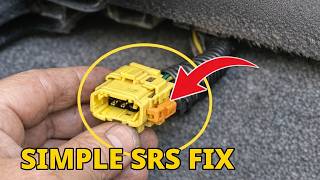
- Damaged under-seat wiring harness (Very Common) — Constant seat movement chafes and breaks wires under the driver's or passenger's seat. This is the most frequent cause, especially on Mitsubishi models with specific technical service bulletins for this issue.
- Faulty Occupant Classification Sensor (OCS) mat (Common) — The weight-sensing mat embedded in the passenger seat cushion fails or loses calibration, preventing accurate passenger identification.
- Faulty Occupant Classification Module (OCM) or software (Common) — The OCM fails internally due to electronic faults, moisture damage, or corrupt software (a known issue on Nissan and Hyundai vehicles). 🎬 Watch: Quick tip for resetting the Hyundai Occupant Detection System.
- Interference from objects under the seat (Common) — Objects lodged under the passenger seat or bunched-up floor mats press against the weight sensor, causing the system to fail its zero-weight self-test.
- Loose or corroded electrical connectors (Less Common) — Connectors under the seat become loose or corroded from moisture, causing communication errors.
- Low vehicle battery voltage (Rare) — A failing battery or alternator drops system voltage, causing temporary communication errors between SRS modules.
Symptoms

- Airbag warning light is on — The primary symptom is the permanent illumination of the red airbag warning light on the dashboard.
- Erratic Passenger Airbag 'OFF' indicator — The passenger airbag 'OFF' light stays on when an adult is seated, stays off when empty, or flickers randomly during vehicle movement.
- 'Service Airbag System' message — Vehicles with digital driver information centers display a text warning alongside the airbag light.
Diagnostic Flowchart

Tap your situation to follow the diagnostic path that matches what you're seeing on this code.
Common Fixes & Costs
- Repairing the under-seat wiring harness — Parts: $10 - $30, Labor: $150 - $250, ~1.5 hr book time (Intermediate)
- Replacing the Occupant Classification Sensor (Seat Cushion) — Parts: $600 - $1200, Labor: $200 - $400, ~2.0 hr book time (Professional)
- Replacing the Occupant Classification Module (OCM) — Parts: $300 - $700, Labor: $150 - $300, ~1.5 hr book time (Professional)
- Replacing the entire under-seat wiring harness — Parts: $150 - $300, Labor: $200 - $350, ~2.0 hr book time (Intermediate)
- Resetting/Reprogramming the OCM or SRS Module — Parts: $0, Labor: $100 - $200, ~1.0 hr book time (Professional)
Used vs. New Parts: Buying Guide
When a used part is worth it: A complete seat assembly from a junkyard is a cost-effective way to replace a faulty occupant sensor mat, especially on older vehicles, provided the donor vehicle was not in a flood or major collision.
Donor-vehicle mileage cap: roughly under 80000 miles for the part to have meaningful remaining life.
Donor quality checklist:
- Verify the donor vehicle's VIN to ensure compatibility and check for open recalls.
- Inspect the part for water damage, corrosion, or physical stress.
- Match the part number exactly. SRS components are highly specific to model year and trim.
- Buy from a reputable auto recycler that offers a warranty.
Decision logic:
- If The fault is a broken wire. → Do not buy any parts. Repair the existing wiring harness.
- If The part is an electronic control module (OCM or SRS ECU). → Favor a new OEM part or a reset service for your original module. A used module requires expensive VIN programming by a dealer.
- If The part is the occupant sensor mat integrated into the seat cushion. → A complete, low-mileage used seat assembly is a viable alternative to an expensive new cushion from the dealer.
Warranty tradeoff: Used parts typically have a 30-90 day warranty. New OEM parts carry a 12-month/12,000-mile warranty but are the most expensive. Mail-in reset services often come with a limited lifetime warranty.
Worst-case if a used part fails: $300-800 if a used part is faulty or incompatible, requiring repeat labor and the purchase of a new part.
What Happens If You Wait — Timeline
- Immediate (0 seconds): The SRS module detects the fault during its key-on self-test. The airbag warning light illuminates, and the passenger airbag system is disabled. (MPG impact: 0%% · Added cost: $0)
- 0-12 months: The vehicle is driven with a known safety defect. In many states, the car will fail its annual safety inspection. (MPG impact: 0%% · Added cost: $50 - $200 in potential fines and re-inspection fees.)
- Ongoing: If the root cause is a chafing wire, continued seat movement causes other wires in the same harness to fail, adding more faults. (MPG impact: 0%% · Added cost: $100 - $500 in additional diagnostic time and complex wiring repairs.)
- The moment of a collision: A collision occurs. Because the system is disabled, the passenger airbag does not deploy, drastically increasing the risk of fatal injury. (MPG impact: 0%% · Added cost: Immeasurable. This represents the total failure of a critical safety system.)
Cost of Not Fixing It
- Immediate: Passenger airbag system is disabled. In a frontal collision, the passenger airbag will not deploy, drastically increasing the risk of serious or fatal injury. (Added cost: N/A)
- 0-12 months: Failure of mandatory state vehicle safety inspection in many states, preventing legal vehicle registration. (Added cost: $50 - $200 in fines and re-inspection fees.)
- Ongoing: Potential for increased liability in the event of an accident that causes injury to a passenger. (Added cost: Potentially thousands in legal fees or insurance penalties.)
- The moment of a collision:
Diagnosis Steps
- Read All Airbag System Codes
Use an advanced OBD-II scanner capable of reading SRS/airbag codes. Code B1558 tells you a fault is in the OCM. You must scan the OCM itself to find the specific underlying code (like B1556 for a seat sensor).
Tools: Advanced OBD-II Scanner (SRS capable) (Beginner) - Clear Objects and Visually Inspect Wiring
Remove any objects under the front seats. Move the seats all the way forward and back. Use a flashlight to inspect all visible wiring harnesses underneath. Look for pinched, stretched, chafed, or broken wires, especially on the harness that moves with the seat track.
Tools: Flashlight (Beginner) - Check Electrical Connectors
Turn the ignition OFF and disconnect the battery for 30 minutes. Check that all connectors under the seats are fully seated. Disconnect and reconnect them to ensure a good connection. Look for corrosion on the pins and clean if necessary.
Tools: Socket set (for battery terminal), Flashlight, Electrical contact cleaner (Intermediate) - Live Data Analysis for Seat Sensors
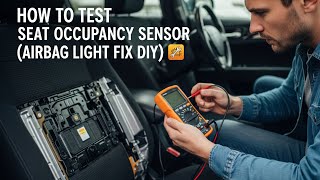
Using an SRS-capable scan tool, access the live data stream for the OCM. Monitor the 'Passenger Seat Weight Sensor' PID. With an empty seat, the value must be stable near 0.0 lbs. Place a 30 lb weight on the seat; the reading must reflect this accurately. Unstable readings indicate a faulty sensor mat.
Tools: Advanced OBD-II Scanner (SRS capable), 30 lb test weight (Advanced) - Test the Seat Position Sensor Circuit
If a secondary code points to a seat position sensor, check for continuity. Disconnect the battery, SRS-ECU, and sensor. Use a multimeter to check for continuity (less than 2 ohms) on the signal and ground wires. Check for a short to ground by measuring resistance between each wire and a clean chassis ground (should read OL).
Tools: Multimeter, Vehicle-specific wiring diagram (Advanced) - Perform OCM Calibration (Re-Zeroing)
If a new OCM or sensor is installed, or if the system lost calibration (Code B1BA8), it must be reset. Use a high-end scan tool and specific weights (e.g., 66 lbs for Mitsubishi) to calibrate the passenger seat sensor following on-screen instructions.
Tools: Advanced Scan Tool with calibration functions, Calibrated weights (Advanced) - Test the CAN Bus Communication Lines
Turn the ignition off and disconnect the battery. Set your multimeter to Ohms. At the OBD-II port, measure resistance between Pin 6 (CAN-H) and Pin 14 (CAN-L). A healthy network reads 60 Ω. A reading of 120 Ω indicates a break in the circuit; near 0 Ω indicates a short.
Tools: Multimeter (Advanced) - Isolate the Faulty Module
If a CAN bus fault is detected, isolate the faulty module. Using a wiring diagram, unplug modules on the SRS CAN bus one by one, re-testing the resistance each time. When resistance returns to normal, the last module unplugged is the source of the short.
Tools: Multimeter, Vehicle-specific wiring diagram (Professional)
When This Code Triggers (Freeze-Frame Conditions)
- System State: Key-On, Engine Off (The SRS module performs a self-test every time the ignition is turned to the 'ON' position.)
- Time After Key-On: 0-7 seconds (The fault is detected during the initial system check, causing the airbag light to remain illuminated.)
- Battery Voltage: 11.5V - 14.5V (The code sets during normal operating voltage; low battery voltage during startup can trigger spurious communication faults.)
- Vehicle Speed: 0 mph (The fault is most often registered while the vehicle is stationary during the startup self-diagnostic sequence.)
Related Codes
- B1556 — Indicates a 'Driver's Seat Slide Sensor Malfunction' on Mitsubishi vehicles. B1558 is the messenger code, while B1556 is the specific fault stored in the OCM.
- B1B8D, B1B8C, B1B8E — Specific electrical fault codes stored within the Mitsubishi OCM for the driver's seat slide sensor (Open Circuit, Performance, Short Circuit).
- B1BA8 — Means 'System Out of Calibration'. Appears with B1558 if the occupant sensor mat has been replaced or disturbed. Requires a scan tool calibration procedure.
- B1527 / B1528 — Seat belt buckle switch codes. The wiring is routed in the same under-seat harness as the seat position sensor, so damage often triggers these alongside B1558.
Climate & Environmental Factors
- Extreme Cold: Low temperatures cause plastic wire insulation to become brittle, making wires susceptible to cracking when the seat is adjusted. It also causes electrical connectors to contract, leading to intermittent open circuits.
- High Humidity / Moisture: Moisture from spills or open windows penetrates sensor mats and connectors, causing corrosion and short circuits. Salt air in coastal areas accelerates this corrosion.
- Extreme Heat: Prolonged exposure to high interior heat degrades wire insulation over time, causing it to harden, crack, and expose the underlying wire to shorts.
How to Talk to a Mechanic About This Code
Say this: "I have an airbag light on and my scanner shows code B1558. I need to schedule a diagnostic appointment. I'd like you to use a scanner that can read the specific codes from the Occupant Classification Module, not just the main SRS computer. Please also check for any technical service bulletins related to this code."
This language shows you understand B1558 is a general code and the real fault is stored in a sub-module. It directs the technician to perform the correct diagnostic steps and prevents them from replacing the wrong parts.
Avoid saying:
- 'My airbag light is on, can you just fix it?'
- 'I think I need a new airbag.'
- 'Just do whatever it takes to turn the light off.'
Questions to ask before authorizing the repair:
- What was the specific code stored in the Occupant Classification Module (OCM)?
- Did you inspect the wiring harness under both front seats for damage?
- If a part needs to be replaced, will it require calibration afterward, and is that included in the quote?
- Can you show me the broken wire or the faulty part before I approve the repair?
Where to Take It: Dealer vs Independent vs Chain
- Dealer:
Recommended if calibration is needed. The dealer is best equipped for the software and calibration procedures required after replacing a sensor or module.
Best for: Vehicles under warranty or subject to a recall/TSB for this issue., Complex repairs requiring OCM calibration or module programming.
Downsides: Highest labor rates and part costs., May default to replacing an entire expensive assembly when a wiring repair would suffice. (Typical cost: +50% vs. baseline) - Independent Shop:
Good fit, but you MUST verify they have a professional-grade scanner that can read SRS sub-modules and perform OCM calibration before you let them work on the car.
Best for: Out-of-warranty vehicles where the cause is likely a broken wire., Shops that specialize in your vehicle's make or in diagnostics.
Downsides: May not have the advanced scanner needed to read OCM codes or perform mandatory calibration., Quality and expertise vary widely. (Typical cost: +0% vs. baseline) - Chain Shop:
AVOID. B1558 diagnosis requires specialized knowledge and tools rarely found at chain shops. The risk of misdiagnosis is very high.
Best for: Not recommended for this type of repair.
Downsides: Technicians lack specialized training or equipment for SRS diagnostics., High pressure to sell parts leads to misdiagnosis and unnecessary replacement of expensive components. (Typical cost: -10% vs. baseline)
When to Walk Away From the Repair
If the estimated repair cost for the airbag system exceeds 50% of the car's private-party value, seriously consider selling the car as-is or trading it in.
- Car worth $4000, fix is $2200: Walk away. The repair cost is over half the car's value. It is not economically sensible to proceed.
- Car worth $12000, fix is $350: Fix it. This is a low-cost wiring repair well below the threshold and essential for safety.
- Car worth $5000, fix is $2200: Borderline, likely a walk away. For a car of this value, a repair this expensive is a poor investment.
What Scan Tool You Need for This Code
Minimum: A scanner that can read and clear SRS/Airbag codes. A basic engine code reader will NOT work.
A basic scanner cannot see the SRS module. For B1558, you must have a scanner that accesses the Occupant Classification Module (OCM) to read the specific underlying fault code.
Budget: BlueDriver Pro (~$100) — Reads and clears SRS/Airbag codes on most major brands. Connects to your smartphone and shows the specific OCM code, which is the essential first step.
Mid-range: Foxwell NT630 Plus / NT510 Elite (~$150) — Reads and clears SRS codes and supports bi-directional controls. The NT510 Elite may include the OCM re-zero/calibration function for some makes.
Professional: Autel MaxiCOM MK808 / MK808BT (~$450-600) — Full bi-directional control. Reads specific OCM codes, views live sensor data, and performs the critical OCM calibration/re-zero procedure after a sensor or module is replaced.
Rent vs buy: For a one-time diagnosis, use an auto parts store 'loan-a-tool' program where you buy the tool and return it for a refund. Ensure the tool you borrow is specified to read SRS/Airbag systems, like an Innova 5160RS or better.
How to Clear the Code After You Fix It
- Ensure the physical fault (e.g., broken wire, faulty sensor) has been properly repaired.
- Reconnect the vehicle's battery if it was disconnected.
- Use an SRS-capable OBD-II scan tool to connect to the Airbag Control Module.
- Select the function to 'Clear DTCs' or 'Erase Codes'. The code must be cleared with a scanner; it will not clear on its own.
Drive cycle (~5 minutes): A specific drive cycle is not required. After clearing the code, turn the ignition off, wait 10 seconds, then turn the ignition back to 'ON'. The airbag light should illuminate for 6-7 seconds and turn off. If it stays on, the fault remains.
Watch out for:
- Using a basic OBD-II scanner that only reads engine codes; it cannot communicate with the SRS module.
- Disconnecting the battery will not clear SRS fault codes.
- Clearing the code without fixing the physical problem causes the code to return immediately.
Will This Fail Emissions / State Inspection?
No — by itself this code doesn't fail OBD inspection (but it can keep readiness monitors from setting, which causes a separate fail).
- California: An airbag light will NOT cause a failure of the California Smog Check, as the inspection is for emissions systems only.
- New York: An illuminated airbag warning light is noted during the safety inspection, but it is an advisory only and not grounds for rejection.
- Texas: As of 2025, most non-commercial vehicles are exempt from the annual safety inspection. An airbag light will not cause a failure.
- Pennsylvania / Virginia: In states with comprehensive annual safety inspections, an illuminated airbag light is a critical safety defect and results in an automatic failure.
Most Commonly Affected Vehicles
- Mitsubishi Outlander Sport / RVR (2011-2020) — Subject to TSB TIN-20-52A-002 for damaged driver's seat slide sensor harnesses causing B1558 and B1556. An improved harness (Part No. 98864W000P) fixes this.
- Mitsubishi Lancer (2008-2017) — Damaged wiring under the driver's seat is a very common cause of an intermittent or constant airbag light.
- Mitsubishi Outlander (2007-2022) — Prone to issues with the passenger occupant sensor mat and requires specific calibration procedures when components are replaced.
- Mitsubishi Galant (2004-2012) — The OCM requires calibration and triggers the B1558 fault. The airbag module part number is often 8635A040 or MR587491.
- Hyundai / Kia Sonata, Santa Fe, Optima, Forte (2006-2018) — Widely known for OCS sensor mat failures. Repair requires replacing the entire seat cushion at a high cost, often exceeding $1,200.
- Nissan / Infiniti Altima, Sentra, Rogue, Versa (2013-2020) — Subject to TSB NTB19-071D and recall 16V244000 for OCS faults (Code B00A0-00). The fix requires reprogramming or replacing the OCS control unit, not the sensors.
- Subaru Outback, Legacy (2020-2022) — Under safety recall WRA-24 (NHTSA ID: 24V227) due to defective ODS sensors that short circuit. The remedy is a free dealer replacement of all four sensors.
- BMW 3-Series, 5-Series, X3, X5 (E-chassis) (2000-2013) — Extremely common issue with the passenger seat occupancy mat sensor, triggering a 'Restraint Systems Faulty' message.
- Chevrolet / GMC Tahoe, Yukon, Silverado, Sierra (2007-2014) — Widely known for broken seat position sensor wires under the driver's seat that cause an airbag light.
Manufacturer-Specific Notes
- Mitsubishi: B1558 almost always points to another code stored in the OCM. Per TSB TIN-20-52A-002, the cause is frequently a broken wire in the driver's seat harness, even though the OCM relates to the passenger seat.
- Nissan / Infiniti: A similar fault (code B00A0-00) is caused by an internal failure of the OCS control unit or software, not the seat sensor mat. Mechanics often waste money replacing seat sensors when the module is the culprit.
- Hyundai / Kia: Widespread failures of the OCS sensor mat are common. Because the sensor is integrated into the seat cushion, the official repair is replacing the entire bottom seat assembly, which is extremely expensive.
- BMW / Mini: The passenger seat occupancy mat has a high failure rate. Owners frequently install a 'bypass emulator' to send a constant 'seat occupied' signal, turning off the light but forcing the airbag to deploy in all crashes.
- Subaru: A major safety recall (WRA-24) was issued for 2020-2022 Outback and Legacy models for defective ODS sensors that short-circuit and disable the passenger airbag.
Real Owner Stories
2014 Mitsubishi Outlander Sport - The Classic Broken Wire Fix
Airbag light came on intermittently at 85k miles, then stayed on permanently. Scan tool showed codes B1558 and B1556.
What they tried:
- Initially took it to the dealer, who wanted $160 for diagnosis. Owner declined.
- Reset the code, but it came back immediately.
- Inspected wiring under the driver's seat and found a broken wire in the main harness.
Outcome: Owner repaired the single broken wire using a butt connector and heat shrink. The codes were cleared and did not return. Total cost was less than $10 for repair materials.
Lesson: On a Mitsubishi with B1558/B1556, the first check is the wiring harness under the driver's seat. Constant seat movement breaks these wires. A simple wiring repair solves the problem without new parts.
2017 Hyundai Santa Fe - The Expensive Seat Cushion Failure
Airbag light came on. Dealer diagnosed a failed Occupant Classification System (OCS) sensor mat in the passenger seat.
What they tried:
- Dealer quoted $2,100 for the repair.
- The owner debated repairing versus selling the vehicle due to the high cost.
Outcome: The repair requires replacing the entire lower seat cushion assembly, as the sensor is integrated and not sold separately. The owner paid the high repair cost to pass state inspection.
Lesson: On many Hyundai and Kia vehicles, a faulty occupant sensor requires replacing the entire seat cushion. Always get a second opinion, but be prepared for a quote exceeding $1,500.
2015 Nissan Altima - A Story of Misdiagnosis
SRS airbag light came on. The car had not been in an accident.
What they tried:
- Took it to the Nissan dealer. They quoted $3,000 to replace the airbag system components.
- Owner sought a second opinion from an independent shop.
Outcome: The independent technician found a dirty electrical connector under the passenger seat. They cleaned the connector, cleared the code, and the light stayed off. The final bill was $300 for diagnostic labor.
Lesson: Never approve a multi-thousand dollar repair without a definitive diagnosis. A simple issue like a loose or corroded connector is a common cause for SRS faults and must be checked first.
2013 Nissan Altima - The Module, Not the Sensor
Airbag light was on, and a scan tool showed code B00A0-00 (Nissan's equivalent of an OCS fault).
What they tried:
- Owner assumed it was the passenger seat weight sensor and replaced it. The code would not clear.
- Tried to perform the 'zero point calibration', but the procedure failed every time.
Outcome: The owner found Nissan TSB NTB19-071D, explaining the issue is an internal failure in the OCS control module, not the sensor mat. The owner swapped the OCS module with a junkyard unit, allowing the system to calibrate.
Lesson: On modern Nissans, OCS faults are often caused by the control module or software, not the seat sensor. Always check for TSBs related to your specific code to avoid wasting money on the wrong parts.
How to Prevent This Code From Triggering
- Avoid storing items under the front seats. (Daily habit) — Objects roll under the seat, damaging sensitive connectors, snagging on wires, and causing them to break.
- Be mindful when adjusting seats. (Every time seat is moved) — Avoid slamming the seat to its limits. Repeated stress is the primary cause of wire fatigue in the harness.
- Protect seats from moisture. (As needed) — Spilling a drink on the passenger seat destroys the sensitive electronic occupant sensor mat, leading to an expensive repair.
- Secure under-seat wiring. (Once, or after any repair) — Use zip ties to secure the harness to the seat frame, ensuring enough slack for full seat movement to prevent snagging.
Frequently Asked Questions
Is it safe to drive with a B1558 code?
No. The code indicates the passenger airbag system is disabled. In an accident, the passenger airbag will not deploy, drastically increasing the risk of severe injury. Have the vehicle serviced immediately.
What are the most common mistakes when diagnosing a B1558 code?
The biggest mistake is replacing the expensive main SRS-ECU instead of scanning the OCM sub-module for the true fault. Another common error is replacing the entire seat track assembly when only a single wire needs repair.
Can I pass a state inspection with the airbag light on?
States with rigorous safety inspections (like NY, PA, and VA) will automatically fail a vehicle with an illuminated airbag light. States that only perform emissions testing may pass it, but driving remains unsafe.
Can I use a seat from a junkyard to fix the airbag light?
Yes, a used seat assembly is a cost-effective way to replace a faulty occupant sensor mat. However, you must ensure exact part number compatibility. The system will still require professional calibration after installation.
What is an OCS emulator or bypass module, and is it safe?
An OCS emulator forces the passenger airbag to remain armed at all times, turning off the warning light. While it bypasses the fault, it is dangerous because the airbag will deploy even if the seat is empty or holds a child seat. This is not a recommended repair.
My airbag light came on after the passenger seat got wet. Could that be the cause?
Yes. The occupant classification sensor is a sensitive electronic mat inside the seat cushion. Moisture from a spill or open window can short out the sensor, causing permanent damage and triggering a fault.
Will clearing the code fix the problem?
No. B1558 indicates a hard fault, meaning a component has failed or lost communication. Clearing the code only turns the light off temporarily until the system runs its next self-test.
My mechanic says I need a new seat cushion assembly. Is that true?
Often, yes. On many vehicles (especially Hyundai and Kia), the occupant sensor mat is integrated into the lower seat cushion and cannot be purchased separately. The entire cushion assembly must be replaced, driving up repair costs.
Key Takeaways
- Code B1558 is a Mitsubishi-specific pointer code indicating a fault in the Occupant Classification Module (OCM), requiring an advanced scanner to read the underlying sub-code.
- The most frequent cause of B1558 on Mitsubishi Outlander and Lancer models is a broken wire in the driver's seat harness, fixable for under $30 in parts.
- Driving with an active B1558 code is dangerous because it completely disables the passenger airbag system, leaving occupants unprotected in a crash.
- Never replace expensive seat cushions or airbag modules without first verifying the under-seat wiring and checking for manufacturer Technical Service Bulletins (TSBs).
Helpful Videos

Shop the Parts Behind B1558
Below are the parts most often responsible for code B1558, ranked by how frequently each one is the actual culprit (per the diagnosis above). Tap any to see what we have for your vehicle.


The information in this article is provided for general reference and educational purposes only. Vehicle specifications, procedures, and part compatibility can vary by production date, trim level, and region. Always consult your vehicle's factory service manual and verify part numbers before purchasing or performing repairs. Safety-critical components such as airbags, seat belts, and braking systems should be installed by a qualified professional.
- 🧭 Diagnostic Flowchart
- 🎬 Helpful Videos
- 🛍️ Shop This Part
- What Does B1558 Mean?
- Can I Drive With B1558?
- Common Causes
- Symptoms
- Common Fixes & Costs
- Used vs. New Parts: Buying Guide
- What Happens If You Wait — Timeline
- Cost of Not Fixing It
- Diagnosis Steps
- When This Code Triggers (Freeze-Frame Conditions)
- Related Codes
- Climate & Environmental Factors
- How to Talk to a Mechanic About This Code
- Where to Take It: Dealer vs Independent vs Chain
- When to Walk Away From the Repair
- What Scan Tool You Need for This Code
- How to Clear the Code After You Fix It
- Will This Fail Emissions / State Inspection?
- Most Commonly Affected Vehicles
- Manufacturer-Specific Notes
- Real Owner Stories
- 2014 Mitsubishi Outlander Sport - The Classic Broken Wire Fix
- 2017 Hyundai Santa Fe - The Expensive Seat Cushion Failure
- 2015 Nissan Altima - A Story of Misdiagnosis
- 2013 Nissan Altima - The Module, Not the Sensor
- How to Prevent This Code From Triggering
- Frequently Asked Questions
- Is it safe to drive with a B1558 code?
- What are the most common mistakes when diagnosing a B1558 code?
- Can I pass a state inspection with the airbag light on?
- Can I use a seat from a junkyard to fix the airbag light?
- What is an OCS emulator or bypass module, and is it safe?
- My airbag light came on after the passenger seat got wet. Could that be the cause?
- Will clearing the code fix the problem?
- My mechanic says I need a new seat cushion assembly. Is that true?
- Key Takeaways
- 🎟️ Get 5% Off