

Ultimate Guide to OBD-II Code B1562: Door Ajar Circuit Failure & Manufacturer Variations
The Definitive Resource to Diagnose, Understand, and Fix Code B1562
- Verify the B1562 definition for your specific vehicle first; for Suzuki, Hyundai, Kia, Dodge, Chrysler, and Fiat, this code points to fuel senders, temp sensors, or antennas, not doors.
- For Ford, GM, and VW vehicles, a faulty door latch switch or broken door jamb wiring causes over 90% of B1562 codes.
- Use an OBD-II scanner with Body Control Module (BCM) live data to instantly identify which specific door circuit is reading 'Open'.
- Never replace the Body Control Module (BCM) for a B1562 code until you have physically tested the door switch, wiring harness, and connectors for shorts to ground.
- Fix a B1562 'Door Ajar' fault within 48 hours to prevent interior lights from completely draining and permanently damaging your 12V battery.
What Does B1562 Mean?
B1562 indicates your vehicle's Body Control Module (BCM) is receiving a persistent signal that a door is open when it is securely closed. The BCM interprets an abnormal voltage reading—or lack thereof—from a specific door switch circuit as a fault. While this guide primarily addresses the 'Door Ajar' definition, this code has vastly different meanings for brands like Suzuki, Hyundai, and Dodge, making vehicle-specific verification your crucial first step.
Technical definition: The SAE/ISO definition for B1562 is not standardized and varies critically by manufacturer. For Ford, GM, and VW vehicles, it is defined as 'Door Ajar Circuit Short to Ground'. For Suzuki, it means 'Outside Air Temperature Sensor Circuit Malfunction'. 🎬 See how to diagnose the Suzuki-specific air temperature sensor fault. For Hyundai and Kia models, it indicates a 'Fuel Sender Error' or 'Lost communication with keyless start control module'. For Dodge, Chrysler, and Jeep, it relates to a 'Checksum Data from RF Transmitter' issue or a 'GPS Antenna' fault. Always confirm the definition for your exact year, make, and model using a professional scan tool.
Can I Drive With B1562?
Yes. Driving with code B1562 is mechanically safe, but presents significant annoyances and a tangible risk to your battery. The constant 'door ajar' warning chime is highly distracting, and interior lights that refuse to turn off drain a healthy battery in 4-6 hours, leaving you stranded. Repeatedly draining the battery shortens its lifespan, leading to a $150-$350 replacement cost.
Common Causes
- Faulty or Sticking Door Ajar Switch (Very Common) — The switch, typically integrated into the door latch assembly, becomes contaminated with dirt, moisture, or simply wears out, sending a continuous 'open' signal (a short to ground). Failed window seals often allow water to drip directly onto the latch, accelerating this failure.
- Broken or Shorted Wiring in Door Jamb (Very Common) — The wiring harness passing through the flexible rubber boot between the door and the vehicle body is in constant motion. Over years of opening and closing the door, these wires fatigue, break, or lose their insulation, causing a short to the chassis.
- Corroded Electrical Connectors (Common) — Water intrusion in the A-pillar kick panel or at the BCM connector corrodes the pins. This corrosion creates unintended electrical paths or high resistance, disrupting the signal from the door switch.
- Misaligned Door or Striker (Less Common) — A sagging door or a worn-out striker plate prevents the door from closing with enough force to fully actuate the plunger switch. This is a mechanical problem causing an electrical code.
- Faulty Aftermarket Alarm or Remote Start (Rare) — Improperly installed aftermarket systems often tap into the door trigger wires. A failing module or a poorly executed wiring splice back-feeds voltage or creates a false ground, triggering the code.
- Failed Body Control Module (BCM) (Very Rare) — An internal failure of the BCM's driver circuit that monitors the door switch causes it to misread the signal. Consider this only after exhaustively testing and ruling out the switch, wiring, and connectors.
Symptoms
- 'Door Ajar' Warning Light Stays On — The persistent warning light on the instrument cluster indicates a door is open even when all are shut.
- Interior Dome/Puddle Lights Stay On — The vehicle keeps the courtesy lights illuminated, leading to rapid battery drain.
- Constant or Intermittent Warning Chime — The vehicle sounds an audible alert to warn of the 'open' door while driving.
- Automatic Door Locks Malfunction — The system prevents you from locking the doors with the key fob or fails to auto-lock when you begin driving.
- Factory Alarm Randomly Triggers — If the vehicle is locked and the faulty circuit sends an 'open' signal, the anti-theft system interprets this as a break-in.
- Accessory Delay Feature Inoperative — The radio turns off immediately when the ignition is turned off, rather than waiting for a door to open.
- BCM Live Data Shows 'Open' Status (scan-tool only — no driver-felt sign) — A scan tool viewing BCM live data shows the status of the specific door switch as 'Open' when physically closed.
Common Fixes & Costs
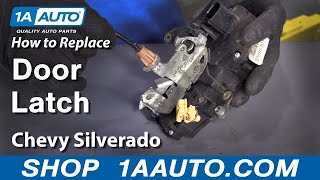
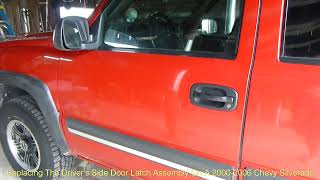
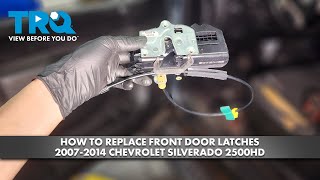
- Replace Door Latch Assembly
— Parts: $110-$250, Labor: $150-$250, ~1.2 hr book time
(Intermediate)
Ford F-150 (2009-2014, Driver Side): OEM 9L3Z-5421813-A (Alt: Dorman 937-678)
Chevrolet Silverado 1500 (2007-2013, Driver Side): OEM 22862028 (Alt: ACDelco 22862028) - Repair Broken Wire in Door Jamb — Parts: $5-$15, Labor: $125-$350, ~1.5 hr book time (Advanced)
- Clean and Lubricate Door Latch — Parts: $10-$20, Labor: $0, ~0.1 hr book time (DIY)
- Replace Fuel Level Sender (Hyundai/Kia)
— Parts: $60-$150, Labor: $150-$250, ~1.5 hr book time
(Intermediate)
Hyundai Sonata (2011-2015): OEM 94460-3Q000 (Alt: Dorman 911-050) - Replace Ambient Air Temp Sensor (Suzuki)
— Parts: $20-$80, Labor: $50-$125, ~0.8 hr book time
(DIY)
Suzuki Grand Vitara (2006-2013): OEM 13650-52G00 (Alt: Duralast SU1484) - Clean or Repair BCM/Pillar Connector — Parts: $15-$30, Labor: $100-$200, ~1 hr book time (Intermediate)
- Replace Body Control Module (BCM) — Parts: $300-$700, Labor: $150-$400, ~2 hr book time (Professional)
DIY vs Professional
- Clean and Lubricate Door Latch 🟢 Beginner
Tools: Aerosol lubricant, electrical contact cleaner, rags. - Replace Ambient Air Temp Sensor (Suzuki) 🟢 Beginner
Tools: Basic socket/wrench set, trim removal tool. - Replace Door Latch Assembly 🟢 Beginner
Tools: Socket set, Torx bits, trim removal tools, flashlight. - Replace Fuel Level Sender (Hyundai/Kia) 🟢 Beginner
Tools: Socket set, screwdrivers, fuel pump lock ring tool. - Repair Broken Wire in Door Jamb 🟢 Beginner
Tools: Wire strippers, butt connectors or soldering iron, heat shrink tubing, multimeter, trim tools. - Replace Body Control Module (BCM) 🟢 Beginner
Tools: Professional diagnostic scan tool for programming, socket set, trim tools.
Used vs. New Parts: Buying Guide
When a used part is worth it: For a door latch assembly, buying used is rarely recommended. The internal switch is a primary wear item, and the labor to replace the assembly is significant. A used part carries a high risk of premature failure, forcing you to pay for the same labor twice.
Donor-vehicle mileage cap: roughly under 40000 miles for the part to have meaningful remaining life.
Donor quality checklist:
- Verify the donor vehicle was not in a side-impact collision.
- Avoid parts from regions with heavy road salt use, as corrosion is a key failure mode.
- Match the part number exactly, as internal wiring and connectors vary by model year and trim.
Decision logic:
- If The cost of a new OEM or quality aftermarket part is less than double the cost of labor → buy new. The warranty and peace of mind outweigh the small savings of a used part.
- If The vehicle is very old and has low value, and you are performing the labor yourself → a used part from a low-mileage, accident-free donor is a reasonable gamble.
- If The part has a known high failure rate (like Ford door latch switches) → favor a new part, as even a low-mileage used one is close to failure.
Warranty tradeoff: Used parts typically offer a 30-90 day warranty, which is not long enough for a wear-related failure to appear. New aftermarket parts offer a 1-year to lifetime warranty. OEM parts carry a 1-2 year warranty.
Worst-case if a used part fails: $200-$400 if a used part fails after installation, primarily due to repeated labor costs.
What Happens If You Wait — Timeline
- 0-48 hours: The 'Door Ajar' light and chime are a constant annoyance. Interior lights stay on, posing a high risk of a dead battery if the vehicle sits overnight. Doors fail to lock with the key fob. (MPG impact: 0%% · Added cost: $0 (unless the battery is drained))
- 1 week - 1 month: High probability of being stranded. The first complete battery drain occurs, requiring a jump start. Repeated deep-cycling of the battery shortens its lifespan. The factory alarm triggers randomly. (MPG impact: 0%% · Added cost: $150-$350 (Cost of a new battery if the original is damaged))
- 1-6 months: For 'Door Ajar' faults, the battery is ruined and requires replacement. For Hyundai/Kia variants, high risk of running out of fuel and needing a tow. For Suzuki, the A/C system remains inoperative. (MPG impact: 0%% · Added cost: $200-$500 (Cost of a tow, emergency fuel, or A/C misdiagnosis))
- 6+ months: A short to power damages the BCM driver circuit, turning a $15 wire repair into a $1,000+ BCM replacement. Corrosion at connectors spreads, affecting other systems sharing the harness. (MPG impact: 0%% · Added cost: $300-$1500+ (Risk of BCM damage or cascading electrical failures))
Cost of Not Fixing It
- 0-48 hours: Annoying chime and interior lights staying on, leading to significant battery drain. High risk of being stranded. (Added cost: $0 (unless the battery is drained completely))
- 1 week - 1 month: Repeated deep cycling shortens the battery's overall lifespan, necessitating premature replacement. Security issues arise as doors fail to lock properly. (Added cost: $150-$350 (for a new battery))
- 1-6 months: For manufacturer-specific variants, consequences include running out of fuel (Hyundai/Kia) or having an inoperative A/C system (Suzuki). (Added cost: $200-$500+ (cost of a tow, emergency fuel, or misdiagnosed A/C repairs))
Diagnosis Steps
- Identify the Faulty Door Circuit with Live Data
Use a scan tool with live data capability to view the status of each individual door switch (e.g., 'Driver Door: Open', 'Passenger Door: Closed'). This instantly tells you which circuit is causing the problem. If you lack a scan tool, sit in the car and push firmly inward on the latch area of each closed door to see if the light goes out.
Tools: OBD-II Scanner with Live Data (Intermediate) - Verify All Closures & Lubricate Latches
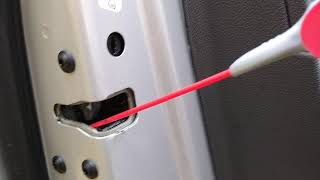
Firmly open and shut every door, the hood, and the trunk. Generously spray electrical contact cleaner followed by white lithium grease into each door latch mechanism. Cycle the doors 5-10 times to free a switch that is sticking mechanically.
Tools: Electrical Contact Cleaner, Lubricant (Beginner) - Inspect the Door Jamb Wiring Harness
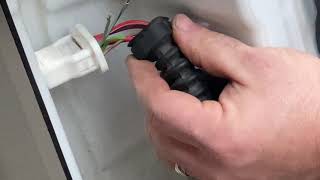
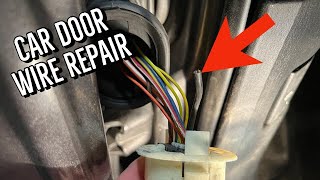
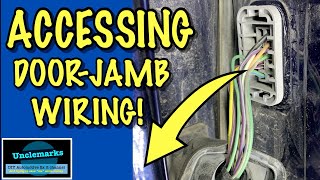
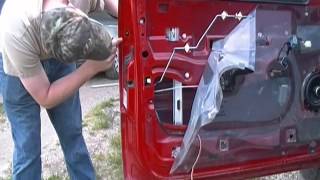
Peel back the rubber boot between the faulty door and the car's A-pillar. Carefully examine each wire for cracks, chafing, or complete breaks. Gently wiggle the harness while observing the dome light or scan tool data to see if the status flickers, indicating a broken wire making intermittent contact. 🎬 Watch: How to find and repair broken door jamb wires.
Tools: Flashlight, Trim Tool (Intermediate) - Test the Circuit Voltage
Access the wiring at the switch/latch connector. Using a multimeter set to DC Volts, probe the signal wire. With the door open, you should see a reference voltage (typically 5V or 12V). With the door closed, this voltage drops to near 0V. If the voltage is stuck at 0V even with the door open, you have a short to ground in the wiring.
Tools: Multimeter, Vehicle-specific wiring diagram (Advanced) - Test the Circuit for a Short to Ground
Disconnect the harness at the suspect door switch and at the BCM. Set your multimeter to continuity (ohms). Check for continuity between the signal wire pin (at the body-side connector) and a known good chassis ground. An open circuit (OL) is normal. A reading near 0 ohms confirms the wire is shorted to ground between the door and the BCM.
Tools: Multimeter, Vehicle-specific wiring diagram (Advanced) - Test the Switch Directly
If the wiring tests good, the fault is in the switch/latch assembly. Disconnect its connector. Use a multimeter to test for continuity across the switch pins while manually operating the latch mechanism. The reading changes from open (OL) to closed (~0 Ω) as you operate it. If the state doesn't change, replace the assembly.
Tools: Multimeter, Trim Removal Tools, Socket Set (Advanced) - Perform a Voltage Drop Test
Connect the black multimeter lead to the battery negative terminal and the red lead to the ground pin at the switch connector. With the switch closed/active, you should see less than 0.2V. A higher reading indicates high resistance in the ground path, which confuses the BCM.
Tools: Multimeter (Expert) - Analyze Scan Tool Freeze Frame Data
A professional scan tool shows 'freeze frame' data, a snapshot of the vehicle's conditions when the DTC set. If the code always sets when stationary at 0 mph, it points away from a wiring flex issue and towards a sticking switch or connector problem.
Tools: Professional OBD-II Scanner (Intermediate) - Advanced: Test Hyundai/Kia Fuel Sender Resistance
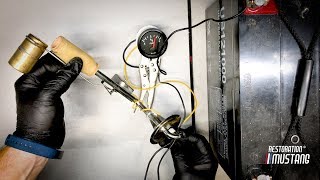
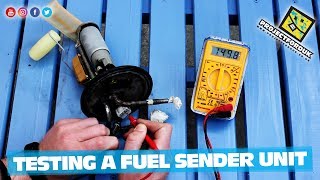
For Hyundai/Kia models where B1562 indicates 'Fuel Sender Error', test the sensor's resistance. Access the fuel pump connector under the rear seat. Disconnect it and measure resistance across the sender pins. The specification is approximately 8Ω when full and 200Ω when empty. A reading of OL indicates a failed sender.
Tools: Multimeter, Socket Set, Trim Removal Tools (Advanced)
When This Code Triggers (Freeze-Frame Conditions)
- Ignition Status: On/Run or Accessory (BCM is powered and polling sensors)
- Vehicle Speed: 0 mph (Code often sets when stationary)
- Battery Voltage: 11.5V - 14.5V (Normal operating voltage)
- Odometer Reading: Varies (Indicates vehicle mileage when fault occurred)
Related Codes
- B1563, B1564, B1565, B1566 — These codes specify the exact failure mode and location, such as B1565 ('Door Ajar Circuit Short To Battery') or B1566 ('Door Ajar Circuit Short To Ground'). Seeing one of these confirms the general area of the fault.
- B-codes for other doors — Look for codes like B1567 or B1571, which point to other doors (e.g., 'Right Rear Door Ajar'). A specific code for one door rules out a central BCM failure.
- U0140 — Means 'Lost Communication with Body Control Module'. If present with B1562, the BCM is offline or has a major power/ground issue. Diagnose U0140 first, as B1562 is just a symptom of the module being down.
- U0109 — On 2007-2013 GM Trucks, communication codes like U0109 ('Lost Communication with Fuel Pump Control Module') appear during a general electrical fault, pointing towards corroded grounds or network wiring issues.
Climate & Environmental Factors
- Cold Weather: Low temperatures reduce battery efficiency, making it highly susceptible to drain from lights left on by a B1562 fault. Cold makes wire insulation brittle and causes metal contacts to contract, leading to poor connections.
- Road Salt & Humidity: Corrosive brine wicks into wiring harnesses and connectors, especially in door jambs, causing severe corrosion that creates shorts or high resistance.
How to Talk to a Mechanic About This Code
Say this: "I have a B1562 code. On my [Ford/GM/VW], I believe it's a door ajar circuit fault, so please check the latch switch and door jamb wiring. On my [Suzuki], it is the ambient air temp sensor. On my [Hyundai/Kia], it is a fuel sender error. Please start your diagnosis there."
This immediately shows you've done research and directs the technician to the correct system for your specific vehicle, saving diagnostic time and preventing them from chasing the wrong problem.
Avoid saying:
- 'My door light is on, can you fix it?'
- 'My car is acting weird, just check it out.'
- 'I have a code B1562, just replace the BCM.'
Questions to ask before authorizing the repair:
- Did you verify the code's meaning for my specific make and model?
- Did you see the 'ajar' status change on the scan tool when wiggling the door wiring harness?
- Can you show me the old latch assembly and why it failed?
- Can you provide the test results that definitively rule out the switch, wiring, and connectors before replacing the BCM?
Where to Take It: Dealer vs Independent vs Chain
- Dealer:
Recommended for warranty work or for brands with ambiguous code definitions to ensure an accurate diagnosis.
Best for: Vehicles under warranty or covered by a recall/customer service program (common for Ford latch issues)., Complex brands like Dodge/Chrysler/Jeep where the code has multiple non-standard meanings requiring specific OEM software to interpret.
Downsides: Highest labor rates., Defaults to replacing a whole assembly when a simpler wire repair suffices. (Typical cost: +50% vs. baseline) - Independent Shop:
Best overall fit for the most common 'door ajar' version of this code, offering the best balance of cost and expertise.
Best for: Out-of-warranty Ford, GM, and VW vehicles with the common 'door ajar' fault., Diagnosing and repairing known issues like broken door jamb wires or replacing a latch assembly.
Downsides: Quality varies; ensure the shop has good reviews for electrical diagnostics., May not be aware of the non-door related definitions for Suzuki, Hyundai, etc. (Typical cost: +0% vs. baseline) - Chain Shop:
AVOID for initial diagnosis. The complexity and variability of code B1562 make it a poor fit for the chain shop model.
Best for: Potentially simple part swaps IF the diagnosis is already 100% certain (e.g., replacing a Suzuki ambient air temp sensor).
Downsides: High risk of misdiagnosis, especially with the manufacturer variations of this code., Technicians lack the specific electrical troubleshooting skills to trace a shorted wire. (Typical cost: -10% vs. baseline)
When to Walk Away From the Repair
If the estimated repair cost exceeds 40-50% of the car's private-party value (e.g., from Kelley Blue Book), pause and evaluate your options.
- Car worth $5000, fix is $450: Fix it. This is a common repair cost for a door latch replacement and is well below the threshold.
- Car worth $3000, fix is $1200: Get a second opinion. This quote is suspiciously high and likely for an unnecessary BCM replacement. If another shop confirms a simpler, cheaper fix, do it. If the BCM has truly failed, consider selling the car.
- Car worth $1500, fix is $500: Borderline. For a car this age, a $500 repair is significant. If the rest of the car is in good shape, it is worth it. If it has other pending issues, walk away.
What Scan Tool You Need for This Code
Minimum: A scanner that reads Body Control Module (BCM) codes and displays BCM **live data**.
A basic $20 engine code reader cannot read 'B' (Body) codes like B1562. A slightly better scanner pulls the code but lacks the essential live data function needed to see which specific door circuit is faulting, turning your diagnosis into a guessing game.
Budget: Ancel BD310 or similar Bluetooth scanner (~$60) — Connects to a smartphone app to read BCM codes and displays live data streams, allowing you to see the 'Open/Closed' status of each door switch in real-time.
Mid-range: ThinkScan 662 or Foxwell NT510 Elite (~$150) — These handheld units offer full system diagnostics, including deep access to BCM live data and error codes across most makes. They provide a stable platform for pinpointing the fault.
Professional: Autel MaxiCOM MK808 or XTOOL D7 (~$400-550) — Offers full bidirectional control, comprehensive live data graphing, and OE-level diagnostics. This is professional-grade equipment for the serious DIYer.
Rent vs buy: Most auto parts store loaner tools are basic code readers that cannot access BCM live data, making them insufficient for this job. Buying a budget or midrange scanner with live data capability is a smart investment.
How to Clear the Code After You Fix It
- Use an OBD-II scan tool to clear the code from the BCM.
- Cycle the ignition off and on.
- Open and close the repaired door to confirm the 'Door Ajar' light extinguishes.
Drive cycle (~5 minutes): For a 'Door Ajar' fault, a formal drive cycle is not required. After clearing the code, operate the doors normally with the ignition on to verify the fix. The code will not return if the underlying electrical fault is resolved.
Readiness monitors affected: None
Watch out for:
- Simply disconnecting the battery fails to clear the code from the BCM's memory.
- The code returns immediately if the root cause (e.g., shorted wire, faulty switch) is not properly repaired.
Will This Fail Emissions / State Inspection?
No — by itself this code doesn't fail OBD inspection (but it can keep readiness monitors from setting, which causes a separate fail).
- California: This is a 'B' (Body) code and does not illuminate the Check Engine Light. It will not cause a failure of the OBD-II emissions inspection.
- New York: NYS inspections focus on safety and emissions. A B1562 code will not cause an emissions failure, but a door that physically cannot be secured fails the safety inspection.
- Texas: The OBD-II portion of the state inspection only fails for powertrain codes (P-codes) that command the Malfunction Indicator Lamp (MIL). B1562 will not cause a failure.
Most Commonly Affected Vehicles
- Ford F-150 (2004-2014) — Extremely common due to the door latch switch design. The 2009-2014 models are particularly known for wiring failures in the driver's side door jamb boot.
- Ford Edge, Explorer, Escape, Focus (2007-2015) — These models share similar latch assembly designs and are highly prone to the same internal switch failure. Many are covered by recalls or extended warranties.
- Chevrolet / GMC Silverado, Sierra, Tahoe, Suburban (2007-2013) — A very frequent issue on GMT900 platform trucks and SUVs. The Driver Information Center (DIC) specifies which door is at fault. The fix is replacing the door latch assembly.
- Volkswagen Jetta, Golf, Passat (2005-2011) — Caused by failing microswitches within the door lock module or cold solder joints on the module's circuit board. Replacement is the standard fix.
- Suzuki Grand Vitara, SX4 (2006-2013) — CRITICAL: On these vehicles, B1562 means 'Outside Air Temperature Sensor Circuit Malfunction'. Symptoms include a blinking A/C light and inaccurate temperature display.
- Hyundai / Kia Sonata, Genesis, Elantra (2011-2015) — CRITICAL: On these vehicles, B1562 means 'Fuel Sender Error', pointing to a faulty fuel level sensor in the gas tank. Diagnosis involves checking the sensor's resistance.
- Dodge / Chrysler / Jeep Various (Charger, Grand Cherokee, Ram) (2008-2016) — CRITICAL: This code is NOT related to doors. It indicates 'Checksum Data from RF Transmitter' (key fob issue) or 'GPS Antenna - Circuit Short to Ground'.
- Fiat 500, various (2012-2019) — CRITICAL: Similar to Chrysler, this code points to 'Gps Antenna - Circuit Short To Ground' or 'Circuit Short To Battery', related to the radio and navigation system.
Manufacturer-Specific Notes
- Ford: The door ajar switch is not sold separately; it is an integral part of the door latch assembly. Ford issued Customer Satisfaction Program 19N06 for this issue on many 2011-2016 models, offering free repairs at dealerships.
- Chevrolet / GMC: The switch is integrated into the latch assembly. While symptoms are identical, the code sometimes logs as B1325 or another body code, but the diagnosis and repair (latch replacement) remain the same.
- Volkswagen: The failure is a broken microswitch inside the door lock module. Specialists offer a repair service for the module's internal circuit board, which is cheaper than a full replacement but requires mailing the part out.
- Suzuki: B1562 is the 'Outside Air Temperature Sensor Circuit'. A key symptom is the 'Auto' A/C light blinking. A scan tool shows the ambient temperature reading as an illogical negative number (e.g., -40°F/C).
- Hyundai / Kia / Dodge / Chrysler / Jeep / Fiat: For this entire group, B1562 is a red herring if you are looking at doors. It points to completely unrelated systems like fuel senders, keyless entry modules, or GPS antennas. Verify the manufacturer-specific code definition immediately.
Real Owner Stories
2011 Ford F-150 at 115K miles
Driver's door ajar light and dome light stayed on intermittently in wet weather. The chime was constant while driving.
What they tried:
- Sprayed WD-40 into the latch assembly, providing a temporary fix.
- Replaced the entire driver's door latch assembly ($180 part), but the problem returned within a week.
Outcome: Inspected the wiring harness inside the rubber boot between the driver's door and the body. Found two wires with cracked insulation, including the black/violet ground wire. Repaired the broken wires with butt connectors and heat shrink tubing, permanently resolving the issue.
Lesson: Always inspect the door jamb wiring, a known weak point on F-150s, before spending money on parts. Wiggling the harness while watching the dome light confirms a wiring break.
2013 Chevy Silverado at 130K miles
The Driver Information Center displayed 'Driver Door Ajar', the dome light stayed on, and the doors would not auto-lock.
What they tried:
- Slamming the door repeatedly.
- Spraying lubricant into the latch, which had no effect.
Outcome: Purchased a new door latch assembly (ACDelco part #22862028) for $150. Replaced the assembly in about an hour following a video tutorial, immediately fixing all symptoms.
Lesson: On 2007-2013 GM trucks, this is a frequent failure of the switch integrated into the latch. If lubrication fails and wiring is intact, replacing the latch assembly is the direct fix.
2008 Suzuki Grand Vitara at 85K miles
Check engine light was on, the A/C system blew warm air, and the 'Auto' A/C light blinked. No door-related symptoms were present.
What they tried:
- Considered an A/C refrigerant service.
- Pulled code B1562 and mistakenly thought it meant a door issue.
Outcome: Discovered B1562 means 'Outside Air Temperature Sensor Circuit Malfunction' for Suzuki. Located the sensor behind the front bumper, found a rodent-chewed wire, and repaired it. The A/C system immediately began working correctly.
Lesson: Never assume the common definition of a code. Verifying the manufacturer-specific definition first saves you from a costly and incorrect diagnosis.
2012 Hyundai Sonata at 95K miles
The fuel gauge behaved erratically, showing empty right after a fill-up and causing the low fuel light to flash.
What they tried:
- A shop pulled code B1562 'Fuel Sender Error' and quoted over $700 to replace the entire fuel pump assembly.
Outcome: Sought a second opinion. The mechanic confirmed the fuel level sender was faulty but replaced only the sender unit ($90 part) instead of the entire pump. Total repair cost was under $300.
Lesson: For Hyundai/Kia, B1562 points to the fuel system. If a shop recommends replacing the entire fuel pump module, get a second opinion. The sender itself is often a separately available part.
How to Prevent This Code From Triggering
- Lubricate Door Latches and Hinges (Once per year (or every 15,000 miles)) — Use a silicone spray or white lithium grease on the latch mechanism to prevent the internal switch from sticking mechanically and reduce wear.
- Inspect Door Jamb Wiring Boot (Once per year) — Gently peel back the rubber boot between the door and the A-pillar to inspect wires for cracking or chafing. Catching damage early allows for a simple tape repair before the wire breaks.
- Treat Rubber Door Seals (Twice per year (spring and fall)) — Wipe down all rubber door seals with a silicone-based protectant. This keeps seals pliable, ensuring a tight seal against water intrusion that drips onto latch assemblies.
- Clean and Protect Door Jamb Connectors (Every 2-3 years, or if working in the area) — Disconnect the main harness in the door jamb, spray with electrical contact cleaner, and apply dielectric grease. This seals out moisture and prevents corrosion.
Frequently Asked Questions
What is the most common mistake when diagnosing B1562?
By far, the biggest mistake is assuming B1562 means 'Door Ajar' on all cars. Technicians waste countless hours checking door wiring on a Suzuki or Hyundai where the code points to the ambient air sensor or fuel tank. Always verify the code definition for your specific vehicle first.
Why does my car say a door is ajar when it's not?
This happens because the sensor detecting the door's position failed or its wiring is damaged. The car's computer receives a signal identical to an open door, usually a short circuit to ground.
I sprayed WD-40 in the latch and the light is still on. What's next?
Lubricant only fixes a mechanically sticking switch. If the problem persists, the fault is electrical. Inspect the wiring harness in the rubber boot between the door and the car body for broken wires.
Can I just remove a fuse to stop the chiming and turn off the light?
This is strongly discouraged. The fuse powering the door ajar circuit is often shared with critical body systems like power locks, windows, or the BCM itself. Pulling the fuse disables these functions and creates larger problems.
Will my battery die if the dome light stays on?
Yes, absolutely. A couple of interior bulbs drain a fully charged car battery overnight, especially in cold weather. Manually turn off the dome light override switch or remove the bulbs until you fix the issue.
How do you trick a door ajar sensor to turn the light off?
You can temporarily bypass the sensor by connecting or separating the two switch wires to simulate a 'closed' door, depending on the car's logic. This permanently disables the sensor, affecting the alarm system and accessory delays. The proper fix is repairing the actual fault.
Is replacing a door latch assembly a difficult DIY job?
It is an intermediate-level job requiring you to remove the interior door panel, disconnect electrical connectors, and unbolt the latch. It is highly achievable for a patient DIYer with a basic tool set and a vehicle-specific video guide.
A shop quoted me $1,200 to replace the BCM. Is this necessary?
It is highly unlikely, as wiring and switch failures account for over 95% of B1562 codes. A BCM is the absolute last resort after exhaustively testing the switch, wiring, and connectors. Always seek a second opinion from an auto electric specialist before authorizing a BCM replacement.
Key Takeaways
- Verify the B1562 definition for your specific vehicle first; for Suzuki, Hyundai, Kia, Dodge, Chrysler, and Fiat, this code points to fuel senders, temp sensors, or antennas, not doors.
- For Ford, GM, and VW vehicles, a faulty door latch switch or broken door jamb wiring causes over 90% of B1562 codes.
- Use an OBD-II scanner with Body Control Module (BCM) live data to instantly identify which specific door circuit is reading 'Open'.
- Never replace the Body Control Module (BCM) for a B1562 code until you have physically tested the door switch, wiring harness, and connectors for shorts to ground.
- Fix a B1562 'Door Ajar' fault within 48 hours to prevent interior lights from completely draining and permanently damaging your 12V battery.
Helpful Videos
Shop the Parts Behind B1562
Below are the parts most often responsible for code B1562, ranked by how frequently each one is the actual culprit (per the diagnosis above). Tap any to see what we have for your vehicle.

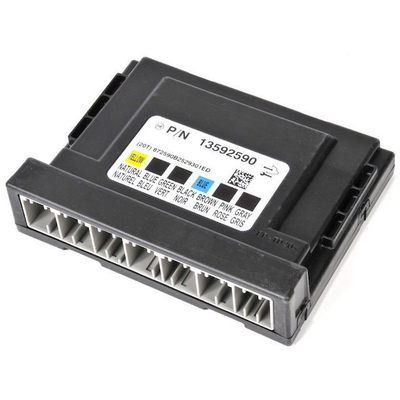



The information in this article is provided for general reference and educational purposes only. Vehicle specifications, procedures, and part compatibility can vary by production date, trim level, and region. Always consult your vehicle's factory service manual and verify part numbers before purchasing or performing repairs. Safety-critical components such as airbags, seat belts, and braking systems should be installed by a qualified professional.
- 🎬 Helpful Videos
- 🛍️ Shop This Part
- What Does B1562 Mean?
- Can I Drive With B1562?
- Common Causes
- Symptoms
- Common Fixes & Costs
- DIY vs Professional
- Used vs. New Parts: Buying Guide
- What Happens If You Wait — Timeline
- Cost of Not Fixing It
- Diagnosis Steps
- When This Code Triggers (Freeze-Frame Conditions)
- Related Codes
- Climate & Environmental Factors
- How to Talk to a Mechanic About This Code
- Where to Take It: Dealer vs Independent vs Chain
- When to Walk Away From the Repair
- What Scan Tool You Need for This Code
- How to Clear the Code After You Fix It
- Will This Fail Emissions / State Inspection?
- Most Commonly Affected Vehicles
- Manufacturer-Specific Notes
- Real Owner Stories
- 2011 Ford F-150 at 115K miles
- 2013 Chevy Silverado at 130K miles
- 2008 Suzuki Grand Vitara at 85K miles
- 2012 Hyundai Sonata at 95K miles
- How to Prevent This Code From Triggering
- Frequently Asked Questions
- What is the most common mistake when diagnosing B1562?
- Why does my car say a door is ajar when it's not?
- I sprayed WD-40 in the latch and the light is still on. What's next?
- Can I just remove a fuse to stop the chiming and turn off the light?
- Will my battery die if the dome light stays on?
- How do you trick a door ajar sensor to turn the light off?
- Is replacing a door latch assembly a difficult DIY job?
- A shop quoted me $1,200 to replace the BCM. Is this necessary?
- Key Takeaways
- 🎟️ Get 5% Off