

OBD-II Code B1570: Park Lamp Circuit, Telematics, or Immobilizer Malfunction
The Ultimate B1570 Guide: What it means, why it triggers, and how to fix it on any make
- Identify your vehicle's specific B1570 definition before diagnosing; it means a Uconnect fault on a 2021+ Chrysler, an SOS LED error on a Toyota, or a park lamp failure on older Fords.
- Fix B1570-93 on 2021+ Chrysler, Dodge, and Jeep vehicles by requesting a dealer-installed Telematics Box Module (TBM) software update per TSB 08-068-22.
- Resolve the B1570 'Red LED Error' on 2010-2020 Toyota and Lexus models by testing the overhead console SOS button assembly with a 3V power source.
- Repair older Ford and GM park lamp circuit faults by testing the headlight switch and verifying the park lamp relay coil resistance reads between 50 and 120 Ohms.
- Address B1570 immediately to restore critical safety systems, avoiding a $150+ traffic ticket for dead tail lights or a disabled automatic emergency SOS crash response.
What Does B1570 Mean?
B1570 is a manufacturer-specific code with multiple, completely different meanings. On modern Chrysler, Dodge, and Jeep vehicles, B1570 indicates a communication failure with the telematics (Uconnect) module or a fault with a USB port. On Toyota and Lexus vehicles, it specifically points to a 'Red LED Error' in the Safety Connect/SOS system. On many older Ford, GM, and other vehicles, it means the Body Control Module (BCM) detected a problem in the park lamp circuit, such as a faulty switch, wiring, or relay. For Hyundai/Kia, it relates to the auto light sensor, and for Subaru, it indicates a fault with the immobilizer antenna.
Technical definition: The SAE/ISO definition for B1570 is 'Park Lamp Input Circuit Malfunction', indicating the Body Control Module (BCM) detected an abnormal voltage or open circuit from the headlight switch's park lamp input. However, manufacturers assign it to wildly different systems. For modern Chrysler/Stellantis products, B1570-93 is 'USB Communication - No Operation' for the Telematics Box Module (TBM), while B1570-19 is 'USB Communication - Overcurrent'. For Toyota, it is 'Red LED Error' for the SOS system's indicator light. On Subarus, it is an 'Immobilizer Antenna' circuit fault.
Can I Drive With B1570?
Yes, But With Caution. Yes, you can drive with this code, but address it immediately. If the code relates to a lighting circuit, your parking lights, tail lights, or dashboard lights fail to illuminate, creating a significant safety hazard at night and risking a traffic ticket. If the code relates to the telematics system (common on Chrysler/Toyota), your SOS or emergency call system is disabled. In a crash, the vehicle cannot automatically call for help, delaying emergency response.
Common Causes
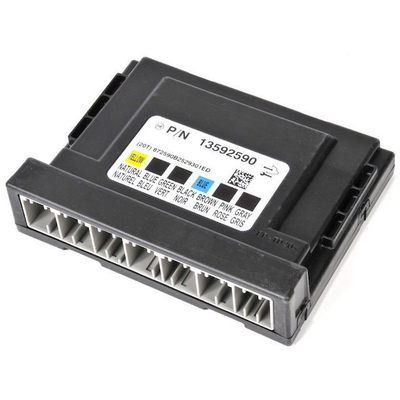
- Telematics Module Software Glitch (Chrysler/Toyota) (Very Common) — On modern Chrysler and Toyota vehicles, this code is frequently caused by a software bug in the Telematics Box Module (TBM) or DCM. A dealer-installed software update fixes this, as specified in numerous TSBs.
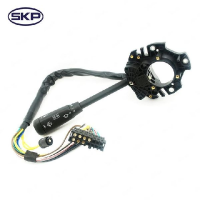
- Faulty Headlight Switch (Multifunction Switch) (Very Common) — For lighting-related faults on older vehicles, the switch on your steering column or dashboard is the most frequent point of failure. Internal contacts wear out, sending incorrect voltage signals to the BCM.
- Faulty Map Light / SOS Button Assembly (Toyota/Lexus) (Common) — On Toyotas, the B1570 'Red LED Error' is caused by a failure within the overhead console map light assembly, which houses the SOS button and its indicator LED.
- Failed Park Lamp Relay (Common) — A small relay acts as the switch between the low-power headlight switch and the high-power lights. If this relay fails, the lights stick on or fail to turn on at all.
- Corroded Wiring, Connectors, or Grounds (Common) — Wires, connectors, and ground points for the headlight switch, BCM, telematics module, or roof console fray, short to ground, or corrode. This creates high resistance and triggers the code across all definitions.
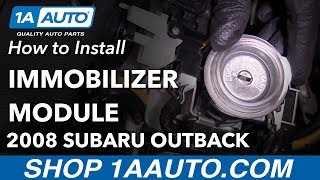
- Faulty Immobilizer Antenna (Subaru) (Less Common) — On Subaru models, this code points directly to a problem with the immobilizer antenna ring around the ignition switch, which is responsible for reading the chip in the key. 🎬 Watch: How to replace the Subaru immobilizer antenna module.
- Internal Short in a Bulb or Socket (Less Common) — A broken filament inside a dual-filament bulb (like a brake/tail light) shorts against the other filament, back-feeding voltage into the park lamp circuit and triggering the code.
- Failing Body Control Module (BCM) (Less Common) — The BCM itself fails, causing it to misinterpret signals and set the code. This is the last part to suspect after thoroughly checking all related wiring, switches, and components.
Symptoms
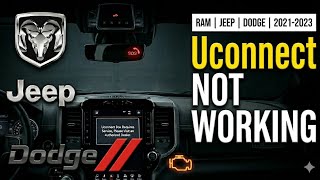
- 'Uconnect Box Requires Service' or SOS Light On — On affected Chrysler, Dodge, Jeep, and Toyota/Lexus models, a message appears on the infotainment screen or the red SOS light illuminates, indicating a fault in the telematics system.
- Parking lights / tail lights do not turn on — The amber and red marker lights on the outside of the car fail to illuminate when commanded by the switch.
- Parking lights / tail lights stay on and won't turn off — The parking lights and tail lights remain lit even when the switch is off, causing a parasitic battery drain.
- Vehicle fails to start and immobilizer light flashes — On affected Subaru models, a faulty immobilizer antenna prevents the car from recognizing the key, resulting in a no-start condition.
- Dashboard illumination is not working correctly — Dashboard backlighting tied to the park lamp circuit fails to turn on, flickers, or stays on.
- Check Engine Light or other warning lamp is on — The vehicle's computer illuminates a warning light on the dashboard to alert the driver of a detected fault.
Diagnostic Flowchart
Tap your situation to follow the diagnostic path that matches what you're seeing on this code.
Common Fixes & Costs
- Update or Replace Telematics Module — Parts: $0-$800, Labor: $150-$300, ~1.5 hr book time (Professional)
- Replace the Headlight Switch — Parts: $50-$150, Labor: $75-$125, ~1 hr book time (DIY)
- Replace Map Light / SOS Assembly (Toyota/Lexus) — Parts: $200-$400, Labor: $100-$150, ~1 hr book time (Intermediate)
- Replace the Park Lamp Relay — Parts: $10-$30, Labor: $0-$25, ~0.2 hr book time (DIY)
- Repair Wiring or Connector — Parts: $10-$30, Labor: $125-$250, ~1.5 hr book time (Intermediate)
- Replace Body Control Module (BCM) — Parts: $400-$700, Labor: $150-$200, ~2 hr book time (Professional)
Used vs. New Parts: Buying Guide
When a used part is worth it: For simple, non-programmable parts like a headlight switch, park lamp relay, or a map light assembly on an older vehicle, a used part from a reputable salvage yard offers significant savings with low risk.
Donor-vehicle mileage cap: roughly under 100000 miles for the part to have meaningful remaining life.
Donor quality checklist:
- Verify the part number matches exactly, as variations exist even within the same model year.
- For electronic parts, ask about the donor vehicle—avoid parts from flood or fire-damaged cars.
- Ensure the seller offers at least a 30-90 day warranty to protect against dead-on-arrival parts.
Decision logic:
- If The part is a programmable control module (BCM, Telematics Module) on a modern vehicle → Buy new OEM. Used modules are often VIN-locked and cannot be reprogrammed, making them useless.
- If The part is a simple switch or relay for a vehicle over 10 years old → Used or new aftermarket parts are both cost-effective and reliable options.
- If The price difference between a used part with a 90-day warranty and a new aftermarket part with a 1-year+ warranty is less than 25% → Buy new for the significantly longer warranty and peace of mind.
Warranty tradeoff: Used parts include a 30-90 day functional warranty. New aftermarket parts carry a 1-year to limited lifetime warranty. New OEM parts installed by a dealer carry a 12-month/12,000-mile warranty.
Worst-case if a used part fails: $200-$500 if a used part fails after installation, requiring repeat labor costs plus the cost of another replacement part.
What Happens If You Wait — Timeline
- Immediate: For a lighting fault: Tail lights fail, creating an immediate safety hazard and ticket risk ($150+). For an immobilizer fault: Vehicle is stranded, requiring a tow ($75-$150). For a telematics fault: 'Service Uconnect' appears; automatic crash response is disabled. (MPG impact: 0%% · Added cost: $75-$300)
- 1-7 Days: For a lighting fault (stuck on): A parasitic drain of over 50-85 milliamps begins. The battery dies overnight or after a weekend of sitting. (MPG impact: 0%% · Added cost: $0 (if caught immediately), plus inconvenience of a dead battery.)
- 1 week - 2 months: For a lighting fault (stuck on): Repeatedly jump-starting the vehicle or letting the battery go completely dead causes sulfation on the battery plates, permanently reducing its capacity. (MPG impact: 0%% · Added cost: $150-$350 for a new battery, plus the cost of the original repair.)
- 2+ months: Continued operation with an electrical issue leads to unpredictable behavior. Voltage spikes from improper jump-starts damage the BCM. Ignoring a telematics warning means driving without a critical safety feature. (MPG impact: 0%% · Added cost: $500-$1500+ if a sensitive module like the BCM is damaged.)
Cost of Not Fixing It
- Immediate: For lighting faults: Inoperative tail lights create a major safety hazard at night and result in a traffic ticket ($100-$250). For immobilizer faults: The vehicle will not start, requiring a tow ($75-$150). (Added cost: $75-$400)
- 0-1 Month: For lighting faults where lights are stuck ON: A parasitic battery drain kills the battery. Repeatedly draining a standard lead-acid battery permanently damages it, requiring replacement. (Added cost: $150-$350)
- Ongoing: For telematics faults (Chrysler/Toyota): The automatic SOS emergency call system is disabled. In a serious accident, the vehicle cannot automatically summon emergency services, delaying life-saving medical attention. (Added cost: Incalculable)
Diagnosis Steps
- Identify the Correct Definition for Your Vehicle
Before any diagnosis, understand what B1570 means for your specific Make, Model, and Year. A code on a 2010 Ford is for lighting; on a 2022 Chrysler, it is for the telematics system. Misunderstanding the definition is the #1 cause of misdiagnosis.
Tools: Smartphone or PC with internet access (Beginner) - Verify the Symptom
Based on the correct definition, verify the fault. If it's a lighting issue, test the lights. If it's telematics, note the SOS light status and any on-screen messages. If it's an immobilizer, check for a no-start condition.
Tools: None (Beginner) - Check for Technical Service Bulletins (TSBs)
For Chrysler and Toyota telematics issues, numerous TSBs exist. A TSB directs you to perform a software update, check a specific connector, or replace a part based on a known manufacturing defect. A dealer or professional technician has access to these documents.
Tools: Access to TSB database (Professional) - Check All Related Fuses and Relays
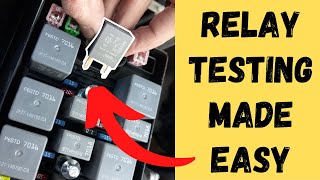
Check all fuses related to 'Lighting', 'BCM', 'TBM', 'Telematics', or 'DCM'. For lighting faults, locate the park lamp relay and swap it with an identical relay from a non-essential system (like the horn) to see if the problem moves. A bad relay is a common, cheap fix.
Tools: Fuse puller (Beginner) - Inspect Connectors and Wiring
Visually inspect the primary connectors. For lighting, check the headlight switch connector. For telematics, check the connectors at the Telematics/DCM module (often behind the radio or glovebox) and the overhead console. Look for corrosion, pushed-out pins, or signs of melting.
Tools: Trim removal tools, flashlight (Intermediate) - Pro Tip: Headlight Switch Voltage Drop Test
For lighting faults, use a multimeter to test the park lamp input wire at the BCM. With the switch ON, you should see close to battery voltage (12V). With the switch OFF, you should see 0V. A reading of 5-10V with the switch OFF indicates a short to power or a faulty switch sending a ghost signal. Conversely, a significant voltage drop (e.g., under 10V) when ON suggests high resistance in the switch or wiring.
Tools: Multimeter, wiring diagram (Advanced) - Pro Tip: Test the SOS LED Circuit (Toyota/Lexus)
For a B1570 'Red LED Error' on a Toyota, test the LED directly. Access the overhead console and disconnect the map light assembly connector. Using two 1.5V batteries in series to create 3V, apply power to the specified LED terminals (e.g., terminal 19 for power, 16 for ground on some RAV4s). If the LED doesn't light up, the map light assembly is faulty. If it does, the problem is in the wiring or the DCM module.
Tools: Two 1.5V batteries, wire leads, vehicle-specific terminal pinout (Advanced) - Advanced Test: Toyota DCM Voltage & Resistance Checks
At the DCM connector with ignition ON, check the SOS LED output pin (e.g., I135-11) to ground. It should read 1.0V - 8.5V for 2 seconds, then 0V. With ignition OFF and connectors disconnected, check resistance between the DCM and map light connectors on the signal wire; it must be below 1.0 Ω. Resistance from that same wire to body ground should be 10 kΩ or higher. Failure of these tests points to a wiring fault.
Tools: Multimeter, wiring diagram, pinout chart (Advanced) - Advanced Test: Subaru Immobilizer Antenna Resistance
Disconnect the immobilizer antenna connector at the ignition switch. Measure the resistance between the two terminals of the antenna itself. The specification is typically 6 - 10 Ω. A reading of infinity (OL) or significantly outside this range indicates a failed antenna coil.
Tools: Multimeter (Advanced) - Advanced Test: Relay Coil Resistance Check
For lighting faults, remove the park lamp relay. Use a multimeter to measure the resistance across the two coil terminals (usually 85 and 86). A typical 12V automotive relay should read between 50 and 120 Ohms. An open circuit (OL) or a dead short (near 0 Ohms) indicates a failed relay.
Tools: Multimeter, relay pinout diagram (Advanced) - Use a Bidirectional Scan Tool
An advanced scan tool is crucial for complex diagnostics. It commands the park lamps on/off to test the BCM output, reads live data from the telematics module to see its status, or checks the immobilizer key recognition status. This confirms if a control module is truly faulty.
Tools: Advanced bidirectional scan tool (Professional)
When This Code Triggers (Freeze-Frame Conditions)
- System State: Key-On or Ignition ON (The BCM or other master module runs a self-test or attempts to communicate with sub-modules (like Telematics or Immobilizer) immediately at key-on. A failure here sets the code instantly.)
- Component Activation: Headlight Switch moved to 'Park' or 'ON' (For lighting-related faults, the code triggers the moment the switch is activated and the BCM detects an incorrect voltage (short or open) on the park lamp circuit.)
- Battery Voltage: 11.5V - 14.5V (The fault typically sets during normal operating voltage. A low or high voltage condition sets other codes (like B1676) but is not the direct trigger for B1570 itself.)
- Vehicle Speed: 0 mph (Most variations of this code relate to component checks that occur before the vehicle is in motion, such as at startup or when activating lights while parked.)
Related Codes
- B1570-93 (Chrysler) — The '-93' means 'No Operation,' indicating a complete loss of communication with the Telematics Box Module (TBM). It triggers a 'Uconnect Box Requires Service' message and requires a software update.
- B1342 — This code means 'ECU is defective'. If B1342 appears alongside B1570, the Body Control Module itself is failing. If B1570 is the only code, the fault lies in the external circuit.
- B1676 — This code is for 'Battery Voltage Out of Range'. An unstable voltage supply from a failing battery or alternator causes electronic modules to set communication codes like B1570. Fix the charging system first.
- P1570 (VW/Audi/Honda) — This is a Powertrain code. On VW/Audi, it means 'Engine Start Blocked by Immobilizer'. On early Honda Hybrids, it means 'Battery Module Individual Voltage Problem'. The symptoms differ completely from a lighting or telematics issue.
Climate & Environmental Factors
- High Humidity / Water Intrusion: Moisture accelerates corrosion on connector pins, circuit boards, and chassis ground points. This corrosion creates unwanted resistance or shorts, triggering circuit fault codes.
- Extreme Cold: Cold temperatures make older plastic components and wire insulation brittle, increasing breakage risks. Mechanical contacts inside relays and switches become stiff, leading to intermittent operation.
- Road Salt (Winter Climates): Salt spray severely corrodes ground wires and connectors exposed to the elements, leading to electrical issues including B1570.
How to Talk to a Mechanic About This Code
Say this: "I have a B1570 code on my [Make, Model, Year]. Based on my research, this code means [CHOOSE ONE: a Uconnect telematics fault / a Toyota SOS 'Red LED' error / a Subaru immobilizer antenna fault / a park lamp circuit fault]. I need a diagnostic to confirm this and provide a repair estimate."
This shows the service advisor you are informed and prevents them from starting a generic diagnosis on the wrong system. It anchors the conversation around the correct fault.
Avoid saying:
- 'My check engine light is on.' (This is a Body code, not a CEL).
- 'The internet said it's the BCM, can you replace it?' (Diagnose first).
- 'Just fix whatever is wrong.' (Invites unnecessary up-sells).
Questions to ask before authorizing the repair:
- For Chrysler/Toyota: Did you check for TSBs related to B1570? Is a software update the first step?
- For Toyota: Did you test the LED in the overhead console directly?
- For Subaru: What was the resistance reading on the immobilizer antenna coil?
- For Lighting Faults: Did you test the switch and the relay before recommending a BCM replacement?
- What is the warranty on this specific repair, covering both parts and labor?
Where to Take It: Dealer vs Independent vs Chain
- Dealer:
REQUIRED for modern telematics software updates and immobilizer programming. For other faults, they are an expensive option.
Best for: Chrysler/Toyota telematics faults requiring TSB software updates., Subaru immobilizer issues requiring key programming., Vehicles still under warranty.
Downsides: Highest labor rates., May default to expensive module replacement without thorough wiring/software diagnosis. (Typical cost: +50% vs. baseline) - Independent Shop:
BEST FIT for lighting circuit faults. A good choice for hardware replacement, but confirm they handle required programming first.
Best for: Lighting-related B1570 faults on older Ford, GM, and other vehicles (switches, relays, wiring)., Out-of-warranty vehicles where the fault is a known mechanical part (e.g., Subaru immobilizer antenna replacement)., Diagnosing and repairing wiring issues.
Downsides: May not have the expensive, manufacturer-specific tools to perform software updates on telematics or body control modules., Quality varies; look for ASE certification and positive reviews. (Typical cost: +0% vs. baseline) - Chain Shop:
AVOID for diagnosing B1570. The complexity and multiple meanings of this code are a poor match for their business model.
Best for: Simple, unambiguous fixes like replacing a fuse or a standard relay.
Downsides: Technicians often lack the advanced electrical diagnostic skills for a complex code like B1570., High pressure to sell parts rather than perform nuanced diagnosis., Almost certainly cannot perform software updates or module programming. (Typical cost: -10% vs. baseline)
When to Walk Away From the Repair
If the estimated repair cost exceeds 40-50% of the car's private-party value, sell or trade it in instead of repairing.
- Car worth $3500, fix is $250: Fix it. A $250 repair for a faulty headlight switch on an older car is a small investment to keep a functional vehicle on the road.
- Car worth $22000, fix is $1100: Fix it. A $1,100 telematics module replacement is only 5% of the vehicle's value and restores a critical safety system.
- Car worth $4000, fix is $2200: Walk away. If a BCM failure and wiring issues total $2,200 (55% of the car's value), it is no longer economical to repair.
What Scan Tool You Need for This Code
Minimum: A scanner that reads manufacturer-specific Body ('B') codes and the Failure Type Byte (e.g., -93, -19). A basic engine-only code reader will not see this code.
A generic $20 scanner that only reads 'P' (Powertrain) codes shows 'No Codes Found'. Knowing the full B1570-XX code is essential for diagnosis on Chrysler, Dodge, and Jeep vehicles.
Budget: BlueDriver Pro / ANCEL BD310 (~$100) — Reads and clears manufacturer-specific Body codes, displays freeze-frame data, and shows live data from some modules. This confirms the code and its definition for your vehicle.
Mid-range: Innova 5610 / Foxwell NT510 Elite (~$300) — Offers bidirectional controls. This allows you to command the park lamps on/off from the tool to test the BCM and relay, or actively test components in the telematics system.
Professional: Autel MaxiCOM MK808 / XTOOL D7 (~$450-700) — Provides full bidirectional control, advanced coding, and programming functions. Necessary for professionals to program a new BCM, telematics module, or immobilizer keys.
Rent vs buy: Auto parts stores like AutoZone offer a loaner tool program for OBD-II scanners. You pay full price as a deposit and get a full refund upon return.
How to Clear the Code After You Fix It
- Use a quality OBD-II scan tool to clear the B1570 fault code from the Body Control Module.
- Disconnecting the negative battery terminal for 30 minutes also clears codes, but resets all vehicle modules, including radio presets and readiness monitors.
- Perform a complete drive cycle to allow vehicle systems to re-verify the repair and run readiness monitors.
Drive cycle (~30 minutes): A generic drive cycle includes: 1) Cold start (sit overnight). 2) Idle for 2-3 minutes with electrical loads on (A/C, defroster). 3) Drive for 15-20 minutes with mixed city (stop-and-go) and highway speeds (steady cruise at 55 mph for 5+ minutes). 4) Let the vehicle cool down completely.
Readiness monitors affected: Catalyst Monitor, Evaporative (EVAP) System Monitor, O2 Sensor Monitor, EGR System Monitor
Before emissions retest: drive at least 100 miles to fully set monitors.
Watch out for:
- Clearing codes with a scanner resets powertrain readiness monitors to 'Not Ready', causing an immediate emissions test failure.
- The code returns immediately if the underlying electrical or communication fault has not been properly fixed.
- Some modules, like a new Telematics module on a Chrysler, require a specific drive cycle (e.g., 20 minutes with good cell signal) to provision themselves after installation.
Will This Fail Emissions / State Inspection?
Yes — this code typically fails an OBD-II emissions inspection.
- California: While B1570 is a body code, if it illuminates the 'Check Engine' light, it triggers an automatic fail. Clearing the code resets readiness monitors. For a 2001+ vehicle, you are allowed only one 'Not Ready' monitor (typically EVAP) to pass.
- New York: NYS inspection fails a vehicle for an illuminated 'Check Engine' light. After clearing codes, 2001 and newer vehicles are allowed only one 'Not Ready' monitor to pass.
- Texas: In emissions-testing counties, an illuminated 'Check Engine' light is an automatic failure. After a repair and code clear, you must complete a drive cycle. 2001 and newer vehicles pass with one monitor 'Not Ready'.
Most Commonly Affected Vehicles
- Chrysler Pacifica, Grand Cherokee (2021-2026) — On these models, B1570-93 means 'USB Communication - No Operation' and points to a Telematics Box Module (TBM) failure. A dealer software update fixes this per TSBs S238A000018, 08-175-23, and 08-068-22.
- Dodge / Ram Durango, Ram 1500 (2021-2026) — B1570 indicates a loss of communication with the Uconnect Telematics Box Module. B1570-19 means 'USB communication over current', caused by an unsupported device plugged into a USB port.
- Toyota / Lexus RAV4, IS, and other models with Safety Connect (2010-2020) — B1570 is defined as 'Red LED Error' related to the SOS button in the overhead console. The cause is a faulty map light assembly or the telematics transceiver (DCM).
- Ford F-150, Explorer, Focus (2000-2015) — The classic 'Park Lamp Circuit Malfunction' definition applies here. The multifunction switch on the steering column is a frequent failure point, followed by the park lamp relay.
- Chevrolet / GMC Silverado, Sierra, HHR (2003-2014) — These trucks and SUVs experience issues with the headlight switch and associated wiring. A poor BCM ground causes this code on these platforms.
- Subaru Forester, Impreza, Crosstrek (2008-2018) — B1570 is defined as 'Immobilizer Antenna'. This code pinpoints a problem with the antenna ring around the ignition switch. Part number 88215AG000 is a common replacement for 2008-2014 models.
- Hyundai / Kia Various Models (2010-2024) — B1570 is defined as 'Auto Light Sensor - Open/Short(GND)'. This pinpoints a fault with the dashboard ambient light sensor or its wiring. The BCM expects 4-6V; values outside this range trigger the code.
- Honda Civic Hybrid, Insight (2003-2008) — On early Honda hybrids, the powertrain code P1570 indicates a 'Battery Module Individual Voltage Problem'. This confirms the high-voltage hybrid battery is failing and is completely unrelated to the lighting system.
Manufacturer-Specific Notes
- Chrysler / Dodge / Jeep / Ram: On 2021+ models, B1570-93 points to Telematics Box Module (TBM) communication, fixed by TSB software updates. B1570-19 means 'USB Communication - Overcurrent' on a Dodge or a 'Rain Sensor Communication Fault' on a Jeep.
- Toyota / Lexus: This code flags a 'Red LED Error' in the Safety Connect / SOS button system. The problem lies in the overhead console map light assembly or the telematics module (DCM). Technicians test the LED with a 3V source to isolate the fault.
- Subaru: B1570 points to the 'Immobilizer Antenna' circuit. The primary symptom is a no-start condition with a flashing key light on the dash. Poor ground connections cause related immobilizer issues.
- Honda: On early hybrid models, P1570 means 'Battery Module Individual Voltage Problem'. It points to a failure in the high-voltage hybrid battery pack. TSB 09-025 addresses this problem.
Real Owner Stories
2021 Chrysler Pacifica with 47K miles
Bought a used 2021 Pacifica. The day they took it home, the 'Uconnect Box Requires Service' message appeared. No other symptoms were present.
Outcome: This is a classic case of B1570-93 on a Stellantis vehicle. A dealer-installed software update for the Telematics Box Module (TBM) fixes this per TSB 08-068-22.
Lesson: On a 2021+ Chrysler/Dodge/Jeep/Ram, if you see B1570 and a Uconnect service message, the cause is a software glitch. Insist the dealer consult TSBs for B1570-93 before replacing hardware.
2018 Toyota/Lexus with Safety Connect
The red SOS light in the overhead console started flashing or staying on, and a message about a communication module failure appeared on the dash.
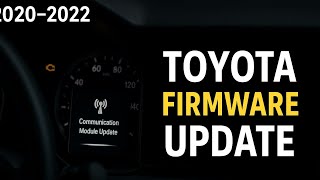
Outcome: For 2020-2022 models, a dealer-installed firmware update for the Data Communication Module (DCM) per TSB T-SB-0089-21 fixes this. For the B1570 'Red LED Error', the fault is the map light assembly itself.
Lesson: A red SOS light on a Toyota/Lexus is B1570. It could be a simple burnt-out LED in the overhead console (a testable part) or a known software bug with a TSB fix.
Older GM/Ford/Subaru with electrical issues
An owner of an older vehicle experienced multiple, seemingly unrelated electrical problems: dimming lights, rough idle, and low alternator voltage readings at idle.
Outcome: After thoroughly cleaning the ground strap, terminal, and mounting points to restore a clean metal-to-metal connection, all symptoms resolved. Alternator voltage returned to 14V, and the engine idle smoothed out.
Lesson: For any B1570 code on an older vehicle, check the simple things first. A corroded main ground strap causes dozens of strange electrical issues that mimic expensive component failures.
How to Prevent This Code From Triggering
- Clean Major Chassis and Engine Ground Points (Every 3-5 years or if corrosion is visible) — Corroded ground connections create high resistance, causing modules like the BCM to set false circuit codes. Disconnecting, cleaning to bare metal, and re-securing ground straps ensures stable voltage.
- Apply Dielectric Grease to Key Connectors (When replacing a part or if a connector is exposed) — Dielectric grease seals out moisture and prevents corrosion on connector pins. Applying it to the seals of connectors for the BCM, headlight switch, or telematics module prevents water intrusion failures.
- Address Water Leaks Immediately (As needed) — Water leaking from a bad windshield seal or clogged sunroof drain drips directly onto the BCM, causing corrosion and catastrophic failure. Fixing the leak prevents BCM damage.
- Test Battery and Alternator Annually (Once per year) — A weak battery or failing alternator provides unstable voltage, stressing sensitive electronics like the BCM and telematics module. Annual testing prevents voltage-spike damage.
- Avoid Untrusted USB Devices (Chrysler/Dodge) (Daily habit) — Plugging in a cheap, damaged, or unsupported USB device causes a fault in the radio or telematics module. Using high-quality cables prevents these errors.
Frequently Asked Questions
Can I fix a B1570 code myself?
For lighting faults, replacing a fuse, relay, or headlight switch is a beginner-friendly DIY job. For telematics or immobilizer issues, take it to a professional. These repairs require dealer-specific software updates or advanced diagnostic tools.
My parking lights are stuck on. How can I stop my battery from draining?
As a temporary fix, pull the 'Park Lamp' fuse or relay from the fuse box. Your owner's manual contains a diagram. This disables the circuit and prevents battery drain until you can repair it.
Why does B1570 have so many different meanings?
'P' codes (Powertrain) are highly standardized, but 'B' (Body) codes are not. Manufacturers assign them to specific electronic systems. B1570 means a light circuit on a Ford but a telematics system on a Chrysler.
What does the '-93' or '-19' after the code mean?
These Failure Type Bytes (FTBs) pinpoint the exact fault. For example, on a Chrysler, B1570-93 means 'No Operation' (a communication loss). On a Dodge, B1570-19 means 'Circuit Current Above Threshold' (an over-current fault in a USB port).
What is the most common misdiagnosis for B1570?
The most common error is ignoring the manufacturer-specific definition. A technician wastes hours diagnosing the lighting circuit on a 2022 Chrysler Pacifica when the code actually flags the Uconnect system. Always verify the definition for your exact vehicle first.
Can a bad tail light bulb cause a B1570 code?
Yes. An internal short in a dual-filament bulb back-feeds voltage into the park lamp circuit when braking. This confuses the BCM, which sees voltage on the circuit when it expects none, triggering the code.
How much does it cost to diagnose a B1570 code?
Shops charge a one-hour diagnostic fee ranging from $125 to $185. This fee covers identifying the root cause. For Chrysler telematics issues, this fee often covers the required software update.
Key Takeaways
- Identify your vehicle's specific B1570 definition before diagnosing; it means a Uconnect fault on a 2021+ Chrysler, an SOS LED error on a Toyota, or a park lamp failure on older Fords.
- Fix B1570-93 on 2021+ Chrysler, Dodge, and Jeep vehicles by requesting a dealer-installed Telematics Box Module (TBM) software update per TSB 08-068-22.
- Resolve the B1570 'Red LED Error' on 2010-2020 Toyota and Lexus models by testing the overhead console SOS button assembly with a 3V power source.
- Repair older Ford and GM park lamp circuit faults by testing the headlight switch and verifying the park lamp relay coil resistance reads between 50 and 120 Ohms.
- Address B1570 immediately to restore critical safety systems, avoiding a $150+ traffic ticket for dead tail lights or a disabled automatic emergency SOS crash response.
Helpful Videos
Shop the Parts Behind B1570
Below are the parts most often responsible for code B1570, ranked by how frequently each one is the actual culprit (per the diagnosis above). Tap any to see what we have for your vehicle.

The information in this article is provided for general reference and educational purposes only. Vehicle specifications, procedures, and part compatibility can vary by production date, trim level, and region. Always consult your vehicle's factory service manual and verify part numbers before purchasing or performing repairs. Safety-critical components such as airbags, seat belts, and braking systems should be installed by a qualified professional.
- 🧭 Diagnostic Flowchart
- 🎬 Helpful Videos
- 🛍️ Shop This Part
- What Does B1570 Mean?
- Can I Drive With B1570?
- Common Causes
- Symptoms
- Common Fixes & Costs
- Used vs. New Parts: Buying Guide
- What Happens If You Wait — Timeline
- Cost of Not Fixing It
- Diagnosis Steps
- When This Code Triggers (Freeze-Frame Conditions)
- Related Codes
- Climate & Environmental Factors
- How to Talk to a Mechanic About This Code
- Where to Take It: Dealer vs Independent vs Chain
- When to Walk Away From the Repair
- What Scan Tool You Need for This Code
- How to Clear the Code After You Fix It
- Will This Fail Emissions / State Inspection?
- Most Commonly Affected Vehicles
- Manufacturer-Specific Notes
- Real Owner Stories
- 2021 Chrysler Pacifica with 47K miles
- 2018 Toyota/Lexus with Safety Connect
- Older GM/Ford/Subaru with electrical issues
- How to Prevent This Code From Triggering
- Frequently Asked Questions
- Can I fix a B1570 code myself?
- My parking lights are stuck on. How can I stop my battery from draining?
- Why does B1570 have so many different meanings?
- What does the '-93' or '-19' after the code mean?
- What is the most common misdiagnosis for B1570?
- Can a bad tail light bulb cause a B1570 code?
- How much does it cost to diagnose a B1570 code?
- Key Takeaways
- 🎟️ Get 5% Off