

Ultimate Guide to OBD-II Code B1597: SRS Fault & Power Seat Issues
The Most Comprehensive B1597 Guide: What it means, why it triggers, and exactly how to fix it.
- Code B1597 disables your entire airbag system, increasing frontal crash fatality risk by up to 32% until repaired.
- Diagnosis depends entirely on your vehicle brand: Ford models require a power seat switch inspection, while GM and Chrysler vehicles need front impact sensor ground testing.
- Over 70% of B1597 triggers stem from a corroded chassis ground bolt or damaged wiring harness, costing under $150 to fix.
- Disconnect the negative battery terminal and wait exactly 10 minutes before touching any SRS component to prevent accidental airbag deployment.
- Perform a voltage drop test on the sensor's ground wire before buying parts; a reading above 100mV confirms a wiring fault, not a bad sensor.
What Does B1597 Mean?
OBD-II code B1597 is a body trouble code signaling a fault within the Supplemental Restraint System (SRS). It typically indicates a grounding failure for a front impact sensor. However, definitions vary by manufacturer. On Ford, Lincoln, and Mercury vehicles, B1597 points to a short to ground in the driver's power seat adjustment switch circuit. This guide covers both scenarios for accurate diagnosis.
Technical definition: The SAE/ISO definition for B1597 is manufacturer-dependent. The most prevalent definition is 'Front Impact Sensor Grounding Failure,' indicating the SRS control module detects a short to ground or high resistance in a crash sensor's ground circuit. Ford Motor Company defines it as 'Driver's Seat Seatback Autoglide Forward Switch Circuit Short to Ground.' On late-model GM vehicles, it indicates a software anomaly in video processing modules.
Can I Drive With B1597?
No — Do Not Drive. Do not drive with code B1597. This code confirms the Supplemental Restraint System (SRS) is disabled. NHTSA data shows frontal airbags reduce driver fatalities by 29% and front-seat passenger fatalities by 32%. In a frontal crash, your primary safety device will not deploy, drastically increasing the risk of severe injury or death.
Common Causes
- Corroded or Damaged Wiring/Connectors (Very Common) — Front impact sensors sit in vulnerable areas like the radiator core support, exposing them to moisture, road salt, and debris. This causes corrosion on the sensor connector, pins, or wiring harness, creating high resistance. Similarly, wiring under a power seat frays or pinches from repeated seat movement.
- Poor Chassis Ground Connection (Common) — The sensor's ground wire requires a clean, tight connection to the vehicle's chassis. Rust, paint, or a loose ground bolt at this critical point interrupts the circuit and triggers the fault code.
- Faulty Front Impact Sensor (Common) — Moisture intrusion through cracked plastic housings causes internal corrosion and sensor failure. Housings crack over time due to age, engine vibration, and thermal cycling.
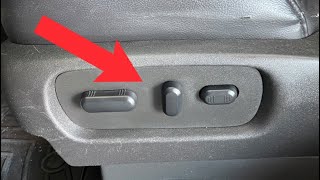
- Faulty Power Seat Switch (Ford-Specific) (Common) — The electronic switch controlling seat movement shorts out internally. Spilled liquids frequently cause this failure. The wiring leading to the switch also pinches and shorts against the metal seat frame.
- Blown Fuse (Less Common) — A blown fuse for the SRS module or power seat circuit sets this code. On a 2015-2020 Ford F-150, the driver's power seat relies on fuse #26 (30A) in the engine bay fuse box. Always verify fuses before replacing parts.
- Low System Voltage / Weak Battery (Less Common) — SRS control modules are highly sensitive to voltage drops. A weak or improperly connected battery causes erratic behavior and false fault codes during vehicle startup. Suspect this if the code appears alongside other electrical glitches or after a jump-start.
- Faulty Airbag (SRS) Control Module (Rare) — The main computer for the airbag system (Restraints Control Module) fails internally. This is a last-resort diagnosis considered only after definitively ruling out all wiring, grounds, and sensors.
- Aftermarket Accessory Interference (Rare) — Improperly installed aftermarket accessories (remote starters, alarms, LED lighting) interfere with the CAN bus network or SRS wiring by tapping into the wrong power or ground source.
Symptoms
- Airbag / SRS Warning Light is On — The primary symptom. The light remains illuminated on the instrument cluster while the fault is active, confirming the airbag system is disabled.
- Power Seat Inoperative or Moves Erratically (Ford-Specific) — On Ford vehicles, the driver's seat fails to move forward or refuses to move at all. Pressing one direction on the switch sometimes causes movement in another.
- Passenger Airbag 'OFF' Indicator Illuminated — On 2020-2022 Subarus with Occupant Detection System (ODS) faults, the passenger airbag 'OFF' light stays on even when the seat is occupied.
- Failed State Safety Inspection — An illuminated airbag warning light triggers an automatic failure for safety inspections in most jurisdictions, blocking vehicle registration renewal.
- Pre-Collision or Driver-Assist System Warnings — On modern GM vehicles, an SRS system fault triggers secondary warnings like 'Service Driver Assist System' or 'Front Camera Unavailable'.
Diagnostic Flowchart
Tap your situation to follow the diagnostic path that matches what you're seeing on this code.
Common Fixes & Costs
- Cleaning or Repairing a Chassis Ground Connection — Parts: $1-$5, Labor: $50-$150, ~1.0 hr book time (DIY)
- Replacing a Front Impact Sensor
— Parts: $70-$350, Labor: $75-$170, ~1.2 hr book time
(DIY)
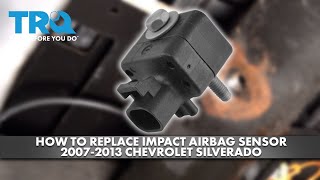
Chevrolet/GMC Silverado/Sierra (2007-2018): OEM [{'part_number': '13525286', 'price': '$130-$200'}, {'part_number': '13514077', 'price': '$190-$310'}] (Alt: {"brand": "Dorman", "part_number": "590-201", "price": "$120-$160"}, {"brand": "ACDelco", "part_number": "13525286", "price": "$130-$200"}) - Replacing a Power Seat Switch (Ford)
— Parts: $90-$190, Labor: $56-$82, ~0.8 hr book time
(DIY)
Ford F-150 (2015-2020): OEM [{'part_number': 'DG9Z-14A701-BZ', 'price': '$55-$90'}, {'part_number': 'SW-7402', 'price': '$50-$75'}] (Alt: {"brand": "Dorman", "part_number": "601-600", "price": "$60-$80"}, {"brand": "Standard Motor Products (SMP)", "part_number": "PMS15", "price": "$90-$110"})
Ford Explorer (2011-2019): OEM [{'part_number': 'BB5Z-14A701-AA', 'price': '$80-$120'}] (Alt: {"brand": "Dorman", "part_number": "901-272", "price": "$55-$70"}) - Repairing Damaged Wiring or Connector Pigtail — Parts: $15-$50, Labor: $150-$350, ~2.0 hr book time (Intermediate)
- Replacing Passenger ODS Sensor (Subaru)
— Parts: $0 (if under recall), Labor: $0 (if under recall), ~2.5 hr book time
(Professional)
Subaru Outback/Legacy (2020-2022): OEM [{'part_number': 'Recall Kit WRA-24', 'price': 'N/A'}] - Replacing the Airbag Control Module (RCM) — Parts: $400-$1,200, Labor: $150-$350 (includes programming), ~2.5 hr book time (Professional)
DIY vs Professional
- Cleaning or Repairing a Chassis Ground Connection 🟢 Beginner
Tools: Socket set, wire brush, sandpaper, safety glasses. - Replacing a Front Impact Sensor 🟢 Beginner
Tools: Socket set, trim removal tools, OBD-II scanner. - Replacing a Power Seat Switch (Ford) 🟢 Beginner
Tools: Plastic trim removal tools, small screwdriver. - Repairing Damaged Wiring or Connector Pigtail 🟢 Beginner
Tools: Wire strippers, wire cutters, heat shrink tubing, quality crimp connectors, digital multimeter. - Replacing the Airbag Control Module (RCM) 🟢 Beginner
Tools: Professional OBD-II scanner with programming capabilities, socket set.
Used vs. New Parts: Buying Guide
When a used part is worth it: For a Ford power seat switch, a used part from a reputable recycler is a budget option. For a front impact sensor, a used part is NEVER recommended due to safety implications.
Donor-vehicle mileage cap: roughly under 80000 miles for the part to have meaningful remaining life.
Donor quality checklist:
- For seat switches, match the part number and button layout exactly.
- Avoid components from flood-damaged or high-corrosion environments.
- Ensure electrical connectors are not cracked and pins are straight and clean.
Decision logic:
- If The part is a safety-critical SRS component like an impact sensor. → Buy new OEM or from a high-quality aftermarket supplier. The risk of a faulty used part is too high.
- If The part is a non-safety item like a power seat switch and budget is a primary concern. → A used part from a certified recycler is acceptable. Verify its history and match part numbers perfectly.
- If The vehicle is newer or the cost of labor for installation is high. → Buy new to minimize the risk of paying for labor twice if the used part fails.
Warranty tradeoff: Used parts typically have a 30-90 day warranty. New aftermarket parts carry a 1-year to limited lifetime warranty. New OEM parts carry a 12-month manufacturer's warranty.
Worst-case if a used part fails: $200-$400. This represents the cost of repeated labor if a used part is dead on arrival, plus the cost of sourcing another part.
What Happens If You Wait — Timeline
- Immediate: The SRS light illuminates. The Airbag Control Module detects the ground fault, disables the entire SRS system, and stores code B1597. Airbags will not deploy. (MPG impact: 0%% · Added cost: $0)
- Days to Weeks: Moisture continues penetrating the faulty sensor or connector, worsening internal corrosion. Vibration causes chafed wires to make intermittent ground contact, risking damage to the control module. (MPG impact: 0%% · Added cost: $0)
- Weeks to Months: The vehicle fails state safety inspections, preventing registration renewal. The initial simple fault cascades into a damaged control module if the short is severe. (MPG impact: 0%% · Added cost: $150 in re-inspection fees and fines.)
- In Case of an Accident: A collision occurs and the airbags do not deploy. Occupants face a significantly higher risk of severe injury or death. Legal settlements for airbag non-deployment cases exceed $50,000. (MPG impact: N/A% · Added cost: $50,000+)
Cost of Not Fixing It
- Immediate: The entire Supplemental Restraint System is disabled and will not deploy in a collision, dramatically increasing the risk of serious injury or death. (Added cost: N/A)
- Next State Inspection: The vehicle automatically fails its state safety inspection, preventing registration renewal. (Added cost: Varies by state (re-inspection fees, potential fines).)
- In Case of an Accident: The financial cost of injuries sustained that would have been prevented by the airbag system. Settlements for airbag non-deployment cases exceed $50,000. (Added cost: $50,000+)
Diagnosis Steps
- Confirm Code and Definition with a Professional Scan Tool
Use an OBD-II scanner capable of reading Body (B) codes. Confirm B1597 is active and check the manufacturer-specific definition. Note all other codes present to provide context.
Tools: Professional OBD-II Scanner (Beginner) - Check Relevant Fuses
Consult your owner's manual. Locate and inspect the fuses for the SRS module and power seats. On a 2015-2020 F-150, check fuse 26 (driver) or 27 (passenger) in the engine bay fuse box.
Tools: Owner's Manual, Fuse Puller (Beginner) - Perform a Thorough Visual Inspection
For SRS faults, locate the front impact sensors behind the grille. Look for green/white corrosion, cracked plastic housings, and damaged wires. For Ford seat faults, inspect the wiring under the driver's seat for chafing or pinching.
Tools: Flashlight, Inspection Mirror (Beginner) - Clean and Secure Chassis Ground Points
SAFETY FIRST: Disconnect the negative battery terminal and wait 10 minutes. Locate the main ground connection for the faulty circuit. Disassemble the connection, wire-brush the terminal, bolt, and chassis surface to bare metal, and re-secure tightly.
Tools: Wrench/Socket Set, Wire Brush, Safety Glasses (Intermediate) - Test Ground Circuit Continuity with a Multimeter
With the battery disconnected and component unplugged, set a multimeter to Ohms. Touch one probe to the ground pin on the harness connector and the other to a known good chassis ground. A reading above 5 Ohms indicates a wiring problem.
Tools: Digital Multimeter (Intermediate) - [PRO TIP] Perform a Voltage Drop Test on the Ground Circuit
Reconnect the battery and component. Turn the ignition ON (engine OFF). Set your multimeter to a low DC Voltage scale. Place the black probe on the negative battery terminal and back-probe the red probe into the ground wire at the connector. A reading over 0.1V (100mV) confirms excessive resistance in the ground path.
Tools: Digital Multimeter, Back-Probing Kit (Advanced) - Swap Components for Diagnosis (If Applicable)
If the vehicle has identical left and right front impact sensors, disconnect the battery and swap their positions. Clear the codes and cycle the ignition. If the code changes sides, the sensor is faulty. If it remains, the wiring harness is the issue.
Tools: Wrench/Socket Set, OBD-II Scanner (Advanced) - [PRO TIP] Conduct a Harness Wiggle Test with Live Data
Connect your scanner and monitor the live data parameter for the suspect sensor. Carefully wiggle the wiring harness between the component and the control module. If the live data reading fluctuates or drops out, you have pinpointed the wiring fault location.
Tools: Professional OBD-II Scanner (Advanced)
When This Code Triggers (Freeze-Frame Conditions)
- System Voltage: 11.8V - 14.5V (The SRS module is sensitive to low voltage, setting false codes during startup.)
- Ignition Status: ON (The fault is detected during the SRS module's power-on self-test.)
- Odometer: Varies (Records the mileage at which the fault was first detected.)
- Ignition Cycle Counter: Varies (Indicates the number of times the vehicle has been started since the fault occurred.)
Related Codes
- B1598 — On Ford vehicles, B1597 is the 'autoglide FORWARD' switch circuit short, while B1598 is the 'autoglide REARWARD' switch circuit short. Both present strongly points to a faulty seat switch assembly.
- B0083 / B0084 — These indicate an 'Open Circuit' or 'Short to Voltage' fault in front impact sensors. For B1597, test the ground wire. For B0083/B0084, test the signal and power wires.
- U0151 — 'Lost Communication with Restraints Control Module.' Diagnose U0151 FIRST. A communication failure means the main computer cannot talk to the airbag module, making B1597 a symptom of a larger power or network issue.
- B0052 — Indicates a fault in the Passenger Presence Detection System. On affected Subarus, B1597 accompanies B0052, pointing directly to the passenger seat sensor system.
Climate & Environmental Factors
- High Humidity / Rain: Moisture penetrates non-sealed connectors and sensor housings, corroding circuit boards and pins. This increases electrical resistance and triggers the code.
- Road Salt (Winter Climates): Salt spray dramatically accelerates the deterioration of front impact sensors, wiring, and chassis ground points. This is the primary cause of failure for GM trucks.
- Extreme Cold: Low temperatures make plastic sensor housings and wire insulation brittle and prone to cracking, allowing moisture to enter.
How to Talk to a Mechanic About This Code
Say this: "I have an airbag light on and my scanner shows code B1597. Based on my vehicle, I believe this is a front impact sensor ground fault. Can you please test the sensor's ground circuit for resistance and voltage drop before recommending a sensor replacement?"
This directs the technician to perform a specific electrical test instead of just replacing the most obvious part, saving you money on unnecessary parts and labor.
Avoid saying:
- 'My airbag light is on, can you just fix it?'
- 'I think I need a new airbag sensor, can you give me a price?'
- 'Just do whatever you think is best.'
Questions to ask before authorizing the repair:
- What was the resistance reading on the ground circuit test? Was it under 1.0 Ohm?
- Did you perform a voltage drop test on the ground wire? What was the reading in millivolts?
- If the sensor needs to be replaced, is the new part an OEM or aftermarket part?
- Does the repair estimate include clearing the SRS codes and confirming the light stays off after a key cycle?
- What is the warranty on this specific repair, including both parts and labor?
Where to Take It: Dealer vs Independent vs Chain
- Dealer:
Best for: Vehicles under warranty., Confirmed recall-related issues (e.g., Subaru ODS sensor)., Complex software-related faults on very new vehicles (e.g., 2022+ GM)., If the fault is diagnosed to be the main SRS control module, requiring brand-specific programming.
Downsides: Highest labor rates, typically 1.5-2x more than independent shops., Defaults to replacing entire assemblies rather than performing targeted wiring repairs. (Typical cost: +50% vs. baseline) - Independent Shop:
Best fit for most scenarios. An experienced independent technician easily diagnoses and repairs the common causes of B1597 at a lower cost than a dealer.
Best for: Out-of-warranty vehicles where the cause is a corroded sensor, bad ground, or wiring., Ford vehicles where the code points to a power seat switch.
Downsides: Shop quality and diagnostic skill vary widely. Vet shops based on ASE certifications., May lack the subscription-based tools to program a new SRS module. (Typical cost: +0% vs. baseline) - Chain Shop:
AVOID for this code. SRS system repair is a safety-critical task requiring a higher level of diagnostic expertise than is found at chain shops.
Best for: Simple, unrelated maintenance like oil changes or tires.
Downsides: Technicians lack specialized training for SRS diagnostics., High pressure to meet sales quotas leads to upselling unnecessary parts., Not equipped with advanced scan tools needed to properly diagnose or reset SRS systems. (Typical cost: -10% vs. baseline)
When to Walk Away From the Repair
If the estimated repair cost for the B1597 fault, combined with any other needed repairs, exceeds 50% of the car's private-party value, consider selling or trading it in.
- Car worth $4000, fix is $1800: Walk away. The repair cost is 45% of the car's value. It is not financially sound to invest this much into an older, lower-value car.
- Car worth $15000, fix is $800: Fix it. The repair cost is a small fraction of the vehicle's value and is a critical safety repair.
- Car worth $2500, fix is $1300: Walk away. The repair cost is over 50% of the car's value. The vehicle is nearing the end of its economic life.
What Scan Tool You Need for This Code
Minimum: A scanner that reads and clears Supplemental Restraint System (SRS) / Airbag codes. Basic engine-only code readers will NOT work.
A standard $20 OBD-II scanner only reads Powertrain (P) codes. B1597 is a Body (B) code stored in the SRS module. Without an SRS-capable scanner, you cannot read the code or clear the light after the repair.
Budget: Autel AutoLink AL619 (~$60) — Reads and clears ABS and SRS codes on most major vehicle models. It confirms the B1597 code and turns off the airbag light after a successful repair.
Mid-range: BlueDriver Pro (~$120) — Connects to your smartphone and provides enhanced diagnostics, including reading and clearing SRS codes for many makes. It offers repair reports based on a database of fixes.
Professional: Autel MaxiCOM MK808 / Foxwell NT809 (~$450-600) — Offers bidirectional control, allowing you to actively test components. This capability is invaluable for complex intermittent issues or diagnosing the SRS module itself.
Rent vs buy: Some auto parts stores offer free loaner tools that read SRS codes. However, given the safety-critical nature of this fault, owning a capable scanner like the Autel AL619 is a smart investment for any DIYer.
How to Clear the Code After You Fix It
- Ensure the underlying electrical fault is fully repaired.
- Reconnect the battery if it was disconnected.
- Use an SRS-capable OBD-II scan tool to connect to the Restraints Control Module.
- Select the option to 'Clear/Erase DTCs'.
Drive cycle (~1 minutes): An SRS code does not require a drive cycle. After clearing the code, cycle the ignition off, then on. The SRS module performs a self-test at startup. If the light illuminates for a few seconds and turns off, the repair was successful.
Readiness monitors affected: None
Watch out for:
- Disconnecting the battery will not clear a B1597 code from the SRS module's memory.
- Using a basic OBD-II scanner that only reads Powertrain (P) codes cannot communicate with the SRS module.
- If the light returns immediately, the root cause of the electrical fault was not corrected.
Will This Fail Emissions / State Inspection?
Yes — this code typically fails an OBD-II emissions inspection.
- California: An airbag light will not cause a failure of the emissions-only smog check. However, if the vehicle requires a comprehensive safety inspection, the light is an automatic failure.
- New York: An illuminated SRS/airbag warning light is an automatic failure of the annual safety inspection. The light must illuminate during the bulb check and then go out.
- Texas: Many inspection stations fail a vehicle for any illuminated safety warning light on the dashboard, considering it a safety failure.
Most Commonly Affected Vehicles
- Chevrolet / GMC Silverado / Sierra 1500 (2007-2018) — Extremely common for front impact sensor failure due to corrosion on the radiator support. Common part numbers include 13525286 and 85598007.
- Ford F-150 (2015-2020) — Code almost always means a power seat fault. Check fuse 26 (30A) for the driver's seat or fuse 27 (30A) for the passenger seat. Suspect a short in the seat switch.
- Ford Explorer (2011-2019) — B1597 points to the driver's power seat switch or its wiring. The harness running along the seat frame is a common chafe point.
- Subaru Outback / Legacy (2020-2022) — Subject to recall WRA-24 (NHTSA 24V227000). A faulty capacitor in the ODS sensor short circuits, disabling the passenger airbag. Fix is a free dealer replacement.
- Chrysler / Dodge / Jeep Various Models (Ram 1500, Grand Cherokee) (2010-2020) — B1597 aligns with the generic definition: a front impact sensor grounding fault. Diagnosis focuses on the sensor and wiring at the front of the vehicle.
- Hyundai / Kia Elantra, Sonata, Optima (2011-2017) — Points to a front impact sensor circuit fault. Check for corrosion at the sensor connector.
- Cadillac Lyriq (2023-2024) — GM TSB PIC6508 states B1597 is triggered by a software issue in the video processing module. Check for software updates before replacing hardware.
- Chevrolet Equinox (2019-2022) — Sets B1597 in relation to camera and driver-assist system malfunctions due to software anomalies in the video processing module.
Manufacturer-Specific Notes
- Ford: Ford uses B1597 for a driver's power seat fault, NOT an airbag issue. The airbag light remains off if B1597 is the only code. Focus diagnosis on the seat switch and fuse #26.
- General Motors (GM): On 2007-2018 trucks, B1597 means corroded front impact sensors. On 2022+ models, it is a 'ghost code' caused by a software glitch in a video module (TSB PIC6508).
- Subaru: For 2020-2022 Outback and Legacy models, B1597 is caused by a faulty ODS sensor subject to recall WRA-24. The repair is a free replacement of all four passenger seat ODS sensors.
- Chrysler/Dodge/Jeep/Ram: Stellantis vehicles use B1597 according to its generic definition: a front impact sensor ground fault. Focus on the sensor, connector, and ground path at the front of the vehicle.
Real Owner Stories
2015 Ford F-150 with 110,000 miles
Driver's power seat stopped working. An OBD-II scan showed code B1597. The airbag light was NOT on.
What they tried:
- Checked power seat fuse #26, which was intact.
- Inspected under-seat wiring and found no damage.
- Replaced the driver's side seat switch assembly.
Outcome: Replacing the seat switch fixed the problem. The owner realized spilled coffee on the switch weeks prior caused the internal short.
Lesson: On a Ford, B1597 points to the power seat circuit. If the airbag light is off, focus diagnosis entirely on the seat switch and its wiring.
2011 Chevy Silverado 1500 at 155,000 miles
Airbag light stayed on permanently. Code B1597 indicated a front impact sensor fault.
What they tried:
- Cleared the code, but it returned immediately.
- Swapped the left and right front impact sensors; the code did not change sides, proving the sensor was fine.
- Cleaned the chassis ground bolt for the sensor harness with a wire brush.
Outcome: Cleaning the rusty ground connection to bare metal solved the issue. The airbag light stayed off after clearing the code.
Lesson: Corrosion at the sensor's chassis ground point is the leading cause of B1597 on GM trucks. Test the circuit and clean grounds before buying a new sensor.
2021 Subaru Outback at 45,000 miles
Airbag light and 'Passenger Airbag OFF' indicator illuminated. A scan confirmed an ODS fault related to B1597.
What they tried:
- Checked the VIN against NHTSA recall 24V227000 (Subaru recall WRA-24).
Outcome: The dealer replaced all four ODS sensors in the passenger seat free of charge under the recall campaign.
Lesson: For 2020-2022 Subaru Outback and Legacy models, this code stems from a known defect. Check for open recalls before paying for diagnostics.
2016 Subaru Forester with recurring issue
Airbag light came on intermittently. The dealer quoted $1,200 for a new seat bottom, blaming water damage.
What they tried:
- Noticed jiggling the wiring harness under the passenger seat temporarily turned the light off.
- Disconnected the main yellow connector under the seat, cleaned the pins, and applied dielectric grease.
Outcome: Securing the connector and protecting it with dielectric grease resolved the intermittent connection, avoiding a $1,200 repair.
Lesson: An intermittent fault that responds to wiggling wires points to a loose connection, not a failed component.
How to Prevent This Code From Triggering
- Apply Dielectric Grease to Connectors (Whenever a connector is disconnected) — Applying dielectric grease to the rubber gasket of front impact sensors creates a moisture-proof barrier, preventing water intrusion and pin corrosion.
- Protect Under-Seat Wiring (Once) — Use zip ties to secure loose harnesses away from seat tracks. Install a flexible plastic wire loom to prevent damage from shifting cargo or passengers' feet.
- Annual Chassis Ground Cleaning (Every 1-2 years in salt-belt states) — Proactively clean critical ground points at the front of the vehicle. Wire-brush the chassis, bolt, and wire terminal to bare metal to prevent high-resistance ground faults.
- Secure Wiring During Repairs (During any vehicle maintenance) — Ensure harnesses are routed and secured in their original clips. A dangling harness easily snags or chafes, leading to a short circuit.
Frequently Asked Questions
Is it safe to drive with code B1597?
No. The code confirms your entire airbag system is offline and will not deploy in a crash. This dramatically increases the risk of severe or fatal injury.
Can I fix a B1597 code myself?
Yes, if the cause is a corroded ground, blown fuse, or a bolt-on sensor. Always disconnect the negative battery terminal and wait 10 minutes before touching any SRS component to prevent accidental deployment.
Will clearing the code fix the problem?
No. B1597 is a hard fault, meaning the electrical problem is actively present. Clearing the code only turns the light off until the SRS module self-tests upon the next ignition cycle and detects the fault again.
I replaced the sensor, but the light is still on. What now?
This proves the sensor was not the root cause. You must perform a voltage drop test on the ground wire (should be < 0.1V) and ensure the chassis ground point is clean and tight. The fault is in the wiring between the connector and the control module.
Where is the front impact sensor located?
Front impact sensors are bolted directly to the radiator core support, located between the radiator and the front grille. There is typically one on the left and one on the right.
Can disconnecting the battery reset the airbag light for good?
No. The SRS module stores fault codes in non-volatile memory, meaning the code persists without power. The underlying electrical fault must be repaired first, and then the code cleared with a capable scanner.
Why does my Ford show an airbag code for a seat problem?
Your scanner is mislabeling a 'Body' code as an 'Airbag' code. On a Ford, B1597 is a Body Control Module code related to the power seat. If the airbag light is on, there is a separate SRS code stored in the system.
What is the resistance of a front impact sensor?
Manufacturers do not publish resistance specifications for sensors, and testing resistance across sensor pins is not a valid diagnostic procedure. Diagnosis must focus on testing the integrity of the wiring and ground circuit leading to the sensor, which should read under 1.0 Ohm.
Key Takeaways
- Code B1597 disables your entire airbag system, increasing frontal crash fatality risk by up to 32% until repaired.
- Diagnosis depends entirely on your vehicle brand: Ford models require a power seat switch inspection, while GM and Chrysler vehicles need front impact sensor ground testing.
- Over 70% of B1597 triggers stem from a corroded chassis ground bolt or damaged wiring harness, costing under $150 to fix.
- Disconnect the negative battery terminal and wait exactly 10 minutes before touching any SRS component to prevent accidental airbag deployment.
- Perform a voltage drop test on the sensor's ground wire before buying parts; a reading above 100mV confirms a wiring fault, not a bad sensor.
Helpful Videos
Shop the Parts Behind B1597
Below are the parts most often responsible for code B1597, ranked by how frequently each one is the actual culprit (per the diagnosis above). Tap any to see what we have for your vehicle.



The information in this article is provided for general reference and educational purposes only. Vehicle specifications, procedures, and part compatibility can vary by production date, trim level, and region. Always consult your vehicle's factory service manual and verify part numbers before purchasing or performing repairs. Safety-critical components such as airbags, seat belts, and braking systems should be installed by a qualified professional.
- 🧭 Diagnostic Flowchart
- 🎬 Helpful Videos
- 🛍️ Shop This Part
- What Does B1597 Mean?
- Can I Drive With B1597?
- Common Causes
- Symptoms
- Common Fixes & Costs
- DIY vs Professional
- Used vs. New Parts: Buying Guide
- What Happens If You Wait — Timeline
- Cost of Not Fixing It
- Diagnosis Steps
- When This Code Triggers (Freeze-Frame Conditions)
- Related Codes
- Climate & Environmental Factors
- How to Talk to a Mechanic About This Code
- Where to Take It: Dealer vs Independent vs Chain
- When to Walk Away From the Repair
- What Scan Tool You Need for This Code
- How to Clear the Code After You Fix It
- Will This Fail Emissions / State Inspection?
- Most Commonly Affected Vehicles
- Manufacturer-Specific Notes
- Real Owner Stories
- 2015 Ford F-150 with 110,000 miles
- 2011 Chevy Silverado 1500 at 155,000 miles
- 2021 Subaru Outback at 45,000 miles
- 2016 Subaru Forester with recurring issue
- How to Prevent This Code From Triggering
- Frequently Asked Questions
- Is it safe to drive with code B1597?
- Can I fix a B1597 code myself?
- Will clearing the code fix the problem?
- I replaced the sensor, but the light is still on. What now?
- Where is the front impact sensor located?
- Can disconnecting the battery reset the airbag light for good?
- Why does my Ford show an airbag code for a seat problem?
- What is the resistance of a front impact sensor?
- Key Takeaways
- 🎟️ Get 5% Off