

OBD-II Code B1608: Manufacturer-Specific Body Control Fault
What B1608 means, why it triggers, and how to fix it on your specific vehicle
- Code B1608 has no universal definition; on 1998-2011 Ford vehicles, it indicates a Passive Anti-Theft System (PATS) failure that completely disables the engine.
- For Toyota models like the 2012 Prius or Corolla, B1608 flags a critical left-front airbag sensor failure, requiring immediate replacement to ensure deployment in a crash.
- Before buying parts for a Ford no-start, test the vehicle battery to ensure it reads above 12.4 volts and attempt to start the car using a second programmed key.
- Never attempt to bypass a Ford PATS system or Toyota SRS module; hire a mobile locksmith for $150-$250 to program a new Ford key, or a dealer to calibrate Toyota airbag sensors.
What Does B1608 Mean?
B1608 is a manufacturer-specific body control module (BCM) code with vastly different definitions depending on your car brand. For most Ford, Lincoln, and Mercury vehicles, it signifies the car's computer did not receive a valid signal from the transponder chip inside the ignition key. The Passive Anti-Theft System (PATS) assumes the vehicle is being stolen and disables the engine.
Technical definition: There is no universal SAE/ISO definition for B1608. The most common definition, primarily for Ford Motor Company vehicles, is 'PATS Ignition Key Transponder Signal Is Not Received / Incomplete Signal'. For Toyota, it indicates 'Front Satellite Sensor Bus LH Initialization Incomplete'. For Hyundai, it flags a steering column communication timeout.
Can I Drive With B1608?
It Depends This entirely depends on the manufacturer. For a Ford, the answer is NO; the engine will not run. For a Toyota, the answer is YES, BUT NOT RECOMMENDED, as it indicates a serious airbag system fault, meaning airbags will not deploy in a crash. For Hyundai or Subaru, the answer is YES, as the fault affects non-essential systems like power steering adjustment or automatic climate control.
Common Causes
- Damaged or Faulty Transponder Key (Ford) (Very Common) — The electronic chip inside the car key is damaged, has a dead internal battery, or lost its programming. This is the most frequent cause for a Ford PATS fault.
- Faulty PATS Transceiver Antenna (Ford) (Common) — The transceiver is a ring-shaped antenna around the ignition lock cylinder that powers and reads the key's chip. If it fails, it cannot read a functional key.
- Faulty Airbag System Sensor (Toyota) (Common) — On Toyota vehicles, this code points directly to a failed front left satellite airbag sensor or damaged sensor wiring.
- Low Vehicle Battery Voltage (Common) — A weak battery providing under 12.4 volts causes communication dropouts between modules during startup, mimicking a PATS or SRS fault.
- Damaged or Loose Wiring/Connectors (Less Common) — Wiring connecting the PATS transceiver or airbag sensor to the main control module is frayed, loose, or corroded.
- Radio Frequency (RF) Interference (Less Common) — Multiple transponder keys on the same keychain or aftermarket phone chargers near the ignition disrupt the low-frequency signal between the key and transceiver.
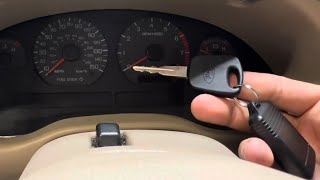
- Unprogrammed or Non-Transponder Key (Less Common) — Using a hardware store key copy without a chip, or an unprogrammed key, triggers the anti-theft system. 🎬 Watch this step-by-step guide for programming Mustang transponder keys.
- Faulty Instrument Cluster or PCM (Rare) — The anti-theft logic resides in the Instrument Panel Cluster (IPC) or Powertrain Control Module (PCM). Internal failures like cracked solder joints cause this code.
Symptoms
- Engine Cranks But Will Not Start (Ford) — The starter turns the engine over, but the security system disables the fuel injectors and ignition.
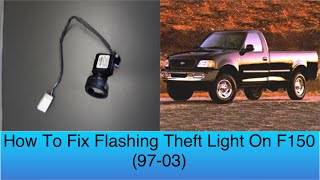
- Rapidly Flashing Security Light (Ford) — The dashboard security light blinks rapidly during startup, indicating an active PATS fault. 🎬 Watch: How to fix a flashing theft light on F-150s.
- Security Light Flashes Code 1-6 (Ford) — After a minute of rapid flashing, the theft light flashes a '1-6' code (one flash, pause, six flashes), specifically pointing to an incomplete key signal.
- Airbag Warning Light Illuminated (Toyota) — The primary symptom is an illuminated SRS/airbag warning light on the dashboard, indicating a disabled safety system.
- Intermittent Temperature-Sensitive No-Start — The fault appears only in extreme heat or cold, pointing to a failing PATS transceiver or cracked solder joint expanding/contracting.
- Power Steering Wheel Adjustment Inoperative (Hyundai) — Indicates a communication loss with the Steering Control Module, disabling the power-adjustable steering column.
Diagnostic Flowchart
Tap your situation to follow the diagnostic path that matches what you're seeing on this code.
Common Fixes & Costs
- Replace and Program Transponder Key (Ford)
— Parts: $20-$100, Labor: $50-$150, ~0.8 hr book time
(Professional)
Ford F-150 (2004-2010): OEM 164-R8040 (Alt: Ilco H92-PT) - Replace PATS Transceiver Antenna Ring (Ford)
— Parts: $60-$90, Labor: $100-$200, ~1.2 hr book time
(Intermediate)
Ford F-150 (2004-2008): OEM 6L3Z-15607-AA (Alt: Dorman 601-004) - Replace Front Airbag Satellite Sensor (Toyota)
— Parts: $70-$350, Labor: $150-$300, ~1.8 hr book time
(Professional)
Toyota Corolla (2009-2013): OEM 89173-01010 (Alt: Standard Motor Products F0043) - Recharge or Replace Vehicle Battery — Parts: $150-$250, Labor: $0-$50, ~0.3 hr book time (Beginner)
- Repair Damaged Wiring — Parts: $5-$20, Labor: $150-$350, ~2.0 hr book time (Intermediate)
- Replace Instrument Cluster or PCM (Ford) — Parts: $300-$800, Labor: $200-$500, ~1.5 hr book time (Professional)
Used vs. New Parts: Buying Guide
When a used part is worth it: For a Ford PATS transceiver, a used OEM part from a salvage yard is a low-risk, cost-effective option as it rarely fails electronically and requires no programming.
Donor-vehicle mileage cap: roughly under 150000 miles for the part to have meaningful remaining life.
Donor quality checklist:
- Match the part number exactly.
- Ensure the part comes with a functional warranty (30-90 days).
- Avoid electronic donors from flood-damaged vehicles.
Decision logic:
- If The part is a Toyota airbag sensor. → Buy new OEM only. The safety risk of a used, unverifiable sensor is too high.
- If The part is a Ford PATS transceiver. → Used OEM is a good budget option; New OEM offers longer-term peace of mind.
- If The part is a transponder key. → Buy a new OEM or high-quality aftermarket key from a trusted locksmith or dealer.
Warranty tradeoff: Used parts have a 30-90 day warranty. New aftermarket parts offer 1-year warranties. New OEM parts carry a 1-2 year warranty if installed by a dealer.
Worst-case if a used part fails: $300-$600 if a used safety component fails, requiring repeat labor and a new part.
What Happens If You Wait — Timeline
- Immediate (Ford): The Passive Anti-Theft System (PATS) immobilizes the vehicle. The engine cranks but will not start. The vehicle is undriveable. (MPG impact: N/A% · Added cost: $75 - $200 (Towing cost))
- Immediate (Toyota): The airbag warning light illuminates. The vehicle drives normally, but the left front airbag system is disabled and will not deploy in a crash. (MPG impact: 0%% · Added cost: $0 (Severe Safety Risk))
- Ongoing (Hyundai/Subaru): A non-critical feature like the power-adjustable steering wheel or automatic A/C function is inoperative. No impact on vehicle safety. (MPG impact: 0%% · Added cost: $0)
Cost of Not Fixing It
- Immediate (Ford): Vehicle is completely immobilized. The engine cranks but will not start, requiring a tow. (Added cost: $75 - $200 (Towing cost))
- Immediate (Toyota): Critical safety failure. The vehicle drives, but the left front airbag will not deploy in a collision, drastically increasing injury risk. (Added cost: N/A (Severe Safety Risk))
- Ongoing (Hyundai/Subaru): Loss of a non-essential feature, such as power steering column adjustment or automatic climate control function. (Added cost: $0)
Diagnosis Steps
- Try a Different Key (Ford)
Attempt to start the vehicle with a known-good, programmed spare key. If the car starts, the first key is faulty and requires replacement.
Tools: Spare programmed key (Beginner) - Check Vehicle Battery Voltage
Use a multimeter to check battery voltage. It must read above 12.4 volts with the engine off. Charge or replace a weak battery before replacing any modules.
Tools: Multimeter (Beginner) - Isolate the Key and Check for Interference
Remove the suspect key from your keychain. Move other fobs, keys, and electronic devices away from the ignition switch and try starting the vehicle again.
Tools: None (Beginner) - Scan All Modules for Codes
Use a professional-grade scanner to read the PATS, PCM, BCM, and SRS modules. Look for related codes like P1260 (Ford) to confirm the immobilizer status, or pinpoint the exact SRS sensor (Toyota).
Tools: Advanced OBD-II scanner (Intermediate) - Inspect Transceiver or Sensor Wiring
Remove the steering column shrouds (Ford) or access the front bumper harness (Toyota). Visually inspect the transceiver ring or airbag sensor connector for secure fitment, corrosion, or pinched wires.
Tools: Screwdrivers, trim removal tools (Intermediate) - Pro Tip: Transceiver Voltage & Resistance Check (Ford)
Disconnect the transceiver. With the key on, verify battery voltage (>10V) on the power wire and continuity to ground (<5 ohms) on the ground wire. Check the TX/RX signal wires for continuity back to the instrument cluster.
Tools: Multimeter, vehicle-specific wiring diagram (Advanced) - Pro Tip: Scan Tool PID Analysis (Ford)
Access the PATS module data stream. Check the 'Number of Programmed Keys' PID. It must be 2 or greater. A value of 0 or 1 indicates erased keys or a module failure requiring reprogramming.
Tools: Advanced OBD-II scanner (e.g., FORScan) (Advanced) - Pro Tip: Check Fuel Pressure (Ford)
PATS disables the fuel pump relay. Connect a gauge to the fuel rail. If you have normal fuel pressure with the key ON, the no-start is likely not caused by PATS, despite the B1608 code.
Tools: Fuel pressure gauge (Advanced) - Pro Tip: Key Signal Verification with Oscilloscope (Ford)
Backprobe the TX and RX wires at the transceiver. A healthy system shows a digital signal burst on the RX line when reading the key. A flat line on RX with a known-good key confirms a bad transceiver.
Tools: Automotive oscilloscope (Professional)
When This Code Triggers (Freeze-Frame Conditions)
- Vehicle Speed: 0 mph (Fault sets during the startup self-test before the vehicle moves.)
- Battery Voltage: 10.5V - 12.5V (Low system voltage during startup triggers false communication codes.)
- PATS Status (Ford): Key Read Fail / Incomplete Signal (The anti-theft module logs this specific status when setting B1608.)
- SRS Module Status (Toyota): Initialization Incomplete (The airbag control module logs this status when it cannot communicate with the satellite sensor.)
Related Codes
- P1260 — On Ford vehicles, P1260 is a generic PCM code meaning 'Theft Detected, Vehicle Immobilized'. It confirms the no-start is PATS-related and directs you to scan the BCM for the specific B1608 code.
- B1600 — B1600 (No Signal) means the PATS transceiver received no signal at all, pointing to a dead key or disconnected transceiver. B1608 means a partial signal was detected.
- B1601 — B1601 (Unprogrammed Key) means a clear signal was received, but the key's ID is unauthorized. B1608 suggests the signal itself was unreadable.
- B1232 / B2103 — These codes point directly to an open or shorted transceiver antenna circuit. If present with B1608, the transceiver or wiring is the definitive problem.
Climate & Environmental Factors
- Extreme Temperatures (Hot or Cold): Causes microscopic cracks in the PATS transceiver or instrument cluster solder joints to expand or contract, leading to intermittent connection loss and a temporary B1608 code.
- High Humidity / Road Salt: Accelerates corrosion on wiring connectors for the PATS transceiver (Ford) or airbag sensors (Toyota), increasing circuit resistance and degrading the signal.
How to Talk to a Mechanic About This Code
Say this: "My [Ford] won't start and shows a B1608 PATS fault. I've tried my spare key and checked the battery. I need a diagnostic for the transceiver, wiring, or cluster. OR My [Toyota] has the airbag light on with a B1608 code. I need a diagnostic for the left front satellite sensor bus."
This signals you've done your research and guides the technician toward the correct system (anti-theft vs. airbag), preventing a broad, expensive diagnosis.
Avoid saying:
- 'Just fix whatever's wrong'
- 'My car won't start, can you look at it?'
- 'My airbag light is on.'
Questions to ask before authorizing the repair:
- For a Ford: If it's the key, what is the total cost for the key, cutting, and programming?
- For a Ford: If you suspect the transceiver or wiring, what is the diagnostic time to confirm?
- For a Toyota: Did you test the wiring harness for continuity and shorts before condemning the sensor?
Where to Take It: Dealer vs Independent vs Chain
- Dealer:
Recommended for Toyota airbag faults and complex Ford PATS module failures.
Best for: Toyota SRS/Airbag repairs due to safety liability and specific calibration needs., Ford PATS issues involving instrument cluster or PCM replacement.
Downsides: Highest labor rates., May replace an entire module when a simpler wiring fix is possible. (Typical cost: +50% vs. baseline) - Independent Shop:
Best overall fit for most Ford B1608 scenarios and minor Hyundai/Subaru faults.
Best for: Ford PATS diagnosis (key, transceiver, wiring)., Out-of-warranty vehicles where cost is a major factor.
Downsides: Quality varies greatly; ensure the shop has advanced, make-specific diagnostic tools. (Typical cost: +0% vs. baseline) - Chain Shop:
AVOID for diagnosing the actual B1608 fault. Only use for a preliminary battery check.
Best for: Battery testing and replacement.
Downsides: Technicians lack specialized training for complex 'B' code diagnostics., High risk of misdiagnosis. (Typical cost: -10% vs. baseline)
When to Walk Away From the Repair
If the estimated repair cost exceeds 40-50% of the car's private-party value, consider selling or trading it in.
- Car worth $4000, fix is $700: Fix it. The repair cost is well below the threshold.
- Car worth $3000, fix is $1500: Borderline. Get a second opinion. If the rest of the car is in excellent shape, fix it.
- Car worth $2000, fix is $1200: Walk away. The repair cost is over half the car's value.
What Scan Tool You Need for This Code
Minimum: A scanner that reads manufacturer-specific Body ('B') and SRS ('C') codes.
A generic $20 OBD-II reader only pulls powertrain ('P') codes and will NOT see the B1608 code.
Budget: FORScan software with OBDLink EX (Ford); BlueDriver Pro (All makes) (~$50-120) — FORScan provides dealer-level diagnostics for Ford, including reading PATS codes and programming keys. BlueDriver reads 'B' and 'C' codes for Toyota SRS faults.
Mid-range: Foxwell NT510 Elite (~$150-250) — Provides deep, dealer-level diagnostics for a single chosen car brand, including specific PATS data or SRS module sensor data.
Professional: Autel MaxiCOM MK808 (~$500-1000) — Full bidirectional control, all-module scanning, robust IMMO/key programming capabilities, and advanced SRS diagnostics.
Rent vs buy: Buy. Free parts store tools often cannot read BCM or SRS modules. A budget pick like FORScan or BlueDriver offers huge value for this specific code.
How to Clear the Code After You Fix It
- Perform the physical repair (replace key, sensor, or wiring).
- For SRS repairs, ensure the battery has been reconnected for at least 2 minutes.
- Use an OBD-II scan tool capable of accessing BCM/SRS modules to clear the fault code.
- Cycle the ignition off, then on, and verify the warning light goes out.
Drive cycle (~20 minutes): Clearing the code resets emissions monitors. Perform a drive cycle: 1) Cold start and idle for 3 minutes. 2) Drive mixed city traffic for 10 minutes. 3) Drive steady highway speeds for 10 minutes. 4) Cool down completely.
Readiness monitors affected: Evaporative System, Catalyst Monitor, O2 Sensor Monitor
Before emissions retest: drive at least 50 miles to fully set monitors.
Watch out for:
- Clearing the code with a scanner will not fix the problem; the code returns immediately if the hardware fault remains.
- Basic code readers that only see 'P' codes cannot clear a 'B' code.
Will This Fail Emissions / State Inspection?
No — by itself this code doesn't fail OBD inspection (but it can keep readiness monitors from setting, which causes a separate fail).
- California: Will PASS. California's smog check does not test for Body (B) or Safety (SRS) codes.
- New York: Will PASS. The NY DMV considers an illuminated airbag warning lamp an advisory only, not cause for rejection.
- Virginia: Will FAIL. Virginia mandates an annual safety inspection. An illuminated airbag warning light causes an automatic failure.
- Texas: Will PASS. Non-commercial vehicles are exempt from safety inspections as of 2025. Emissions tests do not check airbag codes.
Most Commonly Affected Vehicles
- Ford F-150 (1999-2010) — Extremely common issue due to PATS-2 and PATS-3 systems. The theft light flashing code 16 is a classic symptom.
- Ford Ranger (2001-2011) — Transceiver part numbers vary by year; 1L5T-15607-AE is common for 2001-2005. Always verify by VIN.
- Ford Explorer (1998-2005) — Early PATS systems are prone to failure. The PATS module is separate on early models and integrated into the cluster on later ones.
- Ford Mustang (1998-2009) — A frequent source of no-start conditions pointing to a B1608 code due to key or transceiver issues.
- Toyota Prius, Corolla, Sienna (2009-2015) — B1608 is an airbag code for 'Front Satellite Sensor Bus LH Initialization Incomplete'. TSB T-SB-0035-13 specifically addresses this for 2012 models.
- Hyundai Veracruz, Genesis (2008-2012) — Indicates a CAN bus communication timeout with the Steering Control Module (SCM), affecting power tilt/telescoping steering.
- Subaru Outback, Impreza (2011-2021) — Refers to a 'Sunload sensor circuit open' fault affecting automatic climate control. Triggers falsely if diagnosed indoors.
Manufacturer-Specific Notes
- Ford / Lincoln / Mercury: This is the most common context for B1608. It results in a crank-no-start condition with a flashing theft light blinking code '16'.
- Toyota / Lexus: B1608 is an airbag system code for 'Front Satellite Sensor Bus LH Initialization Incomplete'. The vehicle drives, but airbag protection is compromised.
- Hyundai: Indicates a CAN bus communication timeout with the Steering Control Module (SCM), disabling power tilt/telescoping functions.
- Subaru: Indicates an open circuit in the sunload sensor for the automatic climate control. This code appears falsely if the car is scanned indoors away from sunlight.
Real Owner Stories
2002 Ford Expedition - No Start, Flashing Theft Light
Owner experienced a crank-no-start condition. The theft light flashed rapidly, then blinked a '1-6' code. A scan tool could not communicate with the PCM.
What they tried:
- Checked all PATS and PCM fuses.
- Swapped the PCM relay with the fuel pump relay.
- Tried both programmed keys.
Outcome: The owner found the PCM Power Relay was faulty. Replacing this $16 relay restored power to the PCM, resolving the no-start condition and clearing the B1608 code.
Lesson: A flashing theft light accompanied by a 'no communication' error with the PCM points to a power supply issue to the PCM itself, rather than a PATS component failure.
2000 Ford F-150 - Misdiagnosis Leads to Salvage Parts Fix
Truck would not start, and the theft light flashed code 16. The owner tried several common fixes without success.
What they tried:
- Replaced the PATS transceiver and tested the battery.
Outcome: The owner purchased a used instrument cluster, ignition cylinder, and matching key from a salvage vehicle for $100. Swapping all three components fixed the problem.
Lesson: On some Ford models, the PATS module is integrated into the instrument cluster. Sourcing a matched set of cluster, ignition, and key from a donor vehicle is a cost-effective DIY solution for a failed cluster.
2021 Subaru Crosstrek - A/C Stops Blowing in High Heat
In temperatures above 103°F, the climate control blower stopped working entirely. The owner suspected a failing blower motor.
What they tried:
- Took the vehicle to a shop for a blower motor replacement.
Outcome: The mechanic scanned for codes, revealing a B1608 fault for the sunload sensor. Replacing this sensor restored the A/C function.
Lesson: On modern cars with automatic climate control, seemingly unrelated sensors like the sunload sensor cause major system functions to shut down. Always perform a full system scan.
How to Prevent This Code From Triggering
- Protect Your Transponder Key (Daily Habit) — The chip and antenna inside a car key are fragile. Avoid dropping keys on hard surfaces to prevent the most common cause of Ford PATS faults.
- Isolate Keys from RF Noise (Daily Habit) — Keep the ignition key isolated from other transponder keys, key fobs, and large metal objects to prevent signal degradation.
- Maintain Full Battery Voltage (Every 3-5 Years) — Replace your vehicle's battery proactively. A weak battery causes low voltage during startup, triggering random communication fault codes across all modules.
- Regularly Clean Battery Terminals (Annually) — Corrosion on battery terminals increases resistance, causing voltage drops under load that trigger module communication errors.
Frequently Asked Questions
Can I fix code B1608 myself?
You can perform basic checks like trying a spare key, isolating the key from interference, and testing the battery. Definitive fixes, like programming a new Ford key or replacing a Toyota airbag sensor, require specialized tools. Hire a professional for module programming or SRS repairs.
Will clearing the B1608 code fix my car?
No, because B1608 indicates a hard hardware fault. On a Ford, the code returns immediately and the engine remains immobilized. On a Toyota, the airbag light stays illuminated until the sensor or wiring is physically repaired.
I bought a key online for my Ford. Why isn't it working?
An online key must be physically cut to match your ignition and electronically programmed to your vehicle's anti-theft module. Without professional programming from a locksmith or dealer, the car rejects it and sets a B1601 or B1608 code.
What is the Ford PATS 10-minute reset?
This refers to the 10-minute security access delay required by diagnostic tools to enter the PATS module for programming. It is not a reset procedure for the driver. Leaving the key on for 10 minutes will not fix a hard B1608 fault.
Why is my Ford theft light blinking a 1-6 code?
This is a diagnostic flash code from the PATS module. A '16' flash code corresponds directly to DTC B1608, meaning 'Incomplete transponder signal'. It tells you the specific PATS fault without needing an OBD-II scanner.
Can a locksmith fix a B1608 code?
If the issue is on a Ford and caused by a faulty key, an automotive locksmith is the most cost-effective choice. They test, cut, and program new keys on-site. If the problem is the transceiver or instrument cluster, you need a repair shop.
What are the most common misdiagnoses for a Ford B1608?
A common mistake is replacing the PATS transceiver or key when the actual cause is a weak vehicle battery. Low voltage during cranking causes module communication errors that mimic a PATS fault. Always test the battery and try starting with the key isolated from other fobs first.
Key Takeaways
- Code B1608 has no universal definition; on 1998-2011 Ford vehicles, it indicates a Passive Anti-Theft System (PATS) failure that completely disables the engine.
- For Toyota models like the 2012 Prius or Corolla, B1608 flags a critical left-front airbag sensor failure, requiring immediate replacement to ensure deployment in a crash.
- Before buying parts for a Ford no-start, test the vehicle battery to ensure it reads above 12.4 volts and attempt to start the car using a second programmed key.
- Never attempt to bypass a Ford PATS system or Toyota SRS module; hire a mobile locksmith for $150-$250 to program a new Ford key, or a dealer to calibrate Toyota airbag sensors.
Helpful Videos

Shop the Parts Behind B1608
Below are the parts most often responsible for code B1608, ranked by how frequently each one is the actual culprit (per the diagnosis above). Tap any to see what we have for your vehicle.




The information in this article is provided for general reference and educational purposes only. Vehicle specifications, procedures, and part compatibility can vary by production date, trim level, and region. Always consult your vehicle's factory service manual and verify part numbers before purchasing or performing repairs. Safety-critical components such as airbags, seat belts, and braking systems should be installed by a qualified professional.
- 🧭 Diagnostic Flowchart
- 🎬 Helpful Videos
- 🛍️ Shop This Part
- What Does B1608 Mean?
- Can I Drive With B1608?
- Common Causes
- Symptoms
- Common Fixes & Costs
- Used vs. New Parts: Buying Guide
- What Happens If You Wait — Timeline
- Cost of Not Fixing It
- Diagnosis Steps
- When This Code Triggers (Freeze-Frame Conditions)
- Related Codes
- Climate & Environmental Factors
- How to Talk to a Mechanic About This Code
- Where to Take It: Dealer vs Independent vs Chain
- When to Walk Away From the Repair
- What Scan Tool You Need for This Code
- How to Clear the Code After You Fix It
- Will This Fail Emissions / State Inspection?
- Most Commonly Affected Vehicles
- Manufacturer-Specific Notes
- Real Owner Stories
- 2002 Ford Expedition - No Start, Flashing Theft Light
- 2000 Ford F-150 - Misdiagnosis Leads to Salvage Parts Fix
- 2021 Subaru Crosstrek - A/C Stops Blowing in High Heat
- How to Prevent This Code From Triggering
- Frequently Asked Questions
- Can I fix code B1608 myself?
- Will clearing the B1608 code fix my car?
- I bought a key online for my Ford. Why isn't it working?
- What is the Ford PATS 10-minute reset?
- Why is my Ford theft light blinking a 1-6 code?
- Can a locksmith fix a B1608 code?
- What are the most common misdiagnoses for a Ford B1608?
- Key Takeaways
- 🎟️ Get 5% Off