

OBD-II Code B1610: Right Front Airbag Sensor Malfunction
What B1610 means, why it triggers, and how to fix it
- Code B1610 flags a right front airbag sensor circuit failure, instantly disabling your entire airbag system and making the vehicle unsafe to drive.
- Replacing the $100-$250 front right impact sensor fixes the issue 80% of the time, though damaged wiring or a Subaru-specific horn vibration TSB are also common culprits.
- Swap the left and right front sensors on Toyota and Lexus models; if the code changes to B1615, the sensor is definitively bad.
- Disconnect the battery for at least 90 seconds before starting repairs, and use an SRS-compatible OBD-II scanner to clear the hard code afterward.
What Does B1610 Mean?
Code B1610 means the Supplemental Restraint System (SRS) module detected a fault in the right-side front impact sensor circuit. This sensor detects frontal collisions to trigger airbag deployment. When active, the SRS module shuts down the entire airbag system to prevent accidental deployment.
Technical definition: B1610 is a manufacturer-specific code translating to "Front Airbag Sensor (RH) Malfunction". It indicates the SRS control module detected an open, short, or electrical fault in the right front impact sensor circuit for at least two seconds.
Can I Drive With B1610?
No — Do Not Drive. No. A B1610 code indicates a critical fault in the Supplemental Restraint System (SRS), instantly disabling the entire airbag system. While the vehicle operates mechanically, airbags will not deploy in a crash, dramatically increasing the risk of serious injury or death. Do not drive until repaired.
Common Causes
- Faulty Right Front Airbag Sensor (Very Common) — The sensor failed internally due to age, vibration, moisture, or a minor impact. This is the most frequent cause.
- Damaged Wiring or Corroded Connector (Common) — Road debris, water intrusion, or corrosion damage the wiring or connector, causing signal loss. This is highly common in regions using road salt or after driving through deep puddles.
- Previous Accident Repair or Body Work (Common) — Poor-quality repairs after a front-end collision often leave sensors damaged or wiring harnesses pinched, stretched, or improperly reconnected.
- Manufacturer-Specific Glitch (e.g., Horn Vibration) (Less Common) — On 2019-2022 Subaru Ascents, horn vibrations incorrectly trigger a fault in the airbag sensor, setting a false B1610 code.
- Faulty Airbag Control Module (SRS/ECU) (Less Common) — The main SRS computer failed. This is less common and usually triggers additional codes, such as B1000 for ECU malfunction.
- Low Vehicle Battery Voltage (Rare) — A weak battery causes the SRS module's startup self-test to fail due to low voltage, setting a false code.
- Outdated Control Module Software (Rare) — Overly sensitive control module software sets false codes. Toyota issued service campaigns for specific models requiring an ECU software update to fix this.
Symptoms
- Airbag Warning Light is On — A steady or flashing red/yellow airbag or SRS warning light illuminates on the dashboard.
- Service SRS / Airbag System Message — The driver information display shows a 'Service Airbag System' or 'Service SRS' text warning.
- Failed State Safety Inspection — The vehicle automatically fails mandatory state safety inspections 🎬 Learn how to reset your airbag light after completing repairs. due to the active airbag light.
- Airbags Will Not Deploy (scan-tool only — no driver-felt sign) — The entire SRS system disables as a fail-safe, offering zero airbag protection in an accident.
Diagnostic Flowchart
Tap your situation to follow the diagnostic path that matches what you're seeing on this code.
Common Fixes & Costs
- Replace the Front Right Airbag Sensor — Parts: $100-$250, Labor: $100-$200, ~1.5 hr book time (Intermediate)
- Repair Damaged Wiring or Connector — Parts: $20-$75, Labor: $150-$450, ~3 hr book time (Advanced)
- Perform TSB-Related Repair (e.g., Subaru Horn Swap) — Parts: $20-$150, Labor: $125-$400, ~2.5 hr book time (Professional)
- Reset the SRS Control Module — Parts: $0, Labor: $50-$150, ~0.5 hr book time (Professional)
- Replace the SRS Airbag Control Module — Parts: $400-$1200+, Labor: $150-$300, ~2 hr book time (Professional)
Used vs. New Parts: Buying Guide
When a used part is worth it: Never use a salvaged airbag impact sensor. Unknown history and invisible damage from previous impacts or moisture render them useless and dangerous in a crash.
Donor quality checklist:
- Not applicable. Only new OEM parts guarantee safety and proper functionality.
Decision logic:
- If An SRS component like an impact sensor needs replacement → Always buy a new OEM part. The safety risk is never worth the minimal cost savings of a used part.
- If Budget is a major concern → Park the vehicle and save for the new OEM part. Do not drive until this critical safety repair is completed.
Warranty tradeoff: Used SRS parts carry zero warranty. New OEM parts guarantee federal safety standard compliance. Installing salvaged SRS parts voids vehicle warranties and transfers severe legal liability to the installer.
Worst-case if a used part fails: Catastrophic. The cost is the failure of the safety system to protect occupants during an accident, resulting in severe injury or death.
What Happens If You Wait — Timeline
- Immediate: The SRS warning light illuminates and the entire airbag system disables. Airbags will not deploy in a crash. (MPG impact: 0%% · Added cost: $0 (but safety risk is critical))
- 0-12 months: The vehicle automatically fails mandatory state safety inspections, preventing legal registration renewal. (MPG impact: 0%% · Added cost: $50-$200 in failed inspection fees and potential fines.)
- 3-18 months: If the root cause is a slow water leak or spreading corrosion, the damage migrates along the wiring harness, affecting other nearby electrical circuits. (MPG impact: 0%% · Added cost: $250-$1,800 for advanced electrical diagnostics and potential wiring harness section repair.)
- Long-term: The primary risk remains the non-functional airbag system. In a collision, the lack of deployment leads to severe injury or death, introducing insurance liability complications. (MPG impact: 0%% · Added cost: Catastrophic (non-monetary cost of injury))
Cost of Not Fixing It
- Immediate: The entire airbag system disables. No airbags deploy in a collision, dramatically increasing the risk of severe injury or death. (Added cost: N/A)
- 0-12 months: Automatic failure of mandatory state safety inspections, preventing legal vehicle registration renewal. (Added cost: $50-$200 in failed inspection fees and potential fines.)
- 6+ months: Corrosion from water intrusion spreads through the wiring harness, destroying adjacent electrical circuits and connectors. (Added cost: $500-$1500+ for advanced diagnostics and harness repair.)
Diagnosis Steps
- Verify the Code with a Capable Scanner
Use an OBD-II scanner that reads SRS codes. A basic engine code reader will not see 'B' codes. Confirm B1610 is the active code and check its exact manufacturer definition, as it indicates an immobilizer fault on some GM or Nissan models.
Tools: SRS-compatible OBD-II Scanner (Beginner) - Perform a Sensor Swap (If Applicable)
On Toyota, Lexus, and Scion models, left and right front sensors are identical. Disconnect the battery for 90 seconds, swap the sensors, reconnect, and rescan. If the code changes to B1615 (Left Front Sensor Malfunction), the sensor is definitively faulty.
Tools: Wrench/Socket Set, SRS-compatible OBD-II Scanner (Intermediate) - Visually Inspect the Sensor and Wiring
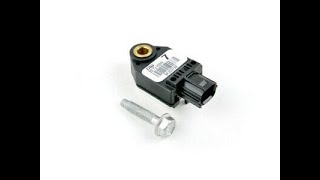
Locate the right front airbag sensor mounted on the radiator core support behind the grille. Look for obvious physical damage to the sensor body, connector, and wiring harness, such as cracks, corrosion, or frayed wires.
Tools: Flashlight (Beginner) - Check for Technical Service Bulletins (TSBs)
Search online for TSBs related to your vehicle's make, model, year, and code B1610. A known issue, like the horn vibration on a Subaru Ascent (TSB 12-240-22R), requires a specific repair procedure.
Tools: Internet Access (Beginner) - Clear the Code and See if it Returns
Using the scanner, clear the B1610 code. Cycle the ignition. If the airbag light and code return immediately, it indicates a 'hard fault' that is currently present. If it does not return, it is an intermittent issue.
Tools: SRS-compatible OBD-II Scanner (Beginner) - Pro Tip: Test the Wiring Circuit for Continuity
Disconnect the sensor and SRS control module. Use a multimeter set to Ohms (Ω) to check continuity on the two wires between the sensor and module connectors. Less than 1.0 Ohm indicates a healthy wire; 'OL' (Open Loop) confirms a broken wire requiring repair.
Tools: Multimeter, Vehicle Wiring Diagram (Advanced) - Pro Tip: Test the Wiring Circuit for Shorts
With the sensor and module disconnected, test each sensor wire for a short to ground. Place one multimeter lead on a wire at the sensor connector and the other on a known good chassis ground. It should read 'OL'. Also test for a short between the two wires by probing both simultaneously; it should also read 'OL'.
Tools: Multimeter, Vehicle Wiring Diagram (Advanced) - Pro Tip: Check for Voltage at the Sensor Connector
With the sensor unplugged and the SRS module connected, turn the ignition ON. Carefully measure the voltage between the two pins in the sensor's harness-side connector. A healthy circuit provides a reference voltage. An absence of voltage points to a wiring or module issue.
Tools: Multimeter, Vehicle Wiring Diagram (Advanced) - Pro Tip: Bench Test the Sensor Resistance (Subaru Specific)
For some Subaru models, the expected resistance across the sensor's pins is approximately 2.0 to 3.0 ohms. A reading of 'OL' (Open Loop) or near-zero ohms indicates an internal failure of the sensor. Compare a suspect sensor to a known-good new part.
Tools: Multimeter (Advanced)
When This Code Triggers (Freeze-Frame Conditions)
- System State: Key-On, Engine-Off (Set during the initial power-on self-test of the Supplemental Restraint System (SRS).)
- Test Duration: 2-5 seconds (The SRS module logs the code if an open or short is detected for as little as two seconds during startup.)
- Vehicle Speed: 0 mph (This is an electrical circuit check performed while stationary, unrelated to driving conditions.)
- Battery Voltage: 9-16 Volts (Low battery voltage during startup causes false test failures and triggers SRS codes.)
Related Codes
- B1615 — Indicates 'Front Airbag Sensor (LH) Malfunction'. Swapping the left and right sensors is the ultimate diagnostic test: if B1610 changes to B1615 after the swap, the sensor is bad. If B1610 remains, the right-side wiring is bad.
- B1000 — Indicates 'ECU Malfunction'. If present alongside B1610, the SRS control module itself is likely dead and generating false sensor codes. Diagnose B1000 first.
- B1801 — Indicates an 'Open in Driver Side Squib Circuit,' relating to the steering wheel airbag inflator. If B1801 appears with B1610, it indicates two separate faults in the SRS system requiring independent diagnosis.
- B0111 / B0116 — Refers to an 'Open in Side Squib Circuit' for the right (B0111) and left (B0116) seat airbags. Their presence with B1610 suggests widespread system damage (e.g., flood vehicle) or a failing SRS module throwing multiple codes.
Climate & Environmental Factors
- Road Salt and Moisture: Snow belt and coastal vehicles suffer accelerated corrosion on the sensor body and electrical connector pins, causing outright circuit failure.
- Water Intrusion: Deep puddles, pressure washing, or missing fender liners force water into the sensor connector, causing immediate electrical shorts and long-term pin rot.
How to Talk to a Mechanic About This Code
Say this: "My scanner pulled code B1610 for the right front impact sensor circuit. I need a diagnostic to confirm if the sensor failed or if there is a break in the wiring harness."
This signals you are informed and have already done preliminary research. It focuses the technician's diagnostic efforts on the specific, relevant system (SRS) and helps prevent them from starting from scratch or suggesting unrelated services.
Avoid saying:
- 'My airbag light is on, can you just reset it?'
- 'Just replace the front sensor.' (Invites the shop to fire the parts cannon without testing the wiring, wasting your money).
- 'Just fix whatever is wrong with the safety system.' (This is too vague and can lead to unnecessary upsells on other components).
Questions to ask before authorizing the repair:
- What specific tests did you perform to confirm the cause? (e.g., Did you test the wiring continuity? Did you swap sensors?)
- Is the recommended part a new Original Equipment Manufacturer (OEM) part? (For SRS components, this is critical).
- If the sensor is replaced and the light comes back, is the diagnostic fee applied to further troubleshooting of the circuit?
- What is your warranty on both the parts and the labor for this specific repair?
Where to Take It: Dealer vs Independent vs Chain
- Dealer:
Best for: Vehicles under warranty., Known manufacturer-specific issues covered by a Technical Service Bulletin (TSB), like the Subaru Ascent horn problem., Complex diagnostics that may require proprietary software or programming a new SRS module.
Downsides: Labor rates often exceed $180/hour and OEM parts are sold at full MSRP., May default to replacing larger, more expensive assemblies rather than isolating a specific wiring fault. (Typical cost: +50% vs. baseline) - Independent Shop:
Best for out-of-warranty vehicles. An independent shop specializing in electrical diagnostics can trace a B1610 wiring fault for half the labor cost of a dealership.
Best for: Out-of-warranty vehicles where cost is a factor., Diagnosing common failures like a bad sensor or a wiring issue., Shops with a strong reputation in electrical and SRS diagnostics.
Downsides: Quality and expertise vary widely; vetting is crucial. Look for ASE certifications and positive reviews related to electrical or SRS work., May not have the latest manufacturer-specific tools for module programming on very new models. (Typical cost: +0% vs. baseline) - Chain Shop:
AVOID. Chain shops lack the specialized training and advanced scan tools required for critical SRS diagnostics. Do not trust safety systems to general lube techs.
Best for: Simple, routine maintenance like oil changes or tires.
Downsides: Technician skill varies dramatically; they often lack the specialized training for complex SRS diagnostics., High pressure to meet sales quotas can lead to misdiagnosis and unnecessary parts replacement., May lack the advanced scan tools needed to properly diagnose and reset the SRS module. (Typical cost: -10% vs. baseline)
When to Walk Away From the Repair
If the B1610 repair estimate exceeds 40% of your car's private-party value, pause and reconsider the investment.
- Car worth $4000, fix is $700: Fix it. This repair is well below the 40% threshold and resolves a critical safety issue.
- Car worth $3000, fix is $1600: Walk away. The repair cost is over 50% of the car's value. It's very likely not a sound financial decision.
- Car worth $8000, fix is $1800: Borderline. The cost is significant but below the threshold. Get a second opinion, especially if the diagnosis points to the expensive SRS control module.
What Scan Tool You Need for This Code
Minimum: A scanner that can specifically read and clear codes from the SRS (Airbag) module. A basic engine-only OBD-II reader will NOT work for this code.
A $20 engine code reader cannot read 'B' (Body) codes. It will report 'no codes found' despite the glowing airbag light. You must use a scanner with dedicated SRS module access.
Budget: BlueDriver Pro (~$99) — Connects to your smartphone via Bluetooth. It can read and clear SRS codes on many popular makes/models. It also provides repair reports based on the code. You must verify compatibility for your specific vehicle on their website.
Mid-range: Foxwell NT630 Plus (~$150) — A dedicated handheld scanner known for strong ABS and SRS capabilities. It will reliably read and clear the B1610 code and can perform some active tests on safety system components, which is excellent for more advanced DIY diagnosis.
Professional: Autel MaxiCOM MK808 (~$450) — A professional-grade tablet scanner that provides full-system diagnostics, including deep analysis of the SRS module. It can read/clear codes, view live sensor data, and perform many service functions. This is more than enough for B1610 and is a great investment for serious DIYers.
Rent vs buy: Buy. Auto parts stores that offer free/rental tools typically only provide basic engine code readers. These tools cannot access the SRS module. To diagnose a B1610 code, you must either purchase a capable scanner or take the vehicle to a repair shop.
How to Clear the Code After You Fix It
- Verify the physical fault (bad sensor, broken wire) is repaired.
- Reconnect the vehicle's negative battery terminal.
- Connect an SRS-compatible OBD-II scan tool to the vehicle.
- Access the SRS/Airbag module menu and select 'Clear' or 'Erase' DTCs.
Drive cycle (~1 minutes): SRS codes require no drive cycle. After clearing the code, cycle the ignition off for 10 seconds, then back to 'ON'. The airbag light will illuminate for a 5-second self-test and turn off. If it stays on, the hard fault remains.
Readiness monitors affected: None
Watch out for:
- Disconnecting the battery never clears SRS hard codes; an SRS-capable scanner is mandatory.
- Using a $20 basic engine code reader that cannot communicate with the SRS module.
- Clearing the code without fixing the root cause forces the light to return immediately on the next key cycle.
Will This Fail Emissions / State Inspection?
No — by itself this code doesn't fail OBD inspection (but it can keep readiness monitors from setting, which causes a separate fail).
- California: Passes smog check. The SRS system is excluded from California emissions testing.
- New York: Fails safety inspection. Recent NY legislation mandates automatic failure for an illuminated airbag light.
- Texas: Passes state inspection. Texas only fails vehicles for an active 'Check Engine' light, ignoring SRS warnings.
Most Commonly Affected Vehicles
- Subaru Ascent (2019-2022) — Subject to TSB 12-240-22R. Right-side horn (350 Hz) vibrations trigger false B1610 codes. Fixed by swapping horn locations and modifying the harness.
- Toyota Corolla (2007-2013) — Highly prone to front impact sensor failure. Left and right sensors are identical (Part #89173-09120), making the left/right swap test the definitive diagnostic step.
- Toyota Tacoma (2005-2015) — Exposed front sensor locations make these trucks highly susceptible to sensor failure and engine bay wiring harness corrosion.
- Toyota Matrix (2005-2013) — A known issue on these models, often pointing to a malfunction in the right front sensor circuit. In some cases, the sensor is found missing entirely after incomplete body repair work.
- Toyota Prius (2004-2009) — Service manuals detail specific diagnostic procedures for B1610, including wiring resistance checks, indicating it is a recognized potential fault.
- Lexus IS, ES, RX (2006-2013) — Commonly reported. While sensor failure is possible, owners frequently find breaks in the wiring harness between the sensor and the SRS module, even with no visible damage.
- Hyundai / Kia Elantra, Sonata, Optima (2011-2018) — Typically points to the same primary causes: a bad sensor or wiring damage near the front of the vehicle. Diagnosis follows standard component and circuit checks.
- Chevrolet Aveo (2009-2015) — For some GM vehicles, B1610 refers to an immobilizer system fault, not an airbag sensor. This is accompanied by a flashing security light and a no-start condition.
Manufacturer-Specific Notes
- Toyota / Lexus: Factory diagnostics dictate swapping the identical left and right front impact sensors. If the code follows the sensor (changing to B1615), the sensor is bad. If it stays B1610, the wiring is bad.
- Subaru: On 2019-2022 Ascents, holding the horn for 5 seconds triggers a false B1610 code due to resonant vibrations. TSB 12-240-22R fixes this by swapping the high and low-tone horn locations.
- General Motors / Nissan: While B1610 almost always refers to an airbag sensor in Japanese makes, some manufacturers use similar codes to indicate an immobilizer or anti-theft system problem. The primary symptom is a no-start condition, not an airbag light.
- Toyota: Safety Recall J0X: Certain 2018-2019 Tundra/Sequoia and 2019 Avalon models were recalled for airbag ECU software erroneously detecting a fault at startup and setting B1610. The remedy was a free software update.
Real Owner Stories
2008 Lexus IS F with persistent B1610
Airbag light came on for no apparent reason. Scanned code B1610.
What they tried:
- Swapped the left and right front impact sensors; the B1610 code remained, proving the sensor was not the problem.
- Purchased and installed a replacement SRS control module, but the code still did not clear.
- Finally tested the two wires in the harness running from the control module to the right sensor and found no continuity.
Outcome: The owner ran two new, dedicated wires from the SRS module to the sensor connector. Soldering these bypassed the hidden harness break, permanently resolving the code.
Lesson: Don't assume the most expensive part (the module) is the cause. A simple continuity test after a failed sensor swap identifies wiring breaks, saving hundreds of dollars.
2007 Toyota Corolla with B1610
Airbag light was on. A scan revealed code B1610, pointing to the right front sensor circuit.
What they tried:
- Confirmed the wiring and connector looked visually okay.
- Swapped the identical left and right front impact sensors.
- Rescanned the vehicle, and the code changed to B1615 (Left Front Sensor Malfunction).
Outcome: The swap test proved the right-side sensor was dead. The owner installed a new OEM sensor (Part #89173-09120) for $154, cleared the codes, and restored the airbag system.
Lesson: For Toyota and Lexus vehicles, the sensor swap is the most effective and cheapest first diagnostic step. It provides a clear 'go/no-go' result on the sensor's health before spending money on parts.
2020 Subaru Ascent with B1610
Airbag light appeared intermittently. Dealer scan showed B1610.
What they tried:
- Technician consulted Subaru's Technical Service Bulletins and found TSB 12-240-22R.
- Following the TSB, the technician performed a test by starting the engine and then holding the horn on for 5-6 seconds.
- The B1610 code and airbag light immediately reappeared, confirming the TSB condition.
Outcome: The dealer performed the TSB repair, physically swapping the locations of the high-tone and low-tone horns and modifying the wiring harness. The issue was resolved under warranty.
Lesson: Always check for TSBs, especially on newer models. An unusual problem that seems unrelated to the fault (like a horn causing an airbag light) is often a documented issue with a specific fix.
2012 Toyota Tacoma with multiple SRS codes
Purchased a used truck with the airbag light and a flashing 'RSCA' light on. Codes B1610, B1615, and others were present.
What they tried:
- Sent the Airbag ECU to a service to be reset, which did not solve the problem.
- Replaced the clock spring due to finding shoddy wiring from the previous owner.
- Discovered evidence of a previous, poorly repaired front-end collision.
Outcome: The owner was left with a complex electrical problem involving multiple failed sensors and potential harness damage stemming from the hidden accident. The simultaneous presence of B1610 and B1615 pointed to a widespread system fault.
Lesson: When buying a used car, an active airbag light is a major red flag. Multiple sensor codes indicate a prior accident. A pre-purchase inspection is critical to avoid inheriting expensive safety system repairs.
How to Prevent This Code From Triggering
- Apply Dielectric Grease to Connectors (Anytime an SRS connector is disconnected for service) — Apply dielectric grease to the rubber seal of the SRS connector to block moisture and road salt, preventing pin corrosion.
- Inspect Fender Liners and Splash Shields (During every oil change or tire rotation) — Replace cracked or missing fender liners immediately to prevent water and road debris from directly striking the front impact sensors.
- Use Caution When Cleaning the Engine Bay (As needed) — Avoid spraying high-pressure water directly at electrical components, especially airbag sensors and their bright yellow connectors. Forceful water bypasses connector seals and causes immediate shorts.
- Maintain a Healthy Battery and Clean Terminals (Annually) — The SRS module performs a self-test at every startup. Low system voltage from a weak battery or corroded terminals causes this self-test to fail, erroneously setting SRS codes.
Frequently Asked Questions
Is it safe to drive my car with a B1610 code?
No. The vehicle drives normally, but the entire airbag system is offline. It offers zero crash protection and must be repaired immediately.
Will my airbags deploy in an accident if the B1610 code is active?
No. The SRS control module disables the entire system to prevent accidental deployment when a sensor fails. Airbags remain disabled until the fault is fixed and the code cleared.
Can I replace the airbag sensor myself?
Yes, for intermediate DIYers. You must disconnect the negative battery terminal for 90 seconds to discharge backup power and prevent accidental deployment. An SRS-compatible scanner is required to clear the code afterward.
Why is my airbag light still on after replacing the sensor?
The SRS module stores 'hard codes' that do not self-clear. Disconnecting the battery will not work; you must use an SRS-compatible scanner to erase the code and turn off the light.
What's the biggest misdiagnosis for B1610?
Replacing the sensor without testing the wiring. Always perform a left/right sensor swap or multimeter continuity test first. Many replace a perfectly good sensor when the real issue is a broken wire.
My car was in a minor accident and now has a B1610. The airbags didn't deploy, so what's wrong?
Low-speed impacts easily damage internal sensor components or stretch the wiring harness. Collision repair standards dictate replacing impact sensors in the crash zone, even if they look physically intact.
What does SRS mean on my dashboard?
SRS stands for Supplemental Restraint System. It is the technical term for the airbag system, designed to supplement your primary restraint system (seatbelts).
Key Takeaways
- Code B1610 flags a right front airbag sensor circuit failure, instantly disabling your entire airbag system and making the vehicle unsafe to drive.
- Replacing the $100-$250 front right impact sensor fixes the issue 80% of the time, though damaged wiring or a Subaru-specific horn vibration TSB are also common culprits.
- Swap the left and right front sensors on Toyota and Lexus models; if the code changes to B1615, the sensor is definitively bad.
- Disconnect the battery for at least 90 seconds before starting repairs, and use an SRS-compatible OBD-II scanner to clear the hard code afterward.
Helpful Videos
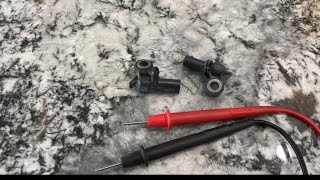

Shop the Parts Behind B1610
Below are the parts most often responsible for code B1610, ranked by how frequently each one is the actual culprit (per the diagnosis above). Tap any to see what we have for your vehicle.



The information in this article is provided for general reference and educational purposes only. Vehicle specifications, procedures, and part compatibility can vary by production date, trim level, and region. Always consult your vehicle's factory service manual and verify part numbers before purchasing or performing repairs. Safety-critical components such as airbags, seat belts, and braking systems should be installed by a qualified professional.
- 🧭 Diagnostic Flowchart
- 🎬 Helpful Videos
- 🛍️ Shop This Part
- What Does B1610 Mean?
- Can I Drive With B1610?
- Common Causes
- Symptoms
- Common Fixes & Costs
- Used vs. New Parts: Buying Guide
- What Happens If You Wait — Timeline
- Cost of Not Fixing It
- Diagnosis Steps
- When This Code Triggers (Freeze-Frame Conditions)
- Related Codes
- Climate & Environmental Factors
- How to Talk to a Mechanic About This Code
- Where to Take It: Dealer vs Independent vs Chain
- When to Walk Away From the Repair
- What Scan Tool You Need for This Code
- How to Clear the Code After You Fix It
- Will This Fail Emissions / State Inspection?
- Most Commonly Affected Vehicles
- Manufacturer-Specific Notes
- Real Owner Stories
- 2008 Lexus IS F with persistent B1610
- 2007 Toyota Corolla with B1610
- 2020 Subaru Ascent with B1610
- 2012 Toyota Tacoma with multiple SRS codes
- How to Prevent This Code From Triggering
- Frequently Asked Questions
- Is it safe to drive my car with a B1610 code?
- Will my airbags deploy in an accident if the B1610 code is active?
- Can I replace the airbag sensor myself?
- Why is my airbag light still on after replacing the sensor?
- What's the biggest misdiagnosis for B1610?
- My car was in a minor accident and now has a B1610. The airbags didn't deploy, so what's wrong?
- What does SRS mean on my dashboard?
- Key Takeaways
- 🎟️ Get 5% Off