

OBD-II Code B1632: Left High Beam Control Circuit Fault
What B1632 means, why it triggers, and how to fix it. Note: The meaning of this code varies significantly by manufacturer.
- For Chrysler, Dodge, and Jeep vehicles, B1632 is usually a wiring harness fault covered by TSB 08-054-21, fixable with a $50 Mopar overlay kit (P/N 68540265AA).
- Diagnose the specific scan tool suffix (B1632-11 for a short to ground vs. B1632-15 for an open circuit) to instantly isolate the fault between the wiring harness and the headlamp assembly.
- Never replace a $500+ headlamp assembly for a B1632 code without first performing a 5-minute continuity and voltage drop test on the wiring circuit.
- Code definitions vary strictly by manufacturer: B1632 means a headlight fault on a Chrysler, a disabled airbag on a Toyota, and a steering lock failure on a Honda.
What Does B1632 Mean?
On many vehicles, particularly from Chrysler, Dodge, Jeep, and Ram, code B1632 means the Body Control Module (BCM) detects an electrical fault in the circuit controlling the left high beam headlight. This is typically an open wire, a short to ground, or a short to power, preventing the BCM from operating the high beam. For manufacturers like Honda, Toyota, Ford, or Mitsubishi, this code points to entirely different systems like the steering lock, airbags, or power mirrors (see 'Manufacturer Quirks' below).
Technical definition: The formal definition for B1632 is Left High Beam Control Circuit Fault. Depending on the specific vehicle and fault nature, it is often specified further as 'Circuit Short To Ground' (B1632-11), 'Circuit Short To Battery or Open' (B1632-15), or 'Circuit Current Above Threshold' (B1632-19). The Body Control Module (BCM) sends a Pulse Width Modulated (PWM) signal to the headlamp. This code sets when the module detects an incorrect voltage, amperage, or lack of connection on that driver circuit.
Can I Drive With B1632?
Yes, But With Caution. You can drive the vehicle, but your left high beam will not function. This presents a significant safety hazard, reducing long-range visibility by at least 50% when driving at night in poorly lit areas. Operating a vehicle with a non-functional high beam is a citable traffic offense in most jurisdictions, resulting in $25-$250 fines and points on your license.
Common Causes
- Faulty Wiring Harness or Connectors (Very Common) — This is the most frequent cause on Chrysler, Dodge, and Jeep models. Technical Service Bulletin (TSB) 08-054-21 identifies a known issue with the L33 circuit wiring between the Power Distribution Center (PDC) and the headlamp connector. The wire chafes, corrodes, or breaks, causing an open or short circuit.
- Melted/Poor Contact at Fuse Block (Common) — On Chrysler platform vehicles, the mini-fuses for the headlights melt at their base, or the terminals in the fuse block (PDC/TIPM) develop poor contact. This creates high resistance, leading to intermittent operation and circuit fault codes even if the fuse remains intact.
- Faulty Headlamp Assembly (Common) — For vehicles with Bi-Xenon/HID headlights, the internal solenoid-actuated shutter that switches between low and high beams fails or sticks. Because this shutter is integrated into the sealed headlamp assembly, the entire unit requires replacement.
- Burned Out High Beam Bulb (Less Common) — A burned-out halogen bulb triggers a circuit code, though it is less frequent than a wiring fault for B1632. The control module expects a specific resistance from the bulb's filament; a broken filament creates an open circuit.
- Rodent Damage to Wiring (Less Common) — Rodents chewing on wiring harnesses is a common cause for mysterious electrical faults. The soy-based wire insulation used in modern cars attracts animals, leading to shorts or open circuits.
- Faulty Body Control Module (BCM) or Power Distribution Center (PDC/TIPM) (Rare) — The electronic driver inside the BCM that sends power to the high beam fails. The PDC, which houses fuses and relays, also fails. On some 2011 models, a BCM software glitch causes a false B1632 code, requiring a dealer update per TSB 08-016-11.
- Blown Fuse (Rare) — A blown fuse for the headlight circuit stops operation and sets a circuit code. Fuses typically blow due to an underlying short circuit in the wiring, requiring root cause diagnosis.
- Incorrect Bulb Installation or Type (Rare) — Using an incorrect bulb type or installing a bulb with loose connections alters the circuit's resistance. This intermittent contact triggers a fault code in sensitive control modules.
Symptoms
- Left high beam does not turn on — The left high beam fails to illuminate when activated.
- High beams flicker or work intermittently — This occurs with a poor wiring connection and is highly noticeable in cold weather, as documented in manufacturer TSBs S1908000212 and 08-054-21.
- High beam indicator on dashboard is on, but light is off — The vehicle's system commands the high beam on, but the bulb remains unlit due to the circuit fault.
- Warning light on the dashboard — A general warning lamp or a specific headlight warning symbol illuminates on the instrument cluster.
- Clicking noise from headlamp assembly with no light — On vehicles with Bi-Xenon/HID headlights, the high beam shutter solenoid attempts to actuate but fails to move, resulting in an audible click but no change in the light pattern.
Diagnostic Flowchart
Tap your situation to follow the diagnostic path that matches what you're seeing on this code.
Common Fixes & Costs
- Repair Wiring Harness with Overlay Kit — Parts: $35-$60 for the Mopar overlay kit., Labor: $150-$225 (labor)., ~1.5 hr book time (Intermediate)
- Replace High Beam Bulb — Parts: $15-$40 for Halogen; $50-$150 for HID/Xenon., Labor: $20-$50 (labor)., ~0.5 hr book time (DIY)
- Replace Headlamp Assembly — Parts: $250-$750 for aftermarket or standard OEM assemblies. $800-$2,500+ for luxury or adaptive LED/HID assemblies., Labor: $150-$300, requires bumper cover removal., ~2 hr book time (DIY)
- Replace Body Control Module (BCM) — Parts: $400-$800 (part only)., Labor: $150-$250 (labor and programming)., ~2 hr book time (Professional)
- Full Wiring Harness Replacement — Parts: $500-$3,000+ depending on make/model., Labor: $1,000-$2,500+ (labor), as this is a 10-20+ hour job., ~12 hr book time (Professional)
Used vs. New Parts: Buying Guide
When a used part is worth it: For a headlamp assembly, buying a used OEM part from a low-mileage, accident-free donor vehicle is the best value. It provides guaranteed OEM fitment and quality at a significant discount compared to a new OEM part from a dealer.
Donor-vehicle mileage cap: roughly under 80000 miles for the part to have meaningful remaining life.
Donor quality checklist:
- Verify the part number matches your original exactly.
- Inspect for clear, non-yellowed lenses and ensure no broken mounting tabs or cracks in the housing.
- Ask the seller about the donor vehicle's history; avoid parts from flood or fire-damaged cars.
Decision logic:
- If Vehicle is under warranty or you prioritize guaranteed longevity → Buy a new OEM part. It is the most expensive but offers the best quality and warranty.
- If Budget is the primary concern and the vehicle is older → A used OEM part is a strong choice. A high-quality aftermarket part (e.g., TYC, Depo) is a second option, but avoid the cheapest online parts, which have poor beam patterns and sealing.
- If The failure is the internal HID shutter and not physical damage → A used OEM assembly is ideal, as you get a working OEM shutter mechanism without paying for a brand new unit.
Warranty tradeoff: Used parts typically have a 30-90 day warranty. New aftermarket parts often come with a 1-year to limited lifetime warranty. New OEM parts carry the manufacturer's standard parts warranty (typically 1-2 years).
Worst-case if a used part fails: $200-$500 if a used or cheap aftermarket part fails prematurely, requiring you to pay for the part again plus another 1.5-3 hours of labor for re-installation.
What Happens If You Wait — Timeline
- 0-1 month: Code B1632 is set. Left high beam is inoperative or flickers intermittently, especially in cold weather. Driver risks a 'fix-it' ticket for defective equipment. (MPG impact: 0%% · Added cost: $0-$250 in potential fines.)
- 1-6 months: If the cause is an intermittent short, continued electrical arcing causes thermal damage to the headlight connector pins and housing, melting the plastic. The vehicle fails any mandatory safety inspection. (MPG impact: 0%% · Added cost: $30-$60 for a new connector pigtail (e.g., Dorman 645-508) plus labor if the original connector is destroyed.)
- 6-12 months: A persistent, unaddressed short circuit places continuous stress on the driver circuit within the Body Control Module (BCM). The high-resistance fault at the fuse box melts the plastic housing of the Power Distribution Center (PDC). (MPG impact: 0%% · Added cost: $200-$500 if the PDC/fuse box requires repair or replacement.)
- 12+ months: Worst-case scenario: the constant stress from the short circuit overloads and destroys the high beam driver circuit inside the BCM. The BCM itself must now be replaced and programmed, a very expensive repair. (MPG impact: 0%% · Added cost: $800-$1,500 for a new BCM and programming.)
Cost of Not Fixing It
- Immediate: Significantly reduced long-range visibility at night, creating a serious safety hazard. Risk of a 'fix-it' ticket or fine. (Added cost: $25-$250 in potential fines, depending on the jurisdiction.)
- 1-12 months: Guaranteed failure of any state-mandated vehicle safety inspection. Continued stress on the electrical system if the fault is an intermittent short. (Added cost: $20-$50 for re-inspection fees, plus time and inconvenience.)
- 6+ months: If the fault is a short circuit, it causes thermal damage to connectors, the wiring harness, or destroys the driver circuit inside the Body Control Module (BCM), requiring a very expensive replacement. (Added cost: $500-$1100+ to replace a damaged BCM.)
Diagnosis Steps
- Verify the Symptom and Check for TSBs
Confirm the left high beam is inoperative. Use a scan tool to read the full DTC, including the suffix (e.g., -11, -15, -19). Check for Technical Service Bulletins (TSBs) for your vehicle. For Chrysler/Dodge/Jeep vehicles, TSB 08-054-21 points directly to a wiring problem, while TSB 08-016-11 requires a software update for 2011 models.
Tools: OBD-II Scanner (BCM capable), internet access (Beginner) - Inspect the High Beam Bulb and Fuse
Visually inspect the high beam bulb for a broken filament. Check the left high beam fuse in the engine bay Power Distribution Center (PDC). Pull the fuse and inspect its terminals and the socket for melting, corrosion, or looseness.
Tools: Flashlight, fuse puller or needle-nose pliers (Beginner) - Inspect the Headlight Connector and Nearby Wiring
Disconnect the electrical connector from the back of the left headlamp assembly. Look for corrosion, melted plastic, or bent pins. Inspect the wiring harness leading to the connector for visible damage, chafing, rodent chew marks, or breaks.
Tools: Flashlight (Beginner) - Pro Tip: Perform a 'Wiggle Test'
With the high beams turned on, carefully wiggle the wiring harness behind the headlamp connector and near the PDC. Gently wiggle the high beam fuse in its socket. If the high beam flickers or turns on, you found the exact location of an intermittent connection.
Tools: Gloves (Intermediate) - Test the Circuit for Voltage
With the headlight disconnected, have a helper turn on the ignition and activate the high beams. Use a multimeter to check for battery voltage at the harness-side power pin. Because the BCM uses a Pulse Width Modulated (PWM) signal, a standard multimeter shows an average voltage (5-10V) rather than full battery voltage (12V+); any stable voltage confirms the BCM is sending power.
Tools: Multimeter (Intermediate) - Check for Continuity and Shorts (Isolate the Fault)
Disconnect the negative battery terminal. Set your multimeter to Ohms. Check for continuity on the ground wire from the headlight connector to a clean chassis ground (must be under 5.0 Ohms). Check for continuity on the power wire between the headlight connector and the PDC/BCM. Test for resistance between the power wire and the chassis; a reading below 10,000 Ohms indicates a short to ground.
Tools: Multimeter, vehicle wiring diagram (Advanced) - Pro Tip: Perform Advanced Circuit Diagnosis (B1632-11 vs. B1632-15)
If you have a B1632-11 (Short to Ground), disconnect the left headlamp connector, turn on the high beams, and re-scan. If the code changes to B1632-15 (Open Circuit), the short is inside the headlamp assembly. If B1632-11 remains, the short is in the wiring harness. This test definitively isolates the fault location.
Tools: OBD-II Scanner (BCM capable) (Advanced) - Advanced: Test Bulb Resistance
To definitively rule out a halogen bulb, remove it and set your multimeter to the lowest resistance setting (200 Ohms). Touch the probes to the two main electrical terminals. A good bulb shows 0.5 to 5 Ohms; an 'OL' reading means the filament is broken. This test does not apply to HID or LED bulbs.
Tools: Multimeter (Advanced) - Pro Tip: Perform a Voltage Drop Test
If voltage is present but the light is dim or flickering, perform a voltage drop test. Connect the positive multimeter lead to the positive battery terminal and the negative lead to the high beam power pin at the connector (with the light on). A reading over 0.5 volts indicates excessive resistance in the power circuit. Repeat on the ground side; a reading over 0.2 volts indicates a bad ground.
Tools: Multimeter with long leads (Advanced) - Isolate and Repair the Fault
If a wiring fault is found, repair the damaged section or install the manufacturer-recommended overlay harness kit (e.g., Mopar Part No. 68540265AA). If all wiring, fuses, and the bulb test good, the fault is the headlamp assembly or the Body Control Module.
Tools: Wiring repair tools or replacement parts (Advanced)
When This Code Triggers (Freeze-Frame Conditions)
- Ignition Status: On / Run (The vehicle's ignition must be on for the BCM to be active and monitor the lighting circuits.)
- High Beam Switch Status: Commanded On (The fault is detected at the exact moment the driver activates the high beams and the BCM attempts to power the circuit.)
- System Voltage: 11.5V - 14.5V (The code sets under normal vehicle operating voltage; it is not caused by a low battery.)
- Fault Status: Active (The BCM detects a mismatch between the commanded state (on) and the circuit's electrical feedback (open, short, or high current).)
Related Codes
- B1636 — This is the identical fault but for the 'Right High Beam Control Circuit'. If both B1632 and B1636 appear together, it strongly suggests a common problem like a faulty wiring harness design (per TSB 08-054-21) or a failing BCM/PDC.
- B1632-11 — This specifies the fault is 'Circuit Shorted to Ground'. To diagnose, disconnect the headlamp. If the code remains B1632-11, the short is in the harness. If it changes to B1632-15, the short is inside the headlamp assembly.
- B1632-15 — This specifies the fault is 'Circuit Shorted to Battery or Open'. This is the code most commonly associated with the broken wire issue in the Chrysler TSB. If this code appears after disconnecting a headlamp that was causing a B1632-11, it confirms the fault is internal to the lamp assembly.
- B1632-19 — This specifies the fault is 'Circuit Current Above Threshold'. This means the BCM detected the high beam circuit drawing too much amperage. This is caused by a partially shorted wire or an internal fault in the headlamp assembly.
Climate & Environmental Factors
- Cold Weather: Cold temperatures cause faulty wires and connectors to contract, making intermittent open circuits more frequent. This is a classic symptom of the wiring issue described in Chrysler TSBs S1908000212 and 08-054-21, leading to flickering or inoperative high beams specifically in the cold.
- High Humidity / Salt: In regions with high humidity or heavy road salt use (the 'Rust Belt'), the wiring harness is highly susceptible to corrosion. The TSB-identified fault area, where the harness chafes against the vehicle body, allows moisture to penetrate the wiring, accelerating corrosion and leading to open circuits or shorts to ground.
How to Talk to a Mechanic About This Code
Say this: "I have a B1632 code on my Chrysler (or Dodge/Jeep). I know there's a TSB for a wiring issue on these cars. I'd like to schedule a diagnostic, but please test the circuit between the fuse box and the headlight before quoting a full headlamp assembly replacement."
This signals to the shop that you are an informed customer. It directs them to the most likely, and cheapest, repair first, preventing them from immediately quoting a very expensive headlamp assembly which is a common misdiagnosis for this code.
Avoid saying:
- My high beam is out, can you fix it?
- Just do whatever it takes to fix the light.
- My check engine light is on.
Questions to ask before authorizing the repair:
- Did you perform a continuity and voltage drop test on the headlight circuit?
- Have you checked the TSB for this issue (TSB 08-054-21)?
- Is the fault in the wiring harness or inside the headlamp assembly itself?
- What is the warranty on this specific repair and the parts used?
Where to Take It: Dealer vs Independent vs Chain
- Dealer:
Good for specific software/module issues, but be cautious of upselling. Insist they check the wiring TSB first.
Best for: Vehicles under warranty., Repairs that require a BCM software update (as per TSB 08-016-11 for 2011 models)., If the fault is confirmed to be the BCM, as they have the specific programming tools.
Downsides: Highest labor rates., Highly inclined to replace the entire expensive headlamp assembly rather than perform a wiring repair. (Typical cost: +50% vs. baseline) - Independent Shop:
Best choice for most common B1632 scenarios (a wiring fault on a CDJR vehicle). Find a reputable local shop that specializes in auto electrics.
Best for: Out-of-warranty Chrysler, Dodge, or Jeep vehicles., Cost-effective diagnosis and repair of the known wiring fault., General electrical troubleshooting.
Downsides: Quality is variable; ensure the shop has good reviews and ASE-certified technicians specializing in electrical systems., Does not always have access to the very latest TSBs as quickly as a dealer. (Typical cost: +0% vs. baseline) - Chain Shop:
AVOID for diagnosing this code. Their business model is not suited for the type of circuit testing required to fix B1632 correctly.
Best for: Simple bulb replacement ONLY if you are certain that is the problem.
Downsides: Not equipped or trained for in-depth electrical diagnosis., High pressure to sell parts; replaces perfectly good headlamp assemblies without proper testing. (Typical cost: -10% vs. baseline)
When to Walk Away From the Repair
If the estimated repair cost exceeds 40-50% of the car's Kelley Blue Book private-party value, consider trading it in or selling it as-is.
- Car worth $4000, fix is $250: Fix it. This is a relatively inexpensive repair that restores a critical safety feature.
- Car worth $4000, fix is $1500: Borderline. The shop likely quoted a full headlamp assembly. Get a second opinion from an independent electrical specialist and mention the wiring TSB.
- Car worth $2500, fix is $1500: Walk away. The repair cost is over 50% of the vehicle's value. It is not economically sensible to proceed.
What Scan Tool You Need for This Code
Minimum: A scanner that reads manufacturer-specific codes from the Body Control Module (BCM).
A basic $20 engine code reader will NOT work. It only reads 'P' (Powertrain) codes from the engine computer. B1632 is a 'B' (Body) code stored in a different module. You need a full-system scanner to see this code at all. Most free scanning services at auto parts stores also cannot read BCM codes.
Budget: MUCAR BT200 / XTOOL A30D (~$80) — These are Bluetooth dongles that connect to a smartphone app. They perform a full system scan, read BCM codes like B1632, and clear them after the repair. Some offer limited bidirectional tests.
Mid-range: Foxwell NT510 Elite / Autel MaxiPRO MP808 (~$160-400) — These are powerful handheld or tablet scanners. They provide full system diagnostics, live data streaming, and special functions. The Foxwell NT510 is loaded with manufacturer-specific software for deep bidirectional controls, extremely useful for advanced diagnosis.
Professional: Autel MaxiSys MS906Pro / Launch X431 Series (~$500-1200) — These professional-grade tools offer full bidirectional control, module coding, and programming capabilities. They perform the advanced diagnostics needed if the fault is in the BCM itself.
Rent vs buy: AutoZone's loaner tool program typically only offers basic engine code readers, which are not sufficient for this B-code. If you are a DIYer, buying a budget-level full-system scanner (under $100) is a worthwhile investment for diagnosing this and future issues on modern cars.
How to Clear the Code After You Fix It
- Use an OBD-II scan tool capable of reading BCM codes to clear the fault.
- Alternatively, disconnect the negative battery terminal for 15 minutes to reset the module.
- Cycle the high beams on and off several times to confirm the repair and ensure the code does not return.
Drive cycle (~10 minutes): A specific drive cycle is not required. After clearing the code, start the engine. Turn the headlights on and activate the high beams for 30 seconds. Turn them off. Repeat this process 3-4 times. Re-scan for codes to confirm the fix is complete.
Readiness monitors affected: No emissions readiness monitors are affected by a B-series code.
Before emissions retest: drive at least 100 miles to fully set monitors.
Watch out for:
- The code returns immediately if the underlying electrical fault (wiring, bulb, etc.) is not properly repaired.
- If you reset the BCM by disconnecting the battery, you also reset all emissions readiness monitors, requiring a 50-100 mile drive cycle before the vehicle passes a smog test. Radio presets are also lost.
Will This Fail Emissions / State Inspection?
No — by itself this code doesn't fail OBD inspection (but it can keep readiness monitors from setting, which causes a separate fail).
- California: This code does not cause a failure of the OBD-II smog check itself, but a non-functional high beam causes a failure of the mandatory visual/functional safety inspection. For some vehicle transfers, a separate 'Brake and Lamp Inspection' is required, which this fails.
- New York: The annual safety inspection in NY requires all lights to be functional, including high beams. A B1632 code with a corresponding inoperative high beam results in an automatic inspection failure.
- Texas: As of 2025, annual safety inspections for non-commercial vehicles are eliminated. Therefore, this code does not prevent vehicle registration. However, driving with defective safety equipment, like a non-working high beam, remains a citable offense.
Most Commonly Affected Vehicles
- Chrysler 300 (2011-2023) — Extremely common issue due to a known wiring harness fault between the PDC and headlamp, documented in TSB 08-054-21. The issue is consistent across the entire generation. 2011 models have a separate TSB (08-016-11) for a BCM software fix.
- Dodge Charger (2011-2023) — Shares the same platform and wiring architecture as the Chrysler 300, making it prone to the identical high beam circuit fault. The TSB for the wiring overlay kit applies.
- Dodge Challenger (2011-2023) — Built on the same platform and suffers from the identical documented wiring harness issue leading to code B1632.
- Ram 1500/2500/3500 (2013-2018) — These trucks log B1632 for left high beam circuit faults, often related to wiring or the Power Distribution Center (TIPM).
- Jeep Grand Cherokee (2011-2021) — Shares electrical components and designs with other Chrysler products, making it susceptible to similar wiring and BCM-related lighting circuit faults.
- Ford F-150, various models (2009-2020) — On Ford vehicles, B1632 does not relate to headlights but indicates 'Mirror Driver Left Circuit Open', a fault in the power mirror system.
- Honda CR-V, Accord, Civic (2017-2023) — On modern Hondas, B1632 indicates a 'MTR CONT Signal Error' related to the electric steering lock and keyless access system, causing a no-start condition.
- Toyota RAV4, various models (2013-2021) — For Toyota models, B1632 is an airbag system code for 'Lost Communication with Rear Airbag Sensor RH'. This is a critical safety system fault.
- Mitsubishi Lancer, Outlander (2008-2017) — On Mitsubishi vehicles, B1632 indicates an 'open circuit' in the driver's knee airbag squib system, a critical safety fault.
Manufacturer-Specific Notes
- Chrysler / Dodge / Jeep: Multiple TSBs exist. TSB 08-054-21 provides a wiring overlay kit (Mopar P/N 68540265AA) for flickering/inoperative high beams. TSB S1908000212 addresses high beams failing in cold weather. TSB 08-016-11 notes that some 2011 models require a BCM software update to fix a false B1632-15 code. A recall (P08 / NHTSA 14V-101) was issued for 2011-2012 Dodge Chargers for overheating low beam connectors, a similar but distinct issue.
- Honda: On Honda vehicles like the CR-V and Accord, B1632 indicates a 'MTR CONT Signal Error' related to the keyless access control unit and the electric steering lock. Symptoms include a no-start condition, a steering lock that won't disengage, and keyless entry problems.
- Toyota: For Toyota models like the RAV4, B1632 is an airbag system code meaning 'Lost Communication with Rear Airbag Sensor RH' or 'Curtain Shield Airbag Sensor Lost Communication (RH)'. This is a serious safety issue that disables part of the airbag system and requires immediate professional diagnosis.
- Ford: On certain Ford models, B1632 is defined as 'Mirror Driver Left Circuit Open', indicating a fault within the driver's side power mirror circuit, completely unrelated to lighting.
- Mitsubishi: On Mitsubishi vehicles, B1632 indicates a fault with the driver's knee airbag, specifically 'Driver's Knee Air Bag Squib Open-Circuited'. This is a critical safety system code that requires immediate attention and diagnosis of the SRS system.
- Chevrolet / GM: On some GM vehicles, a B1632 code in the Body Control Module must be diagnosed after any theft deterrent system codes (like P1632 in the ECM). A theft deterrent issue triggers related B-codes, so the anti-theft system must be repaired first.
Real Owner Stories
2015 Dodge Charger - Classic Wiring Failure
Owner reported the left high beam flickered and then stopped working entirely, especially on cold mornings. The B1632-15 (Open Circuit) code was present.
Outcome: After finding TSB 08-054-21 online, the owner purchased the Mopar wiring overlay kit (P/N 68540265AA) for about $50. Following a YouTube tutorial, they installed the new wire from the PDC to the headlamp connector in about an hour. This permanently fixed the problem.
Lesson: On Chrysler/Dodge vehicles, this code is very frequently a wiring issue covered by a TSB. Always investigate the wiring before agreeing to a costly headlamp replacement.
2018 Honda CR-V - No-Start Condition
Vehicle was completely dead in a parking lot. The push-to-start button did not respond, and the steering wheel was locked. The B1632 'MTR CONT Signal Error' code was retrieved by a mobile mechanic.
Outcome: The fault was traced to a failed electric steering lock module. The module was replaced, requiring removal of the lower dash panel. The new module was programmed to the vehicle's immobilizer system using a capable scan tool. Total repair cost was around $700.
Lesson: On many modern Hondas, B1632 is a critical immobilizer/steering lock fault, not a lighting issue. Symptoms are typically a no-start condition and a locked steering wheel.
2019 Toyota RAV4 - Airbag Light On
The vehicle's airbag warning light came on and stayed on. No other symptoms were present. A scan revealed code B1632: 'Curtain Shield Airbag Sensor Lost Communication (RH)'.
Outcome: A professional diagnosis was required. A technician found corrosion in a connector plug for the rear right airbag sensor, located behind the interior trim panels. Cleaning the connector and clearing the code resolved the issue. Had the sensor itself failed, it would have been a more expensive repair.
Lesson: On a Toyota, B1632 is a serious safety system code. While the cause is sometimes a simple wiring or connector issue, it disables part of the airbag system and requires immediate professional attention.
2021 Jeep Gladiator - Flickering Headlight (Easy Fix)
The left headlight and daytime running light flickered intermittently, eventually setting code B1632.
Outcome: A quick search revealed Jeep TSB S2208000054RevA, pointing to a loose ground nut. The owner located the G905A ground point behind the left headlight assembly, found the 13mm nut was loose, and tightened it. The problem was solved in 15 minutes with zero cost.
Lesson: Always perform a quick search for TSBs related to your specific vehicle and code. The fix is sometimes incredibly simple and well-documented, saving a trip to the shop.
How to Prevent This Code From Triggering
- Apply Dielectric Grease to Connectors (Whenever a connector is disconnected (e.g., changing a bulb).) — Dielectric grease is a non-conductive, silicone-based lubricant that seals electrical connectors from moisture, dirt, and salt. Applying a small amount to the rubber seal and around the plastic housing prevents corrosion, which is a primary cause of high resistance and circuit faults.
- Secure and Protect Wiring Harnesses (During any under-hood maintenance.) — The common failure for B1632 on Chrysler products is wiring chafing against the vehicle body. Visually inspect harnesses to ensure they are properly secured with clips and are not rubbing against sharp metal edges or hot components. Use zip ties or protective wire loom/conduit to secure any loose sections.
- Implement Rodent Deterrents (If parking outdoors in a known risk area.) — Modern soy-based wire insulation attracts rodents. You can use peppermint oil-soaked cotton balls, commercially available repellent sprays, or special capsaicin-laced tape (like Honda Part 4019-2317) to wrap vulnerable harnesses. Ultrasonic electronic deterrents are also an option.
- Regularly Clean Engine Bay and Undercarriage (Seasonally, especially after winter in salt-belt regions.) — Washing away road salt, dirt, and grime reduces the corrosive elements that compromise wiring insulation and connector integrity over time. A clean engine bay also makes it easier to spot potential issues like fluid leaks or harness damage.
Frequently Asked Questions
My mechanic wants to replace the whole headlight assembly for over $1,000. Is this necessary for a B1632 code?
Not always, especially on a Chrysler, Dodge, or Jeep. The most frequent cause is a wiring fault between the fuse box and the headlight, documented in TSB 08-054-21. The official fix is a wiring overlay kit (Mopar P/N 68540265AA) that costs under $60, saving you from buying an expensive headlamp.
What is the difference between a B1632-11 and a B1632-15 code?
The suffix is critical for diagnosis: B1632-11 means a short to ground, while B1632-15 means an open circuit. By unplugging the headlight, a technician can see if a 'short to ground' code changes to an 'open circuit' code. This simple test determines if the fault is in the wiring harness or inside the headlight assembly itself.
Can I just replace the high beam bulb to fix a B1632 code?
While a bad bulb causes an open circuit, for this specific code the cause is much more likely a wiring issue. Always inspect the wiring and fuses before spending money on new parts.
What is a TSB and why is it important for code B1632?
A Technical Service Bulletin (TSB) is a document issued by a manufacturer to its dealers about a known problem. For B1632 on many Chrysler products, TSB 08-054-21 identifies the exact cause (a wiring flaw) and the official repair procedure. This saves time and prevents unnecessary replacement of expensive parts.
My high beams flicker in the cold. Is this related to B1632?
Yes, high beam flickering in cold temperatures is a classic symptom of the wiring issue that causes code B1632. Cold causes the faulty wire or connector to contract, creating an intermittent open circuit.
Why does my Honda show code B1632 when my headlights work fine?
On Hondas, B1632 is not related to the headlights. It points to a problem with the electric steering lock and keyless start system, which causes a no-start condition. This highlights why it is crucial to know that code definitions vary between manufacturers.
My Toyota has a B1632 code and the airbag light is on. Is this serious?
Yes, this is a serious safety issue. On a Toyota, B1632 indicates a loss of communication with a rear airbag sensor, meaning a portion of your airbag system is disabled. You must have the vehicle professionally diagnosed and repaired immediately.
Key Takeaways
- For Chrysler, Dodge, and Jeep vehicles, B1632 is usually a wiring harness fault covered by TSB 08-054-21, fixable with a $50 Mopar overlay kit (P/N 68540265AA).
- Diagnose the specific scan tool suffix (B1632-11 for a short to ground vs. B1632-15 for an open circuit) to instantly isolate the fault between the wiring harness and the headlamp assembly.
- Never replace a $500+ headlamp assembly for a B1632 code without first performing a 5-minute continuity and voltage drop test on the wiring circuit.
- Code definitions vary strictly by manufacturer: B1632 means a headlight fault on a Chrysler, a disabled airbag on a Toyota, and a steering lock failure on a Honda.
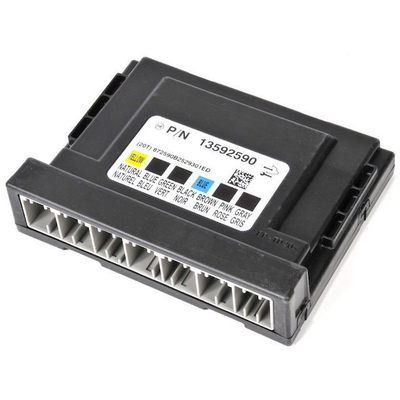
Shop the Parts Behind B1632
Below are the parts most often responsible for code B1632, ranked by how frequently each one is the actual culprit (per the diagnosis above). Tap any to see what we have for your vehicle.




The information in this article is provided for general reference and educational purposes only. Vehicle specifications, procedures, and part compatibility can vary by production date, trim level, and region. Always consult your vehicle's factory service manual and verify part numbers before purchasing or performing repairs. Safety-critical components such as airbags, seat belts, and braking systems should be installed by a qualified professional.
- 🧭 Diagnostic Flowchart
- 🛍️ Shop This Part
- What Does B1632 Mean?
- Can I Drive With B1632?
- Common Causes
- Symptoms
- Common Fixes & Costs
- Used vs. New Parts: Buying Guide
- What Happens If You Wait — Timeline
- Cost of Not Fixing It
- Diagnosis Steps
- When This Code Triggers (Freeze-Frame Conditions)
- Related Codes
- Climate & Environmental Factors
- How to Talk to a Mechanic About This Code
- Where to Take It: Dealer vs Independent vs Chain
- When to Walk Away From the Repair
- What Scan Tool You Need for This Code
- How to Clear the Code After You Fix It
- Will This Fail Emissions / State Inspection?
- Most Commonly Affected Vehicles
- Manufacturer-Specific Notes
- Real Owner Stories
- 2015 Dodge Charger - Classic Wiring Failure
- 2018 Honda CR-V - No-Start Condition
- 2019 Toyota RAV4 - Airbag Light On
- 2021 Jeep Gladiator - Flickering Headlight (Easy Fix)
- How to Prevent This Code From Triggering
- Frequently Asked Questions
- My mechanic wants to replace the whole headlight assembly for over $1,000. Is this necessary for a B1632 code?
- What is the difference between a B1632-11 and a B1632-15 code?
- Can I just replace the high beam bulb to fix a B1632 code?
- What is a TSB and why is it important for code B1632?
- My high beams flicker in the cold. Is this related to B1632?
- Why does my Honda show code B1632 when my headlights work fine?
- My Toyota has a B1632 code and the airbag light is on. Is this serious?
- Key Takeaways
- 🎟️ Get 5% Off