

OBD-II Code B1636: A Complete Diagnostic Guide
What B1636 means, why it triggers, and how to fix it on any vehicle
- Code B1636 is manufacturer-specific: it flags a right high beam failure on a 2015 Chrysler 300, but indicates a disabled curtain airbag on a 2005 Toyota Sienna.
- For 2011-2021 Chrysler, Dodge, and Jeep vehicles, fix flickering high beams by requesting a $150-$250 Body Control Module (BCM) software update before replacing any $500+ headlight assemblies.
- Search for Technical Service Bulletins (TSBs) like Chrysler's 08-054-21 or Ford's wiring splice issues before spending a single dollar on diagnostic time.
- Never use a standard multimeter to test an airbag circuit for a Toyota B1636 code, as the 9-volt battery inside the meter supplies enough current to accidentally deploy the airbag.
What Does B1636 Mean?
B1636 is a manufacturer-specific body trouble code indicating the Body Control Module (BCM) detects an electrical fault in a specific circuit. On Chrysler and Dodge vehicles, it flags a right high beam failure. On Ford models, it points to a passenger-side power mirror circuit open. On Toyota vehicles, it signals a disabled curtain airbag circuit.
Technical definition: The SAE/ISO definition for B1636 varies by manufacturer. Common definitions include 'Right High Beam Control Circuit Short/Open' (Chrysler/Dodge), 'Mirror Driver Right Circuit Open' (Ford), and 'Open in Curtain Shield Squib Rear (LH) Circuit' (Toyota). The BCM sets this code upon detecting a short to ground, short to power, or open circuit in the monitored component.
Can I Drive With B1636?
Yes, But With Caution. Yes, but a critical safety feature is disabled. On Chrysler and Dodge vehicles, a dead high beam dangerously reduces night visibility. On Toyota models, the specific airbag will NOT deploy in an accident. On Ford vehicles, a dead passenger mirror compromises situational awareness. Drive to a repair shop, but avoid night driving if headlights are affected.
Common Causes
- Outdated BCM Software (Very Common) — On 2011-2021 Chrysler, Dodge, and Jeep vehicles, overly sensitive BCM software triggers this code in cold weather. The computer misinterprets natural temperature-related resistance changes as a wiring fault, disabling the high beam.
- Damaged or Corroded Wiring Harness (Common) — Wires leading to the affected component fray, break, or short out from chassis friction or moisture. On Ford F-150s, a corroded factory splice for the mirror power feed in the passenger kick panel is the primary culprit.
- Faulty Component (Headlight, Mirror, or Airbag) (Common) — The physical component fails internally. High beam shutter solenoids break, power mirror adjustment motors burn out, or airbag squibs develop internal open circuits.
- Poor Ground Connection (Common) — A loose or corroded ground wire causes high resistance and intermittent operation. On Chrysler vehicles, corroded ground points G101 and G901a in the front engine bay frequently cause lighting circuit codes.
- Melted or Blown Fuse (Less Common) — A fuse housing melts from sustained heat without blowing the filament, creating a poor connection. This occurs frequently on Chrysler/Dodge platforms at fuses F15 and F16 in the engine bay.
- Aftermarket Accessory Interference (Less Common) — Improperly installed LED headlight bulbs, remote starters, or alarms alter circuit resistance. The BCM interprets these non-standard electrical characteristics as a short or open circuit.
Symptoms
- Right High Beam Inoperative or Flickering — The right high beam fails to turn on or flickers rapidly, specifically in temperatures below 40°F. This is the defining symptom for Chrysler, Dodge, and Jeep vehicles.
- Passenger Power Mirror Inoperative — The passenger-side mirror ignores commands from the interior control switch. This is the primary symptom on Ford and GM vehicles.
- Airbag Warning Light Illuminated — The SRS/airbag warning light illuminates permanently on the dashboard. On Toyota models, this indicates the curtain airbag circuit is disabled.
- Adaptive Headlight Warning Message — A dashboard warning appears, and the headlights stop turning with the steering wheel. This occurs on Hyundai and BMW models due to a LIN bus communication error.
Common Fixes & Costs
- Update Body Control Module (BCM) Software — Parts: $0, Labor: $150-$250, ~1.0 hr book time (Professional)
- Install Wiring Harness Overlay Kit
— Parts: $40-$60, Labor: $150-$250, ~1.5 hr book time
(Intermediate)
: OEM - Repair Damaged Wiring or Splice — Parts: $10-$25, Labor: $150-$300, ~2.0 hr book time (Advanced)
- Replace Side View Mirror Assembly
— Parts: $100-$400, Labor: $75-$150, ~1.0 hr book time
(Beginner)
: OEM - Replace Headlight Assembly
— Parts: $300-$800, Labor: $150-$300, ~2.0 hr book time
(Intermediate)
: OEM
Used vs. New Parts: Buying Guide
When a used part is worth it: Purchase a used OEM headlight or mirror assembly from a salvage yard if your vehicle is over 10 years old and new OEM parts exceed $500. Ensure exact part number matching.
Donor-vehicle mileage cap: roughly under 100000 miles for the part to have meaningful remaining life.
Donor quality checklist:
- Verify the donor vehicle was not in a collision affecting the purchased component.
- Inspect headlight lenses for severe hazing and mirror glass for delamination.
- Demand a minimum 30-day warranty for electronic components.
Decision logic:
- If The fix is a software update or wiring repair → Do not buy parts; pay for diagnostic labor or dealership programming.
- If Vehicle is under 5 years old → Buy new OEM parts to guarantee reliability and maintain factory warranties.
- If New OEM headlight assembly exceeds $800 → Purchase a certified used OEM assembly or a high-quality aftermarket brand like TYC or Depo.
Warranty tradeoff: Used parts offer 30-day warranties. New aftermarket parts offer 1-year warranties. New OEM parts provide 1-2 year guarantees.
Worst-case if a used part fails: $150-$300 in duplicate labor costs if a cheap aftermarket part fails prematurely.
What Happens If You Wait — Timeline
- Immediate: The code sets and disables a specific function. A dead high beam creates a night driving hazard and risks a traffic ticket. A disabled airbag drastically increases injury risk in an accident. (MPG impact: 0%% · Added cost: $50-$200 (Potential traffic ticket))
- 1-3 months: The vehicle fails mandatory state safety inspections due to inoperative lights or illuminated airbag warnings. Moisture in compromised connectors accelerates corrosion. (MPG impact: 0%% · Added cost: $20-$50 (Inspection re-test fee))
- 3-12 months: Corrosion wicks up the copper wire under the insulation, turning a simple connector replacement into a complex harness section repair. Unresolved shorts cause intermittent battery drain. (MPG impact: 0%% · Added cost: $250-$600 (Complex wiring repair))
- 12+ months: A persistent, high-resistance short overheats and destroys the driver circuit inside the Body Control Module, requiring complete BCM replacement and programming. (MPG impact: 0%% · Added cost: $800-$2000 (BCM replacement))
Cost of Not Fixing It
- Immediate: Reduced night visibility and risk of a traffic ticket for a dead headlight. Drastically increased injury risk due to a disabled airbag. (Added cost: $50-$200)
- 0-6 months: Automatic failure of mandatory state safety inspections due to inoperative lights or illuminated dashboard warning lights. (Added cost: $20-$50)
- 6+ months: An unresolved short circuit overheats the BCM driver circuit, requiring complete module replacement instead of a simple wire repair. (Added cost: $800-$2000)
Diagnosis Steps
- Check Technical Service Bulletins (TSBs)
Search for TSBs related to B1636 for your specific year, make, and model. For Chrysler/Dodge, TSBs 08-054-21 and S1908000212 mandate a software update or wiring overlay, bypassing all other diagnostic steps.
Tools: ['Smartphone or Computer', 'Vehicle VIN'] (Beginner) - Test with a Bidirectional Scan Tool
Connect a professional scan tool and navigate to the BCM. Command the faulty circuit ON and OFF (e.g., 'Right High Beam On' or 'Mirror Move Right'). If the component works via the scanner but not the physical switch, replace the switch. If it fails, the issue is in the wiring or the component.
Tools: ['Bidirectional OBD-II Scan Tool'] (Intermediate) - Visually Inspect the Fuse and Wiring
Pull the fuse for the affected component and inspect for a melted plastic housing or blown filament. Trace the wiring harness from the component back to the firewall, checking for chafing, green corrosion at connectors, or broken wires in door jambs.
Tools: ['Flashlight', 'Needle-nose pliers'] (Beginner) - Perform a Voltage Drop Test on the Ground
Set a multimeter to a low DC voltage scale. Connect the positive lead to the component's ground pin and the negative lead to the battery's negative terminal. Activate the circuit. A reading above 300mV indicates excessive ground resistance requiring repair.
Tools: ['Digital Multimeter', 'Back-probe pins'] (Advanced) - Test Circuit Integrity
Disconnect the battery, BCM, and component. For a Short to Ground (-11 suffix), check continuity between the control wire and chassis ground; it must read OL (Open Line). For an Open Circuit (-15 suffix), check end-to-end continuity on the control wire; it must read under 1.0 ohm.
Tools: ['Digital Multimeter', 'Vehicle-specific wiring diagram'] (Advanced) - Diagnose LIN Bus Communication (Hyundai)
For Hyundai adaptive headlight faults, connect an oscilloscope to the LIN wire at the headlamp. A healthy signal is a square wave switching between 0V and 12V. If flatlined, disconnect headlamps one by one until the waveform returns to identify the shorted module.
Tools: ['Oscilloscope', 'Vehicle-specific wiring diagram'] (Professional) - Test Airbag Squib Circuit (Toyota)
WARNING: Never use a multimeter on an airbag circuit; it supplies enough current to deploy the airbag. Use an SRS scan tool and replace the suspected squib with an OEM resistor pack. If the code clears, the airbag squib is faulty and requires replacement.
Tools: ['Professional SRS-compliant scan tool', 'Special service tool (SST) / SRS resistor pack'] (Professional)
When This Code Triggers (Freeze-Frame Conditions)
- Battery Voltage: 11.5-12.5V (Key On, Engine Off)
- Ignition Status: RUN (The code sets when the ignition is on and the BCM actively monitors circuits.)
- Ambient Air Temperature: < 40°F / 5°C (Chrysler/Dodge software faults trigger almost exclusively in cold weather.)
Related Codes
- B1632 — Indicates a LEFT side high beam fault on Chrysler/Dodge vehicles. B1632 and B1636 frequently appear together because the underlying BCM software defect affects both headlight circuits.
- B1636-11 — A manufacturer suffix specifying a 'Circuit Short to Ground'. The BCM detects the circuit's power wire is directly touching the vehicle's metal chassis.
- B1636-15 — A manufacturer suffix specifying a 'Circuit Short to Battery or Open'. The wire is either physically broken (open) or touching a live 12V power source.
- U0140 — Indicates 'Lost Communication with Body Control Module'. If present, diagnose U0140 first, as an offline BCM cannot provide accurate circuit fault codes.
Climate & Environmental Factors
- Cold Temperatures: Temperatures below 40°F trigger B1636 on Chrysler, Dodge, and Jeep vehicles. The BCM misinterprets the natural increase in cold-weather circuit resistance as a short or open circuit.
- High Humidity and Road Salt: Moisture penetrates poorly sealed connectors and factory splices, accelerating corrosion. This is the primary cause of Ford power mirror circuit failures.
How to Talk to a Mechanic About This Code
Say this: "For Chrysler/Dodge: 'I have a B1636 code and the right high beam fails in the cold. Please check TSBs for a BCM software update or wiring overlay before quoting a headlight.' For Ford: 'I have a B1636 Mirror Circuit Open code. Please inspect the door jamb wiring and passenger kick panel splice before replacing the mirror.' For Toyota: 'My airbag light is on with code B1636. I need an SRS-certified diagnostic for an open curtain airbag circuit.'"
This specific language proves you are an informed consumer. It directs technicians to the cheapest, most probable fixes first, preventing them from immediately quoting expensive module or assembly replacements.
Avoid saying:
- 'My high beam is broken'
- 'Just fix the code'
- 'My car has an electrical problem'
Questions to ask before authorizing the repair:
- (Chrysler) Did you confirm my BCM has the latest software update per the TSB?
- (Ford) Can you show me the corroded splice or broken wire you found?
- (Toyota) Which specific part of the SRS circuit tested faulty with the resistor pack?
- What were the results when you commanded the component with the bidirectional scanner?
Where to Take It: Dealer vs Independent vs Chain
- Dealer:
Mandatory for Chrysler/Dodge software updates. Strongly recommended for Toyota airbag faults.
Best for: Chrysler, Dodge, and Jeep vehicles requiring proprietary BCM software updates., Toyota vehicles requiring critical airbag (SRS) system diagnosis.
Downsides: Labor rates are 25-50% higher than independent shops., Service advisors may push for module replacement if you don't specifically request TSB checks. (Typical cost: +40% vs. baseline) - Independent Shop:
The best choice for Ford mirror faults, general wiring repairs, and component replacements.
Best for: Ford and GM vehicles where the fault is a broken wire or corroded splice., Out-of-warranty vehicles requiring component replacement.
Downsides: May lack the manufacturer-specific tools (like wiTECH) required for software flashes., Requires vetting to ensure the shop has strong electrical diagnostic capabilities. (Typical cost: +0% vs. baseline) - Chain Shop:
AVOID. The complexity of B1636 requires specialized diagnostics that chain shops do not provide.
Best for: Not recommended for this code.
Downsides: Technicians lack training for manufacturer-specific 'B' codes and advanced scan tools., Extremely high risk of misdiagnosis and unnecessary parts replacement. (Typical cost: -10% vs. baseline)
When to Walk Away From the Repair
If the estimated repair cost exceeds 50% of the vehicle's private-party value, consider selling or scrapping the car.
- Car worth $4500, fix is $200: Fix it. A $200 software update on a $4500 Chrysler 300 is an excellent value.
- Car worth $4500, fix is $1800: Borderline. An $1800 BCM replacement is 40% of the car's value. Get a second opinion to confirm a cheaper wiring fix isn't possible.
- Car worth $2500, fix is $1500: Walk away. The repair cost is 60% of the vehicle's value. Sell the car as a mechanic's special.
What Scan Tool You Need for This Code
Minimum: A scanner capable of reading manufacturer-specific Body (BCM) and Supplemental Restraint System (SRS) codes.
Basic $20 code readers only scan the engine computer (Powertrain codes). They will display 'No Codes Found' while the BCM actively logs B1636.
Budget: BlueDriver Pro Scan Tool (~$100) — Connects via Bluetooth to read and clear enhanced codes from the BCM and SRS modules, allowing you to see B1636.
Mid-range: Innova 5610 (~$180) — Provides bidirectional control to actively command components (e.g., 'Turn on right high beam'), isolating the fault to the switch, wiring, or component.
Professional: Autel MaxiCOM MK808S (~$450) — Offers full bidirectional control and OE-level live data for professional diagnosis of complex wiring and module faults.
Rent vs buy: Auto parts store loaner tools are basic readers that cannot see BCM codes. You must buy a capable scanner or pay a shop's diagnostic fee.
How to Clear the Code After You Fix It
- Reconnect all components and ensure the battery is fully charged.
- Use a bidirectional OBD-II scan tool to clear codes from the Body Control Module (BCM) or SRS module.
- Cycle the ignition off, then back to RUN.
- Operate the repaired component (high beams, mirror) multiple times to verify the code does not return.
Drive cycle (~5 minutes): A traditional emissions drive cycle is not required. A simple key cycle and physical function test forces the BCM to re-run its circuit self-test immediately.
Watch out for:
- Disconnecting the battery fails to clear hard codes from the BCM's non-volatile memory.
- The code returns instantly upon key-on if the underlying short or open circuit remains unfixed.
Will This Fail Emissions / State Inspection?
No — by itself this code doesn't fail OBD inspection (but it can keep readiness monitors from setting, which causes a separate fail).
- California: B1636 will not fail the emissions OBD-II check, but an illuminated airbag light or dead headlight causes an automatic failure of the safety inspection.
- New York: Annual safety inspections require fully functional high beams and a clear airbag system. This code guarantees an inspection failure.
- Texas: Driving with an inoperative high beam violates the two-headlamp requirement, resulting in a failed annual safety inspection.
Most Commonly Affected Vehicles
- Chrysler 300 (2011-2021) — Extremely common right high beam failure. TSB S1908000212 requires a software update; TSB 08-054-21 requires a wiring overlay harness.
- Dodge Charger (2011-2021) — Shares the Chrysler 300 platform and suffers identical BCM software and high beam wiring issues. A 2011-2012 recall (14V-101) addresses related low-beam overheating.
- Dodge Challenger (2011-2021) — Shares the Charger/300 electronics architecture and requires the exact same TSB software updates for high beam failures.
- Ford F-150, Explorer, Focus (2010-2020) — B1636 indicates 'Mirror Driver Right Circuit Open'. Caused by broken wires in the door jamb boot or corroded splices in the passenger kick panel.
- Chevrolet Silverado, Malibu, Volt (2012-2019) — Indicates various body circuit issues, including airbag harnesses on the Volt or generator control modules on the Malibu. Requires a GM-specific scanner.
- Hyundai Genesis, Tucson (2012-2016) — Indicates a LIN Communication Error with the Adaptive Front-Lighting System (AFLS), caused by a wiring break or failed headlamp module.
- Toyota Sienna (2004-2010) — Indicates an 'Open in Curtain Shield Squib Rear (LH) Circuit'. This is a critical airbag system fault requiring specific SRS diagnostic procedures.
- Jeep Grand Cherokee, Wrangler (2014-2021) — Shares Chrysler electronics and experiences the same right high beam software faults. On hybrid models, it indicates an A/C compressor driver malfunction.
Manufacturer-Specific Notes
- Chrysler / Dodge / Jeep: B1636 is overwhelmingly caused by a BCM software calibration defect that flags false high beam faults in cold weather. TSB S1908000212 (software update) and TSB 08-054-21 (wiring overlay 68540265AA) are the definitive fixes.
- Hyundai: B1636 indicates a LIN bus communication failure within the Adaptive Front-Lighting System (AFLS). Diagnosis requires an oscilloscope to verify the square wave signal at the headlamp module.
- Toyota: B1636 is a critical Supplemental Restraint System (SRS) code indicating a disabled left rear curtain airbag. It has absolutely nothing to do with lighting or mirrors and requires specialized SRS diagnostic tools.
- Ford: B1636 specifically means 'Mirror Driver Right Circuit Open'. The fault is rarely the mirror motor itself; it is almost always a broken wire in the door jamb or a corroded factory splice in the passenger kick panel.
Real Owner Stories
2016 Dodge Charger - The Cold Weather Software Fix
The right high beam flickered and shut off exclusively on mornings below 40°F, triggering code B1636.
Outcome: The owner found Chrysler TSB 08-054-21 and visited a dealership. A $180 BCM software update permanently resolved the issue.
Lesson: For Chrysler/Dodge high beam issues in cold weather, a BCM software update is the definitive fix. Never replace expensive headlight assemblies without checking TSBs first.
2015 Ford F-150 - The Corroded Splice Misdiagnosis
The passenger power mirror stopped working entirely, logging code B1636 'Mirror Driver Right Circuit Open'.
Outcome: An auto electrician found a corroded factory wire splice in the passenger kick panel. A $200 wire repair fixed the issue, rendering the $400 in parts unnecessary.
Lesson: A 'Circuit Open' code points to broken wiring, not necessarily a failed motor. Always inspect door jamb harnesses and kick panel splices on Ford trucks before buying parts.
2005 Toyota Sienna - The Airbag Surprise
The dashboard airbag light illuminated. A basic scanner pulled code B1636, which the owner mistakenly assumed was a headlight issue based on generic internet searches.
Outcome: A technician with an SRS scanner confirmed the code meant 'Open in Curtain Shield Squib'. Re-seating a loose connector under the C-pillar trim fixed the disabled airbag for $120.
Lesson: B1636 definitions are strictly manufacturer-dependent. An airbag light is a critical safety failure requiring immediate professional diagnosis, not a generic DIY fix.
How to Prevent This Code From Triggering
- Apply Dielectric Grease to Connectors (Whenever a connector is disconnected) — Dielectric grease seals electrical connectors from moisture and salt, preventing the corrosion that causes open and shorted circuits.
- Clean Battery Terminals and Chassis Grounds (Once per year) — Corrosion increases overall electrical system resistance, straining control modules and causing intermittent voltage drops that trigger false codes.
- Secure Wiring Harnesses (During any under-hood maintenance) — Zip-tying loose harnesses prevents wires from rubbing against sharp metal edges or hot exhaust manifolds, eliminating future short circuits.
- Ensure Professional Installation of Aftermarket Electronics (During accessory installation) — Improperly tapped wires overload factory circuits. Using dedicated fused relays prevents aftermarket LEDs or alarms from triggering BCM circuit codes.
Frequently Asked Questions
Can I just replace the high beam bulb to fix code B1636?
No. B1636 is a circuit code indicating a wiring or control module fault, not a burned-out bulb filament. Replacing the bulb will not resolve the issue.
What does the '-11' or '-15' at the end of the code mean?
These suffixes specify the exact electrical fault type. '-11' indicates a circuit short to ground, while '-15' means a short to battery power or an open (broken) wire.
Will disconnecting the battery clear the B1636 code?
Disconnecting the battery clears the code temporarily, but it returns immediately once the BCM runs its self-test. You must fix the underlying electrical or software issue to keep the code away.
I was told I need a new BCM, is that accurate?
BCM replacement is a common misdiagnosis. The actual cause is usually outdated software, a wiring problem, or a faulty component. Always verify TSBs and perform circuit diagnostics before replacing an expensive module.
Can I pass a state inspection with code B1636 active?
No. If the code disables a safety feature like a high beam or illuminates an airbag warning light, the vehicle fails inspection automatically in most states.
Why does my high beam only fail in cold weather?
On Chrysler and Dodge vehicles, the BCM's diagnostic software is overly sensitive to natural resistance changes in cold temperatures. A dealership software update corrects this sensitivity.
Should I pay $1,500 for a new headlight assembly?
Decline this repair until the shop checks for TSBs. For Chrysler/Dodge, the fix is usually a $200 software update or wiring kit. Always rule out wiring and software faults before replacing expensive assemblies.
Key Takeaways
- Code B1636 is manufacturer-specific: it flags a right high beam failure on a 2015 Chrysler 300, but indicates a disabled curtain airbag on a 2005 Toyota Sienna.
- For 2011-2021 Chrysler, Dodge, and Jeep vehicles, fix flickering high beams by requesting a $150-$250 Body Control Module (BCM) software update before replacing any $500+ headlight assemblies.
- Search for Technical Service Bulletins (TSBs) like Chrysler's 08-054-21 or Ford's wiring splice issues before spending a single dollar on diagnostic time.
- Never use a standard multimeter to test an airbag circuit for a Toyota B1636 code, as the 9-volt battery inside the meter supplies enough current to accidentally deploy the airbag.
Shop the Parts Behind B1636
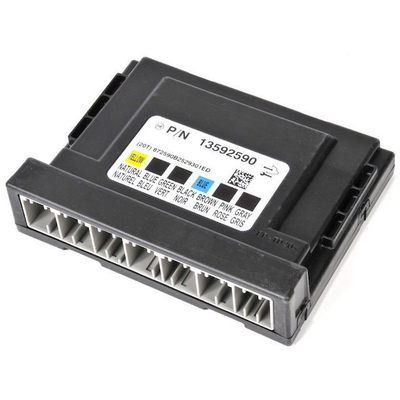
Below are the parts most often responsible for code B1636, ranked by how frequently each one is the actual culprit (per the diagnosis above). Tap any to see what we have for your vehicle.



The information in this article is provided for general reference and educational purposes only. Vehicle specifications, procedures, and part compatibility can vary by production date, trim level, and region. Always consult your vehicle's factory service manual and verify part numbers before purchasing or performing repairs. Safety-critical components such as airbags, seat belts, and braking systems should be installed by a qualified professional.
- 🛍️ Shop This Part
- What Does B1636 Mean?
- Can I Drive With B1636?
- Common Causes
- Symptoms
- Common Fixes & Costs
- Used vs. New Parts: Buying Guide
- What Happens If You Wait — Timeline
- Cost of Not Fixing It
- Diagnosis Steps
- When This Code Triggers (Freeze-Frame Conditions)
- Related Codes
- Climate & Environmental Factors
- How to Talk to a Mechanic About This Code
- Where to Take It: Dealer vs Independent vs Chain
- When to Walk Away From the Repair
- What Scan Tool You Need for This Code
- How to Clear the Code After You Fix It
- Will This Fail Emissions / State Inspection?
- Most Commonly Affected Vehicles
- Manufacturer-Specific Notes
- Real Owner Stories
- 2016 Dodge Charger - The Cold Weather Software Fix
- 2015 Ford F-150 - The Corroded Splice Misdiagnosis
- 2005 Toyota Sienna - The Airbag Surprise
- How to Prevent This Code From Triggering
- Frequently Asked Questions
- Can I just replace the high beam bulb to fix code B1636?
- What does the '-11' or '-15' at the end of the code mean?
- Will disconnecting the battery clear the B1636 code?
- I was told I need a new BCM, is that accurate?
- Can I pass a state inspection with code B1636 active?
- Why does my high beam only fail in cold weather?
- Should I pay $1,500 for a new headlight assembly?
- Key Takeaways
- 🎟️ Get 5% Off