

OBD-II Code B1674: Multi-System Fault (Manufacturer-Specific)
What B1674 means, why it triggers, and how to fix it. **Important:** This code has several different meanings depending on your vehicle's manufacturer.
- Code B1674 has at least four different meanings depending on your vehicle make, requiring a manufacturer-specific scan tool to diagnose correctly.
- On 2006-2012 Dodge Ram trucks, B1674 almost always indicates a failed ABS control module, which disables anti-lock brakes and costs $400-$1050 to replace or rebuild.
- For Ford, Toyota, and GM vehicles, this code disables the passenger airbag due to a faulty seat occupant sensor or corroded under-seat wiring.
- On Chrysler and Dodge minivans, B1674 points to a driver's door courtesy light failure, often caused by a faulty $150-$250 Driver Door Module (DDM) or TIPM.
What Does B1674 Mean?
B1674 is a manufacturer-specific code pointing to a different system depending on your car. For Dodge vehicles, it signals a failure in the Anti-lock Brake System (ABS). For Chrysler/Dodge minivans, it indicates a fault in the driver's door courtesy light circuit. For Ford, Toyota, and Chevrolet, it points to a short in the passenger seat airbag sensor. For select Chrysler sedans, it means an ignition system malfunction.
Technical definition: The formal definition of B1674 varies by manufacturer: - **Dodge:** ABS Left Rear Dump Solenoid valve Circuit Open. - **Chrysler (Type 1):** Driver Courtesy Lamp Control Circuit High. - **Chrysler (Type 2):** Igniter No. 4 Circuit Malfunction. - **Generic/Other (Ford, Toyota, GM):** Seat Driver Occupied Input Circuit Short To Battery.
Can I Drive With B1674?
Yes, But With Caution. Driving is possible but highly discouraged due to severe safety risks. If the code indicates a disabled ABS system (Dodge), stopping distance on slippery surfaces increases by 25% or more. If it indicates a faulty airbag sensor (Ford, Toyota, GM), the passenger airbag is disabled, drastically increasing injury risk. For an ignition fault (Chrysler), driving more than 50 miles destroys the catalytic converter, adding $1,200-$2,800 to the repair cost.
Common Causes
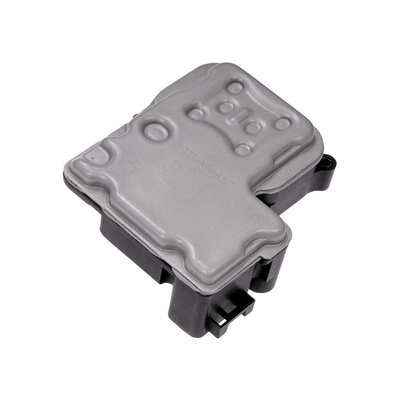
- Faulty ABS Control Module (EBCM) (Very Common) — On Dodge vehicles, this is the most frequent cause. The code indicates an internal malfunction within the electronic brain of the anti-lock brake system, specifically the left rear dump solenoid.
- Damaged Wiring or Connectors (Common) — A broken wire, corroded pin, or loose connector interrupts the signal across all vehicle makes. This frequently occurs in wiring under the passenger seat (airbag sensors) or inside the flexible door jamb boot (courtesy lights).
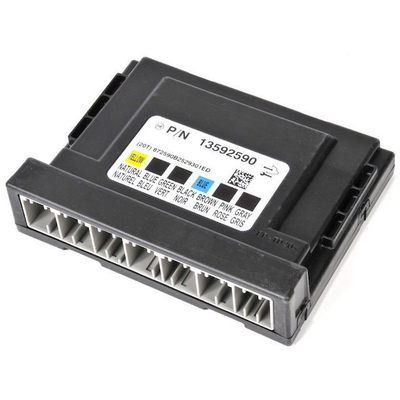
- Failed Driver Door Module (DDM) (Common) — On Chrysler/Dodge minivans, the computer inside the driver's door controlling lights, locks, and windows fails. Water intrusion from a degraded window seal is the primary trigger.
- Faulty Totally Integrated Power Module (TIPM) (Common) — The main fuse box (TIPM) on 2007-2016 Chrysler/Dodge vehicles contains internal relays that fail. Because the TIPM directly controls the Driver Door Module, this triggers a B1674 courtesy lamp code.
- Faulty Seat Occupant Classification Sensor (Less Common) — The weight-detecting sensor mat in the passenger seat cushion fails. This triggers an airbag warning light and disables the passenger airbag.
- Failed Ignition Igniter or Coil Circuit (Rare) — On specific Chrysler models, this points to an ignition circuit failure for cylinder #4, caused by a bad igniter or wiring between the igniter and the Powertrain Control Module (PCM).
- Software Glitch in Control Module (Rare) — A software anomaly within a control module (BCM or DDM) sets a false B1674 code. Disconnecting the battery for 20 minutes or performing a dealer software update resolves this.
Symptoms
- ABS Light On — On Dodge vehicles, the ABS warning light illuminates, indicating the anti-lock braking system is disabled.
- Airbag Warning Light On — For seat sensor faults, the SRS light illuminates and the 'Passenger Airbag OFF' message displays, even when an adult occupies the seat.
- Driver's Door Courtesy Light Not Working — On Chrysler and Dodge minivans, the small light on the bottom or side of the driver's door fails to turn on when opened.
- Erratic Interior Lights or Door Lock Behavior — In Chrysler/Dodge minivans, a failing Driver Door Module or TIPM causes flickering interior lights, self-activating power locks, or inoperable windows.
- Engine Misfire or Rough Idle — For the Chrysler ignition fault, the engine runs poorly, shakes at idle, or hesitates during acceleration because cylinder #4 is not firing.
Diagnostic Flowchart
Tap your situation to follow the diagnostic path that matches what you're seeing on this code.
Common Fixes & Costs
- Replace ABS Control Module — Parts: $250-$800, Labor: $150-$250, ~1.5 hr book time (Professional)
- Repair Damaged Wiring — Parts: $10-$30, Labor: $150-$400, ~2 hr book time (DIY)
- Replace Driver Door Module (DDM) — Parts: $150-$250, Labor: $100-$200, ~1 hr book time (Intermediate)
- Replace Seat Occupant Sensor Mat — Parts: $500-$1300, Labor: $150-$250, ~2 hr book time (Professional)
- Repair or Replace TIPM — Parts: $500-$1500, Labor: $150-$300, ~1.5 hr book time (Professional)
- Replace Ignition Igniter/Coil — Parts: $30-$120, Labor: $80-$200, ~0.8 hr book time (Intermediate)
DIY vs Professional
- Replace ABS Control Module — Beginner: No
Tools: Socket set, torque wrench, professional scan tool for bleeding and programming. - Replace Driver Door Module (DDM) — Beginner: Yes
Tools: Trim removal tools, screwdriver set (Phillips and Torx), socket set. - Replace Seat Occupant Sensor Mat — Beginner: No
Tools: Socket set, hog ring pliers, upholstery tools, professional scan tool for calibration. - Repair Damaged Wiring — Beginner: Yes
Tools: Multimeter, wire cutters/strippers, soldering iron or quality crimp connectors, heat shrink tubing.
Used vs. New Parts: Buying Guide
When a used part is worth it: For expensive electronic modules like an ABS Control Module or a Driver Door Module on an older vehicle, a used part from a reputable salvage yard is a cost-effective option.
Donor-vehicle mileage cap: roughly under 100000 miles for the part to have meaningful remaining life.
Donor quality checklist:
- Verify the part number on the used module exactly matches the original.
- Purchase from a seller offering at least a 90-day warranty.
- For ABS modules, ensure the donor vehicle was not involved in a major front-end collision.
- Avoid parts from flood-damaged vehicles due to hidden corrosion.
Decision logic:
- If The part is a safety-critical component like a seat occupant sensor → buy new OEM. Aftermarket options are rare and the risk of a used part failing is too high.
- If The part is an electronic module (ABS, DDM) and the vehicle is over 10 years old → a warrantied used part is an acceptable budget-friendly alternative to a new part.
- If The new part requires programming that can only be done by a dealer → factor in the programming cost ($100-$250) for both new and used parts, as used modules must be reprogrammed to the new vehicle's VIN.
Warranty tradeoff: Used parts typically come with a 30-90 day warranty covering the part only. New aftermarket parts have a 1-year to limited lifetime warranty, while new OEM parts carry a 1-2 year warranty.
Worst-case if a used part fails: $300-600 if a used electronic module is dead on arrival, as you pay for labor a second time.
What Happens If You Wait — Timeline
- 0-1 month: Warning light (ABS or Airbag) illuminates. For the ABS fault, the system is immediately disabled. For the airbag fault, the passenger airbag is disabled. For courtesy light/ignition faults, the specific function fails. (MPG impact: 0%% · Added cost: $0)
- 1-4 months: For the ABS fault, the brake pedal becomes unresponsive. For the ignition fault, unburnt fuel coats the catalytic converter, reducing its efficiency. (MPG impact: 0-5% (for ignition fault only)% · Added cost: $50-150 in wasted fuel (ignition fault))
- 4-8 months: For the ABS fault, the module's internal failure worsens, affecting speedometer readings. For the ignition fault, the catalytic converter becomes superheated, causing a significant exhaust restriction. (MPG impact: 5-15% (for ignition fault)% · Added cost: $1200-2800 (catalytic converter replacement becomes necessary))
- 8+ months: A completely failed ABS module causes the brakes to lock up erratically. A completely melted catalytic converter causes severe engine performance issues. A wiring issue left unfixed chafes through other wires, causing complex electrical faults. (MPG impact: 15-25% (for ignition fault)% · Added cost: $1500-3500 (engine performance diagnosis and repair of multiple components))
Cost of Not Fixing It
- Immediate: If the code indicates an ABS fault, the anti-lock braking system is disabled, increasing the risk of skidding. If it indicates an airbag fault, the passenger airbag will not deploy in a crash. (Added cost: N/A)
- 0-3 months: For the ignition misfire variant, continued driving causes unburnt fuel to enter the exhaust, overheating and destroying the catalytic converter. (Added cost: $1200-2800)
- 3+ months: Ignoring an ABS module fault leads to severe electrical issues within the module, making a less expensive rebuild impossible and forcing a full replacement. (Added cost: $500-1000)
Diagnosis Steps
- Confirm the Code's Meaning for Your Vehicle
Identify which system this code refers to on your specific vehicle. Use a high-quality OBD-II scanner that reads manufacturer-specific definitions. A generic reader shows 'B1674' without context, guaranteeing misdiagnosis.
Tools: Professional OBD-II Scanner (Beginner) - Perform a Thorough Visual Inspection
For Seat Sensor faults, inspect wiring under the front passenger seat for corrosion or loose connections. For Courtesy Light faults, examine the wiring inside the rubber boot between the driver's door and body for broken wires.
Tools: Flashlight, trim removal tools (Beginner) - Test Power and Ground at the ABS Module (Dodge)
Locate the ABS control module (EBCM). Disconnect the module and use a multimeter to verify it receives full battery voltage (12.4-12.8V) on its power pins and has less than 1 ohm of resistance to ground. A loss of either causes internal fault codes.
Tools: Multimeter, socket set, vehicle-specific wiring diagram (Advanced) - ABS Solenoid Resistance Test (Dodge)
Disconnect the ABS module connector. Identify the two pins for the Left Rear Dump Solenoid. Measure resistance between these pins using a multimeter. A healthy ABS solenoid reads 5-12 ohms. Infinity (OL) indicates an open circuit.
Tools: Multimeter, wiring diagram (Advanced) - Live Data Analysis (Seat Sensor)
Use an advanced scan tool to access Occupant Classification System (OCS) live data. With the seat empty, the sensor reads 0 lbs. Have an adult sit in the seat; the reading must reflect their weight. Unchanging status confirms a faulty sensor mat or circuit.
Tools: Advanced OBD-II Scanner (Advanced) - Advanced DDM Circuit Test (Chrysler Courtesy Light)
Disconnect the driver's courtesy lamp. With the door open and lights commanded OFF, probe the power wire at the connector. You must read a 'phantom' monitoring voltage of 8 volts from the DDM. 12V indicates a short to power; 0V indicates an open circuit.
Tools: Multimeter (Advanced) - Check All Related Fuses
Consult your owner's manual to locate fuses for the ABS, SRS, BCM, and DDM. A blown fuse confirms a shorted circuit that requires immediate repair.
Tools: Fuse puller or needle-nose pliers (Beginner) - Check for Shorts to Voltage (Seat Sensor)
Disconnect the seat sensor and SRS module. Probe the signal wire at the module connector with a multimeter set to DC volts. Any voltage reading above 0.1V confirms a short in the harness between the module and sensor.
Tools: Multimeter, wiring diagram (Professional) - Ignition Signal Test (Chrysler Igniter)
Using an oscilloscope, back-probe the IGT and IGF signal wires for cylinder #4 at the PCM. The IGT signal must be a clean 5V square wave during cranking. An absent IGF signal with a present IGT signal confirms a bad igniter.
Tools: Oscilloscope, wiring diagram (Professional)
When This Code Triggers (Freeze-Frame Conditions)
- Vehicle Speed: 0 mph (The fault is detected during the module's power-on self-test immediately after starting the vehicle.)
- Battery Voltage: 11.8-12.5V (Key-On, Engine-Off. Low battery voltage triggers false module communication codes.)
- System Status: Fault Active (Indicates the code was set on the current ignition cycle and the fault is present now.)
Related Codes
- B1673 — For Chrysler/Dodge vehicles, this code for 'Driver Courtesy Lamp Control Circuit Low' is the direct counterpart to B1674. B1674 indicates a short to power, while B1673 indicates a short to ground.
- B1675 — This code for 'Seat Driver Occupied Input Circuit Short To Ground' is the direct counterpart to the B1674 seat sensor definition. Diagnostically, you test the same circuit but look for a short to ground instead of battery voltage.
- P0304 — If your Chrysler has the 'Igniter No. 4 Circuit Malfunction' code, you will also have a P0304 'Cylinder 4 Misfire Detected' code. If you only have P0304, the issue is a spark plug or fuel injector, not the igniter circuit.
- U0140 — This code for 'Lost Communication with Body Control Module' appears alongside any variant of B1674. Diagnose U0140 first, as resolving the BCM communication issue often clears the B1674 code.
Climate & Environmental Factors
- Humidity and Water Intrusion: Direct water leaks (e.g., from a bad window seal in a Chrysler/Dodge minivan) significantly increase the failure rate of the Driver Door Module (DDM). Similarly, moisture from wet carpets corrodes the under-seat connector for the occupant sensor, causing the airbag-related version of the code.
- Road Salt and Corrosion: In regions using road salt, the ABS control module and its connectors are highly susceptible to corrosion, leading to the B1674 code on Dodge vehicles.
How to Talk to a Mechanic About This Code
Say this: "I have a B1674 code and a specific warning light. For an ABS light on my Dodge, I'd like you to check power, ground, and solenoid resistance at the module before condemning it. For an airbag light on my Ford/Toyota, please check live data from the seat sensor and inspect the under-seat connector before quoting a new sensor mat. For a courtesy light on my Chrysler, please test the Driver Door Module and its wiring."
This shows you understand the code has multiple meanings and directs the technician to perform specific, logical diagnostic steps. It prevents them from immediately quoting the most expensive part without proper verification.
Avoid saying:
- 'My ABS light is on, can you fix it?'
- 'I have an airbag code.' (Too vague, invites unnecessary diagnostic paths)
- 'Just replace the broken part.'
Questions to ask before authorizing the repair:
- Can you show me the faulty reading on the scan tool (e.g., the open solenoid circuit, the non-responsive seat sensor)?
- Did you test the wiring and connector to rule out a simple connection issue?
- If the module needs replacement, does the new one require programming and is that included in the quote?
- What is the warranty on the recommended part and the labor?
Where to Take It: Dealer vs Independent vs Chain
- Dealer:
Best for: Vehicles under warranty, Complex electronic issues requiring module programming or calibration (like a new seat sensor), When an independent shop has failed to diagnose the issue correctly
Downsides: Highest labor rates, typically 1.5-2x more than independent shops., Quick to replace a whole module rather than diagnose a simpler wiring fault. (Typical cost: +50% vs. baseline) - Independent Shop:
Best fit for most scenarios, especially the ABS and courtesy light versions. An independent shop with strong electrical skills accurately diagnoses the root cause, saving you from buying an expensive module you don't need. For the airbag sensor version, ensure the shop has the tools to calibrate a new sensor.
Best for: Out-of-warranty vehicles where cost is a major factor., Diagnosing known common failures, like a Dodge ABS module or Chrysler DDM., Shops specializing in electrical diagnostics.
Downsides: Quality and diagnostic capabilities vary widely; check for ASE certification., May lack the expensive, manufacturer-specific tools needed for programming or calibration. (Typical cost: +0% vs. baseline) - Chain Shop:
AVOID. This code's complexity and multiple meanings require a level of diagnostic expertise not typically found at chain shops. Misdiagnosis is highly likely.
Best for: Simple, routine maintenance like oil changes or tires.
Downsides: Technician skill varies greatly., Lack the advanced diagnostic tools and experience for complex, manufacturer-specific body codes., High pressure to upsell services. (Typical cost: -10% vs. baseline)
When to Walk Away From the Repair
If the estimated repair cost exceeds 50% of your car's private-party value (check Kelley Blue Book or Edmunds), you should seriously consider replacing the vehicle.
- Car worth $5000, fix is $2800: Walk away. The repair cost is over 50% of the car's value.
- Car worth $15000, fix is $1400: Fix it. The repair is well below the threshold and addresses a significant safety system.
- Car worth $3000, fix is $1500: Borderline. This is a 50% cost. If the car is otherwise reliable and has low miles, fixing it makes sense. If it needs other work soon, walk away.
What Scan Tool You Need for This Code
Minimum: A scanner that reads manufacturer-specific Body (B-series) codes and accesses the ABS and SRS/Airbag control modules.
A basic $20 engine code reader will not see B-series codes at all. It shows 'No Codes Found' even when your ABS or Airbag light is on. You need a tool that specifically communicates with the ABS and SRS modules to diagnose B1674.
Budget: BlueDriver Pro (~$100) — Reads and clears engine, ABS, and SRS codes on most major brands. It confirms which module is setting the B1674 code and provides repair reports with common fixes.
Mid-range: Foxwell NT510 Elite or NT630 Plus (~$150) — Offers full system diagnostics and adds bidirectional controls. For the Dodge ABS fault, it performs the automated ABS bleed procedure after module replacement. For the seat sensor fault, it views live data to see if the sensor registers weight.
Professional: Autel MaxiCOM MK808S (~$500) — Provides full bidirectional control to test individual components like solenoids and lights directly. It performs advanced functions like OCS (seat sensor) calibration and new module programming.
Rent vs buy: Most auto parts stores offer free scanning services, but their tools cannot read detailed ABS or SRS codes. For this specific code, buy at least a budget-level scanner that accesses these systems. If the fix requires calibration or programming, visit a shop with a professional-level tool.
How to Clear the Code After You Fix It
- Perform the specific repair for the identified fault (e.g., replace ABS module, repair wiring).
- Reconnect the battery if it was disconnected.
- Use a professional OBD-II scan tool to clear the code from the specific module (ABS, SRS, BCM).
- Cycle the ignition off and then on, and observe if the warning light for the affected system turns off after its initial self-check.
Drive cycle (~15 minutes): For ABS faults, drive the vehicle for 10-15 minutes, including several moderate stops, to allow the ABS module to verify the repair. For SRS/Airbag faults, the light stays off immediately after clearing if the repair was successful. For ignition faults, a standard OBD-II drive cycle is needed to run engine monitors.
Readiness monitors affected: Not applicable for ABS or SRS faults., For the ignition-related variant, the Catalyst and Misfire monitors are affected.
Before emissions retest: drive at least 50 miles to fully set monitors.
Watch out for:
- Using a basic code reader that cannot access and clear codes from specific modules like the ABS or SRS control unit.
- Not performing the required calibration (e.g., for a new seat occupant sensor) after the repair, causing the code to return immediately.
- Simply disconnecting the battery does not clear B-series codes related to safety systems.
Will This Fail Emissions / State Inspection?
No — by itself this code doesn't fail OBD inspection (but it can keep readiness monitors from setting, which causes a separate fail).
- California: An illuminated airbag or ABS warning light causes a failure of the state's safety inspection. This code does not fail the emissions (smog) test itself.
- New York: An illuminated airbag warning lamp is an advisory during the safety inspection. However, an ABS light causes the vehicle to fail the safety inspection.
- Texas: An illuminated airbag or ABS light does not cause a vehicle to fail the state safety inspection. Only the Check Engine Light results in an automatic failure.
- Virginia: An illuminated ABS, brake, or airbag warning light causes the vehicle to fail the Virginia State Inspection.
Most Commonly Affected Vehicles
- Dodge Ram 1500 (2006-2012) — Prone to internal failure of the ABS control module, triggering the solenoid valve circuit fault. Remanufactured modules are the standard repair.
- Chrysler Town & Country (2008-2016) — Commonly experiences failure of the Driver Door Module (DDM) or the TIPM, leading to the 'Driver Courtesy Lamp Control Circuit High' definition.
- Dodge Grand Caravan (2008-2020) — Shares the same platform and electronics as the Town & Country, making it equally susceptible to DDM and TIPM failures.
- Ford F-150 (2009-2014) — B1674 relates to the 'Seat Driver Occupied Input Circuit Short To Battery' and points to a faulty occupant classification sensor. (2015+ models use P1674 for a different fault).
- Toyota Camry (2007-2011) — Sets B1674 for 'Seat Driver Occupied Input Circuit Short To Battery', typically caused by a failed passenger presence sensor.
- Chevrolet Silverado 1500 (2007-2013) — Associated with a faulty passenger presence system (PPS) module or sensor mat, leading to an airbag light.
- Chrysler 300 (2005-2010) — V6/V8 engines register the 'Igniter No. 4 Circuit Malfunction' variant of this code.
Manufacturer-Specific Notes
- Dodge/Chrysler: The use of this single code for three completely different systems (ABS, lighting, and ignition) is a major quirk. You must use a high-quality scan tool to know which system is affected.
- Chrysler/Dodge: The 'phantom voltage' on the courtesy light circuit is by design. The Driver Door Module (DDM) sends an 8-volt signal to monitor circuit integrity when the light is off, which technicians often misdiagnose as a short.
- Ford/GM/Toyota: The Occupant Classification System (OCS) requires a 'zero-point' recalibration using a dealer-level scan tool after replacing the seat sensor. Skipping this step causes the code to return immediately.
Real Owner Stories
2009 Dodge Ram 1500 with 135K miles
ABS and Brake warning lights came on simultaneously. The brakes felt normal during regular driving.
What they tried:
- Checked brake fluid level, which was normal.
- Inspected wheel speed sensors for damage, found none.
- Used a basic OBD-II scanner which showed no codes.
- Took it to a shop with an advanced scanner, which pulled B1674: ABS Left Rear Dump Solenoid valve Circuit Open.
Outcome: The shop diagnosed a failed ABS control module. Instead of buying a new one for over $1,000, the owner had the original module rebuilt by a specialized electronics repair service for $250. This fixed the issue.
Lesson: For the Dodge ABS variant, a remanufactured or rebuilt module is a highly cost-effective solution. A basic code reader cannot access ABS codes; an advanced scanner is required.
2011 Chrysler Town & Country with 110K miles
The small courtesy light on the driver's door stopped working. A few weeks later, the power locks started cycling randomly while driving.
What they tried:
- Replaced the courtesy light bulb, which did not fix the problem.
- Checked the wiring in the door jamb and found no visible breaks.
- A mechanic suspected a faulty Driver Door Module (DDM) but checked the main fuse box (TIPM) first due to the erratic lock behavior.
Outcome: The mechanic found the TIPM had a known internal failure affecting the circuit powering the DDM. Replacing the TIPM with a remanufactured unit for $600 resolved both issues.
Lesson: On Chrysler/Dodge minivans, if B1674 appears with other strange electrical problems, the TIPM is the likely culprit. Don't just focus on the specific component mentioned in the code definition.
2010 Ford F-150 with 85K miles
The airbag warning light came on and the 'Passenger Airbag OFF' light stayed illuminated even with an adult in the seat.
What they tried:
- The owner checked the wiring under the passenger seat, unplugging and replugging the main connector. This did not solve the issue.
- A dealership diagnosed code B1674 and quoted $1,400 to replace the occupant classification sensor mat.
Outcome: An independent shop used a scan tool to view live data and confirmed the sensor was not reading weight. The technician thoroughly cleaned the under-seat connector with contact cleaner. After clearing the codes, the system worked correctly. The issue was minor corrosion on the connector pins.
Lesson: For the seat sensor variant, always perform a thorough cleaning of the under-seat connectors before condemning the expensive sensor mat.
How to Prevent This Code From Triggering
- Regularly clean and treat door weather seals (Once or twice per year) — On Chrysler/Dodge minivans, dried out door seals allow water to leak into the door, shorting out the Driver Door Module (DDM) and causing the courtesy light fault.
- Perform regular brake fluid flushes (Every 2-3 years, or as per manufacturer recommendation) — Brake fluid absorbs moisture over time. This moisture causes internal corrosion within the ABS control module and hydraulic unit, leading to solenoid failures indicated by B1674 on Dodge vehicles.
- Keep the area under the passenger seat clean and dry (Ongoing) — Spilled drinks or moisture from wet carpets seep into the occupant classification sensor connector, causing corrosion and shorts that trigger the airbag-related B1674 code.
- Ensure battery and charging system are healthy (Test annually after 3 years of service) — A weak battery produces unstable voltage, stressing sensitive electronic modules like the ABS module and TIPM. Many electronic fault codes are initially triggered by low voltage conditions.
Frequently Asked Questions
Can I just replace a fuse to fix the B1674 code?
While you should always check the fuses for the related system (ABS, SRS, BCM), a blown fuse is usually a symptom of a larger short circuit. Replacing the fuse rarely fixes the root cause.
Why is the repair for the seat sensor so expensive?
The seat occupant sensor is a large, sensitive mat integrated into the main seat cushion. Replacing it requires removing the seat and completely disassembling the upholstery, taking about 2 hours of labor. The part itself is often only sold as a complete seat cushion assembly, driving costs up to $1,300.
What's the difference between B1674 (Circuit High) and B1673/B1675 (Circuit Low)?
'Circuit High' (B1674) means the control module sees higher voltage than expected, indicating a short to battery power or an open circuit. 'Circuit Low' (B1673/B1675) means the module sees lower voltage than expected, indicating a short to ground.
What is a Driver Door Module (DDM)?
The DDM is a small computer located in the driver's door, usually attached to the master window switch. It controls all electronic functions in that door, including windows, locks, mirrors, and the courtesy light.
Can a bad battery cause a B1674 code?
Yes, a weak battery causes a variety of seemingly unrelated electronic fault codes. Low voltage (below 11.8V) causes modules to malfunction during self-tests and report internal errors. Always test your battery and charging system before performing expensive module replacements.
I was told I need a new TIPM. What is that and is it a common failure?
The TIPM (Totally Integrated Power Module) is the main fuse and relay box in many Chrysler/Dodge vehicles. They have a high failure rate, causing wide-ranging electrical problems. If you have the courtesy light version of B1674 alongside erratic locks or wipers, a faulty TIPM is the likely cause.
Can I replace the seat occupant sensor myself?
DIY replacement is highly discouraged. The new sensor must be calibrated to the SRS control module using specialized dealer-level diagnostic equipment. Improper installation or calibration causes the airbag to fail during an accident.
What are the most common misdiagnoses for a B1674 code?
A common mistake is replacing the wrong part due to the code's multiple manufacturer definitions. For the seat sensor variant, mechanics often overlook a corroded under-seat connector and unnecessarily replace the $1,000 sensor mat. Always perform a thorough circuit test before replacing major components.
Key Takeaways
- Code B1674 has at least four different meanings depending on your vehicle make, requiring a manufacturer-specific scan tool to diagnose correctly.
- On 2006-2012 Dodge Ram trucks, B1674 almost always indicates a failed ABS control module, which disables anti-lock brakes and costs $400-$1050 to replace or rebuild.
- For Ford, Toyota, and GM vehicles, this code disables the passenger airbag due to a faulty seat occupant sensor or corroded under-seat wiring.
- On Chrysler and Dodge minivans, B1674 points to a driver's door courtesy light failure, often caused by a faulty $150-$250 Driver Door Module (DDM) or TIPM.
Helpful Videos
Shop the Parts Behind B1674
Below are the parts most often responsible for code B1674, ranked by how frequently each one is the actual culprit (per the diagnosis above). Tap any to see what we have for your vehicle.


The information in this article is provided for general reference and educational purposes only. Vehicle specifications, procedures, and part compatibility can vary by production date, trim level, and region. Always consult your vehicle's factory service manual and verify part numbers before purchasing or performing repairs. Safety-critical components such as airbags, seat belts, and braking systems should be installed by a qualified professional.
- 🧭 Diagnostic Flowchart
- 🎬 Helpful Videos
- 🛍️ Shop This Part
- What Does B1674 Mean?
- Can I Drive With B1674?
- Common Causes
- Symptoms
- Common Fixes & Costs
- DIY vs Professional
- Used vs. New Parts: Buying Guide
- What Happens If You Wait — Timeline
- Cost of Not Fixing It
- Diagnosis Steps
- When This Code Triggers (Freeze-Frame Conditions)
- Related Codes
- Climate & Environmental Factors
- How to Talk to a Mechanic About This Code
- Where to Take It: Dealer vs Independent vs Chain
- When to Walk Away From the Repair
- What Scan Tool You Need for This Code
- How to Clear the Code After You Fix It
- Will This Fail Emissions / State Inspection?
- Most Commonly Affected Vehicles
- Manufacturer-Specific Notes
- Real Owner Stories
- 2009 Dodge Ram 1500 with 135K miles
- 2011 Chrysler Town & Country with 110K miles
- 2010 Ford F-150 with 85K miles
- How to Prevent This Code From Triggering
- Frequently Asked Questions
- Can I just replace a fuse to fix the B1674 code?
- Why is the repair for the seat sensor so expensive?
- What's the difference between B1674 (Circuit High) and B1673/B1675 (Circuit Low)?
- What is a Driver Door Module (DDM)?
- Can a bad battery cause a B1674 code?
- I was told I need a new TIPM. What is that and is it a common failure?
- Can I replace the seat occupant sensor myself?
- What are the most common misdiagnoses for a B1674 code?
- Key Takeaways
- 🎟️ Get 5% Off