

OBD-II Code B1688: Manufacturer-Specific Fault (Dome Light, A/C Ionizer, Mirror)
The Ultimate Guide to B1688: What it means, why it triggers, and exactly how to fix it for your specific vehicle
- Code B1688 indicates a dome light short on Ford vehicles, an A/C ionizer failure on Hyundai/Kia models, or a power mirror fault on Chevrolets.
- Ford owners typically experience a dead battery within 1 to 3 days due to a faulty dome light assembly switch causing a 200-500mA parasitic drain.
- Hyundai and Kia owners will experience warm A/C air because the climate module disables the compressor; simply unplugging the faulty ionizer restores cold air for $0.
- Basic $20 OBD-II readers cannot detect B1688; you must use a scanner capable of reading Body (B) codes, such as the BlueDriver or Foxwell NT510.
- Never confuse Body code B1688 with Powertrain code P1688, which indicates a critical immobilizer anti-theft fault on Hyundai and Kia vehicles.
What Does B1688 Mean?

The meaning of code B1688 depends entirely on your car's manufacturer. For Ford, Lincoln, and Mercury, it signals a short to ground in the interior dome light circuit. For Hyundai and Kia, it indicates a fault with the A/C system's 'Cluster Ionizer' (an air purifier). For Chevrolet models, it points to a fault in the power rearview mirror motor circuit.
Technical definition: The official SAE definition varies by manufacturer. For Ford, Lincoln, and Mercury, it is 'Lamp Dome Input Circuit Short To Ground'. For Hyundai and Kia, it is 'Cluster Ionizer Fault'. For Chevrolet, it is 'Interior Rearview Mirror Horizontal Motor #2 Circuit High Voltage'. In all cases, the vehicle's primary control module (BCM, SJB, or A/C controller) detects a voltage reading outside the expected range for that specific circuit.
Can I Drive With B1688?
Yes, But With Caution. You can drive your vehicle, as this code affects non-essential systems like interior lights, A/C air purifiers, or power mirrors. However, on Ford, Lincoln, and Mercury vehicles, the associated parasitic battery drain is severe. A healthy battery will drain to a no-start condition in 1 to 3 days of sitting idle.
Common Causes

- Faulty Dome Light Assembly or Switch (Ford/Lincoln/Mercury) (Very Common) — The switch inside the dome light assembly that selects 'On,' 'Off,' and 'Door' wears out or develops an internal short circuit from heat and use. This is the absolute most frequent cause for this code on Ford-family vehicles.
- Failed A/C Cluster Ionizer (Hyundai/Kia) (Very Common) — The cluster ionizer module, which cleans the air inside the cabin, fails internally. The climate control module detects this failure and disables the A/C compressor as a fail-safe.
- Improperly Installed Aftermarket LED Bulbs (Ford/Lincoln/Mercury) (Common) — Replacing factory incandescent dome light bulbs with cheap, non-CANbus compatible LED bulbs confuses the Body Control Module (BCM). The BCM interprets the LED's lower resistance as a short circuit, triggering B1688 and causing a parasitic battery drain.
- Water Intrusion and Subsequent Corrosion (Common) — Water leaking from a bad windshield seal or clogged sunroof drains seeps directly into the Smart Junction Box (SJB) or BCM. This moisture causes severe corrosion on pins and circuit boards, leading to shorts and erratic electrical faults.
- Shorted or Damaged Wiring (Less Common) — A wire in the affected circuit rubs through its insulation and touches the metal vehicle chassis, causing a direct short to ground. This typically happens in door hinges or under tight headliner trim panels.
- Faulty Door Jamb Switch (Less Common) — The switch in the door frame that detects when a door is open fails, sending a constant 'open' signal that keeps the dome light circuit active.
- Internal Failure of Smart Junction Box (SJB) / Body Control Module (BCM) (Rare) — The internal relay controlling the dome light circuit (soldered directly to the SJB circuit board) sticks closed, or the module itself fails. This requires replacing and reprogramming the entire SJB/BCM.
Symptoms

- Parasitic Battery Drain / Dead Battery (Ford/Lincoln/Mercury) — The vehicle's battery dies after sitting for 1 to 3 days. The short circuit prevents the electronic modules from entering 'sleep mode', causing a constant 200-500mA power draw.
- Interior Dome Light Malfunction (Ford/Lincoln/Mercury) — The dome light stays on constantly, even when doors are closed and the switch is 'Off', or it fails to turn on automatically when a door opens.
- A/C Blows Warm Air (Hyundai/Kia) — The air conditioning system blows warm air because the climate control computer disables the A/C compressor clutch in response to the ionizer fault.
- Musty Odor from Vents (Hyundai/Kia) — The failed cluster ionizer stops neutralizing mold and bacteria in the HVAC system, leading to a 'wet dog' smell.
- Power Mirrors Inoperative (Chevrolet) — The power adjustment for the rearview or side mirrors fails to respond to switch inputs.
Diagnostic Flowchart
Tap your situation to follow the diagnostic path that matches what you're seeing on this code.
Common Fixes & Costs

- Replace Dome Light Assembly — Parts: $30-$150, Labor: $50-$100, ~0.5 hr book time (DIY)
- Replace (or Unplug) A/C Cluster Ionizer — Parts: $0-$200, Labor: $0-$600, ~2.5 hr book time (Professional)
- Replace a Faulty Door Jamb Switch — Parts: $10-$30, Labor: $25-$75, ~0.4 hr book time (DIY)
- Diagnose and Repair Shorted Wire — Parts: $5-$20, Labor: $150-$450+, ~1.5 hr book time (Professional)
- Replace Smart Junction Box (SJB) / Body Control Module (BCM) — Parts: $300-$800, Labor: $200-$500, ~1.5 hr book time (Professional)
Used vs. New Parts: Buying Guide
When a used part is worth it: Buy used OEM parts for simple mechanical switches or lighting assemblies (dome lights, door switches) from a reputable salvage yard. Avoid used BCMs or SJBs due to high failure rates and complex programming requirements.
Donor-vehicle mileage cap: roughly under 100000 miles for the part to have meaningful remaining life.
Donor quality checklist:
- Verify the part number exactly matches your original part.
- Inspect connectors for green corrosion, melting, or water damage.
- Ensure dome light plastic is not brittle and the switch clicks solidly.
Decision logic:
- If The part is a dome light assembly or door switch. → Used OEM is a reliable, budget-friendly choice.
- If The part is a BCM or SJB. → Buy new OEM or use a professional remanufacturing service to avoid inheriting another car's electrical gremlins.
- If The cost of a new part is under $50. → Buy new for peace of mind and a warranty.
Warranty tradeoff: Used parts carry a 30-90 day warranty. New OEM parts carry a 1-2 year warranty.
Worst-case if a used part fails: $100-$500 if a used module fails, requiring you to pay labor and programming fees twice.
What Happens If You Wait — Timeline
- Day 1-3 (Ford/Lincoln/Mercury): Code B1688 sets. The dome light circuit remains active, creating a parasitic draw of 200-500mA. The vehicle fails to enter 'sleep mode'. (MPG impact: 0%% · Added cost: $0)
- Day 2-4 (Ford/Lincoln/Mercury): The battery completely discharges to a no-start condition. The first deep discharge begins to weaken the battery through sulfation. (MPG impact: 0%% · Added cost: $50-$150 for a tow or jump-start service.)
- 1-4 weeks (Ford/Lincoln/Mercury): Repeated jump-starts and deep discharges permanently damage the battery's lead plates. The battery can no longer hold a charge. (MPG impact: 0%% · Added cost: $150-$350 for a new battery.)
- 1-6+ months (All Makes): An unaddressed short circuit or water leak causes further damage to the BCM/SJB, requiring replacement. For Hyundai/Kia, the A/C remains inoperative indefinitely. (MPG impact: 0%% · Added cost: $500-$1300 to replace and program a damaged control module.)
Cost of Not Fixing It
- Immediate (Ford/Lincoln/Mercury): A severe parasitic battery drain leaves you stranded with a dead battery within 1 to 3 days. (Added cost: $150-$350 for a new battery if repeated deep discharges cause permanent sulfation damage.)
- Ongoing (Hyundai/Kia): The air conditioning compressor remains disabled, resulting in warm air blowing from the vents indefinitely. (Added cost: $0)
- 1-6+ Months (All): Ignoring an active short circuit or water leak causes progressive corrosion, eventually destroying the expensive Body Control Module (BCM) or Smart Junction Box (SJB). (Added cost: $500-$1300 to replace and program a damaged control module.)
Diagnosis Steps
- Identify Your Vehicle's System
Confirm your vehicle's manufacturer to understand the code's meaning. Ford/Lincoln/Mercury points to interior lighting. Hyundai/Kia points to the A/C cluster ionizer. Chevrolet points to power mirrors.
Tools: Owner's Manual (Beginner) - Scan for All Codes
Use an OBD-II scanner capable of reading Body (B) codes. Basic scanners miss B1688 entirely. Note any U-codes (communication faults), which point to a broader module failure rather than a single component.
Tools: Advanced OBD-II Scan Tool (Beginner) - Test Component Switches
For Ford, cycle the dome light switch between 'On', 'Off', and 'Door'. If the light behaves erratically, the switch is the culprit. Press each door jamb switch by hand; if one fails to affect the lights, replace it.
Tools: Hands (Beginner) - Perform a Parasitic Draw Test (Ford/Lincoln/Mercury)
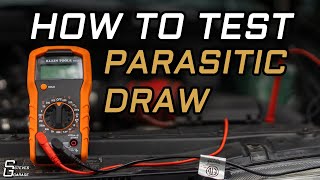
Disconnect the negative battery terminal and connect a multimeter in series (10A setting). Close all doors, lock the vehicle, and wait 45 minutes for modules to sleep. A draw above 50mA (0.050A) confirms a parasitic drain. Pull the 'Interior Lamps' fuse; if the draw drops, the dome light circuit is the confirmed source.
Tools: Multimeter with 10A capability (Advanced) - Check Fuses
Locate the fuse related to 'Interior Lamps', 'BCM', 'SJB', or 'HVAC Controls'. A blown fuse confirms a hard short circuit, but it will blow again until the root cause is fixed.
Tools: Fuse puller (Beginner) - Visually Inspect Wiring and Modules
Inspect the dome light wiring under the headliner or the ionizer harness behind the glove box for pinched or exposed copper. Crucially, check the passenger footwell carpet for dampness—water dripping onto the SJB/BCM is a primary cause of this code.
Tools: Flashlight, Trim removal tools (Intermediate) - Measure Cluster Ionizer Diagnostic Voltage (Hyundai/Kia)
Using an advanced scan tool, monitor 'Cluster Ionizer Voltage' in the A/C live data. Alternatively, back-probe the diagnostic signal wire at the ionizer connector. A reading near 0V (below 1.5V for 2 seconds) confirms the ionizer has failed.
Tools: Advanced Scan Tool or Multimeter (Advanced) - Test for Short to Ground (Ford)
Disconnect the battery and the dome light assembly. Set a multimeter to Ohms (Ω). Probe the power input pin on the harness connector and a clean chassis ground. A reading under 5 Ohms confirms a short in the wiring harness. An 'OL' (open loop) reading means the short is inside the disconnected dome light assembly.
Tools: Multimeter, Wiring diagram (Advanced)
When This Code Triggers (Freeze-Frame Conditions)
- Module Voltage: 12.0-14.8V (The code sets when the controlling module (BCM, SJB, A/C Controller) is powered and detects the fault.)
- Circuit Status: Active/Monitored (For Ford, the fault logs when the dome light circuit activates. For Hyundai/Kia, it logs when the A/C turns on and commands the ionizer to operate.)
- Fault Detection Time: < 5 seconds (The module detects the out-of-range voltage almost immediately. Hyundai/Kia modules trigger the code if voltage drops below 1.5V for more than 2 seconds.)
- Key/Ignition State: Key On, Engine Off (KOEO) or Key On, Engine Running (KOER) (Body modules are active once the key is in the 'ON' position, allowing the fault to be detected without the engine running.)
Related Codes
- B1686 — Means 'Lamp Dome Input Circuit Open.' B1688 (short) makes the light stay ON, while B1686 (open) makes the light fail to turn on due to a broken wire.
- B1687 — Means 'Lamp Dome Input Circuit Short To Battery.' B1688 is a short to ground (chassis), while B1687 is a short to a live power wire, which bypasses fuse protection and is more dangerous.
- B1342 — A generic code for an ECU failure. If B1342 appears alongside B1688, the Body Control Module (BCM) itself has failed and requires replacement.
- P1688 — CRITICAL DISTINCTION: On Hyundai/Kia, P1688 is a Powertrain code for an 'Immobilizer Lock Fault'. It is an anti-theft system failure, completely unrelated to the B1688 A/C ionizer body code.
- U042B — Means 'Invalid Data Received From Ionizer'. Stored alongside B1688 on Hyundai/Kia models, confirming the cluster ionizer module has failed internally.
Climate & Environmental Factors
- High Humidity and Water Intrusion: Water leaks from windshield seals or clogged sunroof drains drip directly onto the SJB/BCM. This moisture causes the corrosion and short circuits that trigger code B1688.
How to Talk to a Mechanic About This Code
Say this: "{'Ford/Lincoln/Mercury': "I have a B1688 code and a parasitic battery drain. I suspect the dome light circuit or the Smart Junction Box. I'd like a diagnostic to confirm the source of the draw, starting with the interior lighting circuit.", 'Hyundai/Kia': 'My A/C is blowing warm and I have a B1688 code. I believe the fault is with the A/C cluster ionizer. Can you confirm the ionizer has failed and quote me to simply unplug it?'}"
This language directs the technician to the specific, known cause for your vehicle, saving diagnostic time and preventing a broad, expensive search for an 'electrical problem'.
Avoid saying:
- 'My battery keeps dying, can you find out why?' (Invites a lengthy and costly parasitic draw hunt.)
- 'My A/C doesn't work.' (Invites an expensive A/C system diagnosis, missing the root cause.)
- 'Just fix whatever is wrong.'
Questions to ask before authorizing the repair:
- For a Ford: What was the parasitic draw in milliamps, and did pulling the interior light fuse make it stop?
- For a Hyundai/Kia: Did you test by unplugging the ionizer, and did that restore cold A/C?
- If a module (SJB/BCM) is being replaced, is the cost of programming included in the quote?
- What is your warranty on this specific electrical repair?
Where to Take It: Dealer vs Independent vs Chain
- Dealer:
Recommended only if the fix requires replacing and programming a control module (SJB/BCM). For simpler fixes, they are an expensive option.
Best for: Vehicles under warranty., Complex repairs requiring module replacement and programming (like an SJB/BCM).
Downsides: Significantly higher labor rates and parts costs., May default to replacing an entire assembly when a smaller component repair would suffice. (Typical cost: +40% vs. baseline) - Independent Shop:
Best fit for most B1688 scenarios. A good independent auto electric specialist handles diagnosis and component replacements more affordably than a dealer.
Best for: Out-of-warranty vehicles where cost is a major factor., Diagnosing common issues like the Ford dome light or Hyundai ionizer failure.
Downsides: Shop quality and diagnostic skill vary greatly; look for ASE certifications in electrical work., May lack the brand-specific tools to program a new control module. (Typical cost: +0% vs. baseline) - Chain Shop:
AVOID for diagnosing B1688. This code requires specific electrical diagnostic expertise that is not the focus of most chain shops.
Best for: Simple, unrelated maintenance like oil changes or tires.
Downsides: Technician skill for complex electrical diagnosis is inconsistent., Often lack the advanced scan tools needed to properly diagnose Body (B) codes. (Typical cost: -10% vs. baseline)
When to Walk Away From the Repair
If the estimated repair cost exceeds 40-50% of the car's current private-party market value, seriously consider not fixing it.
- Car worth $3500, fix is $250: Fix it. A $250 repair for a faulty dome light or unplugging an ionizer is well below the threshold and restores full function.
- Car worth $4000, fix is $1200: Walk away. If the diagnosis points to a failed SJB/BCM requiring a $1200 replacement, this cost is a significant portion of the car's value.
- Car worth $8000, fix is $1200: Borderline. A $1200 SJB replacement on an $8000 vehicle is a tough call. Get a second opinion and consider the car's overall condition.
What Scan Tool You Need for This Code
Minimum: A scanner that can read and clear manufacturer-specific Body (B) trouble codes.
A basic $20 code reader only checks for Powertrain (P) codes related to the check engine light. It cannot see or clear Body (B) codes like B1688.
Budget: BlueDriver Pro (~$100) — Connects to your smartphone via Bluetooth. It reads and clears Body codes (like B1688) for most major brands and views live data.
Mid-range: Foxwell NT510 Elite (~$180) — A handheld scanner offering OE-level diagnostics for a specific car brand. It reads all modules and offers bi-directional controls to test components.
Professional: Autel MaxiCOM MK808S (~$500) — A professional tablet scanner providing full-system diagnostics for all makes/models. Overkill for just this code, but a great investment for serious DIYers.
Rent vs buy: Most auto parts stores offer free code scanning, but their tools may not read B-codes. Buying a budget pick like the BlueDriver is a necessary investment for this issue.
How to Clear the Code After You Fix It
- Use a B-code capable OBD-II scan tool to clear the fault from the module's memory.
- Perform a function test: cycle the dome light switch or run the A/C to verify the repair holds.
Drive cycle (~5 minutes): No specific drive cycle is required. Operate the affected system (open doors, turn on A/C). If the short circuit remains, the code returns immediately upon the system's self-test.
Readiness monitors affected: None. Body codes do not affect emissions readiness monitors.
Watch out for:
- Using a basic $20 code reader that cannot see or clear B-codes.
- Disconnecting the battery to clear the code without fixing the short; the code and parasitic drain will return instantly.
Will This Fail Emissions / State Inspection?
No — by itself this code doesn't fail OBD inspection (but it can keep readiness monitors from setting, which causes a separate fail).
- California: This code will not cause a Smog Check failure. California focuses strictly on powertrain (P-series) codes and emissions readiness.
- New York: B1688 does not cause a NYS inspection failure, as it does not illuminate the Check Engine Light or affect safety/emissions.
- Texas: This body code will not cause an emissions test failure in applicable Texas counties.
Most Commonly Affected Vehicles
- Ford F-150 (2004-2014) — Extremely common for the dome light assembly switch to fail, triggering B1688 and a severe parasitic battery drain.
- Hyundai Tucson (2010-2016) — Prone to cluster ionizer failure, disabling the A/C compressor.
- Kia Sorento (2011-2015) — Experiences frequent failures of the A/C cluster ionizer (Part #97155-3F000).
- Ford Explorer (2006-2010) — Parasitic battery drains related to the SJB and lighting circuits are heavily documented in Ford TSB 07-5-13.
- Hyundai Elantra (2011-2020) — The cluster ionizer is a frequent failure point, often misdiagnosed as a bad A/C compressor.
- Chevrolet Silverado (2007-2013) — B1688 indicates a fault within the power mirror motor circuit, preventing adjustments.
- Mercury Mountaineer (2002-2010) — Shares the Explorer platform and suffers identical SJB water intrusion and dome light short issues.
- Ford Transit (2013-2019) — Interior lighting circuits cause significant battery drains even after lights appear to turn off.
Manufacturer-Specific Notes
- Ford: The dome light switch contacts melt or corrode, creating a permanent connection the BCM interprets as a short. Ford TSB 07-5-13 details diagnostic procedures for the resulting parasitic drain.
- Hyundai / Kia: A failed cluster ionizer presents as an A/C cooling problem. Owners notice warm air and assume the compressor failed, unaware the climate module disabled it due to the air purifier fault.
- Ford / Lincoln / Mercury: The Smart Junction Box (SJB) features an internal, non-serviceable relay for the dome light. If this relay sticks, the entire SJB must be replaced and programmed.
Real Owner Stories
2007 Ford F-150 with 150K miles - The Simple Fix
The battery died every 2-3 days. The interior dome light would not turn off, even with all doors closed and the switch set to 'Off'. Code B1688 was present.
What they tried:
- Replaced the battery, but the new battery also died.
- Checked all door jamb switches, which worked correctly.
- Performed a parasitic draw test and found a draw of over 300mA.
Outcome: Replaced the overhead dome light assembly. The internal switch had failed, creating a permanent short. The new $60 assembly immediately solved the problem, dropping the draw under 50mA.
Lesson: On Ford trucks, the dome light assembly itself is the most common cause of B1688 and parasitic drains. Replacing the assembly is faster and cheaper than hunting for a wiring short.
2013 Hyundai Elantra with 110K miles - The Misdiagnosis
The A/C failed completely. A general repair shop diagnosed a failed A/C compressor and quoted $1,500.
What they tried:
- Shop recharged the A/C system, but the problem returned.
- Owner sought a second opinion because the compressor wasn't making noise.
Outcome: A second mechanic found code B1688 (Cluster Ionizer Fault). He explained the climate module disables the compressor when the ionizer fails. He unplugged the faulty ionizer behind the glovebox. The code cleared, and the A/C blew cold instantly. The owner opted to leave it unplugged.
Lesson: On Hyundai/Kia vehicles, B1688 presenting as a 'no cool' A/C condition is a classic misdiagnosis trap. Unplugging the ionizer is a free way to confirm the diagnosis and restore A/C function.
2008 Ford Explorer with 95K miles - The Unusual Root Cause
Owner experienced a dead battery, dome light staying on (B1688), and door locks cycling randomly. Problems worsened after rain.
What they tried:
- Replaced the dome light assembly, which did not fix the problem.
- Noticed the passenger-side carpet was damp near the kick panel.
Outcome: A clogged sunroof drain tube caused water to overflow and drip directly onto the Smart Junction Box (SJB). The water corroded the SJB's internal circuits. The fix required replacing the SJB ($700 plus programming) and clearing the drain line.
Lesson: If multiple electrical problems appear after rain, suspect water intrusion. Check common leak points like sunroof drains and windshield seals before replacing expensive modules.
How to Prevent This Code From Triggering
- Regularly clean sunroof drains (Once or twice a year) — Clogged sunroof drains cause water to overflow onto the Smart Junction Box (SJB), leading to corrosion and electrical shorts like B1688. Clear drains with compressed air.
- Inspect windshield and cowl seals (Annually or after windshield replacement) — Deteriorated seals allow water to enter the cabin and drip onto the BCM or SJB, directly causing the corrosion that leads to electrical faults.
- Use only CAN-bus compatible LED bulbs (When replacing interior lights) — Cheap LED bulbs have incorrect resistance values that trick the BCM into detecting a short circuit (B1688). CAN-bus compatible bulbs include resistors to mimic standard bulbs.
- Address water leaks immediately (As needed) — Promptly fixing a damp carpet or headliner leak prevents catastrophic damage to sensitive electronics like the BCM/SJB.
Frequently Asked Questions
My A/C blows warm on my Hyundai, but my mechanic says the compressor is fine. Could it be B1688?
Yes. The climate control computer disables the A/C compressor clutch as a protective measure when it detects a fault with the cluster ionizer (B1688). The system is working as designed, but the symptom is warm air, leading to frequent misdiagnosis.
I installed LED interior lights in my Ford and now my battery is draining. Are they related?
Yes. The Body Control Module (BCM) misinterprets the low resistance of cheap LED bulbs as a short to ground. This sets the B1688 code and prevents the circuit from sleeping, creating a parasitic battery drain.
Can a bad battery cause code B1688?
No, a bad battery will not cause this code. However, the parasitic drain caused by a B1688 fault on a Ford vehicle quickly damages a good battery by repeatedly and deeply discharging it.
I replaced the fuse and it blew again. What now?
A fuse that repeatedly blows is a definitive sign of a persistent short circuit. Do not install a larger fuse, as this creates a serious fire hazard. You must find and fix the faulty component or grounded wire.
Is it safe to just remove the dome light bulb on my Ford to fix the problem?
Removing the bulb is a temporary workaround that stops your battery from draining, but it does not fix the underlying short circuit. The fault remains in the system and requires proper repair.
Can I replace the A/C cluster ionizer myself?
This is not recommended for a DIY beginner. The part is located deep within the dashboard, requiring the removal of the glove box, trim panels, and sometimes the entire dash assembly. Take the vehicle to a professional if you want it replaced.
Can I just unplug the cluster ionizer on my Hyundai/Kia?
Yes. Unplugging the faulty ionizer removes the fault, clears the B1688 code, and allows your A/C compressor to engage again. You lose the air purification function, but this is a highly effective, free solution for restoring cold A/C.
What is the difference between OBD-II code B1688 and P1688 on my Hyundai?
B1688 is a Body code indicating a fault with the A/C Cluster Ionizer. P1688 is a Powertrain code indicating an Immobilizer Lock Fault, which is a problem with your car's anti-theft system. They are completely unrelated problems.
Key Takeaways
- Code B1688 indicates a dome light short on Ford vehicles, an A/C ionizer failure on Hyundai/Kia models, or a power mirror fault on Chevrolets.
- Ford owners typically experience a dead battery within 1 to 3 days due to a faulty dome light assembly switch causing a 200-500mA parasitic drain.
- Hyundai and Kia owners will experience warm A/C air because the climate module disables the compressor; simply unplugging the faulty ionizer restores cold air for $0.
- Basic $20 OBD-II readers cannot detect B1688; you must use a scanner capable of reading Body (B) codes, such as the BlueDriver or Foxwell NT510.
- Never confuse Body code B1688 with Powertrain code P1688, which indicates a critical immobilizer anti-theft fault on Hyundai and Kia vehicles.
Helpful Videos
Shop the Parts Behind B1688
Below are the parts most often responsible for code B1688, ranked by how frequently each one is the actual culprit (per the diagnosis above). Tap any to see what we have for your vehicle.

The information in this article is provided for general reference and educational purposes only. Vehicle specifications, procedures, and part compatibility can vary by production date, trim level, and region. Always consult your vehicle's factory service manual and verify part numbers before purchasing or performing repairs. Safety-critical components such as airbags, seat belts, and braking systems should be installed by a qualified professional.
- 🧭 Diagnostic Flowchart
- 🎬 Helpful Videos
- 🛍️ Shop This Part
- What Does B1688 Mean?
- Can I Drive With B1688?
- Common Causes
- Symptoms
- Common Fixes & Costs
- Used vs. New Parts: Buying Guide
- What Happens If You Wait — Timeline
- Cost of Not Fixing It
- Diagnosis Steps
- When This Code Triggers (Freeze-Frame Conditions)
- Related Codes
- Climate & Environmental Factors
- How to Talk to a Mechanic About This Code
- Where to Take It: Dealer vs Independent vs Chain
- When to Walk Away From the Repair
- What Scan Tool You Need for This Code
- How to Clear the Code After You Fix It
- Will This Fail Emissions / State Inspection?
- Most Commonly Affected Vehicles
- Manufacturer-Specific Notes
- Real Owner Stories
- 2007 Ford F-150 with 150K miles - The Simple Fix
- 2013 Hyundai Elantra with 110K miles - The Misdiagnosis
- 2008 Ford Explorer with 95K miles - The Unusual Root Cause
- How to Prevent This Code From Triggering
- Frequently Asked Questions
- My A/C blows warm on my Hyundai, but my mechanic says the compressor is fine. Could it be B1688?
- I installed LED interior lights in my Ford and now my battery is draining. Are they related?
- Can a bad battery cause code B1688?
- I replaced the fuse and it blew again. What now?
- Is it safe to just remove the dome light bulb on my Ford to fix the problem?
- Can I replace the A/C cluster ionizer myself?
- Can I just unplug the cluster ionizer on my Hyundai/Kia?
- What is the difference between OBD-II code B1688 and P1688 on my Hyundai?
- Key Takeaways
- 🎟️ Get 5% Off