

B1695 on 2011-2015 Kia Optima Hybrid: A/C E-Comp Communication Loss Explained
On a 2011-2015 Kia Optima Hybrid, code B1695 almost always means the A/C won't blow cold due to a communication failure with the high-voltage electric A/C compressor (E-Comp). This is often caused by a blown high-voltage fuse, damaged wiring, or a failed compressor. This is a high-voltage system repair and professional service is strongly recommended as it involves a 270-volt system.
- B1695 on your Optima Hybrid means a loss of communication with the electric A/C compressor, resulting in no cold air.
- This is a high-voltage system issue; extreme caution is required. Professional service is highly recommended.
- The most common causes are damaged wiring (check for rodent damage), a blown high-voltage fuse on the HPCU, or a failed compressor unit.
- Do not waste money on recharging the refrigerant; this is an electrical/communication fault, not a refrigerant level issue.
- The Hyundai Sonata Hybrid of the same generation shares this exact problem, confirming it's a platform-wide issue.
What's Unique About the 2011-2015 Kia OPTIMA HYBRID
Unlike conventional cars with belt-driven A/C compressors, the Optima Hybrid uses a high-voltage electric compressor to maintain A/C function during engine-off (EV mode) operation. This component is managed over the vehicle's communication network (CAN bus) and powered by the high-voltage battery. Code B1695 is specific to a failure in this communication link, not a mechanical issue like a slipping belt or bad clutch, which would be common on non-hybrid vehicles.
Diagnostic Flowchart
Tap your situation to follow the diagnostic path that matches what you're seeing on this vehicle.
Symptoms You May Notice
- A/C system does not blow cold air, or blows warm air.
- The A/C indicator light on the control panel may blink.
- Check engine light or other warning lights may be on, sometimes with a "Hybrid System Warning" message.
- No unusual noises from the A/C system (as the compressor is not engaging at all). A lack of the typical 'click' of a compressor clutch engaging is also an indicator.
- Recharging the A/C refrigerant. While low refrigerant can cause no-cold-air symptoms, it will not set a B1695 communication code.
- Replacing the A/C pressure switch. This is a common fix for conventional A/C systems but is not the cause of a communication fault code like B1695.
- Replacing the A/C clutch. The hybrid's electric compressor does not have a traditional magnetic clutch that can fail.
Most Likely Causes
- Damaged Wiring Harness or Connectors 🔴 High Probability Wiring, particularly the low-voltage CAN communication lines to the compressor, can be susceptible to damage from road debris, corrosion, or rodents. The harness is routed in a way that can make it a target for pests seeking shelter.
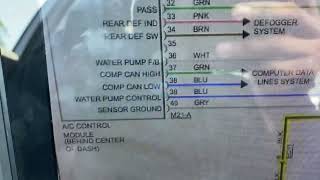
How to confirm: Visually inspect the entire wiring harness leading to the electric A/C compressor for any signs of breaks, chafing, corrosion, or rodent damage like chewed wires. Pay close attention to the low-voltage connector on the compressor for bent pins, corrosion, or a loose connection. A YouTube video by Daniels Customs shows a real-world example of rodent damage on the orange and green communication wires causing this exact code. 🎬 Watch: Real-world diagnosis of rodent damage and communication faults.
Typical fix: Repair the damaged section of the wiring harness and protect it with loom or tape. Replace the connector if it is corroded or damaged. In the case of rodent damage, it's crucial to find and seal any entry points into the engine bay.
Est. part cost: $10-$100 - Blown High-Voltage (HV) Fuse for E-Comp 🟡 Medium Probability The fuse is a protective device designed to blow if the compressor or its wiring shorts out. This can happen if the compressor fails internally, drawing excessive current.
How to confirm: Following all high-voltage safety procedures (disabling the hybrid system), locate the HV E-Comp fuse on the Hybrid Power Control Unit (HPCU). It is located at the rear of the unit. Test the fuse for continuity with a multimeter. An open circuit (no continuity) indicates a blown fuse.
Typical fix: Replace the fuse. IMPORTANT: A blown fuse is almost always caused by an underlying problem, such as a short in the wiring or a failing E-Comp. The root cause must be identified and fixed, or the new fuse will blow again.
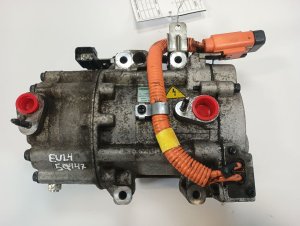
Est. part cost: $20-$50 - Failed Electric A/C Compressor (E-Comp) 🟡 Medium Probability → Shop A/C Compressor The E-Comp is a complex, high-voltage component that can fail internally. The integrated inverter module can short out or the internal motor can fail, causing a short circuit (blowing the fuse) or a complete loss of communication.
How to confirm: If the wiring, connectors, and fuse are all confirmed to be good, and communication with the E-Comp cannot be established with a diagnostic scan tool, the compressor itself is the likely culprit. Resistance checks at the compressor's high and low voltage connectors can also confirm an internal failure, as outlined in Hyundai/Kia diagnostic procedures.
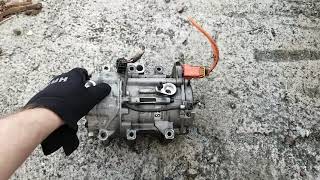
Typical fix: Replace the entire electric A/C compressor assembly. This requires safely decommissioning the high-voltage system, evacuating and recharging the A/C refrigerant, and is a job best left to professionals. 🎬 See this walkthrough for removing the hybrid A/C compressor.
Est. part cost: $1700-$2700
Rare But Worth Checking
- Faulty Climate Control Module: While possible, the module that sends the commands is less likely to fail than the component it's controlling or the wiring in between. This should only be considered after all other possibilities have been exhausted.
- Faulty Hybrid Power Control Unit (HPCU): The HPCU manages the high-voltage power distribution. A failure within this unit could cut power to the E-Comp circuit, but this would likely be accompanied by other, more serious hybrid system trouble codes.
Diagnosis Steps
- WARNING: The following steps involve high-voltage components that carry up to 270 volts. Professional service is strongly recommended. Do not proceed without proper training and safety equipment.
- Scan the climate control module for DTCs. Confirm B1695 is active.
- Following all manufacturer safety protocols, disable the high-voltage system by turning the ignition OFF, disconnecting the 12V auxiliary battery, and removing the hybrid battery safety plug from the trunk.
- Locate the HV E-Comp fuse on the Hybrid Power Control Unit (HPCU), which is at the rear of the unit, above the 270V input.
- Remove and test the fuse for continuity using a multimeter. If the fuse is blown, investigate the wiring and compressor for a short circuit before replacing it. A blown fuse indicates a deeper problem.
- If the fuse is good, thoroughly inspect the wiring harness and connectors between the climate control module and the E-Comp. Look for physical damage, rodent chew marks, corrosion, or loose pins, especially at the compressor connector.
- If the harness is intact, use a multimeter to check for proper power, ground, and CAN bus signals (CAN High/CAN Low) at the E-Comp connector per the factory service manual specifications.
- If all wiring and power inputs are correct and the fuse is good, the electric A/C compressor (E-Comp) is the most likely point of failure and requires replacement.
Parts You'll Likely Need
- Electric A/C Compressor Assembly
(OEM #97701-4U000)— This is the component that fails most often, either internally or by causing a short that blows the fuse, leading to the B1695 communication loss code. It is a single, non-serviceable unit. 🎬 Watch: Overview of the compressor and hose assembly replacement.
Trusted brands: Kia (OEM)
OEM price range: $1728-$2700
Aftermarket price range: $1200-$1800 - High-Voltage E-Comp Fuse — This fuse will blow to protect the system if the compressor or wiring has a short circuit. It's a common failure point but is usually a symptom of a larger problem. The fuse is located on the HPCU.
Trusted brands: Kia (OEM)
OEM price range: $20-$50
Technical Service Bulletins (TSBs) & Recalls
- PS391: OPTIMA HYBRID (TF HEV) WITH DTC B1695 - LOST COMMUNICATION WITH E-COMP.
- Hyundai TSB 19-HA-001H: Addresses electric compressor and inverter failures on the sister platform, the Sonata Hybrid.
Platform-Specific Known Issues
- Kia issued Technical Service Bulletin (TSB) PS391 specifically for this code on the 2011-2015 Optima Hybrid, directly linking DTC B1695 to a customer concern of the A/C not blowing cold air. The bulletin guides technicians to check for a blown HV fuse, circuit concerns, or a high-voltage circuit concern as the primary causes.
- Hyundai has a similar TSB for its Sonata Hybrid (TSB 19-HA-001H) which addresses internal electric shorts and communication malfunctions in the same type of electric compressor, confirming this is a known issue across the shared platform.
Mechanic-Grade Diagnostic Values
- E-Compressor High Voltage Connector Resistance — expected: Over 100 Ω (Open). Failure: A reading below 100 Ω indicates an internal short in the compressor's inverter.
- E-Compressor Low Voltage Connector CAN Bus Resistance — expected: Approximately 60 Ω or 120 Ω, depending on inverter type and whether it's a terminating resistor.. Failure: An open circuit (OL) or a short to ground (near 0 Ω) indicates a wiring or internal inverter fault.
- E-Compressor Low Voltage Connector Interlock Circuit Resistance — expected: Approximately 1.2 kΩ. Failure: An open circuit (∞ MΩ) indicates a problem with the interlock circuit, which is a safety feature.
Scan Tool Commands That Help
- Kia GDS (Global Diagnostic System): Vehicle S/W Management (Special Function) — Used to perform functions like 'Resetting adaptive values' for the Engine Control Module after a repair, which may be necessary to clear learned parameters and ensure proper communication with new components.
- Kia GDS (Global Diagnostic System): Actuation Test — Allows a technician to command specific components to turn on or off. While direct E-Comp activation may not be available due to safety protocols, it can be used to test other climate control inputs and outputs to isolate the fault to the compressor circuit.
- Kia GDS (Global Diagnostic System): DTC Guide — The OEM tool includes a built-in diagnostic guide for each fault code, providing a step-by-step troubleshooting procedure directly from the manufacturer, which is more detailed than generic repair manuals.
Wiring & Ground Locations
- E-Compressor Low-Voltage Connector — On the electric A/C compressor itself, located in the engine bay.. This connector contains the critical CAN High (Orange wire) and CAN Low (Green wire) communication lines. Damage to these specific wires is a known cause of B1695.
- HV E-Comp Fuse — On the Hybrid Power Control Unit (HPCU), located at the rear of the unit just above the 270V input.. This is the main power supply fuse for the compressor. If it blows, the compressor has no power and cannot communicate, setting code B1695. A blown fuse almost always indicates a deeper problem like a shorted compressor or wiring.
Real Owner Repair Stories
- YouTube channel 'Daniels Customs' (2012 Kia Optima Hybrid) — A/C not blowing cold, DTC B1695 (Lost communication with electric compressor) was active.
❌ Tried (didn't work) The technician first suspected the compressor itself or the fuse.
✅ What actually fixed it The technician discovered that rats had chewed through the CAN communication wires (specifically an orange and a green wire) in the harness leading to the E-Compressor. Repairing the broken wires restored communication and fixed the A/C.
OEM Part Supersession History
97701-4U000→N/A— This part number appears to be the primary OEM number for the specified model years.
Heads up: This part is listed for 2013-2016 Kia Optima Hybrid models. Compatibility with 2011-2012 models should be verified with a dealer, as a software update TSB exists for those earlier years which may relate to component differences.
Model Year Variations Within This Range
- 2011-2012: A software upgrade was issued via TSB SA133 that updated the ECM, TCM, and HCU logic. While not directly citing code B1695, updates to the Hybrid Power Control Unit (HCU) could potentially affect how it interacts with high-voltage components like the E-Comp.
Helpful Videos
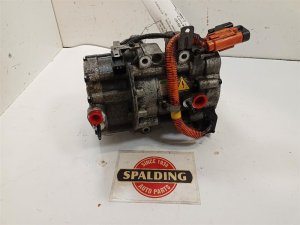
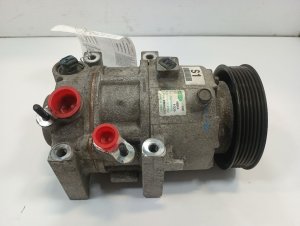
Used OEM Parts in Stock
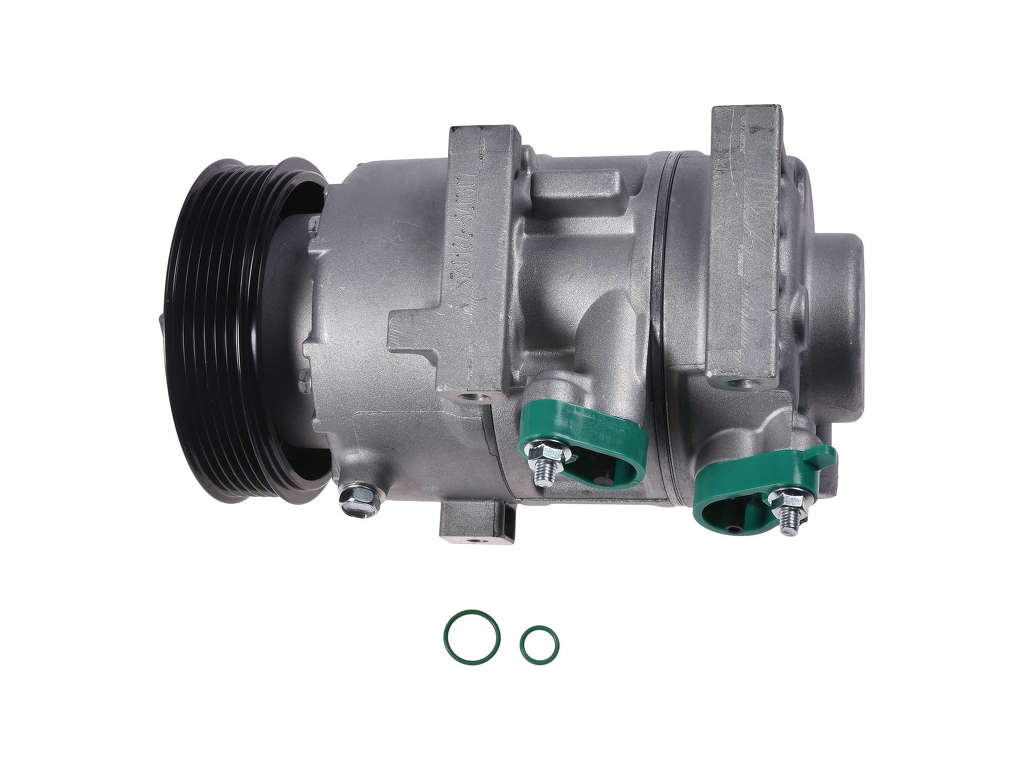
New Aftermarket Parts Available


The information in this article is provided for general reference and educational purposes only. Vehicle specifications, procedures, and part compatibility can vary by production date, trim level, and region. Always consult your vehicle's factory service manual and verify part numbers before purchasing or performing repairs. Safety-critical components such as airbags, seat belts, and braking systems should be installed by a qualified professional.
- Kia OPTIMA HYBRID:
- 🧭 Diagnostic Flowchart
- 🎬 Helpful Videos
- 🛍️ Shop This Part
- What's Unique About the 2011-2015 Kia OPTIMA HYBRID
- Symptoms You May Notice
- Most Likely Causes
- Rare But Worth Checking
- Diagnosis Steps
- Parts You'll Likely Need
- Technical Service Bulletins (TSBs) & Recalls
- Platform-Specific Known Issues
- Mechanic-Grade Diagnostic Values
- Scan Tool Commands That Help
- Wiring & Ground Locations
- Real Owner Repair Stories
- OEM Part Supersession History
- Model Year Variations Within This Range
- 🎟️ Get 5% Off